Quick Info
At a glance
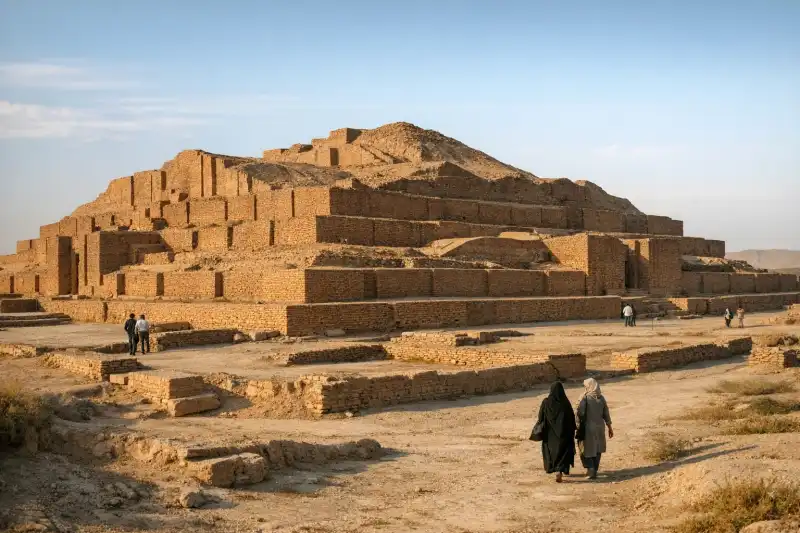
In the wide plains of southwestern Iran, Chogha Zanbil rises from the landscape with a strange and powerful clarity. Even before you know its history, the site feels ceremonial: a geometric mass of ancient brick, ringed by old walls and set against the open horizon of Khuzestan Province. Chogha Zanbil in Iran is not simply an isolated ruin. It is the surviving heart of a sacred city, an ambitious religious foundation from the Elamite world that once drew meaning from royal power, divine protection, and the ordering of space itself.
For modern travelers, part of the site’s appeal lies in that sense of distance from busier tourist circuits. Unlike monumental capitals that grew continuously over centuries, Chogha Zanbil preserves the vision of a single project: a religious complex planned on a grand scale and centered on a towering ziggurat. The mud-brick architecture, the surviving baked-brick inscriptions, and the traces of temples and enclosure walls all combine to make the place unusually legible. You can still read its intention in the layout.
The result is one of the most impressive archaeological experiences in Iran. Chogha Zanbil is a UNESCO World Heritage Site, but it still feels contemplative rather than crowded. Its beauty is not flashy. It comes from proportion, silence, and survival: a stepped temple city built more than three thousand years ago and still commanding attention in the flat light of the Iranian plain.
History
Founding under Untash-Napirisha
Chogha Zanbil was founded during the 13th century BCE by the Elamite king Untash-Napirisha, one of the most significant rulers of the Middle Elamite period. The ancient name of the city was Dur Untash, meaning the fortified or enclosed settlement of Untash. Rather than simply expanding an existing urban center, the king appears to have envisioned a new sacred city that would serve both religious and political purposes.
The Elamite kingdom, centered in parts of what is now southwestern Iran, was a major power in the ancient Near East and maintained complex relations with Mesopotamia. By establishing Dur Untash, Untash-Napirisha was doing more than constructing a temple. He was creating a monumental focus for royal devotion and state identity. The city was dedicated to major Elamite deities, especially Inshushinak, the god closely associated with nearby Susa, and Napirisha, an important divine figure in Elamite religion.
At the center of this foundation stood the ziggurat, a stepped temple tower that linked earthly kingship with divine order. While ziggurats are often associated with Mesopotamia, Chogha Zanbil is exceptional because it shows how this architectural tradition was adopted and reshaped within the Elamite world. Inscriptions found on bricks across the site record the king’s building activity and his pious intentions, helping archaeologists connect the monument directly to its founder.
Religious importance and urban design
The city was built with a carefully planned arrangement of concentric enclosures. These walls divided sacred and administrative spaces, creating layers of access and meaning. The innermost area contained the ziggurat and major temples, while outer areas included additional shrines, service buildings, and likely spaces linked to palace and support functions.
This layout reveals that Chogha Zanbil was not just a single building but a ritual landscape. Processions, offerings, and temple management would all have shaped the life of the city. Archaeological evidence suggests that numerous temples once stood within the complex, each likely serving different cults or divine associations. The site’s water system also points to careful planning, with channels and installations designed to bring and manage water in a challenging environment.
The ziggurat itself may originally have risen in five levels, though only part of its structure survives today. It was built primarily of mud brick, with an outer layer of baked brick in many areas. Some of these baked bricks bear cuneiform inscriptions naming the king and invoking divine favor. Their survival is one reason Chogha Zanbil remains so important for the study of Elamite language, religion, and kingship.
Decline and destruction
Dur Untash seems never to have become a long-lived urban center on the scale its founder intended. After the death of Untash-Napirisha, the city’s importance may have waned, especially as political priorities shifted back toward older centers such as Susa. Even so, the sacred complex remained a visible and valued place for some time.
Its eventual decline was tied to wider conflict in the region. In the 7th century BCE, the Assyrian king Ashurbanipal campaigned against Elam and boasted of destroying Elamite centers. Although the exact sequence of damage at Chogha Zanbil remains a matter of archaeological interpretation, the site clearly suffered in the violent contraction of Elamite power. Over time, abandoned buildings decayed, walls collapsed, and the ziggurat weathered into the form that later generations would know.
The modern name “Chogha Zanbil” is often interpreted as referring to a basket-shaped mound, an apt description of how the ruined structure looked after centuries of erosion. Long after its religious role had ended, the monument remained visible on the plain, a massive earthen silhouette preserving the memory of a lost civilization.
Rediscovery and modern archaeology
Systematic excavation began in the 20th century, especially through the work of French archaeologists, who cleared large areas of the complex and documented its architecture in detail. These investigations revealed the city plan, temple remains, inscriptions, and construction methods, transforming scholarly understanding of Elamite civilization.
In 1979, Chogha Zanbil became one of the first sites in Iran to be inscribed on the UNESCO World Heritage List. That recognition reflected both its rarity and its state of preservation. Few ancient ziggurats survive as clearly as this one, and fewer still can be understood within such a coherent sacred urban setting.
Today, Chogha Zanbil stands as one of the clearest windows into Elamite religious architecture. It is also a reminder that ancient Iran was home to multiple civilizations, each with its own language, gods, artistic forms, and political traditions.
Key Features
The first and most obvious feature of Chogha Zanbil is the ziggurat itself. Even in ruin, it has tremendous visual force. Its stepped mass rises above the surrounding plain in layered terraces of weathered brick, giving visitors a direct sense of the monumentality intended by its builders. Unlike many ancient sites where only foundations remain, here the central structure still retains enough height and shape to communicate its original form. You can see how the levels stacked upward and how the architecture relied on mass, symmetry, and elevation rather than delicate ornament.
What makes the monument especially rewarding is the way detail emerges as you approach. The surviving baked bricks with inscriptions are among the site’s most important elements. They are not decorative in a modern sense, but they carry the voice of the foundation itself: royal statements embedded into the building fabric. These inscriptions connect the structure to Untash-Napirisha and to the gods he honored, giving the complex a rare historical immediacy. Instead of guessing who built the place, visitors encounter a monument that still names its patron.
The enclosure walls are another key feature, though they can be overlooked if attention stays fixed only on the central tower. Chogha Zanbil was planned in zones, and the walls help define those sacred layers. Walking across the site, you begin to understand how movement mattered. Entry was controlled. Space was hierarchical. The city was organized to create a physical progression toward the most sacred center. This is one of the reasons the site feels so intelligible: the plan remains readable in the terrain.
Around the ziggurat are the remains of temples and associated buildings. These lower ruins require a slower kind of looking, but they are essential to appreciating the scale of the original complex. Platforms, walls, courtyards, and foundations show that this was not a solitary ceremonial tower in an empty field. It was the core of an active religious center with multiple structures serving ritual, administrative, and perhaps residential functions. For travelers interested in archaeology rather than only monumental photography, these surrounding remains add depth and context.
Chogha Zanbil is also notable for its construction materials. Mud brick was the basic medium of much ancient architecture in this region, and the site demonstrates both its possibilities and its vulnerabilities. The surviving mass of the ziggurat shows how effective mud-brick architecture could be when engineered on a large scale, while the eroded edges and softened contours reveal how deeply time shapes earthen monuments. In practical terms, this gives the site a very different visual character from stone-built ruins elsewhere. It seems to emerge from the ground rather than stand apart from it.
The setting is part of the experience too. Khuzestan’s open plain gives the monument room to breathe. There is little to obstruct the view, and the broad sky reinforces the geometry of the ancient design. Early morning and late afternoon are especially striking, when the low sun brings out the texture of the brick and the edges of surviving walls. The landscape may look austere, but that austerity works in the site’s favor. It sharpens the sense that Chogha Zanbil was intended as a sacred landmark visible from afar.
Finally, there is the site’s importance as an Elamite monument. For many visitors, Chogha Zanbil is memorable because it represents a civilization less familiar than ancient Egypt, Greece, or Rome. The architecture, inscriptions, and layout all belong to a world that is crucial to Near Eastern history but often underrepresented in mainstream travel writing. That gives the visit a special intellectual reward. You are not only seeing an ancient ruin; you are encountering one of the best-preserved expressions of Elamite religious and political ambition.
Getting There
Chogha Zanbil is usually visited from Shush or Ahvaz in Khuzestan Province. The closest practical base is Shush, which is also the gateway for visiting nearby Susa. From Shush, the site is roughly 35 to 40 kilometers away, and the easiest option is a private taxi or hired driver. Expect a return taxi trip from Shush to cost roughly 8,000,000 to 15,000,000 Iranian rials depending on waiting time, fuel conditions, and your bargaining skills. If you want to combine Chogha Zanbil with Susa or Haft Tappeh in one day, negotiating a half-day or full-day rate is often more convenient.
From Ahvaz, the provincial capital, the journey is longer but straightforward by road, usually taking around two to two and a half hours each way depending on traffic and route. Private car hire from Ahvaz can cost approximately 20,000,000 to 35,000,000 Iranian rials for a day trip. Some hotels or local travel agencies may be able to arrange drivers familiar with the archaeological circuit.
Public transport directly to the site is limited. You can travel by bus or shared taxi to Shush from Ahvaz at relatively modest cost, often in the range of 1,500,000 to 4,000,000 Iranian rials, then hire a local taxi onward to Chogha Zanbil. This is the budget-friendly option, but it requires more planning and flexibility.
If you are self-driving, roads in the region are generally manageable, and having your own vehicle makes it much easier to pair multiple sites in one itinerary. Carry water, confirm opening times in advance, and keep cash on hand, as card acceptance for foreign travelers can be unreliable.
When to Visit
The best time to visit Chogha Zanbil is from late autumn through early spring, when Khuzestan’s temperatures are far more comfortable for walking an exposed archaeological site. From November to March, daytime conditions are usually the most pleasant, with cooler air and softer light. This is the ideal season for travelers who want to spend time exploring the outer enclosures and reading the site spatially rather than rushing from shade to shade.
Winter is often the most comfortable period overall, though mornings can be cool. The lower sun at this time of year is excellent for photography, especially because the brick surfaces take on warm tones in early and late daylight. Spring can also be rewarding, particularly from February to early April, when conditions remain manageable before the more intense heat arrives.
Summer should be approached with caution. Khuzestan can become extremely hot, and the site offers limited protection from the sun. If you must visit in summer, go as early in the morning as possible, carry plenty of water, wear a hat, and keep your visit shorter than you might otherwise plan. Midday heat can make even a modest walk uncomfortable.
Autumn can be a good compromise, especially in October and November, when temperatures begin to ease and visitor numbers are often low. No matter the season, aim for either the first hours after opening or the last part of the afternoon. Chogha Zanbil is at its most atmospheric in angled light, when the monument’s terraces and walls stand out clearly against the plain.
| Quick Facts | Details |
|---|---|
| Location | Near Shush, Khuzestan Province, Iran |
| Ancient name | Dur Untash |
| Civilization | Elamite |
| Date | c. 1250 BCE |
| Founder | Untash-Napirisha |
| Main monument | Monumental ziggurat and sacred city complex |
| UNESCO status | World Heritage Site since 1979 |
| Best base for visitors | Shush |
| Typical visit length | 1.5 to 3 hours |
| Best season | November to March |
A visit to Chogha Zanbil rewards travelers who appreciate archaeology as much as spectacle. The site does not overwhelm with crowds, reconstructed grandeur, or endless museum-style interpretation. Instead, it offers something rarer: a chance to stand inside the planned sacred heart of an ancient Elamite city and still understand its purpose. The ziggurat remains commanding, the inscriptions remain eloquent, and the silence of the plain still suits the monument.
Combined with Susa, Chogha Zanbil makes southwestern Iran one of the most important destinations in the ancient Near East. Yet even on its own, it is unforgettable. This is a place where architecture, kingship, and belief were bound together in brick more than three millennia ago. Enough survives that the message is still clear.
Guided tours: worth it?
Self-guided works here, but a guide can add real value if you want the ruins explained as a living place rather than just a sequence of monuments.
Best for
- First-time visitors who want context, not just photos
- Short visits where a planned route saves time
When to go self-guided
Go independently if you prefer setting your own pace, reading as you go, and checking official hours or ticket rules directly before you arrive.
What I’d avoid
Skip paid tours that bundle unrelated stops you do not actually want. The best option should either save meaningful planning time or add historical context you would miss on your own.
Chogha Zanbil tours
Useful when: you want to compare guided formats before deciding
Susa and Chogha Zanbil tours
Useful when: you want to compare guided formats before deciding
Khuzestan archaeology tours
Useful when: you want to compare guided formats before deciding
Some tour links are affiliate links, which may earn Ancient Travel a small commission at no extra cost to you. I try to surface options that make practical sense for the site—not just anything bookable.
Frequently Asked Questions
What is Chogha Zanbil?
Chogha Zanbil is a major Elamite religious complex in southwestern Iran, best known for its monumental ziggurat built in the 13th century BCE.
Where is Chogha Zanbil located?
The site lies in Khuzestan Province in southwestern Iran, not far from Susa and within reach of Ahvaz and Shush.
Is Chogha Zanbil a UNESCO World Heritage Site?
Yes. Chogha Zanbil was inscribed on the UNESCO World Heritage List in 1979 for its outstanding importance as one of the best-preserved ziggurats in the world.
How much time should I plan for a visit?
Most travelers should allow 1.5 to 3 hours to walk the enclosure walls, view the ziggurat, and explore the surrounding temple complex.
Can I visit Chogha Zanbil and Susa in one day?
Yes. Many visitors pair Chogha Zanbil with Susa in a single day because the two archaeological sites are relatively close to each other.
What should I bring when visiting Chogha Zanbil?
Bring water, sun protection, comfortable walking shoes, and cash for transport or local services, especially in the hotter months.
Nearby Ancient Sites
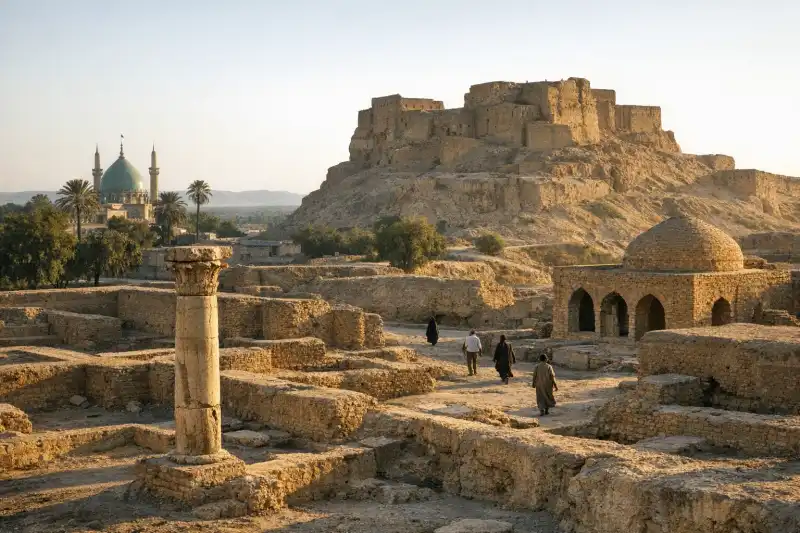
Susa
Elamite, Achaemenid Persian, Seleucid, Parthian, SasanianExplore Susa in Iran, an ancient capital of Elam, Persia, and Parthia with royal ruins, archaeology,...
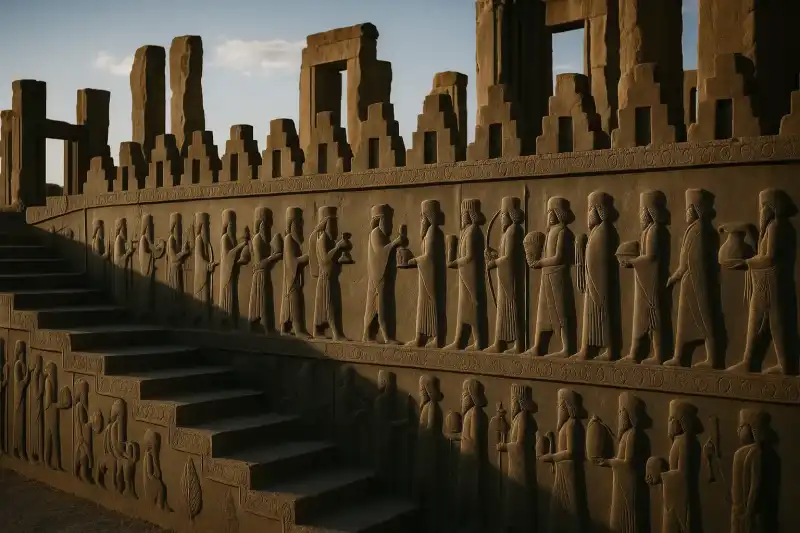
Persepolis: The Glorious Capital of the Persian Empire
Achaemenid Persian EmpireExplore Persepolis, the magnificent ceremonial capital of the Achaemenid Empire. Walk among towering...
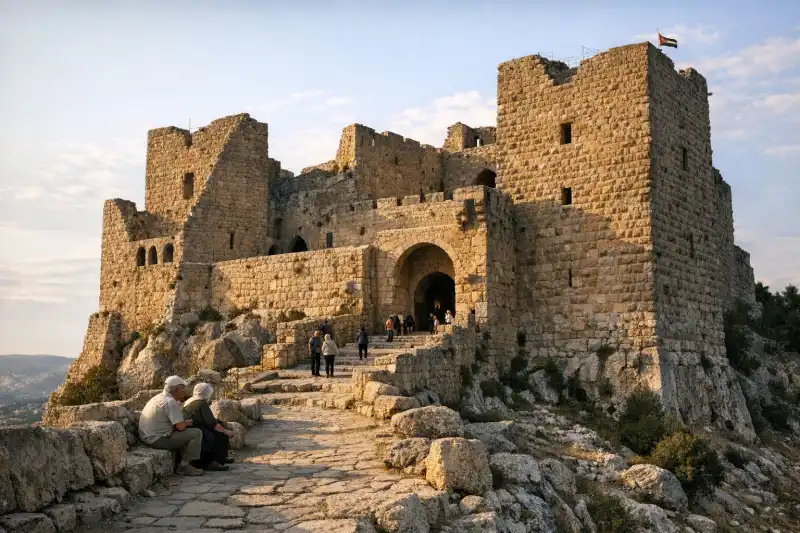
Ajloun Castle
Ajloun Castle in Jordan is a 12th-century Muslim fortress renowned for its strategic hilltop locatio...