
Quick Info
At a glance
Danebury Iron Age Hillfort in the United Kingdom rises from the soft chalk landscape of Hampshire with a quiet authority that is easy to miss from afar and impossible to ignore once you step onto its earthworks. Unlike a stone temple or a ruined palace, Danebury does not overwhelm with towering walls or carved façades. Its power lies in the shape of the land itself: deep ditches, massive banks, and a broad enclosed interior that still communicates planning, labor, defense, and community more than two thousand years after it was first occupied. Standing here, with fields stretching away in every direction and the wind moving over the ramparts, visitors get a vivid sense of how Iron Age people chose commanding positions and transformed them into centers of daily life.
Danebury is one of the most important prehistoric sites in Britain, not simply because it survives so clearly, but because excavations here revolutionized what archaeologists understood about hillforts. For a long time, these enclosures were often imagined as little more than refuges in time of war. Danebury showed something richer and more complex: a place of homes, storage, craft activity, ritual behavior, animal management, and social hierarchy. Today it is both a rewarding landscape for walkers and an essential destination for anyone interested in ancient Britain. A visit is not about admiring a monument from behind barriers. It is about entering an archaeological landscape and reading a story written in banks, pits, gateways, and the contours of the Hampshire downs.
History
Early foundation in the Iron Age
Danebury was established around the 6th century BCE, during the early part of the British Iron Age. The communities of southern Britain were changing in significant ways at this time. Farming was becoming more organized, regional identities were emerging, and some groups began investing enormous effort into enclosed hilltop settlements. Danebury was one of these places, strategically positioned above the surrounding countryside on chalk downland that provided both visibility and access to fertile agricultural land.
The first phase of the hillfort was probably more modest than what visitors see implied in the earthworks today. An initial bank and ditch enclosed the summit, marking out a defended and socially meaningful space. Even in its early form, however, Danebury was clearly more than a simple lookout point. Archaeological finds suggest storage, domestic occupation, and structured use of the interior from an early date. This points to a community that was planning not just for defense, but for continuity, agriculture, and local authority.
Expansion and peak occupation
Over the following centuries, Danebury was enlarged and rebuilt several times. The fortifications became increasingly elaborate, with multiple ramparts in places and a carefully designed entrance system intended to control movement into the enclosure. These changes likely reflect both practical concerns and social display. Massive earthworks sent a message: this was a place of power, coordination, and communal labor.
By the middle and later Iron Age, Danebury had become a major settlement. Excavations directed in the 20th century uncovered evidence for roundhouses, grain storage pits, workshops, and livestock management. Hundreds of pits were dug within the enclosure, many originally used for storing grain in the dry chalk soil. Once abandoned, some were filled with domestic refuse, animal bones, broken pottery, and other materials that now provide archaeologists with an unusually rich picture of life at the site.
The evidence from Danebury changed older assumptions about hillforts. Rather than existing solely as military strongholds, at least some hillforts were thriving centers of everyday life. At Danebury, people lived, worked, stored harvests, herded animals, repaired tools, and participated in social and perhaps ceremonial activities. The fort was part of a wider landscape of fields, trackways, smaller settlements, and related enclosures, showing that it functioned within a carefully managed agricultural world.
Ritual, burial, and social complexity
One of the most striking discoveries at Danebury was the presence of unusual deposits in pits and ditches. Some contained complete or partial animal remains placed in ways that suggest more than simple disposal. There were also human burials and isolated body parts, indicating that the site may have had ritual significance as well as domestic and defensive roles. Such finds remind visitors that Iron Age communities did not divide life neatly into categories like practical, political, and sacred. The hillfort could be all of these at once.
The arrangement of houses and storage areas also hints at social organization within the fort. Danebury was not a random cluster of huts. It was a managed enclosure, and its repeated rebuilding over generations shows long-term continuity. Whether ruled by an elite group, managed collectively, or shaped by a combination of local leaders and communal customs, it stood at the center of a society that was dynamic rather than primitive.
Decline and rediscovery
Danebury appears to have declined in importance toward the end of the Iron Age, particularly as new political and economic patterns developed in southern Britain before and during the Roman period. Some hillforts were abandoned, others reused, and some continued to hold symbolic value after their main period of occupation ended. At Danebury, the major phase of intensive use eventually passed, leaving the earthworks to weather into the landscape.
Its modern significance comes largely from archaeology. The site became internationally famous through extensive excavations led by Barry Cunliffe beginning in the late 1960s. These investigations were among the most influential prehistoric excavations ever undertaken in Britain. Because Danebury was explored so systematically, it became a reference point for interpreting Iron Age sites across the country. Today, even though many structures survive only below ground, the hillfort remains one of the clearest places to understand how prehistoric communities in Britain organized settlement, food storage, defense, and belief.
Key Features
The most immediate feature of Danebury Iron Age Hillfort is its ring of earthworks. Even after centuries of erosion, the ramparts remain impressive. As you approach, the scale becomes clearer: banks rise above deep ditches, and the shape of the enclosure emerges as a deliberate human intervention in the hilltop. Unlike masonry fortresses, which often impress through vertical height, Danebury works horizontally and territorially. It claims the summit, wrapping it in a broad line of defense and identity.
The entrance area is especially important. Hillfort gateways were often the most carefully engineered parts of a site, and Danebury is no exception. The approach was designed to channel movement, making entry more controlled and potentially more defensible. Even in its current earthwork form, this part of the site invites the imagination to reconstruct timber gates, watchful inhabitants, and the practical choreography of people, carts, and livestock moving in and out. For visitors, the gateway helps turn the site from an abstract ring on a map into a lived settlement.
Inside the enclosure, Danebury may at first seem open and empty, but this is where understanding the archaeology enriches the visit. Beneath the grass lay the remains of numerous roundhouses, storage pits, and working areas. The interior was once a busy environment. Grain would have been stored in underground pits, people would have gathered around hearths in circular timber houses, and animals may have been brought within the enclosure at certain times. Because so much was built from earth, timber, and thatch, the visible remains are subtle, but they are no less meaningful. Danebury rewards slow looking. Slight undulations, excavated areas, and the broader geometry of the interior all reveal a place shaped by long occupation.
Another defining feature is the surrounding landscape. Danebury is best appreciated not as an isolated monument, but as part of the Wessex chalk downland environment. From the ramparts, visitors can take in wide views across farmland and rolling ridges. These sightlines matter. In the Iron Age, visibility was strategic, agricultural, and symbolic. The hillfort overlooked land that fed its inhabitants, routes that connected neighboring communities, and a countryside in which status and territory were constantly negotiated. Modern visitors often find that these views create one of the strongest emotional connections with the site. The setting helps explain why this hilltop was chosen in the first place.
Danebury is also notable for what it has contributed to archaeological interpretation. Information panels and guide materials often emphasize the excavations, and this intellectual legacy is part of the site’s character. It is not only an ancient monument but also a landmark in the history of archaeology. Finds from the excavations, now studied and displayed elsewhere, included pottery, iron tools, sling stones, quern stones, animal bones, and evidence of craft production. Knowing this transforms a walk around the hillfort. You are not simply looking at surviving banks; you are standing above one of the richest archives of Iron Age life ever uncovered in Britain.
The site’s atmosphere deserves mention as a feature in its own right. Danebury does not usually feel crowded or over-curated. There is a sense of openness that allows visitors to engage with the monument directly. On a clear day, skylarks, wind, and open fields can make the hillfort feel almost timeless. In mist or rain, the ramparts become more dramatic, and the defensive form of the enclosure stands out strongly against the sky. This changing mood is part of what makes Danebury memorable. It is a place where archaeology and landscape remain closely bound.
Getting There
Danebury Iron Age Hillfort is located in Hampshire, not far from Stockbridge and within reach of Winchester, Andover, and Salisbury. The easiest way to visit is by car. From Winchester, the journey typically takes around 25 to 35 minutes, depending on traffic and your exact route. From Andover, allow about 20 minutes. Parking arrangements can change, so it is worth checking local access guidance before you travel, but roadside or designated visitor parking is usually the most practical option. If you are driving from London, expect roughly 1 hour 45 minutes to 2 hours 30 minutes depending on departure point and conditions.
Public transport is possible, though less direct. The nearest major rail options are Winchester and Andover, both connected to London by regular services. Advance rail fares from London can start around £15 to £30 each way, while flexible tickets may cost more. From either station, a taxi is often the simplest final leg. A taxi from Winchester may cost roughly £25 to £40, and from Andover around £20 to £35, depending on time of day and booking method. Some local bus services serve nearby villages, but schedules can be limited, especially on weekends, so they require planning.
Many visitors combine Danebury with a wider Hampshire day trip. Hiring a car gives the greatest flexibility if you also want to explore Stockbridge, Winchester, or other prehistoric and historic sites in the region. Comfortable walking shoes are essential, as access involves uneven grassy paths and slopes around the earthworks.
When to Visit
Late spring through early autumn is the most convenient time to visit Danebury Iron Age Hillfort. From May to September, longer daylight hours and generally milder weather make it easier to explore the ramparts and appreciate the surrounding views. Summer brings green fields, warm light, and pleasant walking conditions, though exposed hilltops can still be windy. Bring water, sun protection, and a light waterproof layer even on bright days, as weather can shift quickly on the downs.
Spring is especially rewarding if you enjoy landscapes as much as archaeology. Fresh grass, wildflowers in nearby areas, and clearer air after rain can make the setting feel particularly vivid. Autumn is another excellent choice. The site is often quieter, the low-angle light enhances the contours of the banks and ditches, and the agricultural scenery around the hillfort takes on rich tones that suit photography.
Winter visits can be atmospheric and sometimes reveal the earthworks more starkly, especially when vegetation is low. However, mud, wind, and short daylight hours can make the experience less comfortable. The exposed location means that cold weather feels sharper here than in sheltered towns. If visiting in winter, wear sturdy waterproof footwear and check the forecast carefully.
For the best experience at any time of year, aim for a clear morning or late afternoon. The softer light helps the relief of the earthworks stand out, making the structure of the fort easier to read. Danebury is ultimately a landscape monument, so visibility and ground conditions matter as much as temperature.
| Quick Facts | Details |
|---|---|
| Location | Near Stockbridge, Hampshire, England |
| Country | United Kingdom |
| Site Type | Iron Age hillfort |
| Main Period | Middle to Late Iron Age |
| Founded | Around the 6th century BCE |
| Best Known For | Extensive excavations that transformed understanding of Iron Age Britain |
| Key Features | Ramparts, ditches, controlled entrance, settlement interior, panoramic views |
| Typical Visit Length | 1–2 hours |
| Best Season | Late spring to early autumn |
| Access Style | Open-air archaeological landscape with uneven ground |
Danebury Iron Age Hillfort is not a place of monumental ruins in the conventional sense, yet it is one of the most revealing ancient sites in the United Kingdom. Its earthworks, interior space, and commanding landscape preserve the structure of an Iron Age community in a way few locations can match. What makes a visit so compelling is the combination of physical survival and archaeological understanding. You can walk the same perimeter once defended by banks and ditches, stand where houses and granaries once stood, and look across the same Hampshire countryside that sustained generations of prehistoric inhabitants.
For travelers interested in ancient Britain, Danebury offers something unusually complete: not simply a picturesque mound or a famous excavation, but a place where the ideas of settlement, power, farming, ritual, and community all come together. It rewards careful observation, a willingness to imagine timber and thatch where only grass now remains, and an appreciation for how much of the ancient world survives through earth rather than stone. Whether you arrive as an archaeology enthusiast or a curious traveler exploring Hampshire, Danebury leaves a lasting impression precisely because it asks you to read the landscape itself.
Guided tours: worth it?
Most travelers can visit Danebury Iron Age Hillfort independently. Compare a tour only if you want a tighter history-focused visit, easier logistics, or a guide who can answer questions on the spot.
Best for
- Short visits where a planned route saves time
When to go self-guided
Go independently if you prefer setting your own pace, reading as you go, and checking official hours or ticket rules directly before you arrive.
What I’d avoid
Skip paid tours that bundle unrelated stops you do not actually want. The best option should either save meaningful planning time or add historical context you would miss on your own.
Danebury Iron Age Hillfort and Hampshire Countryside Tours
Useful when: you want to compare guided formats before deciding
Winchester Day Tours from London
Useful when: transport or pickup logistics matter
Hampshire Historical Sites Tours
Useful when: you want to compare guided formats before deciding
Some tour links are affiliate links, which may earn Ancient Travel a small commission at no extra cost to you. I try to surface options that make practical sense for the site—not just anything bookable.
Frequently Asked Questions
What is Danebury Iron Age Hillfort?
Danebury is a major Iron Age hillfort in Hampshire, England, known for its well-preserved earthworks and its importance to British archaeology.
Do you need a ticket to visit Danebury Iron Age Hillfort?
The site is generally open access countryside, so visitors can usually enter without a ticket, but it is wise to check current local access information before traveling.
How long should I spend at Danebury Iron Age Hillfort?
Most visitors spend between one and two hours exploring the ramparts, interior earthworks, and surrounding views.
Is Danebury Iron Age Hillfort suitable for families?
Yes, families often enjoy the open space and walking trails, though some slopes and uneven ground may require care with small children.
What is the best way to reach Danebury Iron Age Hillfort?
The easiest way is by car from Winchester, Andover, or Salisbury, though some visitors combine a train journey with a taxi or local bus.
Why is Danebury so important archaeologically?
Extensive excavations revealed houses, storage pits, burials, animal remains, and defensive works that transformed understanding of Iron Age life in Britain.
Nearby Ancient Sites
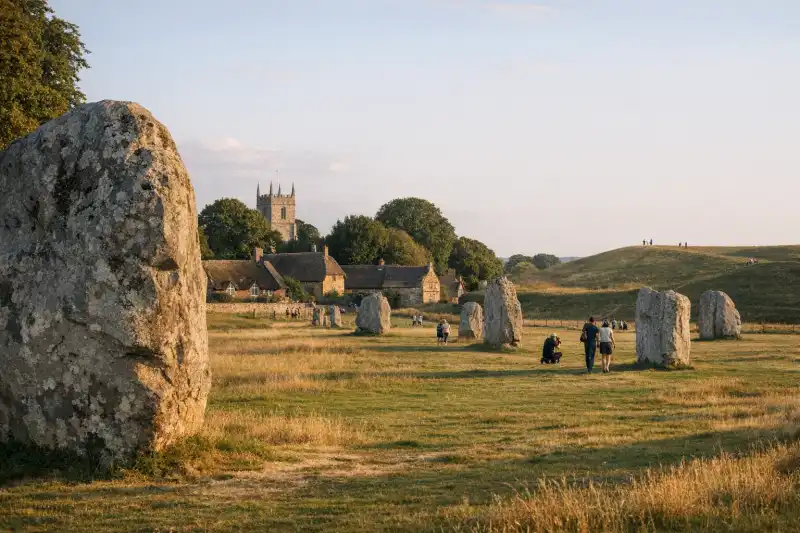
Avebury
Neolithic BritainExplore Avebury in the United Kingdom, a vast prehistoric stone circle and ritual landscape in the h...
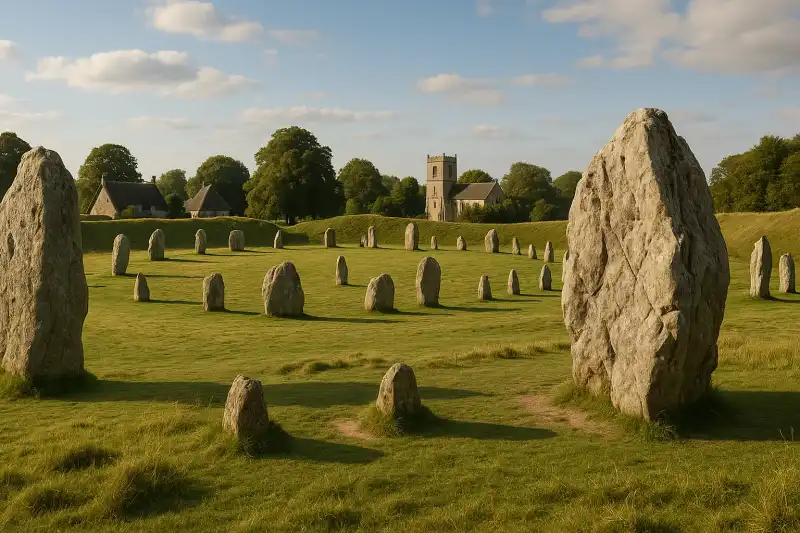
Avebury Stone Circle Travel Guide 2026: Best Walk Routes, History, and Visit Planning
Neolithic BritainPlan a stronger visit to Avebury Stone Circle with practical walking routes, landscape context, and ...
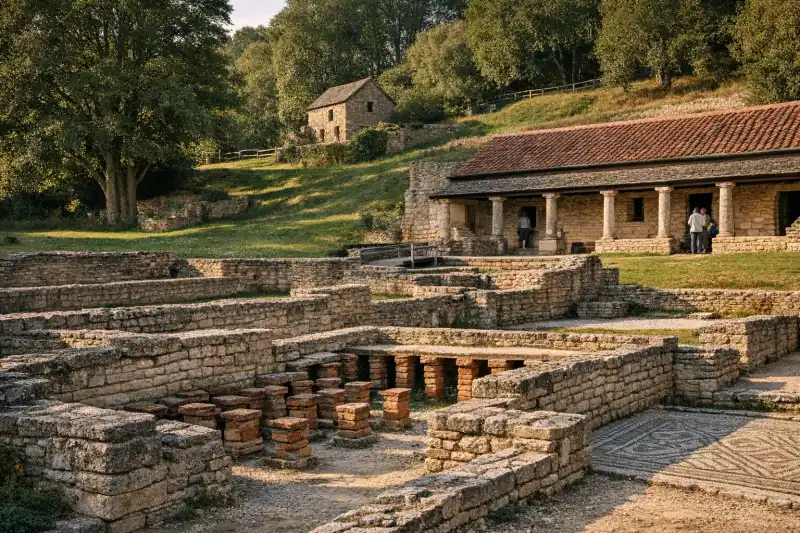
Chedworth Roman Villa
RomanExplore Chedworth Roman Villa, a remarkably preserved Roman countryside estate in the United Kingdom...