Quick Info
Curated Experiences
Dendera and Abydos Day Tour from Luxor
Private Dendera Temple Tour with Egyptologist
Dendera Sunrise Tour from Luxor with Breakfast
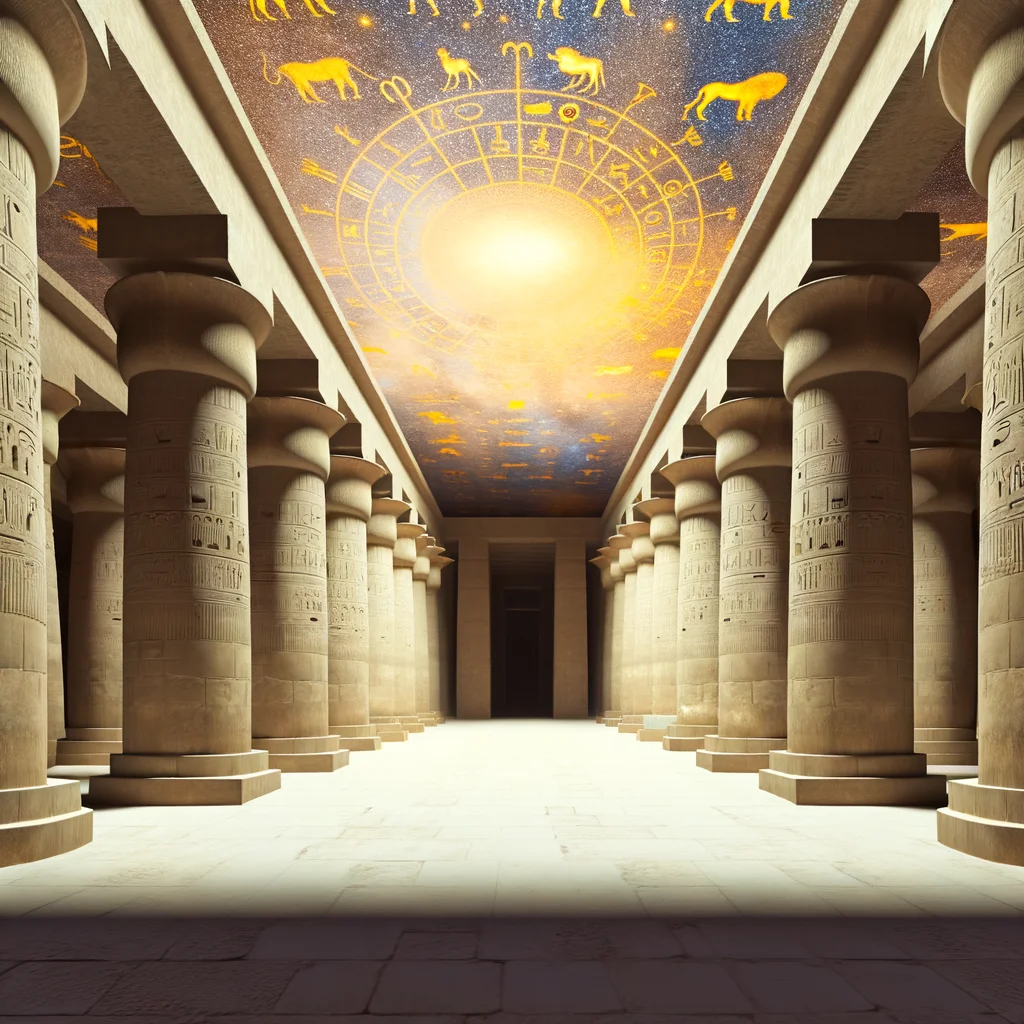
Sixty kilometers north of Luxor, the Temple of Hathor at Dendera rises from the desert with a presence that hasn’t diminished in two millennia. Walk beneath a Ptolemaic portico lined with columns crowned by Hathor-faced capitals—each one a four-faced bovine countenance gazing eternally in four directions. Inside, sunlight streaming through the hypostyle hall illuminates some of ancient Egypt’s most intricate reliefs: hieroglyphic texts cascade across every surface, and scenes of Ptolemaic pharaohs performing ritual acts to the gods cover walls with the precision of a cosmic instruction manual. But the true marvel—the one that draws Egyptologists and astrologers alike—is the zodiac ceiling: a star map carved in stone and pigment, showing constellations that predate the Greek names we still use. At Dendera, you stand at the intersection of astronomy, religion, and royal ambition. This guide covers the Temple of Hathor’s architecture and symbolism, practical logistics from Luxor, seasonal travel tips, and how to combine Dendera with nearby Abydos into a full day of unmatched Nile Valley archaeology.
History: The Temple That Mapped the Heavens
Dynastic Origins (c. 2600 BCE–Ptolemaic Era)
A sacred site dedicated to Hathor, the cow goddess of love, fertility, and music, existed here for millennia. Evidence suggests Old Kingdom structures on the grounds, though they’ve been substantially rebuilt and obscured by later construction. Hathor worship was central to Egyptian theology: she represented motherhood, joy, and the dance of creation. By the New Kingdom, Dendera was an established pilgrimage destination, and royal pharaohs made offerings and built chapels in her honor.
Ptolemaic Reconstruction (305–30 BCE)
The main Temple of Hathor you see today was begun under Ptolemy II Philadelphus (r. 285–246 BCE) and completed under Ptolemy XII (r. 80–51 BCE). This was the golden age of Greek-Egyptian synthesis: Ptolemaic rulers adopted Egyptian regalia and ritual while importing Hellenistic architectural and artistic sensibilities. The hypostyle hall, with its distinctive Hathor-capital columns, is quintessentially Ptolemaic—Egyptian in form but refined with Hellenistic proportion and elegance. The ceiling of the outer hypostyle hall contains the zodiac, a masterpiece of applied astronomy.
Roman Period and Decline (30 BCE–5th century CE)
After Octavian (later Augustus) annexed Egypt, Dendera remained an active cult center. Roman emperors continued to add inscriptions and make donations. By the 4th and 5th centuries CE, as Christianity spread and pagan temples were gradually closed, Dendera’s ritual function diminished, though pilgrims continued to visit. By the medieval period, the temple had been repurposed—parts served as a church, stables, and storage.
Modern Rediscovery and Conservation
Dendera’s decline preserved it: isolated in desert, it escaped the worst urban encroachment. Western Egyptologists and archaeologists documented it intensively from the 18th century onward. Auguste Mariette conducted early excavations in the 1850s. In the 1990s and 2000s, conservation teams meticulously restored the zodiac ceiling and exterior walls, revealing colors and details invisible for centuries. Today, Dendera remains one of Egypt’s most comprehensively intact Ptolemaic temples.
The Key Monuments: What to See at Dendera Temple Complex
The Temple of Hathor: Exterior and Approach
The temple’s façade strikes with immediate authority: six columns of the front pylon (monumental gateway) rise 18 meters, crowned with Hathor capitals so detailed you can distinguish the cow’s eyes and ears. The carved reliefs on the pylon show Ptolemaic pharaohs making offerings to Hathor and other gods. Beyond the pylon lie courtyards and walls decorated with ritual scenes. The scale is monumental yet intimate—not the austere vastness of Karnak, but a space designed for processions and concentrated prayer. Photography from the front courtyard captures the full façade, especially in late afternoon when shadows deepen the relief carving. Walk the perimeter to appreciate the temple’s proportions: the sanctuary grows progressively smaller and more sacred from the public courtyard to the inner sanctum.
The Hypostyle Hall and Zodiac Ceiling
Inside, the hypostyle hall opens into a forest of columns—24 massive supports crowned with the distinctive Hathor capitals (carved bovine faces). The interior gloom is intentional: ancient Egyptians believed the inner temple chambers represented the womb of creation. As your eyes adjust, details emerge: every wall surface bears hieroglyphic inscriptions and ritual imagery. The most famous feature is the ceiling of the outer hypostyle hall: here, in the 1850s, a zodiac map was discovered, showing ancient constellations mapped against a grid. This is one of the oldest known zodiacs, predating the Greek zodiac by centuries and offering astronomers crucial data about ancient Egyptian star knowledge. The zodiac is faded in places but still legible, especially if you bring binoculars. A guide familiar with Egyptian astronomy can explain the symbolic meanings of each constellation and their relationship to Egyptian cosmology. Late morning light through the entrance illuminates the ceiling most effectively.
The Inner Sanctum and Crypts
Deep within the temple, beyond the hypostyle hall, lie the sanctuary and a series of vaulted crypts—underground chambers where precious objects and ritual implements were stored. These crypts are small, dark, and require careful footwork, but they reveal the temple’s engineering complexity: walls are adorned with images of religious treasures, and inscriptions describe rituals performed in secret. The sanctum itself once housed a statue of Hathor, now housed elsewhere. These innermost spaces convey the mystery the ancients cultivated: the temple’s outer areas were public stages for ceremony, while inner chambers were restricted to priests and the elite.
The Mammisi (House of Birth)
Adjacent to the main temple stands the Mammisi, a small chapel dedicated to the birth of the divine child—in Dendera’s theology, the offspring of Hathor and Horus. The Mammisi is decorated with scenes of birth rituals, offerings, and divine protection. This structure demonstrates the Ptolemaic theology that wove Greek and Egyptian traditions: the “house of birth” echoes temple birth-house iconography found elsewhere in Egypt, but with Hellenistic refinements. The interiors are fragile; access is sometimes restricted for conservation, but the exterior reliefs alone reward study.
The Temple of Isis (Eastern Side)
A smaller Ptolemaic temple dedicated to Isis, the mother goddess and widow of Osiris, stands to the east. Though less visited than the main temple, it contains fine reliefs and offers a quieter vantage point for observing the complex’s overall layout. This temple illustrates Dendera’s role as a multi-deity pilgrimage destination: worshippers came not only for Hathor but for a full theological ecosystem.
Getting There: Transportation and Access
Dendera lies 60 kilometers (37 miles) north of Luxor, roughly a 90-minute drive through the Nile Valley. Direct visits from Luxor are straightforward; reaching Dendera from Cairo or Aswan requires more planning. Most independent travelers arrange transport through their hotel; organized tours are the safest and most informative option.
From Luxor
The vast majority of tourists visit Dendera as a day trip from Luxor, either independently or with a tour operator.
- Organized tour: 75–95 EGP ($5–7 USD per person) through your hotel or a street tour operator. Tours typically last 4–6 hours and include entry fee. Many combine Dendera and Abydos (adding 2–3 hours) for a full-day experience.
- Taxi from Luxor: A private taxi round-trip with 2–3 hours of wait time costs 200–300 EGP ($7–10 USD). Negotiate in advance. The drive is straightforward along the main highway.
- Ride-hailing: Uber/Careem operate sporadically in Luxor; fares for Dendera typically run 150–250 EGP ($5–8 USD) each way, depending on demand and exact pickup location.
- Bus: Limited local buses serve Dendera; ask your hotel. Not recommended for first-time visitors without Arabic skills.
From Cairo
Cairo to Dendera requires a longer journey. Options include an internal flight to Luxor (2.5 hours, 50–100 USD) followed by a taxi/tour from Luxor, or an overnight train to Luxor (10–12 hours, 25–60 USD for basic sleeper cabins) plus a day tour.
From Aswan
Aswan to Dendera is approximately 280 km (175 miles) south, a 4–5 hour drive. Most Aswan-based tourists explore temples in the Aswan area first (Philae, Edfu, Kom Ombo) before traveling north to Dendera and Abydos, or they book a multi-day Nile cruise.
Admission and Hours
Entry fee: 300 EGP (~$10 USD) for most foreign tourists. Student rates and local discounts apply. Payment is typically cash (Egyptian pounds) at the gate, though some sites now accept cards.
Hours: 6:00 AM to 5:00 PM year-round. The site closes at sunset.
Best time of day: Arrive by 7:00 or 8:00 AM to beat the heat and crowds. By mid-morning, the sun’s angle illuminates the interior columns and ceilings without excessive glare. Afternoon visits (after 3:00 PM) are cooler but the interior lighting becomes harsh and shadows diminish relief detail.
What to bring: Sunscreen (SPF 50+), a wide-brimmed hat, plenty of water (2+ liters), sturdy walking shoes with good ankle support (the floors are uneven and can be slippery), and a flashlight or phone torch for viewing inner crypts. The site has minimal shade except inside the temple itself.
When to Visit: Seasonal Considerations
Spring (March–May)
Temperatures range from 25–35°C (77–95°F), with low humidity. This is the most comfortable season for archaeological exploration. Mornings are cool and clear; afternoons warm but manageable. Crowds are moderate—international tourism peaks in late spring. Late March and April are ideal; by May, midday temperatures edge toward discomfort.
Summer (June–August)
Summer brings extreme heat: 35–42°C (95–108°F) with occasional sandstorms. Sun exposure causes rapid dehydration, and midday visits become hazardous for visitors unaccustomed to desert heat. Early morning visits (6:00–9:00 AM) are possible, but afternoon exploration is inadvisable. Tourism drops significantly; you’ll have the site to yourself, but the environmental cost is severe. Only experienced desert travelers should visit during summer.
Autumn (September–November)
Temperatures cool from 35°C in September to a comfortable 20–28°C (68–82°F) by November. September and early October can still be hot, but by late October, conditions become ideal. Humidity is low; skies are clear. Autumn is considered the second-best season after spring for Nile Valley visits.
Winter (December–February)
December through February brings cool mornings (10–15°C / 50–59°F) and pleasant afternoons (20–25°C / 68–77°F). Nighttime temperatures can drop below 10°C (50°F). This is peak international tourism season; Dendera is busiest and most crowded. January and February are the busiest months. Tours are plentiful, prices are inflated, and you’ll share the temple with hundreds of daily visitors. However, the weather is unmatched.
Ideal season: October through April, with March and April being the sweet spot—warm but not excessive, fewer crowds than winter, and excellent lighting for photography.
Combining Dendera with the Nile Valley
Dendera rarely stands alone as a full day’s destination; instead, it anchors a northern Luxor excursion. The most rewarding sequence begins by 7:30 AM at Dendera Temple, timing your arrival to beat the heat and crowds. Spend 2.5 to 3 hours exploring the hypostyle hall, zodiac ceiling, and inner crypts, then exit by 10:30 AM as temperatures climb. From Dendera, a 45-minute drive north takes you to Abydos Temple, where the Temple of Seti I awaits. Arrive at Abydos by 11:30 AM and spend 2 to 3 hours on its magnificent reliefs and architecture. By 2:30 PM, head south and stop for a late lunch in a riverside café—try koshari (Egyptian pasta and lentil dish) or grilled fish with bread and fresh salads. This lunch break provides crucial shade and hydration before an afternoon return to Luxor, arriving by 5:00 PM. The entire experience takes 10–12 hours and covers two of Egypt’s finest Ptolemaic temples.
For those with limited time, a half-day morning-only visit to Dendera alone (3.5–4 hours including transport) allows an early return to Luxor by midday, leaving the afternoon free for Luxor Temple or the West Bank’s Valley of the Kings.
Why Dendera Matters
Dendera represents the culmination of three millennia of Egyptian temple building, distilled into a single Ptolemaic masterpiece. It is not the oldest site on the Nile—Dendera lacks the pyramid mystique of Giza or the Old Kingdom majesty of Abu Simbel—but it is among the most intellectually sophisticated. The zodiac ceiling alone has influenced Western astronomy and astrology for two centuries; modern planetariums show variants of this ancient map. To stand before the Hathor columns and gaze upward at a star chart carved by priests who understood precession and celestial mechanics centuries before the printing press is to confront the intellectual power of the ancient world. And aesthetically, Dendera is incomparable: its proportions are harmonious, its reliefs are crisp, its colors (faded but occasionally restored) suggest the vivid appearance it presented to Ptolemaic pilgrims. When you leave Dendera, you carry the image of Hathor’s serene bovine face and the memory of a temple that bridged two civilizations—Egyptian and Greek—in the service of the eternal feminine divine.
Explore More Egypt
- Abydos Temple: Temple of Seti I with exquisite battle reliefs and the famous “King List.”
- Karnak Temple Complex: Egypt’s largest and most complex temple sanctuary, dedicated to Amun.
- Luxor Temple: Grand Theban temple on the East Bank with colossal seated statues.
Plan your complete Egypt archaeological journey with our Egypt Ancient Sites Guide. Discover how to combine multiple Nile Valley temples in a single day.
Quick Facts
| Attribute | Details |
|---|---|
| Location | Qena Governorate, 60 km north of Luxor, Egypt |
| Ancient Name | Iunet (House of Hathor) |
| UNESCO Status | Part of Thebes and its Necropolis (World Heritage Site) |
| Established | c. 2600 BCE sanctuary; Ptolemaic temple 112 BCE–80 BCE |
| Distance from Luxor | 60 km / 90 minutes by road |
| Entry Fee | 300 EGP (~$10 USD) |
| Hours | 6:00 AM–5:00 PM daily |
| Best Time | October–April; March–April ideal |
| Suggested Stay | 3–4 hours for temple; 6–8 hours combined with Abydos |
Frequently Asked Questions
How long should I spend at Dendera Temple?
Plan 3–4 hours for a thorough visit of the main temple and outer structures. The interior requires time to appreciate the detailed reliefs and the zodiac ceiling. Many travelers combine Dendera with nearby Abydos in a full-day tour.
What is the best time to visit Dendera?
October through April offers pleasant temperatures and less intense sun. The zodiac ceiling is best viewed mid-morning when sunlight illuminates the interior without direct glare. Avoid June through August when temperatures exceed 40°C (104°F).
Do I need the Egypt Pass for Dendera?
Dendera is included on many multi-site passes. Individual entry is 300 EGP (~$10 USD) for Egyptian residents and 200 EGP (~$7 USD) for students. Foreign tourists typically pay additional fees; check current rates at the gate.
How do I get to Dendera from Luxor?
Dendera is 60 km north of Luxor (about 90 minutes by road). The most convenient option is a private taxi or hotel-arranged transport (60–80 EGP / $2–3 USD). Most tourists book organized tours that include pickup and return to their hotel.
What will I see at Dendera Temple?
The main attractions include the Temple of Hathor with its famous zodiac ceiling, a Ptolemaic-era structure with exquisitely carved columns, crypts, and chapels. The Temple of Isis and the mammisi (birth house) are also on the complex grounds.
Is Dendera Temple safe for tourists?
Yes, Dendera is a heavily visited archaeological site with standard security. Female travelers should dress respectfully; cover shoulders and knees. Bring sun protection, water, and sturdy shoes. Arrange transport in advance rather than hailing random taxis.
Nearby Ancient Sites
Abydos Temple Egypt Guide 2026: Temple of Seti I & King List
New Kingdom-PtolemaicAbydos Temple near Luxor: magnificent Temple of Seti I with war reliefs, ancient king list, and vibr...
Karnak Temple Complex Egypt Travel Guide 2026: Egypt's Greatest Temple
Ancient EgyptianExplore Karnak, the world's largest ancient religious complex. Discover the Hypostyle Hall, Sacred L...
Luxor Temple Egypt Travel Guide 2026: The Elegant Temple of Luxor
Ancient EgyptianVisit Luxor Temple, the most elegant temple in Egypt. Discover the Avenue of Sphinxes, Colonnade of ...