Quick Info
Curated Experiences
Private Ephesus Miletus Didyma Tour with Lunch
Biblical Ephesus Tour from Kusadasi Port
Private Priene Miletus Didyma Tour from Kusadasi
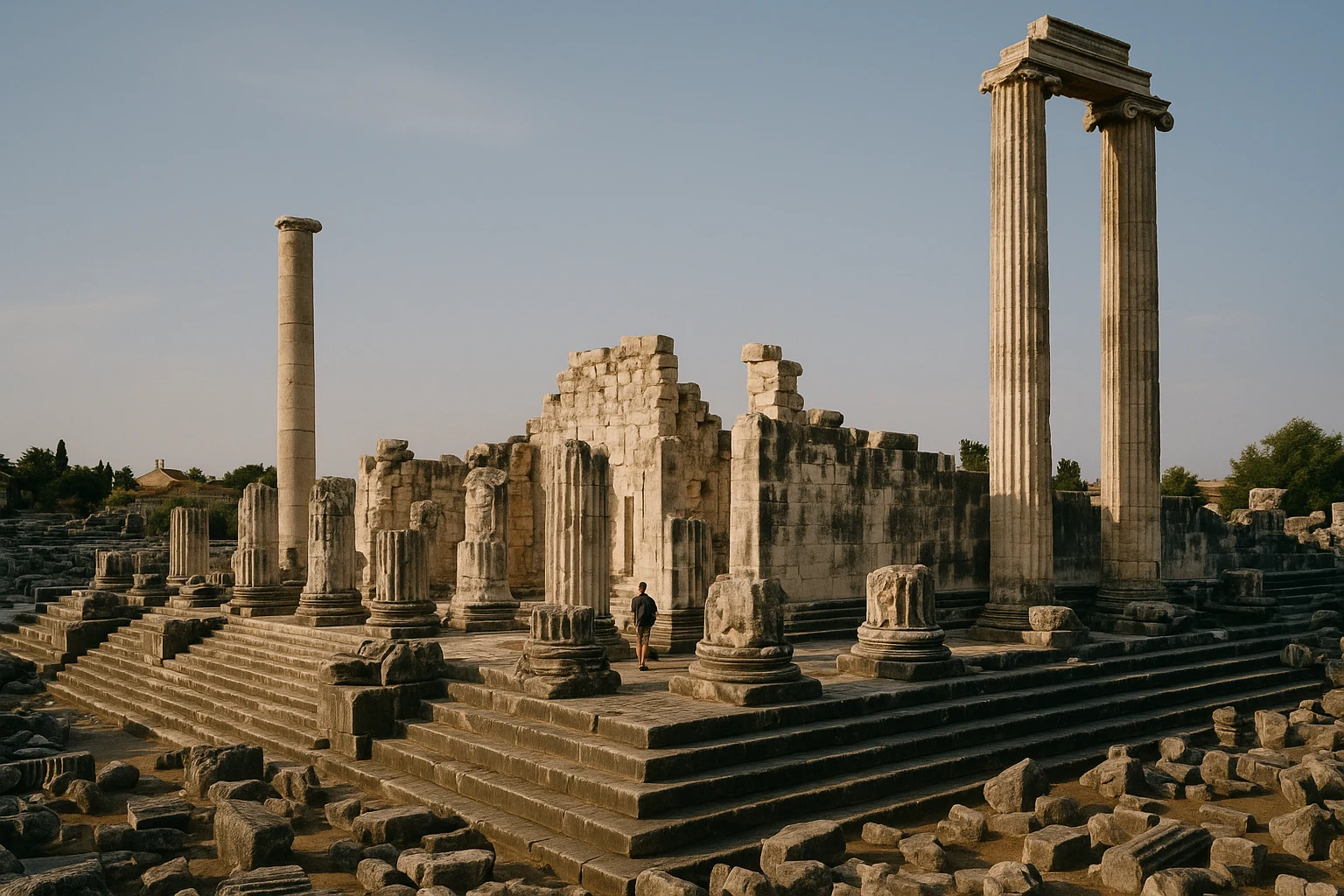
The first thing you notice at Didyma is scale. Not elegant scale, not polished imperial symmetry, but a raw, almost shocking scale that feels slightly out of proportion to human bodies. You stand beside one fallen column drum and realize it rises above your chest. You look up at surviving shafts and understand that the builders were trying to make a god’s house that dwarfed everything around it, including the city that eventually grew beside it. At Didyma, Turkey, the Temple of Apollo does not look like a postcard ruin. It looks like ambition caught in stone, paused mid-breath.
This sanctuary mattered because it was not just decorative religion. It was a working oracle, one of the most respected in the Greek world after Delphi, where rulers, generals, merchants, and ordinary petitioners came to ask questions they could not answer themselves. Wars, colonies, alliances, harvest decisions, civic disputes: all could pass through this sacred place. Today you come for history, architecture, and atmosphere, but what you feel most strongly is purpose. These walls, stairs, and corridors were built to stage revelation. This guide covers the story behind that ritual world, what to see on site, how to get there from Kusadasi or Selcuk, when to visit for the best conditions, and how to combine Didyma with nearby masterpieces like Miletus and Ephesus.
History: Oracle, Empire, and an Unfinished Wonder
Early sacred origins (c. 8th century BCE-6th century BCE)
Long before the colossal Hellenistic temple, Didyma was already a sacred landscape tied to the cult of Apollo and his twin Artemis. Ionian communities in western Anatolia developed sanctuaries that were both religious and political nodes, and Didyma became one of the most important among them. Priestly families, especially the Branchidae, administered the oracle and interpreted divine responses. The site was linked to nearby Miletus through ritual processions and a ceremonial road, making Didyma part of a broader urban-sacred system rather than an isolated shrine. By the Archaic period, visitors from across the Aegean were already traveling here for prophecies.
Persian conquest and rupture (6th century BCE-4th century BCE)
In 494 BCE, after the Ionian Revolt, Persian forces crushed Miletus and the surrounding region, and Didyma’s sanctuary suffered severe disruption. Ancient sources describe the temple as plundered and the priestly order scattered, a historical shock that interrupted regular oracular practice for generations. Even in decline, however, the site retained symbolic power. Sacred places in antiquity could outlast political catastrophe because memory persisted among communities, pilgrims, and elites. Didyma entered a quieter phase, but it was never erased; the prestige of Apollo’s oracle remained available for later rulers to revive and exploit.
Hellenistic rebirth and monumental construction (4th century BCE-1st century BCE)
After Alexander’s campaigns transformed the eastern Mediterranean, Didyma was reactivated on a grand scale. Milesian authorities and Hellenistic patrons initiated the giant new Temple of Apollo, designed in the Ionian order with dimensions that rivaled the largest sanctuaries in the Greek world. The plan was theatrical and unusual: an immense outer colonnade, a monumental stair and passage sequence, and an inner court enclosing the sacred spring and cult focus. Construction advanced in phases across centuries and was never fully completed, but that incompletion is now part of its character. Didyma shows you ancient engineering in process, with drafted blocks, unfinished carvings, and design intent visible in ways fully finished temples often conceal.
Roman patronage and late antique transformation (1st century BCE-Byzantine era)
Under Roman rule, Didyma remained a significant regional sanctuary, though its role evolved as imperial administration and changing religious life reshaped Anatolia. Pilgrimage and local ritual persisted, and the temple precinct continued to attract investment and maintenance. By late antiquity, the spread of Christianity altered the meaning of major pagan sanctuaries across the region, including Didyma, and parts of the complex were adapted, quarried, or reused over time. Yet the core monument survived in extraordinary volume. Modern archaeological work from the 19th century onward has documented inscriptions, architectural fragments, and construction phases that make Didyma one of the best places in Turkey to study the mechanics of monumental temple building across political eras.
The Key Monuments: What to See at Didyma
The Temple of Apollo facade and outer colonnade
The outer envelope of the temple is the image most visitors carry home: colossal columns, some standing and many fallen, arranged around a platform that once announced divine authority from a distance. The intended peristyle count and spacing reveal an architectural program built to impress not only worshippers but rival cities. Even incomplete, the colonnade communicates hierarchy: human visitors at ground scale, priestly processions elevated by stairways, and the unseen god conceptually enthroned beyond. Look closely at the column drums and capitals for tool marks and finishing differences; they reveal that construction teams worked across different periods and priorities. For photography, a low angle near the southeast side in late afternoon gives the strongest contrast and depth.
The monumental stair and ritual approach passages
Didyma’s most distinctive design feature is not a single statue or altar but the choreography of approach. Rather than entering a conventional enclosed cella, visitors moved through controlled transitions that shaped expectation. Broad stair zones, elevated thresholds, and side corridors directed flow, separating public space from restricted ritual areas. This sequence likely amplified the oracle’s authority by making access feel earned and carefully mediated. Standing in these passage areas, you can sense how architecture functioned as liturgy. The sanctuary did not merely host prophecy; it staged prophecy. If you visit with children or first-time archaeology travelers, this is the spot where the site suddenly becomes understandable as a machine for belief.
The inner court (adyton) and sacred spring zone
At the temple’s heart lies the open-air inner court, often described as the adyton, where the oldest sacred elements were preserved within the new monumental shell. Ancient Didyma’s oracle tradition was associated with a spring and cult grove context, and this enclosed court likely maintained continuity with that earlier sacred geography. Unlike the dark interiors modern visitors might expect, this central zone was exposed to the sky, a striking choice that reinforced the site’s layered identity: archaic sacred nucleus wrapped in Hellenistic monumental form. The remaining masonry here is less photogenic than the outer columns but arguably more important for understanding how ritual continuity was engineered across centuries.
Carved Medusa relief and decorative fragments
One of Didyma’s most memorable sculptural survivals is the Medusa head motif carved in high relief, a visual statement of protection and apotropaic force common in Greek sacred architecture. Nearby decorative fragments, moldings, and inscription blocks provide evidence of both artistic refinement and pragmatic reuse. This is where Didyma rewards slow visitors: details emerge in profiles, drill marks, and weathering patterns that quick photo stops miss. If your interest leans toward craftsmanship, spend extra time on relief surfaces and corner transitions. You can often read sequence and workshop behavior directly from the stone.
The broader sanctuary perimeter and modern town interface
Unlike remote hilltop ruins, Didyma sits inside modern Didim, and that juxtaposition is part of the experience. Shops, cafes, and neighborhood streets frame the archaeological zone, reminding you that sacred centers in antiquity were not always isolated from daily life. Walking the perimeter gives you perspective on footprint and orientation, including how the temple was positioned relative to processional movement from Miletus. This outer circuit is also your best chance to appreciate unfinished ambition: planned mass that exceeded practical completion. Didyma is therefore both masterpiece and document, a monument to what ancient cities wanted to build as much as what they actually finished.
Getting There: Transportation and Access
Didyma is easiest as a road trip destination from the Kusadasi-Selcuk coast, and most travelers reach it either by private tour or rental car.
From Kusadasi
Kusadasi is the most common base, especially for cruise passengers and travelers already visiting Ephesus. The road south is straightforward, and a guided route works well if you plan to add Miletus the same day.
- Taxi/private transfer: Around 60-90 minutes each way depending on traffic, typically 2,400-3,600 TRY ($75-115 USD) round trip with waiting time negotiated.
- Guided day tour: Usually 7-9 hours including Miletus and lunch, commonly 2,400-4,200 TRY ($75-135 USD) per person depending on group size and inclusions.
- Rental car: About 75 minutes one way; flexible and efficient for combining multiple sites. Parking near the sanctuary area is generally available.
From Selcuk
Selcuk is ideal for independent archaeology travelers. Reaching Didyma without a car is possible but requires transfers and patience.
- Intercity bus + local connection: Typically 2 to 2.5 hours total depending on transfer timing; around 250-450 TRY ($8-14 USD).
- Taxi/private car: Roughly 90 minutes each way, commonly 2,800-4,000 TRY ($88-125 USD) round trip.
- Rental car: Approximately 1 hour 20 minutes; easiest for pairing with Miletus and nearby coastal stops.
From Bodrum or Didim center
If you are staying on the Bodrum peninsula or in Didim’s beach districts, Didyma can be a half-day site.
- From Didim center by taxi: 10-15 minutes, about 200-350 TRY ($6-11 USD).
- Local minibus (dolmus): Frequent in high season, low-cost option around 25-60 TRY ($1-2 USD), but schedules can thin outside summer.
- From Bodrum by car: About 1.5 to 2 hours, with toll/traffic variability in peak months.
Admission and hours
Entry fees and pass acceptance can adjust by season and ministry updates, so confirm current pricing at the official ticket office on arrival. As a practical benchmark, expect roughly 8-15 EUR equivalent in Turkish lira (about 280-520 TRY, or $9-16 USD) for a standard adult ticket. Museum Pass products are often valid and can deliver strong savings if you are visiting multiple state-run archaeological sites in western Turkey.
Opening windows are usually longest in summer and shorter in winter. A safe planning assumption is an early-morning start and a final entry at least 60-90 minutes before closing. Card payments are increasingly common at major Turkish sites, but carrying some cash remains smart for smaller vendors, parking, or local transit. The best on-site conditions are before 10:30 AM or in the final two hours of afternoon light.
When to Visit: Seasonal Considerations
Spring (March-May)
Spring is the most balanced season for Didyma, with typical daytime temperatures around 16-26°C (61-79°F). Wildflowers can appear in surrounding areas, light is clean for photography, and crowds are moderate outside holiday spikes. Winds are possible but usually manageable. If you want both comfort and good visibility for architectural details, spring is the safest recommendation.
Summer (June-August)
Summer brings strong heat, often 30-37°C (86-99°F) by midday, and minimal shade across exposed stone. Cruise-season traffic from nearby ports can create short crowd surges in late morning. Visit at opening or late afternoon, wear sun protection, and carry more water than you think you need. Summer rewards early risers and punishes slow starts.
Autumn (September-November)
Autumn is excellent, especially September and October, with temperatures generally 20-30°C (68-86°F) easing down as November approaches. Sea humidity can linger early in the season, but crowd pressure drops versus midsummer. For many travelers, this is the ideal blend of warm weather, softer visitor density, and comfortable day-trip logistics across the Aegean sites.
Winter (December-February)
Winter is quieter and often underrated, with typical ranges around 8-16°C (46-61°F). You may encounter rain and occasional wind, but clear winter days can be beautiful for long, uncrowded walks around the sanctuary. If your priority is atmosphere and space rather than beach weather, winter offers a more contemplative Didyma with easier parking, shorter lines, and slower pacing.
Combining Didyma with Miletus and the Aegean Coast
Didyma works best as part of a layered day, not a rushed stop. The classic sequence begins in Miletus by 8:30 AM, when the theater and bath complex are still cool and mostly quiet. After about 90 minutes there, drive south to Didyma and arrive around 10:45 AM before peak sun. Spend the late morning walking the Temple of Apollo perimeter first, then descend toward the inner court when your eyes have adjusted to the site’s scale. By 12:30 PM, break for lunch in Didim, where simple lokanta-style restaurants offer grilled fish, meze, and salads without resort-town pricing.
In the afternoon, you have two strong options. If you want maximum archaeology, head north toward Priene’s hillside remains and finish with panoramic valley views by 5:00 PM. If you prefer a gentler rhythm, stay local and shift to the Aegean coast near Altinkum for a seaside walk and early dinner. Either route turns Didyma from a single monument visit into a full historical arc: urban power at Miletus, prophetic ritual at Didyma, and modern coastal life on top of ancient terrain.
Travelers based in Kusadasi can also combine Ephesus and Didyma in one long day, but it requires discipline. Start Ephesus at opening, depart by late morning, and reach Didyma by mid-afternoon for golden light on the columns. This compressed plan is rewarding if you are short on days, yet most history-focused visitors get more depth by pairing Didyma with Miletus instead. The sites are intellectually linked through religion, politics, and processional culture, so the narrative lands more clearly when experienced together.
Why Didyma Matters
Didyma matters because it preserves a kind of ancient confidence we rarely see intact: the belief that architecture can mediate between human uncertainty and divine order. This was not a palace for kings or a forum for commerce. It was a place designed for questions, for waiting, for interpretation, for the uneasy space between decision and fate. The colossal columns are impressive, yes, but their true power is psychological. They remind you that whole societies invested immense labor in places where answers were never guaranteed.
In modern travel terms, Didyma is also a corrective. It resists checklist tourism. You cannot understand it from one facade photo, and you cannot reduce it to a single civilization or era. Ionian ritual memory, Hellenistic ambition, Roman continuity, late antique change, modern excavation: all are visible in one walk. When the afternoon light stretches across the stone and the crowds thin, Didyma feels less like a ruin and more like an unfinished conversation between belief and engineering. That is exactly why it deserves a full visit, not a quick pass.
Quick Facts
| Attribute | Details |
|---|---|
| Location | Didim, Aydin Province, Turkey |
| Ancient Name | Didyma (Didymaion sanctuary) |
| UNESCO Status | Not independently inscribed; associated with Ionian heritage landscape |
| Established | c. 8th century BCE sanctuary |
| Distance from nearest hub | ~2 km from Didim center (10-15 min by taxi) |
| Entry Fee | Typically ~280-520 TRY ($9-16 USD), check current rates |
| Hours | Seasonal opening; generally morning to early evening |
| Best Time | Spring and autumn; early morning or late afternoon |
| Suggested Stay | 1.5-2 hours (half/full day with Miletus) |
Explore More Turkey
- Ephesus: The best-preserved Roman city in Turkey, anchored by the Library of Celsus and Terrace Houses.
- Pergamon: A dramatic hilltop acropolis with one of antiquity’s steepest theaters and major Hellenistic remains.
- Hierapolis: A Greco-Roman spa city above Pamukkale’s famous travertine terraces.
Plan your wider route with our Turkey Ancient Sites Guide. For regional planning, see our Aegean archaeology itinerary guide.
Frequently Asked Questions
How much time should I plan for Didyma?
Plan 1.5 to 2 hours for the Temple of Apollo itself, including time to walk the perimeter and descend into the inner court area. If you pair Didyma with Miletus and Priene, reserve a full day. Photographers often stay longer in late afternoon for lower-angle light on the columns.
Is Didyma included in a museum pass in Turkey?
Didyma is typically covered by Türkiye's Museum Pass systems valid for state-run archaeological sites, but pass products and validity windows can change seasonally. If you are visiting multiple major sites in western Turkey, a pass is usually better value than single tickets. Check current terms before your trip or at the ticket office.
How do I get from Kusadasi to Didyma without a tour?
The simplest independent route is rental car or taxi, taking roughly 1 hour 15 minutes each way depending on traffic. Public transit is possible via buses toward Didim with a local transfer, but it takes longer and schedules can thin out in the shoulder season. Most travelers choose a guided tour when combining Didyma with Miletus.
What makes Didyma different from Ephesus?
Ephesus is a full ancient city, while Didyma is centered on one of antiquity's greatest oracle sanctuaries: the Temple of Apollo. Didyma feels more monumental and ceremonial, with dramatic unfinished scale and giant column drums. Visiting both gives you city life at Ephesus and sacred ritual space at Didyma.
When is the best time of day to visit Didyma?
Early morning is best for cooler temperatures and quieter conditions, especially from June to September. Late afternoon is excellent for warm light and deep shadow contrast on relief carvings. Midday can be intensely hot because the site has minimal shade.
Is Didyma suitable for visitors with mobility limitations?
Parts of the site are navigable from the upper platform and perimeter paths, but uneven stone surfaces and stairs into lower areas can be challenging. You can still enjoy major views of the temple without descending every section. Supportive footwear and a slower pace make a significant difference.
Nearby Ancient Sites
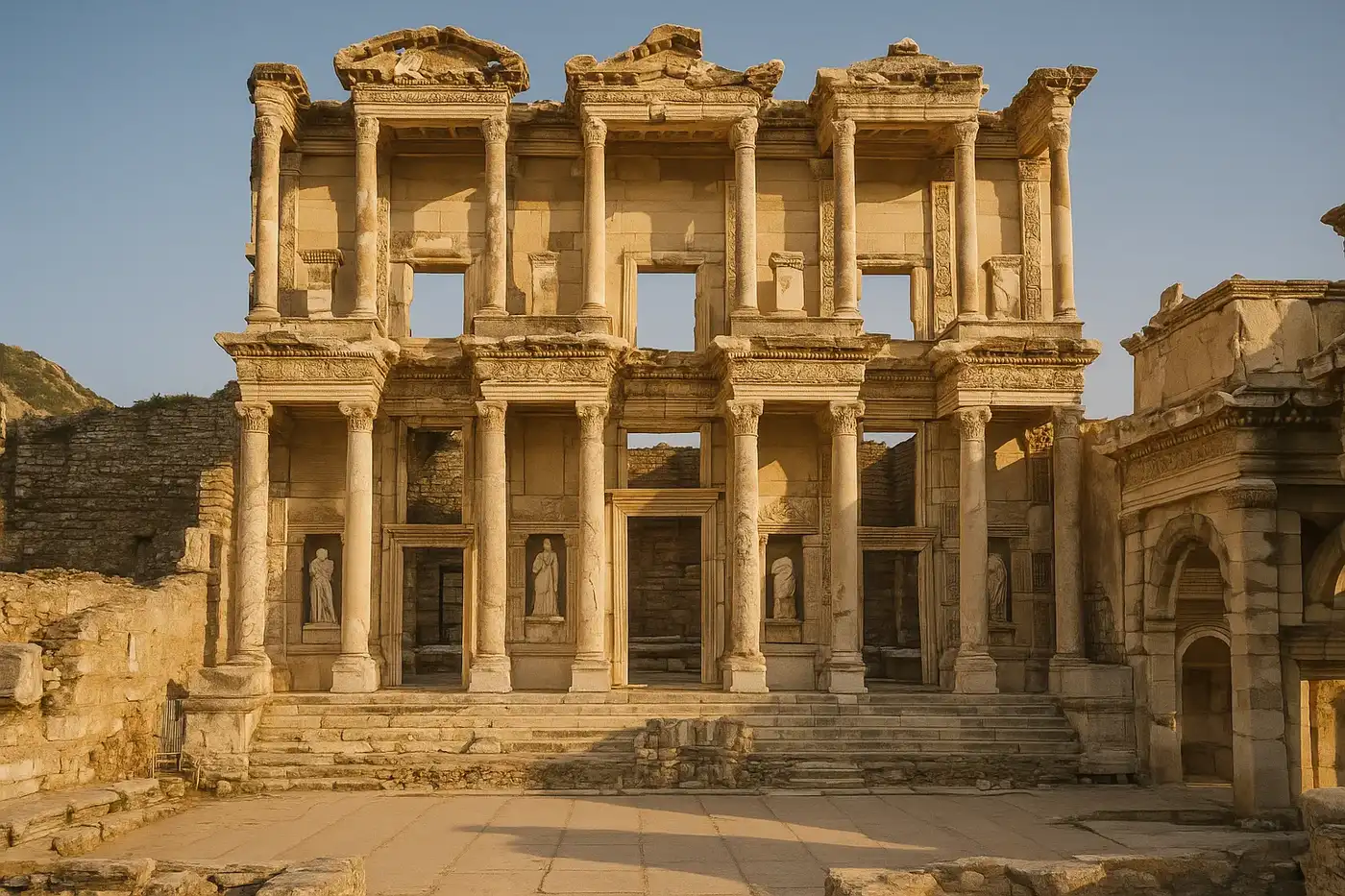
Ephesus Turkey Travel Guide: Library of Celsus & Terrace Houses
Greco-RomanDiscover Ephesus, the best-preserved ancient city in the Mediterranean. Our complete guide covers th...
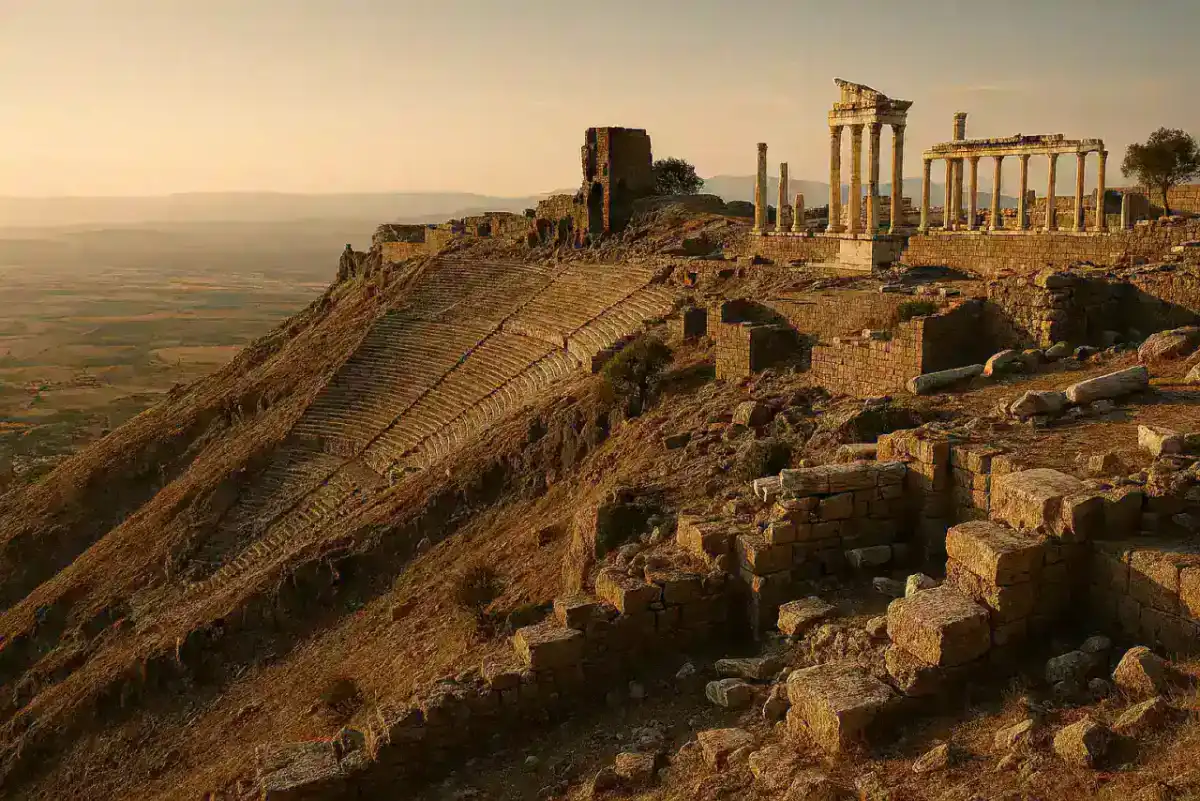
Pergamon Turkey Travel Guide 2026: Acropolis, Altar & Asclepion
Greco-RomanExplore Pergamon's dramatic acropolis, Great Altar, and healing center of Asclepion. Our guide cover...