Quick Info
At a glance
Dodona in Greece feels different from many of the country’s better-known classical sites. Instead of rising above a modern city or clinging to a dramatic island ridge, it rests in the wide, quiet landscape of Epirus, where mountains frame the horizon and the air often carries a sense of remoteness. This was once one of the most revered sanctuaries in the Greek world, a place where pilgrims came to consult Zeus through the whispering of a sacred oak. Long before monumental marble became the standard language of prestige in southern Greece, Dodona was already old, already holy, and already woven into the religious imagination of the ancient Mediterranean.
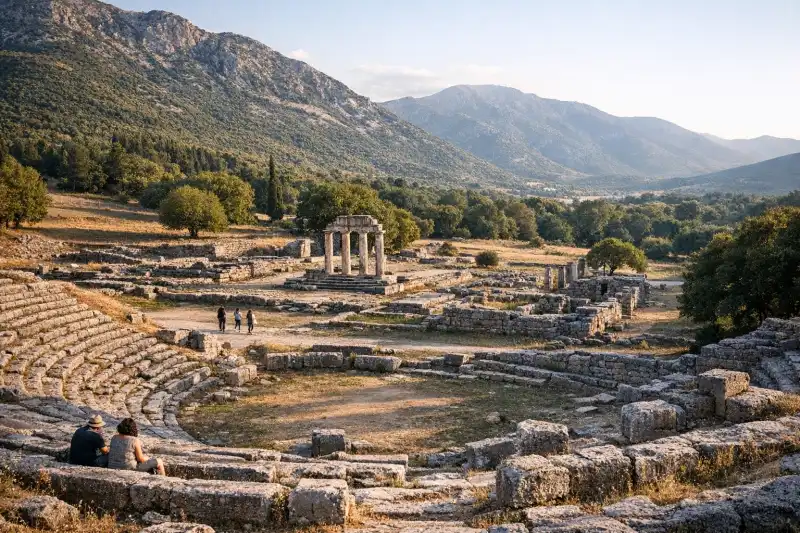
Today, the archaeological site invites visitors to experience a sanctuary that was both deeply spiritual and strikingly physical. The ruins unfold across a broad plain: a theater of impressive scale, traces of temples, stoas, and civic structures, and the sacred heart of the oracle precinct where generations sought divine answers. What makes Dodona memorable is not only what survives in stone, but also the atmosphere around it. The site still feels connected to weather, sound, and landscape in a way that helps explain why this valley became sacred. Visiting Dodona is less about checking off a famous monument and more about understanding how ancient Greeks listened to the natural world and found messages from the gods within it.
History
Early sacred origins
Dodona’s story reaches back into deep antiquity, probably into the second millennium BCE, making it one of the oldest religious centers in Greece. Even before the construction of large temples and theaters, the place seems to have been sacred. Ancient authors connected Dodona especially with Zeus and, in some traditions, with Dione, a female deity whose cult may preserve very old layers of worship. At the center of the sanctuary stood the sacred oak, the natural focus of the oracle. Rather than relying first on a built temple interior, Dodona’s earliest religious identity was rooted in a tree, open sky, and the interpretation of sounds.
The oracle was unusual in the Greek world. While Delphi later became the most famous prophetic center, Dodona retained a more archaic reputation. Priests known as Selloi, and later priestesses, interpreted divine messages from the rustling leaves of the oak, the calls of birds, and perhaps the ringing of bronze vessels set up around the sanctuary. This close link between prophecy and the natural environment gave Dodona an ancient prestige that even classical writers recognized.
Growth in the Archaic and Classical periods
By the Archaic period, Dodona had become a destination for worshippers from across northwestern Greece and beyond. Offerings found at the site show that visitors arrived from many regions, leaving bronze objects, figurines, weapons, and inscribed items. Some of the most fascinating finds are lead tablets on which ordinary people wrote questions to the oracle. These surviving texts reveal concerns both practical and intimate: marriage, property, travel, health, family disputes, and civic decisions. Through them, Dodona appears not as an abstract center of religion, but as a place where real people brought urgent problems.
During the Classical period, the sanctuary expanded. Buildings were added to formalize the sacred precinct, and the cult of Zeus Naios and Dione became more clearly structured. Yet Dodona’s location in Epirus also meant that it developed somewhat outside the political and artistic centers of southern Greece. This relative distance contributed to its distinctive identity. It was a major sanctuary, but one shaped by regional power, frontier exchange, and the traditions of northwestern Greek communities.
Hellenistic monumentalization under Epirus
The greatest transformation of Dodona came in the Hellenistic age, especially under King Pyrrhus of Epirus in the late 4th and early 3rd centuries BCE. Pyrrhus, one of the most ambitious rulers of his era, sought to elevate Epirus on the larger Greek and Mediterranean stage. Dodona benefited directly from this royal attention. The sanctuary was embellished with impressive monuments, and the large theater that dominates the site today dates to this period.
This phase turned Dodona into more than an oracle center. It became a venue for festivals, performances, political display, and regional identity. The Naia festival, held in honor of Zeus, included athletic and dramatic competitions and drew participants from wider Greek networks. Architectural additions such as stoas, temples, and public buildings gave the sanctuary a monumental form suited to Hellenistic statecraft as well as ancient devotion.
Yet prosperity was not uninterrupted. In 219 BCE, the Aetolians attacked and damaged the sanctuary. Reconstruction followed, but the event reminds us that even sacred places were not immune to the rivalries of the Hellenistic world. Dodona endured, however, and remained an important center in Epirus.
Roman rule and later decline
After the Roman conquest of Greece and Epirus, Dodona continued to function, though changing political realities altered its importance. Roman interest in Greek sanctuaries often preserved them to a degree, and the site remained active into the imperial period. The theater was modified by the Romans, who adapted parts of it for arena-style spectacles, changing its original Greek use. This architectural adjustment is one of the clearest signs of how the site evolved under new cultural influences.
Over time, however, the oracle tradition faded. The gradual spread of Christianity, combined with the broader decline of traditional pagan cults in late antiquity, brought an end to Dodona’s religious role. Buildings fell into ruin, the sacred voice of the sanctuary went silent, and the valley slowly surrendered its monuments to time, weather, and earth.
Modern archaeological work has brought Dodona back into historical focus. Excavations revealed the scale of the sanctuary and the richness of its finds, especially the oracle tablets that make the site unusually personal and human. Today, Dodona stands as a record of religious continuity across many centuries, from prehistoric sacred landscape to formal sanctuary, royal showpiece, and finally archaeological treasure.
Key Features
Dodona’s most striking feature is its setting. The sanctuary lies in a broad valley enclosed by mountains, and that landscape is not incidental background. It explains the site’s spiritual logic. This was a place where wind, sound, and open sky mattered. Even a modern visitor can sense why an oracle based on rustling leaves and ambient noise would emerge here. The surrounding terrain gives Dodona a quiet intensity unlike the denser urban remains at many other Greek sites. It feels spacious, elemental, and somehow older than its stone remains.
The great theater is the site’s most visually commanding monument. Built in the Hellenistic period, it is among the largest ancient theaters in Greece. Its vast seating area rises against the slope, creating a dramatic semicircle that still conveys the sanctuary’s prestige. Although time has worn the stone and later modifications changed its use, the theater remains a remarkable expression of royal ambition and communal gathering. Standing in the orchestra and looking up at the tiers, it is easy to imagine the crowds assembled for festivals, performances, and ceremonies linked to the sanctuary’s sacred calendar. The scale alone suggests that Dodona was not a minor local shrine but a center capable of attracting substantial audiences.
Close to the heart of the sanctuary were the sacred precincts associated with Zeus and Dione. Here stood the oracle itself, once organized around the sacred oak. The original tree does not survive, but the significance of that spot still defines the site. Unlike sanctuaries known primarily for colossal temples or lavish sculptural programs, Dodona’s identity depended on a living sacred object. That gives the ruins an unusual character. Even where little rises high above the ground today, the meaning of the place remains powerful. Visitors are often struck by how much imagination the site invites: not fantasy, but historically grounded reconstruction of sound, ritual, and expectation.
Temple remains and subsidiary structures reveal the sanctuary’s layered development. Foundations and low walls outline sacred and administrative spaces, while stoas and other buildings show that Dodona accommodated both ritual activity and the movement of pilgrims. The arrangement of the site suggests a place built for assembly as much as contemplation. Ancient sanctuaries were social centers as well as religious ones, and Dodona offers a clear example of that dual role. It was somewhere to seek divine counsel, but also somewhere to attend festivals, meet others, make offerings, and participate in a larger sacred community.
One of Dodona’s most important but least immediately visible features is the corpus of lead oracle tablets found by archaeologists. Though these are generally encountered through museum interpretation rather than as dramatic on-site monuments, they transform the way visitors understand the ruins. The inscriptions preserve direct questions asked by ancient people, often in simple and urgent language. They make Dodona feel intimate. A sanctuary that might otherwise seem monumental and remote becomes full of individual voices: a person wondering whom to marry, a family asking about inheritance, a community seeking guidance on a civic issue. Few archaeological sites provide such a direct archive of everyday anxiety and hope.
Roman alterations, especially in the theater, add another layer of interest. They show that Dodona was not frozen in a single classical moment but adapted over centuries. This evolution helps visitors appreciate the site as a living institution that changed with political power and cultural taste. The contrast between Greek sacred origins and Roman architectural intervention is subtle but important. It reminds us that ancient sites often had long, complicated afterlives.
Finally, Dodona’s appeal lies in what it does not overwhelm you with. There are no soaring columns on the scale of Athens, no island caldera views, no urban crowds pressing along a famous route. Instead, the site offers clarity, atmosphere, and historical depth. It rewards slower attention. The theater, sanctuary remains, valley setting, and the remembered sacred oak combine to create an experience centered on listening as much as looking. That may be the most fitting legacy of an oracle where meaning once came through the sounds of the natural world.
Getting There
The easiest base for visiting Dodona is Ioannina, the main city of Epirus and the nearest practical transport hub. From central Ioannina, the archaeological site is roughly 20 to 25 kilometers away, and the drive usually takes around 30 to 40 minutes depending on traffic and route. Renting a car is the most convenient option, especially if you plan to explore other parts of Epirus on the same trip. Daily car rental rates in the region often start around €30 to €50 in the lower season and can rise in summer.
Taxis from Ioannina are straightforward and save the trouble of parking or navigation. Expect a one-way fare of roughly €25 to €40, depending on the pickup point, time of day, and local pricing. It is wise to agree on the approximate return arrangement in advance if you are not using a ride-hailing app or pre-booked transfer, since taxis may not always be waiting at the site.
Public transport options can be more limited and seasonal than in larger Greek tourist corridors. Local buses may connect nearby villages or run from Ioannina toward the area, but schedules are not always frequent or convenient for independent travelers. If available, fares are usually inexpensive, often under €5 each way, but services may require extra walking or timetable planning.
Organized excursions from Ioannina can be a practical middle ground. These often combine Dodona with city sightseeing or nearby natural attractions and may cost roughly €40 to €90 per person, depending on group size and inclusions. If you value flexibility and want time to move at your own pace, driving remains the best choice.
When to Visit
Spring and autumn are generally the best times to visit Dodona. From April to early June, the valley is greener, temperatures are usually comfortable, and the site feels especially alive in the changing light and fresh air of Epirus. September and October are similarly pleasant, with warm days, fewer crowds, and softer colors across the landscape. These shoulder seasons are ideal for travelers who want to spend time walking the ruins without intense midday heat.
Summer is entirely possible, but it requires planning. In July and August, temperatures can climb high, and the site offers limited shade across many exposed areas. If you visit in peak summer, arrive early in the morning or later in the afternoon, carry plenty of water, and wear a hat and sun protection. The open valley can feel bright and dry, especially around noon. On the positive side, longer daylight hours make it easy to combine Dodona with Ioannina or other stops in Epirus.
Winter visits can be rewarding for travelers who enjoy quieter archaeological sites and dramatic weather, but conditions are more variable. Epirus is greener and wetter than many parts of Greece, and rain, wind, and lower temperatures may affect comfort. The mountains around Dodona can make the atmosphere feel stark and beautiful, though less suited to a leisurely outdoor visit. Always check opening hours in advance, as seasonal schedules may change.
If your main interest is photography, spring and autumn usually offer the best balance of visibility, color, and softer light. If your priority is solitude, winter weekdays can be memorable. For most visitors, however, late spring and early autumn provide the most enjoyable overall experience.
| Quick Facts | Details |
|---|---|
| Site | Dodona |
| Country | Greece |
| Region | Epirus |
| Nearest city | Ioannina |
| Ancient significance | Major oracle sanctuary of Zeus |
| Associated deities | Zeus and Dione |
| Earliest origins | 2nd millennium BCE |
| Main monument | Large Hellenistic theater |
| Best visit length | 1.5 to 3 hours |
| Best seasons | Spring and autumn |
| Access | Best by car or taxi from Ioannina |
| Ideal for | History lovers, archaeology travelers, classical Greece itineraries |
Guided tours: worth it?
Most travelers can visit Dodona independently. Compare a tour only if you want a tighter history-focused visit, easier logistics, or a guide who can answer questions on the spot.
Best for
- Short visits where a planned route saves time
When to go self-guided
Go independently if you prefer setting your own pace, reading as you go, and checking official hours or ticket rules directly before you arrive.
What I’d avoid
Skip paid tours that bundle unrelated stops you do not actually want. The best option should either save meaningful planning time or add historical context you would miss on your own.
Epirus and Dodona day tours
Useful when: you want to compare guided formats before deciding
Ioannina and Dodona tours
Useful when: you want to compare guided formats before deciding
Ancient sites in northwestern Greece
Useful when: you want to compare guided formats before deciding
Some tour links are affiliate links, which may earn Ancient Travel a small commission at no extra cost to you. I try to surface options that make practical sense for the site—not just anything bookable.
Frequently Asked Questions
What is Dodona famous for?
Dodona is famous as one of the oldest Greek oracles, where priests and priestesses interpreted the will of Zeus from the sounds of a sacred oak and bronze objects in the sanctuary.
Where is Dodona located?
Dodona is in the region of Epirus in northwestern Greece, southwest of Ioannina in a broad valley ringed by mountains.
How much time do you need at Dodona?
Most visitors spend 1.5 to 3 hours exploring the archaeological park, theater, sanctuary, and small museum displays at a comfortable pace.
Can you visit Dodona on a day trip from Ioannina?
Yes. Dodona is an easy day trip from Ioannina by car, taxi, or organized excursion, and the journey usually takes around 30 to 40 minutes each way.
What should you wear to visit Dodona?
Wear comfortable walking shoes, sun protection, and water-friendly clothing for summer heat, as the site is open-air with uneven ancient stone paths.
Is Dodona suitable for families?
Yes, families can enjoy Dodona, especially the large theater and open landscape, though parents should watch children on steps, rocky surfaces, and exposed areas.
Nearby Ancient Sites
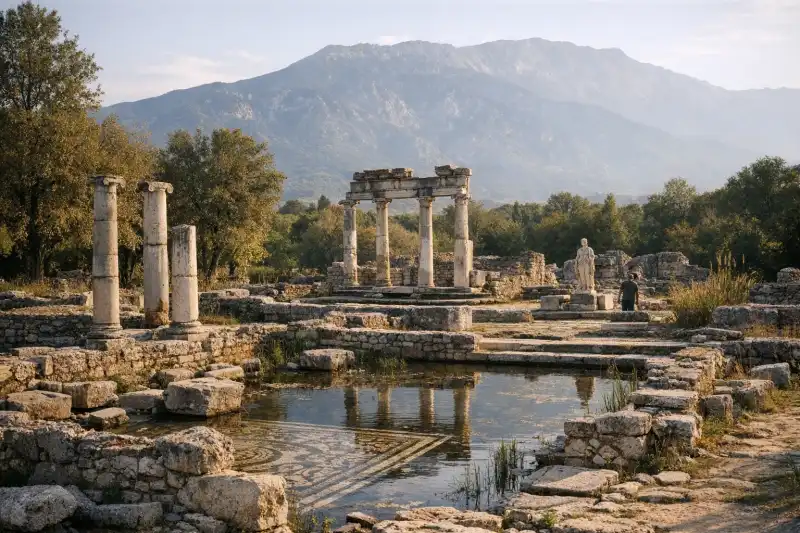
Ancient Dion
Macedonian, Hellenistic Greek, and RomanExplore Ancient Dion in Greece, a sacred Macedonian city at Mount Olympus with temples, theaters, ba...
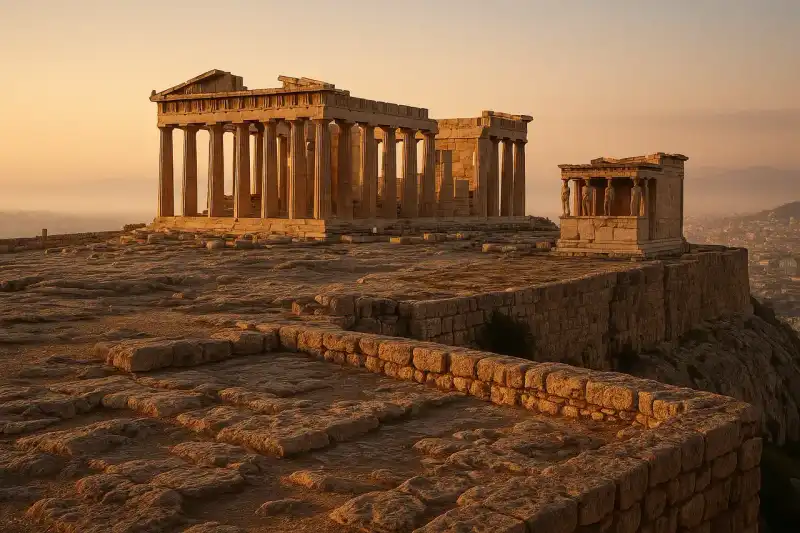
Acropolis Travel Guide 2026: Parthenon, Tickets, and Best Time
Ancient GreecePlan an efficient Acropolis visit with practical ticket timing, key monuments, and museum pairing ti...
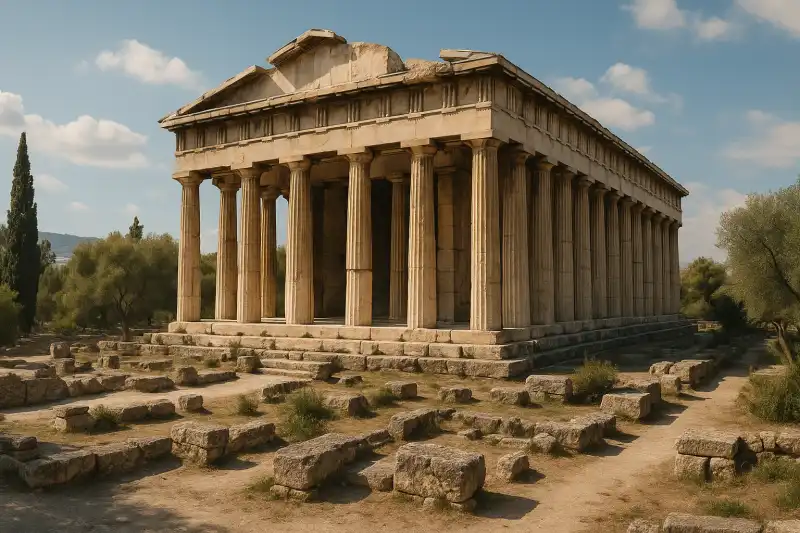
Ancient Agora of Athens Travel Guide 2026: Route, Tickets, and Context
Classical GreekPlan a better Ancient Agora visit with practical timing, monument priorities, and clear historical c...