Quick Info
At a glance
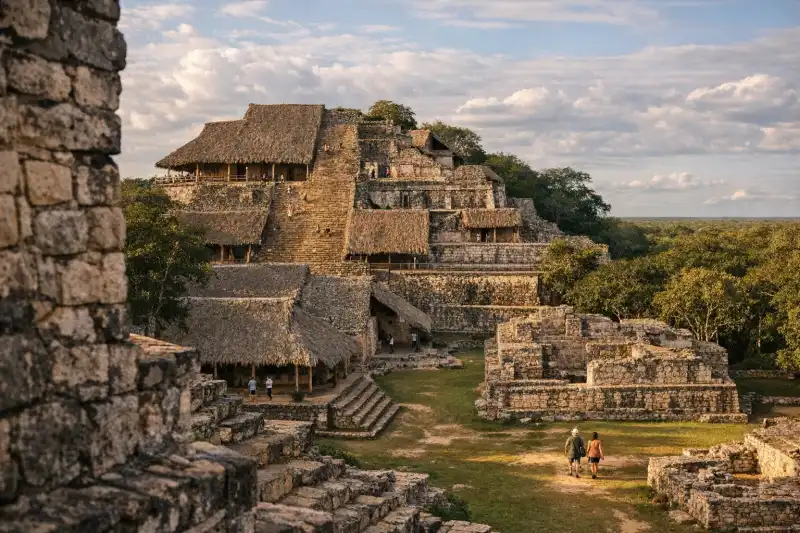
Ek Balam in Mexico feels different from the better-known Maya sites of the Yucatán Peninsula. The approach is quieter, the surrounding forest closer, and the first sight of the great acropolis arrives with a sense of discovery that larger, busier destinations sometimes lose. Rather than being overwhelmed by crowds or long lines, many visitors arrive to find birds calling from the trees, low stone platforms emerging from the greenery, and broad plazas that still hold the solemn geometry of an ancient city. The name Ek Balam is commonly translated as “Black Jaguar,” and it suits the place: impressive, elusive, and powerful without needing spectacle.
Located not far from Valladolid in the Mexican state of Yucatán, Ek Balam was once a regional capital with strong political and ceremonial importance. Today it is one of the most rewarding archaeological visits in southeastern Mexico, especially for travelers who want to understand Maya urban planning beyond the headline landmarks. Its architecture combines monumental scale with unusually rich decorative detail, including stucco façades, carved serpents, winged figures, and a royal tomb that transformed archaeologists’ understanding of the site. Even for travelers already familiar with Maya history, Ek Balam offers something distinctive: a city that feels at once accessible and still partly hidden, where the surviving buildings reveal both military planning and artistic ambition in equal measure.
History
Early settlement and growth
The area around Ek Balam appears to have been occupied from at least the Late Preclassic period, roughly around 300 BCE, when many Maya communities across the northern lowlands were developing into more organized political centers. Like other settlements in the Yucatán Peninsula, its early growth depended on access to arable land, local water sources, and trade routes connecting inland communities. Over time, small-scale habitation developed into a more formal city with ceremonial buildings, elevated platforms, and planned public spaces.
Archaeological evidence suggests that Ek Balam gained importance gradually rather than through a sudden burst of expansion. This pattern is typical of many Maya centers, where centuries of local construction and dynastic consolidation produced large civic-ceremonial cores. By the Classic period, Ek Balam had become a significant regional capital, with enough authority to commission large architecture and maintain fortified boundaries. Its political reach likely extended over surrounding communities, and its rulers used monumental construction to display legitimacy, power, and sacred status.
The Classic period kingdom
Ek Balam reached its peak during the Late Classic period, especially between the 7th and 10th centuries CE. This was the era in which its most imposing buildings were raised or enlarged, including the great acropolis that dominates the site today. Inscriptions and archaeological discoveries indicate that Ek Balam was ruled by a local dynasty, and one of the best-known rulers was Ukit Kan Le’k Tok’, whose tomb was found within Structure 1, the acropolis.
This period was one of dynamic political competition throughout the Maya world. In the southern lowlands, famous cities such as Tikal, Calakmul, and Palenque were engaged in shifting alliances and rivalries, while the northern Yucatán saw the development of powerful urban centers with their own distinctive architectural styles. Ek Balam occupied a strategic position within this northern landscape. It was neither the largest nor the most expansive city of the region, but it was clearly wealthy enough to sponsor ambitious architecture and preserve a courtly culture centered on kingship, ritual, and elite burial.
The discovery of Ukit Kan Le’k Tok’s tomb gave the site exceptional archaeological importance. The burial chamber, enclosed within the acropolis, contained offerings and richly symbolic decoration. The façade associated with this funerary complex is one of the most remarkable in the Maya world: a monstrous open jaw forming the entrance, surrounded by stucco imagery that may have represented the threshold between earthly and supernatural realms. Such iconography reflects a central Maya idea that rulers acted as mediators between worlds, and that funerary monuments were not merely tombs but active sacred spaces.
Fortification, ceremony, and urban identity
One striking feature of Ek Balam is its system of defensive walls. While many Maya sites include boundary features, Ek Balam’s walls suggest that security and controlled access were important parts of its urban design. These barriers may have marked social divisions as well as defensive lines, regulating movement between sacred, elite, and residential spaces. Their presence hints at a city conscious of political instability or competition.
At the same time, Ek Balam was deeply ceremonial. Its ballcourt, plazas, processional routes, and elevated temples indicate a city built not only for administration and defense but also for public ritual. Ancient Maya cities were theaters of sacred authority. Festivals, offerings, political announcements, and dynastic ceremonies unfolded in spaces carefully shaped to impress and instruct. The size and arrangement of Ek Balam’s central precinct show how architecture itself became a language of order.
Decline and rediscovery
Like many Maya cities in the northern lowlands, Ek Balam did not disappear all at once. Its influence declined after the Late Classic and into the Terminal Classic and early Postclassic periods, when broader regional patterns were changing. Some centers in the Yucatán rose in prominence while others lost political weight. Trade networks shifted, dynasties weakened, and populations moved or reorganized. Ek Balam seems to have continued in some form, but eventually its major ceremonial and political role faded.
Over the centuries, tropical vegetation covered much of the ancient city. Local memory preserved knowledge of the ruins, but large-scale scholarly investigation came much later. Modern archaeological work, especially in the late 20th and early 21st centuries, revealed the extraordinary preservation of the acropolis and its sculpted stucco program. Conservation efforts have since made Ek Balam one of the most important sites in the region for understanding northern Maya kingship, funerary ritual, and urban planning. Today, it stands as both a major historical monument and a reminder that many of the Yucatán’s most significant ancient places remain less famous than they deserve.
Key Features
The heart of Ek Balam is the acropolis, often called Structure 1, and it is the reason many travelers leave the site so impressed. Rising above the surrounding plaza, this enormous building combines the mass of a pyramid with the complexity of a palace-temple compound. It stretches horizontally as well as vertically, creating an effect very different from the single, sharply defined pyramids that dominate the image of other Maya sites. The acropolis was not a simple monument but a layered ceremonial and residential complex, expanded over time and packed with symbolic meaning. Even from a distance, its size suggests political ambition; close up, the sculptural details reveal astonishing craftsmanship.
What makes the acropolis especially significant is the funerary chamber associated with Ukit Kan Le’k Tok’. The entrance, framed as the jaws of a supernatural creature, is one of the most memorable survivals in Maya art. Visitors often notice first the dramatic theatricality of the design: to enter is to pass symbolically into another realm. Around it are stucco figures, serpentine forms, and decorative bands that once would have been brightly painted. Although erosion and time have softened some details, enough remains to convey the originality of the composition. This is one of the rare places where a traveler can appreciate how Maya architecture fused sculpture, religion, and royal propaganda into a single façade.
The main plaza offers a broader sense of the city’s planning. Here, low and medium-height structures define open ceremonial space, and the dimensions of the plaza hint at gatherings that once involved both elites and commoners. Maya plazas were not empty voids; they were civic stages. At Ek Balam, the spaciousness of the central area helps visitors imagine processions, dances, announcements, and ritual performances unfolding beneath towering temples. The plaza also provides the best visual approach to the acropolis, allowing its mass to dominate the urban composition exactly as intended by its builders.
The ballcourt is another key element of the site. Ballcourts across the Maya world were more than sports arenas. The ballgame had strong ritual and political meanings, symbolizing cosmic struggle, fertility, and elite competition. At Ek Balam, the ballcourt contributes to the sense that this was a fully developed regional capital, with the ceremonial features expected of an important Maya city. Even when less ornamented than the acropolis, such spaces are vital for understanding how public life was organized.
Ek Balam’s defensive walls set it apart from many sites that casual visitors know better. These walls are reminders that ancient cities were not simply ceremonial centers in peaceful isolation. They could also be contested places requiring controlled access and strategic planning. Walking through the site, the relationship between walls, gateways, and interior monuments gives a sense of a city designed with both symbolism and security in mind. This adds a layer of realism to the visit: the ancient Maya world was deeply intellectual and artistic, but it was also political, competitive, and sometimes dangerous.
Smaller structures and outlying groups reward slower exploration. Some visitors focus only on the largest pyramid, but the lesser buildings help complete the story. Platforms, altars, and secondary temples show how the city extended beyond one monumental centerpiece. The sacbé-like alignments and the spatial logic of the complex reveal a planned urban environment rather than a random collection of ruins. In the surrounding vegetation, birds, insects, and filtered light create an atmosphere that intensifies the sense of entering an ancient landscape rather than an isolated monument field.
Just outside the archaeological zone, many travelers also visit the nearby cenote complex. While not part of the ancient architecture itself, the cenote experience helps contextualize the environment in which Maya settlements flourished. Water management was a defining issue in the Yucatán, and natural sinkholes were essential resources as well as places of ritual significance. Pairing Ek Balam with a cenote visit creates a fuller understanding of why cities rose where they did and how sacred geography shaped everyday life.
Getting There
Ek Balam is most commonly reached from Valladolid, which lies about 30 kilometers away. By car, the journey usually takes 25 to 35 minutes on local roads, making it an easy half-day or full-day excursion. Renting a car is often the most convenient option for independent travelers, especially if you want to combine the site with cenotes or other stops in eastern Yucatán. Fuel and parking costs are generally modest, and parking near the site is usually inexpensive, often around MXN 50 to 100 depending on the current local setup.
Taxis from Valladolid are straightforward and popular. A one-way fare commonly falls in the range of MXN 300 to 500, though prices can vary by season, time of day, and whether the driver waits for the return trip. Negotiating a round-trip fare in advance is often the best value; many travelers pay roughly MXN 700 to 1,000 for transport plus waiting time.
Shared transport options can be more limited than at major destinations such as Chichén Itzá, but colectivos or local vans sometimes operate toward nearby communities. If available, these are the cheapest option, often under MXN 100 per person each way, though schedules may be irregular. Because services can change, ask locally in Valladolid the day before travel.
Guided tours from Valladolid, Mérida, Cancún, or the Riviera Maya are widely sold online and through hotels. These are more expensive but often include hotel pickup, site entry logistics, and combination stops such as cenotes or Chichén Itzá. Day tours from the coast can range from about MXN 1,800 to 3,500 or more per person depending on distance and inclusions. For most travelers, Valladolid remains the easiest base for a flexible and affordable visit.
When to Visit
The best time to visit Ek Balam is generally during the dry season, from November through April, when skies are clearer, humidity is lower, and walking the exposed plazas is more comfortable. This is also the most popular travel period in Yucatán, but Ek Balam usually feels less crowded than the peninsula’s headline sites. Arriving early in the morning is especially rewarding. Temperatures are cooler, the light is softer for photography, and the site has a quieter atmosphere that suits its more contemplative character.
From May through October, heat and humidity rise significantly, with the wettest months usually falling between June and October. Afternoon rain showers are common, and while they can be brief, they may complicate transport and make paths slick. Still, this season has advantages: vegetation is greener, visitor numbers are often lower, and mornings can remain very pleasant if you start early. Bring extra water and expect stronger sun even on partly cloudy days.
If you are deciding between weekdays and weekends, weekdays are usually calmer, particularly outside school holiday periods. Mexican holidays, Christmas week, Easter, and major vacation periods can increase domestic tourism, so plan accordingly if you prefer a quieter experience. The middle of the day can be intense year-round because much of the site is exposed. For that reason, a visit between opening time and late morning is usually the smartest choice.
Travelers combining Ek Balam with cenotes often prefer the warmer months, when a swim afterward feels especially refreshing. In cooler winter mornings, the ruins may be ideal first, with a cenote stop later once temperatures rise. Whatever the season, hat, sunscreen, and water are essential, and insect repellent is wise if you linger near vegetation or visit after rain.
| Quick Facts | Details |
|---|---|
| Location | Yucatán, Mexico |
| Nearest city | Valladolid |
| Civilization | Maya |
| Main period | Late Classic prominence, with earlier origins |
| Founded | Around 300 BCE |
| Best known for | Acropolis, stucco façade, royal tomb, defensive walls |
| Typical visit length | 2 to 3 hours |
| Best time of day | Early morning |
| Good combined excursion | Nearby cenotes and Valladolid |
| Access style | Easiest by car, taxi, or guided tour |
Ek Balam rewards travelers who want something more intimate than a checklist monument and more revealing than a quick photo stop. Its scale is impressive, but its greatest strength lies in how much of the ancient city’s character still feels legible. You can see the political ambition in the acropolis, the ritual life in the plaza and ballcourt, and the lived reality of uncertainty in the fortifications. The decorative stucco work, especially around the royal tomb, adds a rare layer of artistry that transforms the site from merely monumental to unforgettable.
For visitors exploring the Yucatán Peninsula, Ek Balam is not simply an alternative to larger ruins; it is one of the most compelling Maya experiences in its own right. It offers history without excessive distance, grandeur without overwhelming crowds, and a landscape that still feels connected to the old city beneath it. Whether you arrive from Valladolid for a morning visit or include it in a broader archaeological itinerary, Ek Balam leaves the impression of a place still emerging from the forest and from history at the same time.
Guided tours: worth it?
Self-guided works here, but a guide can add real value if you want the ruins explained as a living place rather than just a sequence of monuments.
Best for
- First-time visitors who want context, not just photos
- Trips where tickets, circuits, or timed entry can shape the day
- Short visits where a planned route saves time
When to go self-guided
Go independently if you prefer setting your own pace, reading as you go, and checking official hours or ticket rules directly before you arrive.
What I’d avoid
Skip paid tours that bundle unrelated stops you do not actually want. The best option should either save meaningful planning time or add historical context you would miss on your own.
Ek Balam tours
Useful when: you want to compare guided formats before deciding
Ek Balam and Cenote tours
Useful when: you want to compare guided formats before deciding
Valladolid to Ek Balam tours
Useful when: you want to compare guided formats before deciding
Some tour links are affiliate links, which may earn Ancient Travel a small commission at no extra cost to you. I try to surface options that make practical sense for the site—not just anything bookable.
Frequently Asked Questions
Where is Ek Balam located?
Ek Balam is in the state of Yucatán in Mexico, north of Valladolid and within easy reach of popular destinations on the Yucatán Peninsula.
What is Ek Balam famous for?
Ek Balam is best known for its large acropolis, detailed stucco sculptures, defensive walls, and the tomb of the ruler Ukit Kan Le'k Tok', one of the most impressive discoveries in the Maya region.
Can you climb the pyramid at Ek Balam?
Access rules can change, but climbing is often restricted or more limited than in earlier years to help preserve the structures, so check current site regulations before visiting.
How much time do you need at Ek Balam?
Most visitors spend 2 to 3 hours exploring the main plaza, acropolis, ballcourt, and surrounding structures, though history enthusiasts may want longer.
Is Ek Balam worth visiting instead of Chichen Itza?
Many travelers find Ek Balam worth visiting for its quieter atmosphere, strong preservation, and closer views of Maya architecture, though Chichen Itza remains larger and more famous.
What should you bring to Ek Balam?
Bring water, sun protection, insect repellent, sturdy shoes, and cash for tickets, parking, bicycles, or local services, especially in warm weather.
Nearby Ancient Sites
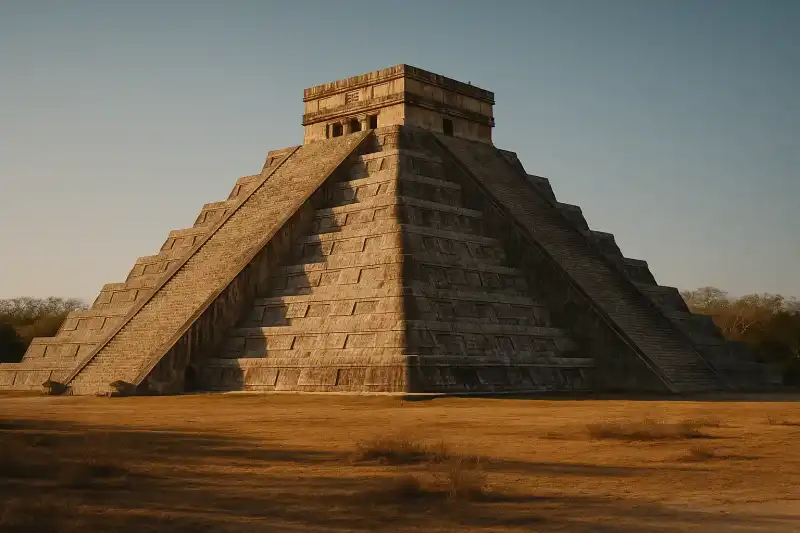
Chichen Itza Travel Guide 2026: Maya Secrets, Sacred Cenote, and Smart Timing
MayaChichen Itza stands as the most visited ancient site in Mexico, showcasing the architectural genius ...
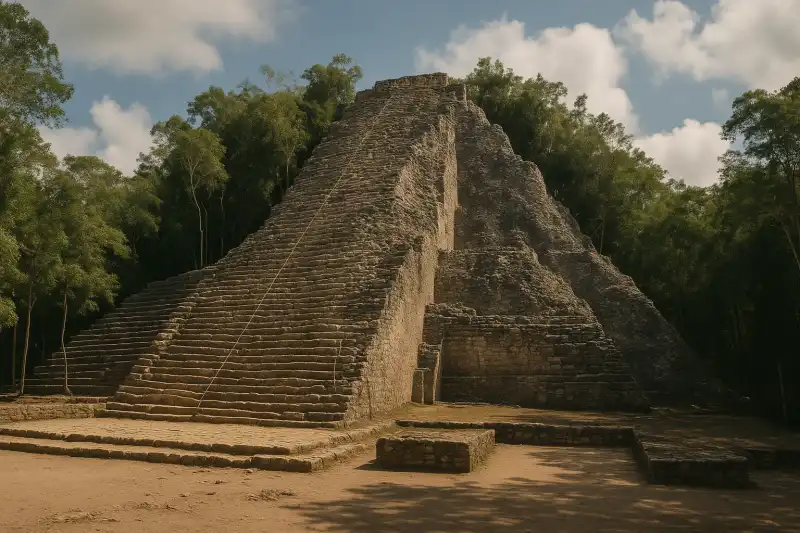
Coba Travel Guide 2026: Ruins Route, Timing, and Practical Day Planning
MayaPlan a better Coba visit with route strategy, realistic timing from Tulum or Cancun, and practical t...
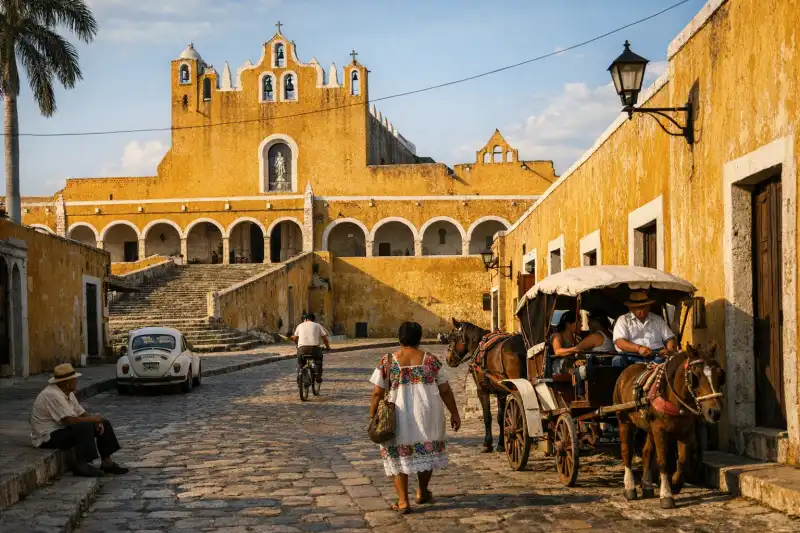
Izamal
Izamal, known as the 'Yellow City,' is a magical town in Yucatán, Mexico, famed for its golden-hued ...
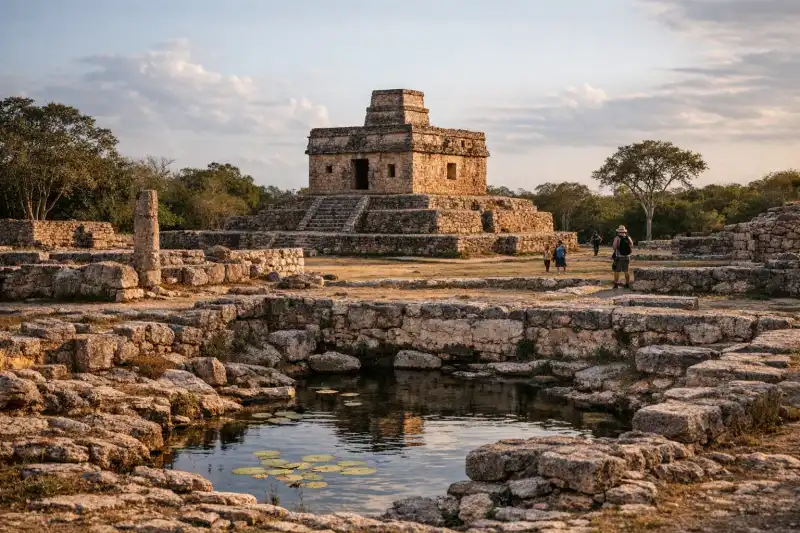
Dzibilchaltún
MayaExplore Dzibilchaltún, an ancient Maya city in Mexico known for its Temple of the Seven Dolls, sacbe...