Quick Info
Curated Experiences
Epidaurus and Mycenae Day Trip from Athens
Nafplio, Epidaurus and Mycenae Private Tour
Epidaurus Ancient Theater and Sanctuary Tour
Where Sound Carries Across Two Thousand Years
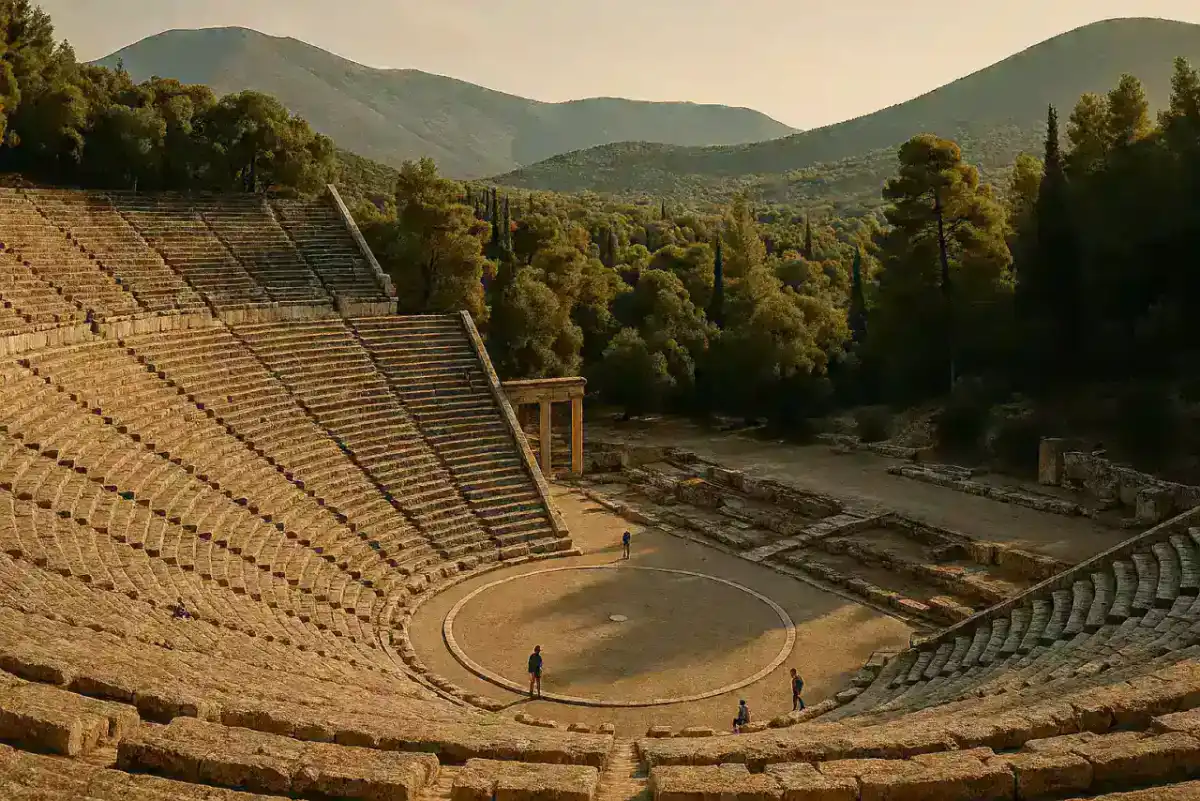
In a shallow valley ringed by fragrant pine forests in the northeastern Peloponnese, there is a place where a coin dropped on stone can be heard clearly from two hundred meters away—where the unamplified human voice travels across a theater that has held audiences for more than two millennia without losing a syllable. Epidaurus is among the most quietly extraordinary sites in the ancient world: not a fortress, not a palace, not a monument to conquest, but a sanctuary dedicated simultaneously to the arts of healing and human expression. The theater built by Polykleitos the Younger in the 4th century BCE remains the finest acoustic space ever constructed by human hands, a 14,000-seat limestone amphitheater shaped with such mathematical precision that every word spoken on the circular orchestra floor reaches the uppermost row with haunting clarity. Beside it lies the sanctuary of Asclepius, son of Apollo and god of medicine, where sick pilgrims traveled from across the Mediterranean world seeking cures through ritual sleep, priestly counsel, and the careful pharmacology of physicians who doubled as priests. Epidaurus held both functions simultaneously—theater and hospital, festival and healing—because the Greeks understood that the health of the mind, the spirit, and the body could not be separated. For modern visitors, the site offers something rare among the great ruins of antiquity: the chance to stand at the center of the orchestra, speak a single word in a normal voice, and listen as it carries perfectly to every corner of an ancient world that still listens back.
Asclepius and the Origins of a Healing Sanctuary
The ground at Epidaurus was sacred long before the theater rose from the hillside. Archaeological evidence places religious activity here as early as the 2nd millennium BCE, with worship of local deities that gradually merged with the Olympian tradition. By the 6th century BCE, the sanctuary had been dedicated to Asclepius—a figure who existed in Greek mythology as both a mortal physician trained by the centaur Chiron and a divine being elevated to godhood for his healing gifts. That ambiguous status, part human and part divine, shaped the sanctuary’s character for nearly a thousand years.
The cult of Asclepius spread throughout the Greek world, establishing healing sanctuaries called Asclepeia at hundreds of sites from Asia Minor to Sicily. But Epidaurus remained the most prestigious, the mother-sanctuary to which others looked for legitimacy and guidance. Pilgrims arrived by sea at the port of ancient Epidaurus and traveled inland through the hills to the sanctuary complex, a journey that itself formed part of the ritual preparation for healing. The site’s deliberate isolation from major cities created a liminal space—apart from ordinary life, yet accessible enough to draw the sick from across the Mediterranean—where extraordinary cures could occur within an extraordinary landscape.
The Romans absorbed the cult of Asclepius (renaming him Aesculapius) and continued developing the Epidaurus sanctuary through the imperial period. Emperor Antoninus funded major restoration projects in the 2nd century CE, extending the site’s active use six centuries beyond its Greek foundation. The combination of theatrical festivals, athletic competitions, and medical practice at Epidaurus produced an institution without precise parallel in the ancient world—or, perhaps, in any world that followed.
The Theater: Geometry in Service of the Human Voice
The theater at Epidaurus was constructed around 340 BCE and expanded in the Hellenistic period to its current capacity, with 55 rows of limestone seats arranged across the hillside in the graceful curve that has defined the Greek theatrical experience for 2,300 years. The design is attributed to Polykleitos the Younger, working in a tradition that brought mathematical rigor to the problems of sight and sound. The theater faces roughly northeast, with the open sky above and the rolling hills of the Argolid visible beyond the stage building—a spatial relationship that integrates the performance space with the larger landscape in a way no enclosed modern venue can replicate.
What makes Epidaurus astonishing is not scale but precision. The semicircular seating area is divided into two zones by a diazoma—a horizontal walkway—with 34 rows below and 21 above. Twelve stairways divide the lower section into wedges (kerkides); the upper section has 22. Each stone seat is slightly angled toward the orchestra floor below, and the entire structure is shaped to funnel sound upward and outward with minimum loss. Recent acoustic research has identified the mechanism: the limestone seats perform a specific physical function, dampening low-frequency background noise—wind, crowd murmur, ambient sound—while allowing the higher frequencies of the human voice to pass unimpeded. The effect, when tested, is genuinely startling. A coin dropped at the center of the 20-meter circular orchestra produces a clear, distinct sound at the top row. A whispered sentence carries equally well. No amplification, no electronics: only mathematics applied to stone.
The circular orchestra, where the chorus of fifteen dancers performed while commenting on the action, is the oldest surviving example of this theatrical form. At its center stood a thymele—an altar to Dionysus, in whose honor dramatic festivals were held—a reminder that Greek theater was not secular entertainment but religious observance. The stage building (skene) that once rose behind the orchestra provided backdrop and changing rooms; its original form has not survived, though archaeological evidence allows partial reconstruction. What has survived, essentially intact, is everything that matters most: the seats, the hillside, the orchestra, and the extraordinary acoustic field that fills the space between them.
The Sanctuary of Asclepius: Where Dreams Became Medicine
While the theater commands modern attention, it was the sanctuary of Asclepius that made Epidaurus famous in antiquity. Spreading across a broad terrace below the theater, the sanctuary complex encompassed temples, dormitories, bath houses, athletic facilities, and administrative buildings—everything required to receive thousands of pilgrims and subject them to an elaborate regimen of spiritual and physical healing lasting days or weeks.
The central ritual was incubation (enkoimesis): after performing purification rites, making offerings, and undergoing a period of dietary and behavioral preparation, the pilgrim slept in the abaton—a long colonnaded dormitory—hoping that Asclepius would appear during sleep and reveal the cure. The god might prescribe specific remedies, perform surgical procedures in the dream itself, or simply signal that healing had occurred. The priests of Asclepius, also trained physicians, would interpret these dream reports and translate them into practical treatments: herbal preparations, bathing schedules, dietary changes, bloodletting, or surgical intervention. The system was sophisticated enough to recognize that expectation, environment, and psychological readiness shaped healing outcomes—an insight that modern medicine took until the 20th century to formalize as the placebo effect and therapeutic milieu.
The Temple of Asclepius stood at the sanctuary’s heart, housing a celebrated gold-and-ivory cult statue of the god enthroned, his serpent-entwined staff beside him. The statue has been lost, but ancient descriptions convey its scale and refinement. The Stadium, where athletic competitions formed part of the quadrennial Asclepieia festival, preserves its track and embankment seating in remarkably complete condition. The Katagogion, a massive 160-room pilgrim hostel arranged around four courtyards, reveals the scale of medical tourism in the 4th century BCE—a structure as pragmatically modern in conception as any contemporary hospital hotel. Marble stelae recovered from the sanctuary record case histories of miraculous cures: a blind man restored to sight, a paralyzed woman who walked, a man healed of an arrowhead embedded in his jaw for years. Whether these represent genuine medical successes, deliberate pious exaggeration, or the placebo effects of an extraordinarily well-designed therapeutic environment, they testify to the depth of ancient faith in this place and the sophistication of the institution that sustained it.
The Tholos: The Most Beautiful Building in Ancient Greece
The Tholos of Polykleitos the Younger—the same architect responsible for the theater—was considered one of the most beautiful buildings in the Greek world, praised by ancient writers for the perfection of its proportions. Its circular design featured three concentric colonnades: Doric on the exterior, Corinthian within the cella, and an inner ring whose purpose remains debated. The subterranean portion consisted of three concentric walls arranged in a labyrinthine pattern, accessible only from within the central chamber. Some scholars interpret this underground maze as housing the sacred snakes of Asclepius—the living symbols of the god, whose shed skins represented renewal and healing. Others suggest it served as a treasury, or as a symbolic representation of the underworld through which Asclepius had power to pass as intercessor between the living and the dead.
The Epidaurus Archaeological Museum, located between the theater entrance and the sanctuary, provides essential context for the ruins above ground. Its highlights include the inscribed marble stelae with their case histories of healing; a remarkable collection of bronze surgical instruments—scalpels, forceps, specula, and bone chisels nearly indistinguishable from modern equivalents; pediment sculptures from the Temple of Asclepius depicting mythological scenes; and a detailed model of the sanctuary complex that allows visitors to reconstruct the original layout of buildings now reduced to foundations. Restored architectural fragments from the Tholos, displayed together, convey the astonishing geometric ambition of the building’s design—the precision of fluted column drums, the elegance of carved capitals—all that remains of what antiquity called the most beautiful structure in Greece. The museum is included in general site admission and warrants at least 45 minutes.
The Athens & Epidaurus Festival: Tragedy Under an Open Sky
From June through August, the ancient theater returns to its original function. The Athens & Epidaurus Festival, one of Greece’s premier cultural events, presents productions of classical Greek tragedy and comedy by the major Greek theater companies and occasional international visitors. The program draws from Aeschylus, Sophocles, Euripides, and Aristophanes—the same dramatists whose work was performed here when the theater was new—though modern productions bring contemporary staging and directorial interpretation to the ancient texts.
Performances begin at 9 PM, after the sun has set and the temperature has dropped to something comfortable. No microphones are used; there is no need. Actors’ voices carry through the natural acoustic field without assistance, as ancient audiences expected them to, and the effect for audiences accustomed to amplified theater is genuinely revelatory. The limestone seats cool quickly after sundown—a light jacket is advisable even in August—and cushions can be rented at the site entrance for seats that become unforgiving after the first hour of a two-and-a-half-hour Sophocles. The theater has no roof, and performances proceed through light rain but cancel in thunderstorms.
Tickets range from €20 to €80 depending on seating section and production, and popular evenings sell out weeks in advance. Booking through the official Greek Festival website (greekfestival.gr) is strongly recommended from spring onward. The experience of watching a Greek tragedy performed in its original language, in its original theater, on a warm Peloponnese evening with stars overhead and cicadas singing in the pines beyond the top row, is among the most transporting things Greece offers.
Getting to Epidaurus: Athens, Nafplio, and the Road Through the Argolid
Epidaurus lies approximately 150 kilometers southwest of Athens in the northeastern Peloponnese, most commonly visited as part of a day trip that also includes Mycenae and the town of Nafplio. The standard Athens itinerary departs the capital by 8 AM, stops at Mycenae for two hours in the late morning, takes lunch in Nafplio on the harbor waterfront, and arrives at Epidaurus by mid-afternoon for a two-to-three-hour visit before the return drive—a full but manageable day for most travelers.
Organized tours remain the most popular and convenient approach, with small-group tours (€80–100 per person, including transport, guide, and entry) departing Athens hotels daily during the tourist season. Private tours (€250–350) offer greater flexibility. For independent travelers, the scenic coastal road via the Saronic Gulf takes approximately two hours by rental car, with free parking at the site. Public buses from Athens to Nafplio run frequently, taking about two hours; local buses and taxis cover the 30 kilometers from Nafplio to Epidaurus in 25–30 minutes. Nafplio itself—a handsome Ottoman-era seaport with a well-preserved old town and the spectacular Palamidi fortress on the hill above—makes an excellent base for exploring the region over two or three days, allowing an unhurried visit to Epidaurus without the time pressure of an Athens day trip.
Practical Guide: Tickets, Timing & What to Know
Essential Planning FAQs
How much time do I need at Epidaurus?
Two to three hours covers the site thoroughly—theater, sanctuary ruins, and museum. History and architecture enthusiasts should allow three hours minimum, with an hour more for careful attention to the museum. A half-day visit is entirely sufficient. Combine with Mycenae (1.5 hours) and Nafplio (lunch, 1 hour) for a complete Peloponnese day.
When is the best time to visit?
April through June and September through October offer ideal conditions—temperatures between 20°C and 28°C, moderate crowds, and comfortable conditions for exploring open ruins. Spring brings wildflowers throughout the sanctuary grounds. July and August are hottest (35°C+) and busiest; arrive at 8 AM opening to beat both. Winter visits (November–March) offer cool temperatures and near-solitude, though shorter opening hours apply and festival performances do not occur.
What are the opening hours and ticket prices?
Entry fee is €12 (summer 2026). A combined ticket with Mycenae is available for €20 and represents good value if visiting both in a day. Summer hours run 8 AM–8 PM (April–October); winter hours 8 AM–3 PM. Free admission on the first Sunday of each month from November through March, plus March 6 (Melina Mercouri Day), April 18 (International Monuments Day), and May 18 (International Museum Day).
What should I bring?
Sun protection is essential—hat, sunglasses, and sunscreen. The theater and sanctuary have minimal shade, and stone surfaces reflect heat intensely. Bring at least one liter of water per person; a small café near the museum operates in summer but closes early. Wear sturdy shoes with grip: the theater steps are worn smooth and steep, and sanctuary paths are uneven gravel. If attending an evening performance, add a light jacket and a cushion—or rent one at the entrance.
Is Epidaurus accessible?
Partially. The theater’s lower sections are accessible by wheelchair; the upper tiers require climbing steep stone steps. Sanctuary paths are manageable with assistance. The museum is fully accessible. Contact the site administration in advance for specific accessibility requirements.
Quick Facts
| Attribute | Details |
|---|---|
| Location | Nafplio, Peloponnese, Greece |
| Country | Greece |
| Region | Peloponnese |
| Civilization | Classical Greek |
| Historical Period | c. 6th century BCE–4th century CE |
| Established | c. 6th century BCE |
| Coordinates | 37.5963, 23.0795 |
Explore More Ancient Greece
- Mycenae: The fortress city of Agamemnon and the Lion Gate
- Acropolis Athens: The Parthenon and birthplace of democracy
- Delphi: The oracle and sanctuary of Apollo on Mount Parnassus
|-----------|---------| | Location | Argolid, northeastern Peloponnese, Greece | | Ancient Name | Epidaurus (Ἐπίδαυρος) | | UNESCO Status | World Heritage Site (1988) | | Peak Period | 4th century BCE–2nd century CE | | Distance from Athens | 150 km (93 miles); 1.5–2 hours by car | | Nearest Town | Nafplio, 30 km (19 miles) | | Best Time | April–June, September–October | | Entry Fee | €12; combined with Mycenae €20 | | Suggested Stay | Half day (2–3 hours) | | Theater Capacity | 14,000 seats across 55 rows |
Frequently Asked Questions
How much time do you need at Epidaurus?
Allow 2-3 hours for a thorough visit. This covers the theater, sanctuary ruins, museum, and time to test the famous acoustics. A half-day is sufficient; combine with Mycenae and Nafplio for a full-day Peloponnese itinerary.
Why is Epidaurus theater acoustically perfect?
The 4th-century BCE theater achieves near-perfect acoustics through precise geometric design: the limestone seats filter low-frequency background noise while amplifying higher-frequency voices. A whisper from the stage reaches the top row of 14,000 seats clearly—an engineering feat still not fully replicated today.
Can you attend performances at Epidaurus?
Yes! The Athens & Epidaurus Festival (June–August) presents ancient Greek dramas in the theater. Performances occur Friday and Saturday nights. Tickets sell out months in advance—book early for this bucket-list experience of watching Greek tragedy where it originated.
How do I get to Epidaurus from Athens?
By car (2 hours via the scenic coastal road), organized tour (most popular option), or bus from Athens KTEL station to Nafplio plus local bus or taxi to Epidaurus (25 minutes). Day trips from Athens typically include Mycenae and Nafplio.
What is the Sanctuary of Asclepius?
The ancient world's most famous healing center, dedicated to Asclepius (god of medicine). Pilgrims came for 'incubation sleep' in the abaton, where dreams revealed cures. The site includes temples, baths, hospital buildings, and athletic facilities supporting holistic healing.
Is Epidaurus wheelchair accessible?
Partially. The theater has wheelchair access to lower seating areas, but the upper tiers require climbing steep stone steps. The sanctuary paths are uneven but navigable with assistance. The museum is fully accessible.
Nearby Ancient Sites
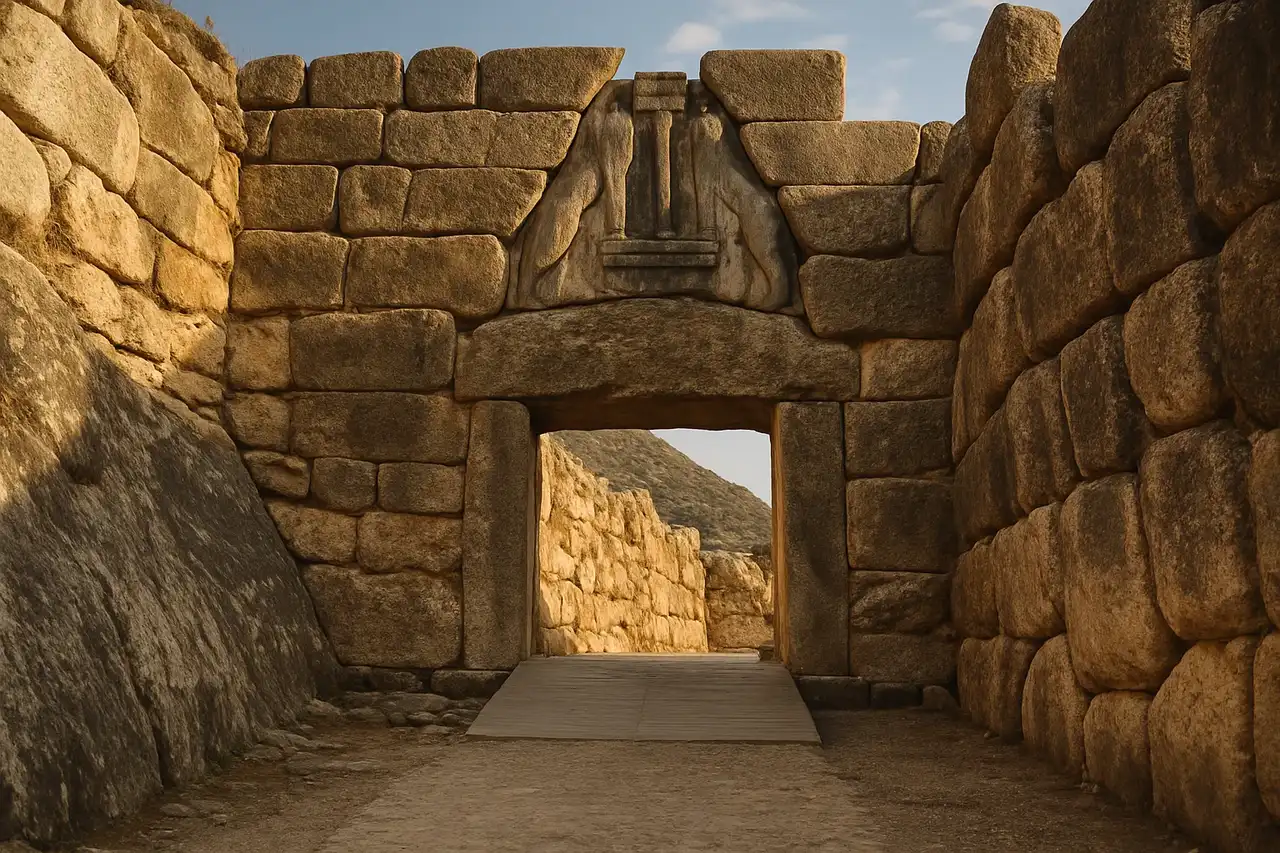
Mycenae, Greece: The Citadel of Legend and Home of Agamemnon
Mycenaean GreeceExplore Mycenae, the legendary citadel of King Agamemnon and one of Greece's most important archaeol...
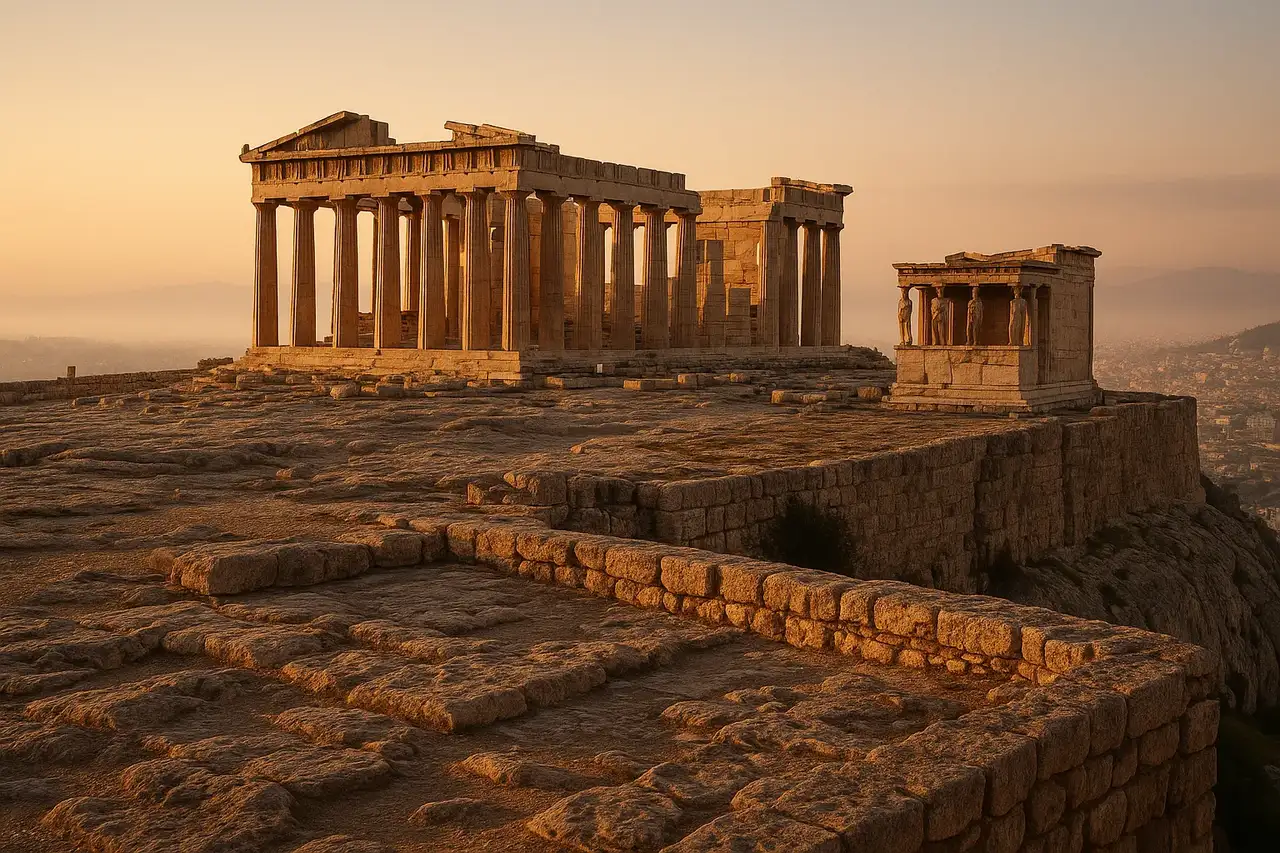
The Complete Acropolis Athens Travel Guide: Temples
Ancient GreecePlan the perfect visit to the Acropolis of Athens with our 2026 guide. Discover the Parthenon, best ...
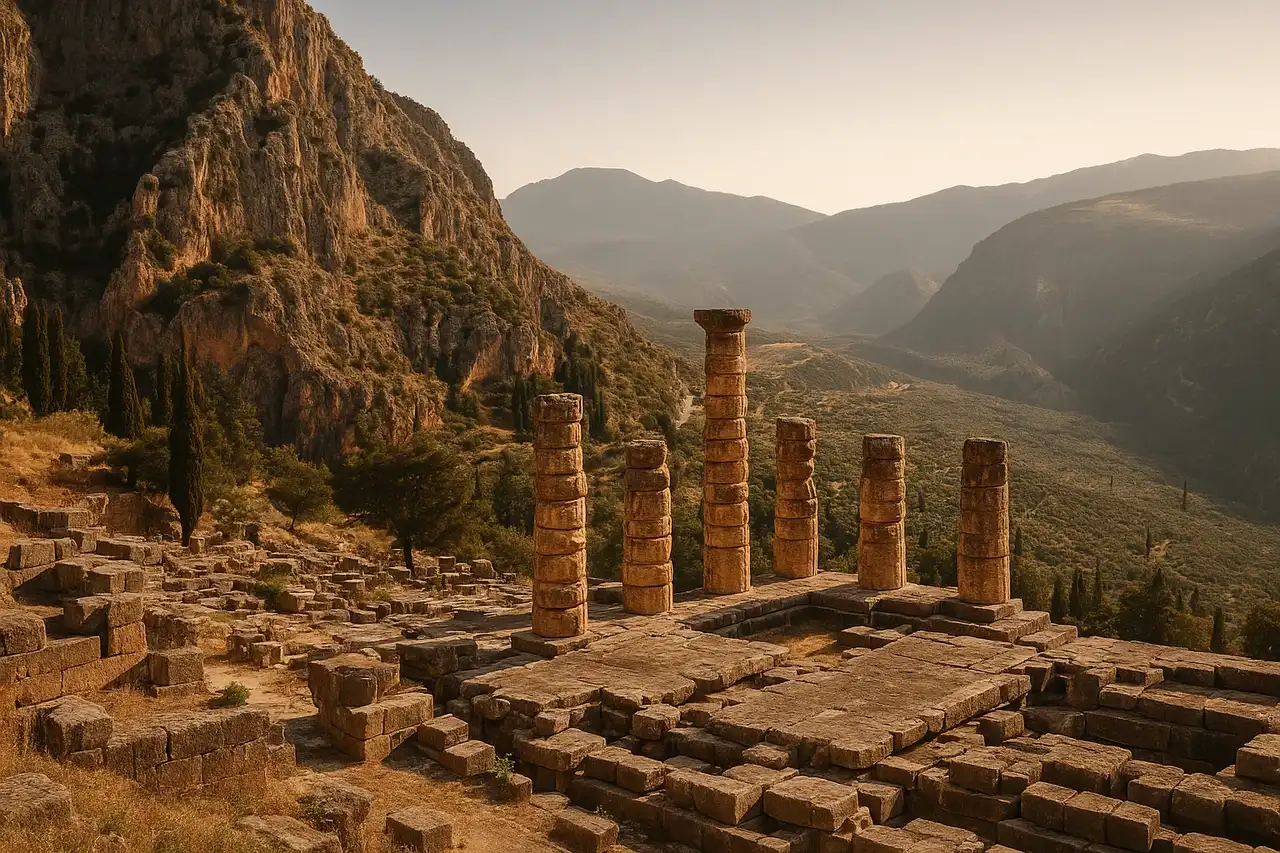
Delphi: The Navel of the Ancient World and Greece's Most
Ancient GreeceExplore Delphi, Greece's most mystical archaeological site. Walk the Sacred Way, discover the Oracle...