Quick Info
Curated Experiences
Erice and Trapani Hilltop History Tour
Western Sicily Archaeology Day: Erice + Segesta
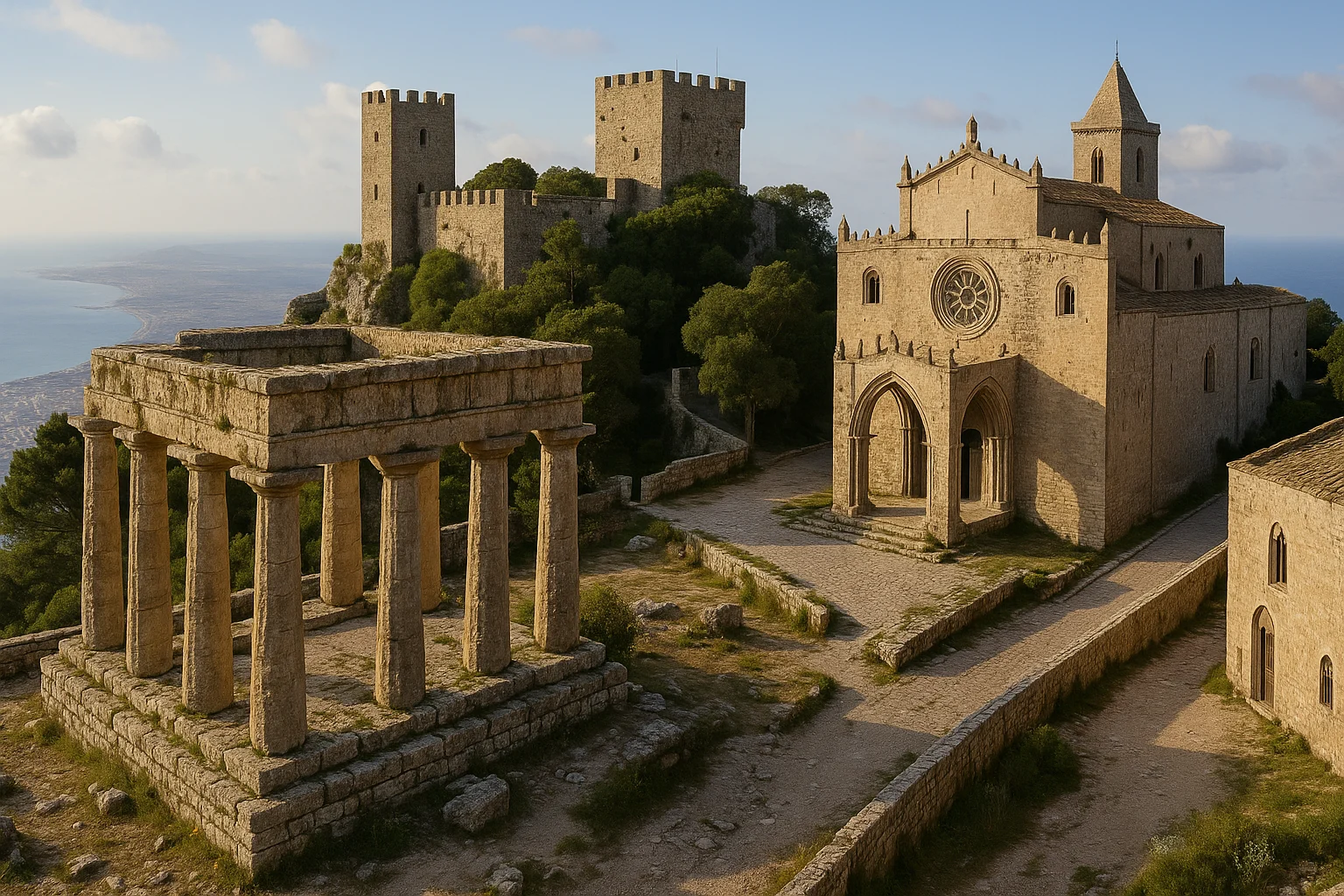
Erice sits 750 meters above Trapani on a limestone plateau that has attracted settlement, fortification, and worship for nearly three thousand years. The hilltop compresses Elymian origins, Phoenician sacred practice, Greek and Roman temple culture, and Norman castle-building into a single walkable circuit less than a kilometer across. For travelers working through western Sicily, Erice is not a detour - it is the site that makes the region’s layered history physically legible.
Unlike valley-floor ruins where you reconstruct context from fragments, Erice hands you the context first. You stand where defenders stood, scan the same coastline Phoenician traders navigated, and trace the same narrow streets that connected sacred precincts to defensive walls across successive centuries. The result is one of the Mediterranean’s most compact demonstrations of why certain places get reused rather than abandoned.
Why Erice Matters
Western Sicily operated for centuries as a contact zone between North African, Levantine, Greek, and Italian spheres. Erice’s elevation made it a natural control point over the approaches to Trapani’s harbor and the sea lanes connecting Sicily to Carthage. Every power that wanted to hold this coastline eventually had to hold this hill.
That strategic logic produced an unusual layering effect. Each new occupier inherited the previous era’s infrastructure and sacred geography rather than starting fresh. The Elymians established a hilltop sanctuary. The Phoenicians absorbed it into their own cult practice. The Romans formalized it as a temple to Venus Erycina, important enough that the cult was exported to Rome itself. The Normans, arriving in the twelfth century, converted the temple site into a castle. The street plan tightened around medieval churches built with reused ancient stone.
For travelers, Erice clarifies a pattern visible across Sicily but rarely this concentrated: sacred continuity driven by geographic advantage. If you visit Segesta the same day, you see the Elymian world from two angles - one monumental and open, the other fortified and compressed.
Historical Context
Elymian and Phoenician Roots
The Elymians, a pre-Greek population of western Sicily whose exact origins remain debated, established Eryx as one of their principal settlements. Ancient sources connect the site to a major fertility cult centered on a hilltop sanctuary. Phoenician traders and settlers, active along Sicily’s western coast from at least the eighth century BCE, engaged with this cult and likely contributed to its Mediterranean reputation. Thucydides and Diodorus Siculus both reference the Elymians as distinct from Sicily’s Greek and Sican populations, and Eryx consistently appears as a significant node in their territory.
Greek, Roman, and Carthaginian Contest
Western Sicily became a persistent flashpoint between Carthage and the Greek cities of eastern Sicily. Erice changed hands multiple times during the wars of the fifth and fourth centuries BCE. Under Roman control after the First Punic War (241 BCE), the temple of Venus Erycina gained imperial patronage. Rome established a duplicate temple on the Capitoline, a rare honor that signals how seriously the cult was taken. The hilltop settlement continued functioning through the imperial period, though large-scale monumental construction shifted to lowland sites.
Norman Transformation
The Normans took Erice in 1167 and built the Castello di Venere directly over the ancient temple precinct, repurposing its foundations and enclosure walls. The town’s medieval street grid, its churches (notably the Chiesa Matrice with its detached bell tower, built around 1314), and its defensive circuit all date primarily from this period. What visitors walk through today is substantially a Norman and post-Norman town sitting on ancient bones.
What to Prioritize On Site
Castello di Venere and the Temple Precinct
Start here. The castle occupies the eastern cliff edge where the ancient sanctuary stood. Portions of the enclosure wall beneath the Norman masonry are ancient - look for the larger, rougher cyclopean-style blocks at the base. The position itself is the real exhibit: the sheer drop to the east, unobstructed sightlines to the Egadi Islands, and the clear defensive logic that made this corner sacred and strategic simultaneously.
The Torri del Balio and Giardino del Balio
The towers flanking the castle approach are Norman-era watch positions. The garden between them (the Giardino del Balio) offers the best combined view of the castle walls and the coastal plain below. This is where the relationship between hilltop and harbor becomes viscerally clear.
Chiesa Matrice and Bell Tower
The fourteenth-century church near the Porta Trapani gate anchors the town’s medieval civic identity. The detached bell tower, originally a Norman lookout post, predates the church and reinforces how military and religious functions overlapped on this hilltop. The interior is straightforward Gothic, but the reused stone in the walls rewards close inspection.
Street Circuit and Defensive Fabric
Erice’s streets are narrow, stone-paved, and built for a settlement that never had room to sprawl. Walk the full perimeter along the town walls rather than just cutting through the center. The walls reveal construction phases - ancient base courses, medieval rebuilding, later patching - that you miss if you stay on the main drag.
Museo Cordici
Small but useful. The municipal museum holds archaeological material from the site and surrounding territory, including Elymian and Punic artifacts that connect the visible medieval town to its deeper past. Budget 20 to 30 minutes.
Practical Visit Strategy
Getting there: The funivia (cable car) from Trapani runs roughly every 30 minutes and takes about 10 minutes. It is the simplest and most scenic approach. Driving is possible via a winding road from Trapani or Valderice; parking is limited inside the town walls, so arrive early or use lots outside the gates.
Timing: Morning arrivals (before 10:00) beat both the heat and the tour bus wave in peak season. Late afternoon also works well, with better light on the western views. Midday in July and August can be surprisingly cool due to elevation, but the town fills with day-trippers. Off-season (November through March), Erice is often wrapped in fog - atmospheric but limiting for views.
Time budget:
- Quick pass: 90 minutes (castle, main viewpoints, one church)
- Balanced visit: 2.5 to 3 hours (full perimeter walk, castle, museum, street exploration)
- Combined day with Segesta: 6 to 8 hours total
What to bring: Comfortable walking shoes with grip - the stone streets are uneven and slippery when wet. A light layer even in summer; the hilltop catches wind and can drop several degrees below Trapani. Water, since options inside the walls are limited outside high season.
Route Pairing and Nearby Sites
Erice plus Segesta is the essential western Sicily pairing. Segesta gives you the Elymian world as monumental architecture in an open landscape; Erice gives you the same culture compressed into a defensible hilltop. Together they form a complete picture that neither site delivers alone. Drive time between them is about 35 minutes.
Erice plus Trapani old town works as a low-logistics half day. Trapani’s salt flats and historic center add a coastal commercial layer to the hilltop military-sacred narrative.
Erice plus Marsala and Mozia extends the Phoenician thread. The island site of Mozia in the Stagnone lagoon near Marsala preserves Phoenician urban fabric that contextualizes the Punic presence Erice references but cannot show directly.
For broader Sicily planning:
- Segesta - Elymian temple and theater
- Selinunte - Greek colonial temple complex
- Valley of the Temples, Agrigento - monumental Greek sacred architecture
- Syracuse Archaeological Park - Greek and Roman urban archaeology
- Villa Romana del Casale - late Roman mosaics
- Italy Ancient Sites Hub
Final Take
Erice is not a site you visit for a single showpiece monument. Its value is cumulative - the ancient foundations beneath Norman walls, the sacred precinct turned castle, the street grid that has channeled foot traffic for centuries on a hilltop where the strategic logic never changed. It makes western Sicily’s deep chronology tangible in a way that scattered lowland ruins cannot. Paired with Segesta, it gives you one of the most efficient and rewarding archaeology days in all of Italy.
Quick Facts
| Attribute | Details |
|---|---|
| Location | Erice, Province of Trapani, Sicily, Italy |
| Country | Italy |
| Region | Sicily |
| Civilizations | Elymian, Phoenician, Greek, Roman, Norman |
| Historical Period | c. 8th century BCE through medieval era |
| Key Structures | Castello di Venere, Chiesa Matrice, Torri del Balio, town walls |
| Elevation | ~750 m above sea level |
| Best Access | Funivia (cable car) from Trapani, ~10 minutes |
| Recommended Time | 2.5 to 3 hours (balanced visit) |
| Coordinates | 38.0386, 12.5877 |
Frequently Asked Questions
Is Erice mainly medieval, or is there meaningful ancient context too?
Most visible structures are medieval and later, but Erice's importance starts much earlier with Elymian and wider Mediterranean cultural connections.
How long should you spend in Erice?
Most travelers need 2 to 4 hours in town; add time if pairing with Segesta or Trapani salt-road stops.
Can Erice be done without a car?
Yes. Cable car and bus links from Trapani make Erice manageable as a no-car half-day or day trip.
What is the best nearby ancient-site pairing with Erice?
Segesta is the strongest pairing because it adds monumental Greek theatre-temple archaeology to Erice's hilltop defensive and sacred setting.
Nearby Ancient Sites
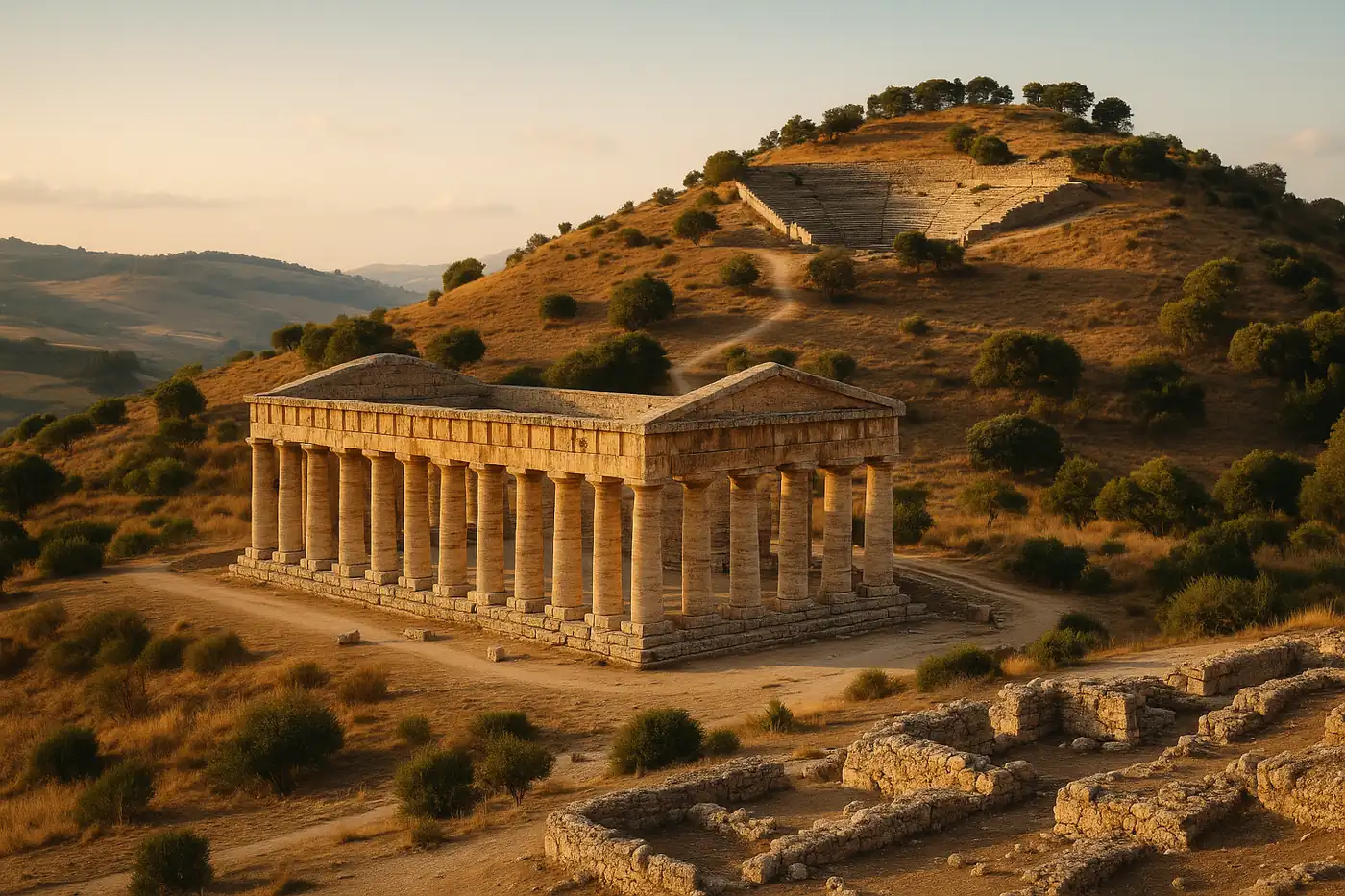
Segesta Archaeological Site: Sicily's Unfinished Temple and Hilltop Theatre
Elymian / Greek / RomanPlan your visit to Segesta in western Sicily: temple, theatre, shuttle logistics, timing, and practi...
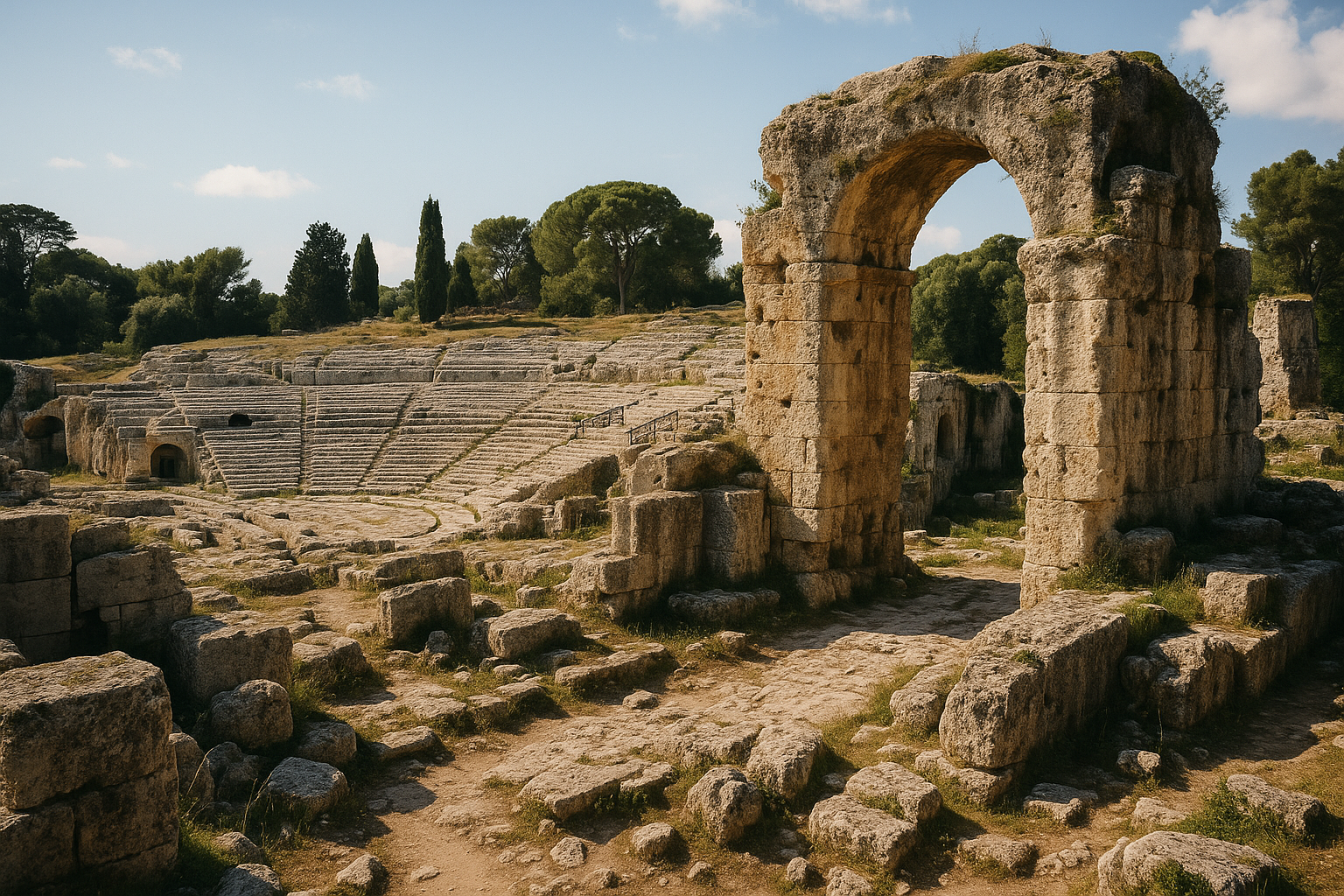
Syracuse Archaeological Park (Neapolis) Guide 2026
Greek-Roman-ByzantinePlan your visit to Syracuse Archaeological Park in Sicily with theatre highlights, Ear of Dionysius ...
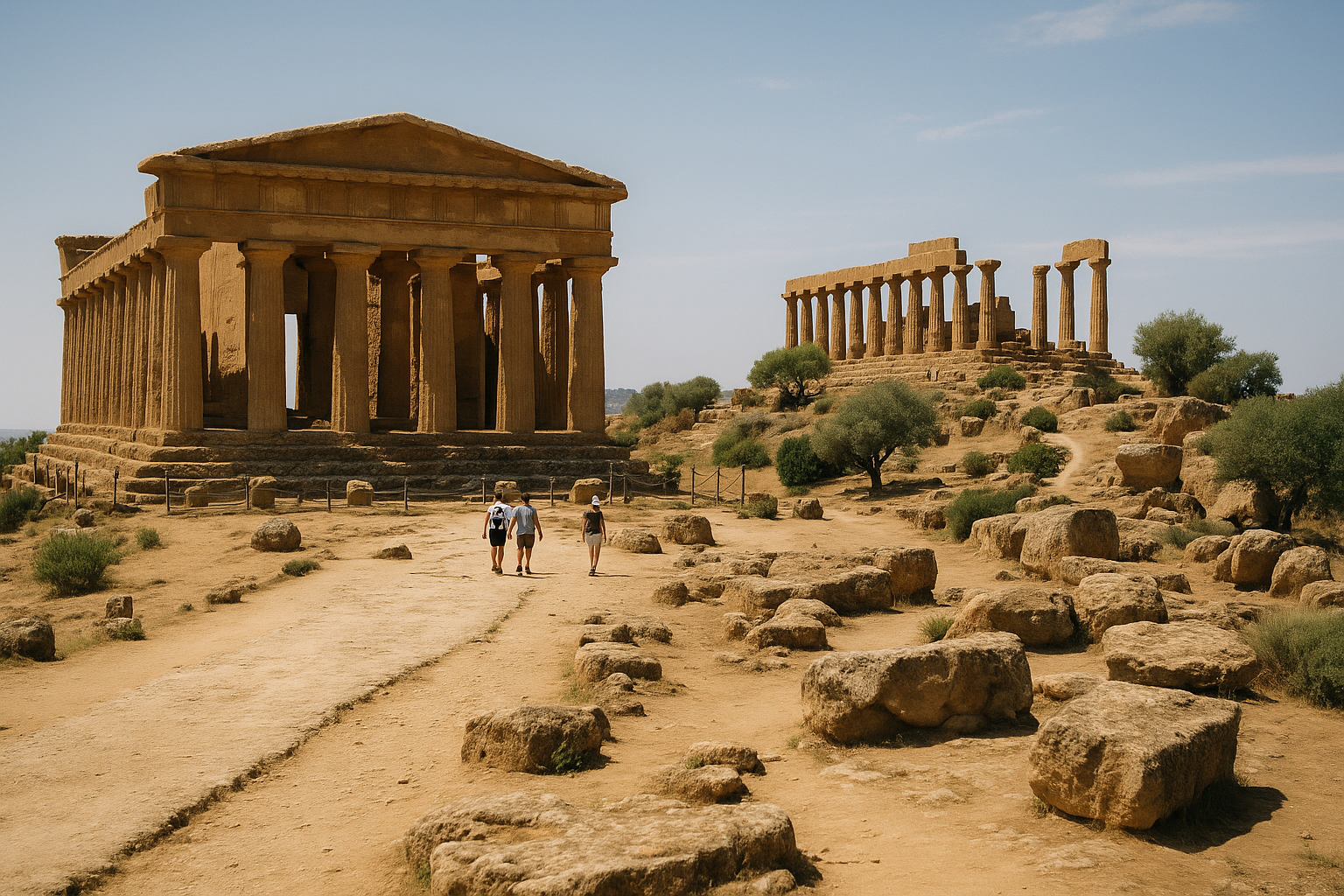
Valley of the Temples Agrigento Guide 2026: Concordia & Juno
Greek-Roman-NormanPlan your Agrigento Valley of the Temples visit with temple highlights, tickets, transport, and prac...
Colosseum Rome: Complete 2026 Guide to Arena Floor, Tickets, and Timing
Roman EmpirePlan the perfect Colosseum visit with timed-entry strategy, Arena Floor and underground access tips,...