Quick Info
Curated Experiences
Évora Small-Group Day Tour from Lisbon
Private Évora and Megaliths Tour
Full-Day Évora Tour with Wine Tasting
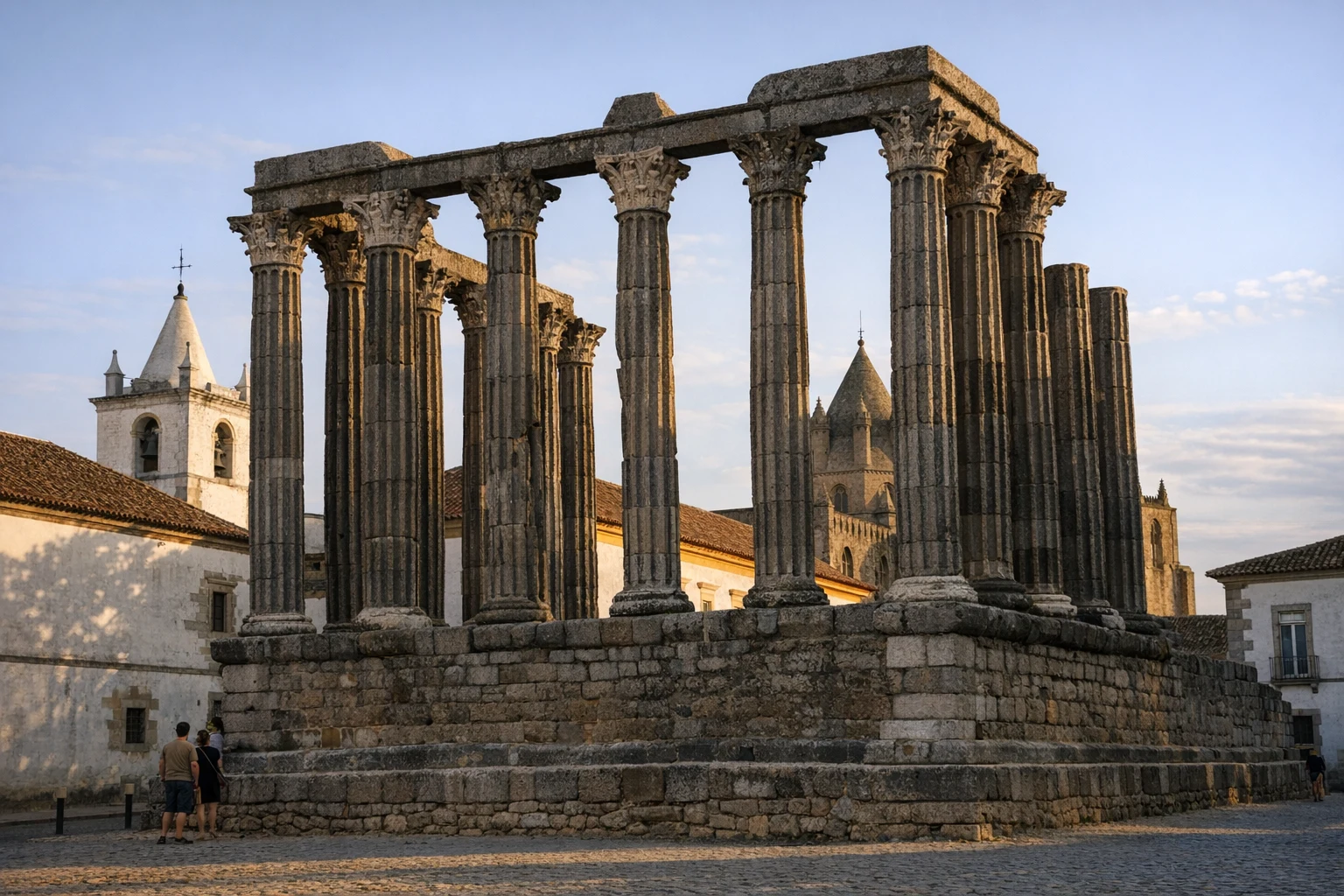
Standing proudly at the heart of Évora, a charming city nestled within Portugal’s golden Alentejo region, the Évora Roman Temple is one of the most striking and best-preserved relics from Roman times on the Iberian Peninsula. Known locally as the Templo Romano or Temple of Diana, though there is little evidence for its dedication to the goddess, this monument tells a story of empire, faith, and endurance. Wandering the sun-warmed cobbled streets of Évora, the temple’s elegant granite columns rise dramatically before you, framed by the pale limestone of the city’s ancient square. Sunlight dances on ancient capitals and playful shadows hint at centuries of history. With the city’s whitewashed houses and terracotta rooftops as a backdrop, the Roman Temple binds together past and present, serving both as the city’s beating heart and a living testament to Évora’s enduring significance.
Visitors will find that the Évora Roman Temple is more than just a photogenic ancient ruin—it is a silent witness to the rise and transformation of Évora itself, from a provincial Roman town to a medieval stronghold and finally a UNESCO World Heritage city renowned for its layered cultural tapestry. The temple is surrounded by other historic treasures, including Évora’s cathedral and the Palace of the Dukes of Cadaval, forming a triangle of grand architecture that transports every guest back in time. Whether you’re an avid history buff, an architecture enthusiast, or simply a traveler seeking Portugal’s soul, the temple is a fountain of stories and an essential stop for anyone drawn to the grandeur of antiquity and the warmth of Alentejo’s hospitality.
History
Roman Foundations and the Birth of Liberalitas Julia
The origins of the Évora Roman Temple trace back to the height of Roman Lusitania—modern-day Portugal and part of western Spain—when the Emperor Augustus established Évora (then called Ebora Liberalitas Julia) as a flourishing administrative center in the late 1st century AD. The city’s strategic location on trade routes connecting Augusta Emerita (Mérida) to Olisipo (Lisbon) spurred urban development, including the construction of administrative buildings, baths, aqueducts, and public fora. The temple itself was likely erected at the end of the 1st century AD or the early 2nd century AD, reflecting the prosperity and imperial favor enjoyed by the settlement.
For centuries, scholars believed that the monument was dedicated to Diana, the Roman goddess of the hunt, a romantic notion fueled largely by Renaissance interpretations and 17th-century local tradition. However, rigorous 20th-century archaeological studies now suggest that the temple was more likely dedicated to the imperial cult, in honor of Augustus or other deified emperors—a common practice in provincial capitals across the Roman Empire. Its central position in the forum would have made it a focal point for civic rituals and a reminder of Roman power and piety.
Transformation Through the Middle Ages
The temple’s fortunes shifted dramatically with the decline of Roman authority in the Iberian Peninsula during the 4th and 5th centuries AD. As Visigothic and, later, Moorish peoples brought new beliefs and ruling structures to the region, many Roman buildings were repurposed, buried, or destroyed. Conservation through adaptation became central to the temple’s survival. In the 5th century, the structure was incorporated into a medieval fortress, with new defensive walls enveloping much of its base. For centuries, it served as part of Évora’s defensive fortifications, its columns hidden behind stonework that obscured their antique origins.
During the tumultuous years of the Reconquista and the Christian resettlement of Évora, the temple’s role shifted further. By the 14th century, the site had become the city’s butcher shop, an unlikely but effective function that paradoxically protected the ancient structure from demolition. Successive generations knew the building primarily as the “Casa das Carnes” (House of Meats); its robust Roman columns supported new medieval walls and roofs.
Rediscovery and Restoration
Interest in ancient Roman heritage revived during the Enlightenment and through the fervor of Portugal’s Romantic period in the 19th century. Scholarly fascination, combined with Évora’s growing cultural profile, led to serious archaeological investigations. In the 1870s, major restoration works systematically removed medieval additions, revealing, for the first time in hundreds of years, the temple’s monumental Roman columns and podium.
Throughout the 20th century, careful conservation efforts reinforced the temple as a jewel of Portuguese antiquity. The site’s significance was recognized in 1986, when Évora was inscribed as a UNESCO World Heritage Site, with the Roman Temple at its core. Today, the monument is celebrated not only for its architectural merit but also for its remarkable resilience—an ancient structure forged by empire, reimagined by generations, and enshrined as a symbol of Portuguese identity.
Key Features
The Évora Roman Temple embodies classical Roman architectural principles while strongly reflecting the adaptation of such designs in provincial settings. Its most iconic feature is the graceful colonnade: fourteen original Corinthian columns, carved from granite and supporting an entablature of marble, rise some seven meters above a square stone podium. Time has softened the details, but the fluted shafts and acanthus-leaf capitals remain crisp in midday sun. Visitors are struck by how the temple, while ruined, still radiates a sense of power and harmony—a legacy of proportions based on Vitruvian ideals and a testament to the skill of Roman craftsmen.
The podium itself is substantial, constructed from local granite blocks, and originally rose several steps above the surrounding forum, emphasizing the temple’s prominence as Évora’s spiritual heart. While only fragments remain of the temple’s cella, or inner chamber, its outline is clearly visible atop the podium, enabling visitors to imagine the rituals and ceremonies once performed here.
A visual highlight is the contrast between the column materials: cylinders of robust granite capped with glistening marble. Archaeological analysis has shown that the marble was brought from Estremoz, a quarry in the nearby Alentejo hills, proving both the ambition and logistical capacity of Roman engineers. The columns’ shiny marble bases and capitals add a sense of dazzling elegance, revealing how the temple would once have been an extraordinary spectacle, illuminated by the southern sun.
Surrounding the temple, the Praça do Conde de Vila Flor forms a dramatic frame, with the imposing medieval Évora Cathedral looming nearby and the elegant Cadaval Palace providing an 18th-century counterpoint. The fluid combination of eras and architectural traditions is one of the temple’s greatest charms, revealing layers of Portuguese history in a single sweeping vista.
One of the temple’s most fascinating features isn’t architectural but symbolic: its layered identity. For centuries, the “Temple of Diana” myth imbued it with a romantic aura, drawing poets and travelers. Today, interpretive plaques help visitors understand the more sober imperial cult purpose behind its construction. This evolving narrative makes Évora Roman Temple not just a static monument but a living palimpsest, inviting every visitor to reflect on how meaning, faith, and beauty can change across centuries.
Getting There
The Évora Roman Temple benefits from Évora’s strategic position on transportation networks linking Lisbon, the Alentejo region, and southern Spain. If arriving from Lisbon, travelers have two main options: rail and road.
By train, Comboios de Portugal (CP) offers several daily services between Lisbon’s Entrecampos or Sete Rios stations and Évora, with comfortable trains whisking travelers to the city in around 1.5 hours. Standard fares typically range between €13 and €18 one-way, depending on time of booking and ticket class. Évora’s railway station is roughly 1.5 kilometers from the historic center; a gentle 20-minute stroll or a short taxi ride (about €5–€7) will bring you directly to the temple’s square.
By bus, operators such as Rede Expressos connect Lisbon’s Sete Rios coach station with Évora, with journeys also lasting about 1.5 hours and ticket prices around €12–€16 each way. Buses conveniently stop closer to the city center, a 10-minute walk to the temple.
For visitors who prefer driving, Évora is easily accessible by car—just a 90-minute drive east from Lisbon via the A6 motorway. While parking inside the historic walled center is limited, several paid lots are available on the outskirts, all within a comfortable walking distance of the Roman Temple.
Once in Évora’s historic center, navigation is best done on foot. The Roman Temple stands on a slight rise in the Praça do Conde de Vila Flor, visible from various points in the old town and easily reached from major attractions, including the cathedral and Giraldo Square. Guided day tours from Lisbon frequently feature transportation, knowledgeable guides, and curated stops at neighboring regional highlights, providing a stress-free way to experience the site.
When to Visit
Évora basks in a typically Mediterranean climate, making the Roman Temple an inviting destination year-round, with each season offering a unique experience. The high summer months of July and August bring long, sunny days and temperatures that often climb above 35°C (95°F). During this period, Évora sees its highest tourist numbers, and the temple’s square can become lively with visitors and local festivals. If you choose to visit in summer, aim for early mornings or late afternoons, both to avoid the heat and to enjoy the magical golden hour light that transforms the columns into sculptures of fire and shadow.
Spring (March to May) and autumn (September to early November) are widely regarded as the best times to visit. The weather is pleasantly warm, with daytime temperatures ranging from 18°C to 28°C (64°F to 82°F), and the city gardens bloom with vibrant flowers. The ambiance is relaxed, crowds are lighter, and photographic opportunities abound without the harsh glare of midsummer.
Winter months (December to February) are mild by European standards, with daytime temperatures rarely dipping below 10°C (50°F). Rainfall is more likely, but the softer light and tranquil squares lend the temple a contemplative atmosphere. Layered clothing is recommended, as temperatures can fluctuate with the occasional chilly wind—a small price for the chance to witness the monument bathed in quiet, misty morning air.
Special events, such as local religious festivals and the annual Évora Classical Music Festival, provide wonderful opportunities to experience the city’s vibrant contemporary culture amid ancient surroundings. Regardless of season, the Roman Temple remains open to visitors day and night, and every hour brings fresh perspectives and enchanting views.
Quick Facts
| Feature | Detail |
|---|---|
| Location | Praça do Conde de Vila Flor, Évora, Portugal |
| Coordinates | 38.5731° N, 7.9077° W |
| Established | Late 1st century AD |
| Civilization | Roman Empire |
| Architectural Style | Corinthian temple, provincial Roman |
| Number of Original Columns | Fourteen (14) |
| Material | Granite (columns), Estremoz marble (capitals, bases) |
| Original Purpose | Likely imperial cult temple (not definitively Diana) |
| UNESCO World Heritage Status | Yes (since 1986, Évora Historic Centre) |
| Public Access | Open-air site, freely accessible at all times |
| Admission Fee | None |
| Nearby Landmarks | Évora Cathedral, Cadaval Palace, Giraldo Square |
| Best Visiting Seasons | Spring and autumn |
| Travel Time from Lisbon | Approx. 1.5 hours by train, bus, or car |
The Évora Roman Temple, with its soaring columns and storied past, stands as a powerful symbol of both Roman ambition and Portuguese resilience. Whether you linger in the golden evening light or wander past under soft winter clouds, Évora invites you to become part of its timeless story—where every stone has a tale to tell, and every visit reveals new wonders beneath the Portuguese sun.
Frequently Asked Questions
What are the opening hours of the Évora Roman Temple?
The Évora Roman Temple is an open-air site, accessible to visitors 24 hours a day. It is located in a public square and does not require tickets for entry.
Is there an entrance fee to visit the Évora Roman Temple?
No, there is no entrance fee to view the Évora Roman Temple. The site is freely accessible to the public at all times.
How much time should I allow for a visit to the Évora Roman Temple?
A visit can last from 20 to 40 minutes, depending on your interest in the temple’s history and your desire to photograph and explore the surrounding area.
Is the site accessible for visitors with limited mobility?
Yes, the Roman Temple is in a square with flat, paved surfaces, making it accessible for most visitors, including those using wheelchairs or strollers.
Are guided tours available at the Évora Roman Temple?
Yes, several guided tours—often including nearby sites in Évora—are available through travel agencies, with experienced guides to provide historical context.
Nearby Ancient Sites
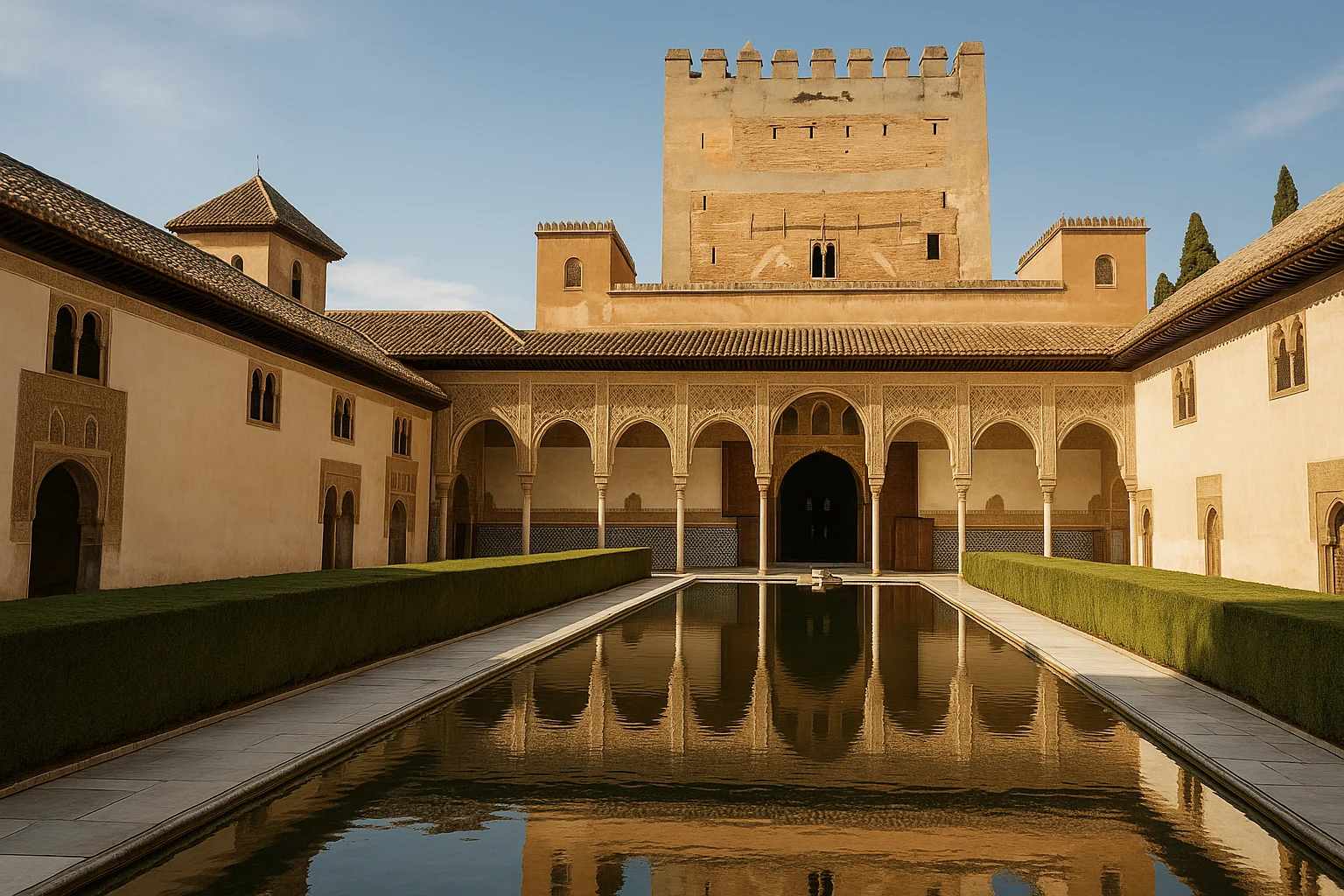
Alhambra Travel Guide 2026: Nasrid Palaces, Tickets, and Visit Strategy
Nasrid Dynasty (Moorish)Plan a well-timed visit to Granada's Alhambra with practical ticket advice, must-see highlights, and...
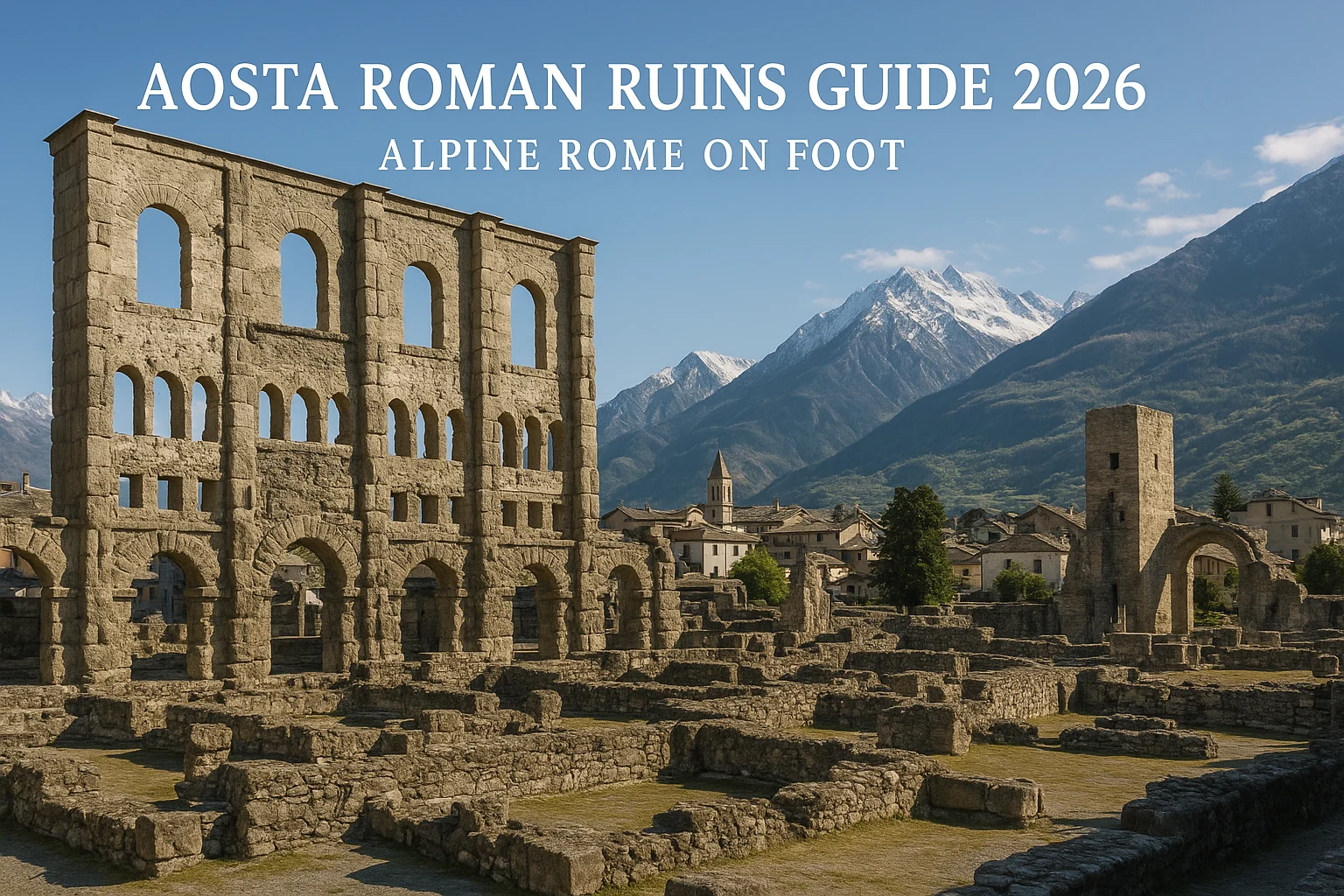
Aosta Roman Ruins Guide 2026: Alpine Rome on Foot
RomanPlan a practical visit to Aosta's Roman remains, including the Arch of Augustus, theater, city walls...
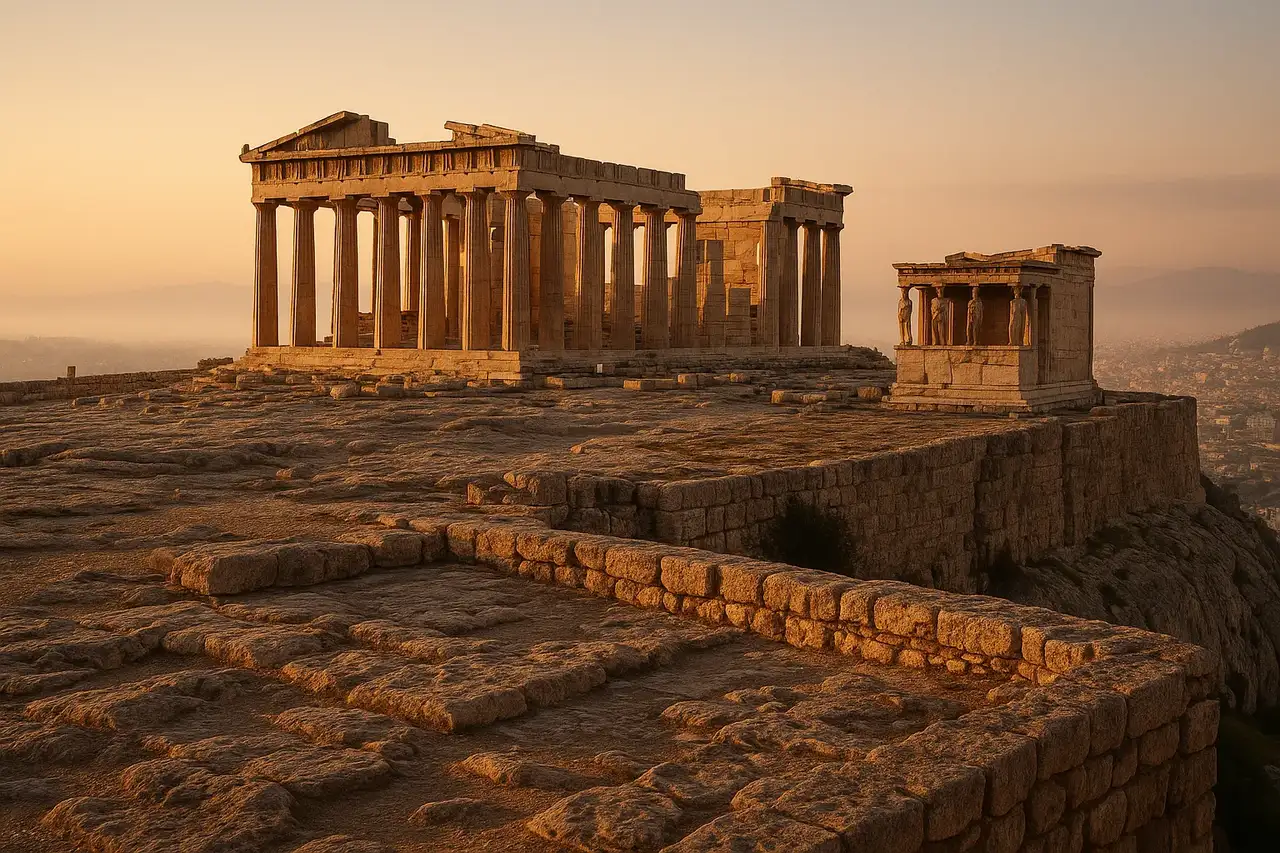
Acropolis Travel Guide 2026: Parthenon, Tickets, and Best Time
Ancient GreecePlan an efficient Acropolis visit with practical ticket timing, key monuments, and museum pairing ti...