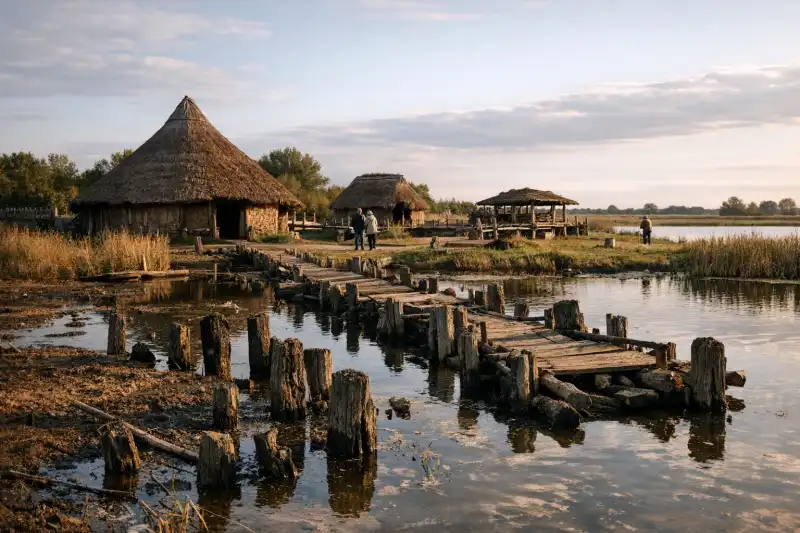
Quick Info
At a glance
Flag Fen in the United Kingdom is one of those rare ancient places where landscape matters as much as artifacts. Set just outside Peterborough in Cambridgeshire, this Bronze Age site does not announce itself with towering stone walls or dramatic ruins on a hill. Instead, its significance lies in water, timber, mud, and memory. Here, in what was once a wet fenland environment, archaeologists uncovered a remarkable timber causeway and an extraordinary spread of objects placed into the water thousands of years ago. The result is a site that feels both subtle and profound: less a monument in the conventional sense than a preserved fragment of a lost world.
Visiting Flag Fen today means entering a landscape that asks you to imagine the ancient environment rather than simply look at surviving architecture. The open ground, reconstructed roundhouses, museum displays, and interpretation panels help bridge the gap between present and past, but the true fascination comes from understanding how unusual this discovery was. Waterlogged conditions protected wood and organic remains that usually disappear from the archaeological record, allowing researchers to reconstruct aspects of Bronze Age life and ritual that would otherwise be invisible. For travelers interested in ancient Britain beyond famous circles and Roman villas, Flag Fen offers a different kind of encounter: quiet, atmospheric, and deeply revealing about how prehistoric communities moved through, worshipped in, and understood their watery world.
History
Discovery in the modern era
Although the fenland landscape around Peterborough had long been shaped by drainage and farming, the importance of Flag Fen only became clear in the late 20th century. The site was discovered during archaeological investigations in the 1980s, when excavation revealed a line of preserved wooden posts stretching across the former wetland. This was not an ordinary trackway or a small local feature. It soon became apparent that archaeologists were dealing with a large and highly unusual prehistoric construction.
The excavations were led by Dr. Francis Pryor, whose work at Flag Fen transformed understanding of Bronze Age Britain. Waterlogged wood survived here in exceptional condition, something rarely seen on open prehistoric sites. As the scale of the remains became clearer, so too did the wider significance of the area. The timber alignment formed part of a complex wetland landscape linked to settlement, movement, and ritual deposition. Flag Fen quickly emerged as one of the most important prehistoric discoveries in Britain.
Bronze Age construction and use
The main phase of the site dates broadly to around 1300 BCE, in the Middle to Late Bronze Age. At that time, this part of eastern England was a very different environment from the managed agricultural land seen today. Instead of drained fields, there was marsh, shallow water, islands of drier ground, and routes that had to be carefully negotiated. The people who built at Flag Fen responded to this setting with engineering that was practical but may also have carried symbolic meaning.
The famous timber causeway stretched for roughly a kilometer, linking areas of dry ground across the wetland. Built from thousands of wooden posts and timbers, it was an immense effort for prehistoric communities. Such labor suggests that the structure mattered greatly. It may have served as a route for movement between settlements or seasonal activity areas, but its context points to something more than simple transport. The repeated deposition of weapons, tools, ornaments, animal bones, and even human remains in the waters beside the causeway suggests that this was also a ceremonial landscape.
Ritual deposits and sacred waters
One of the most compelling aspects of Flag Fen is the evidence for ritual deposition. Archaeologists found numerous Bronze Age objects in the wet places around the causeway, including swords, spearheads, pins, and other crafted items. Many of these were valuable and usable. Their placement in water was therefore meaningful, not accidental disposal. Across prehistoric Europe, wetlands often served as liminal spaces where offerings were made, and Flag Fen is one of the clearest British examples of that tradition.
The site also produced evidence of animal sacrifice and carefully placed remains. This pattern has led many scholars to interpret Flag Fen as a sacred or highly charged location where practical movement and ceremonial behavior overlapped. People may have crossed the causeway for everyday reasons, but they also seem to have marked the place with acts of devotion, remembrance, or social display. The boundary between land and water may itself have been spiritually important.
Settlement, landscape, and long-term significance
Flag Fen was not an isolated monument. Archaeology in the surrounding area indicates nearby occupation and settlement, including domestic activity on drier ground. The causeway likely formed part of a broader cultural landscape in which homes, fields, trackways, and watery places all played interconnected roles. The fen edge was rich in resources such as fish, birds, reeds, and grazing land, making it attractive despite its challenges.
What makes Flag Fen especially significant is how it expanded the historical picture of Bronze Age Britain. Earlier public imagination often focused on round barrows, metal objects, and monumental stone sites. Flag Fen showed that wetlands could preserve entire dimensions of prehistoric experience that were otherwise almost lost: wooden engineering, environmental adaptation, and ritual use of water. Today, the site stands as a landmark in British archaeology not because it dominates the horizon, but because it reveals how sophisticated, organized, and symbolically complex Bronze Age communities really were.
Key Features
The defining feature of Flag Fen is the Bronze Age timber causeway itself. While visitors do not see a towering original structure rising intact from the marsh, interpretation at the site makes clear just how extraordinary this engineering achievement was. Thousands of posts were driven into the wet ground to create a passage across the fen. Reconstructed elements and visual aids help you picture its original appearance and the sheer labor involved in its construction. Once you understand its scale, the site takes on greater drama. What appears modest on the surface becomes evidence of communal planning, technical skill, and a sustained relationship with a difficult landscape.
Equally important is the wetland archaeology that gave Flag Fen its fame. Waterlogged conditions preserved organic materials that are usually lost over time, especially timber. This preservation is central to the site’s value. In most prehistoric locations, visitors see only stone foundations, earthworks, or metal finds behind glass. At Flag Fen, the archaeology points toward a richer and more fragile world of wood, reeds, pathways, and water. Even if much of what was found is now conserved and interpreted rather than left exposed in situ, the visitor experience revolves around this rare survival.
The museum displays are a major part of understanding the site. Artifacts discovered here and in the surrounding landscape reveal the many ways people interacted with Flag Fen. Bronze weapons and tools, personal objects, pottery, and environmental evidence together build a picture of a place that was practical, social, and sacred all at once. Some finds are striking because of their craftsmanship; others are moving because they suggest deliberate acts of offering. A sword cast into water is not just an object but a clue to belief, status, and ceremony. The displays reward slow looking, especially for travelers interested in how archaeologists interpret context rather than simply admire isolated treasures.
Outside, the reconstructed prehistoric roundhouses are among the most accessible and evocative elements for many visitors. These reconstructions help animate the domestic side of Bronze Age life that can otherwise feel abstract. Stepping into these spaces gives a sense of scale, smoke, warmth, and enclosure. They are not direct replicas of one single excavated building from Flag Fen, but they draw on archaeological evidence to convey how people in prehistoric Britain lived. This balance between museum and open-air interpretation makes the site especially useful for families, students, and travelers who want more than a gallery visit.
Another notable feature is the wider fen-edge setting. The landscape may no longer look exactly as it did in the Bronze Age, but the site’s location remains crucial to the experience. Flag Fen is best appreciated as a place where land meets former wetland, where movement was channeled and where crossing itself may have held meaning. Interpretation often emphasizes this environmental context, and rightly so. Without it, the causeway would seem merely technical. With it, the site becomes something more powerful: a route through a threshold world.
The preservation and conservation story is also part of what makes Flag Fen distinctive. Archaeological wood is difficult to protect once removed from the waterlogged conditions that kept it intact for centuries. The site therefore speaks not only about ancient life but also about modern efforts to rescue, study, and present fragile evidence. For visitors who enjoy archaeology as a process, this is one of Flag Fen’s hidden strengths. It is a place where discovery, excavation, conservation, and interpretation are all visible parts of the story.
Getting There
Flag Fen is located near Peterborough in Cambridgeshire, making Peterborough the main transport hub for most visitors. If you are arriving by rail, Peterborough station has frequent services from London King’s Cross, Cambridge, and other major cities. From London, train journeys often take around 50 to 75 minutes, with advance single fares sometimes starting around £15 to £30, though walk-up fares can be higher. From the station, a taxi to Flag Fen usually takes about 10 to 15 minutes and commonly costs around £10 to £18 depending on time of day.
For drivers, the site is straightforward to reach via local roads from central Peterborough and is also accessible from the A47. Driving is the easiest option if you are combining Flag Fen with other attractions in Cambridgeshire or the wider East of England. Car travel also gives flexibility, useful because some public transport connections to the site itself can be limited.
Local bus options may exist from Peterborough toward nearby residential or suburban areas, but schedules and stop locations can change, so it is wise to check current services before traveling. If you rely on public transport, the simplest plan is usually train to Peterborough and taxi onward. Cyclists may also find the flat fenland terrain appealing, and the ride from Peterborough is manageable for confident riders in good weather.
Always check current opening times before setting out, as small heritage attractions may have seasonal schedules or occasional event-day variations.
When to Visit
The best time to visit Flag Fen is usually from late spring through early autumn, when longer daylight hours and milder weather make the outdoor portions of the site more enjoyable. From May to September, temperatures in Cambridgeshire are generally comfortable, often ranging between 15°C and 24°C. This is the easiest season for walking the grounds, exploring reconstructed buildings, and taking your time with the broader landscape setting. Summer can also bring special events, family activities, or living-history style programming, depending on the year.
Spring is particularly appealing if you prefer fewer visitors and softer light. The site can feel atmospheric at this time, with the surrounding landscape beginning to green and the open-air areas becoming more inviting after winter. Autumn also works well, especially for travelers who enjoy quieter visits and a more reflective mood. The lower light and cooler air can actually suit Flag Fen’s ancient wetland character.
Winter visits are possible if the site is open, but they require more planning. Outdoor areas can feel exposed, muddy, or cold, and shorter daylight hours reduce flexibility. That said, a winter visit can still be rewarding for those focused on the museum and interpretation rather than lingering outside. Because Flag Fen’s story is so tied to water and weather, some visitors even find that damp or misty conditions enhance the atmosphere.
Whenever you go, bring practical footwear and a waterproof layer. Even in summer, conditions can change quickly in eastern England, and the site’s open setting means wind and rain are worth preparing for.
| Quick Facts | Details |
|---|---|
| Location | Near Peterborough, Cambridgeshire, United Kingdom |
| Main period | Middle to Late Bronze Age |
| Earliest major phase | c. 1300 BCE |
| Site type | Wetland archaeological site and timber causeway |
| Best known for | Bronze Age wooden causeway and ritual deposits in water |
| Nearest city | Peterborough |
| Recommended visit length | 1.5 to 3 hours |
| Best season | Late spring to early autumn |
| Good for | Archaeology lovers, families, ancient Britain itineraries |
| Access tip | Train to Peterborough, then taxi is the easiest car-free option |
Flag Fen rewards a different kind of traveler. It is not the place for grand stone drama or instantly recognizable ruins. Instead, it offers something rarer: a chance to understand how prehistoric people shaped, crossed, and sanctified a wet landscape that modern life has largely erased. The more you learn about it, the more impressive it becomes. Its timber causeway, watery offerings, and reconstructed dwellings together reveal a Bronze Age world of engineering, belief, and adaptation that feels both distant and unexpectedly human.
For anyone building an ancient Britain itinerary, Flag Fen is especially valuable because it broadens the story. Here, archaeology is not only about monuments that survive above ground, but about environments that preserve hidden evidence and ask us to reconstruct the past with care. In that sense, Flag Fen is one of the United Kingdom’s most thoughtful historic visits: quiet, intellectually rich, and memorable precisely because it teaches you to see an ancient place in a new way.
Guided tours: worth it?
You can visit Flag Fen independently, but a guide can help connect the most important objects to the wider ancient landscape instead of turning the visit into a long label-reading session.
Best for
- Trips where tickets, circuits, or timed entry can shape the day
- Museum-plus-site days where the collection needs context
- Short visits where a planned route saves time
When to go self-guided
Go independently if you prefer setting your own pace, reading as you go, and checking official hours or ticket rules directly before you arrive.
What I’d avoid
Skip paid tours that bundle unrelated stops you do not actually want. The best option should either save meaningful planning time or add historical context you would miss on your own.
Peterborough history and heritage tours
Useful when: you want to compare guided formats before deciding
Cambridgeshire day tours
Useful when: you want to compare guided formats before deciding
East of England archaeological tours
Useful when: you want to compare guided formats before deciding
Some tour links are affiliate links, which may earn Ancient Travel a small commission at no extra cost to you. I try to surface options that make practical sense for the site—not just anything bookable.
Frequently Asked Questions
What is Flag Fen?
Flag Fen is a major Bronze Age archaeological site near Peterborough in eastern England, known for its preserved wooden causeway, wetland ritual deposits, and visitor centre.
Where is Flag Fen located?
Flag Fen is located near Peterborough in Cambridgeshire, United Kingdom, on the edge of the Fenlands.
How much time should I allow for a visit?
Most visitors spend 1.5 to 3 hours exploring the museum, reconstructed roundhouses, outdoor archaeology, and interpretation trails.
Is Flag Fen suitable for families?
Yes, Flag Fen is generally family-friendly, with open-air features, reconstructions, and exhibits that make Bronze Age life easier to imagine for children.
Can I visit Flag Fen without a car?
Yes, but it is easier with a car or taxi from Peterborough. Public transport options are limited compared with central city attractions.
Why is Flag Fen important?
Flag Fen is one of Britain's most important prehistoric wetland sites because waterlogged conditions preserved timber, tools, bones, and offerings that reveal Bronze Age ritual and daily life.
Nearby Ancient Sites
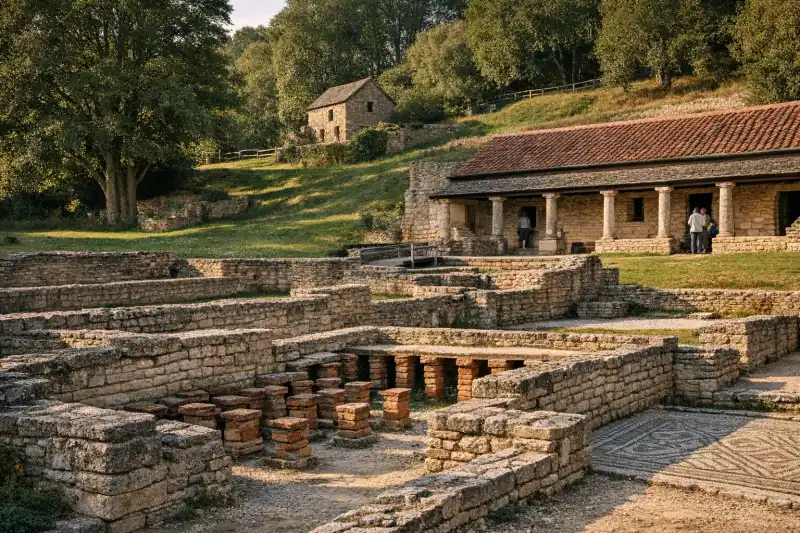
Chedworth Roman Villa
RomanExplore Chedworth Roman Villa, a remarkably preserved Roman countryside estate in the United Kingdom...
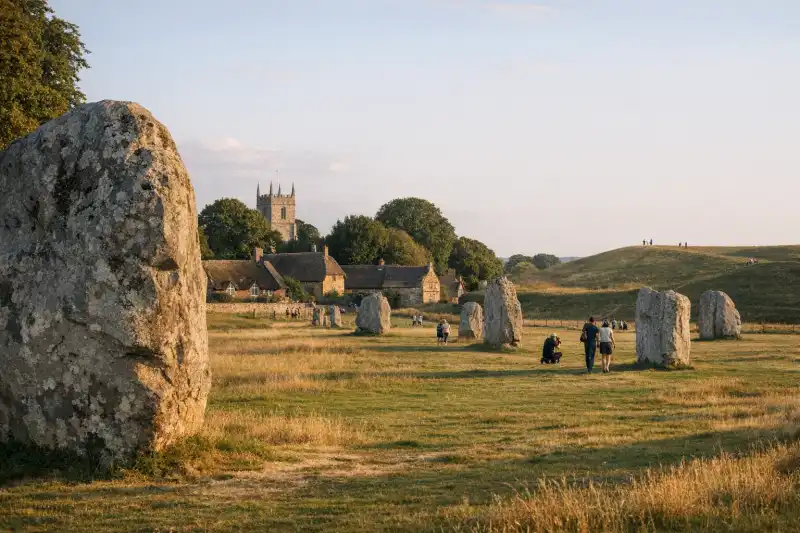
Avebury
Neolithic BritainExplore Avebury in the United Kingdom, a vast prehistoric stone circle and ritual landscape in the h...
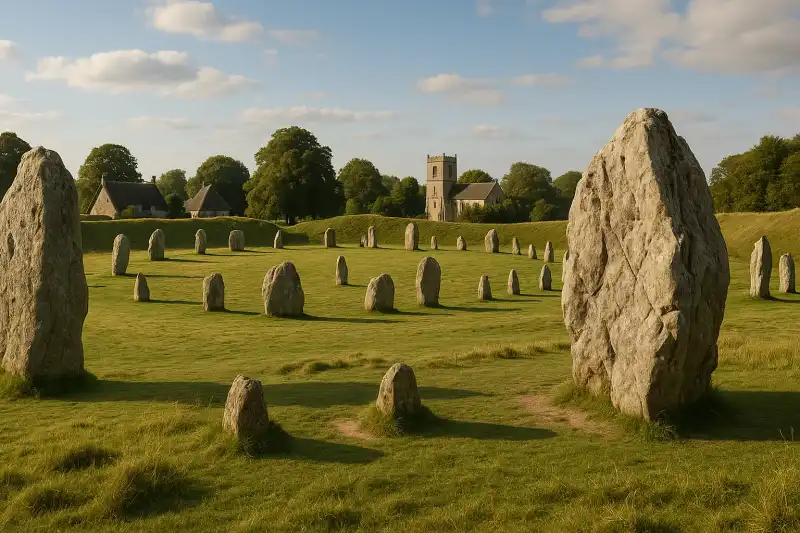
Avebury Stone Circle Travel Guide 2026: Best Walk Routes, History, and Visit Planning
Neolithic BritainPlan a stronger visit to Avebury Stone Circle with practical walking routes, landscape context, and ...