Quick Info
Curated Experiences
Forbidden City and Temple of Heaven Full-Day Tour
Forbidden City Skip-the-Line Tour with Expert Guide
Beijing Historical Tour: Forbidden City, Hutong and Jingshan Park
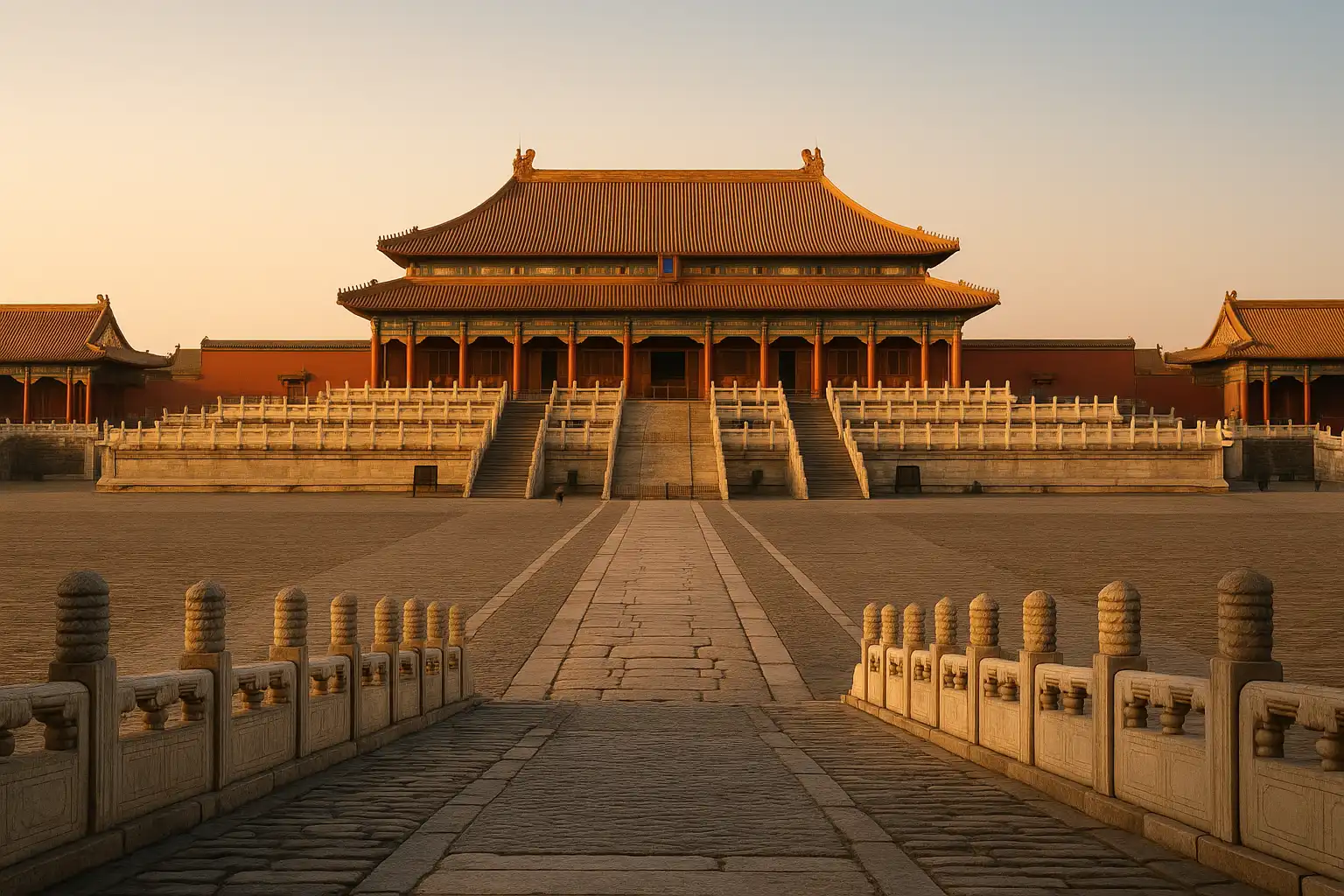
You enter through the Meridian Gate—a massive U-shaped portal whose five arches once assigned access strictly by rank, the central passage reserved for the emperor alone—and the first courtyard opens before you like a statement of intent. The paving stones stretch so far in every direction that the buildings at the edges seem to diminish. This space was not designed for human comfort. It was designed to make you feel small, to compress your sense of self until the only thing that remained was the authority radiating from the throne at its center. Two thousand years of Chinese political philosophy, distilled into architecture.
The Forbidden City is the largest palace complex ever built. Nearly 1,000 buildings spread across 72 hectares of central Beijing, all arranged along a precise north-south axis that extends the cosmic order outward from the emperor’s person to the edges of the empire. For 500 years, 24 emperors of the Ming and Qing dynasties governed from these halls, conducted rituals that sustained heaven’s mandate, and navigated the lethal politics of the imperial household behind walls of deep vermilion and beneath an ocean of glazed yellow tile. To enter without permission was to die. Today, the Palace Museum admits up to 80,000 visitors daily, and even at peak capacity the complex absorbs them. The scale is simply too vast for crowds to diminish.
Come prepared to walk. The central axis alone stretches over a kilometer from the south gate to the north exit, and the side halls, galleries, and gardens that branch off it could fill a second full day. This is not a site you glance at. It is a site you submit to.
Historical Context
The Forbidden City began as an act of political will. In 1406, the Yongle Emperor—third ruler of the Ming Dynasty and a man who had seized power through civil war against his own nephew—decided to move China’s capital from Nanjing to Beijing, his own power base in the north. A new capital required a new palace, and the palace Yongle envisioned would surpass anything that had come before. Construction consumed fourteen years, the labor of an estimated one million workers, and the expertise of some 100,000 artisans drawn from across the empire.
The materials alone testify to the ambition. White marble arrived from quarries near Beijing, hauled on roads flooded and frozen in winter so the blocks could be dragged across ice. An extraordinary hardwood called Phoebe zhennan—dense, fragrant, and resistant to decay—was felled in the forests of Sichuan and Yunnan and floated down rivers for months to reach the capital. The famous “golden bricks” paving the central halls were fired in kilns outside Suzhou and polished for months until they rang like metal underfoot.
The design that emerged was not simply a residence but a cosmological argument rendered in stone and timber. Confucian texts prescribed the arrangement: the emperor at the center, surrounded by rings of decreasing access that reflected the hierarchies of heaven and earth. Feng shui principles governed the orientation—the complex faces south, with Jingshan Hill raised from the excavated moat soil to provide protective elevation to the north. Every proportion, every color, every placement of gate and courtyard expressed the emperor’s position as the pivot between the human and divine realms.
The palace served as the seat of power through the entirety of the Ming Dynasty and then, after the Manchu conquest in 1644, the Qing Dynasty as well. Its final imperial occupant, the child emperor Puyi, was permitted to remain in the Inner Court even after the 1911 Revolution ended the imperial system, living a surreal existence of bicycle rides through corridors built for divine rulers until his expulsion in 1924. The Palace Museum opened to the public in 1925. UNESCO designated it a World Heritage Site in 1987, and a massive restoration completed around 2020 returned the complex to something close to its Qing-era appearance.
What to See
The Outer Court: Hall of Supreme Harmony
Crossing the five marble bridges over the Golden Water River and ascending through the Gate of Supreme Harmony, you reach the ceremonial heart of imperial China. The Hall of Supreme Harmony is the largest wooden hall in the country, raised on a triple-tiered terrace of white marble that elevates it above everything surrounding it. This is where emperors received officials during major ceremonies—coronations, New Year audiences, military victories—seated on the dragon throne beneath a gilded canopy. The hall’s dimensions stagger even by modern standards: eleven bays wide, with a roof ridge more than thirty-five meters above the courtyard floor. The ten ornamental figures marching along each roof ridge—a distinction unique to this building—announce that nothing in China could rank higher.
Behind it stand two companion halls. The Hall of Central Harmony served as the emperor’s preparation chamber before great ceremonies, a place to review ritual texts and compose himself before facing the court. The Hall of Preserving Harmony hosted imperial banquets and the highest level of the civil service examinations, the last held here in 1904. Behind this final hall, look for the enormous marble ramp carved with dragons and clouds: thirty meters long, weighing over two hundred tons, carved from a single quarried stone and dragged across frozen roads to Beijing.
Practical tip: The Outer Court halls are roped off—you view the interiors through open doorways. Arrive early for unobstructed views and photographs of the dragon throne. By mid-morning, the crowds at each doorway are three to four people deep.
The Inner Court: Palace of Heavenly Purity
Beyond the Gate of Heavenly Purity, the scale shifts from ceremonial theater to the complicated intimacy of domestic power. The three central halls of the Inner Court mirror the Outer Court’s arrangement but serve the rhythms of daily life rather than the demands of pageant. The Palace of Heavenly Purity was the emperor’s primary residence during the Ming Dynasty, and it contains the famous “Justice and Brightness” plaque behind which each Qing emperor reportedly placed a sealed box naming his chosen successor—a mechanism designed to prevent the succession crises that had destabilized earlier dynasties.
The Palace of Earthly Tranquility served as the empress’s residence and was later transformed under the Qing into a space for Manchu shamanistic rituals. The wedding chamber—a small, intensely red room where the emperor and empress spent their first nights together—survives intact, its furniture and hangings preserved as they were for the last imperial wedding in 1922.
Practical tip: The Six Eastern and Six Western Palaces branching off the central axis housed hundreds of concubines and are worth exploring for their quieter courtyards and glimpses into the domestic politics that shaped the empire. Most visitors skip them, which is precisely why you should not.
The Hall of Mental Cultivation
Tucked west of the central axis, this unassuming building was the actual working heart of Qing Dynasty governance. From the Yongzheng Emperor onward, rulers rose before dawn here to read memorials from officials across the empire, writing responses in cinnabar red ink that could determine the fate of millions. Here the Empress Dowager Cixi held court behind a bamboo screen during the Qing’s final decades, making decisions that shaped China’s disastrous encounter with modernity. The furnishings—desks, scrolls, worn wooden floors—preserve the texture of bureaucratic empire in a way that the grander halls cannot.
Practical tip: The Hall of Mental Cultivation is not on the main axis and many visitors miss it. Follow signs west from the Inner Court. It is the single most important room in the complex for understanding how China was actually governed.
The Treasure Gallery and Clock Exhibition
The side galleries reward those who stray from the central route. The Treasure Gallery (separate admission, 10 CNY), housed in the Palace of Tranquil Longevity complex in the northeast, displays the accumulated wealth of two dynasties: carved jade mountains the size of boulders, gold Buddhist statues, embroidered silk garments, and ceremonial objects whose technical virtuosity required generations of specialist craftsmen. The Clock and Watch Gallery (10 CNY) holds hundreds of elaborate mechanical timepieces, mostly gifts from European powers in the seventeenth through nineteenth centuries, their automated figures of acrobats and musicians designed to perform on the hour for emperors who had never seen clockwork.
Practical tip: Both galleries are worth the small additional fee. The Treasure Gallery alone justifies an extra hour. Budget accordingly.
The Imperial Garden
After the vast ceremonial distances of the central axis, the Imperial Garden at the palace’s northern end arrives as genuine relief. Ancient cypress trees—some over four hundred years old—shade rockeries assembled from Taihu Lake stones, their contorted forms prized for natural asymmetry. Pavilions, a rockery hill, and the Hall of Imperial Peace create an intimate world in deliberate contrast to the public grandeur beyond. Note the well near the garden’s eastern wall: it was here, according to historical record, that the Guangxu Emperor’s favorite concubine was thrown to her death on the orders of the Empress Dowager during the 1900 Boxer Rebellion.
Practical tip: The garden is small and fills quickly after 10:00 AM. If you are following the standard south-to-north route, you will reach it toward the end of your visit when energy is flagging—the shade and the benches are welcome.
Timing and Seasons
Best months: April through May and September through October offer the most pleasant weather and the clearest skies for photography. Beijing’s autumn, with its crisp blue-sky days and moderate temperatures (15-25 degrees Celsius), is the ideal season. Spring brings flowers to the Imperial Garden but also peak visitor numbers.
Winter advantage: November through March delivers dramatically emptier courtyards, lower ticket prices (40 CNY versus 60 CNY), and an austere beauty that suits the palace’s character. Temperatures can drop below freezing, and Beijing’s winter winds are cutting, but the near-solitude in spaces designed for crowds of thousands creates an atmosphere no other season can match.
Avoid entirely: Golden Week (October 1-7) and Spring Festival (late January or February). The daily cap of 80,000 visitors sells out, and the central axis becomes a slow-moving river of bodies. The Forbidden City on these dates is a fundamentally different and inferior experience.
Best time of day: Arrive at the 8:30 AM opening without exception. The first ninety minutes before organized tour groups arrive offer both the best photography and the clearest sense of how immense and silent these spaces actually are. By 10:30 AM, the Outer Court is saturated. The late afternoon, after 3:00 PM, sees thinning crowds as tour schedules wind down.
Tickets, Logistics and Getting There
Booking is mandatory: Same-day tickets at the gate do not exist. Book online through the official site dpm.org.cn (Chinese language, but navigable with a translation app) or through international platforms like Viator or GetYourGuide. Hotel concierges in Beijing can also arrange tickets. Reserve at least three to seven days ahead during spring and autumn, and as early as possible around Golden Week and Spring Festival. Your passport must match the name on the ticket.
Prices: Adult entry is 60 CNY ($8 USD) from April through October, 40 CNY ($5.50 USD) November through March. Students pay 20 CNY year-round. The Treasure Gallery and Clock Exhibition each cost an additional 10 CNY. An audio guide (40 CNY, deposit required) is available at the entrance and worth considering given limited English signage inside.
Getting there: The Forbidden City occupies the center of Beijing at 4 Jingshan Front Street, Dongcheng District, immediately north of Tiananmen Square. Metro Line 1 to Tiananmen East or Tiananmen West station puts you within a ten-minute walk of the Meridian Gate. Taxis and Didi should be directed to “Gugong” or “Zijin Cheng”—drivers will drop you nearby rather than at the entrance itself due to the pedestrian zone.
Entry and exit: You must enter at the South Gate (Meridian Gate / Wumen) and exit at the North Gate (Gate of Divine Might / Shenwumen). Re-entry after exiting is not permitted, so plan your route before going in. The complex flows in one direction, south to north.
Security: Airport-style screening at the entrance confiscates lighters and matches. Large bags may need to be checked. Allow fifteen to twenty minutes for the security line during peak hours.
Practical Tips
- Wear comfortable shoes with good grip. The complex involves hours of walking on uneven stone, marble staircases, and worn thresholds. Heels and thin-soled shoes will make you miserable by midday.
- Bring sun protection—hat, sunscreen, water—for the Outer Court, which offers almost no shade. In summer, temperatures on the exposed stone courtyards can exceed 35 degrees Celsius.
- Photography is permitted throughout except in certain exhibition halls where flash is prohibited. A wide-angle lens captures the courtyard scale; a telephoto reaches the roof details and dragon carvings that make the architecture extraordinary.
- The complex has limited food options inside—a few small shops sell drinks and snacks. Eat a substantial breakfast before entering, or bring provisions.
- Restrooms are available at regular intervals but can be crowded at midday. The facilities near the Imperial Garden and the side palaces tend to be less congested.
- English signage has improved dramatically but remains sparse in the side halls and lesser-known galleries. The audio guide or a knowledgeable human guide adds significant depth to the experience.
Suggested Itinerary
8:30 AM — Enter at the Meridian Gate. Cross the Golden Water River and proceed through the Gate of Supreme Harmony to the Outer Court. Spend thirty to forty minutes with the Hall of Supreme Harmony, the Hall of Central Harmony, and the Hall of Preserving Harmony, including the carved marble ramp behind the third hall.
9:15 AM — Detour west to the Hall of Mental Cultivation. Spend twenty to thirty minutes in the building where China was actually governed, studying the emperor’s desk, the audience chamber, and Cixi’s screen.
9:45 AM — Return to the central axis and pass through the Gate of Heavenly Purity into the Inner Court. Visit the Palace of Heavenly Purity, the Hall of Union, and the Palace of Earthly Tranquility, including the wedding chamber. Allow thirty minutes.
10:15 AM — Explore the Six Eastern Palaces and the Treasure Gallery (10 CNY extra). Budget forty-five to sixty minutes for the jade, gold, and silk collections.
11:15 AM — Visit the Clock and Watch Gallery (10 CNY extra). Allow twenty to thirty minutes for the European timepieces.
11:45 AM — Finish with the Imperial Garden. Rest on a bench beneath the ancient cypresses before exiting through the North Gate.
12:15 PM — Exit and cross the street to Jingshan Park (2 CNY entry). Climb to the Pavilion of Everlasting Spring for the essential panoramic photograph of the entire Forbidden City spread across Beijing’s skyline—the single best view of the complex and worth the ten-minute climb.
Nearby Sites
Temple of Heaven — The circular altar complex in southern Beijing where emperors prayed for good harvests and performed the rituals that sustained heaven’s mandate. About 30 minutes by taxi from the Forbidden City, and an essential companion visit for understanding how imperial ceremony extended beyond the palace walls.
Summer Palace — The imperial gardens, covered corridors, and vast Kunming Lake that served as the court’s retreat from Beijing’s oppressive summers. Located about 45 minutes northwest of the city center by taxi. Allow a half day.
Great Wall at Badaling — The most accessible and heavily restored section of the Great Wall, about 70 kilometers northwest of Beijing. Most visitors combine this with a full day trip. The Mutianyu section, slightly farther, offers a less crowded alternative with comparable views.
Jingshan Park — Immediately north of the Forbidden City’s exit gate. The artificial hill was created from earth excavated during the moat’s construction. The panoramic view from the summit pavilion is the single best photograph you will take in Beijing. Budget thirty minutes.
The Center of the World
There is a moment, usually in the first courtyard before the tour groups arrive, when the Forbidden City delivers on the full promise of its name. The vermilion walls rise on every side. The yellow roofs catch the morning light. The marble bridges arc over still water. And the silence is so complete that you can hear the flag on the Meridian Gate snap in the wind. For an instant, the five centuries of ceremony and intrigue and governance that filled these spaces feel almost tangible—not as museum exhibit, but as living memory held in stone.
The Forbidden City asks nothing of its visitors except time and attention. Give it both, and it will show you what it meant to build the center of the world.
Discover More Ancient Wonders
- Temple of Heaven — Where emperors prayed for good harvests on the sacred Altar of Heaven
- Summer Palace — Imperial gardens, covered corridors, and the vast Kunming Lake
- Great Wall at Badaling — China’s most iconic fortification at its most accessible stretch
- Terracotta Warriors — The 8,000-strong clay army guarding China’s first emperor near Xi’an
- Explore our China ancient sites hub for more destinations
Quick Facts
| Attribute | Details |
|---|---|
| Location | Dongcheng District, central Beijing |
| Country | China |
| Region | Beijing |
| Civilization | Chinese Imperial (Ming and Qing dynasties) |
| Chinese Name | Zijincheng (紫禁城); Palace Museum (故宫博物院) |
| UNESCO Status | World Heritage Site (1987) |
| Historical Period | 1406-1912 CE |
| Size | 72 hectares; nearly 1,000 buildings |
| Address | 4 Jingshan Front Street, Dongcheng District |
| Entry Fee | 60 CNY ($8 USD) Apr-Oct; 40 CNY ($5.50 USD) Nov-Mar |
| Hours | 8:30 AM-5:00 PM (Apr-Oct); 8:30 AM-4:30 PM (Nov-Mar); closed Mondays |
| Best Time | April-May, September-October (early morning) |
| Suggested Stay | Half day (3-4 hours) to full day |
| Coordinates | 39.9163, 116.3972 |
Frequently Asked Questions
How do I buy tickets for the Forbidden City?
Tickets must be purchased online in advance at dpm.org.cn (Chinese) or through travel platforms like Viator. Same-day tickets are NOT sold at the gate. Passport required for entry. During peak season (April-October), book at least 3-7 days ahead. Daily visitor limit is 80,000. Entry is 60 CNY ($8 USD) April-October, 40 CNY ($5.50 USD) November-March.
How much time do I need at the Forbidden City?
Plan 3-4 hours for a thorough visit covering the main axis (Outer Court and Inner Court) and some side halls. Serious enthusiasts may want a full day (5-6 hours) to explore exhibitions in detail. The complex covers 72 hectares with nearly 1,000 buildings—prioritize the central axis if time is limited. Wear comfortable shoes for extensive walking on uneven stone.
What is the best route through the Forbidden City?
Enter through the South Gate (Meridian Gate) and follow the central north-south axis: Outer Court (Hall of Supreme Harmony, Hall of Central Harmony, Hall of Preserving Harmony) → Inner Court (Palace of Heavenly Purity, Hall of Union, Palace of Earthly Tranquility) → Imperial Garden → exit North Gate (Gate of Divine Might). Side halls contain museums worth exploring if time permits.
When is the best time to visit the Forbidden City?
Early morning (8:30 AM opening) offers fewer crowds and better photography. Avoid weekends, Chinese holidays (especially Golden Week October 1-7, Spring Festival), and midday (10 AM-2 PM) when tour groups peak. Spring (April-May) and autumn (September-October) offer pleasant weather. Winter (November-March) has smaller crowds and lower prices.
What should I wear to the Forbidden City?
Comfortable walking shoes are essential—the complex involves extensive walking on uneven stone and stairs. Dress in layers as Beijing weather varies. No dress code enforced, but modest dress is respectful for a historical/cultural site. Sun protection (hat, sunscreen) recommended as much of the complex is exposed.
Is the Forbidden City wheelchair accessible?
Partially. The main central axis has ramps and accessible routes, but many side areas, halls with stairs, and the Imperial Garden have limited accessibility. Wheelchairs are available for loan at the entrance. Contact the Palace Museum in advance for specific accessibility needs and recommendations.
Nearby Ancient Sites
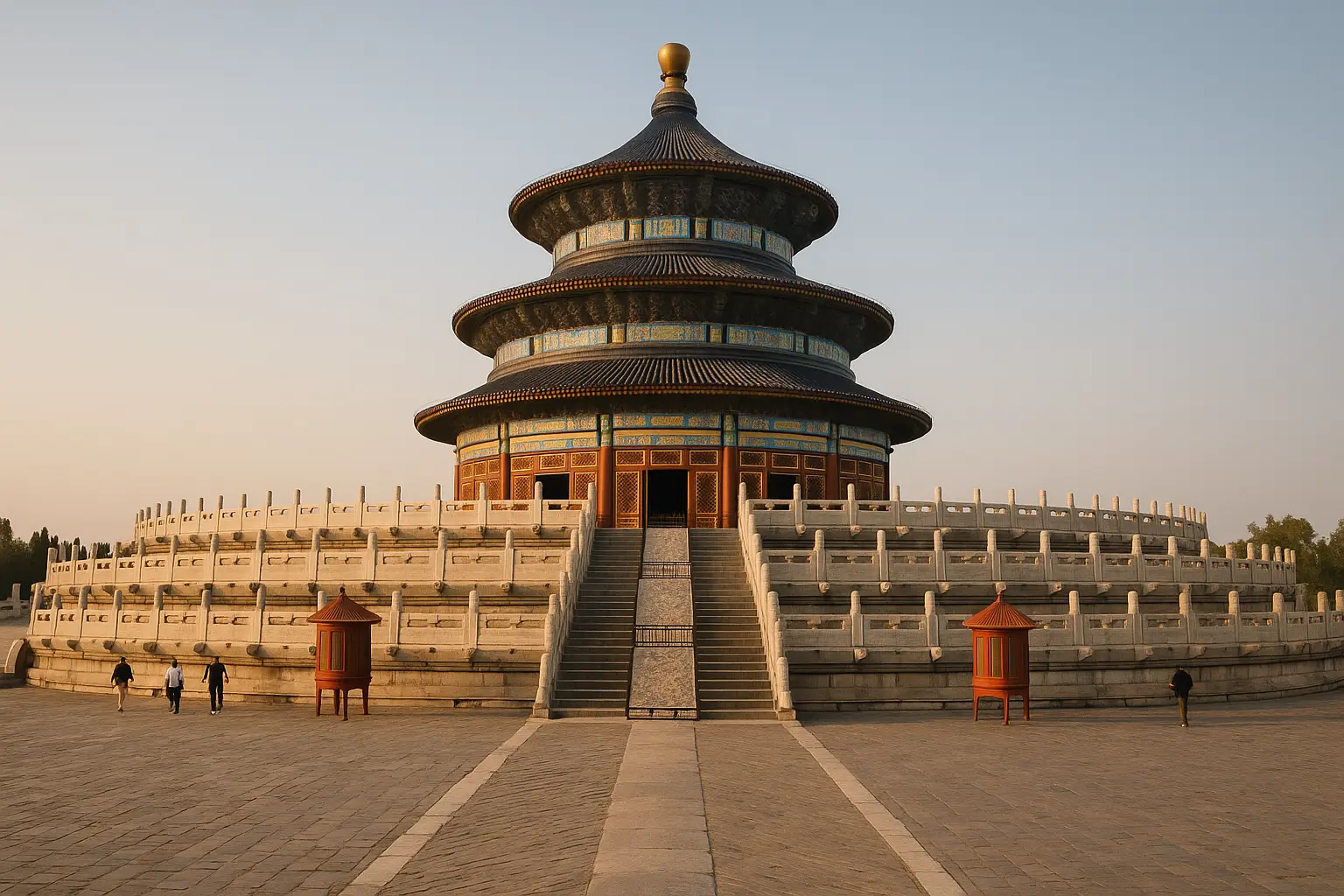
Temple of Heaven China Travel Guide 2026: Where Emperors Prayed
Chinese ImperialVisit the Temple of Heaven where Ming and Qing emperors prayed for good harvests. Explore the Hall o...
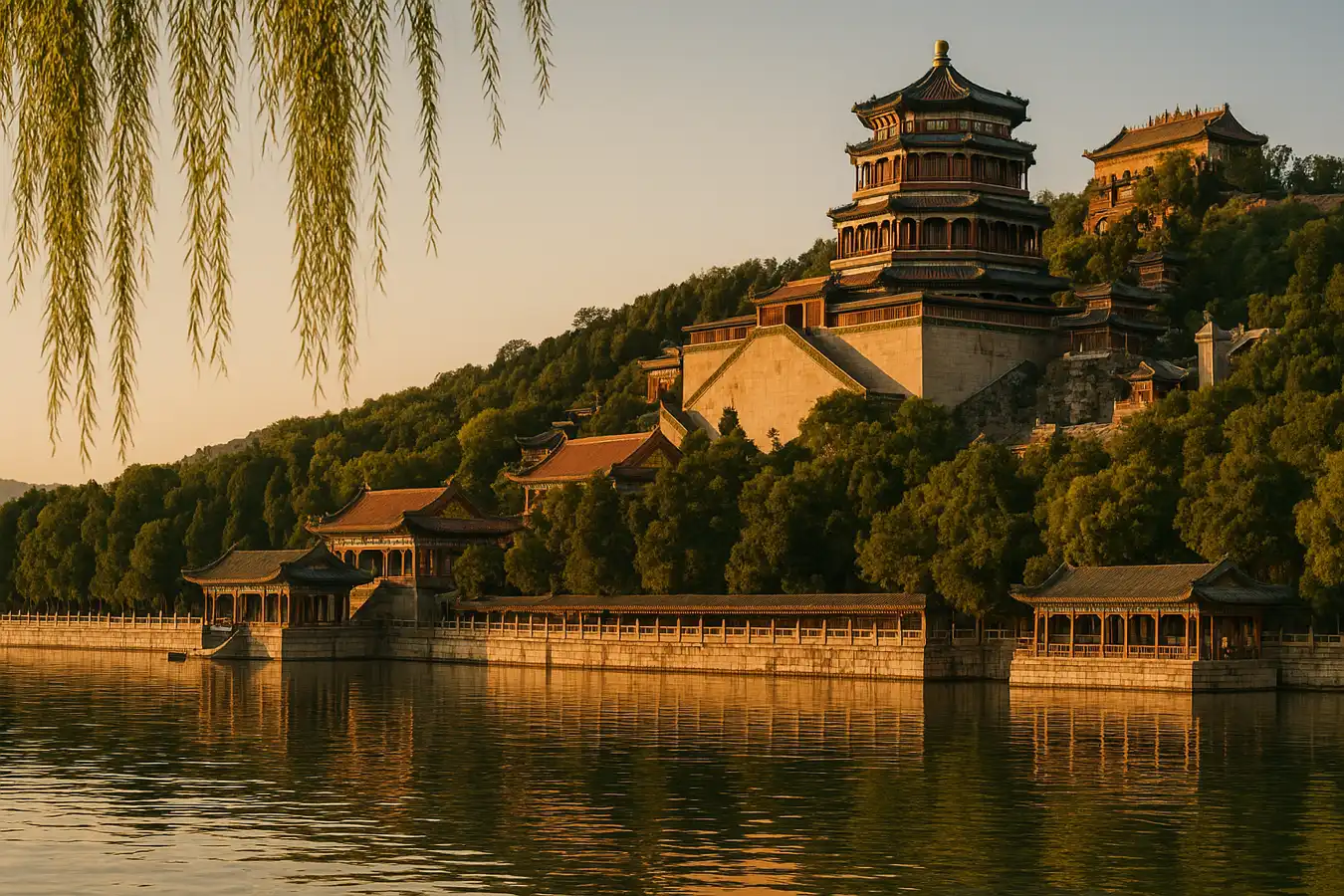
Summer Palace China Travel Guide 2026: Imperial Gardens of Beijing
Chinese ImperialExplore the Summer Palace, China's masterpiece of imperial garden design. Discover Kunming Lake, Lon...
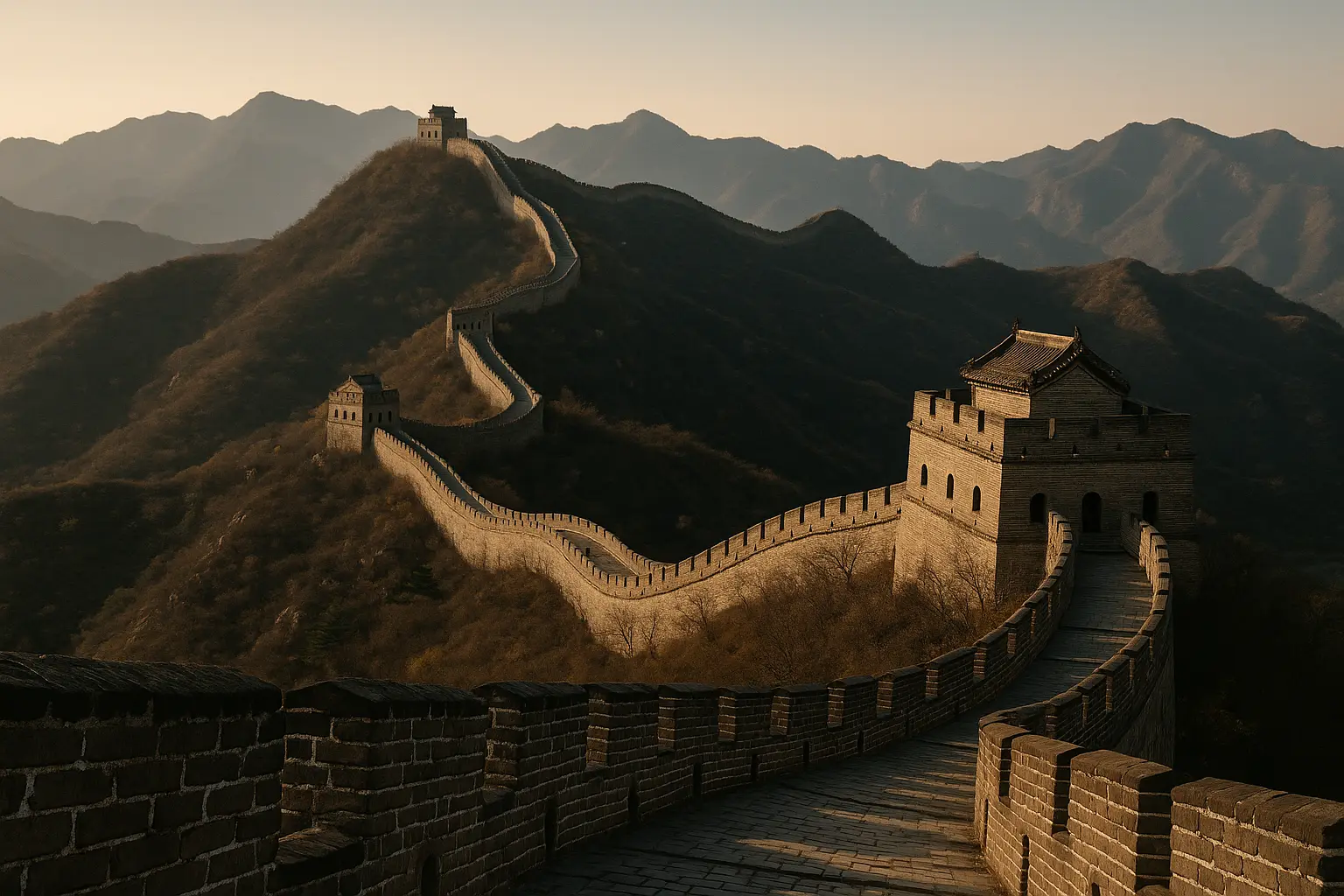
Great Wall of China Badaling Travel Guide 2026: Iconic Fortification
Chinese ImperialVisit Badaling, the most famous section of the Great Wall of China. Our guide covers tickets, cable ...