Quick Info
Curated Experiences
Fujiwara Palace Ruins and Asuka Historical Sites Tour
Private Asuka and Fujiwara Palace Heritage Tour
Nara Ancient Capitals Tour Including Fujiwara Palace Ruins
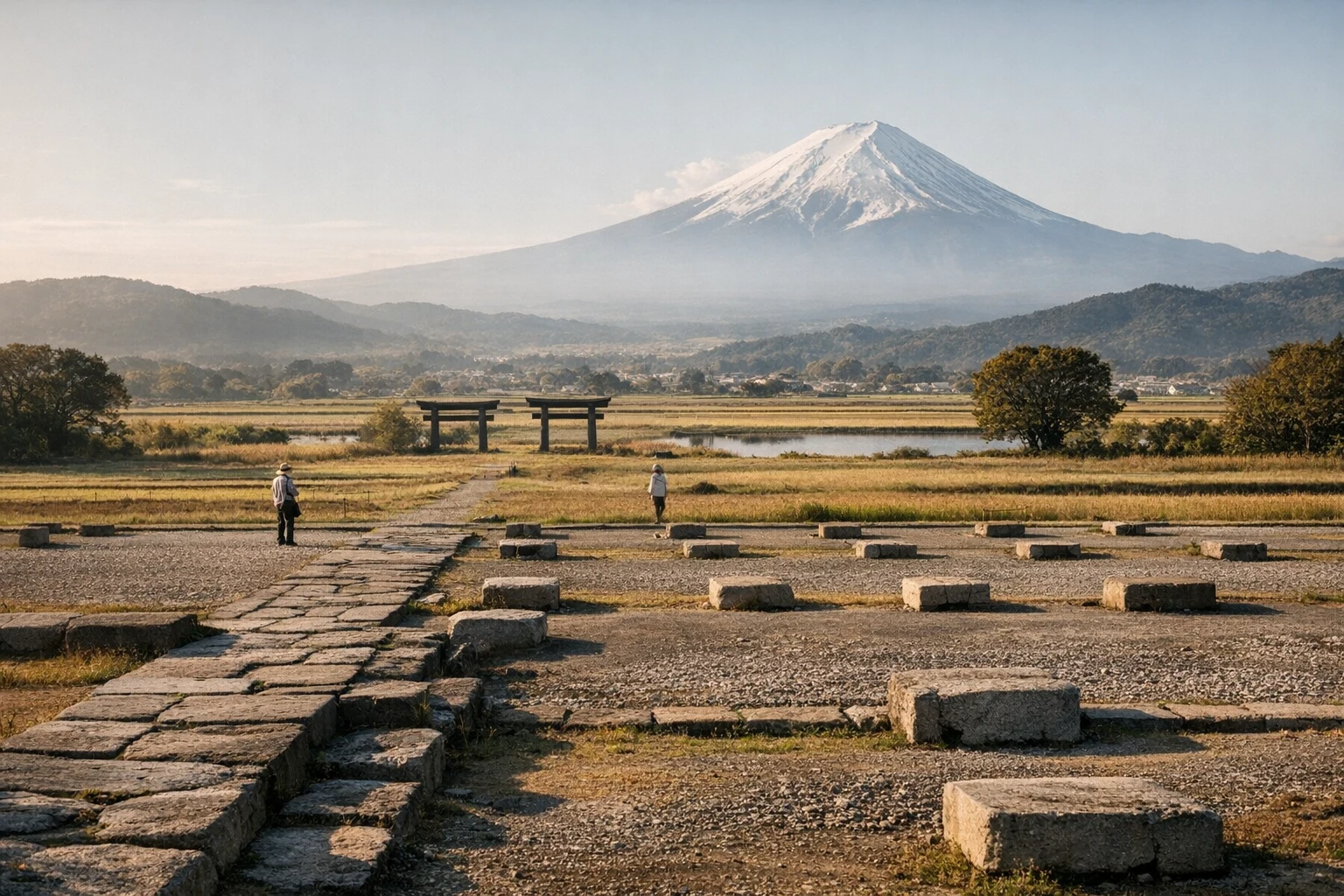
Fujiwara Palace Ruins in Japan do not overwhelm visitors with towering walls or dramatic reconstructions. Instead, the site opens quietly across the Nara basin as a broad archaeological plain where the scale of ancient state power must be imagined through foundations, markers, excavated remains, and the great sweep of land itself. That quietness is not a weakness. It is the point. In Kashihara, in the historic Asuka-Fujiwara region, you are standing at the place where Japan made one of its most important political experiments: the creation of its first fully planned imperial capital. The palace that once stood here was the ceremonial and administrative heart of Fujiwara-kyō, a city laid out with extraordinary ambition at the end of the 7th century, at a moment when the court was consolidating institutions, ritual, and authority in new ways.
What makes Fujiwara Palace Ruins so rewarding is that it changes how you think about ancient Japan. Many travelers know the country through later temples, castles, and urban neighborhoods that still rise above the ground. Fujiwara belongs to an earlier moment, one in which the shape of the state was still being worked out. The site offers little instant spectacle, but it gives something rarer: the chance to stand inside the geometry of political transformation. Broad palace precincts, traces of gates and halls, and the open relationship between the ruins and surrounding mountains make the landscape itself feel like evidence. This is not simply where a palace once stood. It is where the court tested the idea of a planned capital city as the physical expression of centralized rule. For visitors willing to look past the absence of tall ruins, Fujiwara is one of the most conceptually powerful heritage sites in Japan.
History
Before Fujiwara: Court Centers in the Asuka Region
Before Fujiwara-kyō was established, the political heart of early Japan lay in the Asuka region, where court centers shifted between different palace sites according to succession, politics, and ritual needs. The ruling elite of the 6th and 7th centuries did not yet inhabit one long-term fixed capital in the later sense. Instead, courts moved, and authority was expressed through a combination of palace compounds, clan networks, sacred geography, and emerging religious institutions. This mobility reflected an earlier phase of state formation, when structures of governance were still consolidating and the relationship between ruler, land, and ritual center remained relatively fluid.
At the same time, the region was undergoing enormous transformation. Buddhism had entered elite life, continental diplomatic contacts were intensifying, and reform movements associated with the 7th century sought to strengthen the throne and reorganize political authority. The famous reform era often linked to the Taika changes and later ritsuryō structures pushed the court toward more formalized institutions, land administration, and bureaucratic order. These developments created both the ideological and practical conditions for a new kind of capital—one planned on a much larger scale and shaped by models from Tang China and the Korean peninsula, yet adapted to Japanese realities.
The Founding of Fujiwara-kyō
Fujiwara-kyō was founded in 694 CE, during the reign of Empress Jitō, and it is generally regarded as the first fully planned imperial capital in Japan. This was a major departure from earlier patterns. Rather than another temporary palace center, Fujiwara represented a deliberate attempt to create a capital city with formal layout, axial planning, and a monumental palace precinct at its heart. The city was arranged with a grid system and organized in a way that reflected the court’s increasing commitment to centralized administration and ceremonial order.
The palace complex itself formed the political and symbolic center of this urban experiment. Here the ruler presided over state ritual, governance, reception, and administration. The built landscape would have included grand halls, gates, offices, and service structures, all set within a carefully defined enclosure. Although little rises above ground today, excavations make clear that this was a major undertaking, not a modest transitional compound. Fujiwara-kyō expressed the court’s ambition to rule not only through lineage and ritual charisma, but through spatial order.
The city’s foundation also reflects the growing confidence of the Japanese court in adapting continental models to local use. Fujiwara was inspired by East Asian capital planning traditions, especially those visible in Chinese urbanism, but it was not a mere copy. It emerged from Japanese political needs, geography, and court culture. That balance between adaptation and innovation is central to its historical importance.
A Brief Capital with Lasting Consequences
Fujiwara-kyō served as the imperial capital for only a short period, from 694 to 710 CE. By later standards, that brevity might seem to reduce its significance. In fact, the opposite is true. Fujiwara’s importance lies precisely in its role as a pivotal experiment. It stands between the older mobile court tradition of Asuka and the larger, more enduring planned capitals that followed, especially Heijō-kyō at Nara. In many ways, Fujiwara was the prototype that made later capitals possible.
During its brief life, the capital hosted court ceremony, policy formation, diplomatic interaction, and the visible performance of imperial authority. It was a working center of the state at a moment when Japanese rulership was being codified and formalized. When the court moved to Heijō-kyō in 710, the shift did not erase Fujiwara’s importance; it confirmed that the planned-capital model had become central to how power would be organized. The move from Fujiwara to Nara was therefore not a rejection but an expansion of the logic first embodied here.
Burial, Rediscovery, and Archaeological Meaning
After the capital moved, Fujiwara-kyō faded into the agricultural landscape. Buildings disappeared, materials were reused, and the once-formal city gradually sank beneath fields and ordinary rural patterns. Because its architecture was largely of timber and earth rather than enduring stone, little dramatic ruin remained above ground. For centuries, the site’s former status survived more in historical memory and local geography than in visible monumentality.
Modern archaeology changed that. Excavations revealed the scale of the palace precinct, the city layout, gate positions, halls, drainage systems, and artifact zones that made it possible to reconstruct Fujiwara-kyō as a major early capital. These discoveries transformed the site from a quiet plain into one of the key locations for understanding early state formation in Japan. Today the ruins are recognized as part of the broader Asuka-Fujiwara heritage landscape, and their importance lies not in ruined grandeur but in the remarkable clarity with which archaeology has restored a foundational political experiment to view.
Key Features
The most important feature of Fujiwara Palace Ruins is the sheer scale of the palace precinct. The open landscape allows visitors to feel the breadth of the compound in a way that smaller, more enclosed ruins often cannot. This is one of those archaeological sites where emptiness is meaningful. Marker lines, foundation outlines, explanatory signs, and broad fields together create a powerful sense of spatial order. Rather than crowding the visitor with surviving masonry, the site asks you to read power through alignment and extent. Once you begin to understand the dimensions involved, the palace stops feeling absent and starts feeling enormous.
Another major feature is the visible plan of the site. Fujiwara is especially rewarding for visitors interested in urbanism and political geography because it reveals how early capitals were conceptualized. The placement of major halls, gates, and administrative zones helps make the structure of early imperial rule legible. This is not just a former residence. It is a planned center of governance, ritual, and authority. The experience can feel more intellectual than emotional at first, but many visitors find the opposite happens with time: the more legible the site becomes, the more moving it feels.
The relationship between Fujiwara Palace and the wider Asuka-Fujiwara landscape is another defining feature. The ruins do not stand in isolation. Around them lies one of the most historically rich basins in Japan, dense with temples, tombs, roads, sacred hills, and court-associated sites. This wider context matters because Fujiwara was not simply dropped into empty land. It emerged from an already charged political and ritual environment. When visited alongside nearby Asuka Historical Sites and the later Heijō Palace context, Fujiwara’s place in the evolution of Japanese capitals becomes much clearer.
Seasonal scenery also plays a bigger role here than at many other archaeological sites. The open grounds are known for flowers, wide sky, mountain views, and a changing visual rhythm across the year. In spring, blossoms and fresh growth soften the archaeological lines and create one of the most photogenic times to visit. Autumn brings clearer air and a more sculpted landscape, making the palace outlines and distant ridges feel sharper. Even this seasonal beauty contributes to the experience of Fujiwara as a landscape site rather than a single standing monument.
Finally, the site’s interpretive approach is itself a feature. Fujiwara Palace Ruins do not rely on heavy-handed reconstruction. Instead, the balance between archaeological evidence and restrained presentation allows visitors to imagine the missing architecture without losing sight of what is genuinely known. That restraint gives the site intellectual integrity. It feels like a real archaeological landscape, not a theme-park recreation of ancient court life.
Getting There
Fujiwara Palace Ruins are located in Kashihara, Nara Prefecture, and are usually visited as part of the wider Asuka-Fujiwara historical area. The easiest way to reach the region is by train from Kyoto, Osaka, or Nara. Kintetsu rail lines are particularly useful, and stations such as Yamato-Yagi or nearby local stops provide convenient access depending on your route. From Osaka or Kyoto, the journey is straightforward but may involve one or more transfers. Train fares are generally moderate by Japanese intercity standards, especially for regional lines.
Once in Kashihara or the surrounding area, visitors often use a combination of walking, taxi, bus, or rental bicycle. Short taxi rides from nearby stations are practical, especially if you want to conserve time or are combining several sites in one day. Rental bicycles are a popular and arguably ideal option for the broader Asuka-Fujiwara landscape, since they allow you to move flexibly between Fujiwara Palace Ruins, nearby archaeological sites, museums, and village roads at an easy pace. Rental costs vary, but cycling is usually an economical and pleasant way to explore the area.
The palace site itself is open and spread out rather than entered through one dramatic gate. That means it helps to arrive with at least a rough understanding of the layout. Combining Fujiwara Palace Ruins with the Asuka Historical Sites or Heijō Palace makes for the most rewarding day, since the connections between these places are a big part of the story. Comfortable shoes and weather-appropriate clothing matter, especially if you are exploring on foot or by bicycle.
When to Visit
The best times to visit Fujiwara Palace Ruins are spring and autumn. In spring, the broad open site often becomes especially beautiful, with flowers, fresh greenery, and mild temperatures making the landscape feel expansive and gentle. This is a season when the contrast between archaeological order and natural renewal becomes especially striking. Autumn is equally rewarding, with cooler air, crisp light, and clearer long-distance views across the basin. Both seasons make it easier to appreciate the site as a landscape of political geometry rather than simply a field of traces.
Summer can be hot and humid, and because much of the palace ruins are open to the sky, the heat can be more demanding than the sparse remains initially suggest. If you visit in summer, go early in the morning or later in the afternoon and bring water and sun protection. Winter has its own quiet appeal, especially for travelers who enjoy austere landscapes and lighter visitor numbers, but it can feel exposed in cold wind and flatter light.
Morning is usually the best time to arrive. The site feels calm, the basin light is soft, and there is more mental space for the sort of imaginative reconstruction Fujiwara rewards. This is not a site that works best in a rush. Its appeal depends on allowing the layout, the emptiness, and the historical significance to accumulate gradually. If you give it time, the quiet becomes one of its greatest strengths.
| Quick Facts | Details |
|---|---|
| Location | Kashihara, Nara Prefecture, Japan |
| Best Known For | The first fully planned imperial capital site in Japan |
| Historical Period | Late Asuka period |
| Capital Dates | 694-710 CE |
| Cultural Importance | Key stage in the formation of the early Japanese centralized state |
| Nearby Heritage Context | Asuka-Fujiwara historical landscape |
| Recommended Visit Length | 1 to 2 hours, longer with nearby sites |
| Best Season | Spring and autumn |
| Best Way to Explore | On foot or by bicycle with surrounding heritage stops |
| Practical Tip | Combine Fujiwara with nearby Asuka sites to understand how it fits into the evolution of Japan’s early capitals |
Frequently Asked Questions
What are the Fujiwara Palace Ruins best known for?
The Fujiwara Palace Ruins are best known as the remains of Japan’s first fully planned imperial capital, a crucial step in the formation of the early centralized state.
Where are the Fujiwara Palace Ruins located?
The ruins are located in Kashihara, Nara Prefecture, within the historic Asuka-Fujiwara cultural landscape of Japan.
How old is Fujiwara Palace?
Fujiwara-kyō became the imperial capital in 694 CE and remained the capital until 710 CE, during the late Asuka period.
Why is Fujiwara Palace important in Japanese history?
It marks a major turning point in Japan’s adoption of planned capital design, court institutions, and administrative systems influenced by continental East Asian models.
How much time should you spend at Fujiwara Palace Ruins?
Most visitors should allow 1 to 2 hours for the palace ruins themselves, and longer if combining them with the wider Asuka-Fujiwara historical area.
When is the best time to visit Fujiwara Palace Ruins?
Spring and autumn are especially rewarding, with comfortable temperatures and seasonal scenery that suits the site’s broad open archaeological landscape.
Nearby Ancient Sites
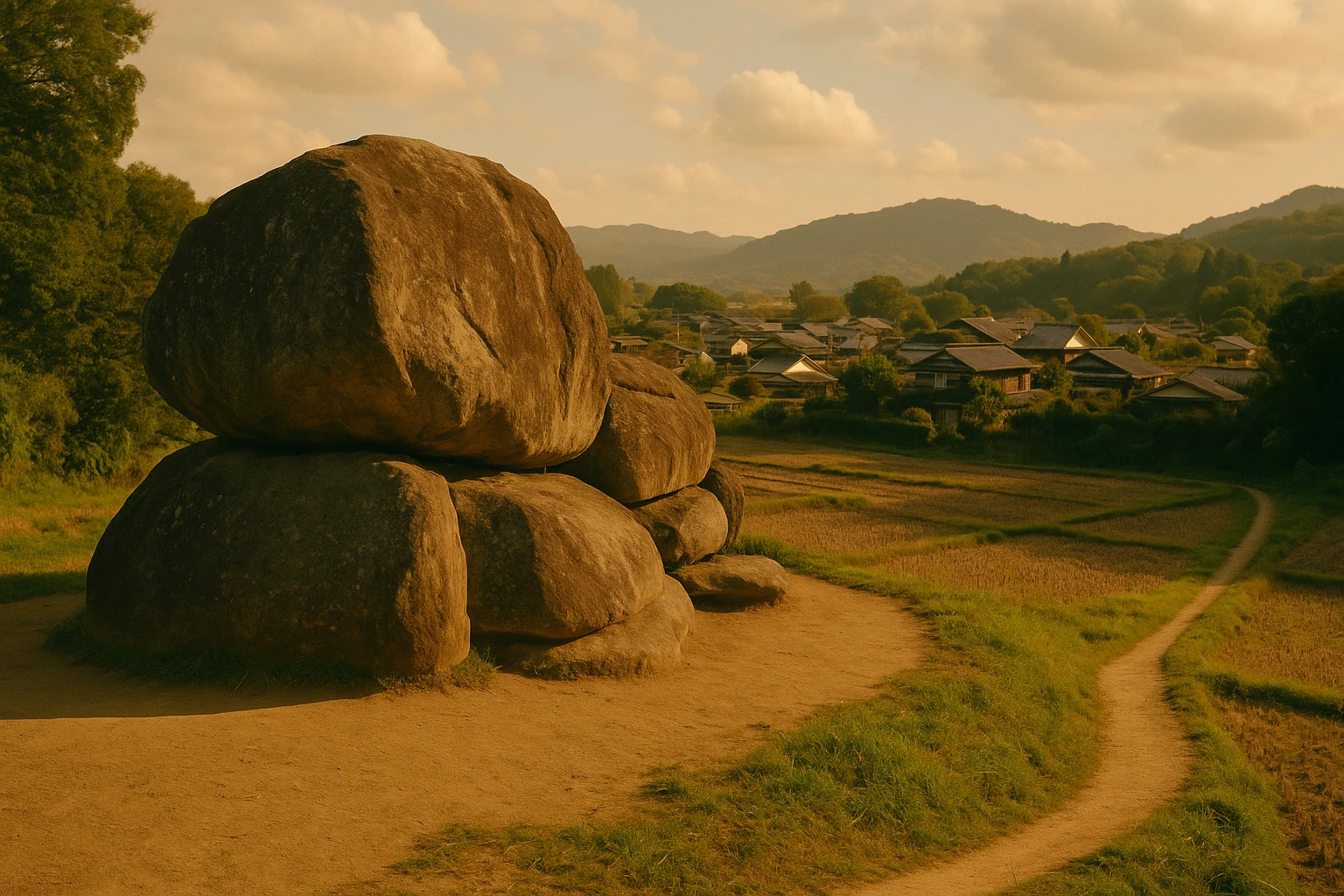
Asuka Historical Sites
Yamato CourtDiscover Asuka's ancient tombs, Buddhist temples, and enigmatic stone monuments — Japan's cradle of ...
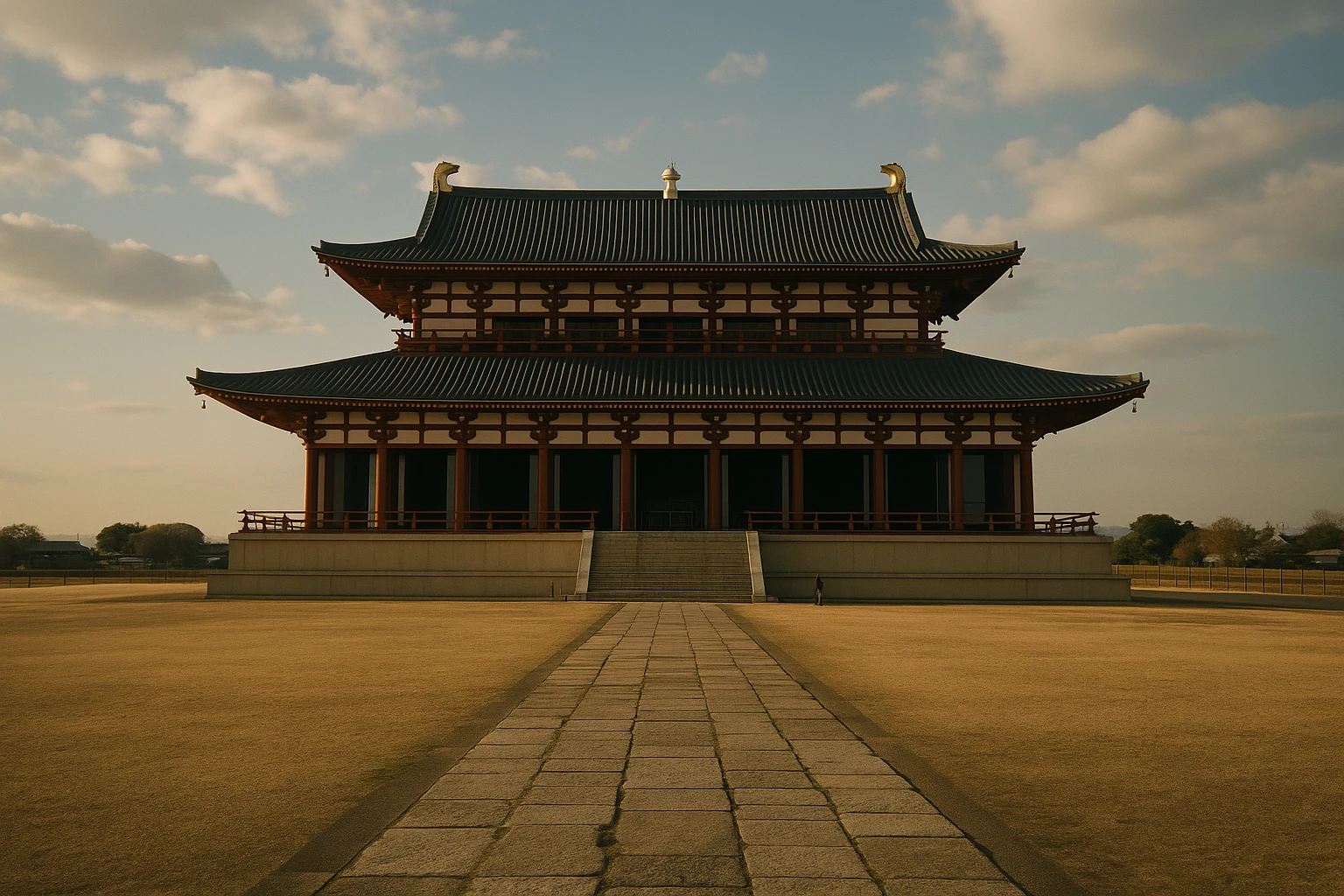
Heijo Palace Site
Nara Period JapanWalk the vast grounds of Japan's 8th-century imperial capital in Nara — a UNESCO World Heritage Site...
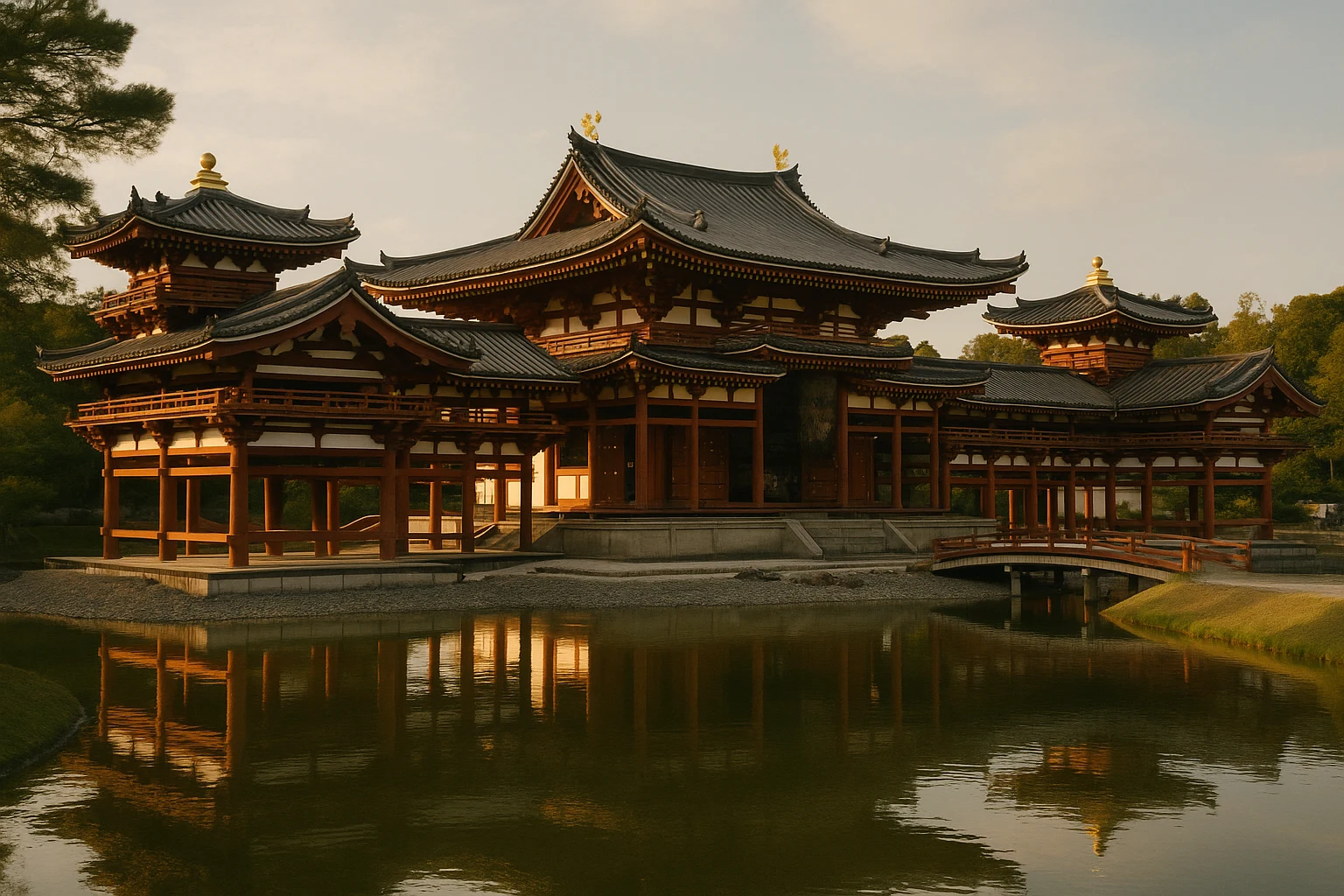
Byodoin Temple
Heian JapanA UNESCO-listed Heian-era masterpiece in Uji, Japan, renowned for its iconic Phoenix Hall reflected ...
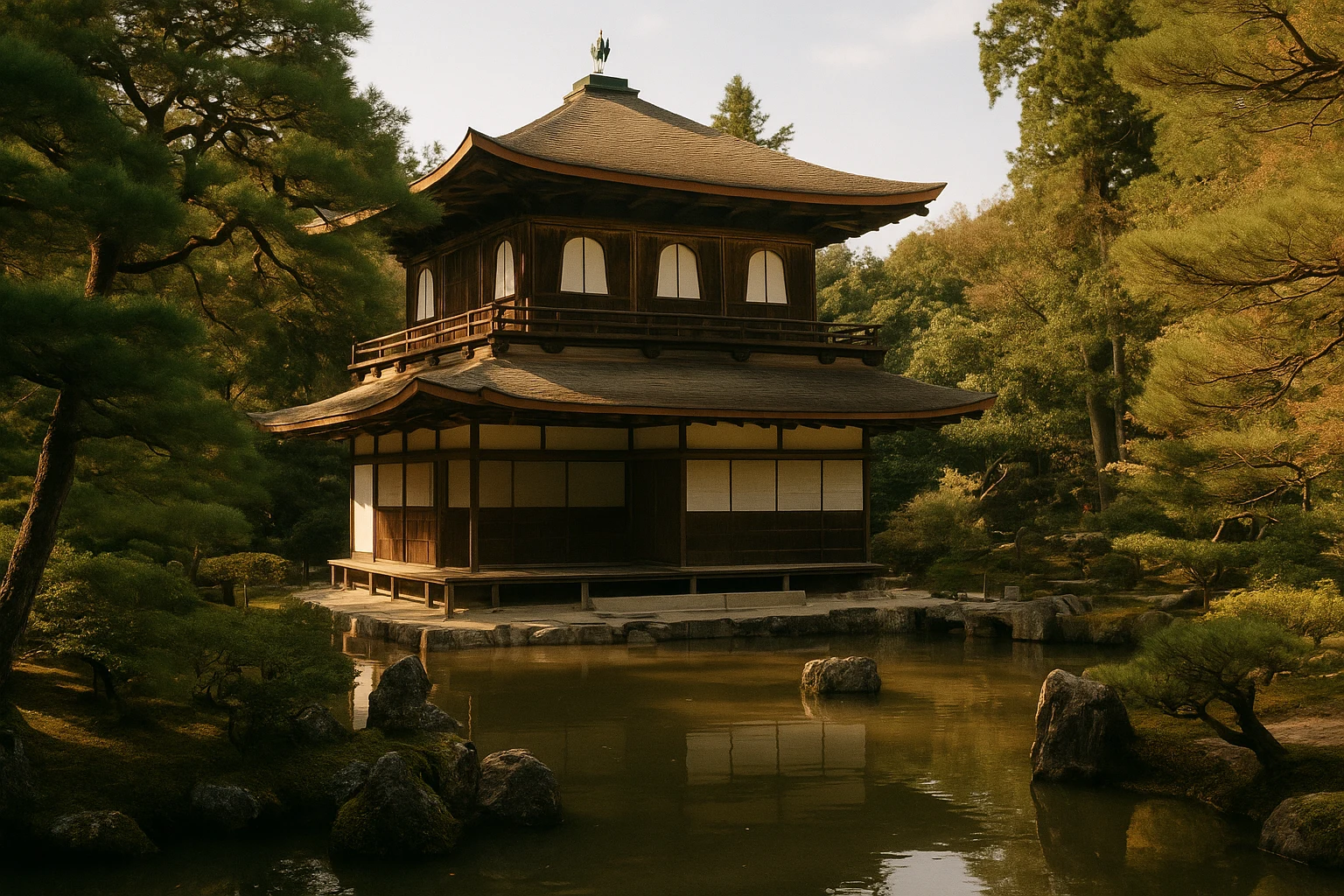
Ginkakuji Temple: Kyoto's Silver Pavilion and the Art of Wabi
Explore Ginkakuji Temple in Kyoto, Japan — the Silver Pavilion, sand gardens, and Ashikaga Yoshimasa...