Quick Info
Curated Experiences
Ginkakuji Temple & Kyoto Highlights Tours
Path of Philosophy Walking Tours
Kyoto Temples & Gardens Day Tours
The Silver Pavilion That Was Never Silver
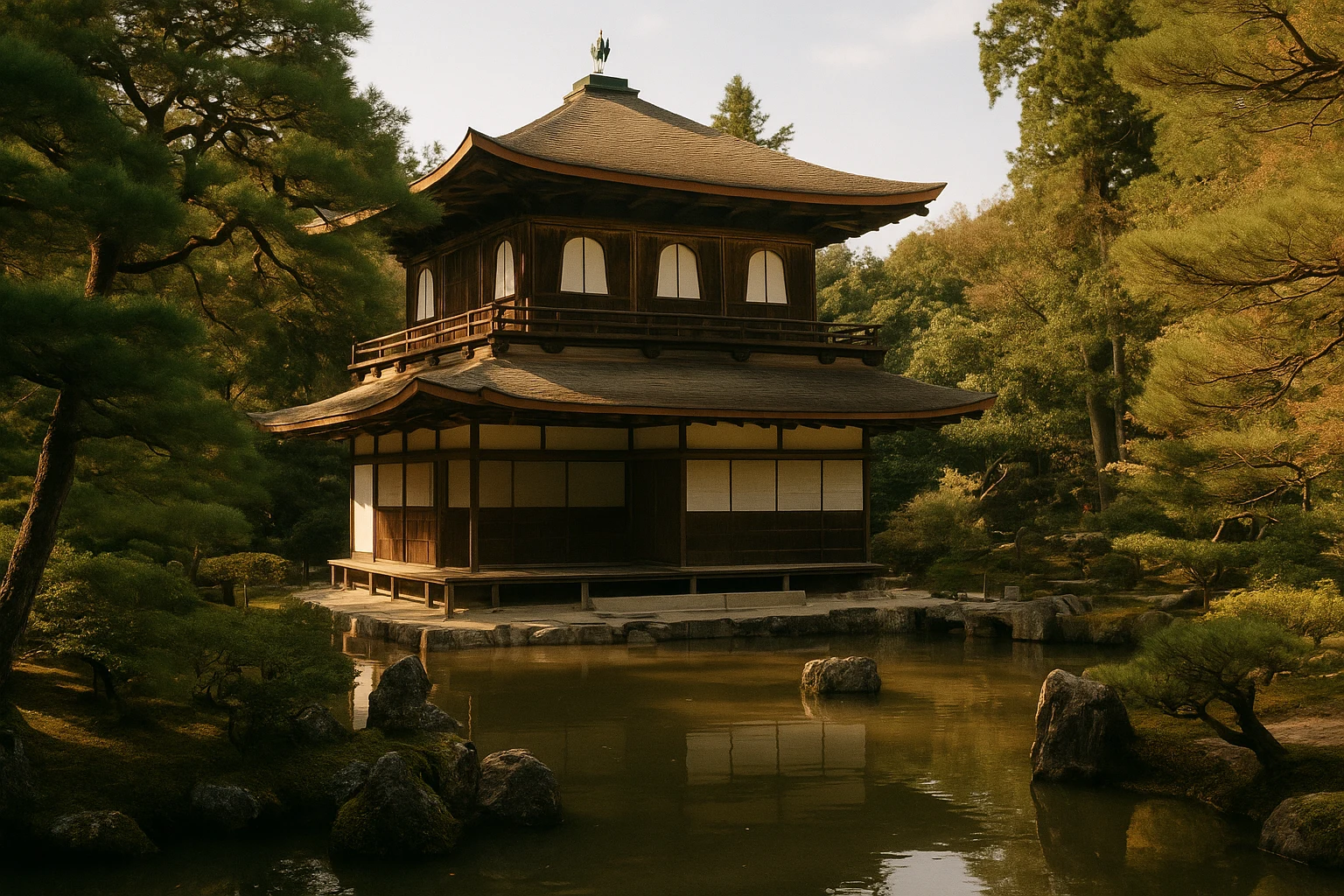
Standing at the northern terminus of Kyoto’s celebrated Path of Philosophy, Ginkakuji Temple presents visitors with a productive riddle: a building universally known as the Silver Pavilion that has never, across more than five centuries, been sheathed in a single sheet of silver. The gap between name and reality is not an embarrassment. It is the point. Ginkakuji — formally Jisho-ji, the Temple of the Shining Mercy — is the supreme monument of Japan’s wabi aesthetic: the beauty found in incompleteness, in transience, in the dignity of natural materials left to age without disguise. The pavilion’s weathered timber, the raked white sand garden, the moss-carpeted hillside, and the still reflecting pond form a composition that rewards patience and close attention far more than spectacle.
The temple occupies a forested slope in Kyoto’s Higashiyama district, roughly five kilometers northeast of the city’s historic center, cradled by a bowl of hills that have sheltered Buddhist monasteries and aristocratic retreats since the Heian period. It draws more than a million visitors annually, yet the complex covers barely two hectares, keeping the experience intimate and the garden legible at human scale. The prescribed circuit moves visitors through a carefully sequenced series of views — from the formal lower garden with its extraordinary sand formations up through shaded woodland to a high viewpoint over the Kyoto basin — that feels less like a tourist attraction than a lesson in how space and time can be shaped by aesthetic intention. Few places in Japan demonstrate so concisely what the country’s garden tradition is capable of.
A Shogun’s Retreat and the Birth of Higashiyama Culture
Ginkakuji was constructed in 1482 as the private retirement villa of Ashikaga Yoshimasa, the eighth shogun of the Muromachi shogunate, and its creation belongs to one of the more remarkable episodes in the cultural history of East Asia. The timing was charged with contradiction. Japan had just emerged from the Onin War (1467–1477), a decade of civil conflict that leveled much of Kyoto, fractured the Ashikaga’s political authority, and set in motion the century-long slide into the Sengoku period of warring states. Yoshimasa, temperamentally unsuited to military command and progressively disenchanted with governance, had effectively withdrawn from active rule while the fighting still raged, redirecting his formidable energies toward creating a hilltop estate on the grounds of an older Tendai Buddhist temple at the foot of Mount Tsukimachi.
The compound he built, initially called Higashiyama-dono — the Eastern Mountain Palace — became the crucible of what historians now term Higashiyama culture. Around his mountain retreat, Yoshimasa gathered a circle of artists, poets, tea practitioners, ink painters, Noh dramatists, and garden designers whose collective output would reshape Japanese aesthetics for generations. The tea ceremony in its wabi-cha form, the ink wash painting tradition, the principles of landscape garden design, the refinement of Noh theater: all received decisive new articulations under Yoshimasa’s patronage and personal participation at this compound. The irony of cultural brilliance flowering from political wreckage is not lost on historians, and it is precisely that irony — beauty wrested from impermanence and loss — that wabi aesthetics encodes.
The pavilion itself was modeled consciously on Kinkakuji, the Golden Pavilion built by Yoshimasa’s grandfather Ashikaga Yoshimitsu on the opposite side of the city some eighty years earlier. Where Kinkakuji blazed with gold leaf in an assertion of unchecked political power, Ginkakuji’s unclad timber and restrained proportions expressed an entirely different sensibility — one rooted in Zen Buddhist values of simplicity, impermanence, and respect for natural materials. Whether a silver cladding was genuinely planned and simply never completed, or whether the name is a later poetic invention, the pavilion as it stands embodies a more demanding vision of beauty than its gilded counterpart across the city.
Yoshimasa died in 1490. His heirs converted the villa into a Rinzai Zen temple under the name Jisho-ji, and successive generations of monks maintained, repaired, and in places rebuilt its structures through wars, fires, and the slow attrition of centuries. UNESCO inscribed it as part of the Historic Monuments of Ancient Kyoto World Heritage Site in 1994, one of seventeen monuments recognized for their outstanding universal cultural value.
What to See: Gardens, Sand, and the Pavilion
The entry experience is carefully managed from the first step. A narrow corridor between towering hedges of azalea and camellia — clipped into smooth vertical walls that rise above the visitor’s eyeline — creates a transitional passage between the urban approach and the garden world within. This hedge corridor shuts out external reference points and focuses attention entirely forward. Emerging from it, the path curves left and the lower garden opens in full.
The Pavilion (Kannon-den)
The Silver Pavilion stands on the northern shore of Kinkyochi Pond, its dark-stained timber and upswept eaves reflected in the water against a background of pine and shaped hedge. The structure rises two stories: the ground level is built in the sukiya residential style associated with tea culture, with shoji screens and deep overhanging eaves that shade a broad veranda; the upper story follows the karahafu cusped gable form of Chinese-influenced Zen devotional architecture. A bronze phoenix ornament crowns the roof, a symbol of imperial and shogunal authority shared with Kinkakuji and Nijo Castle. The building’s proportions are intimate rather than imposing, and its authority derives not from scale or material richness but from the precision of its geometry and its placement within the garden composition. To stand at the pond’s edge and study the pavilion’s reflection is to understand, in an immediate and physical way, what the term wabi actually means in practice.
Kogetsudai: The Moon-Viewing Platform
Immediately beside the pavilion, in the open expanse of white sand known as the Ginshadan, rises Kogetsudai — a truncated cone of raked white sand standing approximately 180 centimeters tall with a leveled summit. Its purpose has been debated by scholars for generations. The name translates roughly as “platform that faces the moon,” and the most prevalent explanation holds that it served as a reflective surface to amplify moonlight during nocturnal garden parties, making the surrounding space luminous without lanterns. Other interpretations read it as a purely formal sculptural element, a miniature abstraction of Mount Fuji, or a Zen garden device expressing cosmic order through geometric perfection. Whatever its original function, Kogetsudai is visually extraordinary: a clean geometric solid set against the organic forms of the garden, simultaneously strange and inevitable.
Ginshadan: The Sea of Silver Sand
Surrounding Kogetsudai, the Ginshadan — Sea of Silver Sand — is a broad raked plane of white gravel that gives the garden its brightness and its powerful horizontal counterpoint to the vertical pavilion and wooded hillside. The sand is combed into low parallel ridges suggesting waves, a convention shared with the famous karesansui dry garden at Ryoan-ji to the west. Unlike that garden’s austere enclosed rectangle, the Ginshadan is generous enough in scale to read as an actual landscape element — a lake or a river flat — against which the surrounding garden forms are measured. Monks rake the sand daily to maintain the precision of its lines, and the physical labour of this maintenance is itself considered part of the temple’s ongoing spiritual practice.
Togu-do
Set among the trees north of the main pond, the Togu-do is a small worship hall built in 1486, making it one of the oldest surviving examples of shoin-style residential architecture in Japan. Within it is the Dojinsai, a four-and-a-half-tatami-mat room frequently cited as the prototype of the formal Japanese tea room. Yoshimasa is recorded as having practiced tea ceremony here under the guidance of Murata Juko, the practitioner credited with establishing wabi-cha — tea ceremony in the spirit of humble simplicity — as a distinct aesthetic discipline. The Togu-do is not routinely open to visitors, but its exterior can be examined from the adjacent path and its cultural significance in the history of tea culture is difficult to overstate.
The Hillside Forest Trail
A stone staircase at the garden’s eastern edge ascends steeply into a secondary woodland garden of extraordinary depth and quiet. The path winds between mature cryptomeria, pine, and maple through a landscape of deep moss that, in wet weather, achieves an almost luminescent green. The route climbs to a clearing that opens without warning onto a panoramic view of the entire complex below: pavilion, sand formations, pond, and beyond them the tiled rooftops of Kyoto stretching south and west toward the Nishiyama hills. The descent follows a different course back through the woodland, completing a circuit that most visitors take sixty to ninety minutes to walk at an unhurried pace.
Getting There
Ginkakuji sits in the Higashiyama district on Kyoto’s northeastern edge, accessible by several routes from the city center. From Kyoto Station, Kyoto City Bus routes 5 and 17 both serve the Ginkakuji-michi stop, from which the temple gate is a ten-minute walk along the Nanzenji-Ginkakuji Bike Lane path and approach lane. Total travel time from the station is approximately forty minutes by bus; an IC card (Suica, ICOCA, or Pasmo) streamlines the fare payment. Buses can be crowded during cherry blossom and autumn foliage peak seasons; if schedules allow, arriving at opening time substantially improves the experience.
From the Keihan Railway, Demachiyanagi Station provides a useful starting point for visitors approaching on foot along the Path of Philosophy. The canal-side walk runs south to north for roughly two kilometers, connecting Nanzenji at its lower end to Ginkakuji at its upper, with a sequence of smaller temples, cafes, and galleries along the route. The walk takes thirty to forty-five minutes at a moderate pace and is itself one of Kyoto’s finest pedestrian experiences.
Private vehicles are strongly discouraged in the surrounding Higashiyama neighborhood, and no visitor parking exists at the temple. Taxis and rideshares drop passengers on the main road at the foot of the approach lane.
When to Visit
Ginkakuji is worth visiting in any season, but two periods are exceptional. Mid-to-late November brings Kyoto’s most celebrated autumn foliage, and the maple trees within the hillside garden are among the finest in the city. The combination of crimson and gold leaves reflected in the pond, with the pale geometry of the Ginshadan as counterpoint, is genuinely memorable — though popular enough that arriving at the 8:30 AM opening is strongly advisable to experience it before tour groups converge.
Late March to early April marks cherry blossom season, and while Ginkakuji itself has relatively few sakura trees, the Path of Philosophy leading to it is one of Japan’s most celebrated hanami (flower viewing) walks. The canal banks are lined with cherry trees whose blossoms form a canopy over the path at peak bloom. Early mornings — before the gates open, along the canal — are the best strategy for a quieter experience.
Summer months are intensely green, the hillside moss reaching its most saturated color in the warmth and humidity of July and August. Winter is the quietest season, crowd-wise, and the garden’s geometry reads most clearly against the bare trees and low northern light. On the rare occasions when Kyoto receives snow, the Kogetsudai cone dusted in white becomes an image of exceptional austerity.
Combining Ginkakuji with Other Sites
Ginkakuji anchors the northern end of one of Kyoto’s most natural half-day itineraries. Beginning at Nanzenji Temple — whose imposing sanmon gate and incongruous Meiji-era brick aqueduct make a striking introduction to Kyoto’s architectural layering — and walking north along the Path of Philosophy passes Eikan-do Temple with its celebrated Mikaeri Amida statue, the tucked-away Honen-in behind its thatched gate, and the small Otoyo Shrine with its sculpted animal guardians, before reaching Ginkakuji as the walk’s destination.
For visitors with a full day, the combination extends easily. Heian Shrine, whose enormous vermilion torii gate is visible across the rooftops from various points on the canal walk, lies a short distance to the south. Kinkakuji, on the city’s northwestern edge, provides a direct and illuminating comparison with Ginkakuji: the two pavilions represent opposite poles of Muromachi-era aesthetic vision within the same family dynasty, and seeing both on the same day clarifies what each is doing architecturally and culturally. Ryoan-ji Temple’s spare karesansui rock garden adds a third reference point for Zen garden aesthetics.
Visitors with a particular interest in tea culture can extend their understanding of Ginkakuji’s legacy by visiting the Urasenke or Omotesenke headquarters in the Nishijin district, where the tea schools whose traditions trace back to Murata Juko’s work at this hilltop complex continue their practice today.
Why Ginkakuji Matters
To understand Ginkakuji is to understand a transformation in values that still shapes how the world thinks about Japanese culture. The Higashiyama period in which Yoshimasa created this compound was one of political catastrophe and cultural productivity in roughly equal measure. The civil war that destroyed the old Kyoto created conditions for a new aesthetic order — one that found beauty in restraint rather than display, dignity in imperfection rather than polish, and richness in emptiness rather than accumulation. This sensibility, which crystallized around the arts practiced and patronized at Yoshimasa’s mountain retreat, became the deep grammar of what the world now recognizes as distinctively Japanese aesthetics.
The tea ceremony’s valuation of irregular, imperfect bowls over fine porcelain; the ink painter’s reliance on blank space as the primary expressive element; the garden designer’s use of raked sand to evoke water — all of these trace direct lineage to the aesthetic experiments of the Higashiyama circle. The pavilion that was never silvered stands as the accidental emblem of all of this: the gap between the ideal and the actual, between the plan and its realization, is not failure. It is where wabi lives.
Ginkakuji is also a lesson in how significant historical sites survive not as frozen relics but as living institutions. The Zen monks of Jisho-ji have maintained, rebuilt, and rethought these structures across five and a half centuries of fire, earthquake, flood, and political upheaval. The garden has been reconsidered multiple times in response to changing resources and changing aesthetic sensibilities. What visitors see today is not the fifteenth century preserved in amber, but the fifteenth century in continuous, living dialogue with every generation since — itself the most wabi thing possible.
Quick Facts
| Detail | Information |
|---|---|
| Formal Name | Jisho-ji (Temple of the Shining Mercy) |
| Common Name | Ginkakuji / Silver Pavilion |
| Location | Higashiyama District, Kyoto, Japan |
| Founded | 1482 (as Higashiyama-dono villa) |
| Patron | Ashikaga Yoshimasa, 8th Muromachi Shogun |
| Converted to Temple | 1490, Rinzai Zen school |
| UNESCO Status | World Heritage Site (1994) — Historic Monuments of Ancient Kyoto |
| Coordinates | 35.0272° N, 135.7985° E |
| Opening Hours | 8:30 AM – 5:00 PM (to 5:30 PM Mar–Nov) |
| Admission | Adults ¥500 / Children ¥300 |
| Nearest Bus Stop | Ginkakuji-michi (Routes 5, 17 from Kyoto Station) |
| Recommended Visit Time | 60–90 min (temple); add 60–120 min for Path of Philosophy |
Explore More
The gardens, Zen traditions, and cultural legacy of Ginkakuji come into sharper focus with a knowledgeable guide. Browse the tours below for expert-led walks through Kyoto’s Higashiyama district, the Path of Philosophy, and the wider world of Japanese garden aesthetics and tea culture that Ashikaga Yoshimasa’s hillside retreat helped bring into being.
Frequently Asked Questions
Is Ginkakuji Temple actually covered in silver?
No. Despite its nickname 'Silver Pavilion,' Ginkakuji has never been clad in silver. The most popular theory is that Shogun Yoshimasa died in 1490 before the planned silvering was completed. Some scholars argue the name instead describes the way moonlight plays off the dark lacquered timber during night-time garden viewings.
How do I get to Ginkakuji Temple from Kyoto Station?
Take Kyoto City Bus routes 5 or 17 from Kyoto Station to the Ginkakuji-michi stop, then walk about ten minutes along the temple approach lane. The total journey takes roughly forty minutes. You can also approach on foot from Nanzenji Temple via the two-kilometer Path of Philosophy, one of Kyoto's most celebrated pedestrian walks.
What is the best time of year to visit Ginkakuji Temple?
Mid-to-late November for peak autumn foliage is widely considered the finest time — the maple trees within the hillside garden turn crimson against the white sand formations. Late March to early April brings cherry blossoms along the nearby Path of Philosophy. Winter visits offer sparse crowds and a stark, contemplative atmosphere; rare snowfall transforms the cone-shaped Kogetsudai into a striking composition.
How long should I plan to spend at Ginkakuji Temple?
Allow sixty to ninety minutes to walk the full prescribed garden circuit — the lower sand garden, the pavilion shore, and the wooded hillside trail with its panoramic view over Kyoto. Combining the temple visit with the adjacent Path of Philosophy walk adds another sixty to one hundred twenty minutes depending on how many stops you make along the canal.
Is Ginkakuji Temple a UNESCO World Heritage Site?
Yes. Ginkakuji is inscribed as part of the 'Historic Monuments of Ancient Kyoto,' a UNESCO World Heritage property designated in 1994 that covers seventeen temples, shrines, and castles across Kyoto, Uji, and Otsu. The designation recognises the outstanding universal value of Kyoto's concentrated Heian and Muromachi-era heritage.
Can I enter the Silver Pavilion building itself?
No. The pavilion is admired from the garden paths and its pond reflection rather than entered by visitors. The Togu-do study hall, a nearby structure from 1486 and one of Japan's oldest surviving examples of shoin-style architecture, is occasionally open on special access days but is not part of the standard garden circuit.
Nearby Ancient Sites
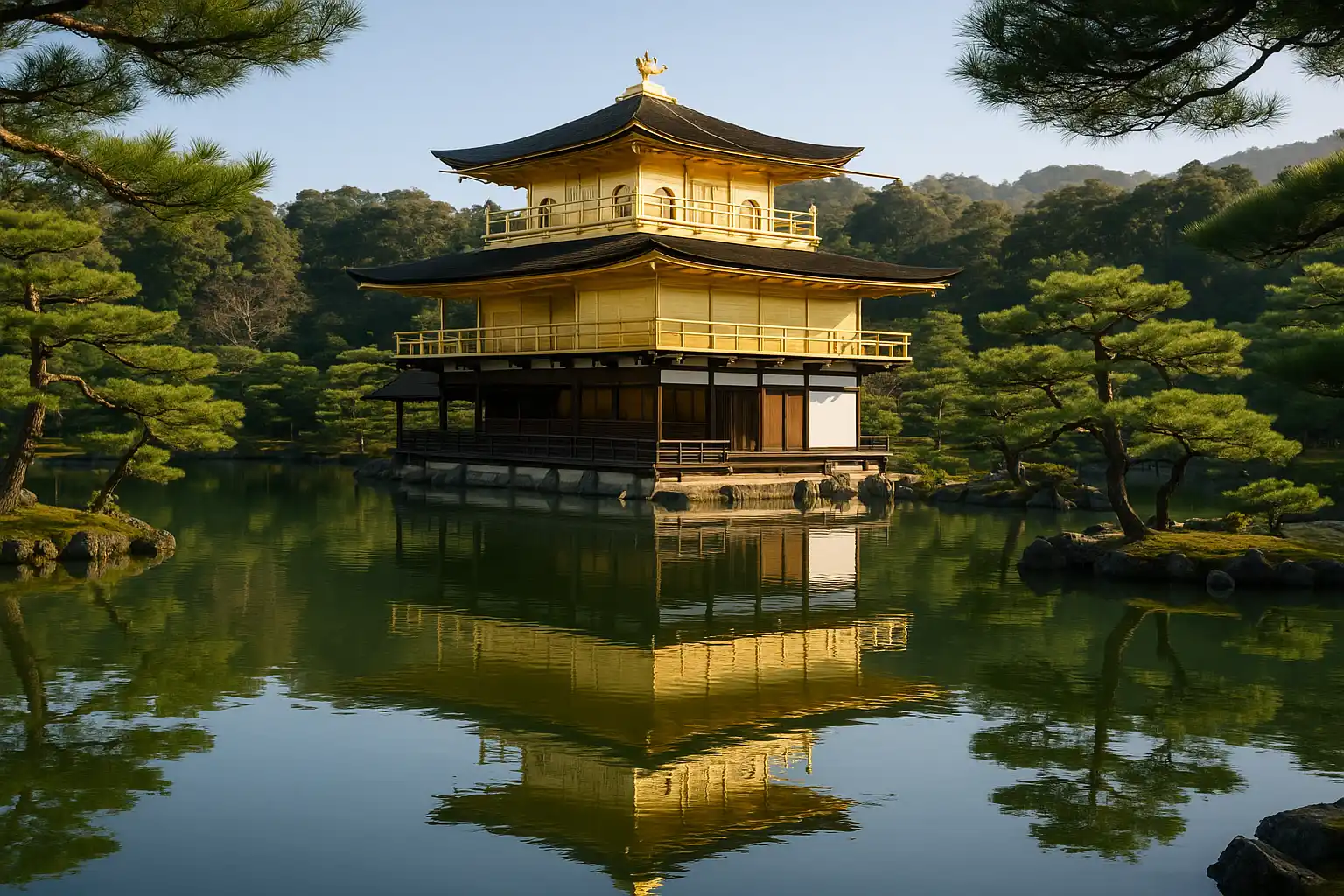
Kinkakuji Temple Japan Travel Guide 2026: Kyoto's Golden Pavilion
Japanese Zen BuddhistVisit Kinkakuji, the Golden Pavilion, Kyoto's most iconic Zen temple. Discover the gold-leaf covered...
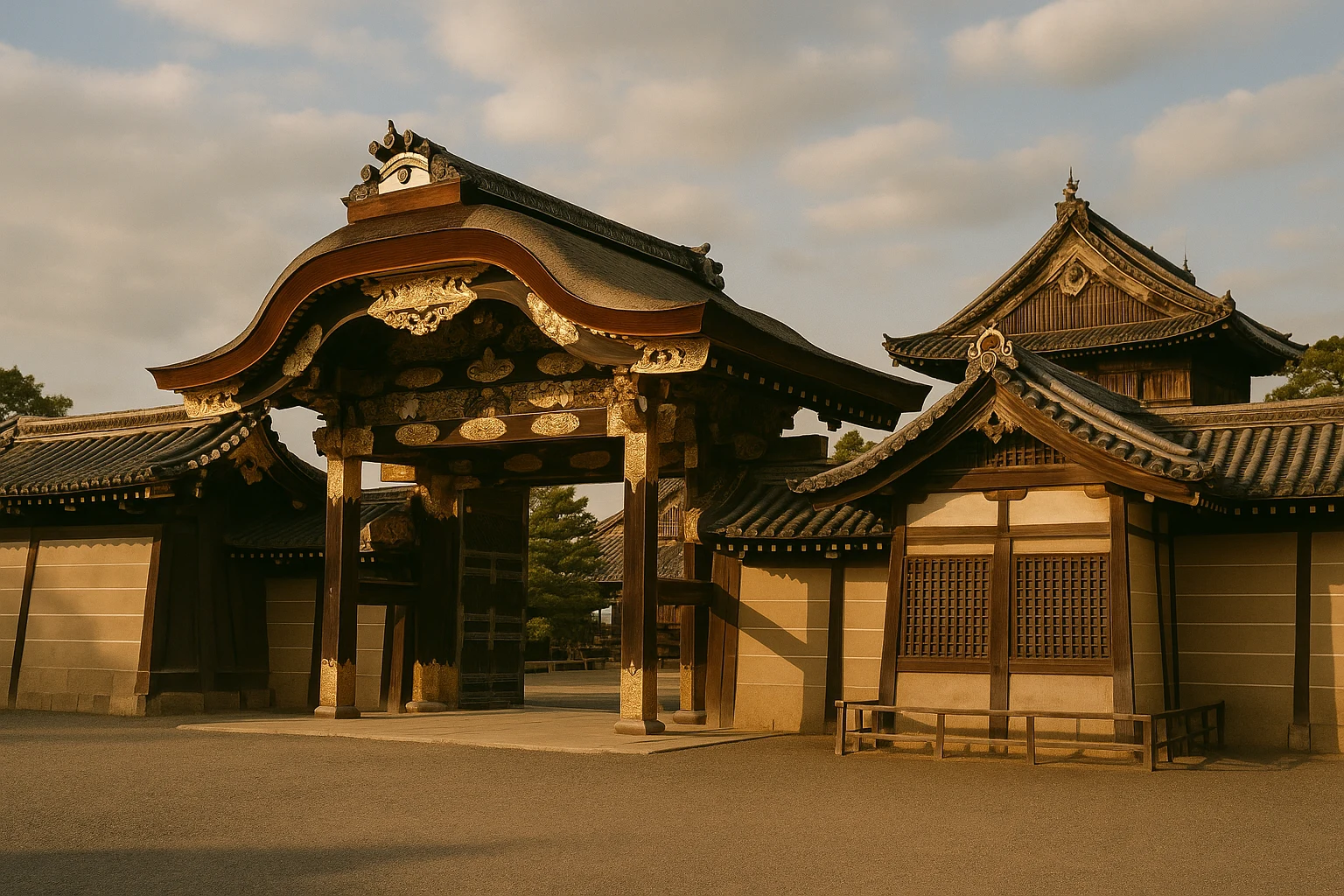
Nijo Castle
Edo Period JapanNijo Castle is a 17th-century Tokugawa shogunate fortress in Kyoto whose nightingale floors and gild...
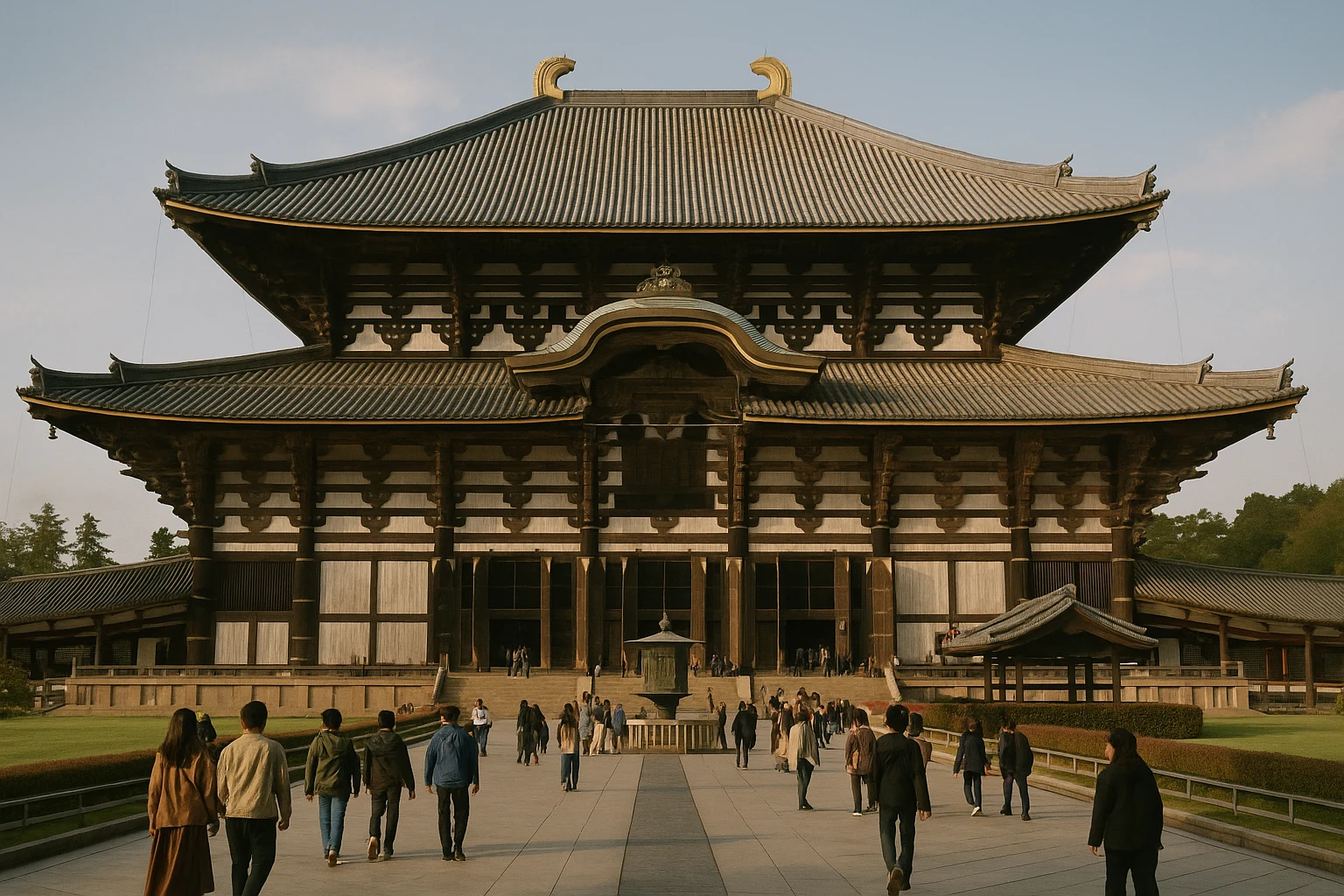
Todaiji Temple
Todaiji Temple in Nara houses the world's largest bronze Buddha and the largest wooden building on E...