Quick Info
Curated Experiences
Bodrum City Tour with Mausoleum, Castle and Ancient Theatre
Private Bodrum Shore Excursion: Halicarnassus and St Peter Castle
Bodrum Heritage Full-Day Tour with Halicarnassus and Myndos Gate
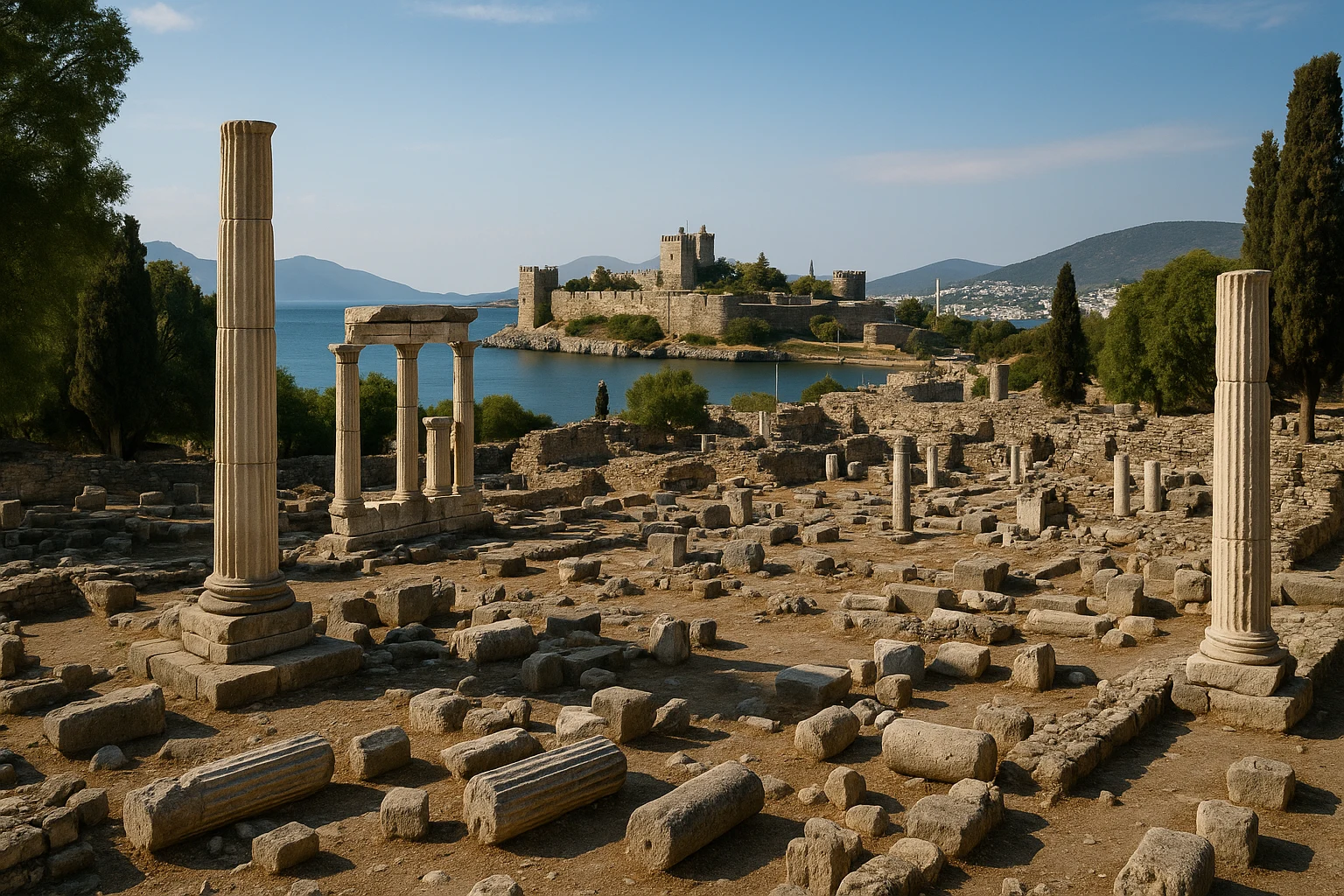
In modern Bodrum, Turkey, the traffic circles, cafés, and marina breeze can make it easy to forget that this was once Halicarnassus, one of the most ambitious cities of the ancient Mediterranean. Then you step into the excavation zone of the Mausoleum, and scale suddenly returns. The surviving blocks are not decorative leftovers; they are the grounded remains of a project so monumental that Greek and Roman writers placed it among the Seven Wonders of the Ancient World. The building itself no longer rises over the harbor as it did in the 4th century BCE, but its footprint, masonry, and story still reshape how you see this coastline.
What makes Halicarnassus special is not only the fame of one lost monument. It is the layering of political power, architecture, and memory in a city that moved from Carian capital to Persian satrapal seat, from Hellenistic port to Roman provincial center, then into Byzantine, crusader, and Ottoman worlds. You can walk those layers in a single day, from the Mausoleum site to Myndos Gate, the ancient theatre, and Bodrum Castle where spolia from older structures were built into medieval walls. This guide covers the historical arc, what is still visible on site, practical transport and admission details, and the best way to combine Halicarnassus with nearby attractions for a meaningful visit rather than a rushed photo stop.
History: From Carian Capital to World Wonder
Early Carian settlement and regional power (c. 11th century BCE-6th century BCE)
Halicarnassus began as a coastal settlement in Caria, a region of southwestern Anatolia where local traditions mixed with Greek maritime influence. Its natural harbor and defensible hinterland made it valuable long before imperial powers took interest. Archaeological evidence suggests steady occupation, with local elites controlling trade in ceramics, olive products, and maritime routes across the Aegean. By the Archaic period, Halicarnassus had become a politically important city, linked to wider Greek-speaking networks but never fully detached from its Carian identity. That dual character, local Anatolian roots plus cosmopolitan seaborne culture, shaped everything that came after.
Hecatomnid rule and the Mausolus era (4th century BCE)
The defining phase arrived under the Hecatomnid dynasty, especially Mausolus, the Persian-appointed satrap who transformed Halicarnassus into a monumental capital in the 4th century BCE. He moved administrative focus here, commissioned major urban works, and projected power through architecture on a scale intended to rival older Greek centers. After his death around 353 BCE, his sister-wife Artemisia II oversaw construction of the Mausoleum: a hybrid design blending Greek sculptural programs, Anatolian royal symbolism, and Near Eastern monumental intent. Its fame became so great that Mausolus’s name gave the world the word “mausoleum.” Even in ruin, the project remains one of antiquity’s clearest statements of architecture as political messaging.
Hellenistic transition and Roman urban life (3rd century BCE-4th century CE)
After Alexander’s campaigns and the fragmentation of his empire, Halicarnassus moved through Hellenistic realignments while retaining strategic value as a harbor city. Under Roman rule, it remained integrated into regional commerce and civic life, with continued use of theatres, gates, and administrative zones. The city did not preserve its Wonder intact forever; earthquakes, material reuse, and changing priorities gradually altered the built environment. Yet Roman-period continuity mattered: streets, public spaces, and coastal infrastructure kept Halicarnassus relevant long after the original dynastic moment that produced the Mausoleum. The ancient city evolved rather than simply disappearing.
Byzantine, crusader, and Ottoman transformations (5th century CE-19th century CE)
Late antiquity and Byzantine centuries brought altered settlement patterns and new religious landscapes. By the medieval era, the most visible architectural intervention came with the Knights Hospitaller, who built Bodrum Castle (St Peter) in the 15th century and reused dressed stones from surrounding classical ruins, including parts traditionally associated with the Mausoleum complex. This reuse was practical, not malicious by medieval standards: cut stone was expensive, and visible ancient blocks became fortification material. Under Ottoman rule, Bodrum remained a smaller provincial town, but the palimpsest of reused architecture preserved traces of earlier epochs within later walls and streets.
Modern rediscovery and archaeology (19th century-present)
European travelers and antiquarians in the 19th century reignited scholarly interest in Halicarnassus, especially the search for Mausoleum remains. Systematic excavations in the late 19th and 20th centuries clarified the monument’s plan, decorative program, and construction phases, even as major sculptural pieces had already dispersed to international collections. Contemporary Turkish heritage management has focused on site protection, interpretation, and integrating the ruins into Bodrum’s urban fabric. What visitors encounter today is not a reconstructed Wonder, but something arguably more instructive: archaeological evidence that reveals how the monument was built, modified, dismantled, and remembered across two millennia.
The Key Monuments: What to See at Halicarnassus
The Mausoleum foundations and podium remains
The heart of any Halicarnassus visit is the Mausoleum archaeological area. You will not see a towering marble pyramid crowned by a quadriga as ancient descriptions suggest, but you can read the monument’s mass through surviving foundation lines, podium blocks, and the graded terrain around the central core. Standing at ground level, the engineering logic becomes clear: this was a carefully staged platform structure designed for visual dominance across the city.
Pay attention to stone joinery and the scale of individual blocks; they communicate labor organization, quarry logistics, and the sheer financial commitment behind dynastic architecture. Interpretive displays help reconstruct the superstructure mentally, but the most useful exercise is to walk the perimeter slowly and imagine processional movement toward the tomb. For photographers, low-angle late-afternoon light works best for capturing relief in masonry textures.
Sculptural fragments and architectural details
Surviving fragments associated with the Mausoleum and broader Halicarnassian context show the artistic ambition that made the structure famous in antiquity. Even when major originals are housed elsewhere, local displays and replicas communicate the design vocabulary: heroic figures, friezes with dynamic movement, and decorative transitions between base, colonnade, and roof forms. This language was deliberately trans-cultural, blending Greek sculptural refinement with Anatolian royal symbolism.
What matters for travelers is understanding that the Mausoleum was never just a tomb box; it was a complete visual program meant to assert legitimacy. Look for carved moldings, column elements, and block fragments that preserve finishing techniques. They demonstrate workshop specialization and the coordination required across architects, stonecutters, sculptors, and transport crews.
Myndos Gate and the city walls
A short distance away, Myndos Gate preserves part of Halicarnassus’s defensive system and offers a crucial counterpoint to the Mausoleum’s ceremonial grandeur. Gates and walls tell you how the city managed threat, movement, and control. The surviving towers and wall lines, though fragmentary, still indicate urban scale and planning priorities in a contested Aegean landscape.
Historically, this zone is associated with military episodes in the age of Alexander, and while much of the original fortification circuit is gone, the remaining sections anchor the city in lived strategic reality. Visit in the cooler part of the day; there is limited shade, and the open surroundings can feel hotter than expected.
Bodrum Castle and reused classical stone
Technically medieval, Bodrum Castle is still essential for understanding Halicarnassus because it physically incorporates antiquity. Builders of St Peter used available cut stone from nearby ruins, and the castle’s fabric can include blocks and fragments that once belonged to classical contexts. This is an uncomfortable but historically honest lesson in continuity: monuments survive by adaptation, dismantling, and reuse as much as by preservation.
Inside the castle complex and museum areas, you gain broader context for regional chronology, maritime routes, and post-classical life on this coast. If your schedule is tight, prioritize at least a partial castle visit after the Mausoleum so the narrative moves from dynastic tomb to fortified harbor town.
The ancient theatre and Bodrum panorama
The hillside ancient theatre of Halicarnassus gives you spatial understanding that isolated ruins cannot. From upper seating, you can visualize how city, harbor, and monumental zones related to one another. The theatre also represents everyday civic life: festivals, assemblies, performances, and social display in a mixed population city tied to maritime exchange.
While less globally famous than the Mausoleum, this stop is invaluable for interpreting urban scale. It is also one of the best photographic vantage points in Bodrum, especially near sunset when sea light softens and the modern town’s white facades echo the ancient preference for luminous stone surfaces.
Getting There: Transportation and Access
Halicarnassus is one of the easiest major ancient sites in Turkey to access because its principal remains are embedded within modern Bodrum.
From central Bodrum
If you are staying near the marina, old town, or cruise port area, reaching the Mausoleum zone is simple and fast.
- Taxi: 150-350 TRY ($4-10 USD) depending on distance and season; usually 5-10 minutes from central hotels.
- Local minibus (dolmuş): 25-50 TRY ($1-2 USD) on routes serving central Bodrum corridors, followed by a short walk.
- Walking: 20-30 minutes from much of central Bodrum; mostly urban pavement with moderate inclines in places.
From Milas-Bodrum Airport (BJV)
Many travelers visit Halicarnassus on arrival or departure day because transfer times are manageable.
- Airport taxi: 1,200-1,900 TRY ($35-55 USD), typically 35-45 minutes depending on traffic.
- Havaş/shuttle + taxi: 180-320 TRY ($5-10 USD) total; budget extra time for transfers and waits.
- Rental car: Practical if continuing to Didyma, Priene, or other coastal archaeology beyond Bodrum.
From nearby resort zones (Gümbet, Bitez, Turgutreis, Yalıkavak)
Resort-based visitors can reach the site independently or as part of a structured half-day city circuit.
- Taxi: 300-1,100 TRY ($9-32 USD) depending on starting point; 15-45 minutes.
- Dolmuş networks: Usually the budget option, with frequent service to Bodrum center and short onward transfer.
- Organized heritage tour: Convenient for same-day combinations with the castle, theatre, and local museum stops.
Admission and Hours
The Mausoleum site generally operates with seasonal opening windows: longer in summer, shorter in winter. Admission policies can change, but pricing is usually modest compared with major destination sites, and card payment is commonly available while carrying cash remains wise. Check official Turkish museum channels shortly before your visit for the latest hours, holiday closures, and any combined-ticket opportunities with nearby cultural attractions. For comfort and better photography, arrive near opening or in the final two hours before closing.
When to Visit: Seasonal Considerations
Spring (March-May)
Spring is the most balanced season for most visitors, with daytime temperatures around 16-27°C (61-81°F). Wildflowers can appear on less-trafficked slopes, and visibility over Bodrum Bay is often excellent. Crowd levels are moderate outside holiday periods, making it easier to move slowly through interpretation panels and associated ruins.
Summer (June-August)
Summer in Bodrum is hot and bright, frequently 30-37°C (86-99°F), with limited shade at archaeological zones. Crowds rise sharply with beach tourism and cruise traffic. Plan early-morning or late-afternoon visits, carry more water than you think you’ll need, and avoid prolonged midday exposure at open stone areas.
Autumn (September-November)
Autumn is another excellent window, especially September and October, with temperatures usually 20-31°C (68-88°F) tapering cooler into November. Sea warmth lingers, so combining archaeology with waterfront evenings is easy. Crowds thin compared with peak summer while daylight remains favorable for multi-stop itineraries.
Winter (December-February)
Winter is quieter and often pleasantly mild, around 10-18°C (50-64°F), with occasional rain and wind. Lower crowd pressure makes reflective visits easier, especially for travelers interested in reading site details rather than rushing through highlights. Bring a light waterproof layer and confirm reduced seasonal hours in advance.
Combining Halicarnassus with Bodrum
The most rewarding sequence starts at the Mausoleum area by 8:30 AM, before city heat and tour traffic build. Spend your first 75-90 minutes walking the core archaeological zone and interpretation points, then take a short transfer toward Myndos Gate by 10:15 AM for defensive-context perspective and quick photographs. By 11:00 AM, continue to the ancient theatre, where upper seating gives you the best spatial read of the old city in relation to the modern bay.
Break for lunch around 12:30 PM in central Bodrum; neighborhoods near Cumhuriyet Street and the marina have reliable options ranging from quick meze plates to longer seafood lunches. After lunch, enter Bodrum Castle by 2:00 PM and give yourself at least 90 minutes for the fortification walk and museum context. End near the waterfront around 4:00 PM as late light begins to soften across the harbor walls.
If you have only half a day, prioritize Mausoleum plus castle. If you have a full day, add theatre and Myndos Gate for a more coherent historical arc from dynastic monument to civic life to medieval reuse. Total active exploration time with short transfers is usually 6-8 hours at a comfortable pace.
Practical Information
What to Bring
- Sun protection: Hat, sunscreen, and sunglasses are essential from late spring through early autumn.
- Water: At least 1 liter per person for a half-day circuit; more in July and August.
- Footwear: Stable walking shoes for uneven stone surfaces and mild inclines.
- Camera or phone with extra battery: You’ll likely shoot across multiple locations in one day.
- Cash and card: Card is commonly accepted, but small cash helps for short taxi rides and kiosk purchases.
Dress code and etiquette
Bodrum is generally relaxed, but archaeological sites are still cultural heritage spaces where respectful behavior matters. Avoid climbing on fragile masonry, stay within marked paths, and keep voices low around guided groups. Modest, breathable clothing is practical for sun and socially comfortable in mixed local-tourist settings.
Accessibility
The Mausoleum site is easier than many hilltop ruins, but not fully barrier-free. Some paths are uneven, and certain viewing angles require steps. Visitors with limited mobility can still enjoy key interpretive points with slower pacing, taxi-assisted transfers between major stops, and selective route planning rather than full circuits.
Why Halicarnassus Matters
Halicarnassus matters because it shows that historical significance is not measured only by what stands intact. The Mausoleum is mostly gone as an elevation, yet it remains present as idea, evidence, and influence. A single ruler’s tomb changed architectural language so deeply that every modern “mausoleum” still carries Mausolus’s name. Few sites can claim that kind of linguistic and cultural afterlife.
It also matters because Bodrum lets you watch historical time in layers instead of chapters: Carian ambition, Persian administration, Greek artistic vocabulary, Roman continuity, medieval fortification, and modern tourism all occupying the same coastal bowl. You do not visit a frozen ruin here; you visit an active city that still negotiates memory through stone. Stand at the theatre in late light, look from the harbor to the hill lines and back to the old walls, and you see the long continuity of human intent: to build, to defend, to commemorate, and to be remembered.
Quick Facts
| Attribute | Details |
|---|---|
| Location | Bodrum, Muğla Province, Turkey |
| Ancient Name | Halicarnassus |
| UNESCO Status | The Mausoleum is one of the classical Seven Wonders (not a current UNESCO World Heritage inscription) |
| Established | c. 11th century BCE Carian settlement |
| Distance from nearest hub | In central Bodrum; ~37 km from Milas-Bodrum Airport |
| Entry Fee | Seasonal museum pricing in TRY (check official channels before visit) |
| Hours | Typically longer summer hours, shorter winter hours |
| Best Time | Spring and autumn; early morning or late afternoon |
| Suggested Stay | 1-2 hours for Mausoleum only; 6-8 hours for full Bodrum heritage circuit |
| Known For | Mausoleum at Halicarnassus, one of the Seven Wonders of the Ancient World |
Explore More Turkey
- Didyma: See the vast Temple of Apollo and one of Anatolia’s most dramatic oracle sanctuaries.
- Ephesus: Walk monumental Roman streets, terraces, and theatres in Turkey’s best-known ancient city.
- Patara: Combine Lycian ruins, a restored assembly complex, and one of the Mediterranean’s longest beaches.
Plan your wider route with our Turkey Ancient Sites Guide. For practical planning, read our itinerary on combining Aegean archaeological sites from Bodrum.
Frequently Asked Questions
How much time should I plan at the Mausoleum at Halicarnassus?
Plan 60-90 minutes for the Mausoleum site itself if you read interpretive panels and walk the full foundation perimeter. If you add Bodrum Castle, the underwater archaeology displays, and Myndos Gate, your visit becomes a rewarding half-day to full-day historical circuit.
Is there still much to see at Halicarnassus if the Wonder is mostly gone?
Yes, especially if you visit with context. You can still see the Mausoleum platform footprint, surviving architectural fragments, and stratified remains that explain how one of the Seven Wonders was engineered. Pairing the site with Bodrum Castle makes the story far clearer because reused stones and regional collections add visual depth.
How do I get to Halicarnassus from central Bodrum?
From central Bodrum, the site is usually a short taxi ride of about 5-10 minutes, or a walk of roughly 20-30 minutes depending on your starting point. Local minibuses can get you close, but you'll usually finish with a short walk on city streets.
What is the best time of day to visit the Halicarnassus ruins?
Early morning and late afternoon are best for comfort and photography, especially from May through September when midday heat can be intense. Late-afternoon light gives better texture on stone blocks and makes site contours easier to read.
Do I need to buy tickets in advance for the Mausoleum site?
At most times of year, on-site purchase is straightforward, though opening hours and ticket policies can shift seasonally. During summer weekends and holiday periods, it helps to arrive earlier in the day and check current hours through official Turkish museum channels.
Is Halicarnassus suitable for families and older travelers?
Yes, but surfaces are uneven in places and summer heat is a serious factor. Families and older visitors do best with morning visits, sun protection, steady footwear, and a slower pace that combines short site stops with shaded breaks in Bodrum town.
Nearby Ancient Sites
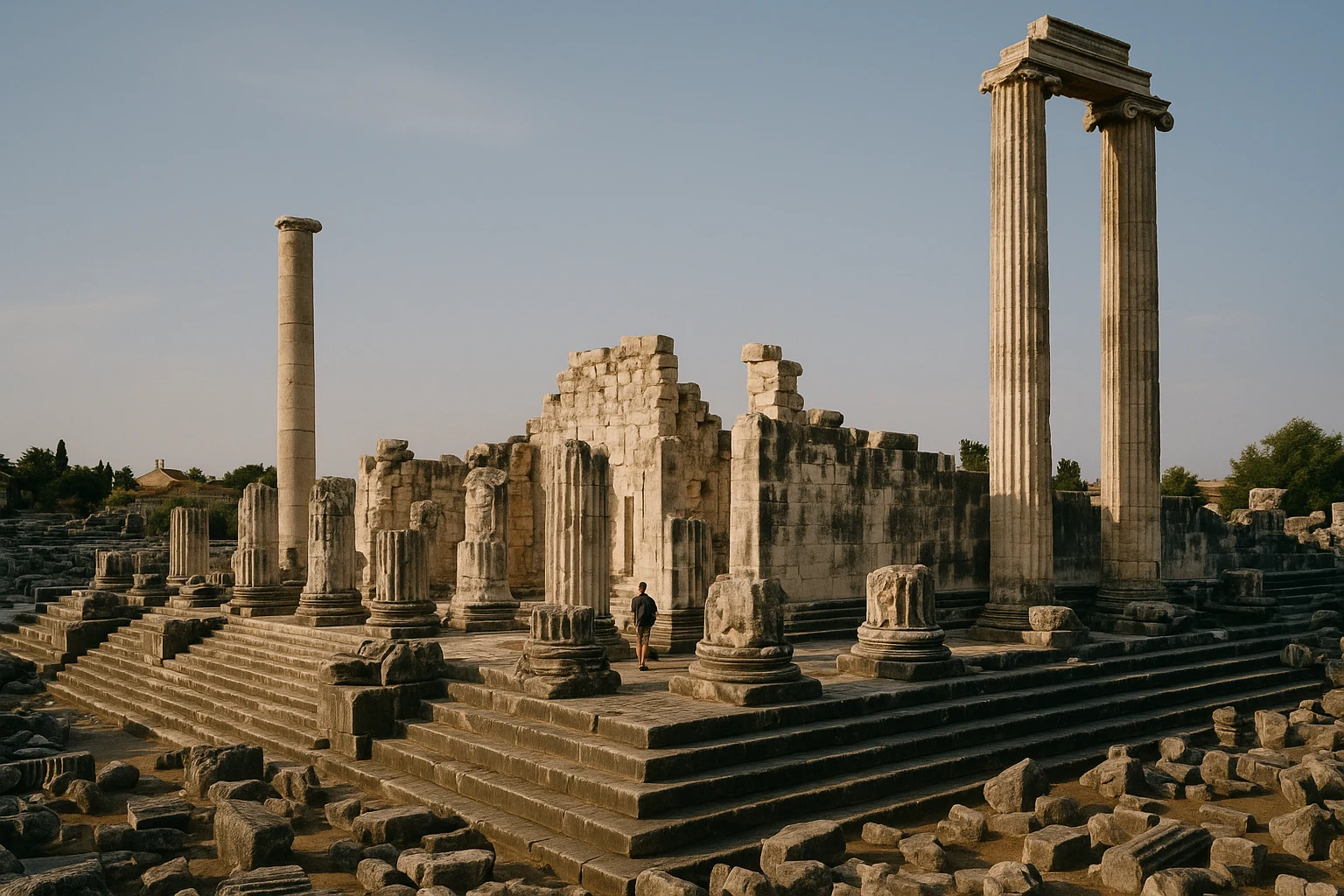
Didyma Turkey Guide 2026: Temple of Apollo & Sacred Way
Ionian-Hellenistic-Roman-ByzantinePlan your Didyma, Turkey visit with history, transport, tickets, and what to see at the vast Temple ...
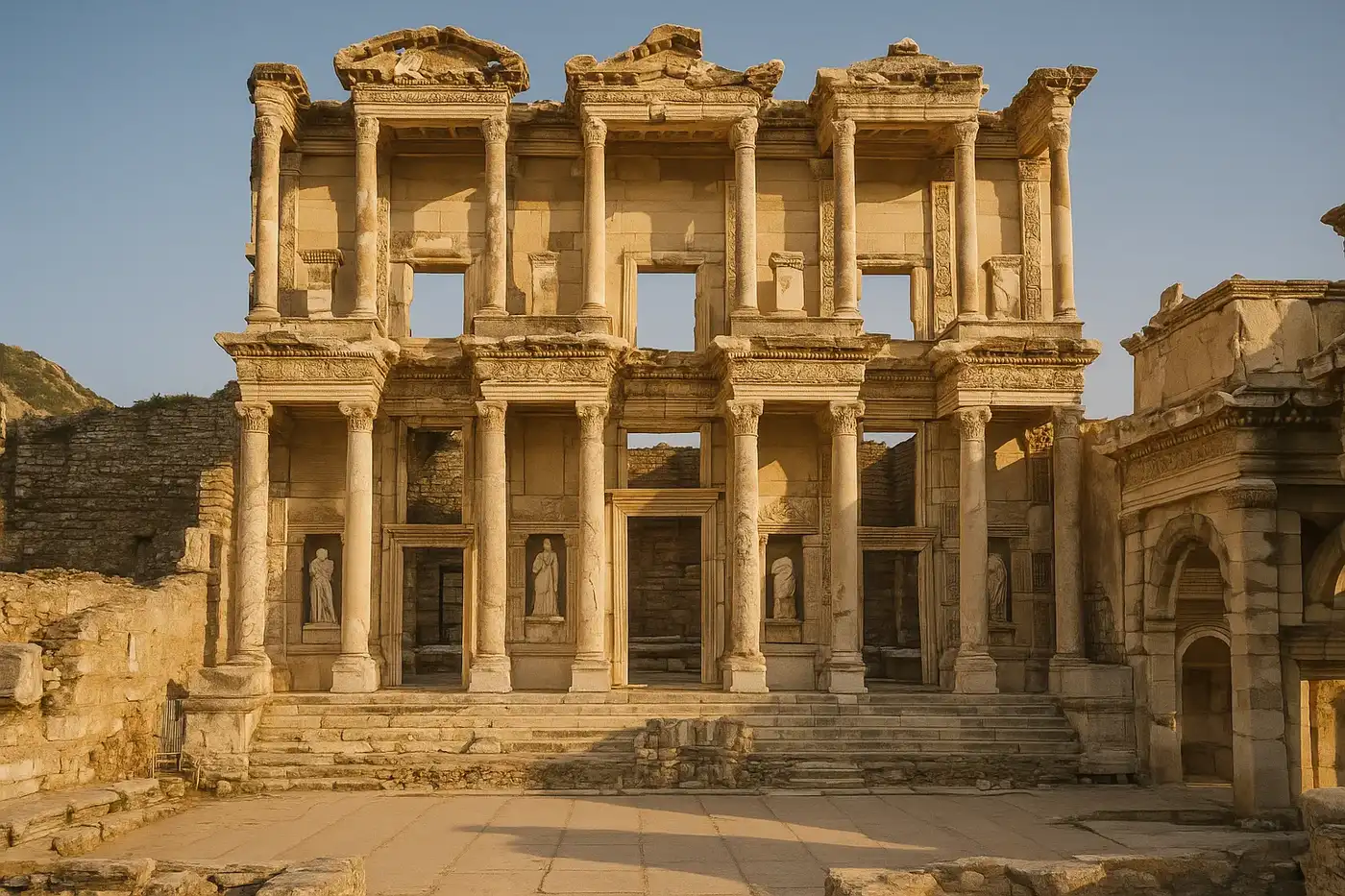
Ephesus Turkey Travel Guide: Library of Celsus & Terrace Houses
Greco-RomanDiscover Ephesus, the best-preserved ancient city in the Mediterranean. Our complete guide covers th...
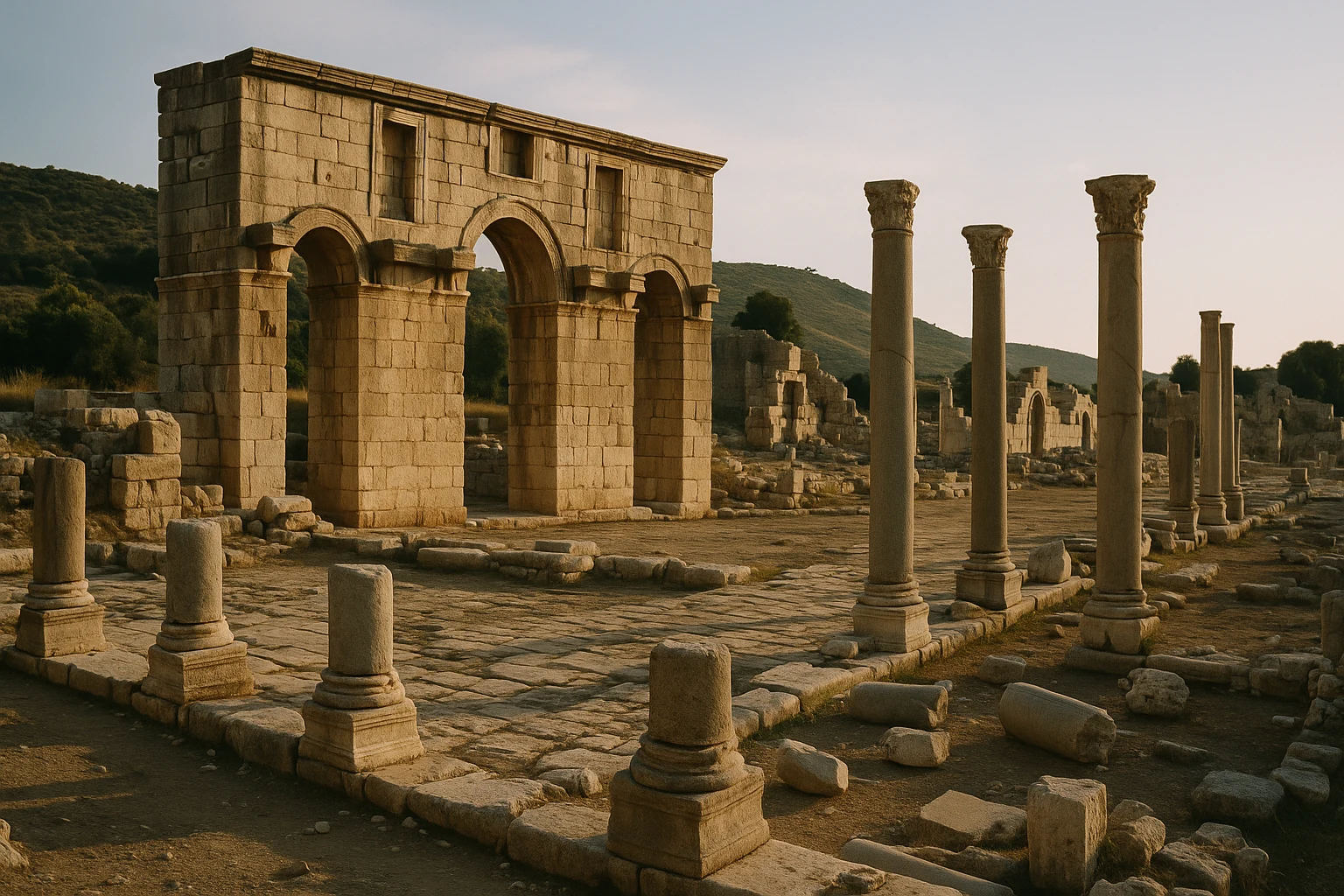
Patara Turkey Guide 2026: Lycian Capital & Roman Granary
Lycian-Hellenistic-Roman-ByzantinePlan your Patara, Turkey visit: explore Lycian and Roman ruins, climb the theater, and pair the site...