Quick Info
Curated Experiences
Herculaneum Half-Day Trip from Naples
Pompeii and Herculaneum Small Group Tour with an Archaeologist
Mount Vesuvius and Herculaneum Day Trip from Naples
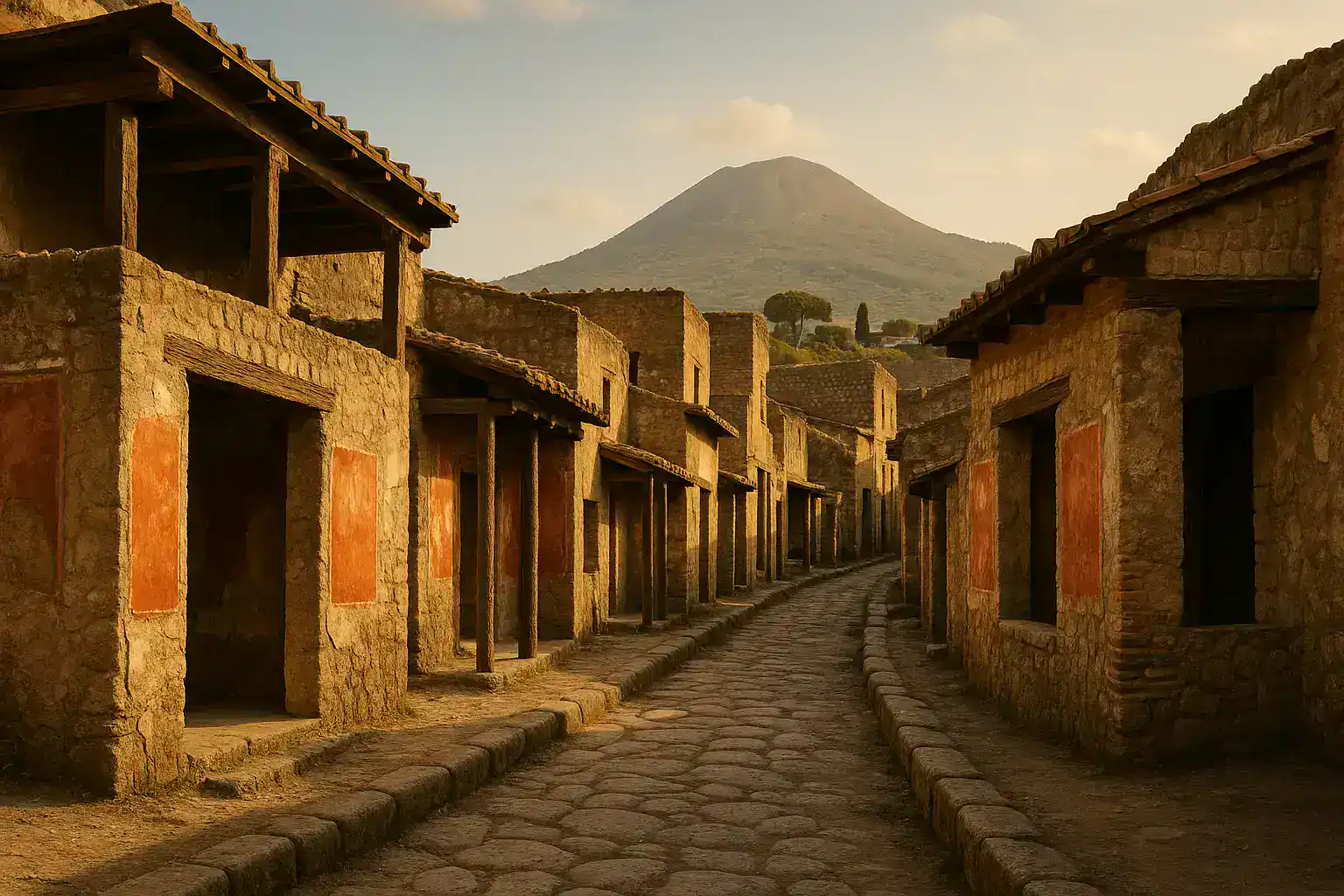
The first thing that strikes you at Herculaneum is how deep you descend. The modern town of Ercolano sits at street level; you walk through the entrance, cross a bridge, and look down twenty meters into the excavated pit where a Roman town sits exactly as it was on the morning of August 24, 79 CE. The scale of the burial is visible in the cross-section of volcanic deposits above the ancient rooflines — layer upon layer of solidified mud and ash that sealed this place airtight for nearly two thousand years. Then you descend the ramp, reach the ancient street level, and the preservation hits you. Wooden doors still hang in their frames. Frescoes blaze with colors that have never seen sunlight. A carbonized bed stands in an upstairs room, its wooden frame intact. You are not imagining what Roman life looked like. You are seeing it.
Herculaneum lives in the shadow of its more famous neighbor, Pompeii, and that is an advantage. Most visitors to the Bay of Naples spend their archaeological day at Pompeii’s sprawling 66-hectare site and never make it here. Their loss is your gain. Herculaneum covers just 4.5 hectares — a fraction of Pompeii’s footprint — but the quality of preservation is in a different category entirely. Where Pompeii was buried under lighter pumice that allowed centuries of weathering and looting, Herculaneum was entombed in 20-plus meters of volcanic mud that sealed organic materials — wood, food, cloth, rope, even brain tissue — in an airless cocoon. The result is the most intimate encounter with Roman domestic life available anywhere on earth, and you can see it in two to three focused hours.
Pair it with the climb to Vesuvius’s crater in the afternoon, and you have what many travelers describe as the single most powerful day of their Italian journey.
Historical Context
Herculaneum’s origins are obscure but ancient. The town existed by at least the 6th or 7th century BCE, likely as an Oscan settlement that passed through Greek and Samnite control before its absorption into the Roman world after the Social War of 89 BCE. Its mythological founder was Hercules himself — a legend that shaped the town’s civic identity and its public art for centuries. The name stuck: Herculaneum, the town of Hercules.
By the 1st century CE, Herculaneum had become a prosperous resort on the Bay of Naples. Its population was modest, perhaps four to five thousand residents, drawn to the seaside location’s cooling breezes and panoramic views across the bay. This was not a commercial hub like Pompeii — it was a retreat for wealthy Romans who built grand villas with sea-facing terraces and decorated their homes with elaborate mosaics, frescoes, and marble furnishings that announced both taste and wealth. The town had fine public baths, a theater (still buried beneath modern Ercolano), a palaestra (sports ground), and the kind of civic infrastructure that marked a community comfortable in its prosperity.
The catastrophe arrived on August 24, 79 CE, when Vesuvius erupted with a force that sent a column of ash and pumice over 30 kilometers into the atmosphere. Herculaneum’s position to the west of the volcano initially spared it the worst of the pumice fall that was burying Pompeii to the southeast. Most residents gathered valuables and fled. The town seemed, for a time, to be escaping the disaster. Then, between midnight and dawn, the eruption entered its deadliest phase. A series of pyroclastic surges — superheated avalanches of gas, rock, and ash moving at hurricane speed and temperatures exceeding 400°C — swept down the volcano’s western flank and through the streets. Death for anyone remaining was instantaneous. Wave after wave of volcanic material then buried the town 20 to 25 meters deep, creating a dense, airless seal that preserved everything it touched.
The site was rediscovered by accident in 1709 when workers digging a well struck the buried theater. Eighteenth-century excavations through tunnels stripped the site of many sculptures and treasures (now in the National Archaeological Museum in Naples). Systematic open-air excavation began in the 1920s under Amedeo Maiuri and continues today. Roughly three-quarters of the ancient town remains unexcavated beneath modern Ercolano, including the enormous Villa of the Papyri — the only intact library to survive from antiquity.
What to See
The Boat Sheds (Fornici)
Start here. At the ancient shoreline — now 500 meters inland from the modern coast due to volcanic deposits that reshaped the bay — a row of arched boat chambers once opened onto the beach. When Vesuvius entered its final deadly phase, roughly 300 people crowded into these vaulted spaces seeking shelter, hoping for rescue boats that never arrived. The pyroclastic surge killed them instantly. Their skeletons, discovered beginning in the 1980s, remain exactly where they fell — men, women, children, a soldier with his sword still at his side, a woman clutching jewelry, a child held close by an adult who may have been its mother. These are not plaster casts made from voids, as at Pompeii. These are actual bones, in context, preserved with their possessions. The boat sheds are the most emotionally affecting place in all of Campanian archaeology, and seeing them first frames everything else at the site with the human reality of what happened here.
The House of Neptune and Amphitrite
Named for the spectacular mosaic panel in its summer dining room, this house represents Herculaneum’s preservation at its most visually stunning. The mosaic depicts the sea god Neptune and his consort Amphitrite in vivid blues, greens, and yellows — tesserae so precisely arranged that the figures retain the luminosity they had the day the house was buried. The mosaic faces a garden nymphaeum (decorative fountain wall) decorated with shells and colored glass paste, creating an ensemble of water, plantings, and shimmering tile that represents Roman decorative arts at their most accomplished. The adjacent ground-floor shop preserves wooden shelving and storage vessels. Look up: the carbonized wooden ceiling beams survive overhead, something you will never see at Pompeii. The contrast is the whole argument for visiting Herculaneum — at Pompeii, centuries of exposure have bleached most painted surfaces to pale ghosts. Here, you see Rome in the colors Romans actually saw.
The House of the Wooden Partition
If one building makes the case for Herculaneum’s archaeological uniqueness, it is this one. The carbonized wooden partition that gives the house its name still stands in its original position, dividing the atrium from the tablinum exactly as it did on August 24, 79 CE. Upstairs, original wooden bed frames survive in their rooms. Wooden shelving remains in place. A carbonized screen door — the kind of everyday domestic object that rots away within decades under normal conditions — is preserved with its fittings intact. The house belonged to a family of comfortable but not extravagant means, and its preservation captures the texture of ordinary Roman life with more authority than the grander residences. Frescoes and mosaic floors are present, but it is the wood — the everyday infrastructure of domestic space — that makes this building extraordinary among all surviving Roman structures.
The College of the Augustales
This building served the Augustales, a brotherhood of wealthy freed slaves devoted to the imperial cult of Augustus who achieved social prestige through civic patronage and religious office. The college preserves some of Herculaneum’s finest wall paintings, depicting Hercules in mythological scenes including his apotheosis — his elevation to godhood. The choice of subject was apt: Hercules the hero who transcended mortal limitations, for a brotherhood of men who had risen above the circumstances of their birth. The colors here are revelatory. Cinnabar reds, Egyptian blues, and ochre yellows glow with an intensity that explains, in visceral terms, what Roman interior decoration actually looked like when it was new. Museum paintings stripped from walls and faded by exposure give only a partial impression. Here, you see them as they were designed to be seen.
The Central Baths
Herculaneum’s public baths preserve the full sequence of a Roman bathing establishment with a completeness unmatched anywhere in the ancient world. The caldarium (hot room), tepidarium (warm room), and frigidarium (cold room) are all clearly legible, along with the praefurnium — the furnace room where enslaved workers stoked fires to heat the hypocaust floors and hollow walls that distributed warmth throughout the building. Original marble fittings remain in place. Wooden benches survive in carbonized form in the changing rooms. Parallel male and female sections allow you to understand how Roman bathers experienced identical facilities through gendered but equivalent routes. The baths were not merely hygienic; they were the central institution of Roman social life, where business was transacted, gossip exchanged, and the rhythms of daily existence organized. The preservation here makes that abstract claim tangible.
The House of the Deer (Casa dei Cervi)
One of the site’s largest and most opulent residences, the House of the Deer takes its name from marble statues of deer being attacked by hounds, found in the central garden alongside a famous sculpture of a drunken Hercules. The two-story structure is among the finest evidence anywhere of how a wealthy Roman family organized domestic space: reception rooms for clients, private quarters for the family, garden terraces for leisure, and a sea-facing dining room oriented toward the views that made this address desirable. The reconstructed garden, with its original sculptural elements arranged as they were found, conveys the pleasure-garden aesthetic that made Herculaneum’s coastal villas famous. The house is at the southern edge of the excavated area, close to the ancient shoreline, and receives fewer visitors than the central buildings — spend extra time here.
Timing and Seasons
March through May is the sweet spot. Temperatures range from 15-25°C, the light is soft, and the site is comfortable to explore without the oppressive heat of summer. Wildflowers occasionally appear among the ancient paving stones. Crowds are manageable on weekdays, though cruise ship traffic from Naples picks up from April onward.
September through November offers similar advantages: warm but not punishing temperatures (18-28°C in September, cooling to 12-18°C in November), reduced crowds after the summer peak, and excellent photographic light in the lower-angled autumn sun.
Summer (June through August) brings temperatures of 30-35°C to a site with limited shade. Arrive at the 8:30 AM opening and plan to finish before noon, or visit in the late afternoon after 4:00 PM. Midday heat in the excavated pit, which sits below the surrounding terrain, can feel particularly intense.
Winter (December through February) is quiet, atmospheric, and surprisingly pleasant on sunny days, with temperatures around 8-14°C. Earlier closing times (5:00 PM, last entry 3:30 PM) limit the window, and occasional rain is a factor, but you will have the site largely to yourself.
The site opens daily at 8:30 AM. Last entry is 6:00 PM in summer and 3:30 PM in winter. Arrive at opening for the emptiest streets and the best morning light, which illuminates the frescoes and mosaics at their most vivid.
Tickets, Logistics and Getting There
Standard admission is 13 euros (approximately $14). A combined ticket covering both Herculaneum and Pompeii costs 22 euros — saving 4 euros if you plan to visit both, which you should. A five-site pass extending to Oplontis, Stabiae, and Boscoreale is also 22 euros and excellent value for anyone with time and interest. Entry is free on the first Sunday of each month (expect larger crowds). EU citizens under 18 enter free year-round. Purchase tickets in advance at pompeiisites.org; while queues at Herculaneum rarely reach Pompeii’s extremes, advance booking avoids any wait during cruise ship season.
By train from Naples: Take the Circumvesuviana commuter line from Napoli Centrale (lower level, separate from mainline platforms) or Napoli Porta Nolana toward Sorrento. Exit at Ercolano Scavi station — 20-25 minutes, trains roughly every 30 minutes, tickets 2-3 euros each way. From the station, walk 10 minutes downhill following signs for “Scavi di Ercolano.” Validate your ticket before boarding, keep valuables secure, and expect crowded cars during peak hours.
By train from Sorrento: Trains run every 30 minutes from Sorrento to Ercolano Scavi (35-40 minutes), making Herculaneum a natural morning excursion from the Amalfi Coast base.
By car: From Naples, take the A3 motorway toward Salerno and exit at Ercolano Portico. Parking near the entrance runs 2-3 euros per hour. From Sorrento, follow the SS145 coastal road then join the A3. Having a car gives flexibility for combining Herculaneum with Vesuvius or a winery visit.
By organized tour: Tours combining Herculaneum with Vesuvius, or with Pompeii and Herculaneum together, run daily from Naples, Sorrento, and Rome. Prices range from $45-120 depending on inclusions. For visitors unfamiliar with the Circumvesuviana or wanting expert archaeological commentary, a guided option is worth the premium.
Practical Tips
- Wear closed-toe shoes with good grip. The ancient paving is uneven, some areas involve stairs, and surfaces can be slippery when damp.
- Bring at least one liter of water per person, especially from May through September. The site’s small cafe has limited options.
- Sun protection matters even on overcast days — hat, sunscreen, and sunglasses. Shade within the excavated area is sparse.
- A guide or audio guide (6-8 euros rental at the entrance) is strongly recommended. The carbonized wooden furniture in the House of the Wooden Partition is easy to overlook without explanation; the significance of the boat sheds is greatly deepened by understanding the volcanic sequence.
- Photography is permitted throughout the site. The frescoes photograph best in natural light without flash.
- The area around Ercolano Scavi station is unpolished but safe. The walk downhill to the entrance passes through ordinary residential streets. Keep valuables secure on the Circumvesuviana, where petty theft can occur.
- For food, the options near the site are mediocre tourist fare. Eat before or after in Naples (a 20-minute train ride away), or pack a lunch and eat on the benches outside the entrance with the view of Vesuvius above you.
Suggested Itinerary
8:30 AM — Arrive at opening. Descend the entrance ramp and head directly to the boat sheds at the ancient shoreline to see the skeletons before the crowds build. Allow 20 minutes.
8:50 AM — Walk along the ancient shore-level terrace to the House of the Deer. Explore the garden, the sea-facing rooms, and the marble sculptures. 20 minutes.
9:10 AM — Climb to street level and work your way through the central blocks. Visit the House of Neptune and Amphitrite for the mosaic, then cross to the House of the Wooden Partition for the carbonized furniture. 30 minutes.
9:40 AM — Continue to the College of the Augustales for the wall paintings. Then walk to the Central Baths and trace the full bathing sequence from the furnace room through the caldarium, tepidarium, and frigidarium. 30 minutes.
10:10 AM — Explore the remaining streets at your own pace. The Samnite House, with its elegant atrium, and the House of the Beautiful Courtyard are worth seeking out. Allow time to simply walk the grid of streets and look at the details — shop counters, drain covers, graffiti, the everyday infrastructure of a Roman town. 30-40 minutes.
10:50 AM — Exit the site. Take a taxi or organized transfer to Mount Vesuvius (30 minutes). The bus drops you at 1,000 meters elevation; the crater path takes about 45 minutes round trip. Views on clear days extend across the entire Bay of Naples, including the buried outlines of the towns below.
1:00 PM — Return to Naples or Sorrento for a late lunch.
Nearby Sites
Pompeii is the essential companion visit, 12 km southeast on the same Circumvesuviana rail line (20 minutes from Ercolano Scavi to Pompei Scavi - Villa dei Misteri station). Where Herculaneum offers depth and intimacy, Pompeii provides breadth and grandeur — a full Roman city at epic scale with its forum, temples, theaters, amphitheater, and street grid. Budget at least half a day. The combined ticket (22 euros) covers both sites and is valid for consecutive days.
Paestum lies about 100 km south along the coast, reachable by car in 90 minutes or by train to Paestum station (2 hours from Naples with a change at Salerno). The three Greek temples here — among the best preserved in the world — predate Herculaneum’s Roman buildings by centuries and add a Hellenic layer to your Campanian archaeology itinerary.
Colosseum, Rome is about 2.5 hours north by high-speed train from Naples. The amphitheater represents the public, spectacular face of Roman civilization; Herculaneum shows its private, domestic one. The contrast is illuminating.
Mount Vesuvius is the unmissable pairing. The crater is accessible by bus or taxi from Ercolano (30 minutes to the 1,000-meter parking area), followed by a 45-minute walk to the rim. Standing on the volcano that created the site you just visited — looking down at the bay where three hundred people died waiting for rescue — is an experience that gives both places a resonance they do not achieve separately.
Final Take
Herculaneum asks you to slow down. It rewards attention to detail rather than the accumulation of distance, and its power lies not in monumental scale but in the uncanny intimacy of rooms where wooden furniture has not moved in two thousand years. The boat sheds will stay with you — the skeletons in their final positions, the soldier with his sword, the mother clutching her child. The frescoes will recalibrate your understanding of Roman color. The carbonized wood will make you realize that what survives at most ancient sites is only the skeleton of what was once there, the durable materials stripped of the organic fabric that made them homes.
This is the site that veterans of Italian archaeology call the better of the two Vesuvian cities, and they are right. Pompeii is grander, more famous, and more exhausting. Herculaneum is smaller, quieter, and more devastating. Visit both if you can. But if you visit only one, come here.
Discover More Ancient Wonders
- Pompeii — The complete Roman city frozen in time, 12 km from Herculaneum
- Colosseum, Rome — The empire’s greatest amphitheater, 2.5 hours north by train
- Paestum — Three Greek temples among the best preserved in the world
- Ostia Antica — Rome’s ancient port city, another window into everyday Roman life
- Explore our complete Italy Ancient Sites Guide for more archaeological destinations
Quick Facts
| Attribute | Details |
|---|---|
| Location | Ercolano, Campania, Italy (Bay of Naples) |
| Country | Italy |
| Region | Campania |
| Civilization | Roman Empire |
| Historical Period | Destroyed 79 CE eruption |
| Established | c. 6th-7th century BCE |
| Ancient Name | Herculaneum (named for Hercules) |
| UNESCO Status | World Heritage Site (1997, with Pompeii and Torre Annunziata) |
| Excavated Area | ~4.5 hectares (est. 20 hectares still unexcavated) |
| Distance from Naples | 10 km (6 miles); 20 min by Circumvesuviana train |
| Entry Fee | 13 euros; combined with Pompeii 22 euros |
| Best Time | March-May, September-November |
| Coordinates | 40.8058, 14.3481 |
Frequently Asked Questions
Is Herculaneum better than Pompeii?
Herculaneum offers superior preservation in many ways due to different volcanic burial. While smaller than Pompeii, you can see carbonized wooden furniture, intact upper floors, vividly preserved frescoes, and skeletons in the boat sheds—none of which survive at Pompeii. It's less crowded and easier to navigate in 2-3 hours.
How do I get to Herculaneum from Naples?
Take the Circumvesuviana train from Napoli Centrale or Napoli Porta Nolana to Ercolano Scavi station (20 minutes, tickets €2-3). Walk 10 minutes downhill to the entrance. Alternatively, organized tours from Naples include transport. Taxis cost approximately €30-40 each way.
How much time do I need at Herculaneum?
Plan 2-3 hours for a thorough visit. The site is compact and well-organized, covering approximately 4.5 hectares (compared to Pompeii's 66 hectares). This manageable size makes Herculaneum ideal for visitors with limited time or those who find Pompeii overwhelming.
Can you climb Vesuvius and visit Herculaneum in one day?
Yes, easily. Herculaneum takes 2-3 hours, and Vesuvius requires 2-3 hours including transport. The combination makes a perfect full-day itinerary from Naples. Many tour operators offer this exact combination with pickup from your hotel.
Why is Herculaneum better preserved than Pompeii?
Herculaneum was buried under 20+ meters of volcanic mud and ash rather than Pompeii's lighter pumice. This denser, wetter material preserved organic materials—wooden beds, doors, furniture, food, cloth, and even brain tissue. The intense heat also carbonized wooden structures rather than burning them completely.
What will I see at Herculaneum that I won't see at Pompeii?
Herculaneum preserves: carbonized wooden furniture and doors; intact two-story buildings; original wooden staircases; vividly colored frescoes unbleached by sun; organic materials including bread, beans, and cloth; the skeletal remains of refugees in the boat sheds; and marble furniture still in place.
Nearby Ancient Sites
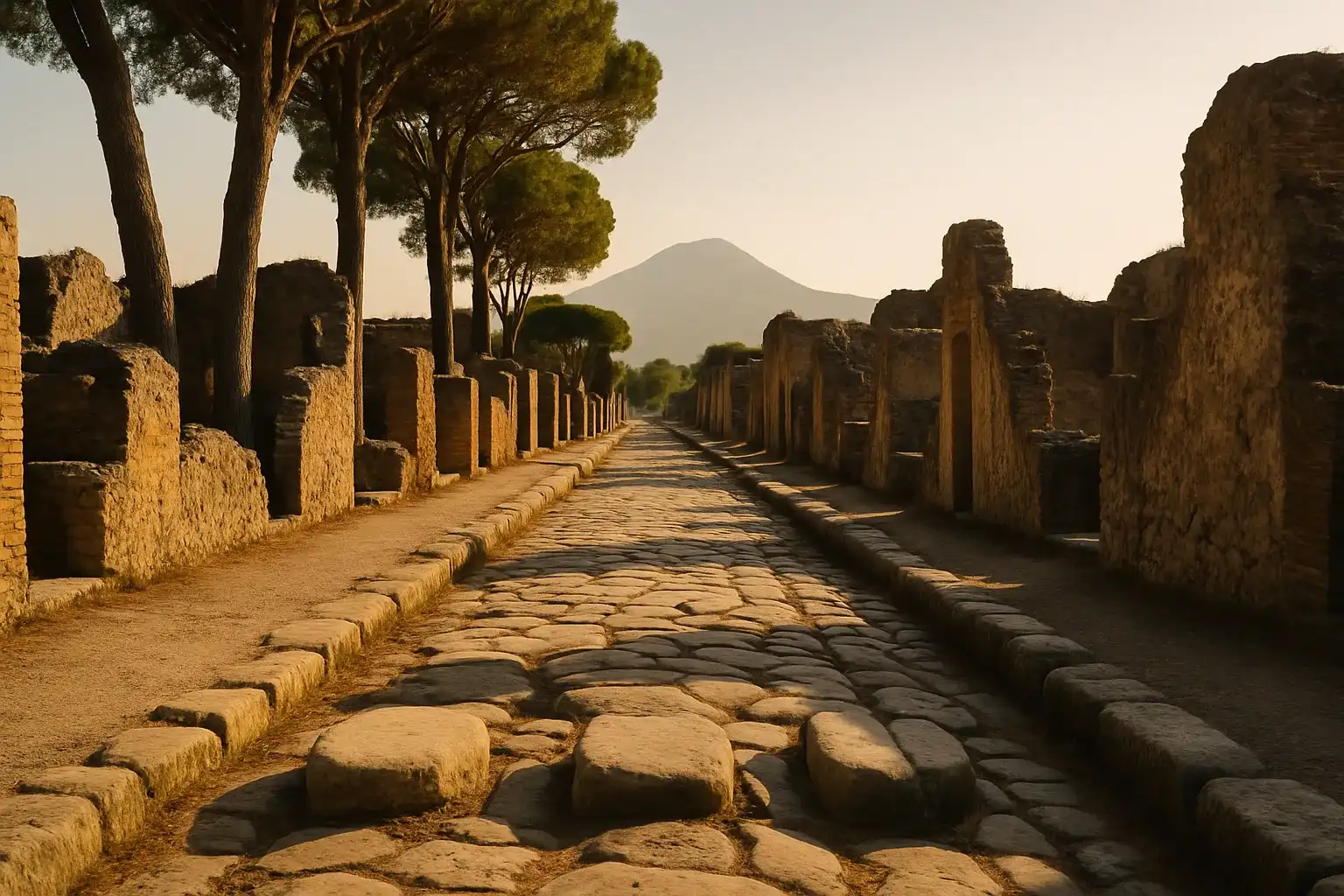
Pompeii Italy Travel Guide: Frozen in Time, Complete 2026
Roman EmpireWalk the streets of ancient Pompeii with our complete guide. Discover the best routes, must-see hous...
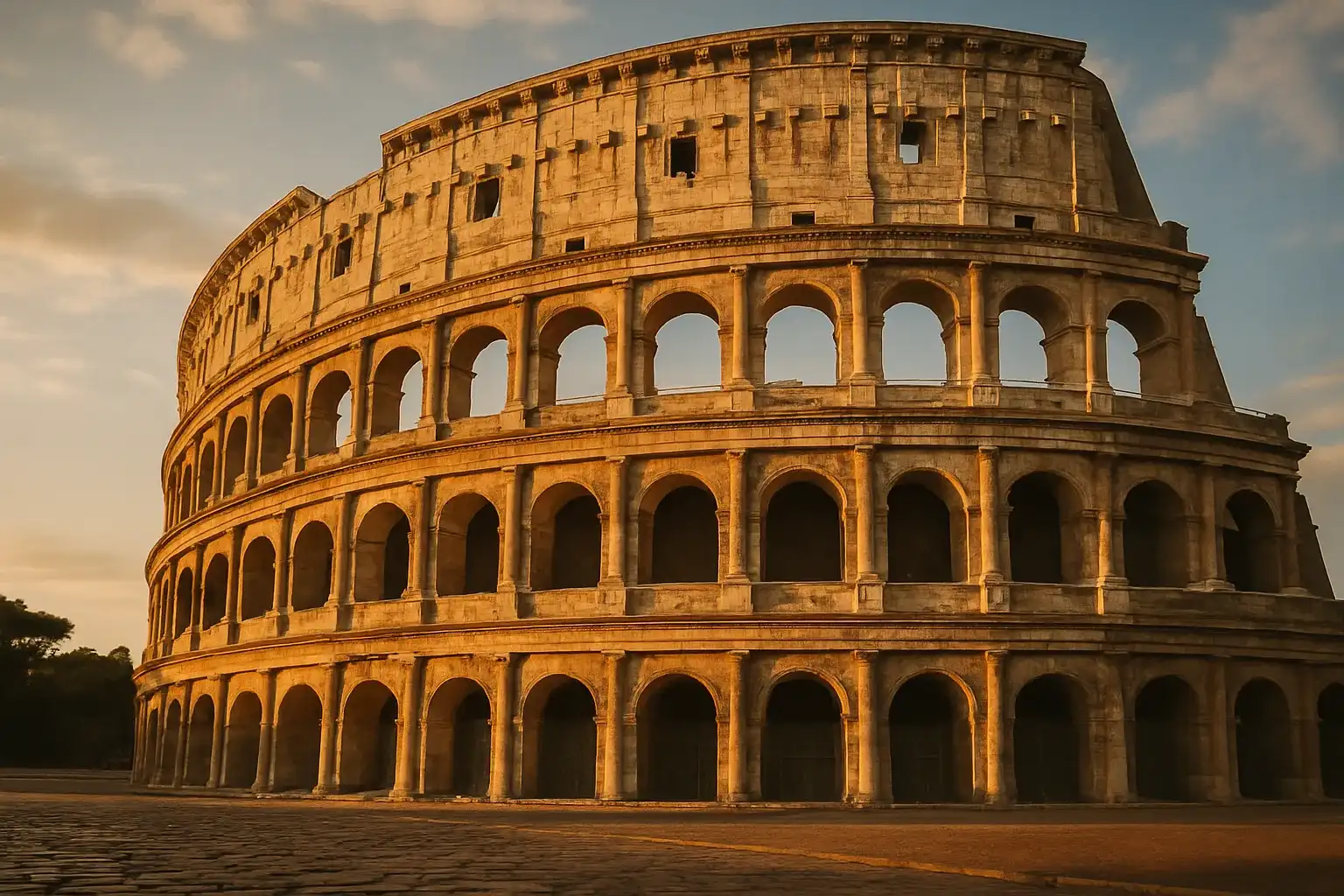
Colosseum Rome: Complete 2026 Guide to Arena Floor, Tickets, and Timing
Roman EmpirePlan the perfect Colosseum visit with timed-entry strategy, Arena Floor and underground access tips,...
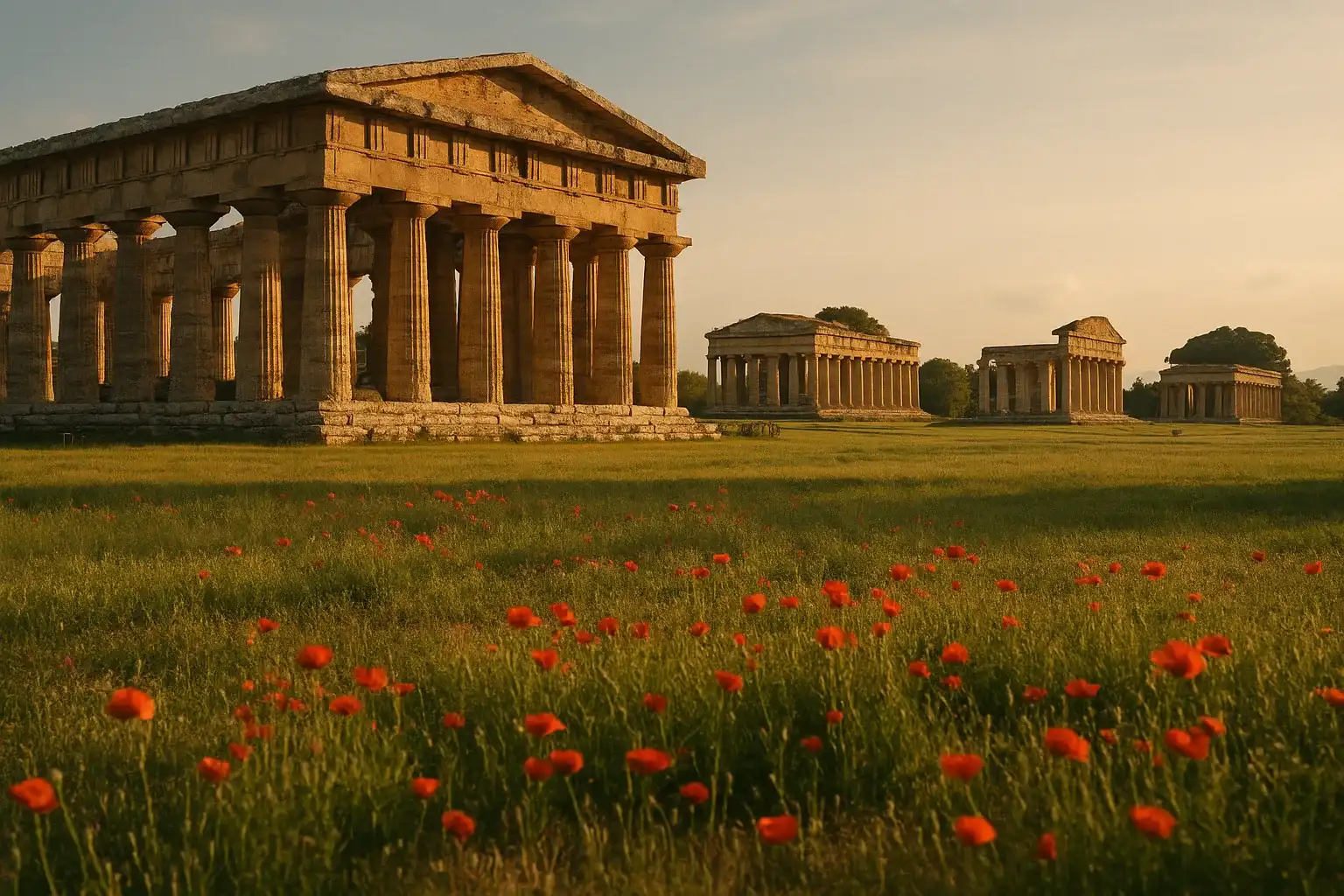
Paestum: Europe's Best-Preserved Greek Temples on Italy's
Ancient Greek / RomanDiscover Paestum's magnificent Greek temples, the Tomb of the Diver, and buffalo mozzarella farms on...