Quick Info
Curated Experiences
Tour to El Brujo Archaeological Complex
Trujillo Full Day: Chan Chan, Huacas and Museo
Private Northern Peru Archaeology from Trujillo
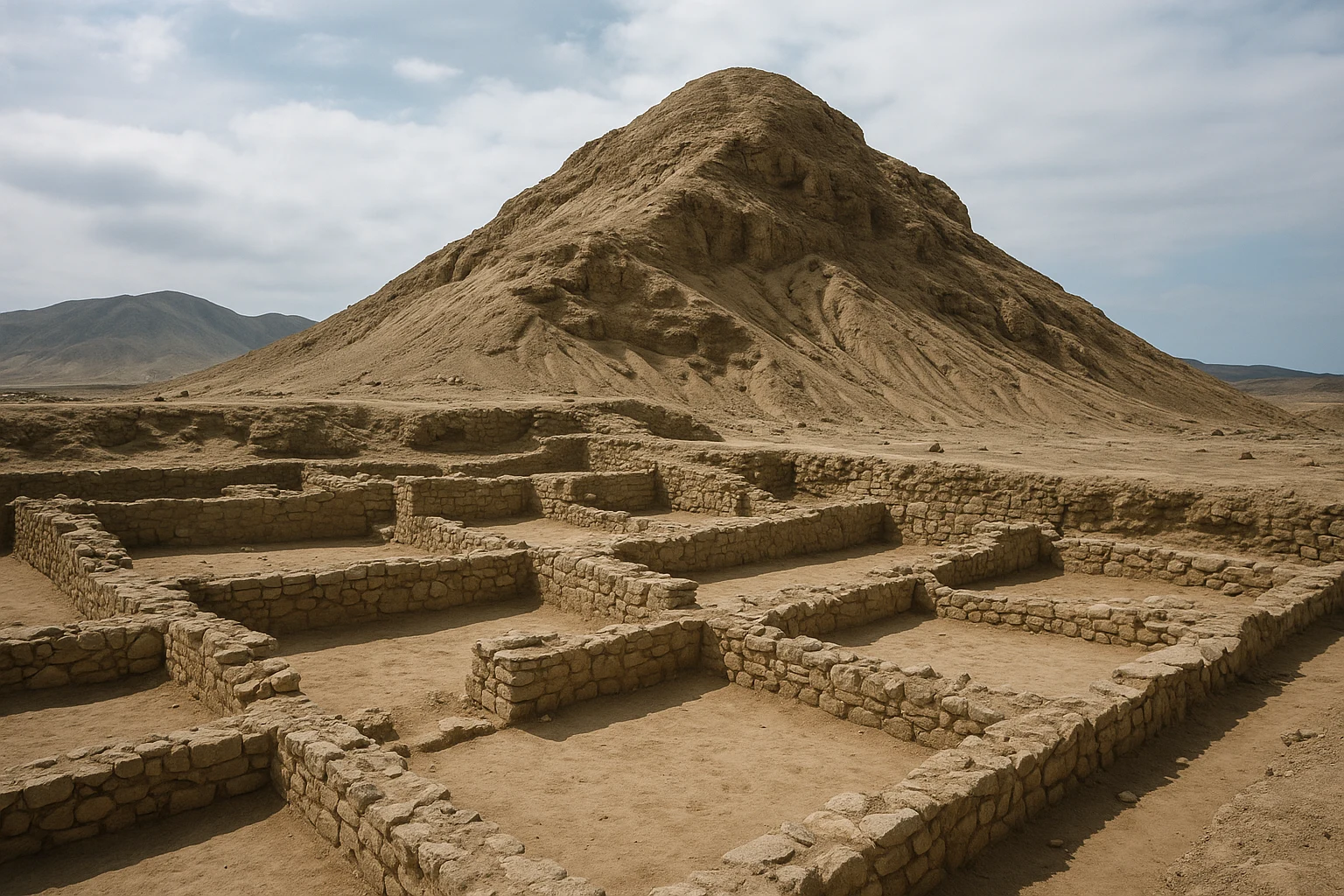
The Huaca Prieta Peru travel guide starts in a place that does not look like a famous archaeological wonder at first glance: a wind-carved, dark mound above the Pacific, where salt air and desert light flatten the horizon and make time feel strangely compressed. Yet at Huaca Prieta in Peru, near Trujillo, archaeologists uncovered some of the earliest evidence of complex life on South America’s coast — including ancient cotton textiles, worked gourds, basketry, and food remains that push deep into the Late Pleistocene and early Holocene. This is not a site of giant carved stone or theatrical temples. It is older, quieter, and in many ways more radical: proof that sophisticated ritual and technological knowledge existed here long before pottery, metal, or imperial states.
At Ancient Travels, we recommend Huaca Prieta for travelers who want to understand Peru before the Inca, before the Moche, even before the earliest ceramic cultures of the Andes. The site is best approached as part of a larger north-coast story anchored in the El Brujo complex, where later monumental phases are easier to read visually. This guide explains Huaca Prieta’s history and key features, how to get there from Trujillo, practical admission and timing details, what each season changes on the coast, and how to combine your visit with Chan Chan and other major archaeological highlights.
History: Deep Time on the Chicama Coast
Earliest occupation and coastal lifeways (c. 14,500-8000 BCE)
Huaca Prieta sits near the mouth of the Chicama River, a strategic zone where marine resources, fertile valley soils, and overland routes intersect. Excavations revealed very early human activity in this area, with dates that reach back to roughly 14,500 BCE in associated contexts and later deeply stratified occupation in the mound itself. These early communities relied on mixed subsistence: fishing, shellfish gathering, and gathering or cultivating plants adapted to the littoral desert. What makes the evidence extraordinary is not just age, but continuity. The stratigraphy suggests long-term engagement with the same landscape, indicating that this coast was not a temporary camp but part of a durable social world.
Preceramic mound building and ritual practice (c. 4000-2500 BCE)
By the Late Preceramic period, the site developed into a formal mound center through repeated construction episodes using packed sediments, cultural refuse, and prepared surfaces. This process created the dark, layered mass now called Huaca Prieta. Rather than one monumental project built at once, the mound grew incrementally through ritual activity, feasting debris, domestic residues, and engineered fills. Archaeologists interpret this as evidence of collective social organization before the appearance of classic temple states on the coast. The communities here were already coordinating labor, creating symbolic spaces, and marking ancestry through place-based building cycles.
Textiles, gourds, and early technology (c. 3000-1800 BCE)
Huaca Prieta became globally significant when researchers identified finely worked cotton textiles and decorated gourds from Preceramic levels. Some textiles use twining and complex patterning techniques that imply technical mastery usually associated with much later periods. Gourd pyro-engraving and iconographic motifs also suggest developed aesthetic systems, not merely utilitarian production. These finds overturned old assumptions that sophistication in the Andes followed a linear sequence beginning with pottery and monumental stone. At Huaca Prieta, innovation emerged through fiber, plant technology, and maritime adaptation, demonstrating an alternative pathway to social complexity rooted in coastal ecologies.
Regional transformation and later cultures (c. 1800 BCE-700 CE)
As ceramic traditions spread and new regional centers emerged across Peru’s coast, Huaca Prieta’s central role appears to have changed. Activity in the immediate mound area became less dominant compared with later large ceremonial complexes nearby, especially within what became the broader El Brujo landscape. Still, the location remained meaningful. Successive communities did not erase the deep past; they built around it, reused adjacent zones, and integrated older sacred ground into new social geographies. This pattern of continuity through transformation is a hallmark of Andean archaeology, where sacred places often accumulate significance rather than being abandoned outright.
Modern rediscovery and scientific excavation (20th century-present)
Modern archaeological attention to Huaca Prieta accelerated in the twentieth century, with major field campaigns that refined chronology and expanded understanding of Peru’s Preceramic coast. Later multidisciplinary work — including microbotanical analysis, radiocarbon dating, zooarchaeology, and textile studies — turned the site into a reference point for early Andean civilization debates. Today, Huaca Prieta is recognized as one of the key locations for understanding how early societies on the Pacific coast organized labor, ritual, and technology long before imperial formations. Preservation remains delicate because the mound consists largely of earthen and organic contexts vulnerable to moisture and erosion, so site management emphasizes controlled access and interpretation.
The Key Monuments: What to See at Huaca Prieta
The Huaca Prieta mound itself
The central feature is Huaca Prieta, a low but imposing earthen mound whose dark coloration comes from centuries of ash, organic residues, and occupation debris compacted into archaeological strata. Unlike stepped pyramids with formal staircases, this mound reads as an accumulated archive of repeated human action. Its profile may seem austere, but that visual understatement is exactly what makes it so important: every layer records meals, craft work, ritual deposits, and rebuilding episodes spanning thousands of years. Standing at the perimeter, you are looking at one of the longest-lived cultural deposits on Peru’s north coast.
What survives visibly is only part of the story; much of Huaca Prieta’s value lies in subsurface contexts documented through excavation profiles and associated research publications. Guides often explain how tiny finds — fish bones, shell fragments, botanical residues, textile fibers — can be as historically transformative as monumental walls. For photography, early morning provides better relief on the mound’s contours and less haze from coastal glare.
Excavation sectors and stratigraphic cuts
Authorized excavation areas near the mound reveal cross-sections of layered occupation, where color and texture changes mark distinct periods of use. These stratigraphic windows are the closest thing Huaca Prieta has to a monumental facade: they expose time itself as architecture. You can often see alternating compacted floors, midden lenses, and fill events that correspond to cycles of occupation and ceremonial renewal. For non-specialists, this is where a guide matters most, because the visual language of earth layers is not intuitive without context.
These sectors also illustrate why unrestricted foot traffic is limited. Huaca Prieta is not a stone ruin built to withstand mass circulation; it is a fragile scientific record. Even minor surface disturbance can degrade contexts that preserve rare organic information in an otherwise harsh environment.
The broader El Brujo landscape connection
Huaca Prieta sits within the larger El Brujo archaeological complex, and understanding that relationship is essential. Later monumental structures — especially Huaca Cao Viejo — provide the dramatic vertical architecture that Huaca Prieta does not. Together, they show a long arc of north-coast development from Preceramic mound traditions to state-level ritual architecture under the Moche and later Chimu. Many visitors first grasp Huaca Prieta’s significance only after seeing both sectors in one day: the older mound as deep foundation, the later pyramids as political elaboration.
From elevated points between site sectors, the Pacific coastline and Chicama Valley fields frame this continuity beautifully. The juxtaposition of ocean, desert, and irrigated valley helps explain why communities repeatedly invested in this landscape over millennia.
Museum interpretation and material culture displays
Although Huaca Prieta itself is visually restrained, nearby interpretation spaces and museum displays in the El Brujo area provide the artifacts and narrative frameworks that make the mound legible. Exhibits typically emphasize early textiles, plant processing, maritime adaptation, and changing ritual forms over time. The key insight is that complexity here was built through fiber technologies, food systems, and social coordination — not through massive carved stone.
If you’re serious about understanding Huaca Prieta, budget at least 45 to 60 minutes for interpretation exhibits rather than treating them as an optional add-on. The museum context turns the mound from “interesting dirt hill” into one of the most consequential archaeological records in the Americas.
Getting There: Transportation and Access
Huaca Prieta is easiest to visit as part of a north-coast archaeology day from Trujillo, usually paired with El Brujo sector sites.
From central Trujillo
The route heads northwest via the Pan-American Highway and local roads toward Magdalena de Cao and the coastal sector. Total one-way travel time is usually about 1.5 hours, depending on traffic leaving Trujillo.
- Private taxi or hired driver: 100-170 PEN ($26-45 USD) round trip, depending on waiting time and whether you add extra stops. This is the most flexible option for independent travelers.
- Organized guided tour: 150-220 PEN ($40-58 USD) per person, often including guide services and entry coordination for El Brujo-area components.
- Public transport + local transfer: 4-8 PEN ($1-2 USD) by combi to Magdalena de Cao, then mototaxi or arranged local ride to site access points. Cheapest method, but schedules are inconsistent and return options can be limited.
From Trujillo airport (Cap. FAP Carlos Martínez de Pinillos)
If you land the same day you plan to visit, go directly by pre-booked transport; do not rely on improvised connections once outside the city.
- Airport private transfer with driver wait: 170-250 PEN ($45-66 USD) including airport pickup, site visit, and return to Trujillo.
- Taxi to city + day tour departure: 25-40 PEN ($7-11 USD) airport to city, then join a scheduled group tour from downtown agencies.
- Rental car: 140-220 PEN ($37-58 USD) per day plus fuel; roads are manageable, but signage near minor turnoffs can be sparse. Daytime driving is strongly recommended.
Practical Information
Admission and Hours
Huaca Prieta access is generally managed through the broader El Brujo archaeological zone, with operating hours typically around 9:00 AM to 5:00 PM daily. Standard visitor fees in the complex are commonly around 15 PEN (about $4 USD), though rates can change by season or management updates. Bring cash in Peruvian soles, as card facilities may be unavailable or unreliable. There is no widely used national multi-site pass equivalent here, so each north-coast attraction is usually ticketed independently. Aim to start early: between 9:00 and 11:00 AM you get better light, cooler temperatures, and more time for guided interpretation before afternoon wind picks up.
What to bring
- Sun protection: Hat, sunscreen, and sunglasses are essential; shade is minimal.
- Water: At least 1.5 to 2 liters per person for a half-day field visit.
- Footwear: Closed shoes with good grip for dusty, uneven ground.
- Layered clothing: Coastal wind can feel cool even on warm days.
- Cash: Small denominations in PEN for tickets, snacks, and local transport.
Dress code and etiquette
There is no formal religious dress code, but practical modest clothing is best: lightweight long sleeves and long pants protect against sun and windblown sand. Follow all path restrictions and do not climb on unmarked earthen features; these are vulnerable contexts, not durable masonry. If photography limits are posted in specific sectors or exhibits, respect them.
Accessibility
Accessibility is partial. Some interpretation areas and pathways are navigable, but earthen terrain, uneven surfaces, and occasional inclines can be difficult for travelers with limited mobility. If accessibility support is needed, arrange in advance through your tour provider or local cultural authority in Trujillo so transport and pacing can be adapted.
When to Visit: Seasonal Considerations
Spring (September-November)
Spring on Peru’s north coast is mild and increasingly clear, with typical daytime temperatures around 18-24°C (64-75°F). Coastal haze begins to recede, and visibility across the Chicama plain improves. Crowds remain moderate, making it a comfortable shoulder season for travelers who want good conditions without peak-volume group traffic.
Summer (December-March)
Summer temperatures generally run 22-29°C (72-84°F), with stronger sun exposure and occasional humidity spikes. Crowd levels rise during holiday periods. In some years, El Niño patterns increase rainfall risk on the north coast, which can affect road conditions and preservation protocols at earthen sites. Start early and confirm same-day site status if unusual weather is forecast.
Autumn (April-June)
Autumn is the ideal season for most visitors: 20-26°C (68-79°F), clearer skies, manageable wind, and stable travel conditions. Crowd levels are moderate to low, and morning light is excellent for reading topographic form on the mound and surrounding sectors. If you can pick only one window, choose April through June.
Winter (July-August)
Winter is cooler at roughly 15-20°C (59-68°F), with frequent overcast conditions and marine fog (garúa). Crowds are lighter, which can improve guide availability and pace on site. Bring a windproof outer layer for exposed viewpoints. Even without bright sun, UV exposure can remain significant, so sunscreen is still necessary.
Combining Huaca Prieta with Trujillo
The best way to experience Huaca Prieta is to frame it within a full north-coast timeline rather than as an isolated stop. Start from Trujillo around 7:30 AM and aim to reach the El Brujo sector close to opening at 9:00 AM. Begin with Huaca Prieta interpretation while temperatures are cool and concentration is high, then move to Huaca Cao Viejo by 10:30 AM to contrast Preceramic mound traditions with later Moche ceremonial architecture. By 12:30 PM, break for lunch in Magdalena de Cao or on your return route toward Trujillo.
In the afternoon, continue to Chan Chan around 3:00 PM, when lower-angle light improves the visibility of adobe reliefs and broad urban walls. This sequence gives you a powerful historical arc in a single day: from very early coastal settlement and fiber technology at Huaca Prieta to imperial-scale Chimu urbanism at Chan Chan. If you have a second day, head north toward Lambayeque for the Sipan Royal Tombs, where elite Moche burials add another layer to the regional story.
Travelers short on time can still do a focused half-day: Huaca Prieta context plus El Brujo museum sectors, returning to Trujillo by early afternoon. But if your schedule allows, the full-day combination produces much deeper understanding with only modest extra transit.
Why Huaca Prieta Matters
Huaca Prieta matters because it rewrites the starting chapter of Andean civilization. For generations, public imagination favored civilizations that left massive stone architecture or imperial road networks. Huaca Prieta insists on a different truth: complexity can begin in fiber, food systems, and ritual accumulation; political intelligence can be encoded in landscape management long before recognizable “states” emerge. The people who built and rebuilt this mound were not waiting for history to start. They were already making it.
What stays with you after visiting is not monumental spectacle but temporal depth. Wind moves across the same coastal strip where people engineered livelihoods and ceremonial identities over thousands of years. The mound’s dark layers, easy to overlook at first, become a record of endurance: community after community returning to the same place, adding material, memory, and meaning. In that sense, Huaca Prieta offers one of the most honest experiences in Peru’s archaeological circuit. It asks you to look carefully, think slowly, and recognize that some of humanity’s most important innovations were built not for display, but for continuity.
Quick Facts
| Attribute | Details |
|---|---|
| Location | Magdalena de Cao district, La Libertad, Peru |
| Ancient Name | Huaca Prieta (modern archaeological name) |
| UNESCO Status | Not independently inscribed (near UNESCO-listed Chan Chan region) |
| Established | c. 14,500 BCE early settlement evidence; major Preceramic mound later |
| Distance from Trujillo | Approx. 60 km northwest; about 1.5 hrs by road |
| Entry Fee | Commonly around 15 PEN (~$4 USD), cash recommended |
| Hours | Typically daily 9:00 AM-5:00 PM |
| Best Time | April-June for clear skies and moderate temperatures |
| Suggested Stay | 2-3 hours for Huaca Prieta context; full day with El Brujo |
Explore More Peru
- El Brujo Complex: Moche ceremonial pyramids, murals, and the Lady of Cao museum context just beside Huaca Prieta.
- Chan Chan: The monumental Chimu adobe capital near Trujillo, essential for understanding later north-coast state power.
- Sipan Royal Tombs: Extraordinary elite Moche burials and one of South America’s best archaeological museums.
Plan your wider route with our Peru Ancient Sites Guide. For logistics and sequencing, see our Northern Peru Itinerary Guide.
Frequently Asked Questions
How much time should I plan for Huaca Prieta?
Plan at least 2 to 3 hours in the El Brujo sector to understand Huaca Prieta in context, including interpretation at nearby museum facilities. If you combine it with Huaca Cao Viejo and Trujillo return transport, it becomes a full-day outing of 7 to 9 hours.
Can I walk freely on Huaca Prieta like other ruins?
Access is more controlled than at many monumental sites because Huaca Prieta is an active and sensitive archaeological context. Most visits are observational, with interpretation from authorized guides and nearby displays rather than unrestricted climbing on the mound.
What is the best season to visit Huaca Prieta?
April through June is usually ideal on Peru's north coast, with clearer skies and moderate temperatures. July and August are cooler but can be overcast with coastal fog, while summer months are warmer and occasionally affected by El Niño-related rain events.
How do I get to Huaca Prieta from Trujillo?
The easiest option is a private driver or guided tour heading toward El Brujo, about 60 km northwest of Trujillo (roughly 1.5 hours each way). Public transport can get you partway to Magdalena de Cao, but final access is less reliable without pre-arranged local transport.
Why is Huaca Prieta so important archaeologically?
Huaca Prieta produced exceptionally early evidence of complex lifeways on the Andean coast, including ancient cotton textiles, basketry, and food remains dating back millennia before ceramic traditions. It helps scholars trace how early coastal communities developed ritual architecture, maritime adaptation, and long-distance exchange.
Is Huaca Prieta suitable for families and non-specialists?
Yes, especially when visited with a guide who can explain why the mound matters beyond what is visible on the surface. Pairing it with nearby El Brujo's museum and monumental architecture makes the day more engaging for children and first-time archaeology travelers.
Nearby Ancient Sites
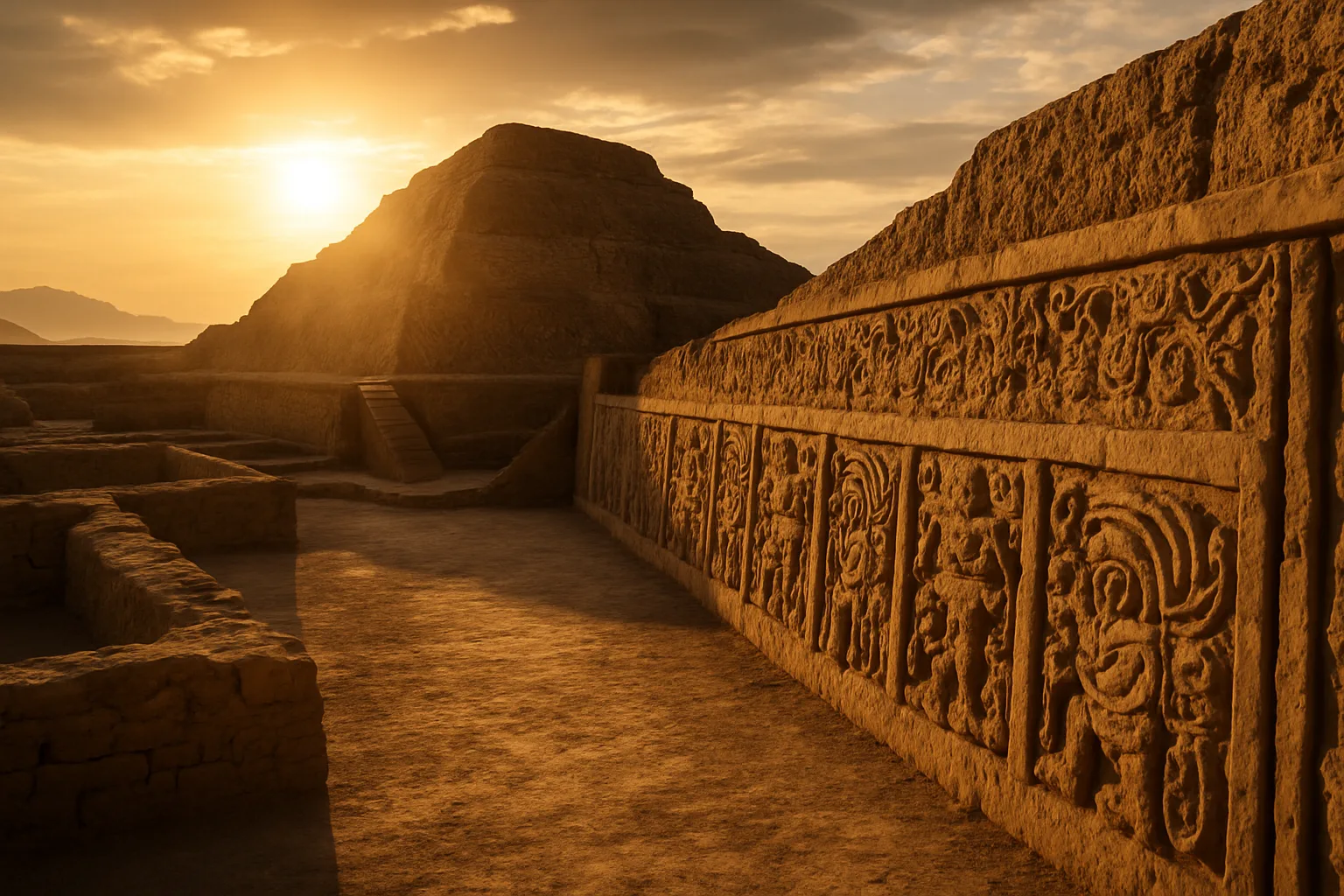
El Brujo Complex Peru Guide 2026: Lady of Cao & Moche Pyramids
Moche-ChimuVisit El Brujo Complex near Trujillo, Peru: Huaca Cao Viejo, the Lady of Cao tomb, and Moche murals....
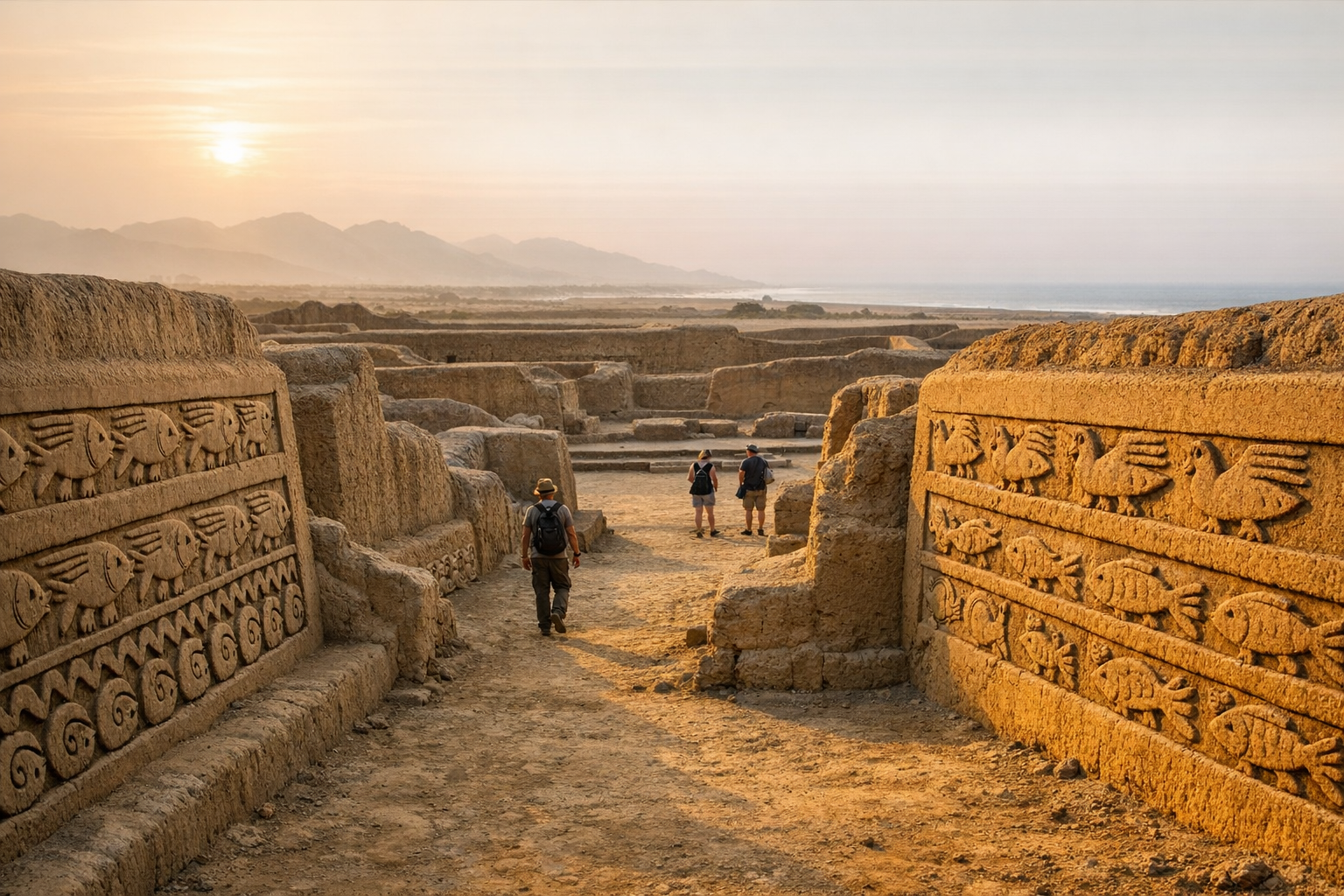
Chan Chan Peru Guide 2026: Chimu Capital & Adobe Citadels
ChimuExplore Chan Chan near Trujillo — the largest pre-Columbian city in the Americas. Discover the Chimu...
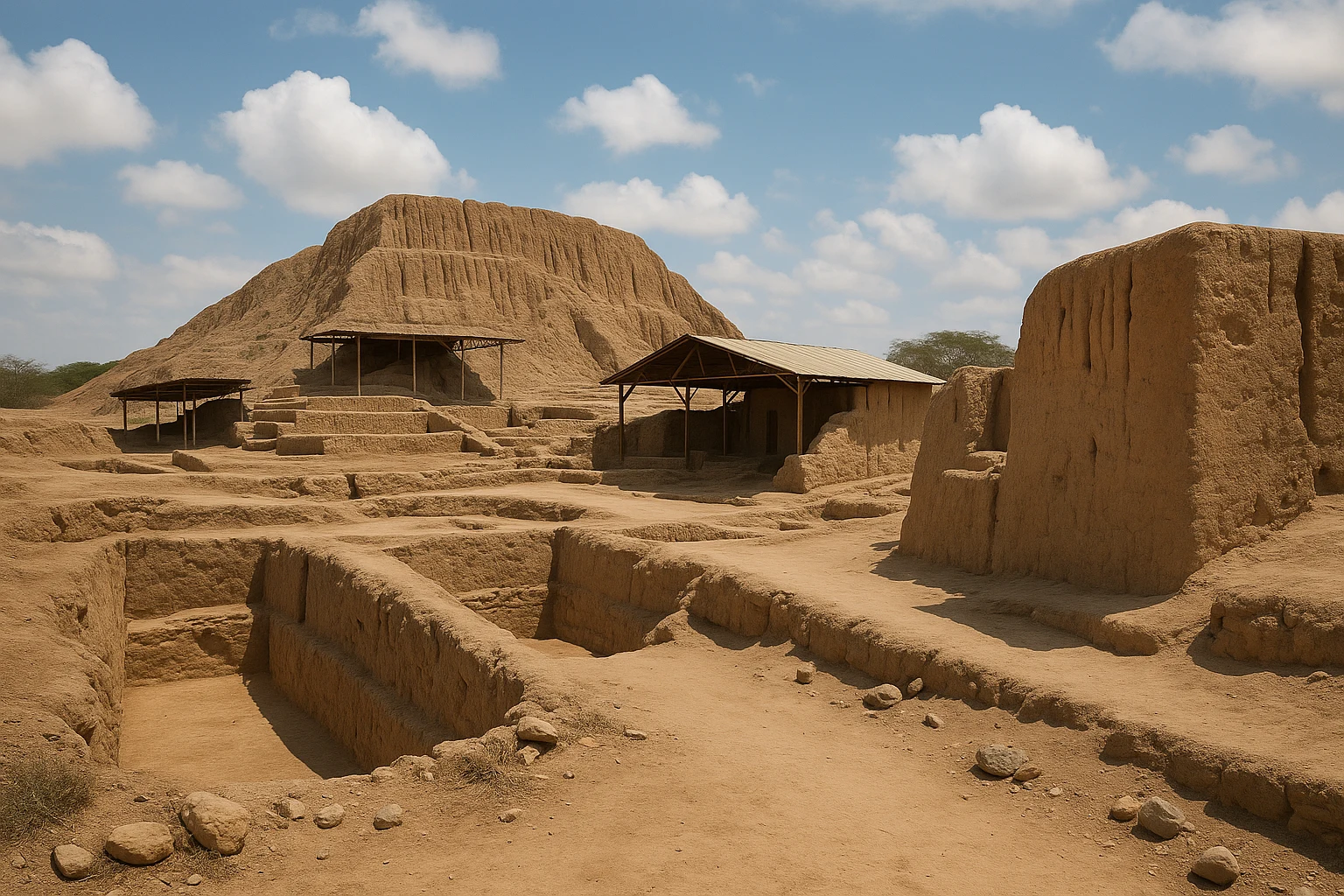
Sipan Royal Tombs Peru Guide 2026: Lord of Sipán & Moche Gold
Cupisnique-Moche-Lambayeque-Inca-Spanish ColonialVisit Peru’s Sipán Royal Tombs to see Moche elite burials, museum treasures, and practical tips for ...