Quick Info
Curated Experiences
Huancavelica Highlands and Huaytara Cultural Day Tour
Private Huaytara and Inca Road Experience from Ica
Southern Andes Archaeology: Huaytara and Tambo Colorado
Huaytara in Peru is the kind of place that changes your understanding of empire in one glance. You stand before tightly fitted Inca stonework, then look up and see colonial masonry and Christian iconography resting directly on that older foundation. The junction is not subtle. It is architectural negotiation turned into stone: one political order reusing, reframing, and attempting to command the authority of another. For travelers interested in how landscapes absorb conquest, adaptation, and continuity, Huaytara is one of the most revealing small sites in the Peruvian Andes.
At Ancient Travels, we recommend Huaytara as a high-value stop for readers who want something quieter than Peru’s headline destinations but no less meaningful historically. The site sits along routes that once linked highland and coastal worlds, and its surviving monuments still carry that in-between identity. This guide covers the historical timeline, what to see on the ground, practical transport and planning from Huancavelica or Ica, seasonal strategy, and how to combine Huaytara with nearby archaeological destinations for a full day of focused exploration.
History: A Highland Crossroads in Stone
Before imperial control: regional Andean communities (before c. 1470 CE)
Before the Inca state incorporated this valley, the Huaytara zone was already part of active Andean exchange between ecological tiers. Communities in this section of today’s Huancavelica region moved goods, labor, and ritual practices across mountain corridors that connected sierra settlements to lower valleys and, ultimately, coastal routes. While monumental remains from this phase are less visually dominant than later architecture, the strategic location itself explains why imperial powers cared about this node. Huaytara was useful because it sat within movement systems older than any single dynasty, a pattern common across Andean political history.
Inca incorporation and state building (c. 1470-1532 CE)
As the Inca Empire expanded under late imperial rulers, Huaytara appears to have been developed as an administrative and logistical station tied to broader road networks. The most important surviving evidence is the finely cut masonry associated with the local palace or state compound, where trapezoidal openings, controlled courtyards, and durable ashlar construction reflect official imperial style. This was not random regional imitation. It was state architecture intended to project order and authority into a frontier-like connective zone. In practical terms, Huaytara likely served officials, travelers, and supply movement along routes that linked major centers across difficult terrain.
Early colonial transformation (16th-17th centuries)
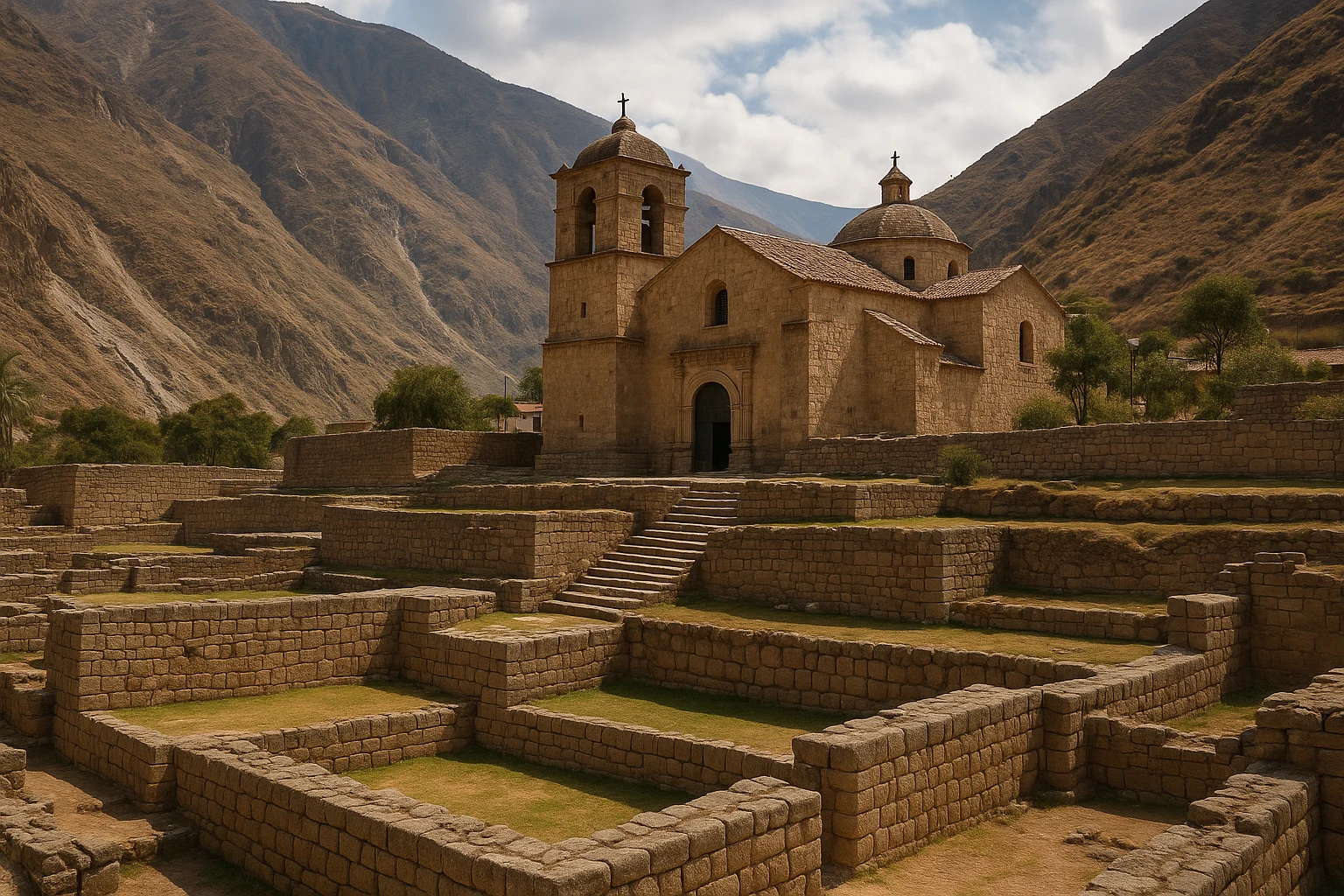
After the Spanish invasion and the collapse of Inca central rule, Huaytara’s built environment was reorganized around new religious and administrative priorities. The most dramatic expression is San Juan Bautista church, constructed with direct reuse and adaptation of Inca foundations and structural elements. Like many Andean colonial monuments, the site did not erase what came before; it layered a new ritual and political grammar onto earlier sacred or administrative space. For modern visitors, this makes Huaytara exceptionally legible. You can read imperial succession in walls, joints, and alignment changes without needing to imagine an abstract timeline.
Local continuity and republican Peru (18th-20th centuries)
Even as national political frameworks shifted over centuries, Huaytara remained an inhabited local center rather than an abandoned ruin field. That continuity matters because community use shaped preservation outcomes: some elements were maintained through practical reuse, while others were altered, weathered, or partially dismantled. In republican Peru, regional roads and administrative reforms changed mobility patterns, yet the town’s historical core stayed symbolically important. Huaytara became both an everyday settlement and a visible archive of long-term Andean negotiation between indigenous inheritance and imposed colonial structures.
Modern rediscovery, conservation, and heritage pressures (20th century-present)
Systematic scholarly attention to Huaytara increased in the 20th century as Andean architectural studies broadened beyond a small set of famous monuments. Researchers documented masonry techniques, construction phases, and the interface between Inca and colonial components, while local and regional authorities pursued varying conservation efforts. Today, Huaytara sits in a familiar heritage tension: greater tourism visibility can support preservation funding, but increased traffic and under-resourced management can also strain fragile structures. Visiting responsibly helps. The site is most rewarding when treated as a living historic center where archaeology, architecture, and local identity remain actively intertwined.
The Key Monuments: What to See at Huaytara
The Inca palace complex (often called Palacio del Inca)
Huaytara’s signature monument is the Inca palace complex, whose stonework immediately signals state-level craftsmanship. You will see carefully fitted blocks, trapezoidal door geometry, and wall planes designed for both durability and symbolic order. Although not preserved as a fully intact administrative compound, the surviving sections are substantial enough to communicate scale and intention. This architecture likely hosted official functions tied to transit control, storage, and regional governance along imperial routes. What makes it memorable is proportion: even fragmented, the geometry retains calm authority. For photography, use early side light to emphasize joint lines and the contrast between original Inca cuts and later additions.
San Juan Bautista church over Inca foundations
The San Juan Bautista church is Huaytara’s most striking lesson in historical layering. Colonial builders established Christian worship space directly over earlier Inca construction, reusing foundations and in places integrating stonework that predates the church by decades. Rather than seeing two separate monuments, you are looking at one continuous architectural argument about power, legitimacy, and place-making. Exterior observation often reveals the clearest transitions between building traditions, especially where masonry style changes at structural seams. If interior access is open during your visit, watch how liturgical orientation and decorative language reinterpret an older spatial logic.
Inca masonry details: doors, niches, and wall transitions
Beyond the headline structures, Huaytara rewards slow attention to masonry details that many travelers pass too quickly. Trapezoidal openings, surviving niches, and subtle changes in stone treatment can indicate functional zoning or later adaptation. In some sectors, you can distinguish original imperial technique from colonial repairs by looking at block finish, edge precision, and mortar behavior. These details are not minor. They are the primary evidence for how the site was reworked over time. Stand back for whole-building context first, then move close to read workmanship and sequence like a text.
The historic plaza and settlement fabric
Huaytara is not only a single monument compound; the surrounding historic plaza and town fabric complete the experience. Streets, civic edges, and daily life around the core structures demonstrate how heritage sits inside a functioning community. This context helps you avoid treating Huaytara as a museum object isolated from contemporary Peru. You are moving through a town where architecture still organizes social rhythm. For visitors interested in cultural landscape rather than stand-alone ruins, this integration is a major strength and a reason Huaytara lingers in memory longer than larger but more detached archaeological parks.
Inca route landscape and corridor views
The broader valley around Huaytara preserves the feeling of a corridor site linked to Inca route systems crossing altitude zones. While not every segment is monumentalized for tourism, the topography itself explains why officials invested here: movement funnels through constrained mountain geography, and visibility over approach lines is strong from key points. Short viewpoint stops around town can clarify that strategic logic in minutes. Late afternoon often gives the most dramatic relief across slopes, while morning light is better for architectural detail in the built core.
Getting There: Transportation and Access
Huaytara is accessible by overland travel, but the key is planning around mountain road timing rather than raw distance.
From Huancavelica
Huancavelica is a practical highland base if you want regional context and a same-day return with manageable pacing.
- Private driver or taxi charter: Usually S/320-S/520 ($86-$140 USD) round trip depending on waiting time and route condition.
- Organized day tour: Commonly S/180-S/320 ($48-$86 USD) per person with transport and basic guiding.
- Regional shared transport combinations: Often S/45-S/90 ($12-$24 USD) total, but schedules can be irregular and return timing limited.
- Rental car: Around $45-$85 USD per day plus fuel; useful only if you are comfortable on winding Andean roads.
From Ica
From the coast, Huaytara is feasible as a long day or one-way transit stop toward the sierra, best with prearranged logistics.
- Private transfer: Roughly S/520-S/900 ($140-$242 USD) depending on vehicle type and stops.
- Guided multi-stop archaeology route: Usually S/260-S/420 ($70-$113 USD) per person when bundled with nearby sites.
- Public transport chain: Cheaper but complex, often S/70-S/140 ($19-$38 USD) with multiple connections and uncertain timing.
Admission and hours
Huaytara’s exterior heritage areas are often visible without a large formal ticket system, but access conditions vary by monument component, church activity, and local administration. Carry S/10-S/30 ($3-$8 USD) in small cash for donations, occasional local entry charges, or guide support. Daylight visiting hours are the practical norm, roughly around 8:30 AM to 5:00 PM for comfortable exploration, though doors may open and close with local routines rather than fixed museum-style schedules.
If you want the best mix of light and lower heat, arrive in the morning. You will also have more flexibility if weather shifts and you need to adjust your return drive.
Practical Information
A successful Huaytara visit is less about formal ticketing and more about preparation for road reality, altitude, and variable local opening patterns. Carry cash in soles, water, and sun protection even on cool days because UV is intense at elevation. Mobile signal can be inconsistent in stretches of the route, so confirm your transport details before departure rather than relying on mid-journey coordination.
For most travelers, modest attire and respectful behavior around church spaces are appropriate, especially if local religious activities are underway. Footwear with grip is useful because street surfaces and monument-adjacent areas can be uneven. If you are sensitive to altitude, plan a slower pace and avoid stacking too many stops into one tight schedule. Huaytara is most rewarding when you allow enough time to observe stonework detail instead of rushing through for checklist photos.
When to Visit: Seasonal Considerations
Spring (September-November)
Spring in Huaytara usually brings mixed conditions with temperatures around 10-21°C (50-70°F). Mornings can be clear, with occasional cloud build-up later in the day. Crowd levels are generally light to moderate, making this a good season for travelers who want room to photograph architecture without constant foot traffic. Bring a light layer for wind and a rain shell for variable afternoons.
Summer (December-March)
Summer is the wetter period, often around 11-20°C (52-68°F), with greater chance of rain-related delays on mountain roads. Visitor numbers vary: holiday windows can be busier, but many independent travelers avoid peak wet conditions. If you visit in summer, begin early, protect electronics from moisture, and keep extra transit buffer in case of slower road sections.
Autumn (April-May)
Autumn is often excellent, with clearer skies returning after heavier rains and typical ranges near 9-22°C (48-72°F). Crowds remain moderate, and road reliability usually improves. For many visitors, this is the ideal balance of comfort, visibility, and manageable logistics. Architectural textures in both Inca and colonial stonework are especially photogenic in the cleaner post-rain atmosphere.
Winter (June-August)
Winter is generally the driest season, with daytime temperatures around 7-21°C (45-70°F) and notably colder starts. Skies are often crisp, and mountain visibility is strong, which helps if you are combining Huaytara with longer scenic driving loops. Bring layers for early morning cold and strong midday sun. For pure reliability and clear light, winter is the safest planning window.
Combining Huaytara with the South-Central Peru Route
The best Huaytara itinerary works as a narrative drive rather than a rushed checklist. Start from Huancavelica or Ica early, aiming to arrive in town by 9:00 AM when light is still soft on stone joints and streets are relatively quiet. Spend your first hour at the Inca palace sectors, then transition to the church complex around 10:15 AM so you can read the architectural layering while shadows still define construction seams.
By 11:30 AM, take a short walk through the historic center and pause at viewpoints that reveal Huaytara’s corridor geography. If you are continuing from the coast, schedule lunch around 1:00 PM before descending toward lower elevations; if you are returning to Huancavelica, lunch in town gives a welcome break before the mountain drive back. Travelers with an archaeology-first agenda can pair Huaytara with Tambo Colorado in a long full-day circuit, but this requires disciplined timing and private transport.
Most combined routes run 10 to 13 hours total including transit. If that sounds too aggressive, treat Huaytara as the primary destination and keep the rest of the day flexible. The site rewards attention more than speed, and you will remember far more if you spend time reading its details rather than racing between stops.
Why Huaytara Matters
Huaytara matters because it makes historical succession visible at human scale. In many destinations, you need maps, models, or imagination to understand how one civilization replaced another. Here, the evidence is immediate: imperial Inca geometry, colonial adaptation, and modern community life occupy the same architectural frame. The result is not a frozen ruin, but a layered place where power, faith, and continuity remain legible.
For your wider Peru journey, Huaytara is a corrective to simplified narratives. It reminds you that Andean history is not only about singular golden ages; it is about durable landscapes repeatedly interpreted by new authorities and local communities alike. Stand before the old stone at the edge of the plaza in late light, and you can feel centuries speaking at once, not in conflict alone, but in uneasy, enduring conversation.
Quick Facts
| Attribute | Details |
|---|---|
| Location | Huaytara district, Huancavelica Region, Peru |
| Ancient Name | Inca administrative center at Huaytara |
| UNESCO Status | Not individually inscribed; part of wider Andean heritage landscape |
| Established | c. 15th century CE Inca administrative center |
| Distance from nearest hub | About 120 km from Huancavelica (roughly 3.5-4.5 hours by road) |
| Entry Fee | Usually free exterior access; allow S/10-S/30 ($3-$8 USD) for local access/donations |
| Hours | Best visited in daylight, roughly 8:30 AM-5:00 PM |
| Best Time | April-September for drier roads and clearer views |
| Suggested Stay | 1.5-2.5 hours on site; full day with transit |
| Signature Highlight | Inca palace masonry merged with San Juan Bautista church |
Explore More Peru
- Tambo Colorado: See one of the best-preserved Inca coastal administrative centers with surviving color traces.
- Incahuasi: Explore another Inca installation tied to regional control and movement networks.
- Nazca Lines: Experience Peru’s vast geoglyph landscape and the mysteries of desert ceremonial design.
- Machu Picchu: Compare Huaytara’s administrative layering with the Inca Empire’s most famous mountain sanctuary.
Plan your complete route with our Peru Ancient Sites Guide and prepare overland logistics with our Peru transport planning guide.
Frequently Asked Questions
How much time should I plan for Huaytara?
Plan 1.5 to 2.5 hours in Huaytara for a solid visit focused on the Inca palace, the church complex, and a short walk through town. If you enjoy architectural detail and photography, give yourself closer to 3 hours. Most travelers combine Huaytara with a longer regional day route, so buffer extra transit time.
Do I need a ticket to enter the Huaytara monuments?
Public exterior areas are often accessible without a major entry fee, but interior access to specific spaces can depend on local schedules, church use, and municipal management. Carry small cash in soles for donations, local guides, or occasional access charges. It is smart to confirm opening conditions the same morning in town.
What is the best season to visit Huaytara?
The dry season from roughly May to September is usually best for clear roads, stable weather, and sharp mountain light. Shoulder months can also work well with fewer visitors. During the wettest months, plan for slower driving and occasional rain interruptions.
How do I get to Huaytara from Huancavelica or Ica?
From Huancavelica, you can travel by private driver, organized tour, or regional transport combinations, with mountain roads making early departures useful. From Ica, Huaytara is reachable by long overland routes that climb into the sierra, best done with a prearranged vehicle. Independent travel is possible, but fixed-timetable options can be limited.
What are the main things to see in Huaytara?
The highlights are the finely cut Inca stone walls associated with the former palace or administrative complex, the colonial San Juan Bautista church integrated into earlier foundations, and surviving traces of Inca route infrastructure in the surrounding landscape. The site's layered architecture is the key reason to visit.
Is Huaytara safe for travelers?
Huaytara is generally calm and manageable for visitors, with the main challenges tied to altitude, long road days, and changing weather rather than urban security risks. Travel in daylight where possible, keep valuables discreet, and carry water, sun protection, and warm layers. Local guidance improves both safety and interpretation.
Nearby Ancient Sites
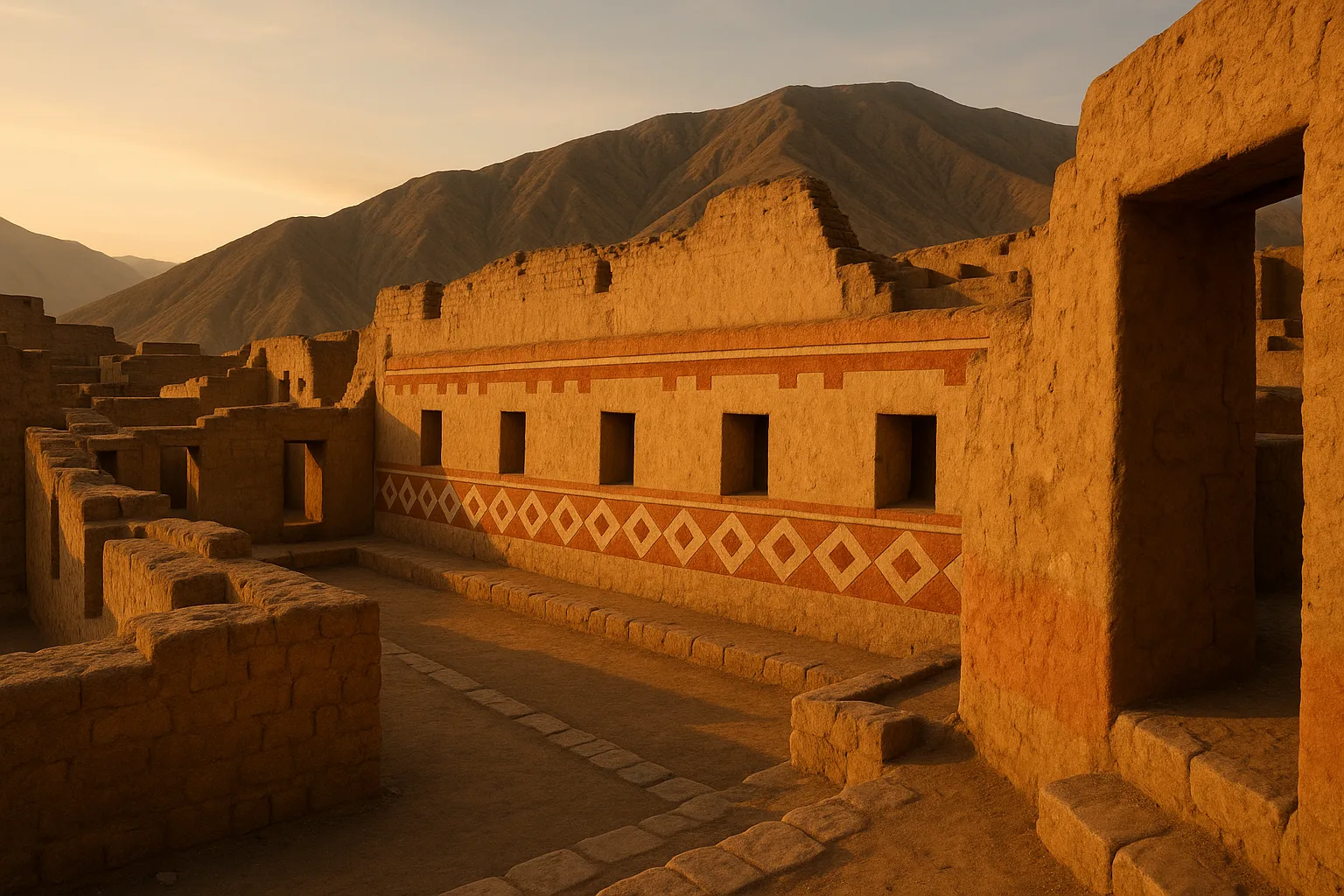
Tambo Colorado Peru Guide 2026: Inca Painted Walls & Royal Palace
IncaVisit Tambo Colorado near Pisco, Peru's best-preserved Inca coastal palace. Get transport, tickets, ...
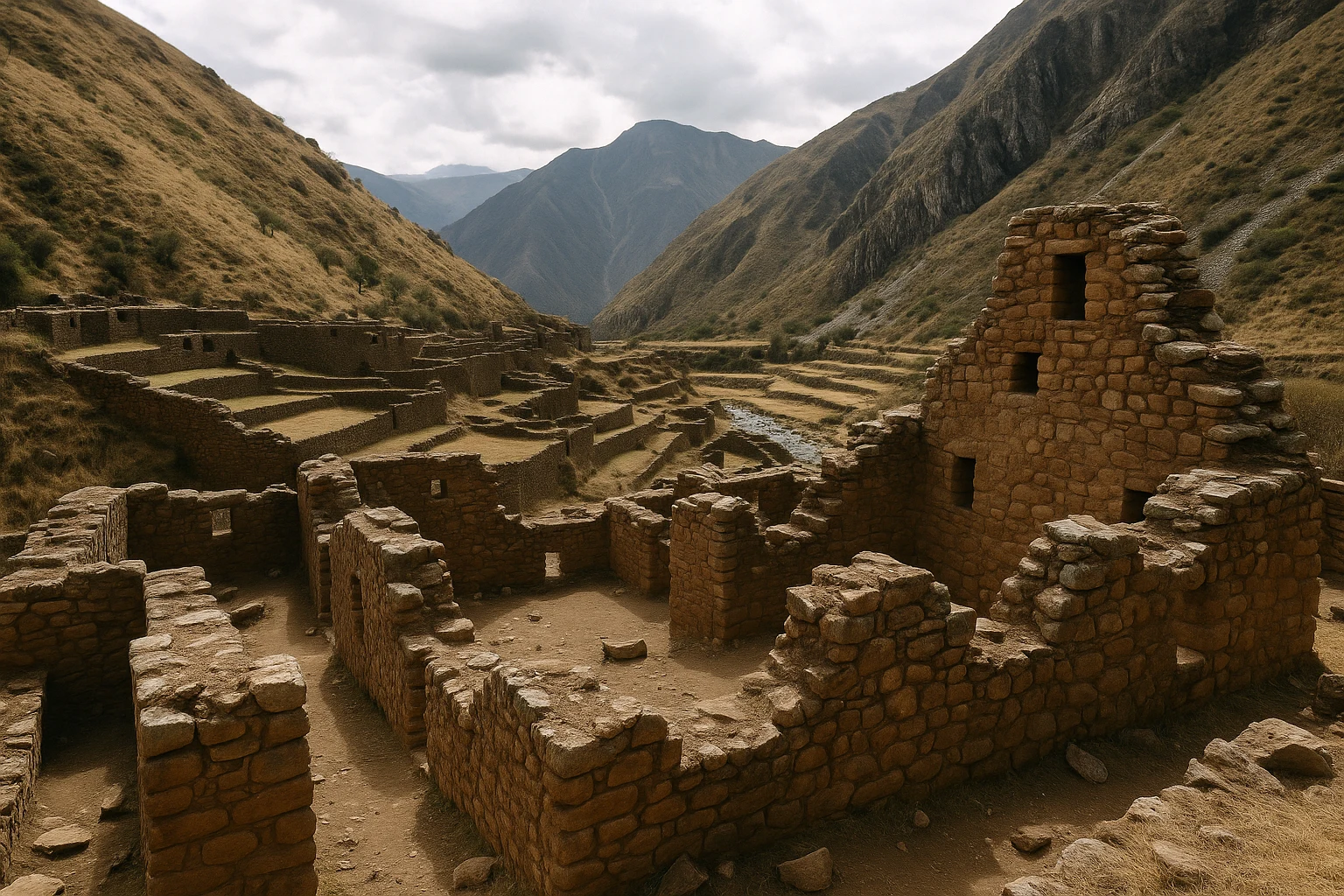
Incahuasi Peru Guide 2026: Cliff Temples & Sacred Valley Views
Killke-Inca-Colonial-AndeanExplore Incahuasi in Peru's Sacred Valley for Inca terraces, ceremonial platforms, and canyon views,...
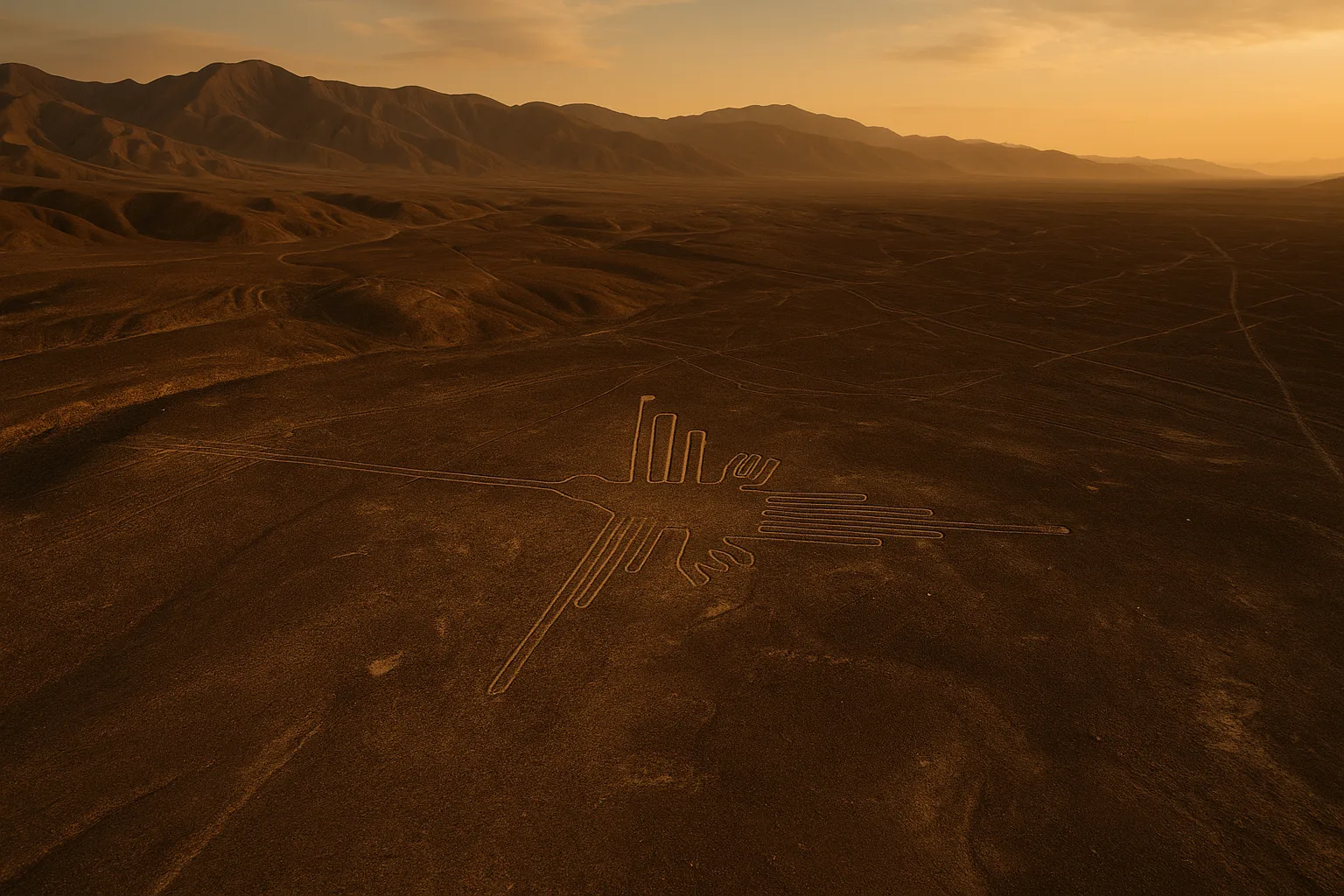
Nazca Lines Peru Guide 2026: Geoglyphs & Desert Mystery
NazcaExplore Peru's Nazca Lines: ancient geoglyphs etched in desert sand. Plan your overflight or land to...
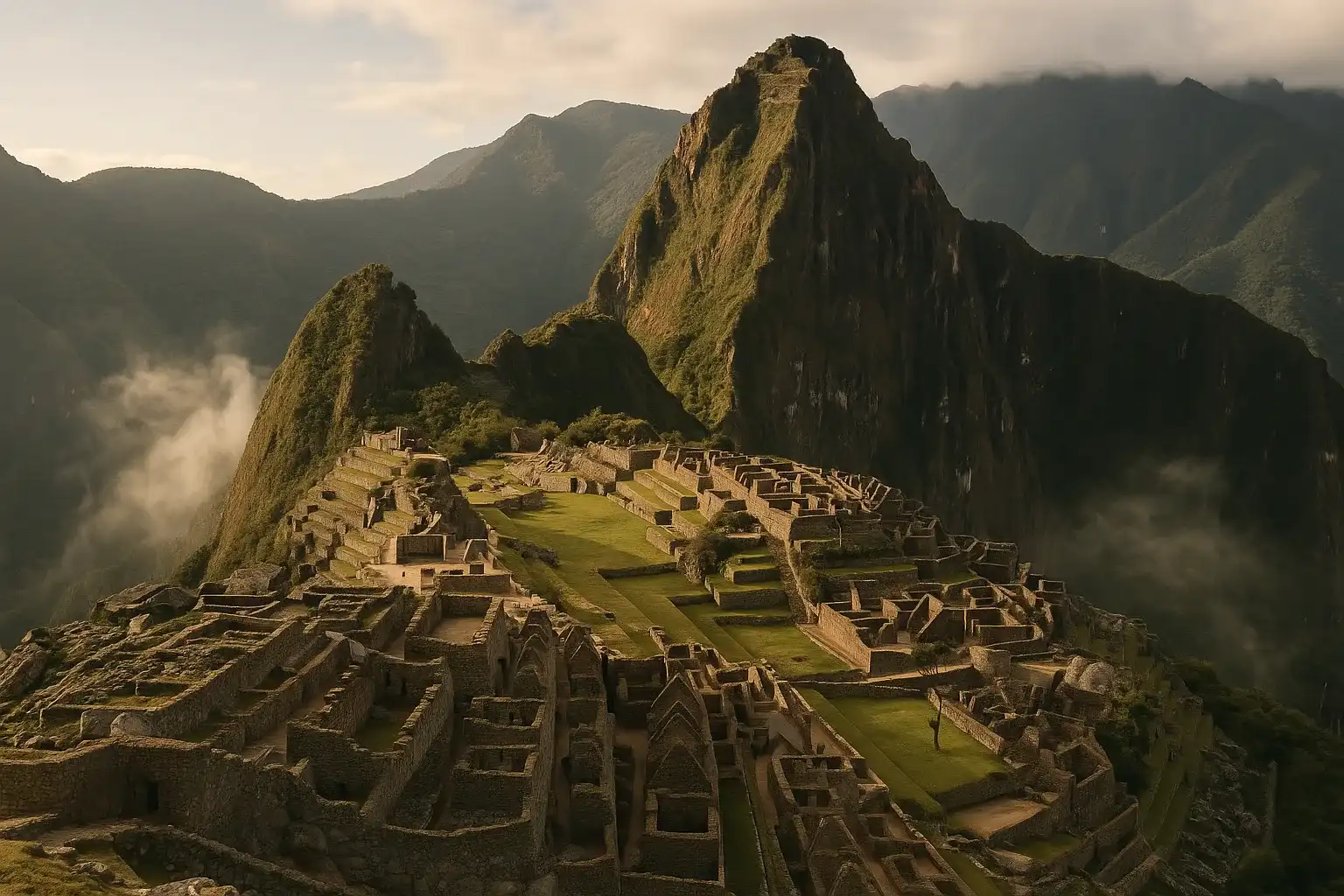
Machu Picchu Peru Travel Guide 2026: Circuits, Tickets & Entry Tips
Inca EmpireNavigate Machu Picchu's 2026 circuit system with our definitive guide. Learn how to choose your rout...