Quick Info
Curated Experiences
Kofun Burial Mounds & Ancient Okayama Day Tour
Japan Archaeology: Kofun Tombs Guided Experience
Okayama Historical Landmarks Private Tour
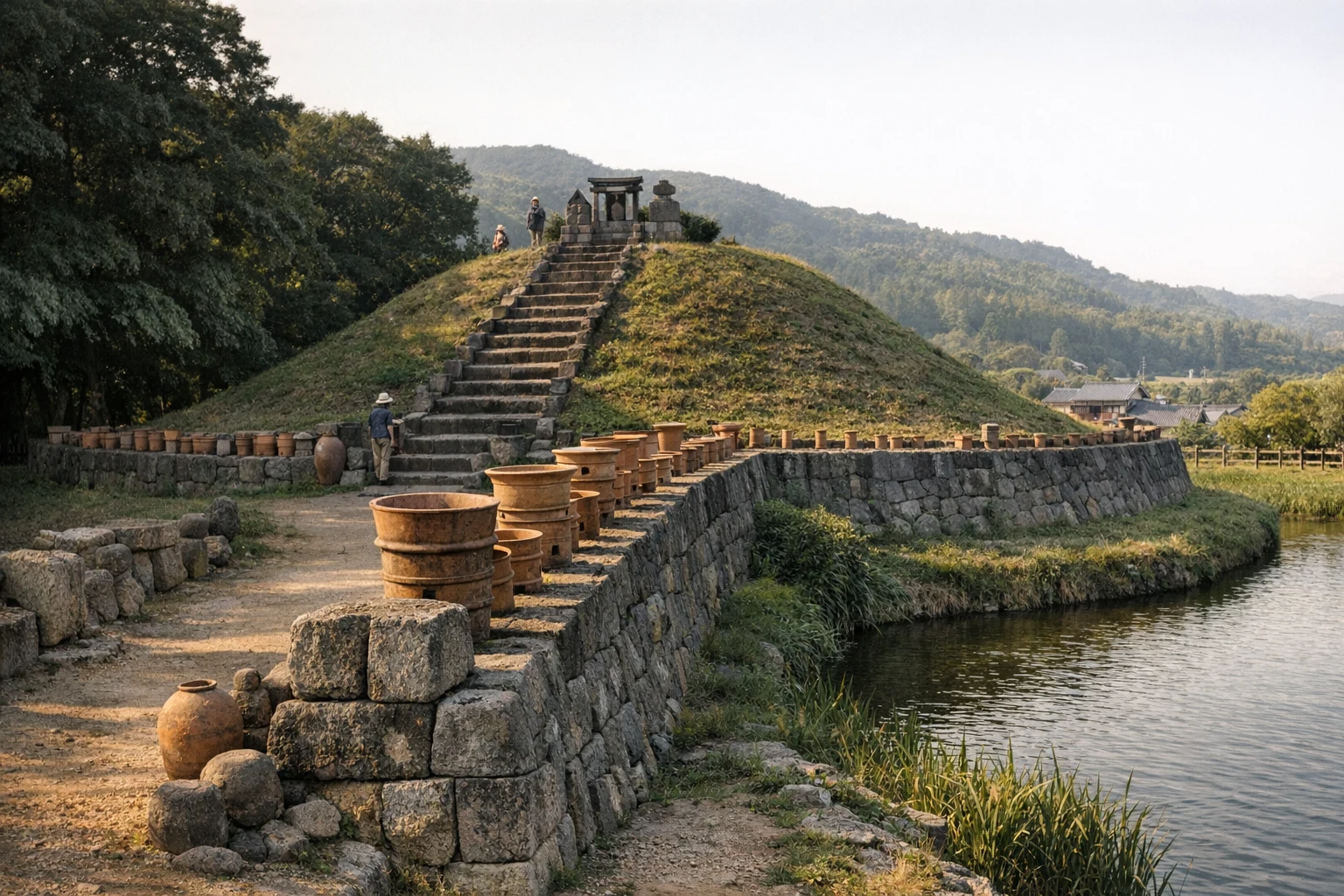
Steeped in the verdant tranquility of Okayama Prefecture, the Iwayama Ancient Tomb is one of Japan’s most evocative remnants of the Kofun period, a formative chapter in the archipelago’s early history. Situated on a gentle rise amid picturesque countryside, the site exudes an air of solemn dignity—its grassy mound partially concealed by mature trees, echoing centuries of reverence and cultural significance. Visitors are instantly reminded that this land bears the legacy of Japan’s ancient elite, a place once reserved for chieftains or nobility whose power and influence shaped the dynamics of early Japanese society. In the hush of the morning mist or the golden hour of dusk, the Iwayama Ancient Tomb reveals itself as not just a burial mound but as a living testament to an era when Japan took its formative steps into organized culture, ritual, and governance.
The region around Okayama is renowned for its clusters of burial mounds—known as kofun—each representing the apex of funerary architecture between the 3rd and 7th centuries CE. The Iwayama Ancient Tomb stands out for its size, its commanding views, and its layered mysteries. While the surrounding landscape has changed with modern times, the mound itself remains a tangible link to a Japan that existed long before samurai or shogunate. As you approach, the blend of silence and subtle birdsong encourages quiet reflection, and interpretative signs written in both Japanese and English offer insights into who may have been entombed here, what rituals were observed, and how the local people have sought to honor this resting place through the ages. Whether you’re a student of history, an archaeology enthusiast, or simply someone captivated by the persistent echoes of the past, the Iwayama Ancient Tomb promises an evocative journey into the heart of Japan’s ancient soul.
History
Pre-Kofun Influence and Early Settlement
The land now home to the Iwayama Ancient Tomb was shaped long before the mound itself was constructed. Archaeological studies suggest that, prior to the Kofun period, this region of Okayama saw habitation by small agrarian communities. These villagers left behind traces of pit dwellings, earthenware, and primitive tools, painting a picture of a society transitioning from Jomon-era hunter-gatherers to Yayoi agriculturalists. Throughout the Yayoi period (roughly 300 BCE – 300 CE), rice farming flourished along Okayama’s fertile plains. This era witnessed an increasing stratification of society, which laid the groundwork for the emergence of powerful clans—precursors to the chieftains honored with monumental tombs.
The Kofun Period: Dawn of Elite Burial Practices
It was during the Kofun period (ca. 250–538 CE) that societies across the Japanese archipelago began to invest dramatically in mortuary architecture. The term ‘kofun’ itself translates to ‘ancient tomb’, and the period takes its name from these impressive burial mounds. The Iwayama Ancient Tomb, constructed in the middle phase of the Kofun period (estimated 5th century CE), is a textbook example of this evolution. Rising above the countryside, its keyhole-shaped layout—an architectural hallmark found across western Japan—hints at connections to the central Yamato polity, which was consolidating power and establishing ritualized burial customs.
The mound likely entombed a local ruler or influential family, part of an intricate network of elite alliances tied by kinship and vassalage to the central court in Nara. Grave goods uncovered near the tomb include iron weapons, bronze mirrors, magatama beads, and haniwa clay figurines, each symbolic of wealth, authority, and the afterlife. Such artifacts underscore the influence of continental cultures, especially from Korea and China, during this period—a time of vibrant exchange in metalworking technology, artistic motifs, and social organization. The tomb not only immortalized an individual or family but also displayed their enduring connection to power and cosmology.
Later Historical Context and Rediscovery
As the Kofun period gave way to the more centralized Asuka and then Nara periods, the practice of constructing large tumuli waned. Nevertheless, the Iwayama Ancient Tomb and similar sites were often preserved, if not actively maintained, by later generations recognizing their ancestral importance. Medieval chronicles occasionally mention the site in connection with legendary local chieftains—though, as with many such sites, historical fact often blends with folklore.
The modern era saw renewed interest in kofun mounds as Japanese scholars and government authorities began to systematically document and study them in the 19th and early 20th centuries. Iwayama was formally designated a protected historic site, and meticulous excavation campaigns unearthed further details about its construction techniques, burial practices, and cultural significance. Today, it stands not only as an archaeological site but as a symbol of the community’s living connection to a distant but foundational epoch in Japanese civilization.
Key Features
Visitors to the Iwayama Ancient Tomb will find a site that balances archaeological intrigue with natural beauty. The most immediately striking aspect is the great mound itself—some 80 meters in length, rising in two distinct tiers to an elevated summit. This “zenpo-koenfun” or keyhole-shaped structure is best appreciated from a gentle climb along a marked pathway, which reveals how the builders cleverly integrated the mound into the natural rise of the hill.
Much of the exterior remains clad in grass and low shrubs, creating a naturalistic appearance that belies the careful engineering that went into constructing the mound. Archeological surveys have shown that beneath this calm exterior lies a sophisticated core of compacted earth and stone, layered for both stability and symbolic meaning. Along one edge, visitors can spot remnants of the original moat—a ring of water or marsh that would have added both protection and ritual distinction to the tomb. Fragments of haniwa—terracotta figures once placed along the surface—can occasionally be seen at the site museum, depicting warriors, dancers, and animals with abstract charm.
The tumulus is oriented to command broad views over the surrounding paddies and distant hills, a feature that not only underscores the tomb’s prominence but also connects it to the cycle of rice cultivation, seasonal rituals, and the broader cosmological beliefs of the time. Strategic trees—some planted decades or even centuries ago—help frame the mound and add to its sense of quiet dignity. Near the base, sturdy stone steps lead to an information area where interpretative plaques in both Japanese and English lay out the history, archaeological findings, and cultural context of the site.
While access to the inner burial chamber is restricted to protect both the tomb and its hypothetical occupants, replicas and models in the onsite exhibition room offer a glimpse into how the original sarcophagus and grave goods would have been arranged. Here you can find detailed reconstructions of the bead necklaces, mirrors, weapons, and ceremonial vessels discovered during excavations. The museum also explores the wider kofun phenomenon in Okayama Prefecture, offering context on how local variations in tomb design reflect both regional identities and ties to the imperial center.
For many visitors, what leaves the deepest impression is the seamless blend of ancient engineering, spiritual symbolism, and the living landscape. Wildflowers bloom along the mound’s perimeter in spring, while in autumn the grasses turn a russet gold, creating a sensory tapestry that reinforces the tomb’s place in both the natural and cultural history of Japan. Benches along the route invite quiet contemplation, making the Iwayama Ancient Tomb a place not only for archaeological discovery but also for meditation and memory.
Getting There
Reaching the Iwayama Ancient Tomb is straightforward for travelers based in Okayama city or beyond. The site lies approximately 12 kilometers northeast of central Okayama, accessible by a combination of rail and local bus, or via direct taxi.
For most visitors, the journey begins at Okayama Station, a major stop on the Sanyo Shinkansen line and other regional railways. From Okayama Station, take the JR Ako Line to the Bizen-Mikado Station; this trip takes about 20 minutes and costs around ¥320 (approx. $2.25 USD). From Bizen-Mikado, local buses depart regularly to the “Iwayama Kofun Iriguchi” stop, which puts you about 500 meters from the entrance to the ancient tomb. The bus fare from Bizen-Mikado is typically ¥210 (about $1.50 USD), and the journey takes less than 15 minutes.
Alternatively, for those seeking maximal convenience or traveling in small groups, taxis are readily available from both Okayama Station and Bizen-Mikado Station. The journey by taxi from Okayama Station to the tomb’s parking area usually takes around 25–30 minutes and costs in the range of ¥3,800–¥4,200 (about $28–$32 USD), depending on traffic and the exact drop-off location. For visitors with rental cars, clear signage directs drivers to a small on-site parking lot; parking is generally free.
Cycling is also popular among locals, particularly in fair weather, as the route from Okayama follows rural backroads and offers a scenic view of rice paddies and gently rolling hills. Bicycle rentals are available from several outlets near Okayama Station, with daily rates averaging ¥1,200–¥1,500 (approx. $9–$11 USD).
Once on-site, well-maintained trails and signage guide visitors from the parking area or bus stop to the mound and adjacent exhibition facilities. Regardless of your chosen transport method, the journey to Iwayama Ancient Tomb is both accessible and rewarding, offering a microcosm of Okayama Prefecture’s cultural and natural charm along the way.
When to Visit
The Iwayama Ancient Tomb welcomes visitors throughout the year, but optimal visiting times depend on your preferences for climate, scenery, and local activity.
Spring (March to May) is perhaps the most enchanting season, as the mound and its surroundings burst alive with wildflowers, cherry blossoms, and fresh greenery. Temperatures are moderate, averaging between 12°C and 20°C (54°F–68°F), with minimal rainfall and soft breezes perfect for exploring on foot or by bicycle. This is also when local festivals may coincide, offering a glimpse of traditional culture interwoven with the ancient landscape.
Summer (June to August) brings lush foliage but can also mean high humidity and temperatures soaring up to 32°C (90°F). Occasional afternoon showers are common, especially during Japan’s rainy season in June and early July. If you visit during this period, aim for early morning or late afternoon hours to avoid midday heat, and bring ample water and insect repellent for comfort. The site’s canopy of mature trees does provide some relief from the sun.
Autumn (September through November) rivals spring for beauty, marked by the fiery transformation of the mound’s grasses and surrounding maples into shades of russet, gold, and crimson. Temperatures cool down to pleasant levels, typically ranging from 15°C to 25°C (59°F–77°F), and the air is crisp and clear, ideal for photographers and those seeking tranquil contemplation.
Winter (December to February) is the quietest time to visit, with fewer crowds and stark views that highlight the mound’s contours beneath bare trees. While snow is rare, frosty mornings add a certain mystical air to the landscape. Dress warmly, as temperatures can dip below 5°C (41°F), especially early or late in the day.
In general, weekends and holidays tend to attract local families and student groups, but the grounds are extensive enough to accommodate a steady flow of visitors. For those seeking solitude or the best photography conditions, plan your visit for a weekday morning or late afternoon, when the tumulus stands nearly empty and the surrounding countryside glows with the light of centuries past.
Quick Facts
| Feature | Detail |
|---|---|
| Location | Okayama Prefecture, Japan |
| Type | Kofun period burial mound (zenpo-koenfun, keyhole-shaped) |
| Estimated Construction | 5th century CE |
| Materials | Earth, stone, clay (haniwa), wooden sarcophagus |
| Length | Approx. 80 meters (262 feet) |
| Public Access | Year-round (outdoors); inner chamber restricted |
| Guided Tours | Available via local providers; English support |
| On-site Museum | Yes (exhibits, models, information - Japanese/English) |
| Parking | Free onsite parking |
| Nearest City | Okayama (12 km / 7.5 miles) |
| Entry Fee | Typically free; fees may apply for special exhibits |
| Civilizational Context | Early Yamato culture, Kofun era |
| Notable Artifacts | Bronze mirrors, magatama, iron weapons, haniwa figures |
Frequently Asked Questions
What era does the Iwayama Ancient Tomb date back to?
Iwayama Ancient Tomb is from the Kofun period, roughly spanning the 3rd to 7th centuries CE.
Is the Iwayama Ancient Tomb open to visitors year-round?
Yes, the site is open throughout the year, though access to the inner burial chamber is restricted to protect the site.
Are there guided tours available at the tomb?
Guided tours are available through local tour providers and can be booked in advance, often as part of larger regional archaeology tours.
What amenities are available at the site?
Basic amenities such as restrooms and information boards are available, but dining options are limited. Visitors should plan accordingly.
Is photography allowed at Iwayama Ancient Tomb?
Photography is allowed in the outdoor areas, but flash photography or tripods may be restricted, especially near the burial mound.
Nearby Ancient Sites
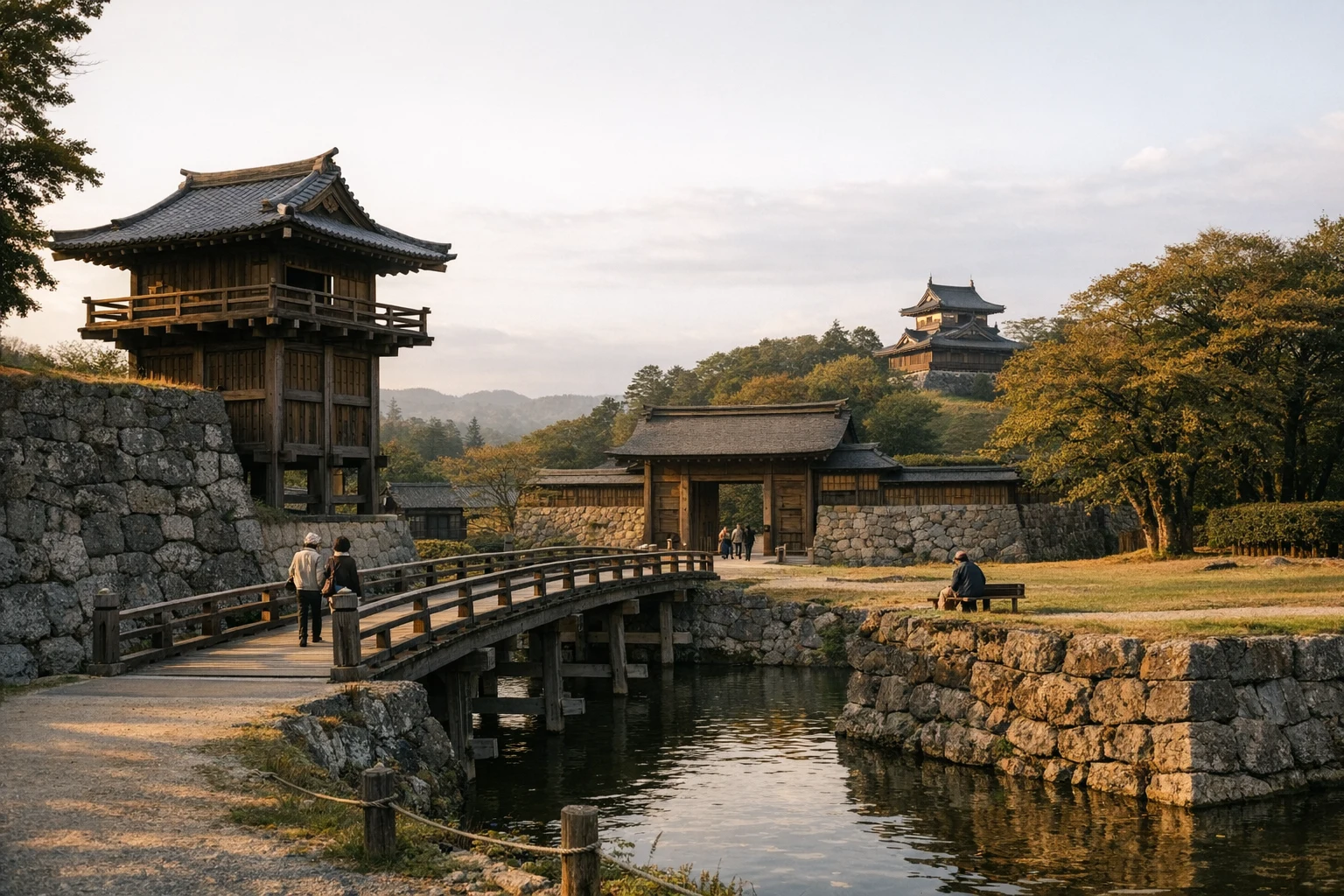
Akita Castle Site
Explore the Akita Castle Site, a historic Japanese fortification in Akita Prefecture that reveals th...
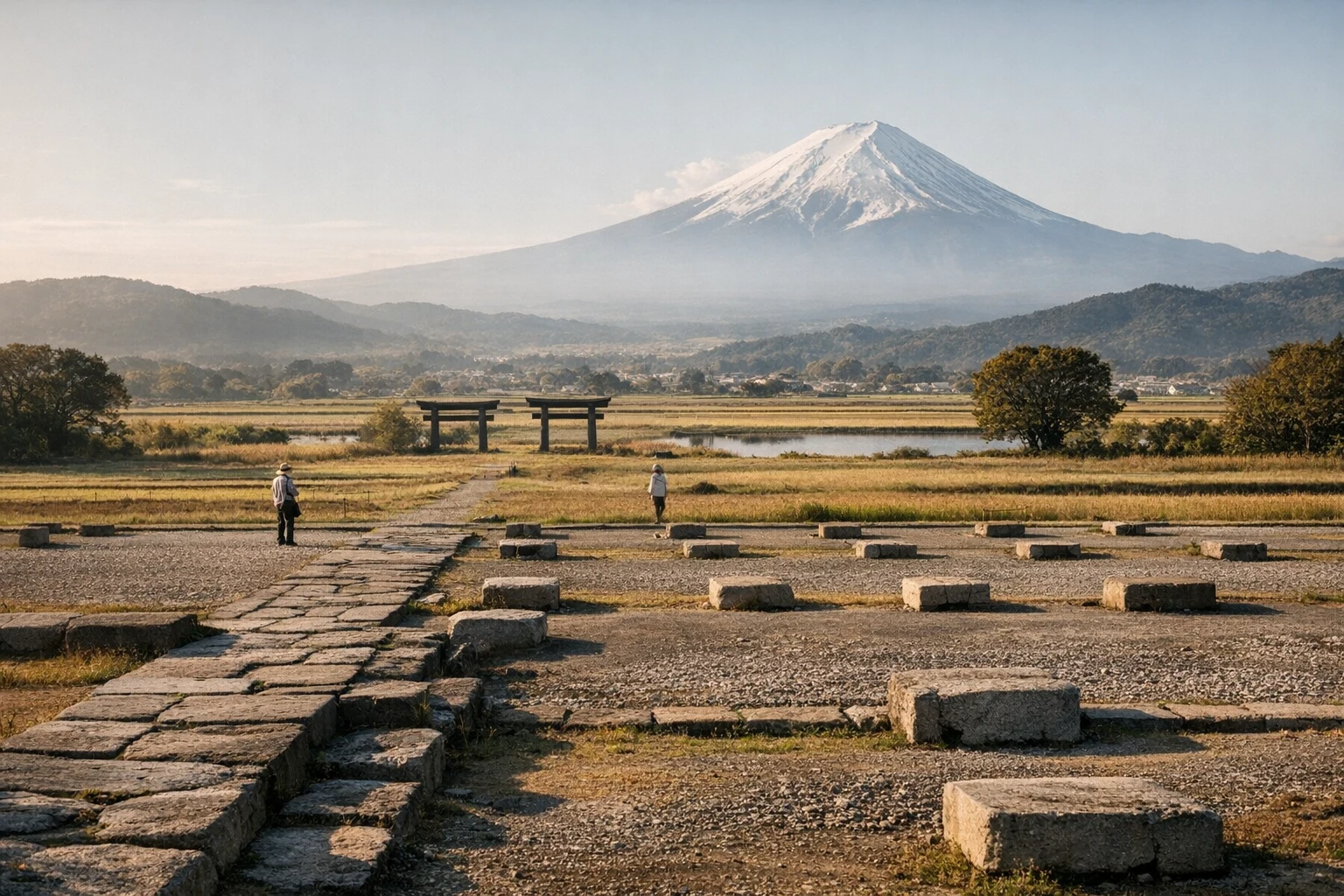
Fujiwara Palace Ruins
Early Japanese imperial stateDiscover Japan’s Fujiwara Palace Ruins, the vast remains of the first fully planned imperial capital...
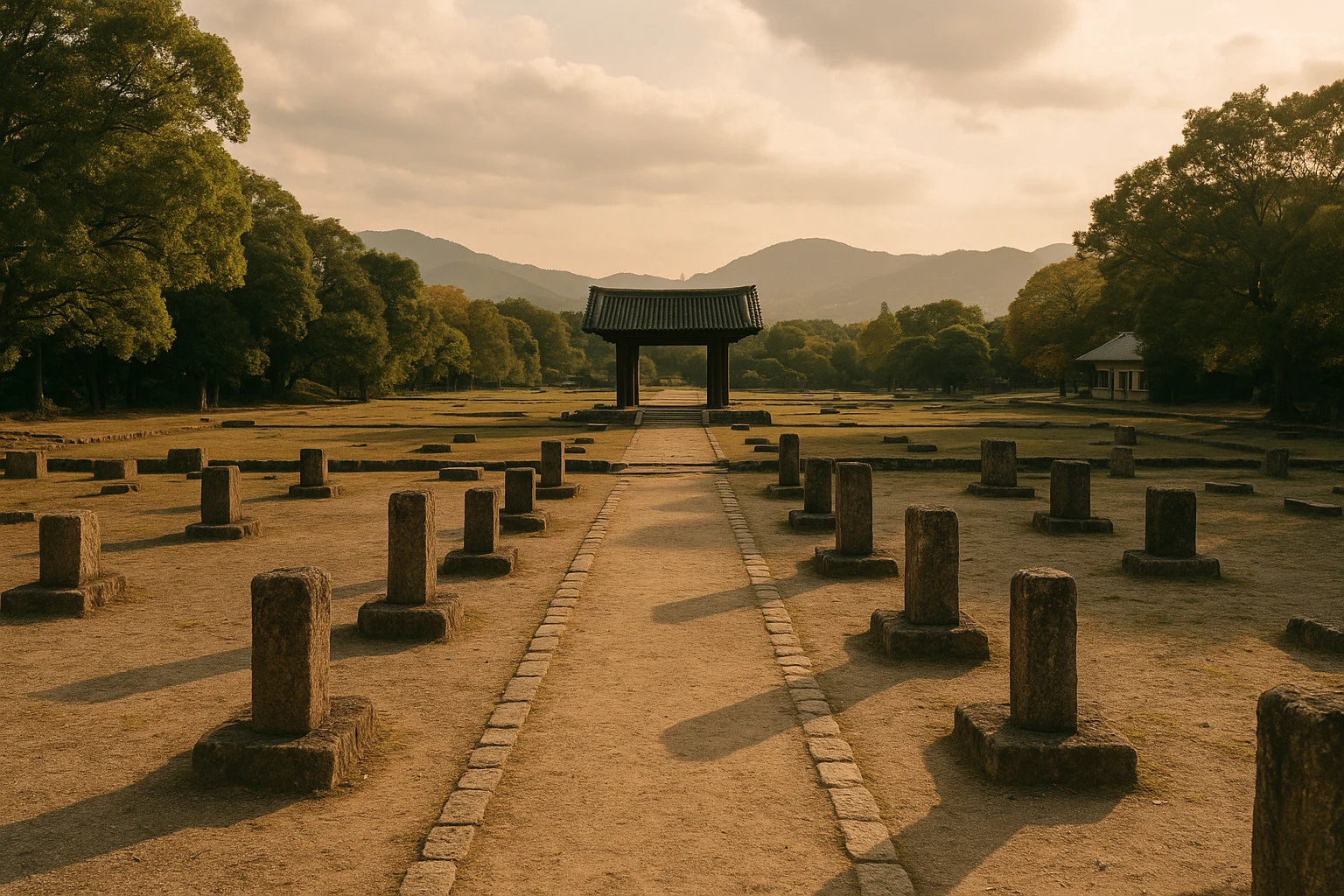
Dazaifu Government Office Ruins
Yamato Japan / Nara–Heian StateAncient administrative heart of Kyushu, the Dazaifu Government Office Ruins preserve Japan's 7th-cen...