Quick Info
Curated Experiences
Jomon Archaeological Sites Small-Group Tour
Aomori Historical Sites Guided Experience
Japan Prehistoric Heritage: Kamegaoka and Beyond
Nestled in the northwestern reaches of Japan’s main island, Honshu, the Kamegaoka Site stands as one of the most evocative and significant archaeological sites from Japan’s prehistoric era. Located in Aomori Prefecture, just outside the small town of Tsugaru, this celebrated destination is revered for its remarkable ties to the Jomon period—a time stretching back thousands of years, long before the onset of written history in Japan. Standing on the rolling hills that cradle Kamegaoka, with the dramatic outline of Mount Iwaki on the horizon and the breezes from the Sea of Japan washing over ancient fields, it’s easy to understand why this place has inspired awe for generations.
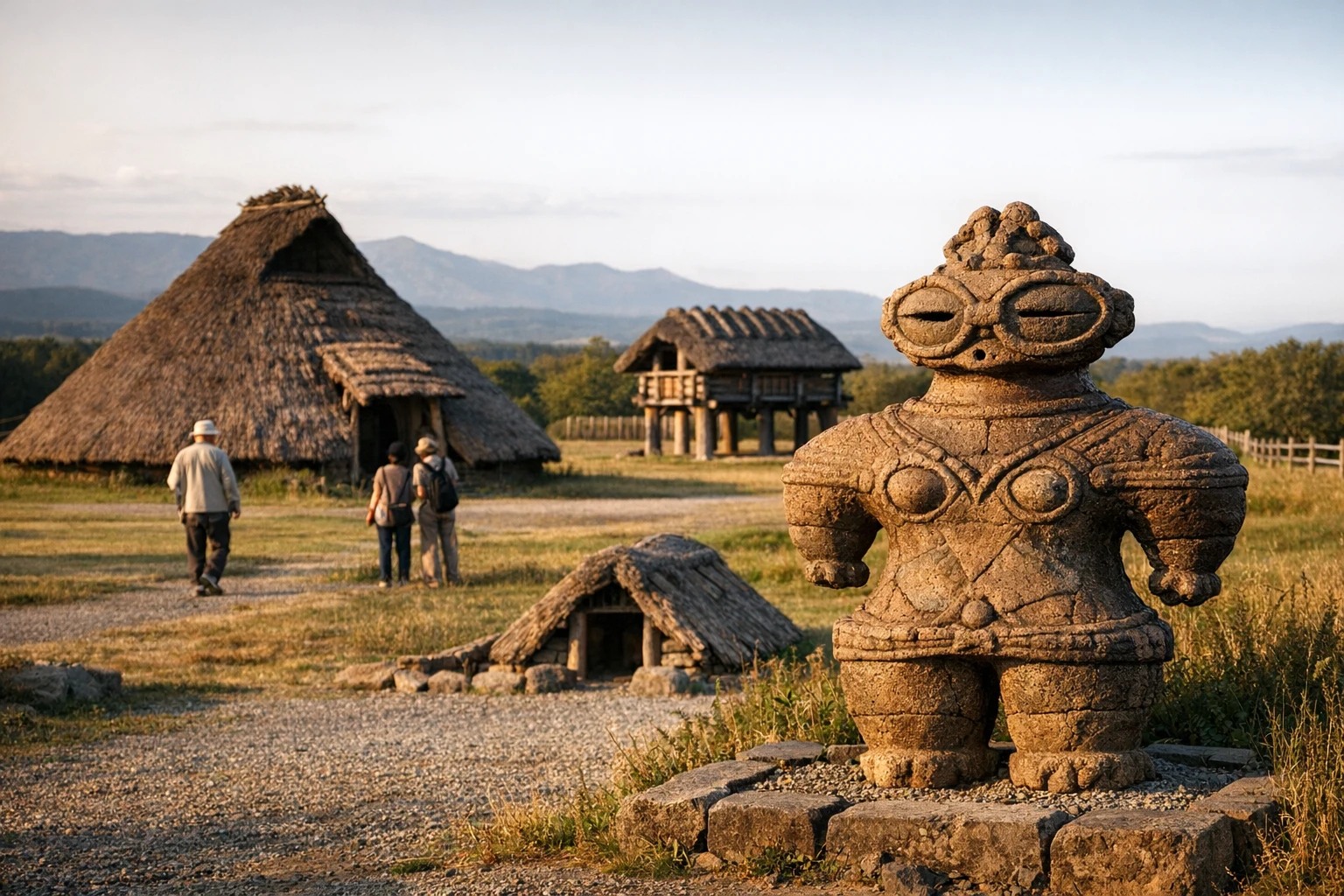
From the very first shovel that broke Kamegaoka’s quiet earth in the 19th century, the site has yielded striking treasures—none more famous than its enigmatic “goggle-eyed” clay figurine, the Shakōki-dogū. These artifacts conjure images of a vibrant and sophisticated culture, whose people shaped intricate earthenware, lacquered utensils, and fantastical figures over 3,000 years ago. The Kamegaoka Site is a linchpin in the story of early Japan, giving voice to centuries now lost to time. Its importance is such that in recent years, it has been nominated as part of the UNESCO World Heritage “Jomon Prehistoric Sites in Northern Japan” listing, attracting both dedicated scholars and curious travelers eager to see the dawn of Japanese civilization.
Arriving here, you step into an atmospheric landscape where ancient pit dwellings once clustered and daily life thrived millennia ago. Whether viewing the reconstructed dwellings, examining pottery shards at the visitor center, or simply wandering the well-tended grounds, you are immersed in tangible echoes of a world that predates even Japan’s earliest emperors. For anyone fascinated by how deeply the roots of culture can run, the Kamegaoka Site provides an unmatched window into the distant, creative, and mysterious heart of Japan’s Jomon heritage.
History
The Early Jomon Period
The chronicles of the Kamegaoka Site begin during the later phases of the Jomon period, a prehistoric era that spanned from around 14,000 BCE to 300 BCE. This era is named after the distinctive “cord-marked” pottery technology that its people developed and refined, regarded as the earliest known pottery in the world. Northern Honshu, including what is now Aomori Prefecture, became fertile ground for the development of Jomon culture due to its rich forests, abundant rivers, and proximity to both the sea and resources inland.
While the site itself was established relatively late in the Jomon era—around the 1,000 BCE mark—it inherited the traditions that had been cultivated over millennia of regional development. The Jomon people were semi-sedentary hunters, gatherers, and fishers, but their culture exhibited growing complexity, with large, organized settlements and elaborate mortuary customs taking root across Honshu’s northern landscapes.
The Height of Kamegaoka Culture
Kamegaoka reached its zenith between approximately 1,000 BCE and 300 BCE, a period known specifically as the Final Jomon. Villages here were composed of robust pit dwellings semi-submerged into the earth, arranged in clusters around communal spaces and ritual grounds. Kamegaoka’s people manufactured distinctive lacquerware—bowls, combs, and utensils—using sophisticated methods to create glossy, weather-resistant surfaces colored in vibrant reds and blacks. These high-quality goods, unearthed through careful excavation, speak to both daily life and ceremonial practice.
No artifact is more iconic than the Shakōki-dogū. This type of dogū (clay figurine) is characterized by dramatic, exaggerated “goggles” or eye rings, and intricate patterns incised with apparent ritual significance. The figurines are believed to represent deities, protective spirits, or fertility icons, testifying to a society with complex beliefs about the natural and supernatural worlds. Numerous dogū and related artifacts—along with jewelry, beads, and stone tools—have been excavated here, making Kamegaoka one of the richest sources of Jomon material culture in Japan.
Rediscovery and Modern Archaeology
The mysteries of Kamegaoka lay dormant until the late 19th century, when Japan’s modernization and the growing field of archaeology brought new scrutiny to the region. Notably, the first major excavations in the late 1800s and early 1900s revealed layers of artifacts so significant that they were promptly recognized by scholars across Japan and beyond. Early travelers, including Western scientists and collectors, were captivated by the sophistication of finds from Kamegaoka, sparking international interest in Jomon heritage as a whole.
Over the 20th and 21st centuries, sustained research has reshaped our understanding of not only Kamegaoka, but also the technological prowess and societal organization of Jomon peoples at large. New excavations and analytical methods—radiocarbon dating, trace residue analysis, and microscopic study of pottery and tools—have enriched the narrative, situating Kamegaoka at the heart of Jomon research. In 2021, the site was included as part of the “Jomon Prehistoric Sites in Northern Japan” UNESCO World Heritage inscription, standing as a testament to its enduring importance.
Key Features
One of the first impressions you gain at the Kamegaoka Site is of its beautifully managed landscape. The site encompasses a series of gently sloping hills and plateaus, with reconstructed pit dwellings marking the general outlines of settlements that once clustered here nearly 3,000 years ago. Each dwelling is partially sunk into the earth, with timber supports and thatched roofs recreating the likely appearance of Jomon homes. Stepping inside, you find displays of daily tools—grinding stones, pottery, and wooden objects—evoking scenes of ancient life, where families gathered for warmth and crafting.
Foremost among the key features is the ongoing exposure and exhibition of the dogū figurines. The Shakōki-dogū of Kamegaoka, though the original is protected and displayed at Tokyo National Museum, is a striking centerpiece of the site’s visitor facilities. Life-sized replicas and interpretive panels explain the significance of the dogū’s otherworldly gaze and elaborate ornamentation. Their mystery lingers in the air, prompting speculation about Jomon spirituality and artistic vision.
In addition to the figurines, Kamegaoka’s legacy is written in lacquer. The site has yielded some of Japan’s oldest and most sophisticated lacquerware, displayed both onsite and in nearby museums. Scholars point to these finds as evidence of advanced chemical techniques and aesthetic sensibilities developed in relative isolation. Visitors can admire reconstructed bowls, combs, and decorative staves, dazzling even after millennia below ground.
Unlike many archaeological sites, Kamegaoka is not simply a static ‘dig’: it is a living classroom. Carefully maintained walking paths circle excavated areas, leading to gently restored mounds and kilometers of green space used for educational programs, school excursions, and seasonal festivals. Interpretive signage—some in English, most in Japanese—guides you through zones of habitation, burial grounds, and areas set aside for ritual. The sense of discovery is palpable, especially as you descend into trenches revealing cross-sections of Jomon earth and peer into layers peppered with pottery shards and charcoal.
For those hungry to go deeper, the Kamegaoka Archaeological Museum just a short drive away offers a trove of materials from the site, including original artifacts, detailed dioramas, and rotating exhibitions on broader Jomon culture across northern Japan. There, you can magnify your understanding of toolmaking, trade, and daily lifeways.
The entire site provides a rare bridge between hands-on exploration and academic rigor. You don’t just view relics behind glass: you stand atop the very ground where Jomon artisans, hunters, and spiritual leaders once walked. Taken together, the reconstructed dwellings, interpretive trails, evocative dogū reproductions, and freshly excavated finds create a space where the ancient past seems almost within reach.
Getting There
Reaching the Kamegaoka Site in Aomori Prefecture is straightforward, but requires some planning for those traveling from major cities or international gateways. The closest metropolitan hub is Aomori City, located about 50 kilometers east of the site. Most travelers start their journey from Aomori Station, which is well-served by Japan Railways (JR) connections from Tokyo (via Shinkansen, 3–4 hours, approximately ¥18,000 one-way).
From Aomori City, make your way to the JR Gono Line, a scenic railway that hugs the northern coastline. Disembark at Kizukuri Station—the nearest train stop to the Kamegaoka Site. Local trains between Aomori and Kizukuri run hourly and cost about ¥1,180 each way, taking roughly 70 minutes. The journey itself is a treat, with panoramic views of Tsugaru plains, farmland, and distant volcanic peaks.
Upon arrival at Kizukuri Station, visitors can choose between several transport options for the final 6 km stretch. Local buses operate at regular intervals (every 1–2 hours), costing around ¥200–¥400, and drop passengers near the entrance to the archaeological park. Taxis are more convenient for groups and cost approximately ¥1,500 for the short drive. Some hotels in the region, particularly those catering to heritage tourists, offer scheduled shuttle service—advance booking is recommended.
Car rental is another practical choice, especially if combining Kamegaoka with other Jomon-related destinations in Aomori Prefecture. Nagoya and Aomori both have multiple car rental agencies, with daily rates starting at around ¥6,500 for compact vehicles. Signage to Kamegaoka is clear and routes are well-maintained even in winter.
For international visitors arriving via Aomori Airport, shuttle buses and taxis connect to Aomori Station (30–45 minutes, ¥700–¥3,000), from which you begin the rail or rental journey described above. While English signage is increasing at major transit points, those unfamiliar with Japanese will benefit from offline maps or translation apps.
When to Visit
The Kamegaoka Site is open year-round, allowing for a rich variety of experiences depending on the season. Each time of year brings a distinct atmosphere to the ancient landscape, with local weather and cultural events coloring your visit.
Spring (April to June) is one of the best times to visit. Cherry blossoms often bloom in the area through late April, painting the park-like grounds in soft pinks. Mild temperatures range from 10°C to 20°C, and regional rice paddies begin to green up, adding vibrancy to the landscape. This season also sees the fewest crowds outside Golden Week (late April–early May), making for tranquil walks among the ruins.
Summer (July to September) offers lush growth but can bring humidity and occasional rainfall, with highs reaching 28°C. The summer months coincide with local festivals—particularly the Tsugaru Shamisen Festival—allowing visitors to enjoy traditional music and food. Do be mindful of mosquitoes and the possibility of heavy summer rains; bringing an umbrella and insect repellent is recommended.
Autumn (September to November) is another recommended window. Warm days give way to crisp nights, and the gentle decline in tourism means more peaceful exploration. Fields and woodlands surrounding Kamegaoka explode with vivid hues of red, orange, and gold, and local apple orchards offer tastings. October in particular features pleasant temperatures (15°C–20°C) and excellent visibility of Mount Iwaki.
Winter (December to March), though cold and snowy (temperatures can drop below 0°C), reveals the site’s stark beauty. Reduced visitor numbers allow for solitary contemplation, and snow-laden pit dwellings and fields evoke a different sense of ancient perseverance. However, some outdoor structures may not be accessible after especially heavy snowfall, and bus/train schedules may be reduced.
The site is generally open 9:00–17:00 daily (may vary seasonally), with museum hours and tours sometimes adjusting for regional holidays. Checking opening times and special event schedules in advance is strongly advised.
| Quick Facts | Details |
|---|---|
| Location | Tsugaru City, Aomori Prefecture, Japan |
| Site Type | Archaeological park and museum |
| Established | Circa 1,000 BCE (Jomon period) |
| Notable Artifacts | Shakōki-dogū figurine, lacquerware, cord-marked pottery |
| UNESCO Status | Part of “Jomon Prehistoric Sites in Northern Japan” (2021) |
| Primary Period | Final Jomon (ca. 1,000–300 BCE) |
| Accessibility | Railway (JR Gono Line), Bus, Taxi, Car Rental |
| Admission | Free (some exhibitions may charge a fee) |
| Opening Hours | 9:00–17:00 (subject to change by season) |
| Guided Tours | Available (advance booking recommended) |
| Languages | Japanese (English signage at key points) |
| Closest City | Aomori City |
Frequently Asked Questions
What is the Kamegaoka Site famous for?
The site is renowned for its unique Jomon period clay figurines, especially the iconic 'Shakōki-dogū' with goggle-eyed features, as well as beautiful lacquerware.
How do I get to the Kamegaoka Site from Aomori City?
Visitors can take the JR Gono Line to Kizukuri Station, then transfer to a local bus or taxi. The journey takes about 2 hours in total.
Is there an admission fee to visit the Kamegaoka Site?
Entrance to the archaeological park is generally free, but certain exhibitions or guided experiences may have a small fee.
Are there English-language signs and guides available?
While many signs are in Japanese, some English explanations are available at key points, especially after the site's inclusion in the World Heritage list. Audio guides and pamphlets may also be offered.
What is the best time to visit the Kamegaoka Site?
Late spring (May-June) and early autumn (September-October) are ideal for visiting due to pleasant weather and fewer crowds.
Nearby Ancient Sites
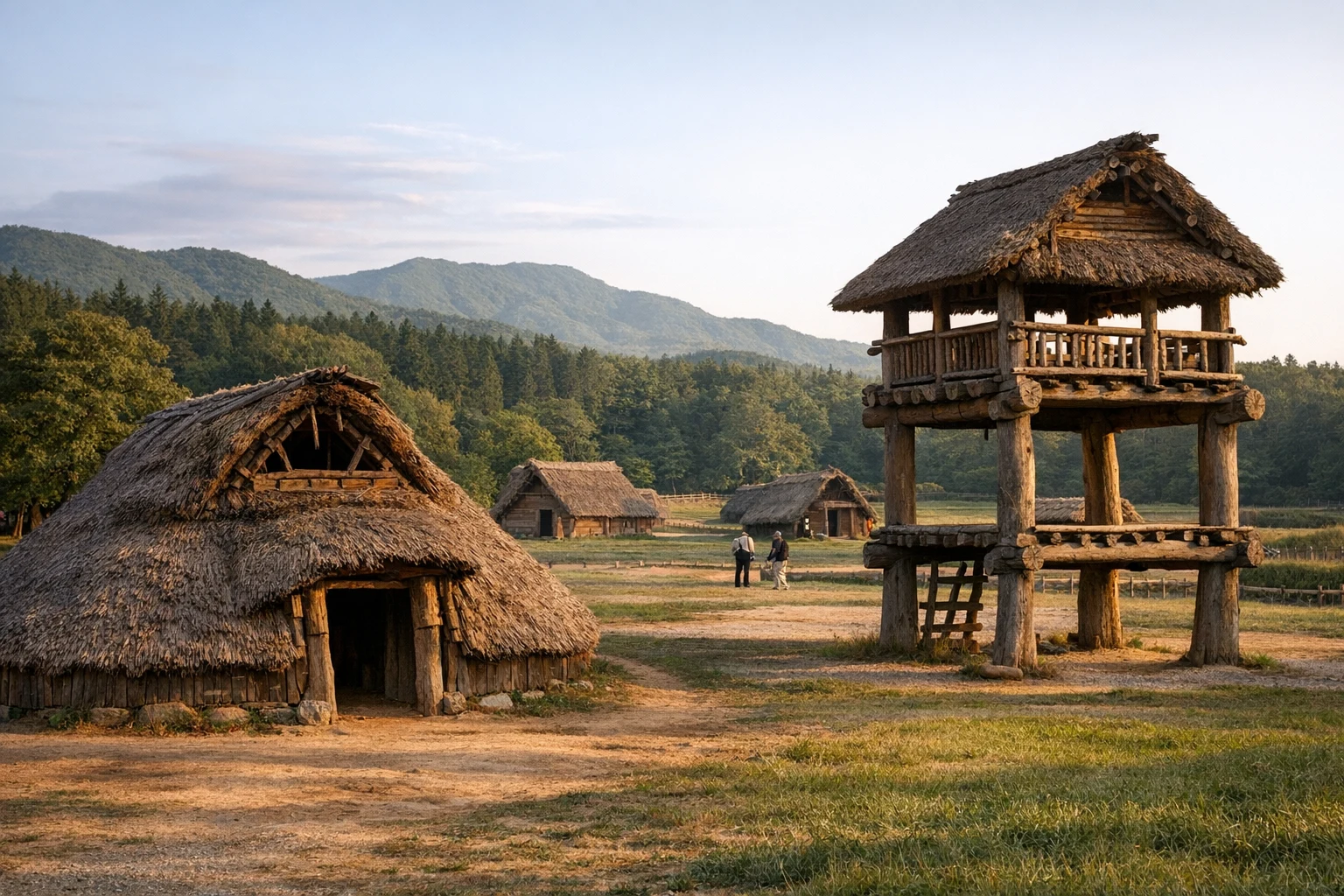
Goshono Jomon Site
Goshono Jomon Site in Japan is a remarkable archaeological park preserving a mid-Jomon period settle...
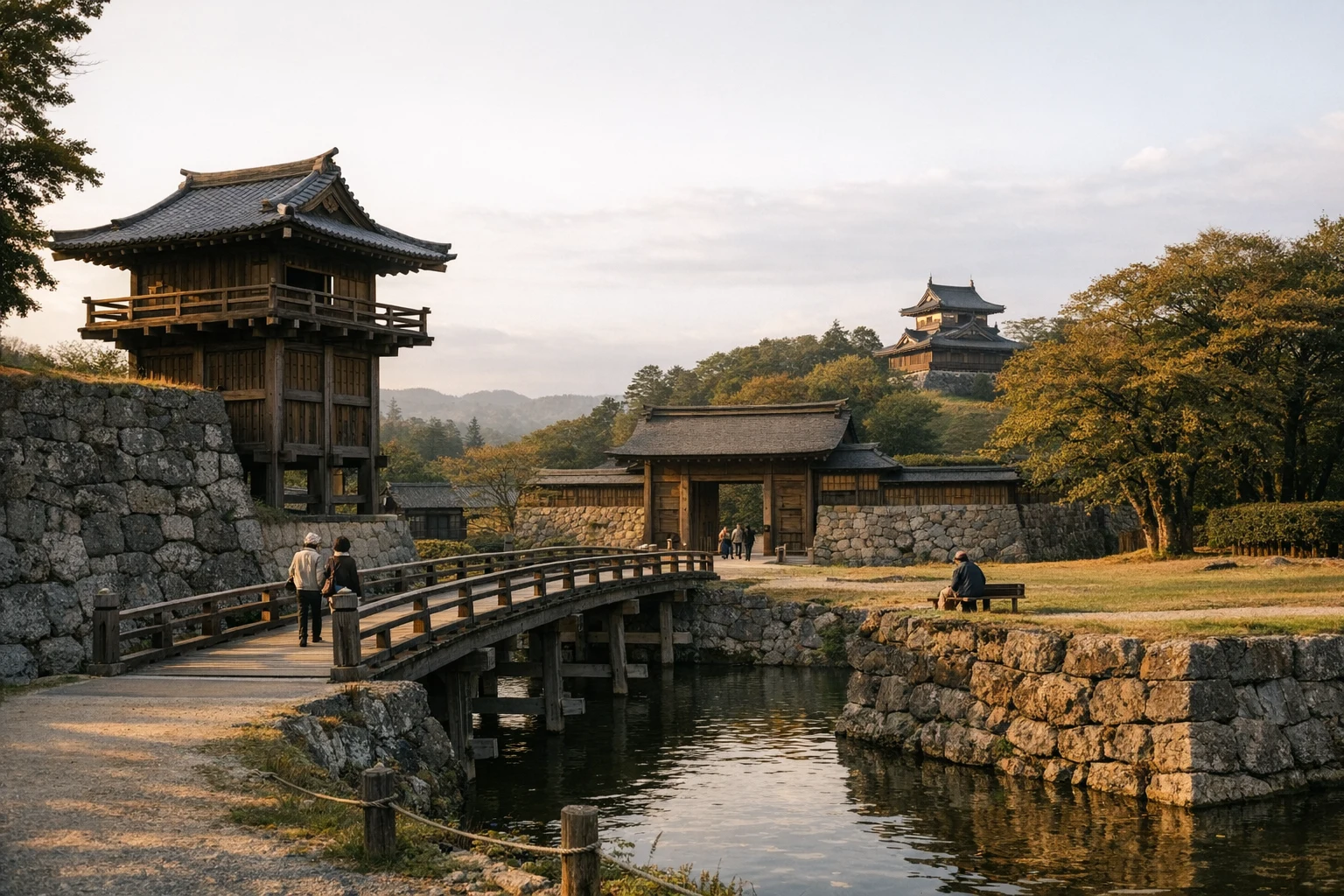
Akita Castle Site
Explore the Akita Castle Site, a historic Japanese fortification in Akita Prefecture that reveals th...
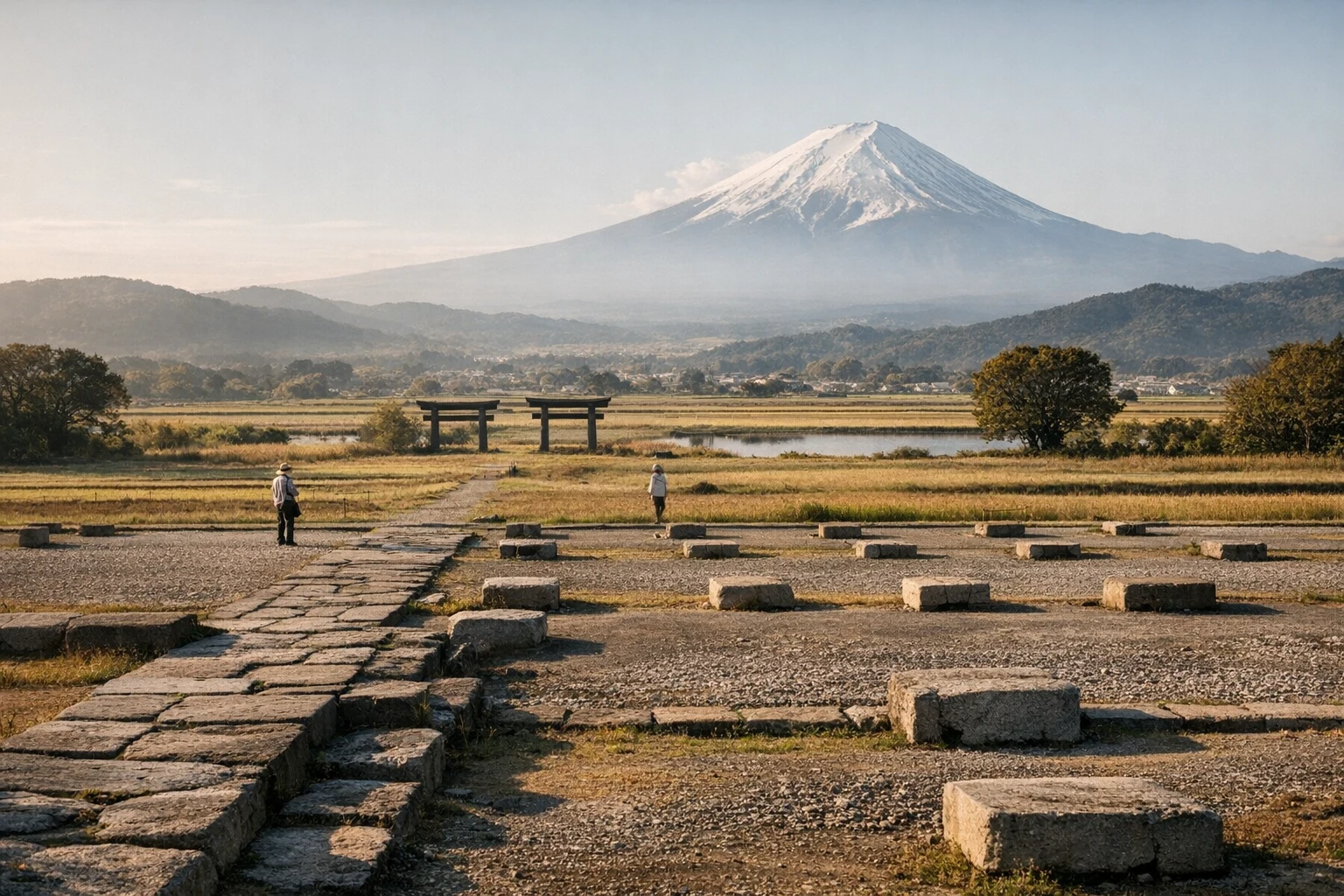
Fujiwara Palace Ruins
Early Japanese imperial stateDiscover Japan’s Fujiwara Palace Ruins, the vast remains of the first fully planned imperial capital...