Quick Info
Curated Experiences
Bokun Free Product April
Daily Gobeklitepe Private Tour
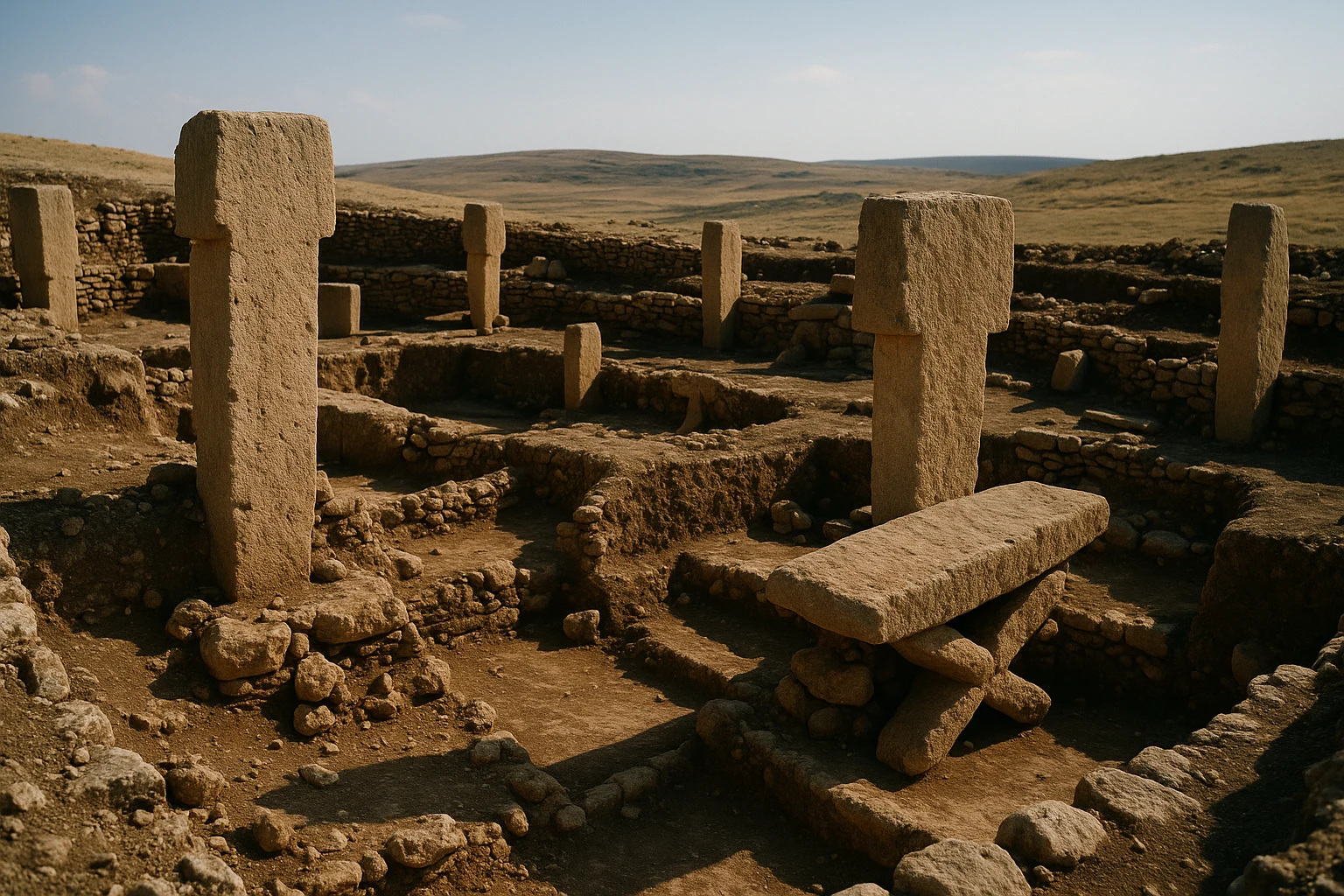
A low, wind-cut ridge east of Şanlıurfa does not look like the place where your timeline for human history gets rewritten, but that is exactly what Karahan Tepe does. In southeastern Turkey, where steppe, limestone, and long horizons define the land, archaeologists are uncovering a Pre-Pottery Neolithic complex filled with carved pillars, human imagery, and ritual architecture that is at least as conceptually daring as anything at nearby Göbekli Tepe. Karahan Tepe in Turkey is not just another old ruin. It is one of the clearest signs that the earliest monumental building tradition in the region was broader, denser, and more inventive than anyone assumed ten years ago.
What makes this site so powerful for travelers is the combination of scale and intimacy. You are not standing in a finished museum-piece city. You are watching archaeology in motion, with exposed sectors, fresh interpretations, and active conservation shaping what the public can see year by year. Ancient Travels recommends Karahan Tepe as a paired anchor with Göbekli Tepe: one day, two related sites, and one coherent narrative about how communities before pottery, writing, and metal were already organizing labor, architecture, and symbolic life at a remarkable level. This guide covers the historical sequence, key monuments, access logistics from Şanlıurfa, seasonal strategy, and how to build a practical itinerary around the Taş Tepeler landscape.
History: A Neolithic Landscape Comes Into Focus
Hunter-gatherer monumentality emerges (c. 9500-9000 BCE)
The earliest phases at Karahan Tepe belong to the Pre-Pottery Neolithic, a period when communities in Upper Mesopotamia had not yet developed ceramics but were already experimenting with permanent ritual architecture. This matters because the older textbook story claimed monumentality required farming surplus first. Karahan Tepe, like Göbekli Tepe, pushes against that model. People still relying heavily on hunting and foraging organized stone extraction, shaping, transport, and placement at a scale that demanded planning across seasons. The site therefore belongs to a turning point: not the end of mobile life, but the beginning of persistent ceremonial centers that likely pulled groups together repeatedly.
The Taş Tepeler network expands (c. 9000-8500 BCE)
As excavation data improved across Şanlıurfa Province, Karahan Tepe stopped looking like an isolated outlier and began to read as part of a larger constellation now framed as Taş Tepeler (“Stone Hills”). Multiple sites with related T-shaped pillars, sculpted imagery, and engineered spaces suggest shared ideas, regional interaction, and perhaps specialized roles across settlements. Karahan Tepe’s architectural vocabulary overlaps with Göbekli Tepe yet preserves distinct design decisions, especially in carved anthropomorphic elements and rock-cut contexts. This regional perspective is essential for visitors: you are not seeing a single miracle site but a cultural landscape where communities tested forms of ritual gathering that may have helped catalyze social complexity.
Architectural and symbolic maturation (c. 8500-8000 BCE)
Later Neolithic phases appear to show changing use patterns, including construction modifications and selective infilling, echoing behaviors seen elsewhere in the region. At Karahan Tepe, carved human heads, upright stone forms, and constrained spatial sequences imply controlled movement and potentially staged ritual participation. While archaeologists rightly avoid overconfident narratives, the pattern points to increasingly formal symbolic practice. These were not random carvings in empty ground. They were composed environments where architecture, image, and embodied experience worked together. For modern travelers, that means reading the site less as a “temple” in modern religious terms and more as a social theater where identity, memory, and authority were negotiated.
Burial, abandonment, and preservation under sediment (c. 8000 BCE onward)
Like other early Neolithic complexes in the region, sectors at Karahan Tepe were eventually covered, transformed, or abandoned as lifeways shifted toward more settled agricultural systems elsewhere. Layers of sediment and collapse then protected carved surfaces for millennia. Preservation is uneven: some elements survive sharply, while others are fragmentary or still partially buried. That unevenness is part of the site’s value. You can see how archaeological knowledge is built piece by piece, not delivered complete. The partially exposed state also reminds visitors that what is currently visible is only a fraction of the broader site footprint.
Modern rediscovery and active archaeology (1990s-present)
Although the area was known to local communities long before scientific campaigns intensified, systematic archaeological attention accelerated in the early 21st century, especially as the significance of regional Neolithic sites became clearer after global attention on Göbekli Tepe. Karahan Tepe entered broader public conversation through Turkish-led excavations linked to the Taş Tepeler initiative. Today, it functions as both research zone and growing visitor destination, with interpretation still evolving. That makes each visit time-sensitive in the best possible way: paths, signage, and accepted interpretations can change as new sectors open, new carvings emerge, and the chronology is refined.
The Key Monuments: What to See at Karahan Tepe
The carved human-head chamber
Karahan Tepe’s most discussed feature is a rock-cut space associated with carved human heads and strongly anthropomorphic imagery that differs in mood from Göbekli Tepe’s better-known circular enclosures. The chamber-like quality creates an experience of compression and focus: instead of reading architecture across a wide open ring, you encounter carved forms in tighter spatial relationships. The effect is intense and deliberate, as if movement, sightline, and emotional response were all part of design intent. Dating evidence places this within the broader early Neolithic horizon, but the conceptual sophistication feels startlingly modern. Photography is best in softer morning light, when surface texture and carving depth read more clearly without harsh glare.
Upright pillars and anthropomorphic stone forms
Across exposed sectors, you will see upright limestone elements that continue the regional T-shaped pillar tradition while adding local variation in carving style and placement. These are not decorative garden stones; each required quarrying, shaping, and controlled installation. Several elements suggest stylized human presence through torso-like massing or implied bodily geometry. Even when fragmentary, they convey a visual grammar shared across Taş Tepeler sites. Stand back before moving close: the macro layout helps you understand procession and orientation, while close viewing reveals tool marks and relief decisions. A medium zoom lens helps capture both context and detail in one sequence.
Rock-cut architecture and sunken spaces
One of Karahan Tepe’s defining traits is its relationship to bedrock. Rather than building only above grade, Neolithic builders cut into the limestone to create lowered or bounded spaces that likely structured gathering and ritual behavior. This interplay between carved void and placed monolith gives the site a sculptural quality distinct from purely masonry-built architecture. You can read practical intelligence here too: bedrock cuts stabilize forms and create durable boundaries. For visitors, these zones are where interpretation becomes physical. Your body feels changes in elevation, enclosure, and movement, which is exactly why this monument class matters.
Excavation terraces and stratigraphic windows
Unlike heavily restored classical sites, Karahan Tepe still presents active archaeological surfaces where trenches, protective coverings, and partially revealed walls expose the process of discovery itself. These terraces are monuments in their own right because they show sequence: what belongs to early phases, what is intrusive, what has collapsed, and what remains sealed. Pay attention to section profiles and marker boards when available. They are your best clue to time depth and site formation. If you visit with a guide, ask specifically about contexts that changed interpretation in the last two seasons; this often produces the most rewarding on-site conversations.
The wider plateau viewpoints
Do not skip the surrounding ridge views. From the higher points, Karahan Tepe reads as part of a larger settlement ecology rather than an isolated pit of stones. You can see why this location mattered: visual command over approaches, access to workable limestone, and a landscape suitable for repeated congregation. These viewpoints also provide the strongest mental link to Göbekli Tepe and other Şanlıurfa-era sites. The monuments are the carved nodes, but the full site is the landscape itself.
Getting There: Transportation and Access
Karahan Tepe is reachable from Şanlıurfa in under half a day, but because it remains a relatively remote archaeology zone, transport planning matters more than at fully urban sites.
From central Şanlıurfa
From the city center, the drive is usually 50-70 minutes depending on traffic and your exact starting point. The final approach roads can vary in condition across seasons, so allow buffer time.
- Taxi or private driver: Typical day hire runs about 2,500-4,500 TRY ($70-125 USD), usually including wait time for a 2-3 hour visit.
- Organized tour: Small-group or private archaeology tours generally range from 3,500-8,000 TRY ($95-225 USD) depending on inclusions and whether Göbekli Tepe is bundled.
- Rental car: Daily rental is often 1,200-2,400 TRY ($35-70 USD), plus fuel; useful if you want control over timing and multiple stops.
From Şanlıurfa GAP Airport (GNY)
If you land and go directly, expect around 75-100 minutes total travel time depending on transfer setup and city traffic.
- Airport transfer + driver: Pre-booked transfer with waiting can cost 3,500-5,500 TRY ($95-155 USD).
- Taxi from airport: Metered plus distance surcharge often lands between 2,800-4,800 TRY ($80-135 USD).
- Rental car pickup at airport: Practical for independent travelers doing Taş Tepeler circuits over 1-2 days.
Public transport reality
Public buses and minibuses are not a reliable primary option to the excavation entrance. Service patterns can change, stop short, or require awkward transfers that leave you stranded on return.
- Best practice: Arrange round-trip transport before departure.
- If on a tight budget: Ask your hotel to coordinate shared transport with other travelers rather than relying on ad-hoc local connections.
Admission and hours
Karahan Tepe’s admission policy and opening schedule can shift as excavation infrastructure evolves. Recent patterns in the region suggest standard daytime opening windows, but visitors should confirm current details through official Turkish museum channels or local tourism offices before travel. As a planning baseline, carry both card and cash for entry-related purchases, arrive early in the day for cooler conditions, and expect occasional restricted zones where conservation work is active.
Practical Information
Because Karahan Tepe is both a visitor site and a live archaeological environment, practical preparation is part of having a good day.
What to bring
- Sun protection: High-SPF sunscreen, hat, and sunglasses are essential on exposed limestone terrain.
- Water: At least 1.5 liters per person in mild seasons; 2 liters in summer.
- Footwear: Closed shoes with grip for uneven stone and dusty paths.
- Cash and card: Payment systems can be inconsistent during infrastructure upgrades.
- Camera with zoom: Useful for carving detail where barriers limit close approach.
Dress code and etiquette
Standard tourist dress is acceptable on site, but modest, practical clothing is the easiest choice in conservative parts of Şanlıurfa Province. Avoid climbing on archaeological features, and respect all barrier lines even when photo angles are tempting. This is a research landscape first and a tourism product second.
Accessibility
Mobility access is currently limited compared with major museum-managed sites. Uneven ground, dust, and elevation changes are common. Travelers with reduced mobility should contact local operators in advance to confirm which viewing areas are currently reachable and whether assisted drop-off points are available.
When to Visit: Seasonal Considerations
Spring (March-May)
Spring is the strongest all-around season, with daytime temperatures often around 15-26°C (59-79°F). Light is clean, winds are manageable, and the steppe can briefly show green tones that soften the landscape. Crowds are moderate, especially outside holiday weekends. For most travelers, this is the ideal window for combining Karahan Tepe with Göbekli Tepe in one day.
Summer (June-August)
Summer can be severe, with midday highs frequently around 32-40°C (90-104°F) and intense reflected heat from pale stone surfaces. Crowd levels at remote sites are still moderate, but comfort drops quickly after late morning. Arrive at opening, wear breathable long sleeves, and plan your museum stop for the hottest hours.
Autumn (September-November)
Autumn brings a second excellent window, generally around 16-30°C (61-86°F) early in the season and cooler later on. Visibility is often good, and tour traffic is steadier but less compressed than spring peaks. If you want warm weather without peak summer stress, October is particularly strong.
Winter (December-February)
Winter conditions are cooler, often around 4-14°C (39-57°F), with occasional rain and stronger winds over exposed ground. Crowds are low, which improves the contemplative feel of the site. Bring layers and wind protection; cold air and open terrain can feel sharper than the thermometer suggests.
Combining Karahan Tepe with Şanlıurfa and Göbekli Tepe
The most efficient sequence starts early from Şanlıurfa, departing by 7:30 AM so you reach Karahan Tepe in cooler air and softer light by 8:30 AM. Spend roughly two hours across the main excavation sectors, taking time to read carved features before the sun rises high. By 10:45 AM, drive toward Göbekli Tepe and arrive around 11:30 AM for a focused circuit of the enclosures and visitor interpretation spaces. This pairing works because each site answers a different question: Göbekli Tepe demonstrates the discovery that changed global narratives, while Karahan Tepe deepens the argument by showing variation within the same cultural horizon.
After a lunch break in Şanlıurfa around 2:00 PM, continue to the Şanlıurfa Archaeology and Mosaic Museum by 3:00 PM. The museum context stabilizes everything you have seen in the field, especially if conditions at either site limited close viewing. Wrap the day in the old bazaar district around 5:30 PM for kebab and local meze before evening traffic builds. Total duration is about 10 hours door to door, with manageable pacing if your driver is pre-arranged and you avoid overlong midday exposure.
If you only have half a day, prioritize Karahan Tepe in the morning and leave the museum for the next day. You will get more from the site with energy and shade strategy than from trying to rush all three stops under peak heat.
Why Karahan Tepe Matters
Karahan Tepe matters because it moves the conversation from wonder to system. Göbekli Tepe startled the world by proving hunter-gatherers could build monumental ritual architecture. Karahan Tepe shows that such architecture was not a singular anomaly but part of a wider cultural experiment unfolding across the stone hills of southeastern Turkey. That shift is enormous. It suggests coordinated social imagination, repeated gatherings, and shared symbolic language at a scale we are still learning to describe.
For travelers, the impact is immediate and physical. You stand in carved spaces that were designed before writing, before cities, before metal, yet they are unmistakably intentional and conceptually rich. The place is quiet, windswept, and still unfinished in archaeological terms, which is precisely its power. You do not encounter a closed chapter. You encounter history while it is still being assembled. Leave at dusk with dust on your shoes and you carry more than site photos; you carry a better question about how civilization actually began.
Quick Facts
| Attribute | Details |
|---|---|
| Location | Şanlıurfa Province, Turkey |
| Ancient Name | Not securely attested |
| UNESCO Status | Part of wider Taş Tepeler research landscape (not separately inscribed) |
| Established | c. 9500 BCE ritual settlement |
| Distance from nearest hub | ~60 km from central Şanlıurfa (50-70 min by road) |
| Entry Fee | Verify current rate locally; carry TRY + card |
| Hours | Daytime access; confirm seasonal schedule before travel |
| Best Time | Spring and autumn, early morning |
| Suggested Stay | 2-3 hours on site; full day with Göbekli Tepe |
Explore More Turkey
- Göbekli Tepe: The site that transformed global understanding of the Neolithic world.
- Çatalhöyük: A later but equally important experiment in early settled life and symbolic art.
- Hattusa: The Hittite imperial capital, where Bronze Age state power appears in full scale.
Plan your wider journey with our Turkey Ancient Sites Guide. For field strategy and packing logic, read our beginner’s guide to archaeological sites.
Frequently Asked Questions
How much time should I plan at Karahan Tepe?
Plan 2-3 hours on site if you want to walk the excavation areas slowly and understand the main architectural zones. If you add Göbekli Tepe and the Şanlıurfa Museum, expect a full day of 8-10 hours with road transfers.
What is the best time to visit Karahan Tepe?
Spring and autumn are ideal, with mild temperatures and softer light for reading carvings and relief details. In summer, arrive right at opening and leave before midday heat builds across the exposed plateau.
How do I get to Karahan Tepe from Şanlıurfa?
The practical options are private driver, taxi, or rental car from Şanlıurfa; the drive usually takes about 50-70 minutes depending on your starting point. Public transport does not reliably reach the excavation entrance, so independent travelers should pre-arrange return transport.
Do I need a separate ticket for Karahan Tepe?
Ticket policy can change as excavation phases and visitor infrastructure expand, so check current pricing at official Turkish museum channels before arrival. Most visitors should carry cash and card, because payment systems at emerging sites can be inconsistent during upgrades.
What will I see at Karahan Tepe that differs from Göbekli Tepe?
Karahan Tepe includes distinctive carved human heads, seated and high-relief anthropomorphic forms, and rock-cut spaces that feel more enclosed than Göbekli Tepe's famous circular enclosures. It broadens the story from one extraordinary sanctuary to a regional Neolithic tradition.
Is Karahan Tepe safe and suitable for independent travelers?
Yes, it is generally safe for independent travelers who plan transport and carry water, sun protection, and sturdy footwear. The site is remote and active as a research zone, so follow posted barriers and staff guidance carefully.
Nearby Ancient Sites
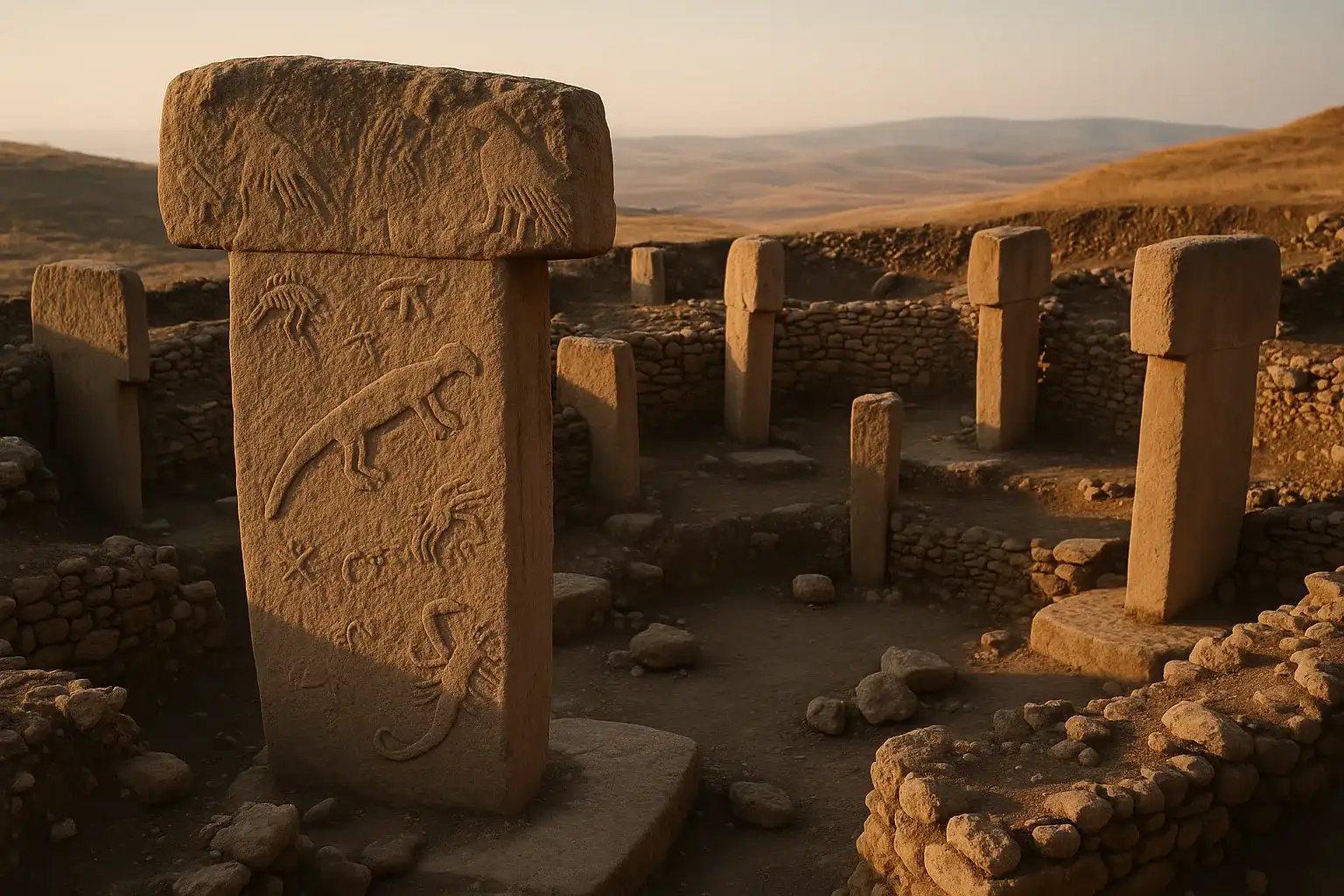
Göbekli Tepe, Turkey: The World's Oldest Temple Complex
Pre-Pottery NeolithicDiscover Göbekli Tepe, the 12,000-year-old archaeological wonder in Turkey that rewrites human histo...
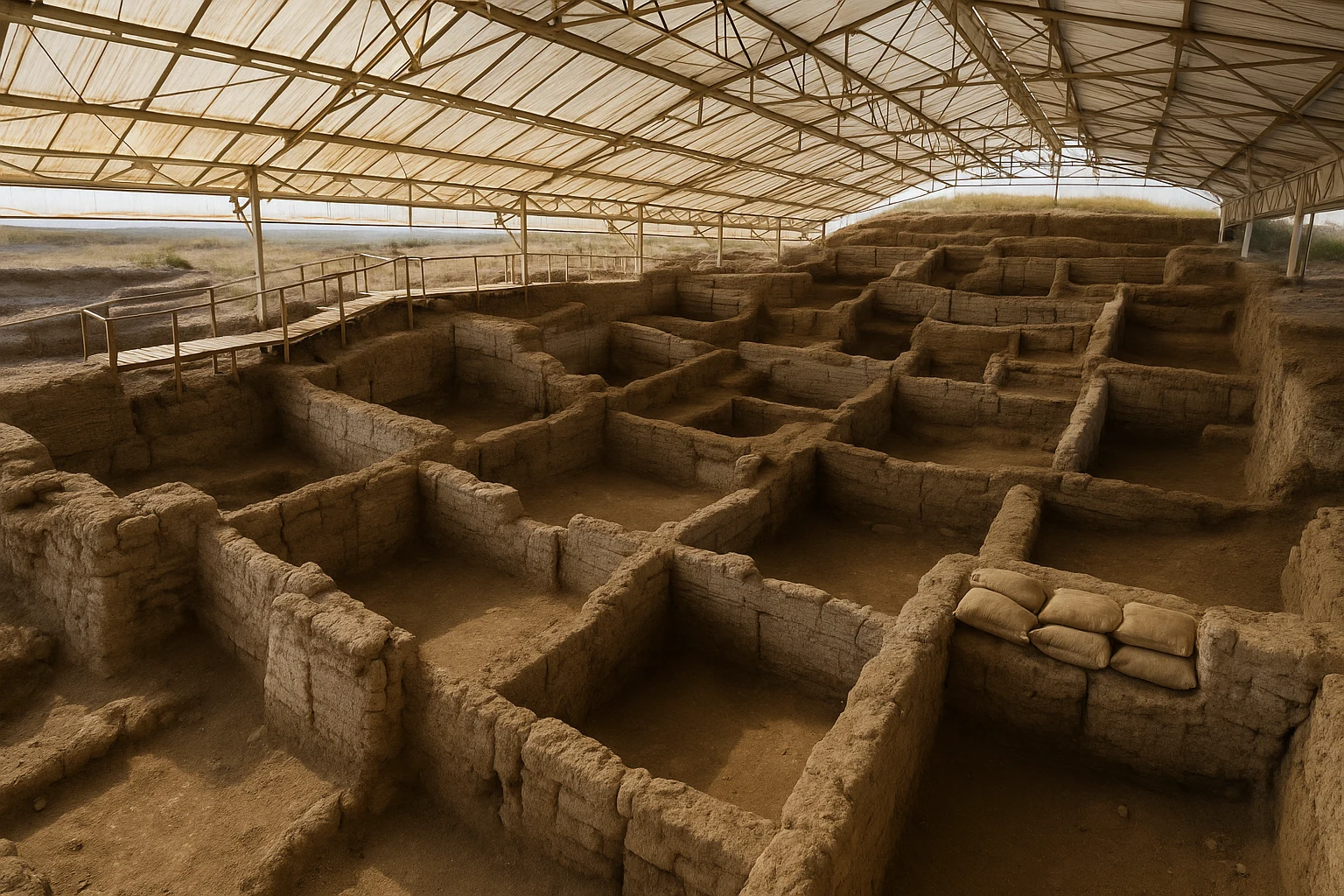
Çatalhöyük Turkey Guide 2026: Neolithic Houses & Wall Paintings
Neolithic-ChalcolithicPlan your Çatalhöyük visit from Konya with history, key areas, tickets, seasonal tips, and a practic...
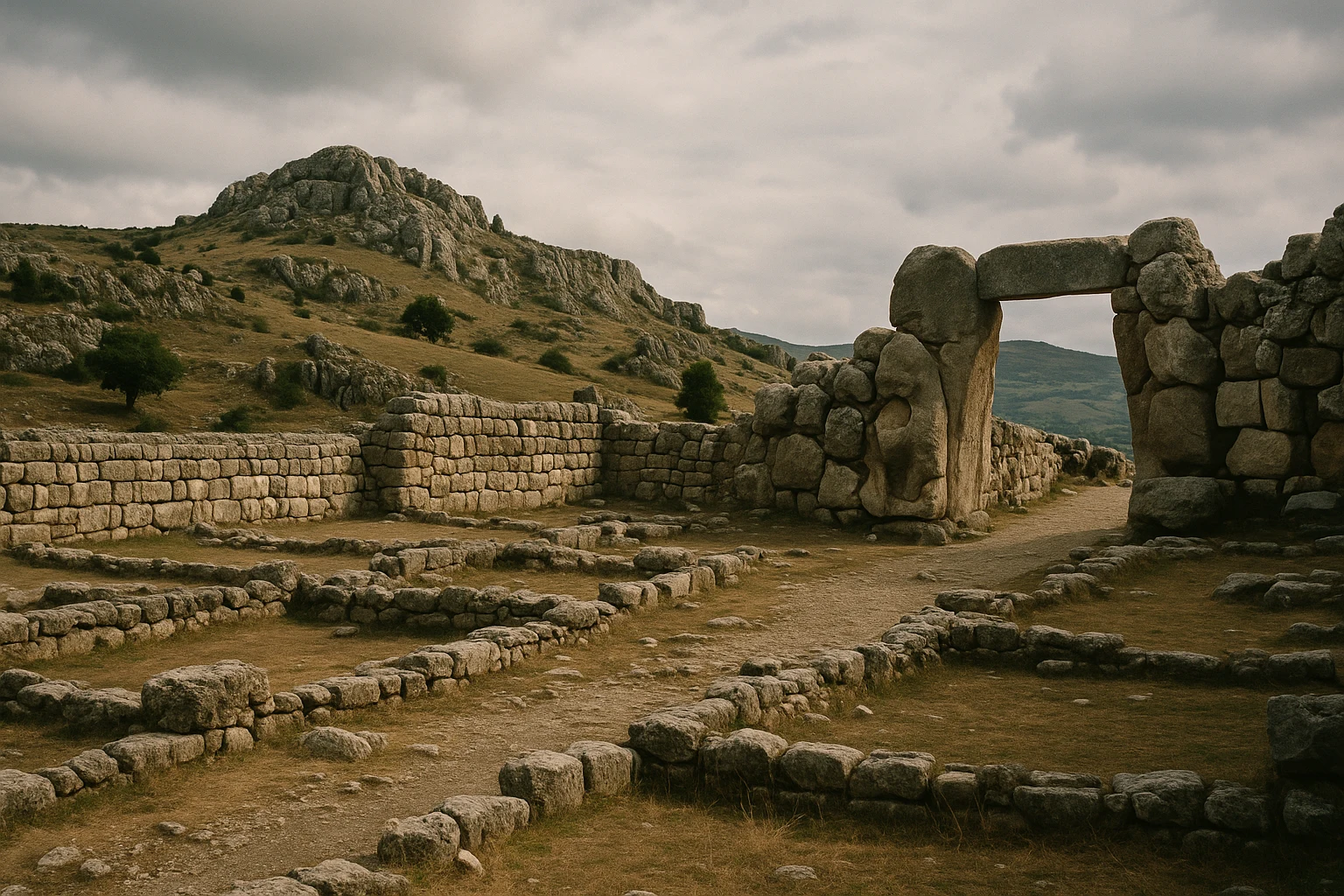
Hattusa Turkey Guide 2026: Lion Gate & Great Temple
Hattian-Hittite-Phrygian-GalatianPlan your Hattusa, Turkey visit with routes from Ankara, key monuments, ticket info, and a practical...