Quick Info
Curated Experiences
Kilmainham Gaol and Dublin Independence History Tour
Private Dublin Political History Tour with Kilmainham
Dublin Gaol, Castle, and Cathedral Heritage Circuit
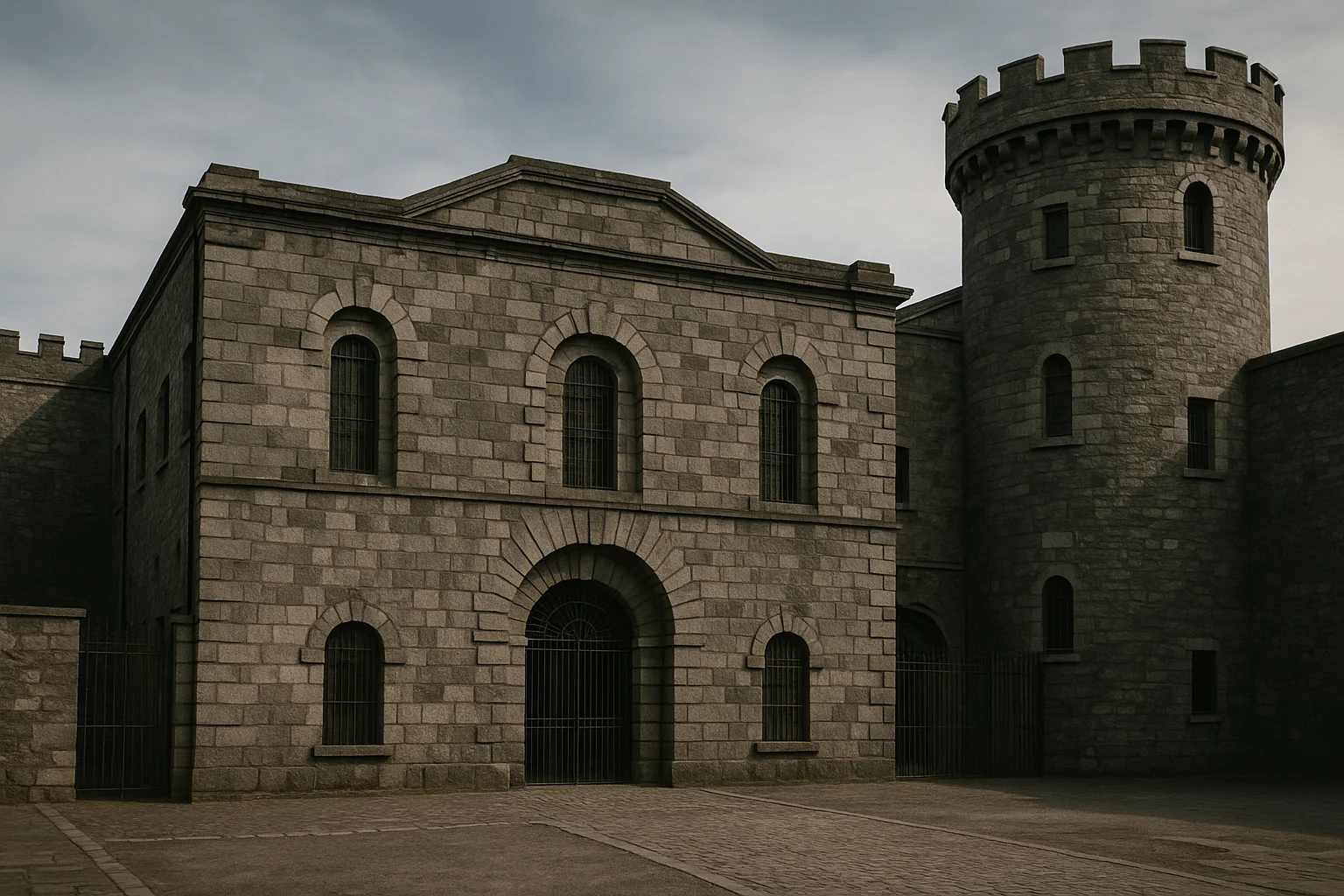
Kilmainham Gaol sits on the western edge of Dublin’s city center, a limestone prison complex that held political prisoners across three centuries of Irish history. Built in 1796 and decommissioned in 1924, it passed through nearly every phase of Ireland’s struggle for self-governance. Leaders of the 1798 Rebellion, the Young Irelanders of 1848, Fenians in the 1860s and 1880s, and the executed signatories of the 1916 Proclamation all occupied its cells. No other single building in Ireland compresses that much political history into one visit.
For travelers interested in how modern Ireland came into existence, this is the essential stop in Dublin.
Why Kilmainham Gaol Matters
Most European capitals have a signature museum or monument that anchors their national story. In Dublin, Kilmainham Gaol fills that role, but with an unusual directness. You are not looking at artifacts behind glass or reading plaques on a battlefield. You are standing in the corridors and cells where specific, well-documented events took place. The executions of May 1916 happened in the Stonebreakers’ Yard you can walk through. The cells where leaders like Patrick Pearse, James Connolly, and Joseph Plunkett spent their final hours are labeled and accessible.
That immediacy is what separates Kilmainham from a conventional museum. The architecture does interpretive work on its own. The shift from the cramped, dark 18th-century west wing to the bright, panopticon-style Victorian east wing tells a story about evolving ideas of punishment and surveillance without a guide needing to say a word.
Historical Context
Kilmainham opened during a period of political unrest following the French Revolution, and its first major prisoners arrived almost immediately. Members of the 1798 Rebellion led by the United Irishmen were held here, setting the pattern that would define the building’s next 125 years: political imprisonment layered on top of ordinary criminal incarceration.
Through the 19th century, the gaol held prisoners from nearly every major Irish political movement. Robert Emmet was held here before his execution in 1803. Young Ireland leaders were imprisoned after their 1848 rising. Fenian prisoners filled the cells in the 1860s and again in the 1880s. Charles Stewart Parnell, the parliamentary nationalist leader, was briefly detained here in 1881. Each generation of political prisoners overlapped with the broader population of men, women, and children imprisoned for offenses ranging from petty theft to vagrancy, many driven by poverty during and after the Great Famine.
The gaol’s most significant chapter came in 1916. After the Easter Rising was suppressed, over a hundred participants were held at Kilmainham. Between May 3 and May 12, fourteen leaders were executed by firing squad in the Stonebreakers’ Yard. The executions, carried out over nine days while public opinion was still forming, shifted Irish sentiment decisively toward independence. James Connolly, too wounded to stand, was executed while tied to a chair. That detail became one of the defining images of the independence movement.
The gaol continued to hold prisoners during the Irish Civil War (1922-1923), including anti-Treaty republicans. Éamon de Valera, who would later serve as both Taoiseach and President, was its last political prisoner. The building closed in 1924 and sat derelict for decades before a volunteer restoration effort in the 1960s led to its reopening as a museum and monument.
What to Prioritize Onsite
The Guided Tour
Access to the main prison building is by guided tour only, and this is genuinely worth following rather than rushing through. Guides are knowledgeable and provide context that the physical spaces alone cannot deliver. The tour typically runs 60 to 70 minutes and moves through the west wing, east wing, chapel, and execution yard in sequence.
East Wing
The Victorian-era east wing is the most photographed space in the gaol, a bright, multi-level atrium with iron catwalks and rows of individual cells. Beyond its visual impact, this wing illustrates how 19th-century prison reform moved from communal confinement toward solitary isolation, reflecting ideas about punishment that were being debated across Europe.
Stonebreakers’ Yard
This is where the 1916 executions took place. It is a small, walled outdoor space, and its scale is part of the impact. Two simple crosses mark the approximate positions where prisoners faced the firing squad. Most visitors find this the most affecting part of the visit.
Museum Exhibition
After the guided portion, the ground-floor museum galleries are self-paced and worth at least 30 minutes. Exhibits cover the full arc from 1796 through the Civil War, with documents, photographs, personal effects, and audiovisual material. Letters written by prisoners on the eve of their executions are displayed here and are among the most powerful items in any Dublin museum.
Practical Visit Strategy
Timing and Tickets
Kilmainham operates on timed entry, and slots sell out, especially from June through September and during school holidays. Book online as far in advance as possible. The earliest morning slots (9:30 or 10:00 a.m.) are the least crowded and give you the most reflective experience. Midday and early afternoon are the busiest windows.
When to Go
The best months for visiting are March through May and September through October. Weather is mild enough, crowds are lighter, and you avoid the peak summer compression. Winter visits are perfectly viable (the site is mostly indoors) but daylight is limited if you plan to pair with outdoor sites afterward.
What to Bring
Wear comfortable shoes with some grip; the older sections of the building have uneven stone floors. A light layer is useful since the interior is not climate-controlled and can be cool even in summer. Photography is allowed in most areas, but tripods and flash are restricted. Leave large bags at your accommodation if possible, as storage options are limited.
Duration
Plan for 90 minutes to two hours total, including the guided tour and museum time. Do not try to squeeze this into a 45-minute gap between other activities. The content is dense and emotionally weighty, and it benefits from a slower pace.
Route Pairing and Nearby Sites
Kilmainham sits just west of Dublin’s center, making it easy to pair with other sites in a single day without overloading your itinerary.
Dublin Castle is the natural institutional counterpart. Where Kilmainham shows the cost of resistance, Dublin Castle shows the seat of British administration in Ireland. Together they form a complete picture of power and opposition.
Glasnevin Cemetery, a short bus or taxi ride north, is where many of the figures connected to Kilmainham are buried, including Michael Collins and Éamon de Valera. The guided tours there are excellent and extend the historical thread.
For a complete contrast, Newgrange offers a deep pivot into Ireland’s prehistoric past. The passage tomb predates Kilmainham by roughly 5,000 years, and visiting both in the same trip gives you the widest possible frame on Irish history.
Trim Castle adds a medieval Anglo-Norman layer. Used together, Kilmainham, Newgrange, and Trim Castle build a timeline from Neolithic ritual through Norman military power to modern nationalism.
Limit yourself to one pairing per day. Kilmainham is not a site you want to dilute with a packed afternoon schedule.
Final Take
Kilmainham Gaol is one of the most focused and effective historical sites in Western Europe. It does not try to cover everything. It tells a specific, well-documented story in the exact place where that story happened, and it trusts the architecture and the facts to carry the weight. For any traveler spending time in Dublin, this belongs at the top of the list, not as an obligation, but because it delivers something most heritage sites only gesture toward: a direct, unmediated encounter with the events that shaped a country.
Quick Facts
| Attribute | Details |
|---|---|
| Location | Dublin, Dublin, Ireland |
| Country | Ireland |
| Region | Dublin |
| Civilization | Modern Ireland |
| Historical Period | 18th-20th centuries CE |
| Established | 1796 CE |
| Coordinates | 53.3427, -6.3099 |
Frequently Asked Questions
Do you need to book Kilmainham Gaol in advance?
Yes. Timed tickets regularly sell out, especially in spring and summer, so booking ahead is strongly recommended.
How long should you spend at Kilmainham Gaol?
Most visitors should plan 1.5 to 2 hours including the guided experience and museum galleries.
Is Kilmainham Gaol worth visiting if you have already seen Dublin Castle?
Yes. Dublin Castle covers long political administration history, while Kilmainham Gaol gives a focused, emotional view of imprisonment and the independence era.
Nearby Ancient Sites
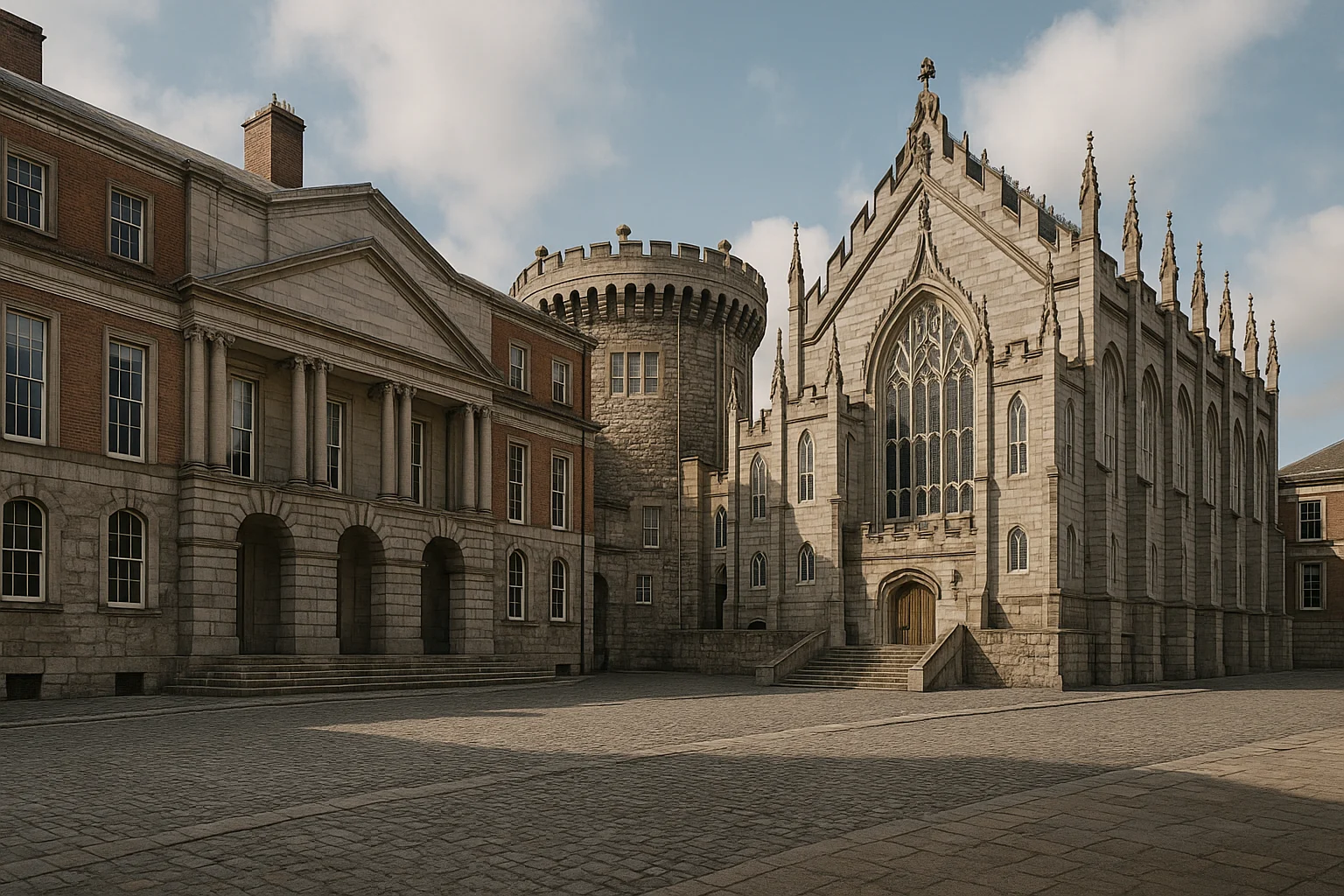
Dublin Castle Travel Guide 2026: State Apartments, Viking Layers, and City-Center Route
Medieval and Early Modern IrelandPlan a first visit to Dublin Castle with practical timing, ticket strategy, and clear context on the...
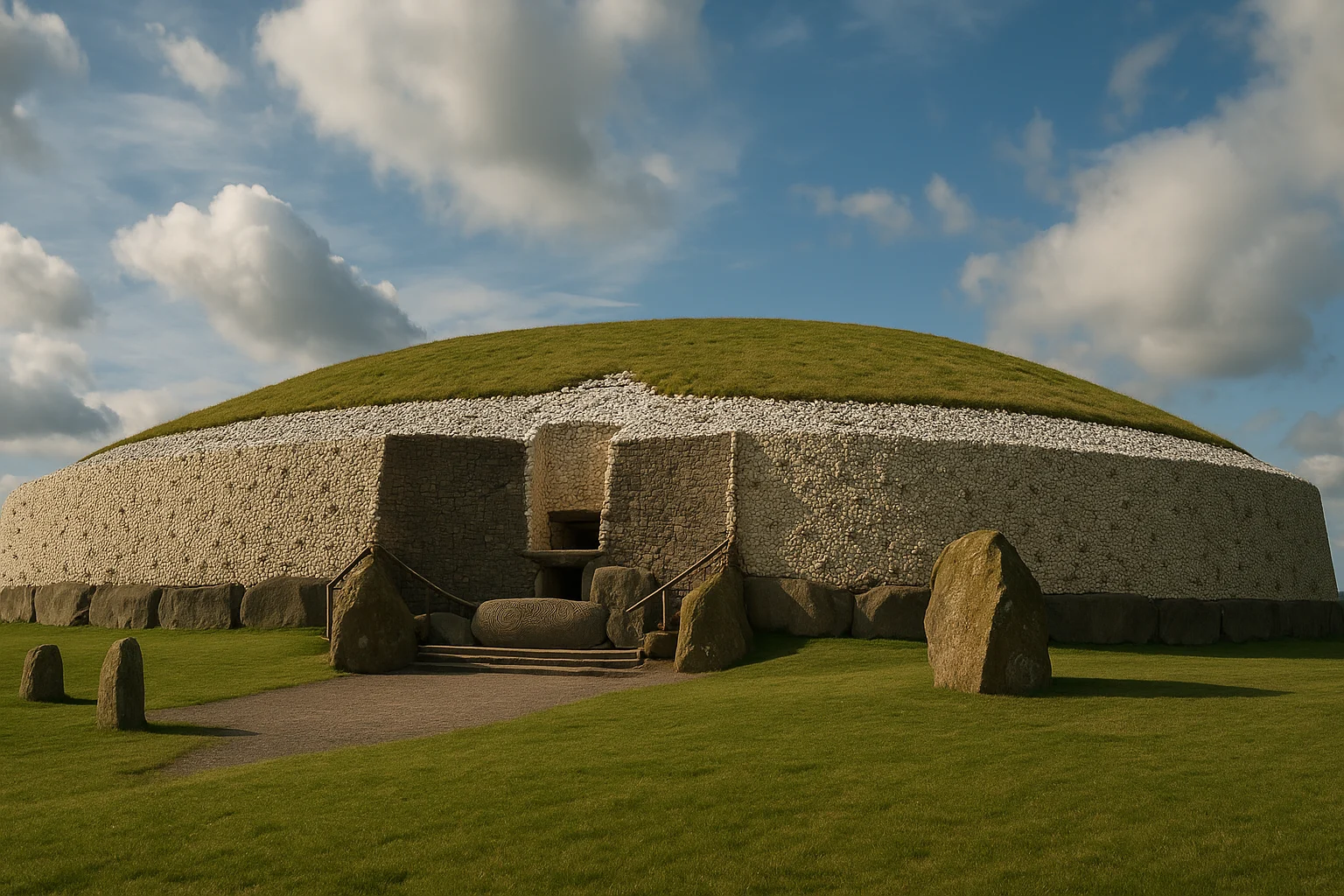
Newgrange Travel Guide 2026: Passage Tomb Access, Solstice Context, and Boyne Valley Planning
Neolithic IrelandPlan a first visit to Newgrange with practical access logistics, what to expect inside the passage t...
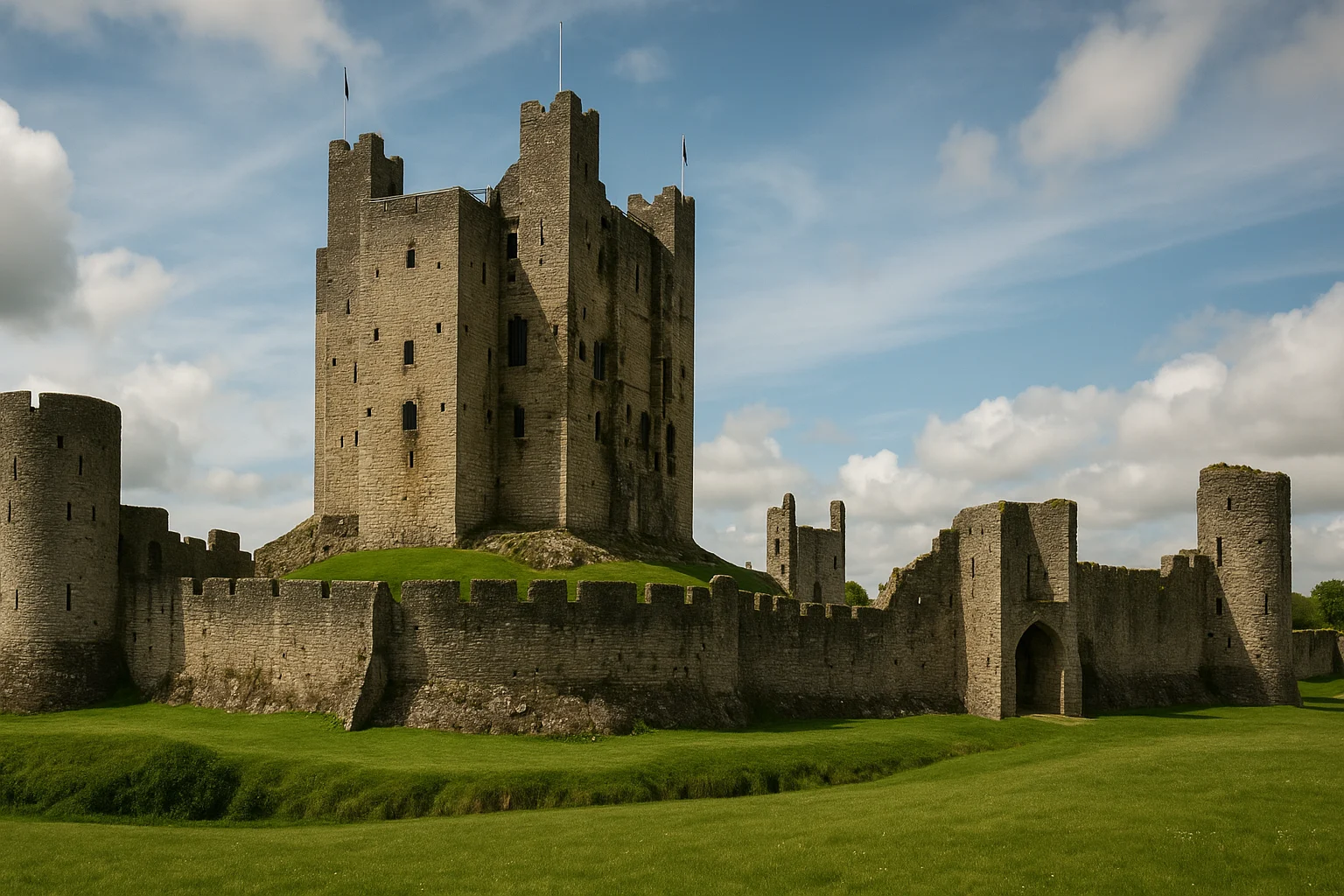
Trim Castle Travel Guide 2026: Norman Keep, Curtain Walls, and County Meath Plan
Anglo-Norman IrelandPlan a first visit to Trim Castle with practical timing, keep-tour logistics, and clear context for ...