Quick Info
Curated Experiences
Leshan Giant Buddha Day Tour from Chengdu
Leshan Giant Buddha and Mount Emei Combo Tour
Private Leshan Buddha River Boat and Cliff Path Tour
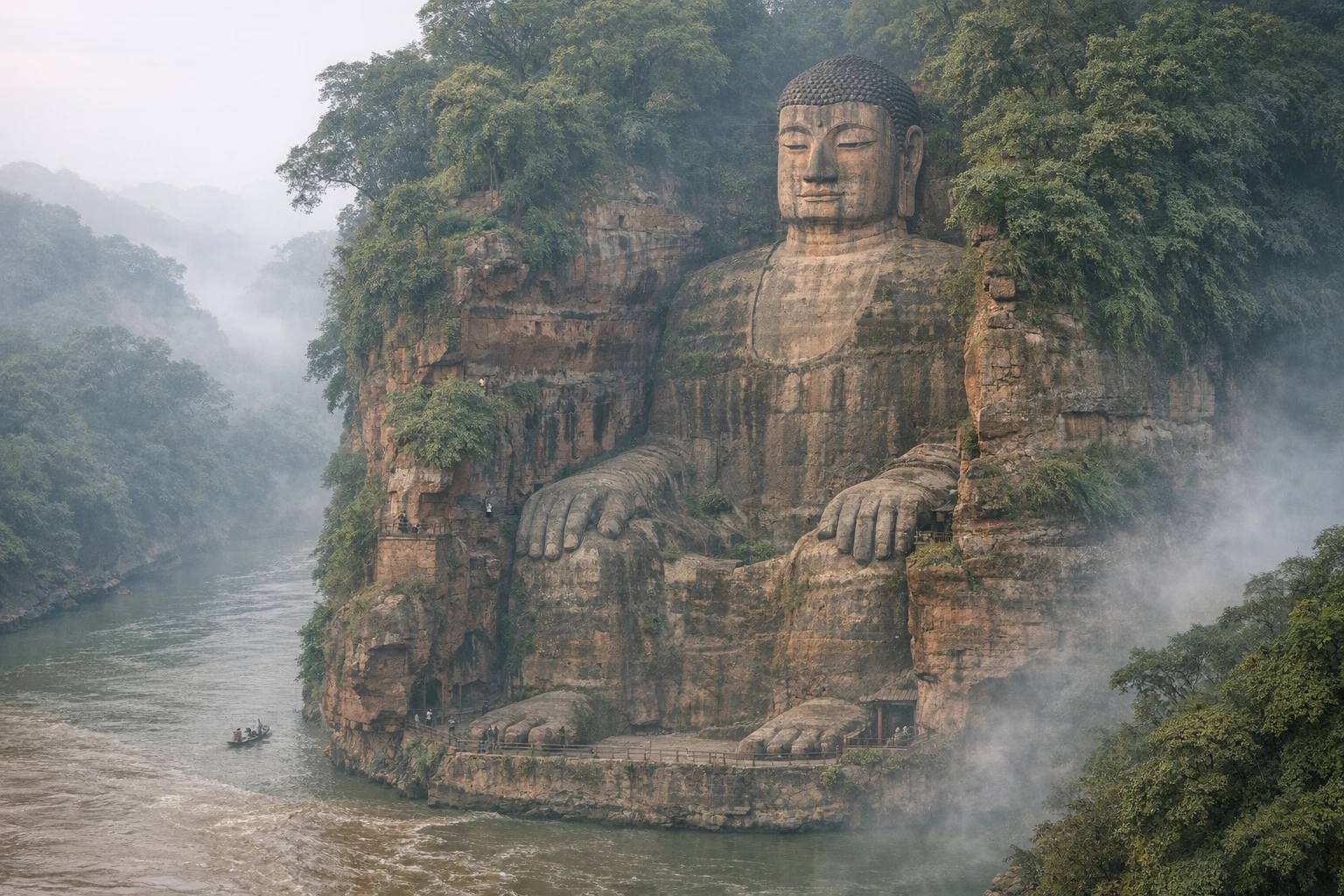
Rising from a red sandstone cliff at the confluence of three rivers in Sichuan Province, China, the Leshan Giant Buddha is one of the most astonishing feats of ancient craftsmanship anywhere on Earth. Carved directly into the living rock of Lingyun Hill, the seated figure of Maitreya — the Buddha of the Future — stands 71 metres tall, a scale so immense that early visitors wrote of its feet as courtyards and its shoulders as terraced gardens. From the water, as a slow ferry rounds the bend where the Minjiang, Dadu, and Qingyi rivers converge, the statue reveals itself all at once: a serene, impassive face beneath a curled stone topknot, hands resting on knees, gazing permanently south across the water it was built to calm. Construction began in 713 CE under the Tang dynasty and was not completed until 803 CE — ninety years of continuous labour by generations of workers, monks, and engineers who never lived to see the finished work. Today the Leshan Giant Buddha draws millions of visitors each year, anchors a UNESCO World Heritage Site shared with the sacred Buddhist mountain of Emei Shan, and remains, more than twelve centuries after its completion, the largest pre-modern stone-carved Buddha statue in the world.
History
The Problem the Buddha Was Meant to Solve
The site at Leshan was not chosen for its beauty alone, though the clifftop views across the three rivers are genuinely spectacular. It was chosen because those three rivers were dangerous. The convergence of the Minjiang, the Dadu, and the Qingyi created violent, unpredictable currents that capsized boats and drowned merchants and fishermen with troubling regularity. In the early Tang dynasty, trade along these waterways was commercially vital to Sichuan, and the loss of lives and cargo was both an economic and a human catastrophe.
Haitong and the Vision of the Statue
It was a Buddhist monk named Haitong who first proposed carving the cliff into a colossal image of Maitreya. Haitong believed that the presence of a great Buddha would sanctify the waters, appease the river spirits, and bring the boats safe passage. He also understood — with a pragmatism not at all incompatible with his faith — that the enormous volume of rock excavated from the cliff face would be deposited into the river below, altering the currents and genuinely reducing the hydrological hazard. In this the plan worked: modern engineering studies have confirmed that the underwater debris from the carving did in fact modify the riverbed and calm the most treacherous eddies.
Haitong spent decades raising funds from across the empire, reportedly gouging out his own eyes at one point to prove his sincerity to a corrupt official who threatened to seize the project’s finances. He died before the statue was finished, having only seen work completed to the shoulders. The project was continued under the governors Zhangchou Jianqiong and Wei Gao, who each contributed state funds and manpower to bring it to completion in 803 CE.
Construction and Engineering
The technical achievement of the Leshan Giant Buddha is staggering by any era’s standards. Workers quarried and shaped the sandstone from the top of the figure downward, suspending themselves on ropes and wooden scaffolding over the river. The face and hands required the most delicate finishing work, carried out with iron chisels by craftsmen who had to be lowered by rope in stages. Hidden within the statue is an elaborate drainage system of channels and culverts cut into the rock — behind the hairline, through the collar, along the arms — that has carried rainwater away from the interior for over a millennium, protecting the stone from saturation damage. This engineering has been credited with preserving the statue’s structural integrity far longer than comparable open-air carvings elsewhere in Asia.
The Tang Dynasty Context
The Tang dynasty (618–907 CE) was a golden age of Chinese culture, Buddhism, and international exchange. The Silk Road funnelled goods, ideas, and artistic influences from Central Asia, India, and Persia through Chang’an and ultimately into the workshops of Sichuan. The colossal Buddha style — popularised at sites like Bamiyan in Afghanistan, which the Tang dynasty Chinese knew well — found its most extreme expression at Leshan. The statue’s iconography draws on both Indian Mahayana tradition and distinctly Chinese aesthetic sensibilities: the face is serene rather than ecstatic, the proportions are squared and monumental, and the elaborate hair curls follow a Chinese sculptural convention that diverges markedly from Indian precedents.
Later History and Modern Preservation
After the Tang dynasty, the statue passed through periods of worship, neglect, and rediscovery. A thirteen-storey wooden pavilion, the Dafo Pavilion, was constructed over the statue during the Song dynasty to protect it from the elements, but it was destroyed during the Ming-dynasty wars. By the Qing dynasty the statue was again exposed, its surface darkened by moss and weather. The twentieth century brought new threats: acid rain from Sichuan’s industrial development began to erode the sandstone face and hands, and in 2018 a major conservation project treated the surface and repaired damaged areas. UNESCO inscription in 1996 brought international attention and funding to ongoing maintenance, and the statue today is monitored continuously for structural changes.
Key Features
The Scale of the Figure
Numbers alone cannot quite convey the experience of standing beside the Leshan Giant Buddha, but they help establish a frame. The statue is 71 metres from foot to crown — taller than the Statue of Liberty including its pedestal. The head is 14.7 metres tall. Each ear stretches 7 metres. The nose is nearly 6 metres long. The instep of each foot is wide enough for a hundred people to stand comfortably. The sheer mass of the carving means that the cliff face effectively no longer exists as a geological feature; the Buddha has replaced it entirely. What appears from the river as a seated figure composed of smooth planes and gentle curves is, up close, an intricately worked surface of stone hair, stone robes, and stone fingers, each element finished with a level of craft that took the original sculptors years to complete.
The Cliff Path Experience
The formal descent to the Buddha’s feet begins at the head, where visitors first see the serene face at close range before stepping onto a stairway cut into the cliff alongside the figure’s right arm. The path is narrow — sometimes only wide enough for two people to pass — and descends steeply in tight switchbacks, requiring careful footing. At the base, the Buddha’s feet extend onto a wide stone platform from which the full height of the figure, seen from below, produces a genuine sense of awe. The ascent back up uses a parallel stairway on the figure’s left side. At peak times in summer, the wait to descend can stretch to ninety minutes, and the path itself becomes slow-moving. Visiting early in the morning or on weekdays dramatically reduces queuing.
The River Cruise Perspective
Many experienced visitors argue that the boat is the essential way to understand the statue. From the water, the entire 71-metre figure is visible simultaneously, framed by the river and the forested cliffs on either side. Cruise boats depart from Leshan dock and swing wide across the Minjiang before turning to give passengers a full frontal view. The experience lasts roughly twenty minutes and costs around ¥70–90 per person on a public ferry. Private boats can be chartered for a slower pass and better photography access. On clear days, the reflection of the statue in the river creates compositions that have been reproduced in Chinese art and photography for centuries.
The Surrounding Temple Complex
The Leshan Giant Buddha does not stand alone. Lingyun Hill above and around the statue supports the Lingyun Temple, a functioning Chan (Zen) Buddhist monastery active since the Tang dynasty, its current buildings largely rebuilt in the Ming and Qing periods. Incense burns continuously in the main hall, and monks conduct daily rituals open to respectful observers. Across the river, accessible by a short ferry, the Wuyou Temple occupies its own island promontory and offers views back toward the Buddha that differ considerably from those on the main hill. Walking between the two complexes via the sculpture garden and the museum at the scenic area entrance adds at least two hours to any visit but provides essential context for understanding both the religious and historical significance of the site.
The Drainage System
Invisible from outside but fundamental to the Buddha’s survival, the internal drainage system is one of the more remarkable pieces of ancient engineering at the site. Carved into the rock simultaneously with the figure itself, the system includes channels concealed within the hair buns, passages along the collar and beneath the ears, and culverts running through the torso and arms. Together they prevent water from pooling in the stone, which would accelerate frost damage and accelerate the erosion of the sandstone surface. During the 2018 conservation project, engineers mapped the drainage network using ground-penetrating radar and cleared several passages that had become blocked with sediment over the centuries. The system continues to function largely as its Tang dynasty designers intended.
Getting There
Leshan lies approximately 150 kilometres south of Chengdu, and the high-speed rail connection between the two cities makes the journey straightforward. Trains from Chengdu East station reach Leshan station in 35 to 40 minutes, with tickets priced at ¥27–34 depending on the service. From Leshan station, bus 13 runs directly to the scenic area entrance in about 20 minutes (¥1), or taxis cover the same distance in 10–15 minutes for ¥20–30.
Tourist coaches also depart from Chengdu’s Xinnanmen bus station (near Tianfu Square) throughout the morning, taking approximately 90 minutes and costing ¥35–55 each way. This option is convenient but ties you to fixed departure times. Many visitors combine the Leshan trip with a stop at Emei Shan, the sacred Buddhist mountain 30 kilometres to the southwest — buses run between the two scenic areas directly in around 50 minutes (¥15–20).
If you are travelling from beyond Sichuan, Chengdu Tianfu International Airport receives flights from all major Chinese cities and several international hubs. From the airport, the subway and high-speed rail connections to Leshan add roughly two hours to the journey. Guided day tours from Chengdu hotels are widely available and typically include transport, a boat cruise, and an English-speaking guide for ¥200–400 per person, depending on group size and inclusions.
When to Visit
Sichuan’s climate is famously humid and overcast — locals joke that the dogs bark at the rare sight of sunshine — but the Leshan area is at its best between April and early June, and again from September through October. Spring brings mild temperatures in the 15–22°C range, fresh greenery on the surrounding hills, and manageable visitor numbers. Autumn offers similar temperatures with cleaner air and the possibility of clear skies for photography.
July and August are the peak domestic holiday months. The cliff path queues can stretch to two hours, the riverside promenade is dense with visitors, and temperatures regularly exceed 32°C with high humidity. If summer is your only option, arrive at the scenic area when it opens at 7:30 am and walk the cliff path before tour groups arrive.
Winter from December through February is quiet and atmospheric, with morning mist rising from the three rivers and very few crowds. Average temperatures hover between 5°C and 12°C, and while rain is always possible, the mood of the site in low season is markedly different from summer — more contemplative, more in keeping with the site’s religious character. The Chinese New Year holiday (usually late January or early February) is an exception, when visitor numbers spike sharply for about a week.
| Quick Facts | |
|---|---|
| Location | Leshan, Sichuan Province, China |
| Coordinates | 29.5443°N, 103.7734°E |
| Construction | 713–803 CE |
| Dynasty | Tang |
| Height | 71 metres (233 feet) |
| Material | Red sandstone |
| UNESCO Status | World Heritage Site (1996, jointly with Mount Emei) |
| Opening Hours | 7:30 am – 6:30 pm (summer); 8:00 am – 5:30 pm (winter) |
| Admission | ¥80 (statue area); river cruise ¥70–90 extra |
| Nearest City | Leshan (10 km); Chengdu (150 km) |
| Best Time to Visit | April–June, September–October |
The Leshan Giant Buddha endures as an intersection of devotion, engineering, and geological accident — a place where a monk’s faith that stone could calm water produced, over ninety years of patient labour, something that has outlasted every dynasty that followed. Standing at its feet, with the three rivers visible below and the sandstone toes arching overhead, the sense of accumulated time is almost physical: twelve centuries of pilgrims, merchants, monks, and now tourists, all arriving at the same cliff, all looking up at the same face. Whatever the visitor’s own beliefs, the scale and the stillness of the place have a settling quality — an invitation to slow down, look carefully, and consider what human hands, given enough time, can accomplish.
Frequently Asked Questions
How tall is the Leshan Giant Buddha?
The statue stands 71 metres (233 feet) tall from the soles of its feet to the crown of its head, making it the tallest pre-modern stone-carved Buddha in the world. Each ear alone measures 7 metres, and the thumbnail is large enough for a person to sit on comfortably.
How do you see the Leshan Giant Buddha?
There are two main ways. The cliff path descends from the Buddha's head down steep stairs along its side to its feet — expect queues of 30–90 minutes at peak times. Alternatively, hire a river cruise boat from Leshan dock for a full frontal view of the entire statue from the water, which takes about 20 minutes and costs roughly ¥70–90 per person.
How do I get from Chengdu to the Leshan Giant Buddha?
High-speed trains run from Chengdu East station to Leshan station in about 35–40 minutes (¥27–34). From Leshan station, take bus 13 or a taxi (¥20–30) to the scenic area. Alternatively, tourist coaches depart from Chengdu's Xinnanmen bus station in about 1.5 hours. The scenic area is 150 km south of Chengdu city centre.
When is the best time to visit the Leshan Giant Buddha?
April to June and September to early November offer the best combination of mild temperatures, manageable crowds, and clear skies. July and August are peak season — very hot, humid, and extremely crowded. Winter (December–February) is cool and misty but visitor numbers drop sharply, making it a peaceful alternative if you dress warmly.
Is the Leshan Giant Buddha a UNESCO World Heritage Site?
Yes. The Leshan Giant Buddha Scenic Area was jointly inscribed on the UNESCO World Heritage List in 1996 as part of the Mount Emei Scenic Area, recognising its outstanding cultural and natural significance. The inscription encompasses both the Buddhist mountain temples of Emei Shan and the monumental Tang-dynasty carving at Leshan.
How long does a visit to the Leshan Giant Buddha take?
Allow a minimum of three to four hours if you want to walk the cliff path to the Buddha's feet and take a river cruise. A half-day is comfortable; a full day lets you explore the surrounding Lingyun Hill temples, the Wuyou Temple complex across the river, and the museum at the scenic area entrance.
What is the entrance fee for the Leshan Giant Buddha?
As of 2025, the general admission ticket is ¥80 per person, which covers access to Lingyun Hill, the cliff path, and the surrounding temple complex. River cruise boats are purchased separately at the dock for approximately ¥70–90. A combined scenic-area ticket including the boat is sometimes available for around ¥150.
Nearby Ancient Sites
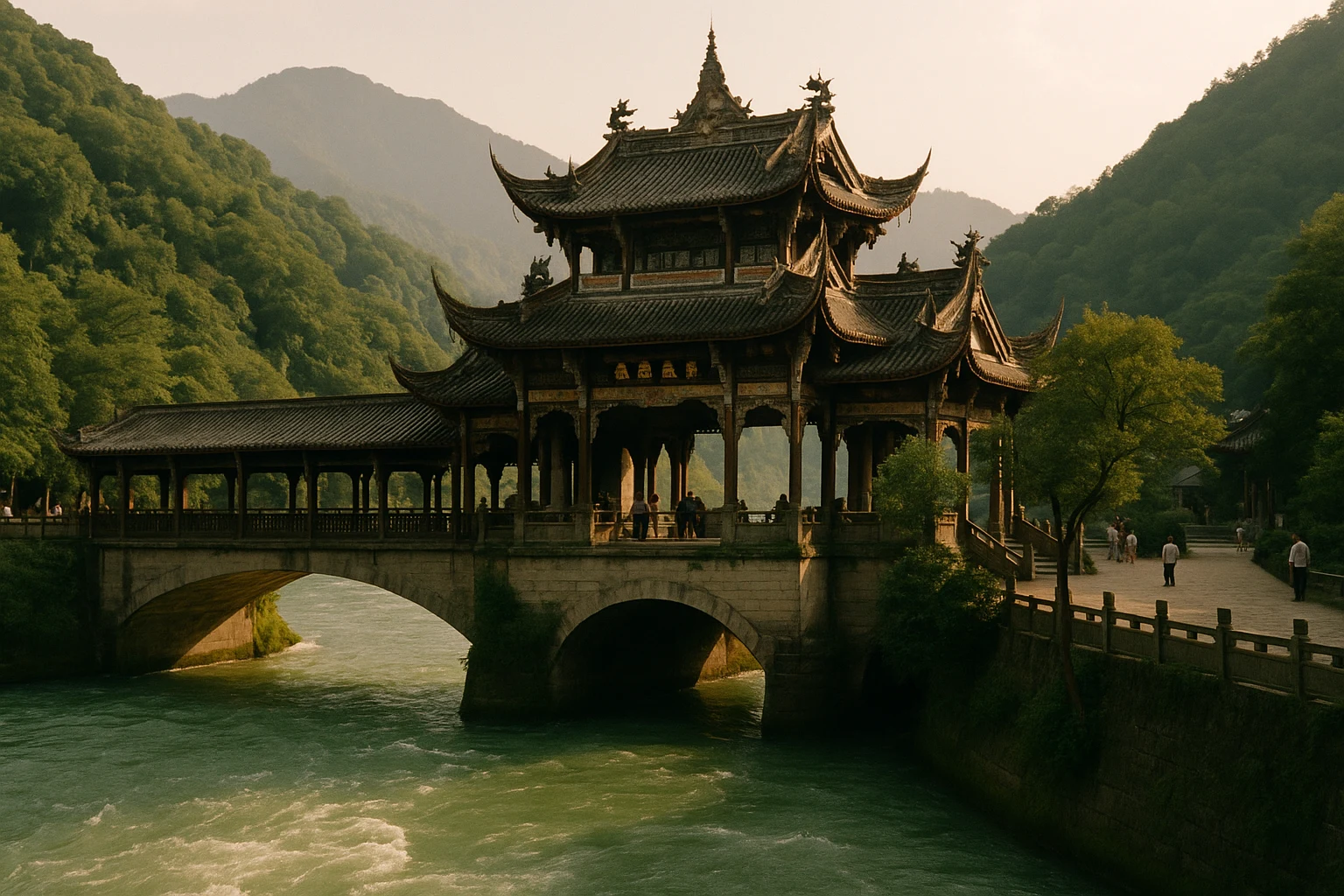
Dujiangyan Irrigation System
Explore Dujiangyan, the world's oldest functioning irrigation system, built in 256 BCE by engineer L...
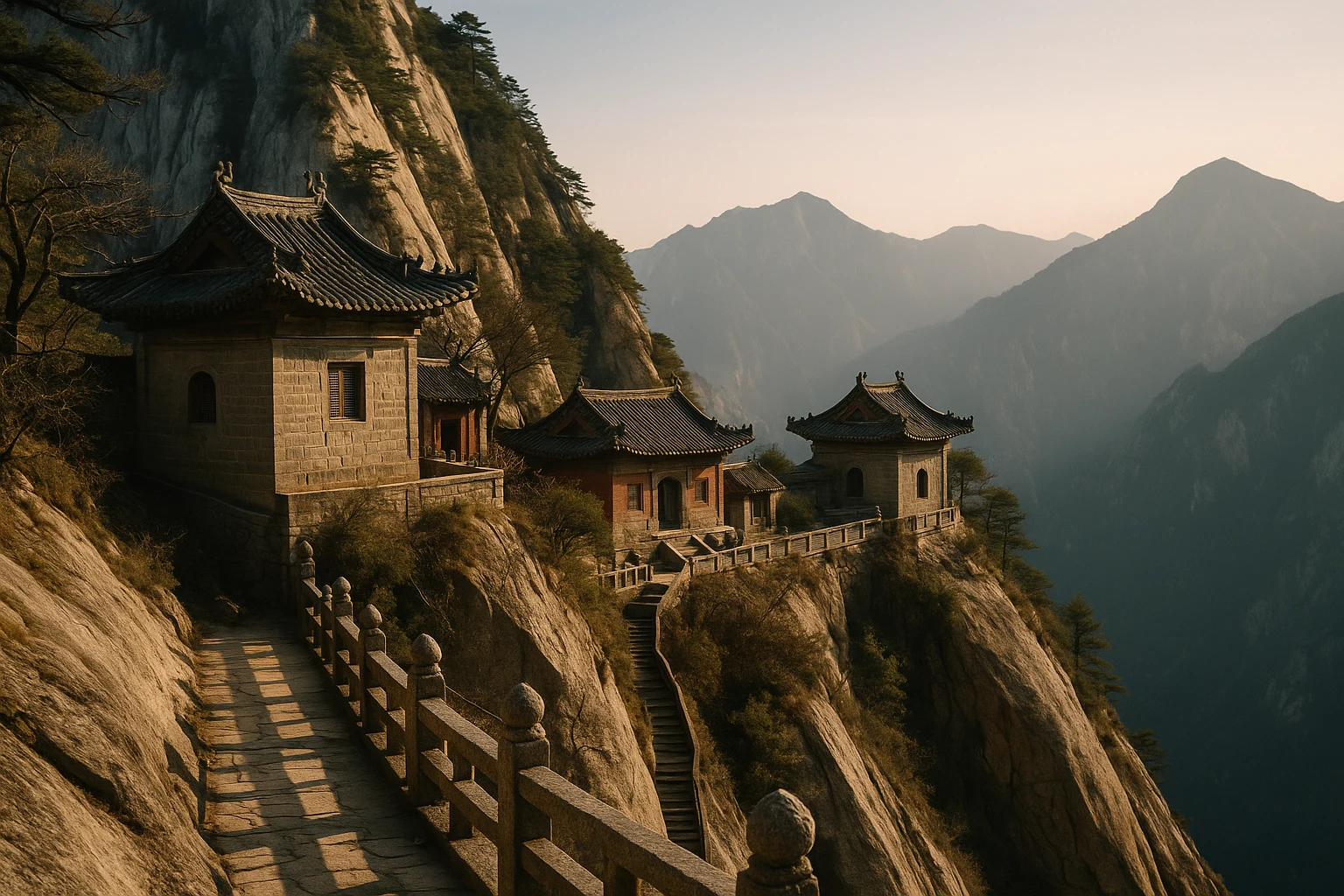
Mount Huashan Ancient Temples
Discover the sacred Daoist temples clinging to the sheer granite cliffs of Mount Huashan, one of Chi...
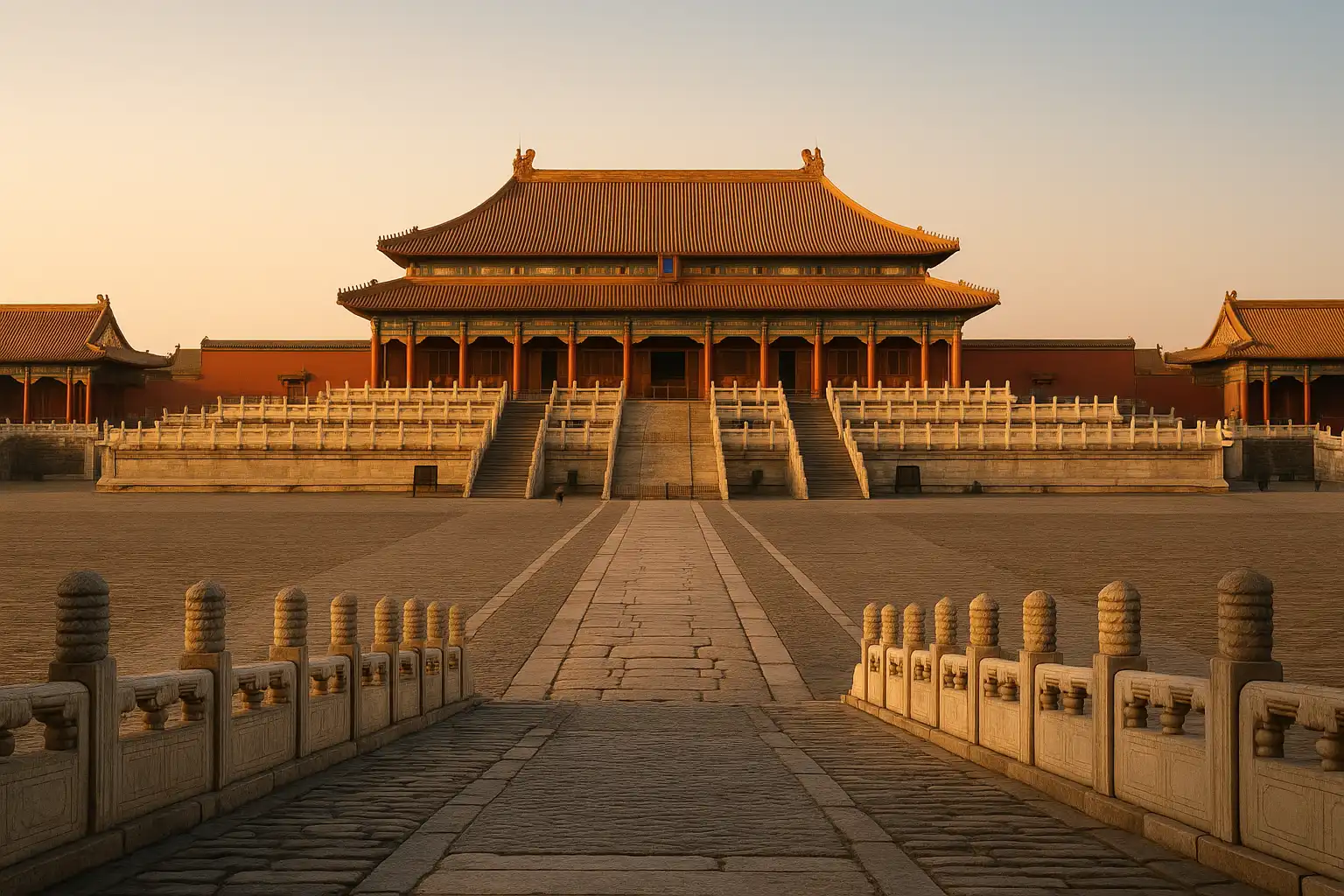
Forbidden City China Travel Guide 2026: Imperial Palace of Beijing
Chinese ImperialExplore the Forbidden City, China's imperial palace for 500 years. Discover the Hall of Supreme Harm...
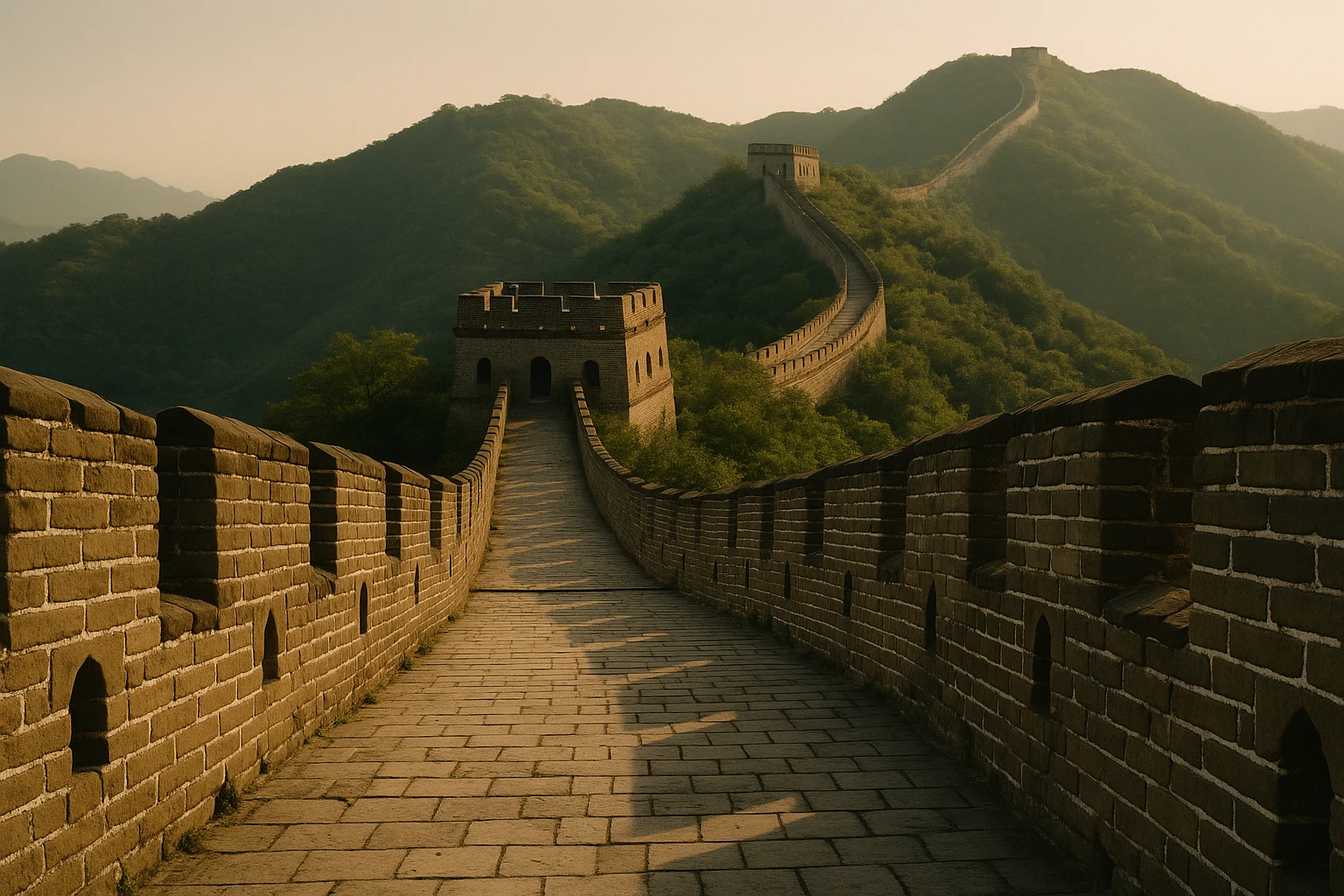
Great Wall of China (Mutianyu)
Explore Mutianyu — the Great Wall's most dramatic restored section, with 22 Ming-era watchtowers, mo...