Quick Info
Curated Experiences
Discover Lycian Civilization: Tlos, Xanthos and Patara Tour
Private Lycian Heritage Tour: Xanthos, Letoon and Patara
Lycian Coast Small-Group Day Trip from Fethiye
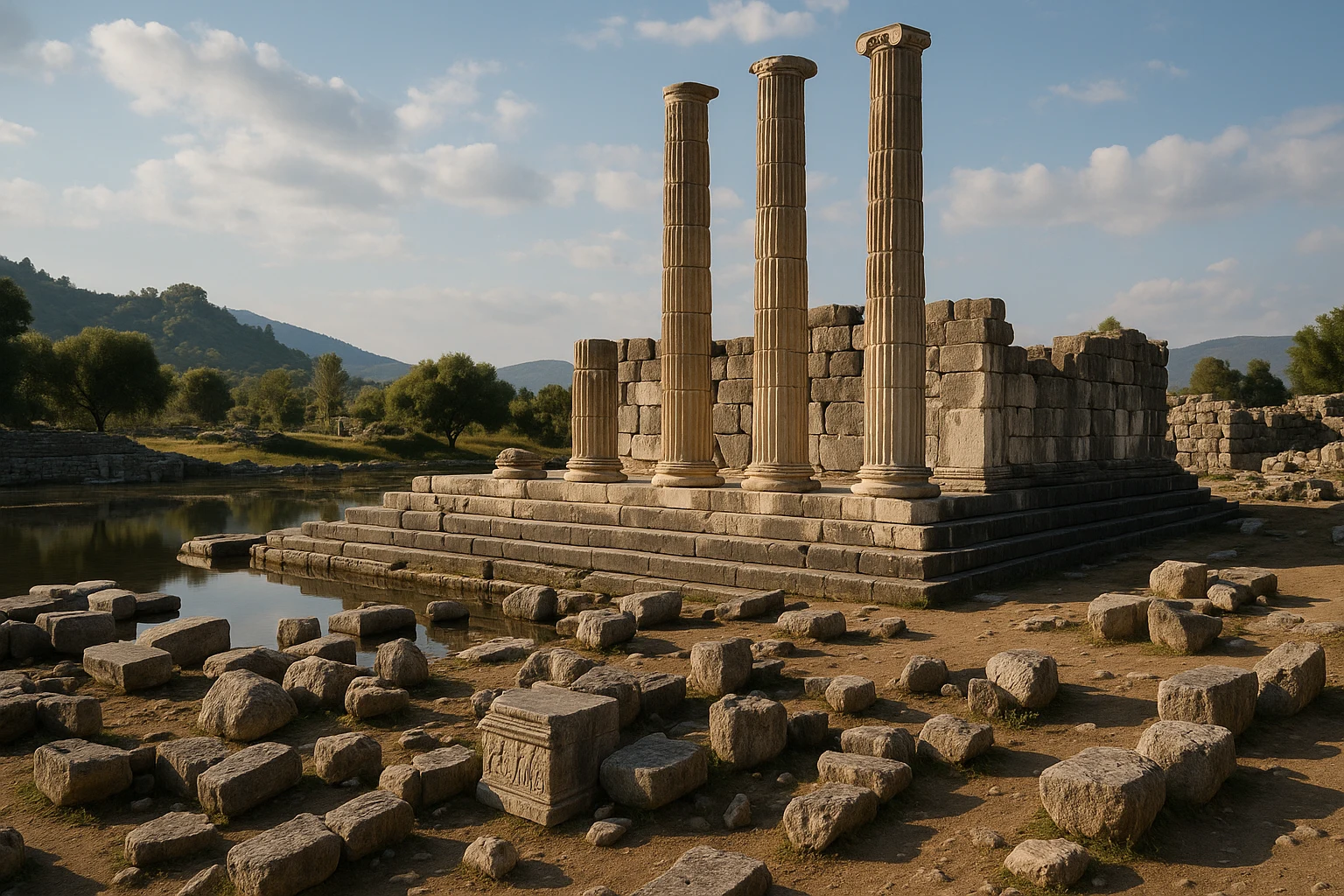
Letoon Turkey travel guide searches often lead to short entries that treat this place as a quick add-on between bigger names, but that misses what Letoon actually is. In southwestern Turkey, not far from the Lycian city of Xanthos, Letoon was the sacred heart of a civilization that understood power and worship as inseparable. The sanctuary’s temples, water source, and ceremonial spaces were not decorative extras; they were part of the political and cultural framework that held Lycia together across shifting empires. You do not come here for one colossal standing monument. You come to read a sacred landscape where identity was performed, negotiated, and preserved.
At Ancient Travels, we recommend Letoon because it gives you something many famous sites cannot: clarity. The sanctuary is compact enough to grasp in a single walk, yet historically deep enough to illuminate centuries of change from the Archaic Lycian world through Hellenistic, Roman, and Byzantine phases. This guide covers that full timeline, the key features to prioritize on-site, transport and admission logistics from Fethiye and Kaş, seasonal strategy, and how to combine Letoon with Xanthos and Patara in a coherent archaeological day.
History: The Sacred Core of Lycian Identity
Early Lycian sanctuary formation (c. 7th century BCE-6th century BCE)
Letoon likely emerged as a formal sacred place during the early first millennium BCE, when Lycian communities were consolidating political and religious institutions across the Xanthos Valley. The site was anchored by water, and that mattered profoundly in Anatolian sacred geography. Springs and wetland margins were often associated with ritual power, fertility, and divine presence, and Letoon’s setting suggests that the cult landscape preceded much of the surviving architecture. Rather than a monumental city center, Letoon developed as a ceremonial node linked to nearby urban powers, especially Xanthos, where civic and military authority was concentrated.
Persian-era continuity and local autonomy (6th century BCE-4th century BCE)
As Achaemenid Persian authority expanded through Anatolia, Lycia entered an imperial system but retained strong local structures. Letoon’s importance appears to have endured through this period because sanctuaries offered continuity even when political allegiances shifted. Ritual practice, seasonal festivals, and temple patronage gave elites a way to legitimize rule in familiar regional terms. In this phase, Letoon functioned as a shared cultural reference point: a place where Lycian identity could be reaffirmed under external pressure. Sacred sites like this were not isolated from power; they were one of power’s most durable languages.
Hellenistic transformation and monumental framing (4th century BCE-1st century BCE)
After Alexander’s campaigns, the eastern Mediterranean entered centuries of Hellenistic competition, and Lycian centers adapted quickly. At Letoon, this likely meant architectural reworking, new cult expressions, and the formalization of the triad associated with Leto, Artemis, and Apollo in ways legible to wider Greek-speaking networks. Yet the sanctuary did not become culturally generic. The local landscape, inherited ritual patterns, and epigraphic tradition kept it distinctly Lycian in function. Letoon in this era demonstrates adaptation rather than replacement, where regional identity was translated into broader Mediterranean religious forms without being erased.
Roman provincial integration (1st century BCE-4th century CE)
Under Roman administration, Letoon remained active as a religious center tied to the wider civic geography of Lycia. Roads, taxation systems, and legal structures connected sanctuary and city more tightly, while temple maintenance and ceremonial activity continued within imperial frameworks. Roman rule often stabilized funding and access for established sacred places, and Letoon seems to have benefited from that continuity. The sanctuary’s role became both devotional and representational, signaling that local traditions could coexist with Rome’s administrative order. Visitors today are often surprised by how strongly this layered identity still reads in the ground plan.
Byzantine adaptation and modern archaeology (4th century CE-present)
In late antiquity and Byzantine centuries, religious and settlement patterns shifted, and Letoon’s centrality gradually diminished. Christianization altered ritual landscapes across the region, and economic changes reduced the sanctuary’s former prominence. Still, abandonment was not instantaneous; like many Anatolian sites, Letoon passed through slow transformation rather than sudden collapse. Modern rediscovery began with early travelers and intensified through systematic archaeological campaigns in the 20th century and beyond. Excavation, epigraphy, and conservation have since clarified temple phases, inscriptions, and hydrological context, making Letoon one of the most informative windows into Lycian religious life.
The Key Monuments: What to See at Letoon
The temple of Leto
The Temple of Leto anchors the sanctuary both symbolically and spatially. Although much of the superstructure is gone, the foundation footprint and surviving architectural blocks still communicate the building’s hierarchy within the sacred complex. Leto, mother of Apollo and Artemis in Greek tradition, became a central divine figure in the regional cult framework, and her temple likely hosted rituals with both local and supra-regional significance. When you stand at the core platform and look outward, the site’s planning logic becomes clear: processional movement, orientation, and proximity to water were deliberate, not incidental.
For photography, morning light often brings out masonry textures and subtle elevation shifts that are harder to read under noon glare.
The temple zones of Artemis and Apollo
Set near the main sanctuary axis, the Artemis and Apollo temple areas complete Letoon’s famous triadic arrangement. These adjacent sacred structures are essential for understanding the site’s ritual grammar. Rather than treating each temple as an isolated monument, read them together as a coordinated theological and civic statement. Their spatial relationship suggests a sanctuary designed for repeated ceremonial movement, likely tied to annual observances and elite patronage. Even in ruin, the architectural dialogue between the three temple zones gives Letoon unusual interpretive clarity for visitors willing to move slowly and observe alignments.
If you carry a wide lens, shoot from slightly lower angles to include both temple lines and the surrounding low landscape in one frame.
The sacred spring and water landscape
Letoon cannot be understood without the sacred water context. The spring-fed area and wetter ground around the sanctuary were not background scenery; they were part of the religious engine of the site. In many Anatolian traditions, water marked thresholds between human and divine order, and Letoon’s cult likely drew meaning from this living hydrology. Seasonal conditions still affect how the terrain reads today, sometimes highlighting reflective surfaces and marsh-like contours that explain why this location became sacred in the first place.
Spend time here without rushing to the next ruin line. The sanctuary’s mood and logic become clearer when you register sound, moisture, and terrain together.
The Letoon trilingual inscription legacy
One of Letoon’s greatest scholarly contributions is epigraphic. The Letoon trilingual inscription tradition, associated with Greek, Lycian, and Aramaic language forms, is central to reconstructing how authority and communication operated in multilingual Anatolia. Not every visitor arrives for inscriptions, but this is where Letoon moves from scenic archaeology to documentary history. Texts from the site illuminate governance, cultural contact, and local adaptation under wider imperial systems. In practical terms, this means Letoon is not just visually important; it is intellectually foundational for anyone studying Lycian identity.
A quick pre-read on Lycian scripts dramatically improves this stop, turning carved surfaces into legible historical voices.
Theater and ceremonial gathering space
Letoon’s small theater area is modest compared with grand Roman urban examples, but it matters because it reinforces the sanctuary’s social function. Ritual and public assembly were often intertwined, and even limited seating infrastructure could support performances, proclamations, or festival gatherings connected to sacred calendars. This feature reminds you that sanctuaries were active social environments, not silent temple compounds. As you sit briefly on surviving stone lines, the site’s scale feels human and local, which is exactly what makes it powerful.
Late-afternoon side light tends to define the theater contours best and can produce cleaner relief in photos.
Getting There: Transportation and Access
Letoon is straightforward by road but easiest when you treat it as part of a wider Lycian circuit rather than a standalone transit challenge.
From Fethiye
Fethiye is the most practical base for many visitors, with reliable day-tour options and manageable driving distances into the Xanthos Valley corridor.
- Taxi: Typically 1,200-1,800 TRY ($36-54 USD) round-trip depending on wait time, with one-way travel around 45-60 minutes.
- Public transport + local transfer: Regional buses/dolmuş toward Kınık corridor are cheaper, usually 120-220 TRY ($4-7 USD), but schedules vary and final access often needs a short taxi segment.
- Rental car: Usually the easiest independent option, with driving time around 50 minutes and good flexibility for combining Letoon with Xanthos and Patara.
From Kaş and Kalkan
From Kaş or Kalkan, Letoon is very feasible as a half-day archaeological outing, especially if you begin early and avoid midday traffic pinch points.
- Taxi/private transfer: Commonly 1,400-2,200 TRY ($42-66 USD) round-trip depending on origin and waiting arrangement.
- Dolmuş + taxi: Budget option around 150-280 TRY ($5-9 USD) for regional bus segments, then short local transfer where needed.
- Rental car: Roughly 60-75 minutes from Kaş under normal conditions; parking near site access points is usually uncomplicated.
Admission and Hours
Entry is typically ticketed at the site in Turkish lira, with pricing updated seasonally by cultural authorities; expect a modest archaeological-site fee and keep both card and cash available. The Turkey Museum Pass can be worthwhile if Letoon is one of several major stops in your itinerary. Opening windows commonly begin in the morning and run into late afternoon or early evening depending on season, with shorter winter schedules. Aim for early morning or final opening hours for cooler temperatures, softer light, and a calmer experience across exposed temple zones.
Practical Information
Letoon’s compact footprint makes planning easy, but a few practical choices can significantly improve your visit quality.
What to bring
- Sun protection: Hat, sunscreen, and sunglasses are essential because shade is limited around the temple foundations.
- Water: Bring at least 1 liter per person in warm months; on-site facilities can be minimal or inconsistent.
- Footwear: Closed, supportive shoes help on uneven stone edges and mixed dirt-gravel ground.
- Camera or phone with extra battery: Light can be excellent in morning and late afternoon, and you’ll likely shoot both details and wide contextual frames.
- Small cash reserve: Useful for tickets, small local purchases, or backup when card systems stall.
Dress code and etiquette
Letoon is an archaeological sanctuary rather than an active mosque or church, so there is no strict ceremonial dress code. Still, respectful attire is appropriate, especially when visiting nearby towns and mixed local spaces on the same day. Avoid climbing on fragile masonry, and keep drone use aligned with local regulations and active restrictions.
Accessibility
Most of the site is walkable for visitors with moderate mobility, but surfaces are uneven and there are limited formal accessibility adaptations compared with major urban museums. Wheelchair access can be challenging in sections with loose ground or elevation transitions. If accessibility is a priority, visiting with a private guide or assistant and allowing extra time is strongly recommended.
When to Visit: Seasonal Considerations
Spring (March-May)
Spring is the ideal season for most travelers. Daytime temperatures are often around 16-25°C (61-77°F), vegetation is greener, and visibility across the valley is usually clear after winter rains. Crowds remain moderate compared with peak summer resort traffic. Bring a light layer for early starts, then switch to breathable sun gear by midday.
Summer (June-August)
Summer can be beautiful but demanding. Expect 30-37°C (86-99°F) on many days, with strong sun and reflected heat from pale stone. Crowds rise as coastal tourism peaks, especially on tour routes. Visit as close to opening as possible, carry more water than you think you need, and keep your site walk focused to avoid heat fatigue.
Autumn (September-November)
Autumn is another excellent window, often with 18-30°C (64-86°F) early in the season and milder conditions into November. Light quality is strong for photography, and visitor flow is usually steadier and less compressed than midsummer. This is a practical period for pairing Letoon with longer days at Xanthos and Patara without extreme heat stress.
Winter (December-February)
Winter is the quietest season, typically around 10-17°C (50-63°F) with occasional rain and cooler winds. Low visitor numbers make interpretation easier, but wet ground can affect footing near water-sensitive zones. Wear grippy footwear and a weatherproof layer, and confirm opening hours in advance because seasonal schedules may be shorter.
Combining Letoon with the Lycian Coast
Letoon works best as part of a connected day, not an isolated stop. The strongest sequence begins at Letoon by 8:30 AM, when the sanctuary is cool and quiet and the temple plan is easiest to read without tour-group overlap. Spend roughly 90 minutes moving from the Leto core to the adjacent Artemis and Apollo zones, then pause near the sacred water edge before leaving around 10:15 AM.
From there, drive to Xanthos and arrive by 10:35 AM for the political counterpart to Letoon’s ritual landscape. Give Xanthos about two hours, focusing on the theater, acropolis terrain, and key inscription contexts. By 1:00 PM, continue toward Kınık or onward to Patara corridor lunch stops where local lokanta menus are simple, fast, and ideal between site walks. If you still have energy, a late-afternoon Patara segment from 3:30 PM onward rounds out the Lycian arc with urban-scale ruins and coastal light.
If you prefer a shorter day, Letoon plus Xanthos alone is fully satisfying in about five to six hours including transport and lunch. That version keeps the intellectual pairing intact while avoiding rushed transitions.
Why Letoon Matters
Letoon matters because it preserves a truth modern travel often obscures: civilizations are held together by meaning as much as by walls. At nearby Xanthos, Lycia projected authority through fortification, inscriptions, and public architecture. At Letoon, the same society grounded that authority in ritual, water, memory, and the repeated choreography of sacred space. Standing among these temple lines, you are not looking at leftovers from a vanished world. You are reading the framework that made political life feel legitimate to the people living it.
For contemporary travelers, that makes Letoon unusually intimate. It does not overwhelm you with scale; it teaches you through proportion, alignment, and atmosphere. The sanctuary asks for attention rather than speed. If you give it that attention, even for an hour, you leave with a deeper sense of Lycia than any checklist monument can provide.
Quick Facts
| Attribute | Details |
|---|---|
| Location | Near Kumluova, Muğla Province, Turkey |
| Ancient Name | Letoon (Lycian federal sanctuary) |
| UNESCO Status | Included with Xanthos-Letoon UNESCO World Heritage listing (1988) |
| Established | c. 7th century BCE sanctuary formation |
| Distance from nearest hub | About 55 km from Fethiye (45-60 minutes by road) |
| Entry Fee | Ticketed in TRY at gate; Museum Pass may apply |
| Hours | Seasonal; generally morning to late afternoon/early evening |
| Best Time | Spring and autumn mornings |
| Suggested Stay | 1.5-2.5 hours |
Explore More Turkey
- Xanthos Letoon: Understand Lycia’s political and sacred centers together in one UNESCO landscape.
- Patara: Walk a major Lycian-Roman city with theater, assembly heritage, and dune-backed ruins.
- Myra: Explore Lycian rock-cut tombs and a large Roman theater near Demre.
Plan your full route with our Turkey Ancient Sites Guide. For broader trip strategy, read our Mediterranean archaeology planning guide.
Frequently Asked Questions
How much time should I plan at Letoon?
Most travelers need 1.5-2 hours to walk the sanctuary slowly, read the temple layouts, and spend time around the sacred water area. If you are interested in inscriptions or detailed photography, give yourself closer to 3 hours. Letoon pairs naturally with Xanthos in the same half-day or day trip.
What is the best time to visit Letoon?
Early morning is usually the most comfortable, especially from late May through September, because the site has limited shade and strong midday glare. Late afternoon can also be beautiful for softer side light on the temple foundations. Spring and autumn generally offer the best balance of temperature and visibility.
Do I need a pass to enter Letoon?
You can usually buy a standard ticket at the entrance in Turkish lira, and that works for most visitors. If you are touring multiple archaeological sites in one trip, the Turkey Museum Pass may be better value. Carry both card and a little cash in case payment systems are slow.
How do I get to Letoon from Fethiye or Kaş?
From Fethiye, the easiest approach is rental car, taxi, or organized day tour, with driving time usually around 45-60 minutes depending on traffic and route. From Kaş, road time is often about an hour. Public transport can get you near the corridor, but final access is usually easier with taxi transfer.
What are the highlights at Letoon?
The core highlights are the three adjacent temple zones dedicated to Leto, Artemis, and Apollo, the sacred spring environment, and the site's key inscriptions tied to Lycian language and identity. The compact scale makes it excellent for understanding ritual topography. It complements the political monuments at nearby Xanthos.
Is Letoon suitable for first-time visitors to Turkey's ancient sites?
Yes. Letoon is manageable, usually calmer than larger headline ruins, and easy to understand once you know you are seeing a sanctuary rather than a dense city plan. Paths are mostly straightforward, though some ground is uneven, so supportive shoes and sun protection are important.
Nearby Ancient Sites
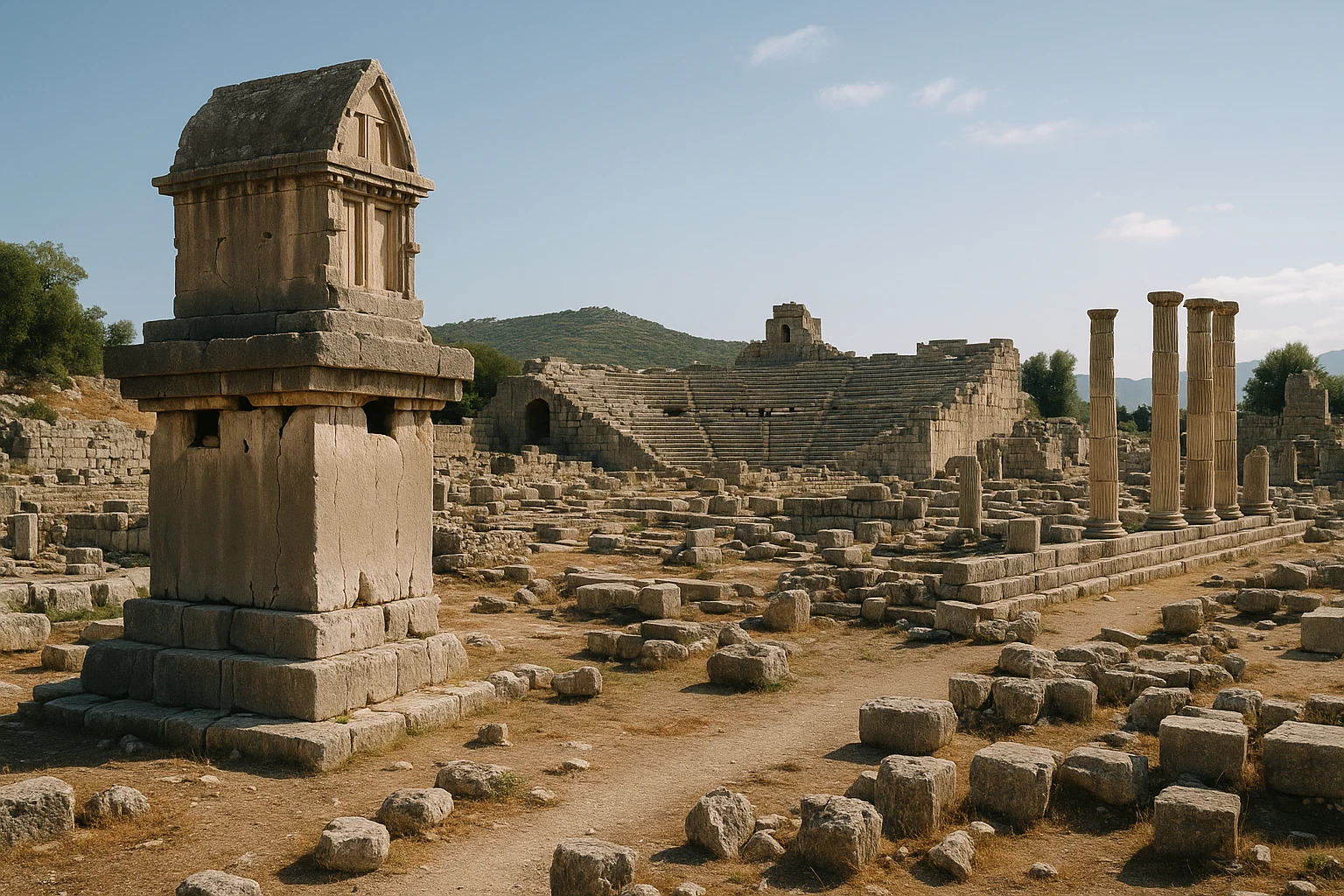
Xanthos Letoon Turkey Guide 2026: Lycian Tombs & Sanctuary
Lycian-Hellenistic-Roman-ByzantineVisit Xanthos and Letoon in Turkey for Lycian tombs, theater ruins, and sacred temples, with practic...
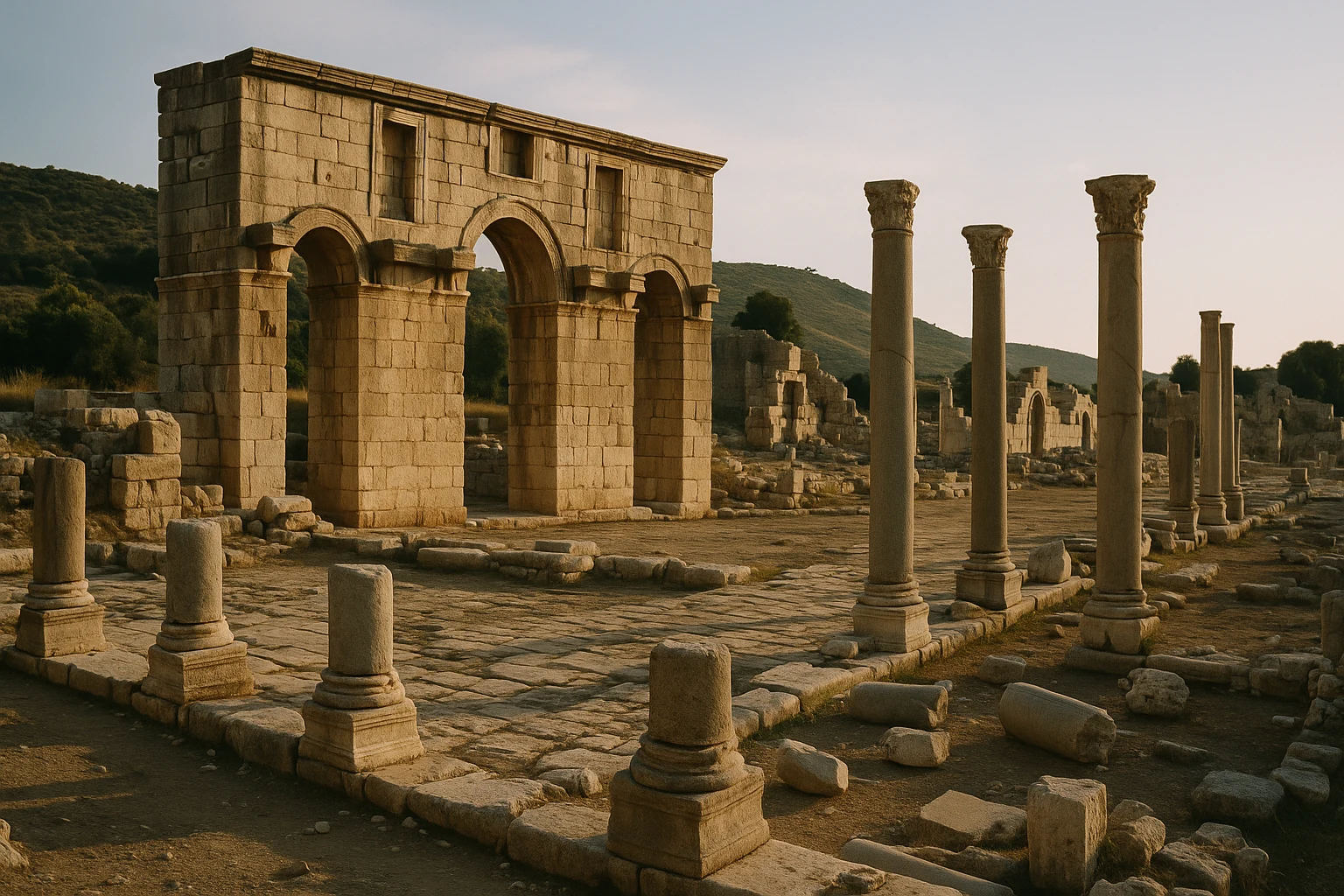
Patara Turkey Guide 2026: Lycian Capital & Roman Granary
Lycian-Hellenistic-Roman-ByzantinePlan your Patara, Turkey visit: explore Lycian and Roman ruins, climb the theater, and pair the site...
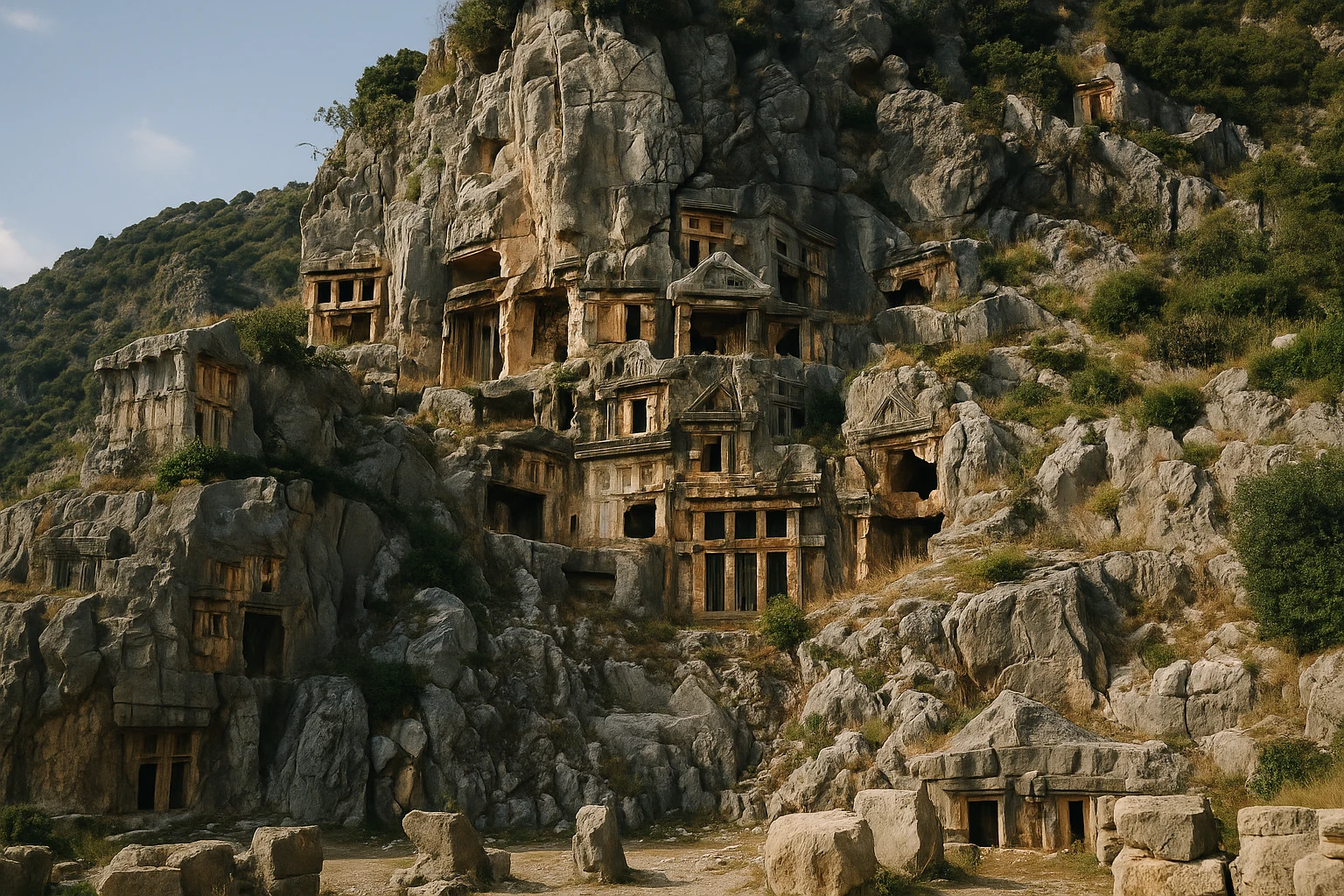
Myra Turkey Guide 2026: Lycian Tombs & Roman Theatre
Lycian-Roman-ByzantinePlan your Myra, Turkey visit with rock-cut Lycian tombs, a Roman theatre, tickets, hours, and transp...