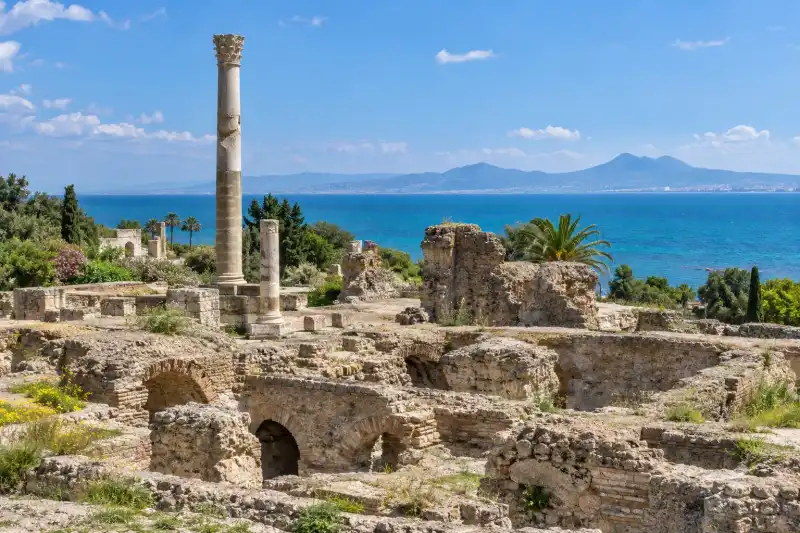
The Mediterranean is not a single archaeological destination. It is a web of coastlines, islands, river valleys, modern borders, languages, entry systems and historical periods that overlap without lining up for tourists. A good cross-border itinerary does not try to “cover the Mediterranean.” It follows a question and gives that question enough room to breathe.
You might trace Greek colonization and local adaptation from the Aegean to southern Italy and Sicily. You might compare Roman urban life in Italy and North Africa. You might focus on Bronze Age palaces in Crete and the mainland. The route becomes coherent when the sites are in conversation, not merely when they share a sea.
Choose one historical thread
UNESCO’s listings make useful starting points because they explain why a site or group of sites matters, but they are not ready-made travel routes. Its record for Mycenae and Tiryns describes two major Mycenaean centers, while the new Minoan Palatial Centres record groups six Cretan archaeological sites from 1900 to 1100 BCE. Those records can support a Bronze Age itinerary, but the actual journey still needs island or mainland transfers, museum time and weather slack.
A Roman route might use Pompeii, the Roman Forum and North African cities as comparative anchors. An Egypt-and-Aegean route may put Karnak beside Knossos without pretending they are part of a single civilization. The point is comparison: sacred landscapes, palace economies, ports, burial customs, imperial administration, or whatever question you can actually pursue with care.
Build regional modules, then join them
Think in modules of three to five nights, each with a clear base and purpose. Add a border or flight day between modules. That is less glamorous than drawing a sweeping arrow across the sea, but it means you arrive in time to use your site entry and do not spend the entire trip carrying chargers through security.
| Module | Possible historical focus | Planning boundary |
|---|---|---|
| Athens and the Peloponnese | Classical civic life and Mycenaean landscapes | Road and rail logic differs once you leave Athens |
| Crete | Minoan palatial centers and museum collections | Ferry and flight alternatives require a real weather and baggage plan |
| Southern Italy and Sicily | Greek colonies, Roman cities and later reuse | Rural sites often need a vehicle or carefully checked final connection |
| Nile Valley | Temple landscapes, royal necropolises and river travel | Treat Luxor, the West Bank and Aswan as separate geographic units |
| Tunis and Carthage region | Phoenician, Punic and Roman layers | Confirm current entry, transport and border requirements before routing onward |
Let borders be part of the itinerary
A border is not a blank line between two archaeological chapters. It has passport rules, flight schedules, baggage restrictions, currency changes, local insurance requirements and the possibility that a delay destroys the first afternoon at the next base. Check government travel advice for your passport, airline conditions and the current official visitor information for each site. Build an overnight buffer before non-refundable long-haul departures.
This does not mean the route needs military-grade contingency planning. It means you should not fly from one country at dawn and hold a timed archaeological entry three hours later unless you can afford to lose it.
Research before you connect claims
Use museum catalogues, archaeological authorities and UNESCO pages for historical context. Use official site pages for current access. Keep the two kinds of information separate. A site’s significance can be stable while its entry route, photography policy or seasonal closure changes next month.
Our Nile Valley temples guide and Sicily transport guide handle two useful modules in more detail. The multi-site archaeology itinerary guide helps with on-the-ground pacing once you have chosen the regional frame.
A cross-border archaeology trip works when it leaves you with comparisons you can explain, not a camera roll that looks like a marble-column scavenger hunt. Keep the number of modules small, check each official source close to travel, and accept that the best route is usually the one with fewer heroic connections.