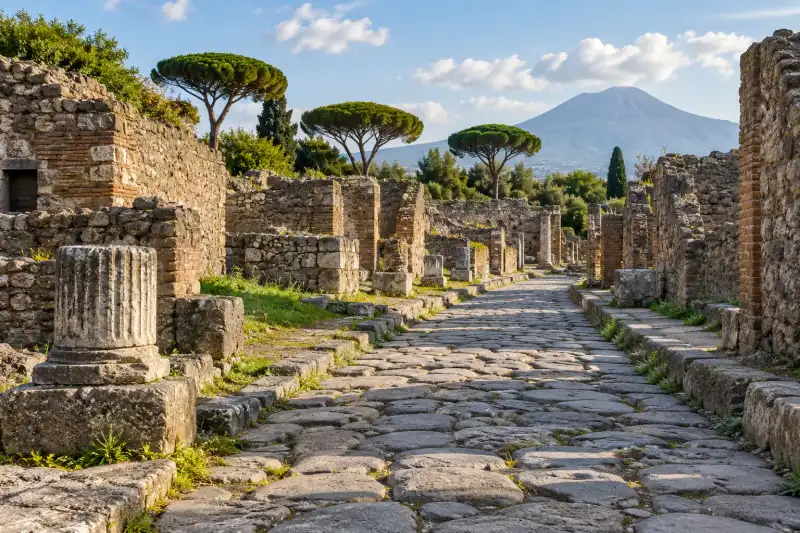
The bad archaeology itinerary is built like a grocery list: five pins, one rental car, no lunch, and an optimistic belief that every ruin is interchangeable. The good one has a rhythm. It knows which place deserves the morning, which museum makes the stones legible, and when to stop before the day becomes a sunburn with masonry.
Start with a question sharper than “what is nearby?” Decide whether your trip follows a civilization, a landscape, a building type, or a single historical change. A Roman urban route can move from Pompeii to a port or museum. A Nile route can connect Philae with Kom Ombo. A theme gives you permission to skip famous things that do not serve the story.
Build around anchors, not pins
Choose one anchor site for each full day. An anchor is large enough, important enough, or complicated enough that it would still justify the day if the rest fell away. Put it first, before heat, traffic, fatigue, or an unexpectedly absorbing gallery changes the plan.
Then add only one supporting stop. This can be a site that explains the anchor, a collection that contains its finds, or a settlement that provides a useful overnight base. At Ephesus, that might mean separating the ancient city from the museum rather than treating them as a blur. At Machu Picchu, it means treating the journey and entry plan as part of the visit, not a logistical footnote.
A third stop belongs only when it is genuinely on the route and modest in scope. Do not count a map’s straight line as travel time. Mountain roads, city exits, parking, ticket checks, and the walk from a gate to the archaeology all consume the day with quiet efficiency.
Use bases to reduce friction
Change hotels less often than your map suggests. Two or three nights in a well-connected base makes early starts possible and gives you a recovery window after a long travel day. It also lets you move a weather-sensitive outdoor visit without detonating the whole plan.
Before you reserve a base, trace the actual sequence: arrival terminal or station, lodging, site entrance, museum, dinner, and the next departure. A hotel that looks central may be awkward for a dawn train or a site on the opposite side of town. Keep addresses, reservation codes, offline maps, and operator contact details available without assuming mobile service will rescue a rushed transfer.
Give museums their proper job
Museums are not rainy-day consolation prizes. They supply labels, chronology, inscriptions, small objects, and architectural fragments that open-air sites cannot always show in context. Put the museum before a site when you need orientation; put it afterward when you want to identify what you have just seen. Either choice is better than squeezing it into the last forty exhausted minutes.
UNESCO’s World Heritage guidance describes heritage protection as an ongoing responsibility rather than a backdrop for visitor traffic. Treat barriers, marked paths, no-drone rules, photography limits, and closed rooms as part of the visit. They often protect the exact surfaces that make a place worth crossing an ocean to see.
Sequence tickets and transport honestly
Work from immovable commitments outward. If an official site uses dated or timed admission, place that first. Next set the arrival transfer that makes it feasible, then the hotel, then flexible meals and secondary stops. Recheck the official operator shortly before travel for access terms, closures, and the current booking method. This guide intentionally does not repeat live hours, prices, quotas, or availability.
Leave daylight around rural and unfamiliar transfers. If a day hinges on a train, ferry, domestic flight, or long road transfer, do not book a non-refundable visit on the far side with no margin. The goal is not to prove you can beat a spreadsheet. It is to arrive capable of paying attention.
A practical day shape
A durable pattern is simple: reach the anchor early; take a real pause in the middle of the day; use late afternoon for a museum, compact secondary site, or the historic center of your base. Carry water, sun protection, a layer for exposed terrain, and footwear that tolerates uneven stone. Read the local rules before entering, especially at sacred, funerary, or actively conserved places.
Keep one half-day unassigned on every multi-base trip. Use it for a delayed connection, a site that deserved longer, or the lovely rare event of doing less. Archaeology rewards the person who can linger at one inscription, one relief, one view across an old city. The itinerary should make that possible.
A final check before booking
For every day, write one sentence explaining why its stops belong together. If you cannot, split them. Then verify each official site page, identify the day’s true transport risk, and decide what gets cut first if the morning runs late. That small exercise removes more nonsense than any color-coded route map.
For related planning, see our guides to archaeological-site heat planning, photographing ruins, and budget archaeological travel.