Quick Info
At a glance
Lot’s Cave in Jordan sits high above the southeastern Dead Sea, where stark desert slopes fall toward one of the most dramatic landscapes in the Levant. The setting feels almost theatrical: pale rock, immense silence, and a horizon shaped by salt flats, cliffs, and heat haze. For many travelers, the appeal begins with the biblical association. According to longstanding tradition, this cave is linked to Lot, the figure whose story is tied to nearby Sodom and Gomorrah. Yet what makes the site compelling is not faith alone. It is also an archaeological place, where a natural cave, burial chambers, a Byzantine monastery, and the remains of a church all come together on a single hillside.
Visiting here is very different from entering a monumental city of columns or a vast desert fortress. Lot’s Cave is smaller, quieter, and more atmospheric. The approach encourages attention to detail: a path climbing the slope, fragments of masonry, traces of devotional life, and wide views over a landscape that has been meaningful for thousands of years. The site rewards travelers who like places where geology, scripture, archaeology, and pilgrimage overlap. Whether you come for biblical history, early Christian remains, or simply to see an unusual corner of Jordan beyond the standard itineraries, Lot’s Cave offers a concentrated encounter with the region’s ancient memory.
History
Biblical tradition and the memory of Lot
The deepest layer of significance at Lot’s Cave is traditional rather than archaeological. In the Book of Genesis, Lot is the nephew of Abraham and is closely connected to the story of the destruction of Sodom and Gomorrah. After escaping the doomed cities, Lot and his daughters are described as taking refuge in a cave in the mountains. Across centuries, communities living around the Dead Sea associated this dramatic terrain with that narrative. The southeastern Dead Sea basin, with its barren hills and striking geological formations, made a powerful setting for such identification.
No excavation can prove that a specific biblical individual occupied this exact cave. Still, sacred geography often develops through local memory, repeated visitation, and the desire to anchor scripture in physical landscapes. By late antiquity, this cave had become accepted in regional Christian tradition as the place connected to Lot’s refuge. That traditional identification is what eventually drew monastic builders to the site.
The late Roman and Byzantine sacred complex
The main surviving remains at Lot’s Cave belong to the Byzantine period, especially the 5th to 7th centuries CE, when Christian pilgrimage expanded across the Holy Land and neighboring regions. During this era, important biblical locations were marked with churches, chapels, monasteries, commemorative inscriptions, and mosaic pavements. Lot’s Cave became one of these devotional landscapes.
Archaeological work has shown that the cave was incorporated into a religious complex rather than left as an isolated natural feature. A monastery and church were established nearby, transforming the hillside into a place of pilgrimage and worship. Monks and visitors could ascend to the cave, pray in a sanctified setting, and connect biblical memory with liturgical practice. The presence of mosaic floors and ecclesiastical structures suggests that this was not a casual rural shrine but a formally organized religious site.
The Byzantine builders adapted themselves to the terrain. Instead of creating a grand basilica on a level urban plot, they worked with the mountain slope. Terraces, retaining walls, and connected rooms shaped the sanctuary. This integration of architecture and landscape is one of the site’s defining characteristics and helps explain its lasting appeal.
Pilgrimage, local devotion, and regional life
Byzantine pilgrimage did not only focus on Jerusalem, Bethlehem, and the Jordan River. It also extended to more remote sites associated with Old and New Testament events. Lot’s Cave fit naturally into a broader sacred map that included the Dead Sea, Mount Nebo, Madaba, and Bethany Beyond the Jordan. Pilgrims moving through the region could encounter a network of places that connected biblical text to local topography.
The sanctuary at Lot’s Cave likely served multiple functions. It was a memorial site for scriptural reflection, a stop for pilgrims, and a local monastic center. Monks may have maintained the cave, offered hospitality, and participated in agricultural or small-scale economic life in the surrounding area. The southeastern Dead Sea was not empty wilderness in antiquity; it was a connected zone with settlements, trade routes, and cultivated pockets where possible.
Tombs discovered at the site and in the vicinity add another dimension. They indicate long-term use of the hillside and suggest that the area carried significance beyond a single moment of religious construction. Burial near holy places was valued in many late antique Christian communities, reflecting hopes of spiritual protection and closeness to sanctity.
Decline, abandonment, and rediscovery
Like many Byzantine religious sites in Jordan, Lot’s Cave eventually declined. Changes in pilgrimage patterns, shifts in political control, earthquakes, and the gradual reduction of monastic communities likely contributed to abandonment. The church and monastery fell into ruin, while the cave itself remained part of local memory and regional tradition.
Modern archaeological investigation brought the site back into broader awareness. Excavations clarified the layout of the sanctuary and documented the mosaics, architectural remains, and associated features. Conservation efforts have aimed to stabilize fragile structures and make the site more accessible to visitors. Today, Lot’s Cave occupies a distinctive place in Jordan’s heritage landscape: not among the country’s largest ruins, but among its most evocative, especially for travelers interested in biblical archaeology and the quieter edge of pilgrimage history.
Key Features
The first and most obvious feature is the cave itself, the natural chamber that gives the site its name and meaning. It is not monumental in size, but its importance lies in how generations understood it. A cave already carries symbolic power: refuge, survival, solitude, and withdrawal from the world. Here, those associations are intensified by the biblical narrative and by the steep mountain setting. Standing inside or just outside the cave, visitors can feel why a natural shelter in this landscape became spiritually charged.
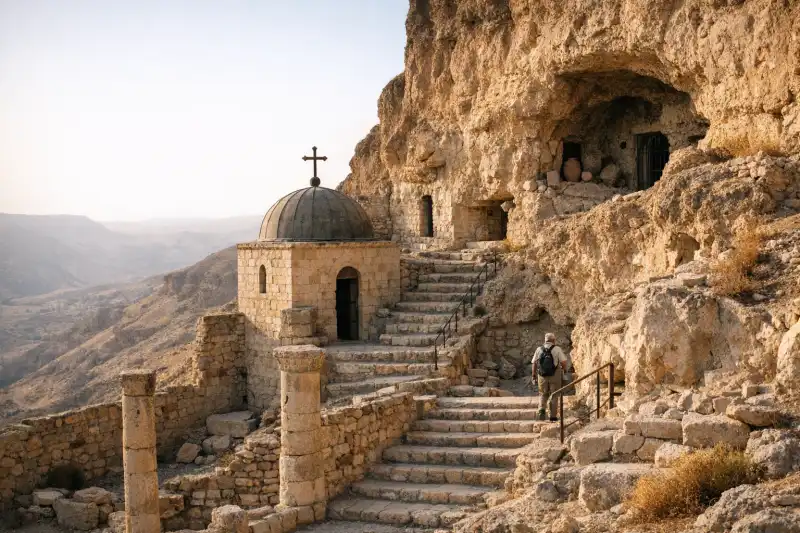
Immediately around the cave are the remains of the Byzantine religious complex. These are among the site’s richest archaeological elements. Instead of one isolated building, the sanctuary included a church and monastic spaces arranged across terraces. The remains may seem modest at first glance compared with Jordan’s more famous urban ruins, but they reward close looking. Wall lines reveal how builders organized sacred and practical spaces on difficult terrain. Foundations and room divisions suggest areas for worship, circulation, and daily communal use.
One of the most memorable features is the mosaic flooring found in the church area. Even when incomplete, Byzantine mosaics transform a ruin by showing the care and expense invested in it. They speak to a period when this remote hillside mattered enough to attract artistic labor and ecclesiastical patronage. The mosaic work links Lot’s Cave to the broader visual culture of Byzantine Jordan, where churches in Madaba, Mount Nebo, and elsewhere were adorned with intricate pavements. At Lot’s Cave, the mosaics underscore the transition from natural cave to formal shrine.
The relationship between architecture and landscape is another defining feature. Lot’s Cave is best experienced not as a single object but as a hillside ensemble. Paths, terraces, walls, and openings are all shaped by the contours of the slope. This creates a layered visual experience. As you move upward, new perspectives open over the Dead Sea plain and the harsh ridges around Safi. The sanctuary feels embedded in the mountain rather than imposed upon it. That embedded quality gives the site much of its character.
The views are especially important. Ancient holy sites were often chosen for symbolic reasons, but they also benefited from memorable settings that enhanced pilgrimage. From this height, the surrounding region appears vast and exposed, helping visitors imagine both the drama of biblical storytelling and the practical realities of life in the Dead Sea zone. The scenery is not decorative background; it is part of the meaning of the place.
Nearby burial features and caves add depth to the visit. They remind travelers that this was not simply a commemorative stop but a lived and reused landscape. Caves in the ancient Near East often served multiple functions over time: shelter, burial place, storage area, or sacred focus. At Lot’s Cave, this complexity is visible in the combination of natural spaces and built religious structures.
The site also stands out for its atmosphere. Unlike heavily commercialized attractions, Lot’s Cave tends to feel relatively quiet. You are more likely to notice wind, birds, distant road noise, and the crunch of stone underfoot than crowds or amplified commentary. That calm makes it easier to appreciate the place as early pilgrims might have done: as a destination for contemplation as much as sightseeing.
Finally, Lot’s Cave is a key feature in a broader travel itinerary through Jordan’s biblical and archaeological landscapes. It pairs well with the Dead Sea, Mount Nebo, Madaba, and Bethany Beyond the Jordan because it complements those better-known destinations with something more intimate. If those sites explain major chapters of regional sacred history, Lot’s Cave shows how that history was localized and materialized on a single hillside through memory, architecture, and devotion.
Getting There
Lot’s Cave is usually reached by road via the town of Safi near the southeastern Dead Sea. The most practical starting points are Amman, Madaba, or the Dead Sea resort area. From Amman, expect a drive of roughly 2.5 to 3.5 hours depending on traffic and your route. A private taxi or hired driver is the simplest option; fares typically range from 70 to 120 Jordanian dinars for a day trip depending on distance, waiting time, and negotiation. Many travelers reduce costs by combining the site with the Dead Sea or Mount Nebo.
Self-driving is feasible and often the best choice if you are comfortable on Jordanian roads. Rental cars from Amman commonly start around 25 to 45 dinars per day before fuel and insurance. Roads in the region are generally manageable, but the final approach may involve local roads and a bit of navigation, so download offline maps and confirm opening conditions in advance.
Public transport is more difficult. You may find buses or service taxis toward Ghor al-Safi or nearby areas from larger towns, often for just a few dinars, but schedules can be irregular and connections are not designed for tourists. In practice, public transport usually gets you only part of the way, after which you may need a local taxi.
Once at the site, expect a short uphill walk and some uneven surfaces. Wear sturdy shoes, carry water, and avoid arriving in the hottest part of the afternoon, especially outside winter.
When to Visit
The best time to visit Lot’s Cave is spring, especially March through May, when temperatures are warmer but usually still manageable. In these months, visibility can be good, the hills sometimes show traces of seasonal greenery, and walking the site is more comfortable than in high summer. Autumn, from October through November, is another strong option, with warm days and cooler mornings and evenings.
Summer can be challenging. The Dead Sea region and the lower elevations around Safi become intensely hot, and exposed stone paths reflect the heat. If you visit from June to September, go as early in the day as possible, bring more water than you think you need, and wear a hat and sunscreen. Midday visits in peak summer are tiring and can make it hard to enjoy the site properly.
Winter is viable and sometimes surprisingly pleasant, especially for travelers who prefer cooler weather and clearer conditions. Daytime temperatures are often comfortable for walking, but rain can occasionally affect road conditions and make paths slippery. Layers are useful, as mornings can feel cool before the sun rises higher.
Time of day matters almost as much as season. Morning and late afternoon usually offer softer light for photography and more comfortable temperatures. Early visits also make the site feel especially atmospheric, with long shadows over the Dead Sea plain and a stronger sense of isolation. If you are combining Lot’s Cave with nearby regional stops, plan it either first thing in the morning or later in the afternoon rather than as a noon stop.
| Quick Facts | Details |
|---|---|
| Location | Near Safi, above the southeastern Dead Sea, Jordan |
| Region | Karak Governorate |
| Main significance | Traditional biblical site associated with Lot |
| Visible remains | Cave, Byzantine church, monastery, mosaics, tombs |
| Best for | Biblical history, archaeology, pilgrimage, landscape views |
| Time needed | 45 minutes to 1.5 hours |
| Access | Best by rental car, private driver, or organized tour |
| Difficulty | Easy to moderate; short uphill walk and uneven ground |
| Best season | Spring and autumn |
| What to bring | Water, sun protection, sturdy shoes, offline maps |
Lot’s Cave is not the kind of destination that overwhelms with scale. Its power comes from concentration: one cave, one hillside, one wide biblical landscape, and the remains of a community that turned memory into architecture. That makes it especially rewarding for travelers who enjoy places where history is felt through setting as much as through ruins. In Jordan, where famous sites often dominate itineraries, Lot’s Cave offers something rarer: a quiet, elevated encounter with tradition, faith, and the enduring human habit of marking meaningful ground.
Guided tours: worth it?
Most travelers can visit Lot's Cave independently. Compare a tour only if you want a tighter history-focused visit, easier logistics, or a guide who can answer questions on the spot.
Best for
- Short visits where a planned route saves time
When to go self-guided
Go independently if you prefer setting your own pace, reading as you go, and checking official hours or ticket rules directly before you arrive.
What I’d avoid
Skip paid tours that bundle unrelated stops you do not actually want. The best option should either save meaningful planning time or add historical context you would miss on your own.
Jordan biblical sites tours
Useful when: you want to compare guided formats before deciding
Dead Sea and Mount Nebo tours from Amman
Useful when: transport or pickup logistics matter
Madaba, Mount Nebo, and Dead Sea day trips
Useful when: transport or pickup logistics matter
Some tour links are affiliate links, which may earn Ancient Travel a small commission at no extra cost to you. I try to surface options that make practical sense for the site—not just anything bookable.
Frequently Asked Questions
Where is Lot's Cave located?
Lot's Cave is in southern Jordan above the southeastern side of the Dead Sea, near the town of Safi in Karak Governorate.
Is Lot's Cave the actual biblical cave?
The site is traditionally associated with the biblical Lot, but like many ancient holy places, the identification is based on long-standing religious tradition rather than definitive proof.
What can visitors see at Lot's Cave?
Visitors can explore the cave itself, the remains of a Byzantine monastery and church with mosaics, tombs, and panoramic views over the Dead Sea plain.
How difficult is the visit?
The site usually involves a drive to the area and a short uphill walk with steps or uneven ground, so sturdy shoes and water are recommended.
Can you visit Lot's Cave on a day trip?
Yes. Many travelers combine it with the Dead Sea, Madaba, Mount Nebo, or other biblical and archaeological sites in Jordan on a long day trip or overnight circuit.
What should I bring to Lot's Cave?
Bring sun protection, water, comfortable walking shoes, and a camera, especially in warm months when the Dead Sea region can be intensely hot.
Nearby Ancient Sites
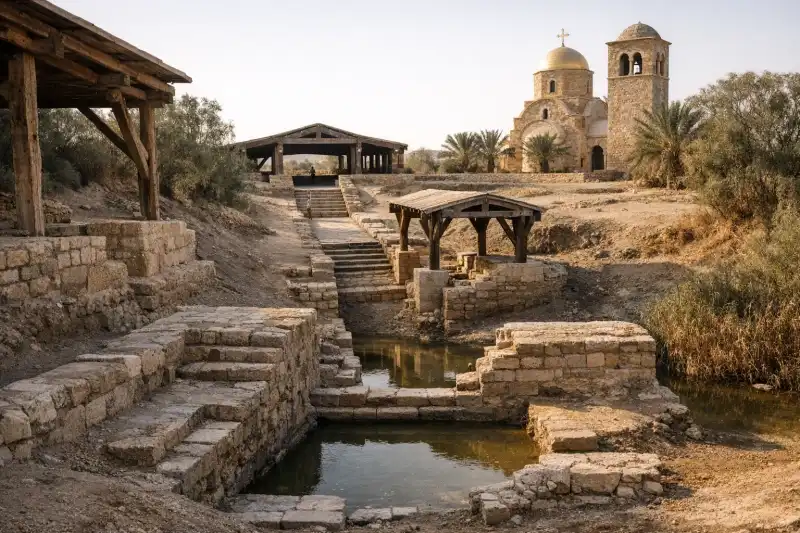
Bethany Beyond the Jordan
Bethany Beyond the Jordan in Jordan is an archaeological and religiously significant site believed t...
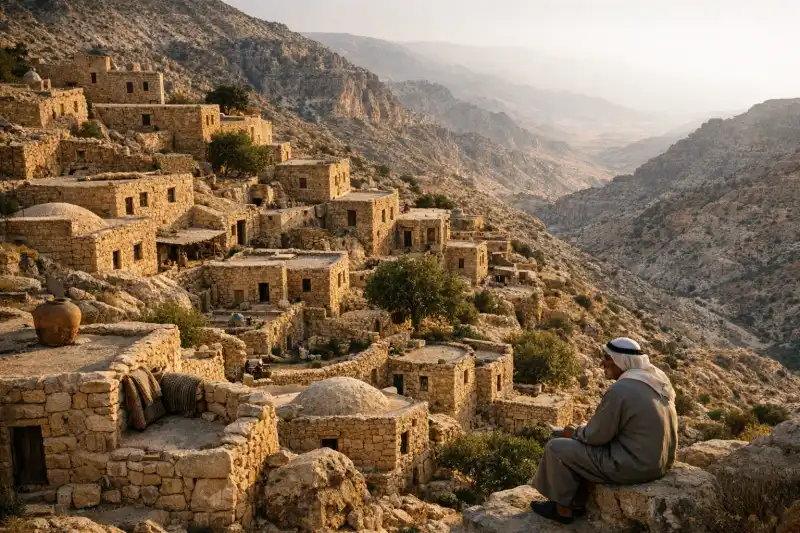
Dana Village
Nabataean, Ottoman, and local Jordanian highland communitiesA timeless stone village in Jordan overlooking Dana Biosphere Reserve, famed for mountain views, tra...
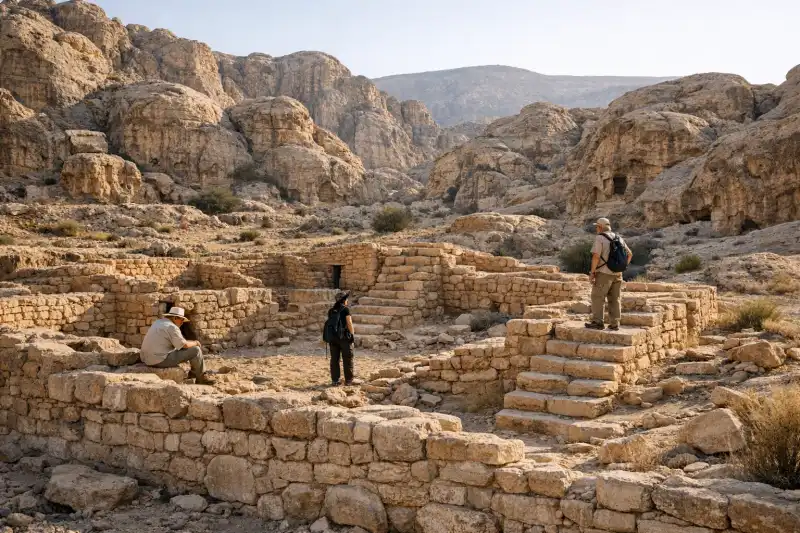
Beidha
Pre-Pottery Neolithic communities of the southern LevantExplore Beidha, a remarkable Neolithic village near Petra in Jordan, known for early farming, stone ...