Quick Info
At a glance
Maumbury Rings in the United Kingdom is one of those rare ancient places that rewards visitors not with towering ruins or polished museum displays, but with a landscape that still carries the shape of deep time. Set just south of the center of Dorchester in Dorset, this vast circular earthwork appears at first glance to be a simple grassy enclosure. Yet once you stand on its banks and look across the hollowed interior, the site begins to reveal its unusual story. It started as a Neolithic monument, probably a ceremonial henge, before being dramatically reshaped centuries later by the Romans into an arena. Few places in Britain show such a clear physical dialogue between prehistoric ritual and Roman spectacle.
Today, Maumbury Rings feels both urban and ancient. Roads, houses, and everyday life sit close by, but inside the earthwork there is a sudden sense of space and separation. The circular form gathers the eye, and the steep sides hint that people here once dug, carried, built, performed, and watched. It is not a grand ruin in the Mediterranean style. Its power lies in the survival of form, in the fact that a ceremonial monument from prehistoric Britain was later absorbed into Roman Dorchester, then reused again for public events in more recent centuries. For travelers interested in ancient landscapes, Roman Britain, or the long continuity of sacred and civic places, Maumbury Rings is one of Dorset’s most compelling sites.
History
Neolithic origins
The earliest phase of Maumbury Rings belongs to the late Neolithic, probably around 2500 BCE. Archaeologists identify it as a henge monument, though it differs in striking ways from more familiar stone circles or earthworks elsewhere in Britain. Instead of being defined by massive standing stones, Maumbury Rings was formed by a large circular enclosure with a bank and internal ditch. What makes it especially unusual is the depth of its shaft-like pits, which may originally have been dug for the extraction of chalk. Over time, these pits became integrated into a ceremonial landscape.
Like many prehistoric monuments, the exact purpose of Maumbury Rings remains uncertain. It may have served ritual, communal, or symbolic functions rather than purely practical ones. Henges were often places of gathering and ceremony, and their circular forms suggest a controlled sacred space separated from the ordinary world outside. The labor involved in creating Maumbury Rings was considerable, pointing to organized social effort and a site of real significance for the people who built it.
Evidence recovered from excavations suggests that the monument was not simply a utilitarian quarry later enclosed, but a site with ceremonial intent. Human remains found at the site have also prompted discussion about ritual activity, though interpretation is complex and continues to evolve. What is clear is that Maumbury Rings belonged to a period in British prehistory when communities were reshaping the landscape with monumental earthworks that may have reflected belief, identity, and social cohesion.
Roman transformation
The most dramatic change in Maumbury Rings came during the Roman occupation of Britain. By the 1st or 2nd century CE, the Romans adapted the prehistoric earthwork into an amphitheatre-like venue associated with Durnovaria, the Roman town that later became Dorchester. This was not a case of building from scratch; instead, the Romans recognized the potential of the existing enclosure and modified it for new purposes.
They reworked the interior to create seating and a more regular arena space, likely adding structural elements in timber. The result was a venue for public entertainment and display. In Roman towns, amphitheatres served as places for spectacle, military demonstrations, and gatherings that reinforced civic identity and imperial culture. At Maumbury Rings, Roman engineering overlaid a prehistoric monument, giving the site a second life radically different from its original one.
This adaptive reuse is one of the reasons the site is so important. It reveals Roman pragmatism, but also the layered nature of ancient landscapes in Britain. Rather than ignoring an earlier monument, the Romans incorporated it into the life of their town. Visitors today can still sense this change in purpose: a ritual circle became a civic arena. Even if the stone or timber seating has vanished, the shape of performance remains embedded in the earth.
Post-Roman and later uses
After the Roman period ended, Maumbury Rings did not simply disappear from local memory. Like many prominent earthworks in Britain, it remained a visible landmark and was reused in different ways over the centuries. The medieval and early modern history of the site is less clearly documented than its prehistoric and Roman phases, but its commanding circular enclosure ensured it was never entirely forgotten.
In the 17th century, Maumbury Rings became associated with one of the darker episodes in its history: the execution of political prisoners after the Monmouth Rebellion in 1685. Judge Jeffreys’ “Bloody Assizes” left a grim mark on many places in the southwest of England, and local tradition remembers Maumbury Rings as one of the locations where punishment was publicly carried out. This later use again shows how the site’s enclosed form made it suitable for public display, though under vastly different circumstances from those of the Roman era.
During the 18th and 19th centuries, the Rings were used for public events, including military displays and entertainment. In effect, the space returned once more to the role of gathering place. This continuity of public use across millennia is remarkable. From prehistoric ceremony to Roman spectacle, from early modern punishment to later civic assembly, Maumbury Rings repeatedly drew communities into its circle.
Archaeology and preservation
Modern understanding of Maumbury Rings owes much to archaeological investigation, especially work in the 20th century. Excavations helped clarify the monument’s Neolithic origin and the scale of Roman adaptation. Researchers found evidence of deep shafts, human remains, and reworked earthworks that deepened appreciation for the site’s complexity.
Today Maumbury Rings is protected as a scheduled monument, recognizing its national importance. Preservation here is less about restoring walls than about safeguarding the shape, profile, and archaeological integrity of the earthwork. Grass, slope, and enclosure are the architecture. Because so much of its significance lies beneath the surface, respectful visiting matters. The site stands as one of Britain’s clearest examples of a monument continuously reinterpreted by different cultures over thousands of years.
Key Features
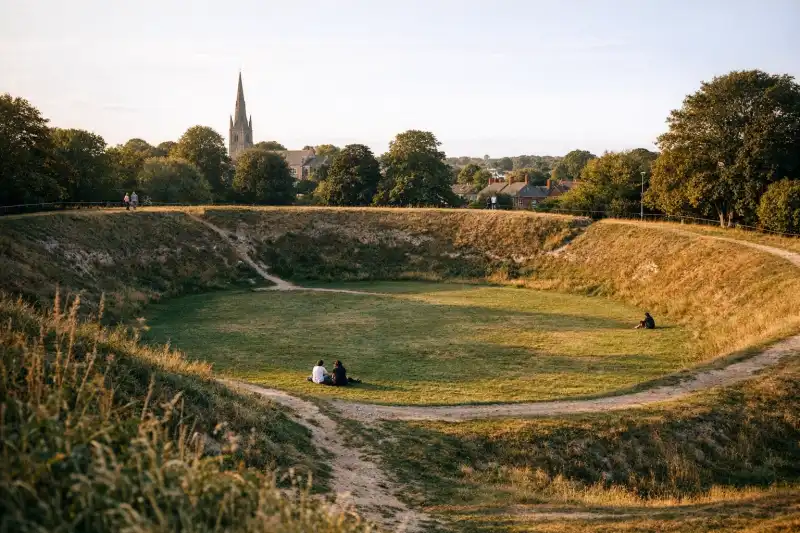
The defining feature of Maumbury Rings is its immense circular form. Even before you step inside, the bank announces itself as an unmistakably human-made shape imposed on the Dorset landscape. The enclosure measures roughly 85 meters across within the arena area, but the broader impression is larger because of the raised embankments and steep internal slopes. This topography creates a natural bowl, and the effect is strongly theatrical. It is easy to understand why the Romans found the site ideal for conversion into an entertainment venue. The enclosing earth concentrates sound, movement, and attention.
The grassy banks are the most immediately visible remains, and they deserve more than a passing glance. Unlike ruined walls, earthworks can seem subtle from photographs, but in person they are physically impressive. Walking around the perimeter reveals changes in height, angle, and entry points. The banks also show how ancient monuments survive through contour rather than masonry. What has lasted at Maumbury Rings is shape itself: the memory of labor translated into landform.
The interior basin is another key part of the site’s appeal. Standing in the center, a visitor can appreciate both the prehistoric and Roman identities of the monument. As a henge, the enclosed space would have felt separated, perhaps ceremonial or restricted. As a Roman arena, it became performative, a place meant to be seen into. This dual character gives the site unusual interpretive depth. You are not merely visiting one ancient structure, but two major historical phases occupying the same footprint.
One of the most fascinating, though less visible, features is the evidence for the deep Neolithic shafts. These are archaeologically significant because they distinguish Maumbury Rings from many other henges. Their original purpose has been debated, but they point to a monument with unusual construction history. For visitors, this means that much of what matters here is hidden below the turf. The visible earthwork is only the upper expression of a more complicated buried story.
The entrances are also important in understanding the site. Access points break the circular continuity and help orient the visitor in relation to the wider landscape and the later Roman town. Approaching through one of these openings can feel ceremonial even now. The shift from outside to inside is immediate. Traffic noise fades slightly, the bank rises around you, and the site becomes a contained world.
Because Maumbury Rings sits close to Dorchester, it also has a distinctive setting compared with more remote prehistoric sites. You do not encounter it after a long hike across open moorland; instead, it emerges within a lived-in townscape. That contrast adds to its fascination. Ancient space survives amid modern streets, reminding visitors that history in Britain is often layered directly beneath ordinary urban life.
Interpretive value is another of the site’s strengths. Although the monument itself is minimalist in appearance, it rewards informed observation. Visitors who know even a little of its chronology will see more: a late Neolithic enclosure, a Roman amphitheatre, an early modern execution site, and a later public gathering place. This long sequence enriches what might otherwise appear to be a simple ring of grassed earth.
Finally, there is the atmosphere. Maumbury Rings is not picturesque in the same way as a castle ruin or a stone circle at sunset, yet it has a special presence. Its geometry is calm but commanding. The circular bank gives a sense of order and enclosure, while the open sky above keeps the place airy and exposed. It is a site best appreciated slowly, by walking, pausing, and imagining the many audiences, rituals, and crowds that once occupied the same ground.
Getting There
Maumbury Rings is in Dorchester, the county town of Dorset, and is one of the easier ancient sites in southern England to reach without a car. If you are traveling by rail, Dorchester has two stations: Dorchester South, with services from London Waterloo, and Dorchester West, with connections from Bristol and other regional destinations. From either station, Maumbury Rings is about a 10 to 20 minute walk depending on your route. Advance train fares from London can start around £15 to £30 each way if booked early, while flexible tickets are often higher.
By bus, Dorchester is well connected to nearby Dorset towns including Weymouth, Bridport, and Poole. Local and regional bus fares are usually in the range of £2 to £8 depending on distance and operator, with occasional capped fare schemes making travel especially affordable. From the town center, the site is a short walk south.
If you are driving, Dorchester is accessible via the A35 and A37. Public parking is available in town, and daily parking charges commonly range from about £4 to £10 depending on the location and duration. From central car parks, Maumbury Rings is easy to reach on foot.
For visitors already exploring Dorset’s heritage, combining Maumbury Rings with the Dorset Museum, Roman Town House, or a walk through historic Dorchester makes practical sense. The site is open-air and generally accessible year-round, so there is no entry ticket to budget for, though comfortable footwear is a good idea, especially after wet weather when the grass can be slippery.
When to Visit
Maumbury Rings can be visited in any season, but each time of year changes the experience. Spring is one of the best periods for many travelers. The grass is fresh, temperatures are mild, and Dorchester is lively without feeling overcrowded. Light rain is always possible in Dorset, but spring often offers the right balance of comfort and atmosphere.
Summer brings the longest days and the easiest conditions for combining the site with other attractions in town. Warm evenings can make a late visit especially appealing, when the low sun defines the shape of the banks more clearly. Because Maumbury Rings is an open grassy site rather than a ticketed monument, it rarely feels packed in the way famous attractions do, though town events may increase local foot traffic. Bring water and sun protection on hotter days, since shade is limited.
Autumn is excellent for travelers who prefer quieter streets and softer light. The cooling air and changing colors in Dorchester’s surrounding landscape give the site a reflective mood. The earthworks often stand out well under angled autumn sunlight, making this a good season for photography and careful observation.
Winter visits can be rewarding too, especially if you enjoy stark landscapes and fewer people. The open form of the monument is often easiest to read when vegetation is low and the sky is dramatic. However, wet or frosty conditions can make the slopes muddy or slick. If visiting in winter, sturdy shoes and a weatherproof jacket are sensible. In general, the best time of day is morning or late afternoon, when raking light emphasizes the contours that define Maumbury Rings.
| Quick Facts | Details |
|---|---|
| Location | Dorchester, Dorset, United Kingdom |
| Type | Neolithic henge later adapted as a Roman amphitheatre |
| Earliest date | c. 2500 BCE |
| Roman phase | 1st-2nd century CE |
| Best known for | Multi-period use from prehistory to Roman Britain and beyond |
| Time needed | 30-60 minutes |
| Entry fee | Free |
| Nearest city | Dorchester |
| Best for | Ancient history, archaeology, Roman Britain, landscape heritage |
| Access | Short walk from Dorchester town center and railway stations |
Maumbury Rings is not a site of monumental ruins, but of monumental continuity. Its banked circle preserves an extraordinary sequence of human intentions: excavation, ceremony, entertainment, punishment, assembly, memory. For travelers willing to look beyond stone walls and dramatic facades, it offers something rarer: a place where the same ground has been reshaped and reimagined for more than four thousand years. In the center of modern Dorchester, that long history still survives in a simple ring of earth.
Guided tours: worth it?
Most travelers can visit Maumbury Rings independently. Compare a tour only if you want a tighter history-focused visit, easier logistics, or a guide who can answer questions on the spot.
Best for
- Short visits where a planned route saves time
When to go self-guided
Go independently if you prefer setting your own pace, reading as you go, and checking official hours or ticket rules directly before you arrive.
What I’d avoid
Skip paid tours that bundle unrelated stops you do not actually want. The best option should either save meaningful planning time or add historical context you would miss on your own.
Dorset Ancient Sites Tours
Useful when: you want to compare guided formats before deciding
Dorchester History Tours
Useful when: you want to compare guided formats before deciding
Roman Britain Tours England
Useful when: you want to compare guided formats before deciding
Some tour links are affiliate links, which may earn Ancient Travel a small commission at no extra cost to you. I try to surface options that make practical sense for the site—not just anything bookable.
Frequently Asked Questions
What is Maumbury Rings?
Maumbury Rings is a large earthwork in Dorchester, Dorset, first created as a Neolithic henge and later adapted by the Romans into an amphitheatre-like arena.
Is Maumbury Rings free to visit?
Yes, the site is generally open access and free to visit, making it an easy stop for travelers exploring Dorchester and Dorset's historic landscape.
How much time do I need at Maumbury Rings?
Most visitors spend 30 to 60 minutes walking the banks, viewing the interior, and reading interpretation nearby, though history enthusiasts may stay longer.
Can you walk inside Maumbury Rings?
Yes, visitors can usually enter the site and walk around the interior and surrounding banks, though conditions may vary after rain or during local events.
What is the best way to reach Maumbury Rings?
The easiest way is by train or bus to Dorchester, then a short walk from the town center. Drivers will find public parking in Dorchester.
Why is Maumbury Rings historically important?
It is significant because it preserves evidence of multiple periods of use, from Neolithic ritual activity to Roman entertainment and later public gatherings.
Nearby Ancient Sites
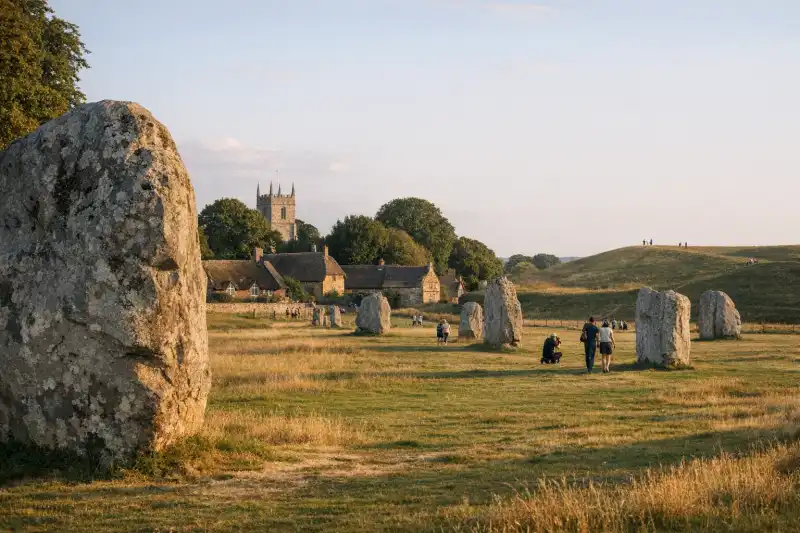
Avebury
Neolithic BritainExplore Avebury in the United Kingdom, a vast prehistoric stone circle and ritual landscape in the h...
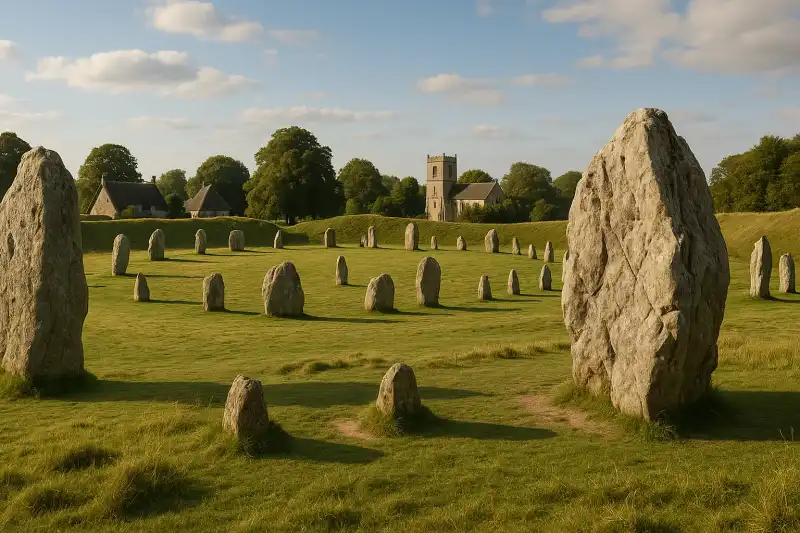
Avebury Stone Circle Travel Guide 2026: Best Walk Routes, History, and Visit Planning
Neolithic BritainPlan a stronger visit to Avebury Stone Circle with practical walking routes, landscape context, and ...
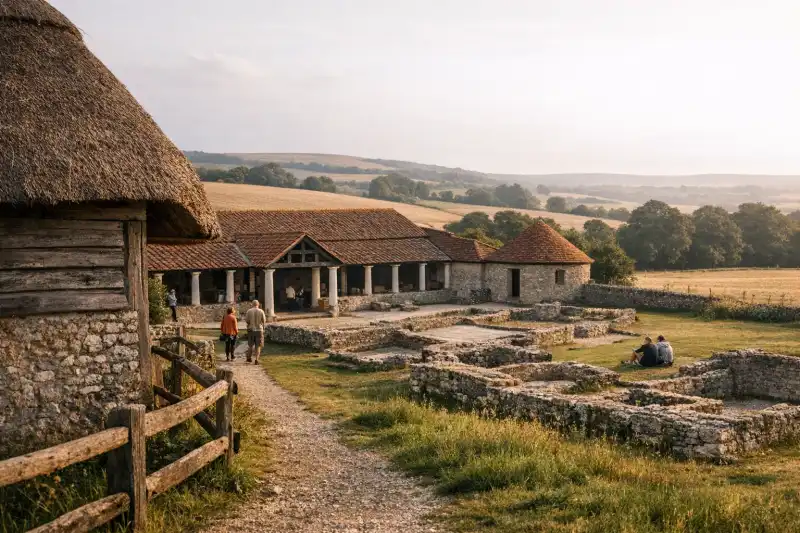
Bignor Roman Villa
RomanExplore Bignor Roman Villa in the United Kingdom, home to some of Britain's finest surviving Roman m...