Quick Info
Curated Experiences
Medinet Habu, Deir el-Medina, Valley of the Kings Full Day Tour
Private Medinet Habu Temple Tour with Egyptologist
Medinet Habu Sunrise Tour with Breakfast
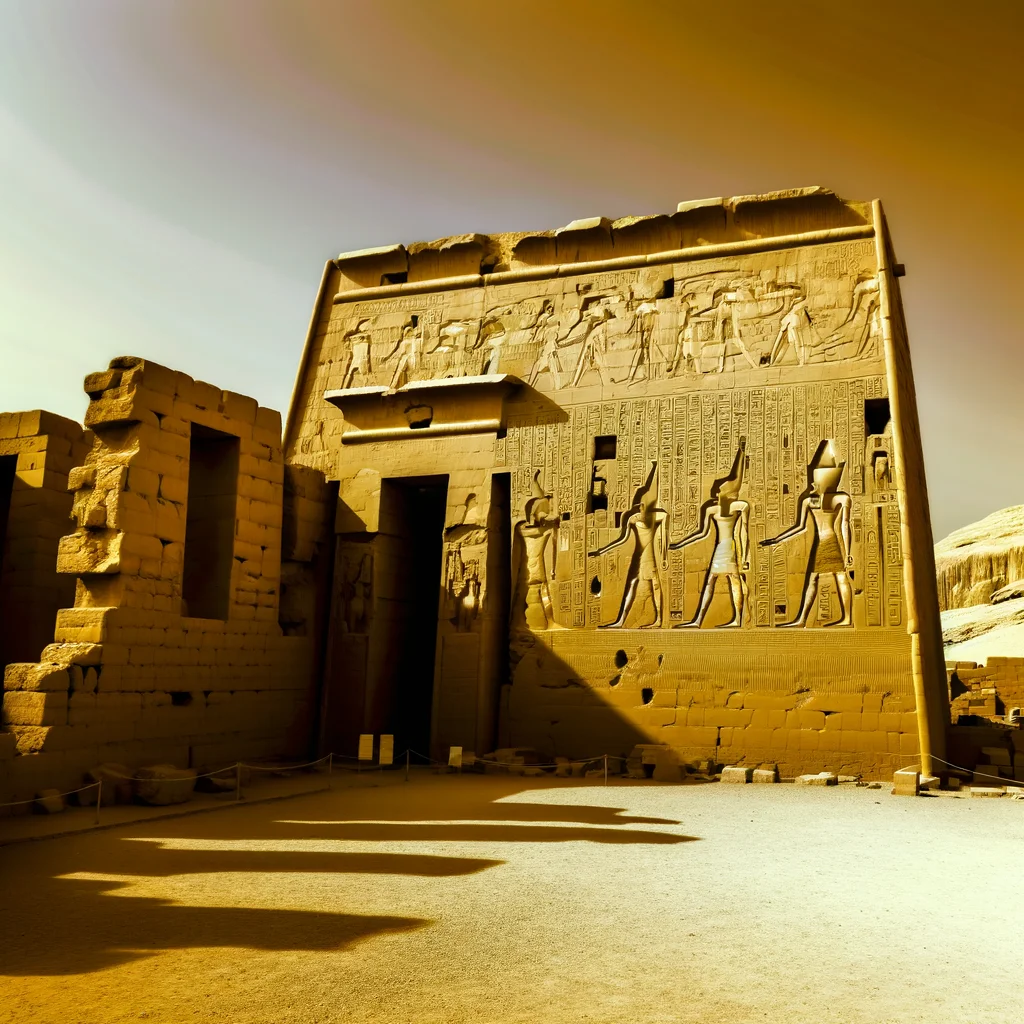
On Luxor’s West Bank, where the Nile bends and the Valley of the Kings rises in arid dignity, stands one of Egypt’s most monumental temples: the mortuary temple of Ramesses III at Medinet Habu. This colossal structure—the largest mortuary temple in Egypt—rises from the desert floor with an assertiveness that communicates the power of Egypt’s last great pharaoh. Walk through its massive pylon, and you step into a narrative of military triumph written in stone: the walls depict Ramesses III’s war against the mysterious Sea Peoples, a confederation of Mediterranean raiders whose origins remain one of archaeology’s great unsolved puzzles. The reliefs show naval battles with ships colliding, warriors grappling, and the pharaoh commanding the onslaught. Colors persist: blues, reds, and golds still visible after 3,300 years. Inside, courtyards and chambers testify to Ramesses III’s investment in his eternal life—elaborate reliefs show ritual performances, divine encounters, and the daily maintenance of the god’s presence. Medinet Habu stands apart from other temples not just for its size and completeness but for what it reveals: a pharaoh’s final assertion of power at a moment when Egypt’s international dominance was waning and the Bronze Age order was collapsing. This guide covers Ramesses III and the Sea Peoples, Medinet Habu’s architecture and military iconography, practical logistics from Luxor, and how to combine it with Valley of the Kings.
History: The Last Great Pharaoh and the Sea Peoples Crisis
Predynastic Origins (Earlier temples on the site)
Medinet Habu’s site was sacred for millennia. An earlier temple to the god Amun existed here before Ramesses III’s grand construction, but it has been completely obscured by later building.
Ramesses III’s Reign (c. 1186–1155 BCE, Dynasty 20)
Ramesses III was the last great pharaoh of the New Kingdom—a warrior-king who faced existential threats to Egyptian stability. His reign coincided with the collapse of Bronze Age civilization: the Hittite Empire fell, Mediterranean trade routes were disrupted, and waves of raiders attacked established powers. Egypt itself faced invasion from the Sea Peoples, mysterious maritime confederates whose exact origins remain debated. Some scholars propose they were displaced populations from the Aegean, Anatolia, or the Levant; others suggest mixed raiders from multiple origins. Regardless of origin, their impact was catastrophic: they attacked Egypt’s borders, threatened Nile Delta settlements, and represented an existential challenge to pharaonic authority. Ramesses III’s victories over the Sea Peoples—both naval battles and land campaigns—were presented as divine triumphs, validating his legitimacy and power.
Construction of Medinet Habu (c. 1186–1155 BCE)
Ramesses III invested enormous resources in his mortuary temple, viewing it as a permanent testimony to his reign. The temple took decades to construct; it employed thousands of laborers and artisans. The detailed reliefs commemorating his victories were carved with meticulous care, as if the act of depicting triumph in stone secured its permanence in the afterlife.
Dynasty 20 and Decline
After Ramesses III, Ramesside power declined. Ramesses IV through Ramesses XI became progressively weaker, and by Dynasty 21, Egypt was fragmenting. However, Medinet Habu remained an active religious center, with subsequent pharaohs adding inscriptions and making offerings. The temple’s fortified wall suggests that by the late Ramesside period, temple estates had become sufficiently valuable to require military protection.
Medieval and Modern History
After Egypt fell to Roman and then Islamic rule, Medinet Habu became obscured but never completely lost. By the medieval period, part of the temple was converted to a church (visible in some walls). Western Egyptologists documented the site from the 18th century onward. Modern excavations have revealed extensive administrative papyri and ostraca (pottery shards with written texts) that provide intimate details of Ramesses III’s reign and the operation of royal mortuary temples.
The Key Monuments: What to See at Medinet Habu
The Monumental Pylon and Battle Reliefs
Medinet Habu’s front pylon is one of Egypt’s most imposing structures—towers of sandstone carved with scenes of Ramesses III smiting enemies and making offerings to gods. The most famous reliefs depict the Sea Peoples naval battle: Egyptian ships engage enemy vessels; warriors wielding distinctive weapons (some with feathered headdresses and unusual armor) grapple on deck; the pharaoh oversees the carnage from a commanding position. The reliefs are carved in high relief, creating dramatic shadows and depth. The artistry is Ramesside-era precision: proportions are correct, individual features are distinct, and the composition conveys both historical propaganda and aesthetic beauty. Photography of the pylon from the approach courtyard captures its monumental grandeur; afternoon light accentuates the carved details.
The naval battle relief is one of antiquity’s most historically significant artworks. The ships depicted are distinctly different from Egyptian vessels: the enemy ships have high prows and rounded hulls, and the warriors aboard wear kilts or armor styles foreign to Egypt. The reliefs identify these enemies as Prst (possibly Philistines or Sea Peoples from the Aegean), Tks (possibly Lycians from Anatolia), and other confederated groups whose names appear as hieroglyphic labels in the composition. This is the only known Egyptian visual depiction of the Sea Peoples, making Medinet Habu invaluable for historians studying late Bronze Age collapse and migration patterns. The reliefs show not just naval combat but also the capture of enemies, the execution of prisoners, and the presentation of booty to the pharaoh—a comprehensive visual account of warfare from decision to triumphant conclusion.
The First Courtyard and Hypostyle Hall
Inside, a large open courtyard with columns creates a processional space. The courtyard’s walls bear reliefs showing Ramesses III making offerings, performing rituals, and being acknowledged by gods. The hypostyle hall beyond is columned and decorated, creating a transition from public to sacred space. The reliefs here show priests performing daily rituals and maintaining the god’s statue—visual documentation of temple operations and religious ceremony. The courtyard reliefs depict festival processions in which Ramesses III, dressed in regalia, leads a divine boat (solar barque) in ceremonial progression. These reliefs provide rare evidence of Egyptian temple festivals: the organization, the clothing, the positioning of participants, and the symbolic choreography of ritual movement. Some reliefs show the pharaoh accompanied by court musicians, dancers, and incense-bearers—a full sensory experience of sacred ceremony. Other reliefs depict specific offerings: bread, beer, cattle, flowers, and other commodities being presented to the gods. These visual records complement written texts found on ostraca (pottery shards) that document the daily operation of mortuary temples, including inventory lists, worker rosters, and ration distributions—a comprehensive archive of institutional life.
The Sanctuary and Inner Chambers
Deep within the temple lies the sanctuary, where a statue of Ramesses III stood (now lost). The sanctuary’s walls are inscribed with texts describing the god’s daily maintenance ritual and the offerings presented to him. Unlike state temples where the pharaoh was secondary to a major deity, mortuary temples centered the deceased pharaoh as the focal point of worship—a practice that elevated Ramesses III to near-divine status and perpetuated his power beyond death.
The Fortified Mudbrick Wall
Surrounding Medinet Habu is a largely ruined fortified mudbrick wall—a unique feature among Egyptian temples. This wall suggests the temple complex served not merely religious functions but also administrative and defensive ones. The wall enclosed administrative buildings, storehouses, and residential quarters for priests and workers. The presence of a fortress-like enclosure indicates the temple’s role as a regional power center—a function that distinguishes Medinet Habu from purely religious temples.
The Small Chapels and Subsidiary Buildings
Beyond the main temple stand several smaller chapels and structures, including chapels to Mut and Khonsu. These subsidiary structures reveal Medinet Habu’s scope: it was not a single temple but a complex of interconnected religious buildings serving multiple deities and multiple ritual functions.
Getting There: Transportation and Access
Medinet Habu is located on Luxor’s West Bank, approximately 15 kilometers from the city center. Access requires crossing the Nile via ferry or boat; all West Bank temples are reached this way.
From Luxor City Center
- Organized West Bank tour: 85–95 USD via your hotel or tour operator. Comprehensive tours typically visit Medinet Habu along with Valley of the Kings, Deir el-Bahari, and other sites (8–10 hours total). Includes transport, entry fees, and guide.
- Private taxi/driver: 200–300 EGP ($7–10 USD) round-trip with 2–3 hours of waiting time. The driver arranges Nile crossing; negotiate in advance.
- Ride-hailing: Uber/Careem operate in Luxor; fares vary but typically 150–250 EGP ($5–8 USD) each way.
- Self-drive: Car rental is available; follow the main road across the Nile ferry, then navigate to Medinet Habu. Not recommended for unfamiliar drivers without Arabic.
Nile Ferry Crossing
All access to the West Bank requires crossing the Nile. Public ferries (2–5 EGP / ~$0.07–0.15 USD per person) operate continuously; private boat services cater to tourists. Organized tours handle ferry logistics.
Admission and Hours
Entry fee: 300 EGP (~$10 USD) for foreign tourists. The site is part of the West Bank pass system; many multi-site passes include Medinet Habu.
Hours: 6:00 AM to 5:00 PM year-round. Last entry is typically 30 minutes before closing.
Best time of day: Arrive by 7:00 or 8:00 AM for cool morning temperatures and soft light illuminating the pylon and courtyard reliefs. By midday (11:00 AM–3:00 PM), the sun is overhead; the interior courtyards and hypostyle hall provide shade but reduce exterior photography quality. Late afternoon (after 3:00 PM) provides warm, golden light ideal for reliefs but limits exploration time.
What to bring: Sunscreen (SPF 50+), wide-brimmed hat, 2+ liters of water, sturdy shoes with ankle support, flashlight for inner chambers, and camera. The site has minimal shade; courtyard interiors offer refuge from midday heat. Bring a lightweight scarf for sun protection and to respect dress codes when entering sacred spaces.
When to Visit: Seasonal Considerations
Spring (March–May)
Temperatures range from 25–35°C (77–95°F) with low humidity. This is pleasant for exploration; mornings are cool, afternoons warm but manageable. Crowds are moderate; March and April are ideal.
Summer (June–August)
Summer is extreme: 35–43°C (95–109°F). Midday exploration is inadvisable. Early morning visits (6:00–9:00 AM) are possible with careful hydration and sun protection. Tourism drops significantly. Only heat-acclimated travelers should visit in summer.
Autumn (September–November)
Temperatures cool from 35°C in September to 20–28°C (68–82°F) by November. Late September and early October can still be warm; by late October, conditions are ideal. Autumn offers excellent weather and moderate crowds.
Winter (December–February)
Cool mornings (10–15°C / 50–59°F) and pleasant afternoons (20–25°C / 68–77°F). This is peak tourism season; the West Bank is busiest and prices are inflated. January and February are the busiest. The weather is unmatched.
Ideal season: October through April, with March and April being optimal.
Combining Medinet Habu with Valley of the Kings and West Bank Sites
The ideal West Bank day begins at Valley of the Kings by 7:00 AM, spending 2.5–3 hours exploring royal tombs. By 10:00 AM, visit the Temple of Deir el-Bahari (Hatshepsut’s mortuary temple, 30 minutes from Valley of the Kings), spending 1.5 hours appreciating its unique colonnaded architecture. By 12:00 PM, descend to Medinet Habu (15 minutes), where you spend 2–2.5 hours exploring Ramesses III’s temple and war reliefs. By 2:30 PM, enjoy lunch at a West Bank café. If energy permits, visit Deir el-Medina (the artisan village, 30 minutes from Medinet Habu) for 1 hour, exploring workers’ tombs and administrative records. By 5:00–6:00 PM, return to Luxor across the Nile. This 10–12 hour sequence covers Luxor’s most significant West Bank monuments and provides comprehensive context for understanding New Kingdom royal culture.
Alternatively, for travelers focusing on Medinet Habu alone, a 3–4 hour dedicated visit allows deep exploration of the temple’s reliefs and architectural details without the broader West Bank itinerary.
Why Medinet Habu Matters
Medinet Habu is Egypt’s ultimate statement of pharaonic power projected into eternity. Ramesses III built it during a time of crisis—when external enemies threatened Egypt’s borders and internal cohesion was fracturing. The temple’s scale, decoration, and fortified wall communicate defiance: despite these challenges, Egypt’s pharaoh remained supreme. The Sea Peoples reliefs are invaluable to historians: they provide the only known Egyptian visual depiction of these mysterious invaders and offer crucial context for understanding late Bronze Age collapse. Architecturally, Medinet Habu synthesizes three centuries of Ramesside temple innovation into a single comprehensive statement. And phenomenologically, standing before the pylon reliefs showing Ramesses III commanding a naval battle connects you directly to moments of existential human struggle—the moment when civilizations clashed and uncertain outcomes hung in the balance. Medinet Habu is not merely a temple; it is a historical document carved in stone.
Explore More Egypt
- Valley of the Kings: Royal tombs and the burial ground of New Kingdom pharaohs.
- Luxor Temple: Grand Theban temple with colossal seated statues and sacred lake.
- Karnak Temple Complex: Egypt’s largest and most complex temple sanctuary.
Plan your complete Egypt archaeological journey with our Egypt Ancient Sites Guide. Discover how to explore all West Bank temples and tombs in a comprehensive day.
Quick Facts
| Attribute | Details |
|---|---|
| Location | West Bank, Luxor, Egypt |
| Ancient Name | Medinet Habu (House of Habu, a local deity) |
| UNESCO Status | Thebes and its Necropolis (World Heritage Site) |
| Established | c. 1186–1155 BCE (Ramesses III reign) |
| Distance from Luxor | 15 km / 30–45 minutes by road plus ferry crossing |
| Entry Fee | 300 EGP (~$10 USD); included in West Bank pass |
| Hours | 6:00 AM–5:00 PM daily |
| Best Time | October–April; March–April ideal |
| Suggested Stay | 2–3 hours for temple alone; 8–10 hours combined with Valley of Kings and Deir el-Bahari |
Frequently Asked Questions
How much time should I plan at Medinet Habu?
Plan 2–3 hours for Medinet Habu alone. The temple is smaller than Karnak but architecturally complete with intact walls, vibrant reliefs, and open courtyards. For a full West Bank experience combining Medinet Habu with Valley of the Kings and other sites, allow 8–10 hours.
Why are the battle scenes at Medinet Habu so important?
Medinet Habu's reliefs depict Ramesses III's wars against the Sea Peoples—mysterious invaders from the Mediterranean who threatened Egypt during the 12th century BCE. These reliefs provide the most detailed visual record of ancient naval warfare and the only known depiction of Sea Peoples in Egyptian art. Historians rely on these carvings to understand late Bronze Age geopolitics and migration crises.
What are the 'Sea Peoples'?
The Sea Peoples were a confederation of maritime raiders and colonists who disrupted Mediterranean civilizations during the late 12th century BCE. Their origins remain debated (possibly from Greece, Anatolia, or the Levant), but their impact was catastrophic: they destroyed the Hittite Empire, raided Egypt, and contributed to the collapse of Bronze Age civilization. Medinet Habu is the primary visual source for understanding them.
Is Medinet Habu on the West Bank with other temples?
Yes. Medinet Habu is located on Luxor's West Bank, near the Valley of the Kings, the Temple of Deir el-Bahari, Deir el-Medina, and other monuments. Most tourists visit multiple West Bank sites in a single day organized tour.
How do I get to Medinet Habu from Luxor?
Medinet Habu is on Luxor's West Bank, about 15 km south of the city center. Access requires crossing the Nile via ferry or boat. Options: organized West Bank tour (85–95 USD), private taxi (200–300 EGP / $7–10 USD round-trip), or car rental. Most tourists book comprehensive West Bank tours that include Medinet Habu along with Valley of the Kings and other sites.
What makes Medinet Habu different from other mortuary temples?
Medinet Habu is the largest and best-preserved mortuary temple in Egypt. Unlike earlier mortuary temples, Medinet Habu is surrounded by a fortified brick wall (now mostly ruined), suggesting it served both religious and defensive functions. The temple's decoration is unusually complete, with vivid colors and detailed reliefs. It's a comprehensive record of Ramesside temple architecture and Ramesses III's reign.
Nearby Ancient Sites
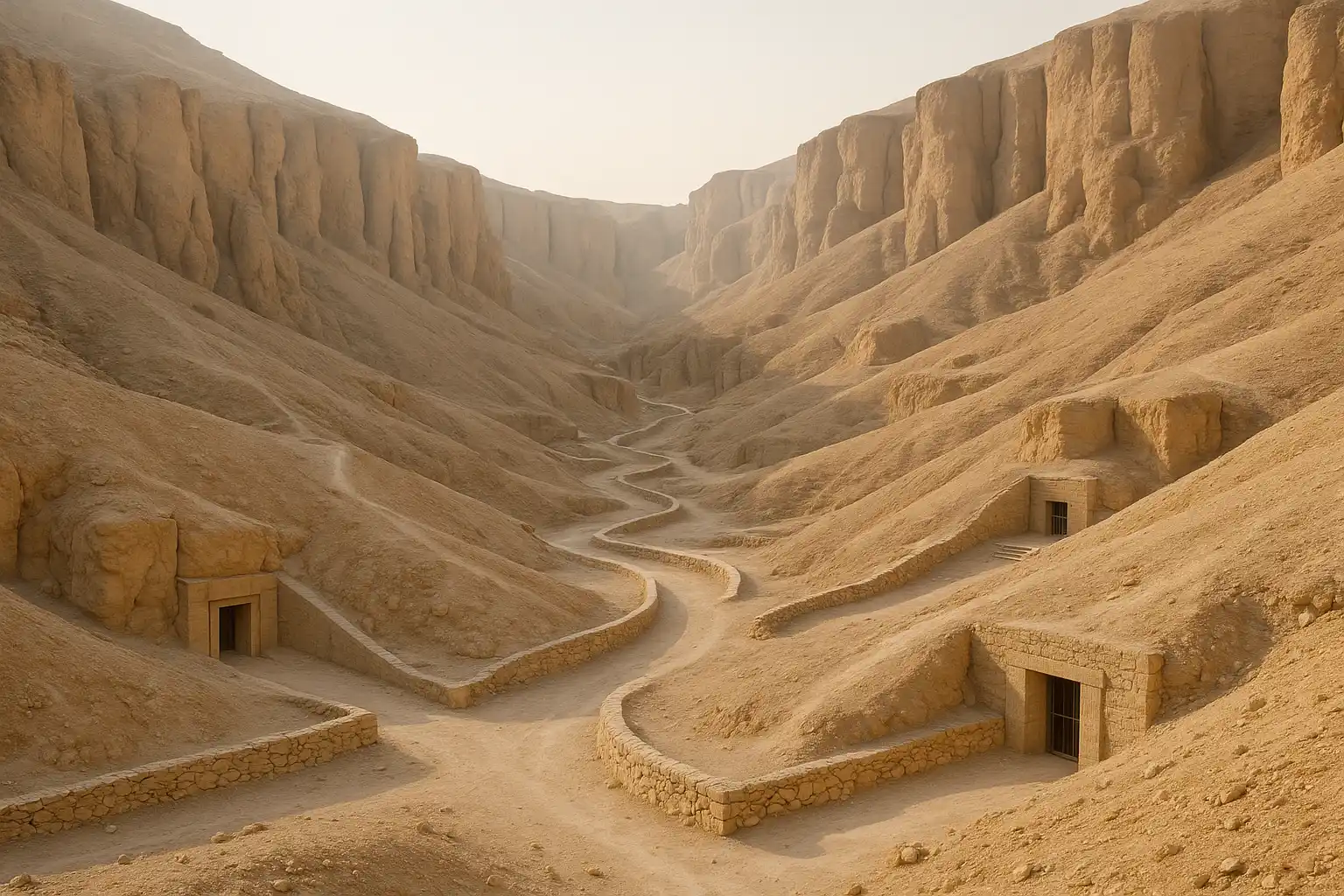
Valley of the Kings Egypt Travel Guide 2026: Royal Tombs of the Pharaohs
Ancient EgyptianExplore the Valley of the Kings where Tutankhamun and Ramesses were buried. Our guide covers tomb se...
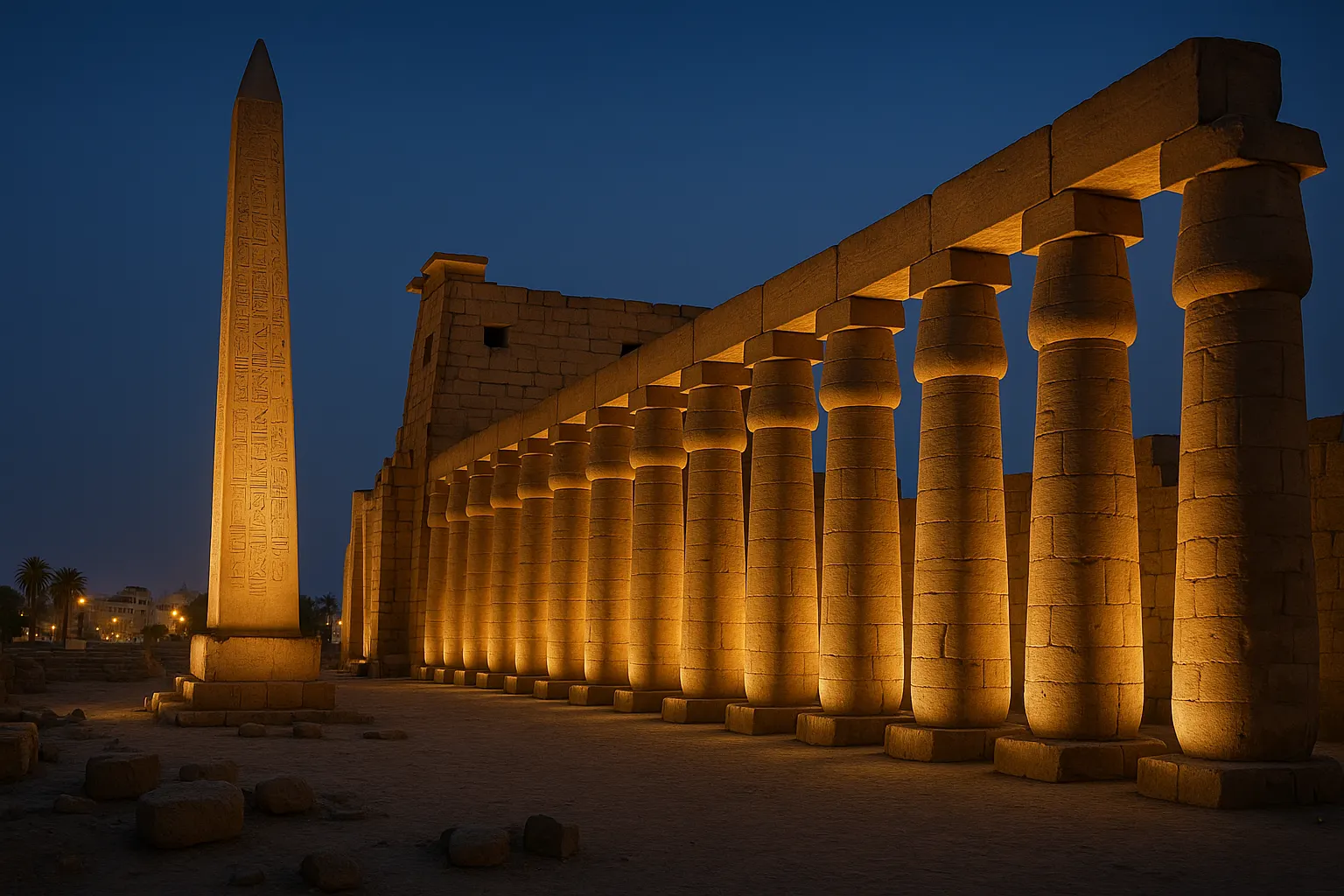
Luxor Temple Egypt Travel Guide 2026: The Elegant Temple of Luxor
Ancient EgyptianVisit Luxor Temple, the most elegant temple in Egypt. Discover the Avenue of Sphinxes, Colonnade of ...
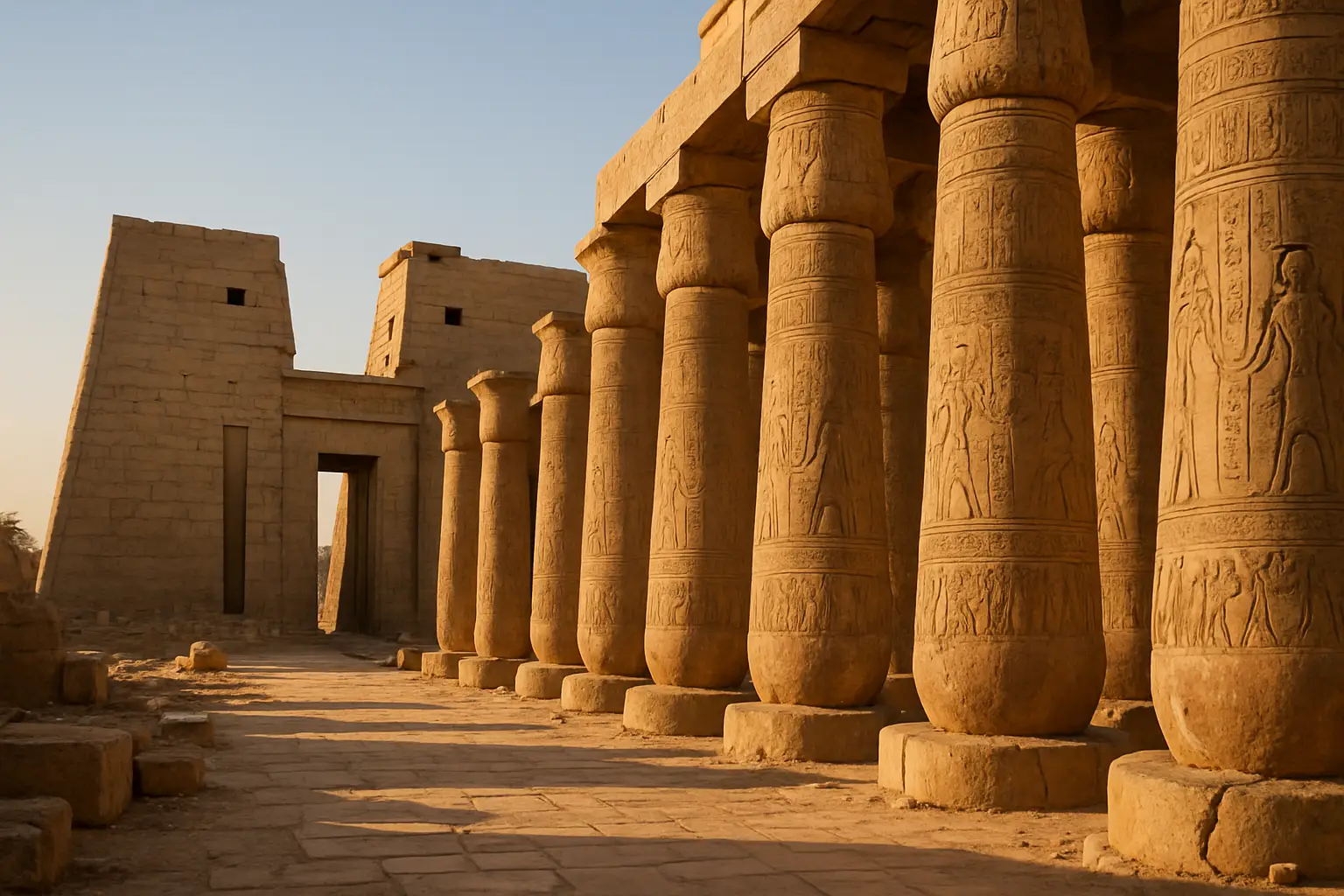
Karnak Temple Complex Egypt Travel Guide 2026: Egypt's Greatest Temple
Ancient EgyptianExplore Karnak, the world's largest ancient religious complex. Discover the Hypostyle Hall, Sacred L...