Quick Info
At a glance
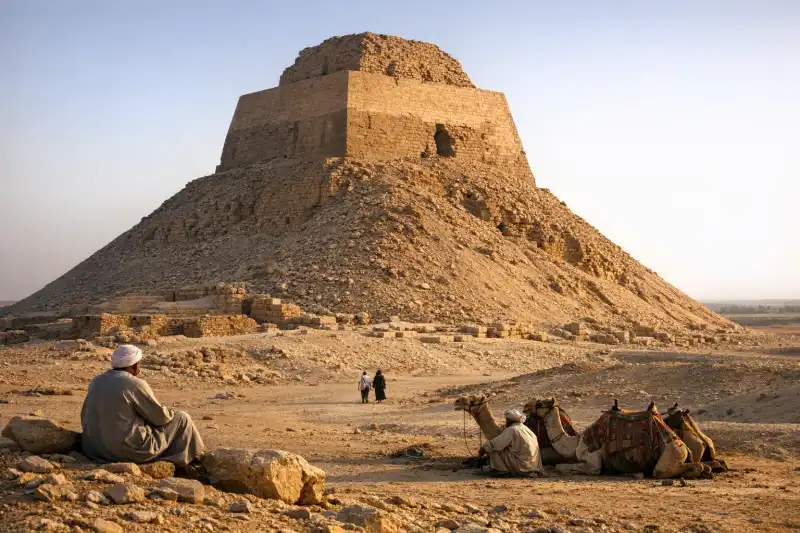
In the quiet agricultural plain south of Cairo, the Meidum Pyramid in Egypt rises out of the desert with a silhouette unlike any other royal monument in the country. It does not present the smooth geometric perfection many travelers imagine when they think of pyramids. Instead, it appears abrupt, isolated, and slightly mysterious, like the surviving core of an experiment interrupted by time. That unusual profile is exactly what makes Meidum so compelling. It stands at a turning point in Egyptian architecture, when builders were moving from stepped forms toward the true pyramid shape that would define the Old Kingdom.
For visitors willing to leave the busier circuits of Giza and Saqqara, Meidum offers something rare: a monumental site where the landscape still feels open and the history still feels unsettled. The approach itself is memorable. Green fields and villages gradually give way to desert, and then the structure comes into view, rising from a broad sandy setting with a starkness that emphasizes its age. Here, away from the larger crowds, it is easier to imagine the ambitions of Egypt’s earliest pyramid builders, the engineering challenges they faced, and the immense symbolic weight these tombs carried. Meidum is more than a curious ruin. It is one of the most important monuments for understanding how Egyptian pyramids evolved from bold experimentation into one of the most recognizable architectural traditions in human history.
History
Origins in the Late 3rd Dynasty
The story of the Meidum Pyramid begins in a formative period of Egyptian state power. During the late 3rd Dynasty, Egypt’s kings were already commissioning large funerary monuments, but pyramid construction had not yet reached the mature form seen later at Dahshur and Giza. Most scholars connect the original monument at Meidum with King Huni, traditionally regarded as the last ruler of the 3rd Dynasty. In its earliest phase, the structure was probably designed as a step pyramid, continuing a style established by the famous complex of Djoser at Saqqara.
This early design mattered because step pyramids were not only tombs; they were statements of divine kingship. Their ascending tiers may have symbolized a cosmic stairway, connecting the deceased ruler to the heavens. At Meidum, however, builders appear to have gone further, creating a monument that would later be modified in a way that marked a decisive shift in royal architecture. The site therefore occupies a key place in the transition between earlier funerary traditions and the fully developed true pyramids of the Old Kingdom.
Sneferu’s Transformation
The king most often associated with Meidum is Sneferu, founder of the 4th Dynasty and one of ancient Egypt’s great builder-pharaohs. Whether Sneferu inherited the monument from Huni and completed it, or whether he was responsible for more of the project from the beginning, remains debated. What is clearer is that under Sneferu, Meidum was significantly altered. The original stepped structure was encased and expanded so that it approximated a true pyramid, with smooth sides rather than distinct terraces.
This transformation was architecturally revolutionary. It shows that Egyptian engineers were actively testing methods for achieving the idealized pyramid form that would later culminate in Sneferu’s other monuments, especially the Bent Pyramid and the Red Pyramid at Dahshur. Meidum can therefore be understood as part of a sequence of experimentation. It represents a moment when royal ambition outpaced certainty, and when builders were learning by doing on an extraordinary scale.
The internal arrangement also reflects this developmental phase. Corridors, chambers, and construction techniques differ in notable ways from later pyramids. For historians and archaeologists, Meidum is not simply another royal tomb; it is a laboratory preserved in stone.
Collapse, Robbing, and Ancient Reputation
At some point, much of the outer casing and outer layers of the pyramid collapsed or were removed, producing the distinctive tower-like ruin visible today. Exactly when this happened remains uncertain. Some older accounts imagined a catastrophic collapse during construction or soon after completion. Modern scholars tend to be more cautious, suggesting that structural weaknesses may have contributed, but that long-term decay and intensive stone robbing also played major roles.
The monument’s design likely made it vulnerable. If the transformation from step pyramid to true pyramid relied on infill and casing laid over an earlier core, then load distribution and bonding between layers may have been less stable than in later, more refined designs. Over centuries, quarrying by local builders seeking ready-cut stone almost certainly accelerated the damage. By the medieval period, the pyramid may already have resembled the partial ruin seen now.
Even in antiquity and the Middle Ages, Meidum attracted attention. Its strange appearance stood out in the landscape, and travelers recorded impressions of a structure that looked incomplete or broken. That enduring sense of mystery has followed the site into the modern era.
Exploration in the Modern Period
European scholars and explorers documented Meidum in the 19th century as interest in ancient Egypt intensified. Early descriptions often emphasized the unusual form of the pyramid and the puzzle of its construction. More systematic archaeological work followed, including studies of the surrounding cemetery, mastabas, and associated temple remains.
Excavations in the area revealed that Meidum was not an isolated monument. Like other Egyptian pyramids, it belonged to a broader funerary landscape that included elite tombs for officials and members of the royal administration. These discoveries helped scholars understand the social world around the pyramid and its original ritual setting. Reliefs and tomb scenes from nearby mastabas also became important sources for the study of daily life, agriculture, and craftsmanship in the Old Kingdom.
Today, Meidum remains one of Egypt’s most valuable sites for understanding the early evolution of pyramid building. Though less visited than Giza, its historical importance is immense. It captures a moment when Egyptian architecture was still in transition, and when the now-iconic pyramid shape was being invented through daring trial, adaptation, and monumental vision.
Key Features
The first and most obvious feature of the Meidum Pyramid is its dramatic form. Unlike a complete true pyramid with smooth triangular faces, Meidum appears as a steep central mass rising above a broad mound of debris. This appearance has led many visitors to compare it to a tower or even a multi-story stone platform. The visual effect is unforgettable, especially in the late afternoon when shadows sharpen the edges of the surviving core. Rather than diminishing the site, the collapsed outer shell gives travelers a rare opportunity to understand the anatomy of pyramid construction. You can see that this was not a simple solid mass but a monument built in stages, altered over time, and shaped by both engineering ambition and structural vulnerability.
The surviving core is especially significant because it preserves evidence of the pyramid’s earlier stepped design. Scholars can study the arrangement of masonry and infer how the original monument was expanded. In this way, the ruin itself tells the story of architectural experimentation. At Giza, the pyramids impress with completion and scale. At Meidum, the monument impresses through exposure: its history is visible on its surface.
Another key feature is the interior passage system. Access conditions vary, but the internal layout has long interested archaeologists because it reflects an early stage in pyramid planning. The descending entrance passage, chamber arrangements, and corbelled elements show builders grappling with problems of structural support and royal burial design. These details may seem technical, yet they are central to why Meidum matters. The pyramid is not only photogenic; it is a primary document in stone for the development of Egyptian engineering.
The surrounding archaeological landscape adds depth to the visit. Near the pyramid are remains of a mortuary temple and associated structures that would once have supported rituals for the dead king. These elements remind visitors that a pyramid was not merely a tomb but the focal point of a ceremonial complex. Priests, offerings, processions, and ongoing cult practices connected the king’s earthly burial to his eternal existence. Even where only foundations or fragments survive, the broader sacred geography can still be traced.
Particularly important are the nearby mastabas, the flat-roofed tombs of high officials and nobles linked to the royal court. Some of these burials produced remarkable artworks and scenes of daily life, now known through excavation records and museum collections. They show farming, food production, craft activity, and social hierarchy with a vividness that contrasts with the austere mass of the pyramid itself. For the traveler, this means Meidum offers two complementary experiences: the abstraction of royal monumentality and the human detail of elite tomb culture.
The site’s setting is also a feature in its own right. Because Meidum lies away from the densest tourist routes, the desert around it often feels quieter than the better-known pyramid fields. This relative calm changes the rhythm of a visit. You notice the wind, the horizon, and the way the monument dominates an otherwise sparse landscape. The agricultural land nearby creates a striking edge between fertility and aridity, a contrast deeply meaningful in ancient Egypt, where death and rebirth were imagined through the relationship between cultivated valley and desert necropolis.
Photographers often find Meidum especially rewarding because of this sense of space. The pyramid’s unusual geometry, combined with the low-lying debris field and open sky, produces images very different from the crowded panoramas of Giza. Early morning and late afternoon light are best for emphasizing texture and relief. The starkness of the site also invites slower looking. There are fewer visual distractions, so architectural details and changes in masonry stand out more clearly.
Perhaps the greatest feature of Meidum, however, is interpretive rather than visual. It allows visitors to witness a process, not just a finished achievement. Here you can see ancient Egypt in the act of invention. The monument is evidence of transition: from step pyramid to true pyramid, from experimental concept to architectural standard. That alone makes Meidum one of the most intellectually rewarding pyramid sites in Egypt.
Getting There
The Meidum Pyramid is most commonly visited as a day trip from Cairo or Giza. By road, the journey typically takes around 1.5 to 2.5 hours depending on traffic, route, and starting point. The easiest option is to hire a private car with driver, either through a hotel, local travel agency, or ride arrangement for the day. Expect to pay roughly EGP 2,000 to 4,500 for a round-trip private vehicle depending on vehicle size, wait time, and whether the itinerary includes other sites such as Dahshur or Saqqara.
Organized tours are another practical choice, especially for travelers who prefer fixed logistics and a guide. Full-day pyramid excursions that include lesser-visited sites can vary widely in price, but many fall in the range of USD 50 to 150 per person, depending on transport standard, group size, and inclusions. A guided visit is particularly useful at Meidum because signage may be limited and the site’s historical importance is easier to appreciate with context.
Independent travelers can use public transport for part of the journey, but it is less straightforward. Microbuses or trains from Cairo toward Beni Suef are budget-friendly, often costing only a few dollars equivalent, yet you will usually need a taxi for the final stretch to the pyramid. Local taxis from nearby towns may cost several hundred Egyptian pounds depending on negotiation and waiting time. This option is cheaper but more time-consuming and less predictable.
Bring water, sun protection, cash for tickets and tips, and ideally arrange your return transport in advance. The area around the pyramid is rural and services are limited.
When to Visit
The best time to visit the Meidum Pyramid is between October and April, when temperatures are cooler and walking around the exposed desert site is far more comfortable. During these months, daytime conditions are usually pleasant to mild, making it easier to explore the pyramid, surrounding ruins, and nearby mastabas without the fatigue that comes with intense summer heat. Winter, especially December through February, can be ideal for long sightseeing days, though mornings may be cool and occasional haze can soften distant views.
Spring and autumn are often excellent compromises. In October, November, March, and early April, the weather is typically warm but not oppressive, and the light can be beautiful for photography. These shoulder seasons are especially good if you want fewer visitors while still enjoying favorable conditions. If you are combining Meidum with Dahshur or Saqqara, these months are also well suited for a full day of outdoor archaeological touring.
Summer visits from May through September are possible but require planning. Temperatures can become very high by late morning and early afternoon, with exposed stone and sand intensifying the heat. If traveling in summer, arrive as early as possible, ideally shortly after opening, and keep your visit relatively short. Carry more water than you think you need and avoid the midday peak.
Time of day matters as much as season. Early morning offers softer light, cooler air, and a more peaceful atmosphere. Late afternoon can also be rewarding for photography, with warm tones accentuating the pyramid’s textures. Midday is generally the least comfortable and least flattering time for both sightseeing and photos.
| Quick Facts | Details |
|---|---|
| Location | Meidum, Beni Suef Governorate, Egypt |
| Main significance | Early royal pyramid showing the transition from step pyramid to true pyramid |
| Associated rulers | Huni and Sneferu |
| Historical period | Old Kingdom, late 3rd to early 4th Dynasty |
| Approximate date | c. 2600 BCE |
| Architectural type | Originally step pyramid, later modified toward a true pyramid |
| Best base for visitors | Cairo or Giza |
| Typical visit length | 1–2 hours |
| Best season | October to April |
| Best for | Ancient Egypt enthusiasts, archaeology travelers, pyramid architecture study |
Guided tours: worth it?
Most travelers can visit Meidum Pyramid independently. Compare a tour only if you want a tighter history-focused visit, easier logistics, or a guide who can answer questions on the spot.
Best for
- Short visits where a planned route saves time
When to go self-guided
Go independently if you prefer setting your own pace, reading as you go, and checking official hours or ticket rules directly before you arrive.
What I’d avoid
Skip paid tours that bundle unrelated stops you do not actually want. The best option should either save meaningful planning time or add historical context you would miss on your own.
Meidum Pyramid tours from Cairo
Useful when: transport or pickup logistics matter
Day trips to Meidum and Dahshur
Useful when: transport or pickup logistics matter
Ancient Egypt pyramid tours from Giza
Useful when: transport or pickup logistics matter
Some tour links are affiliate links, which may earn Ancient Travel a small commission at no extra cost to you. I try to surface options that make practical sense for the site—not just anything bookable.
Frequently Asked Questions
Where is the Meidum Pyramid located?
The Meidum Pyramid stands in Egypt’s Beni Suef Governorate, south of Cairo on the edge of the desert near the village of Meidum.
Who built the Meidum Pyramid?
The pyramid is generally associated with the late 3rd Dynasty king Huni and the early 4th Dynasty king Sneferu, with many scholars believing Sneferu completed or transformed the monument.
Why does the Meidum Pyramid look collapsed?
Its outer casing and much of its stepped structure fell away in antiquity, likely because of design and construction issues combined with later stone robbing, leaving its striking tower-like core.
Can you go inside the Meidum Pyramid?
Interior access may vary depending on conservation work and local regulations, so travelers should check current conditions with Egyptian authorities or a licensed guide before visiting.
How do you visit the Meidum Pyramid from Cairo?
Most visitors go by private car, hired driver, or organized day tour from Cairo, usually combining Meidum with Dahshur, Saqqara, or other pyramid sites.
How much time do you need at the Meidum Pyramid?
Plan on around 1 to 2 hours on site, longer if you want to explore the surrounding mastabas, take photographs, and visit with an expert guide.
Nearby Ancient Sites
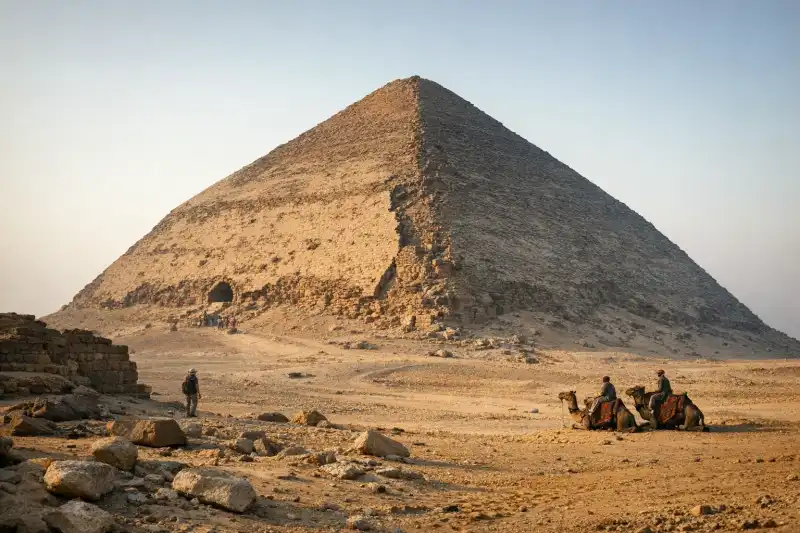
Bent Pyramid
Ancient EgyptianThe Bent Pyramid in Egypt is a rare Old Kingdom monument where a dramatic change in angle reveals th...
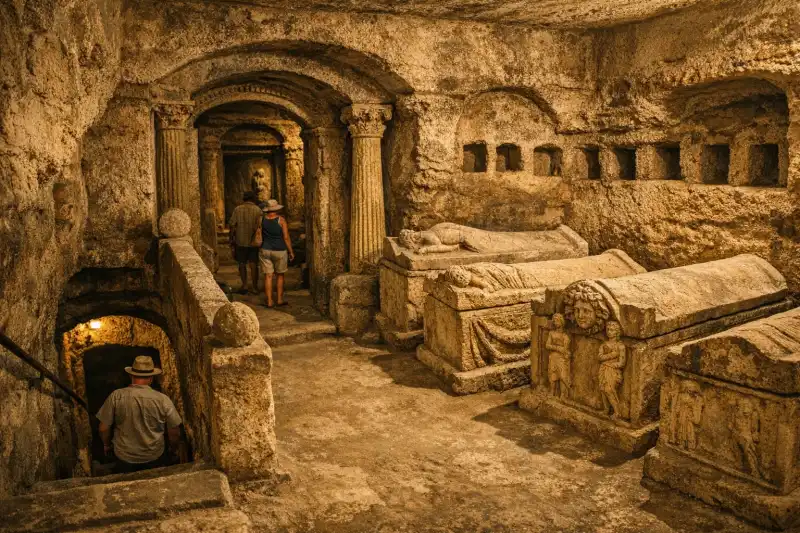
Alexandria Catacombs
Greco-Roman EgyptExplore Alexandria Catacombs in Egypt, a remarkable Roman-era underground necropolis blending Egypti...
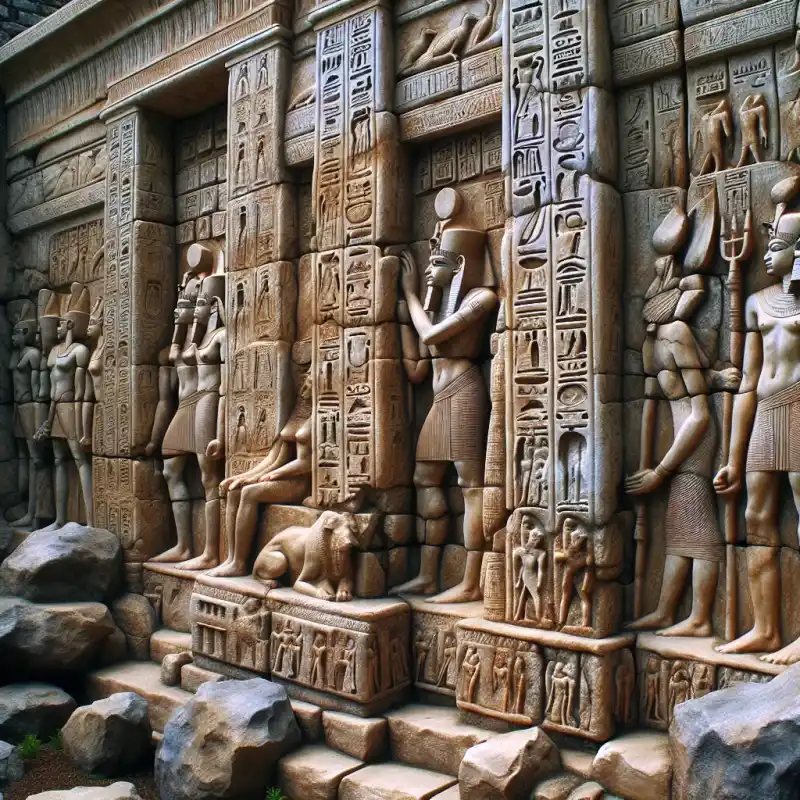
Abydos Temple Egypt Guide 2026: Temple of Seti I & King List
New Kingdom-PtolemaicAbydos Temple near Luxor: magnificent Temple of Seti I with war reliefs, ancient king list, and vibr...