Quick Info
Curated Experiences
Oplontis and Pompeii Guided Tour from Naples
Pompeii, Oplontis and Vesuvius Day Tour
Private Vesuvian Villas Tour: Oplontis and Herculaneum
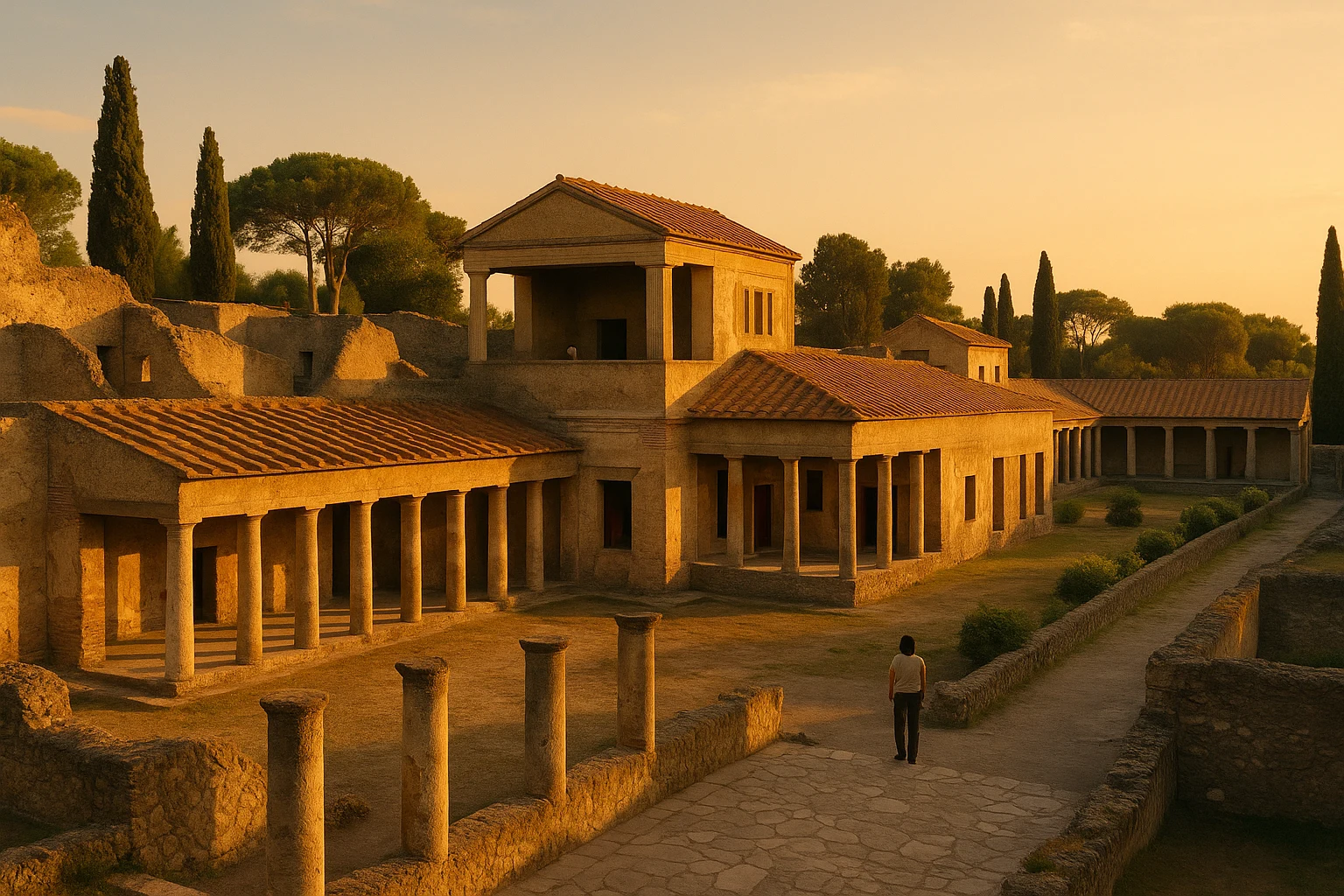
There is a moment at Oplontis when the noise of modern Campania disappears and you feel, very clearly, that you have stepped into a private world that was never meant for crowds. You turn through a corridor painted in deep Pompeian red, pass a threshold edged in black and ochre, and suddenly you are standing in a colonnaded garden court where the geometry still feels precise, intentional, and luxurious. This is Oplontis, Italy, and unlike nearby Pompeii, it does not overwhelm you with an entire buried city. It does something rarer: it lets you inhabit one aristocratic vision of Roman life in extraordinary detail.
At Ancient Travels, we recommend Oplontis for travelers who want both historical depth and human scale. The site, centered on Villa Poppaea at Torre Annunziata, offers some of the finest surviving wall painting in the Vesuvian zone, layered with architecture designed for display, comfort, and status. In this guide, you will find the history behind the villa, a room-by-room approach to the key monuments, practical transport and ticket advice from Naples, the best seasons and times to visit, and how to combine Oplontis with Pompeii, Herculaneum, or Stabiae in one smart itinerary.
History: A luxury villa beneath volcanic silence
From coastal settlement to elite estate (4th-1st century BCE)
The coastline south of modern Naples had long attracted settlement before Oplontis emerged as an elite residential zone. By the late Republican period, wealthy Roman families were investing heavily in villas along the Bay of Naples, building estates that balanced agricultural production, maritime access, and social display. The area around present-day Torre Annunziata became part of that network, valued for sea views, fertile volcanic soils, and proximity to the trading routes linking Neapolis, Pompeii, and the wider Mediterranean. Archaeological evidence suggests that the earliest nucleus of Villa Poppaea developed in the 1st century BCE, then expanded in phases as elite tastes and fortunes changed.
Imperial expansion and the age of display (1st century BCE-1st century CE)
Under the Roman Empire, Oplontis evolved from substantial villa to architectural statement. The structure now identified as Villa Poppaea was enlarged with monumental reception rooms, long porticoes, decorative gardens, and one of the largest known private swimming pools in the Vesuvian world. The decorative program reflects high-status Roman aesthetics: illusionistic frescoes, controlled sightlines, and carefully staged movement from dark entry passages into bright open courts. Whether or not the villa was directly owned by Poppaea Sabina, wife of Nero, its scale and finish leave little doubt that this was a property of the imperial aristocratic class.
79 CE: Vesuvius and abrupt burial
In 79 CE, the eruption of Mount Vesuvius ended life at Oplontis as decisively as it did at Pompeii and Herculaneum. Pyroclastic surges and volcanic deposits buried the villa complex, sealing architecture, pigments, and architectural surfaces beneath meters of material. Unlike urban Pompeii, Oplontis was not a dense city grid, so what survived here is primarily the architecture of privilege: reception suites, bath spaces, service areas, and gardens designed for a life of leisure and performance. The disaster froze those spaces in time, preserving visual evidence of Roman domestic luxury that would otherwise have vanished through reuse, weather, and later construction.
Rediscovery in the Bourbon era (18th century)
Early exploration of the Vesuvian buried sites in the 18th century, under the Bourbon monarchy, brought intermittent attention to remains at Torre Annunziata. Like early excavations elsewhere in Campania, these investigations were often tunnel-based and focused on spectacular finds rather than full context. Fresco fragments, decorative pieces, and movable objects were prioritized, while architecture remained partially hidden. Even so, those first excavations established Oplontis as part of the same archaeological catastrophe-zone as Pompeii and Herculaneum.
Modern archaeology and UNESCO recognition (20th-21st century)
Systematic excavation in the 20th century transformed understanding of Oplontis, especially from the 1960s onward, when larger areas of Villa Poppaea were exposed with stratigraphic methods and architectural documentation. The site is now included in the UNESCO inscription covering Pompeii, Herculaneum, and Torre Annunziata, recognizing its global significance within the Vesuvian archaeological landscape. Ongoing conservation focuses on fresco stabilization, drainage control, and balancing public access with preservation in a fragile coastal environment.
The Key Monuments: What to See at Oplontis
Villa Poppaea (Villa A)
The heart of Oplontis is Villa Poppaea, one of the most refined examples of an elite Roman seaside villa. Its plan unfolds through reception rooms, peristyle courts, service corridors, and leisure spaces that reveal how architecture was used to express rank. You can still read the villa as a choreography of status: narrow approaches that suddenly open into broad, light-filled spaces, painted walls that simulate marble and architecture, and garden views positioned to impress guests at specific moments of entry. Built in stages from the late Republic into the imperial period, the villa shows both continuity and adaptation, with later renovations integrating changing decorative fashions while preserving the core logic of luxury display.
The grand swimming pool and garden complex
One of the villa’s defining features is the enormous open-air pool, framed by long colonnades and garden zones. It is not simply a leisure feature; it is a social stage. In Roman elite culture, water signaled control, expense, and cultivated taste, especially in properties outside dense urban centers. Standing at the pool edge, you can still grasp the scale of intended spectacle: processional walks along the porticoes, shaded conversation areas, and broad perspectives designed for arriving visitors. The pool complex also helps explain how the villa functioned seasonally, with outdoor life and controlled microclimates playing a central role in warm Campanian months. For photography, late-afternoon light gives the colonnades the strongest depth and texture.
Fresco suites and painted interiors
Oplontis is famous for its painted rooms, where wall decoration survives with remarkable intensity. Across multiple chambers you see high-quality Second Style and later decorative programs using red, black, ochre, and white fields, architectural illusion, and framed mythological or ornamental panels. These are not isolated fragments but coherent interior environments, allowing you to understand how paint, plaster, and architecture worked together in lived space. Several rooms preserve visual transitions from darker lower registers to brighter upper zones, creating the illusion of expanded depth in otherwise enclosed chambers. The best way to experience them is slowly: pause in doorways and look back toward previous rooms to see how sightlines were intentionally composed.
The atrium and reception sequence
The reception core of the villa shows Roman domestic protocol in material form. Entry movement likely brought clients, visitors, or invited guests through an atrium-like sequence into progressively more prestigious rooms, each with richer visual effects. Flooring patterns, wall finishes, and room proportions shift subtly to signal hierarchy. This sequence is one reason Oplontis matters beyond aesthetics: it documents social behavior. Architecture here did not merely shelter; it organized power relationships, controlled access, and framed patronage rituals. You are not just seeing beautiful rooms; you are seeing a system for making authority visible.
Service quarters and the hidden labor of luxury
Behind the celebrated reception areas lie less theatrical spaces that reveal the workforce required to sustain elite life. Corridors, storage zones, and utilitarian rooms remind you that villas like Oplontis depended on continuous labor: cooking, cleaning, water management, garden maintenance, and supervision of supplies. These areas are archaeologically vital because they complicate the glamorous surface narrative. Oplontis was both art and operation, beauty and logistics. If you spend time in these transitional spaces, the villa becomes legible as a living organism rather than a static monument.
Oplontis B and the broader site context
The wider Oplontis zone includes another excavated complex, often called Villa B or the Lucius Crassius Tertius site, interpreted as a mixed residential-commercial structure with storage and trading functions. While access conditions can vary, its presence is important: Oplontis was not a single isolated mansion but part of a broader coastal economy tied to production, storage, and regional exchange. Together, the complexes suggest a landscape where elite residence and commercial movement coexisted. If Villa Poppaea is the face of aristocratic consumption, Oplontis B hints at the systems that supported it.
Getting There: Transportation and Access
Oplontis is one of the easiest Vesuvian sites to reach independently, especially if you are already based in Naples, Sorrento, or Pompeii.
From Naples
From central Naples, the most practical route is the Circumvesuviana commuter train from Napoli Garibaldi toward Sorrento. Get off at Torre Annunziata Oplonti, then walk about 10 minutes on level urban streets to the entrance.
- Circumvesuviana train: 30-35 minutes ride time; typically €3-4 ($3-4 USD) each way depending on ticket class and season.
- Taxi: Around €45-60 ($49-65 USD) from central Naples; 35-50 minutes depending on traffic.
- Rental car: 30-45 minutes in light traffic; paid parking is available nearby but can fill during peak summer weekends.
From Pompeii or Herculaneum
If you are building a multi-site day, Oplontis connects efficiently to neighboring Vesuvian destinations.
- From Pompeii by train: About 10-15 minutes by Circumvesuviana plus short walk; roughly €2-3 ($2-3 USD).
- From Herculaneum by train: About 20-25 minutes with straightforward line access; roughly €2-3 ($2-3 USD).
- Taxi between sites: Usually €20-35 ($22-38 USD) depending on distance, wait time, and season.
Admission and hours
Ticketing is managed within the Pompeii archaeological park system. A single-site Oplontis ticket is often around €8-10 ($9-11 USD), while multi-site options covering Pompeii-area ruins are usually around €22 ($24 USD) and can offer better value if you plan two or more sites in one or several days. Opening hours are typically full-day with seasonal variation, and last entry is usually earlier than final closing, so check the official site before departure. Card payment is generally accepted at major entrances, but carrying some cash is wise for small purchases and transport contingencies. The best visiting windows are at opening or in late afternoon, when temperatures and group traffic are lower.
Practical Information
Oplontis is manageable for most travelers, but a few practical choices dramatically improve the experience. Wear stable walking shoes: surfaces include uneven ancient floors, thresholds, and occasional damp patches. Bring water, especially from May through September, and add sun protection because open courtyard zones can feel exposed even when interior rooms are shaded. A compact hat and light breathable layers work better than heavy clothing in humid summer conditions.
Dress is casual, but respectful attire is always a good baseline in southern Italy, particularly if your day includes churches or town-center stops between sites. For accessibility, some areas are easier than others; the site is less extensive than Pompeii but still includes uneven terrain and level changes that can challenge wheelchairs or strollers. If mobility is a concern, contact the park in advance for current accessible routes and temporary closures. A short printed map or offline phone map helps, since mobile signal can fluctuate in parts of the complex.
When to Visit: Seasonal Considerations
Spring (March-May)
Spring is the best overall season for Oplontis. Temperatures usually range from 15-24°C (59-75°F), with fresh light and moderate humidity that make both painted interiors and outdoor courts comfortable to explore. Crowds are present but generally lighter than high summer, especially on weekdays. If you want the most balanced conditions for photography and walking, this is the ideal window.
Summer (June-August)
Summer brings heat, bright sun, and higher visitation across all Vesuvian sites. Expect roughly 27-34°C (81-93°F), with hotter spikes in exposed areas around midday. Crowds increase, particularly when cruise or coach traffic is strong. Visit at opening time or in the final two hours before closing, carry extra water, and avoid scheduling your most exposed walking segments in early afternoon.
Autumn (September-November)
Early autumn is excellent, often with 18-28°C (64-82°F) in September and cooler conditions into November. The light softens, and peak family-holiday traffic begins to ease. Rain becomes more likely later in the season, but showers are usually manageable with a light jacket. For many travelers, autumn offers nearly spring-level comfort with slightly thinner crowds.
Winter (December-February)
Winter is the quietest season, with temperatures around 8-15°C (46-59°F). You get more space in the painted rooms and a calmer pace overall, though occasional rain and shorter daylight hours can limit flexibility. If you prefer low-crowd archaeology and do not mind variable weather, winter can be deeply rewarding. Bring a waterproof outer layer and plan around earlier last-entry times.
Combining Oplontis with the Bay of Naples sites
Oplontis works best as part of a carefully sequenced half-day or full-day route, and timing matters more than distance. A strong morning plan begins at Villa Poppaea by 8:45 AM, when rooms are quiet enough to appreciate the painted surfaces without rushing. By 10:45 AM, you can walk back to Torre Annunziata Oplonti station and ride south to Pompeii in under 15 minutes, arriving before lunch for a focused forum-and-houses circuit. Break around 1:30 PM in modern Pompeii near Piazza Anfiteatro, where casual trattorias and cafes make an easy reset.
If you prefer a two-site day with less walking, pair Oplontis with Herculaneum instead. Start Oplontis at 9:00 AM, then transfer north by train around 11:30 AM and enter Herculaneum shortly after noon, when many tour groups are already moving out. Finish by 3:30 PM and head to Naples for dinner in the historic center. This sequence gives you two complementary experiences: elite villa luxury at Oplontis and compact urban preservation at Herculaneum.
For travelers based in Sorrento, reverse the logic: go north early to Oplontis, then continue to Pompeii or return south before evening congestion. However you structure it, budget realistic transfer buffers. On paper the distances are short; in practice, platform changes and service gaps can add 20-30 minutes. Done well, Oplontis becomes the high-resolution lens that gives deeper meaning to every other Vesuvian stop.
Why Oplontis Matters
Oplontis matters because it preserves a Roman world that is usually invisible. Public monuments survive across the Mediterranean, and entire city plans survive at places like Pompeii. But the private architecture of power, taste, and controlled beauty is harder to encounter intact. At Villa Poppaea, you can still read how privilege was staged: the threshold effects, the painted illusions, the garden horizons, the deliberate pacing of social encounter from one room to the next.
It also matters because it recenters the human scale of archaeology. You do not need to walk all day to understand what you are seeing. In two focused hours, Oplontis can change how you interpret Roman domestic life, and by extension, how you read nearby sites. After Oplontis, Pompeii’s houses feel less like fragments and more like lived environments; Herculaneum’s preserved interiors feel part of a larger cultural logic.
Stand in the peristyle as late light catches the plaster, and the site offers its final argument: history is not only made in forums and battlefields. It is also made in rooms where people hosted, negotiated, displayed, and dreamed—until one volcanic night turned those rooms into witnesses.
Quick Facts
| Attribute | Details |
|---|---|
| Location | Torre Annunziata, Campania, Italy |
| Ancient Name | Oplontis (modern identification in Torre Annunziata area) |
| UNESCO Status | Included in UNESCO World Heritage listing (1997) with Pompeii and Herculaneum |
| Established | c. 1st century BCE villa complex |
| Distance from nearest hub | ~25 km from Naples; about 35-45 min by Circumvesuviana + walk |
| Entry Fee | ~€8-10 ($9-11 USD) single site; multi-site passes around €22 ($24 USD) |
| Hours | Seasonal full-day opening; last entry earlier than closing (check official schedule) |
| Best Time | Spring and early autumn; early morning or late afternoon |
| Suggested Stay | 1.5-2.5 hours for Oplontis; full day when paired with another site |
| Coordinates | 40.7528, 14.4533 |
Explore More Italy
- Pompeii: The vast Roman city buried in 79 CE, ideal after Oplontis for urban scale.
- Herculaneum: Intensely preserved streets and interiors that pair naturally with villa-focused Oplontis.
- Stabiae: Another Vesuvian villa landscape with sea-facing aristocratic architecture.
- Paestum: Monumental Greek temples for a deeper Campania timeline beyond Rome.
Plan your wider journey with our Italy Ancient Sites Guide. For practical strategy, see our guide to planning multi-site archaeology days.
Frequently Asked Questions
How much time do I need at Oplontis?
Plan 1.5 to 2.5 hours for Villa Poppaea, depending on how closely you study frescoes and garden layouts. If you add a second site like Pompeii or Herculaneum, the full day becomes 6 to 8 hours including transfers.
Is Oplontis included in combined Pompeii-area tickets?
Yes. Oplontis is usually covered by the broader Pompeii-area circuit ticket sold through the official park system, which can include Pompeii, Oplontis, Boscoreale, and Stabiae. If you only want Oplontis, a single-site ticket is often available for less.
How do I get to Oplontis from Naples without a car?
Take the Circumvesuviana from Napoli Garibaldi toward Sorrento and get off at Torre Annunziata Oplonti, then walk about 10 minutes to the entrance. Total travel time is usually 35 to 45 minutes depending on train timing.
What makes Oplontis different from Pompeii?
Pompeii shows an entire city; Oplontis gives you a focused look at elite Roman domestic life in a single luxurious villa. The frescoes, garden architecture, and quieter atmosphere make it ideal if you want depth over scale.
When is the best time of day to visit Oplontis?
Early morning or late afternoon is best for softer light and lower temperatures, especially from June through September. Midday can be hot in exposed courtyard areas, though several interior rooms offer shade.
Is Oplontis suitable for families and first-time archaeology visitors?
Yes. The site is compact, less crowded than Pompeii, and easier to understand in one visit. Families with older children usually find the painted rooms and garden pools engaging, but strollers may struggle on uneven ancient surfaces.
Nearby Ancient Sites
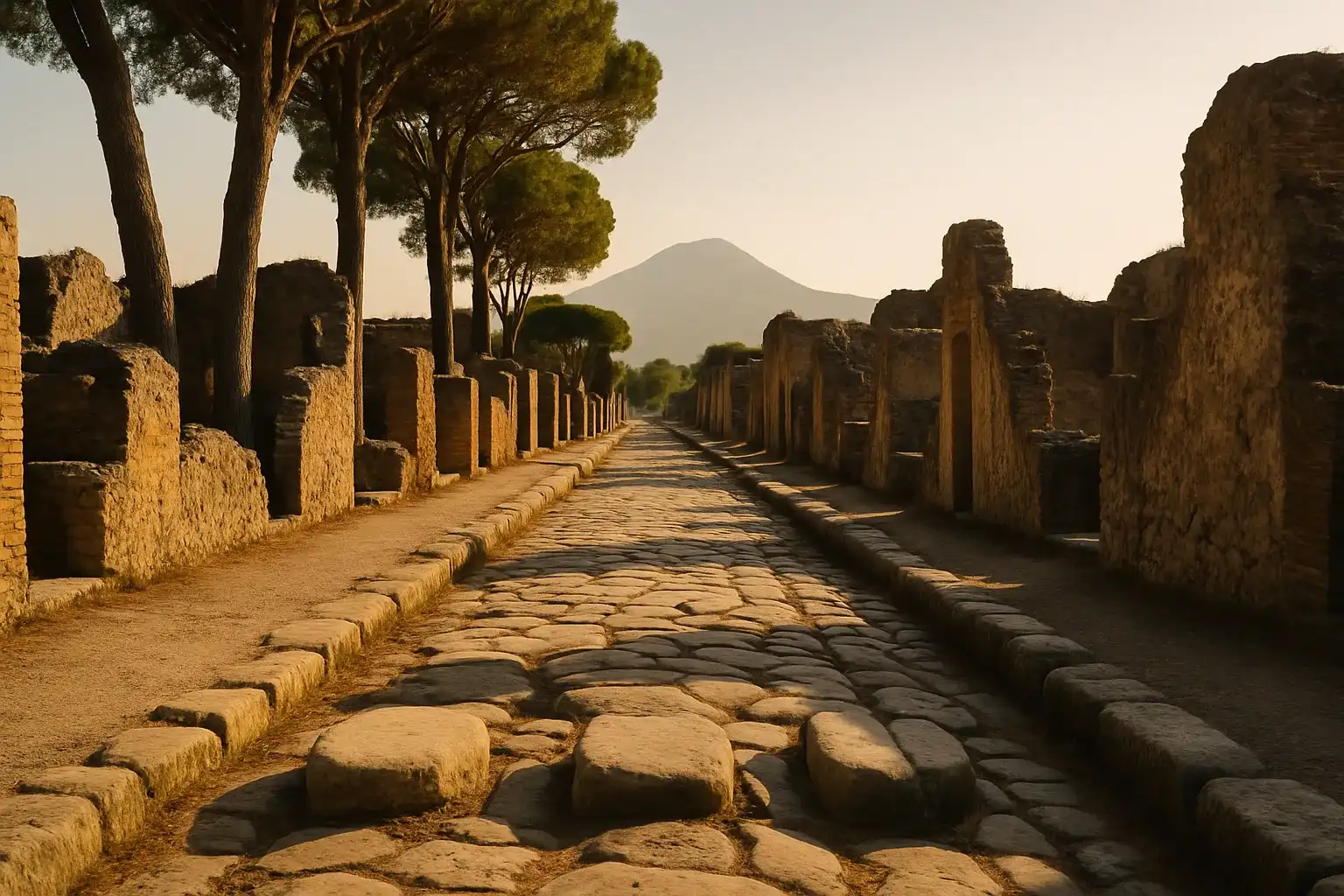
Pompeii Italy Travel Guide: Frozen in Time, Complete 2026
Roman EmpireWalk the streets of ancient Pompeii with our complete guide. Discover the best routes, must-see hous...
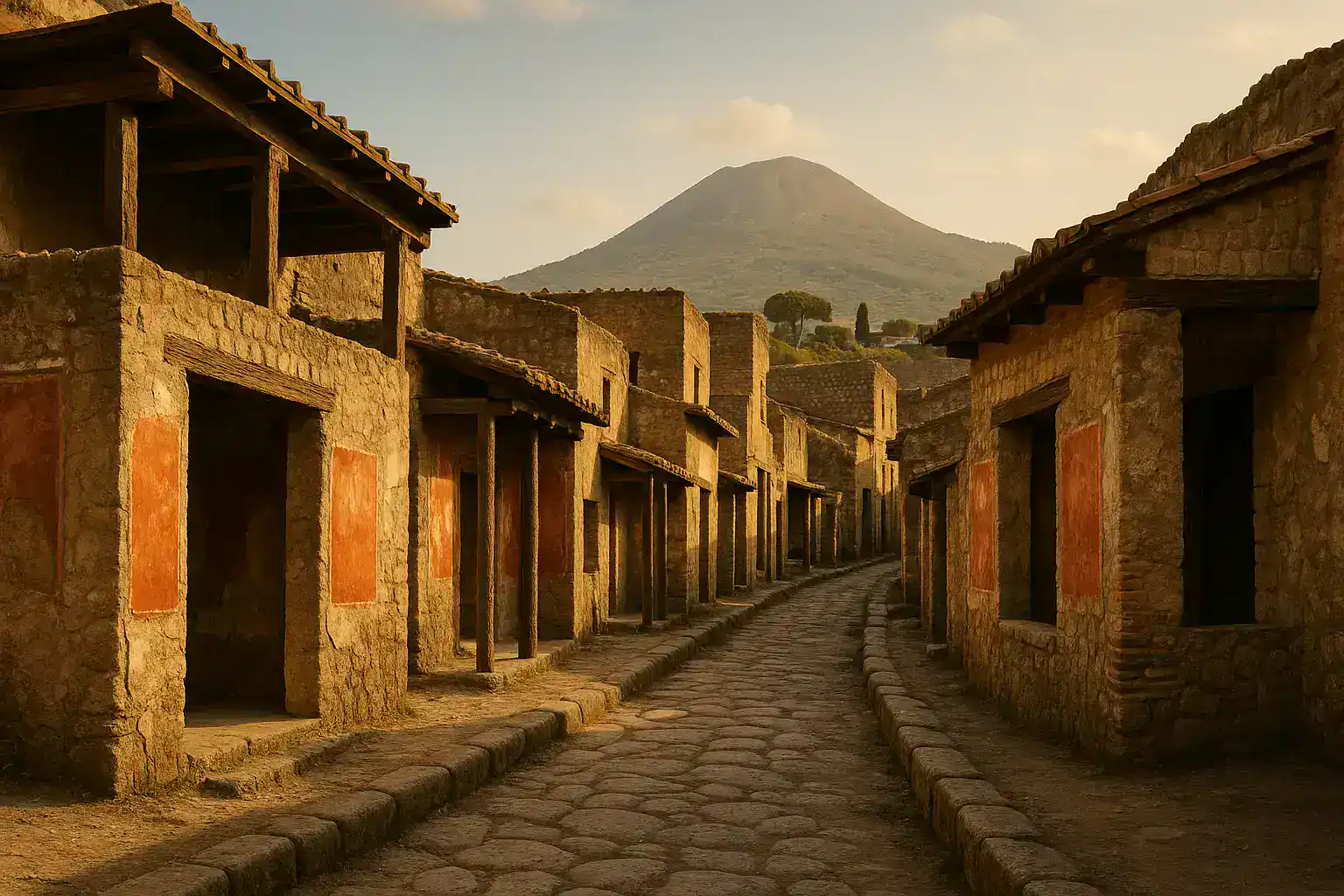
Herculaneum Italy Travel Guide 2026: Better Preserved Than Pompeii
Roman EmpireDiscover Herculaneum's extraordinary preservation of ancient Roman life. See carbonized wood, vivid ...
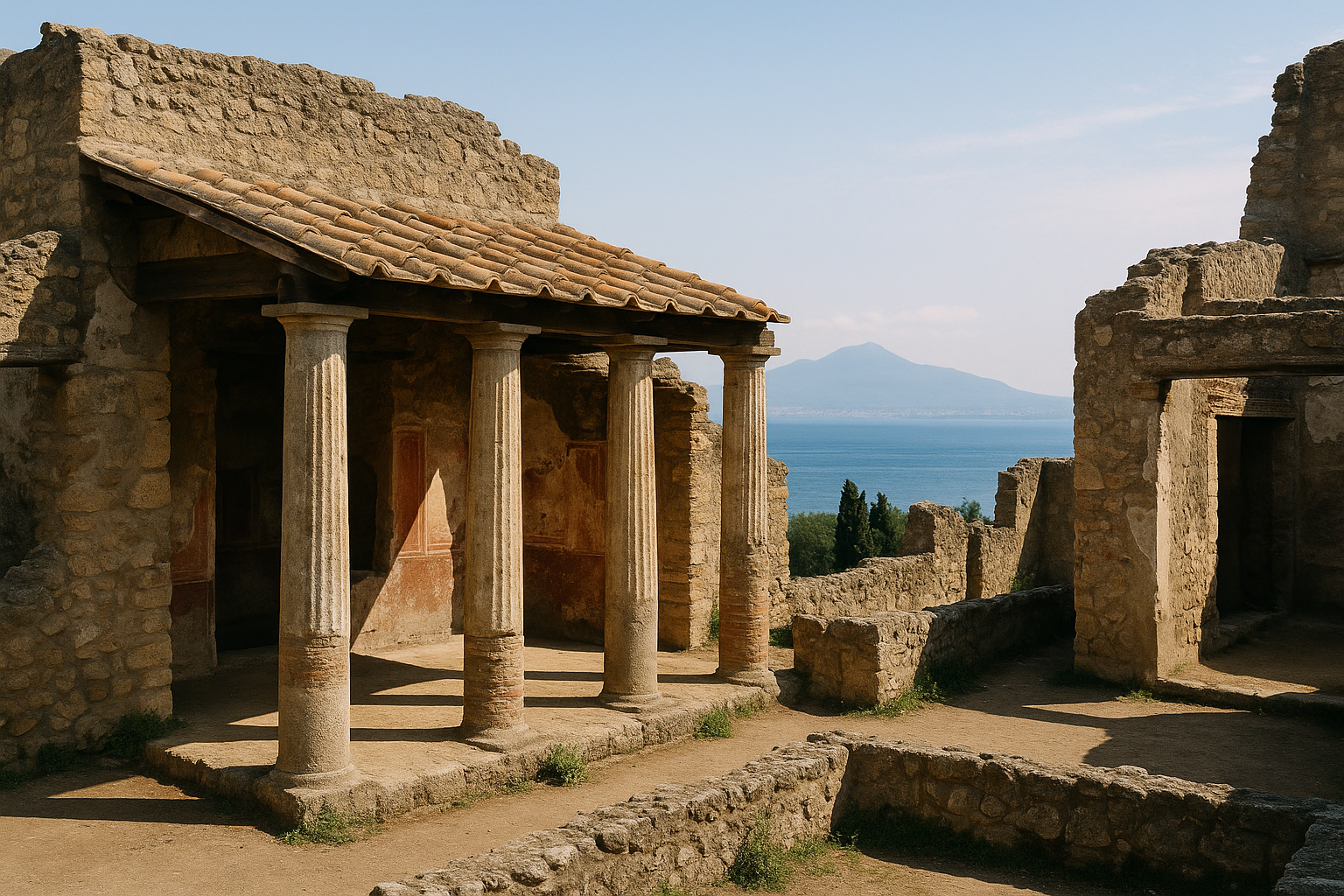
Stabiae Archaeological Site Guide 2026: Roman Villas Above the Bay of Naples
RomanPlan a practical visit to Stabiae with villa priorities, logistics from Naples/Sorrento, and itinera...