Quick Info
Curated Experiences
Ostia Antica Half-Day Trip from Rome
Ostia Antica and Borghese Gardens Full-Day Tour
Private Ostia Antica and Ancient Port Tour
Where Rome Met the Sea
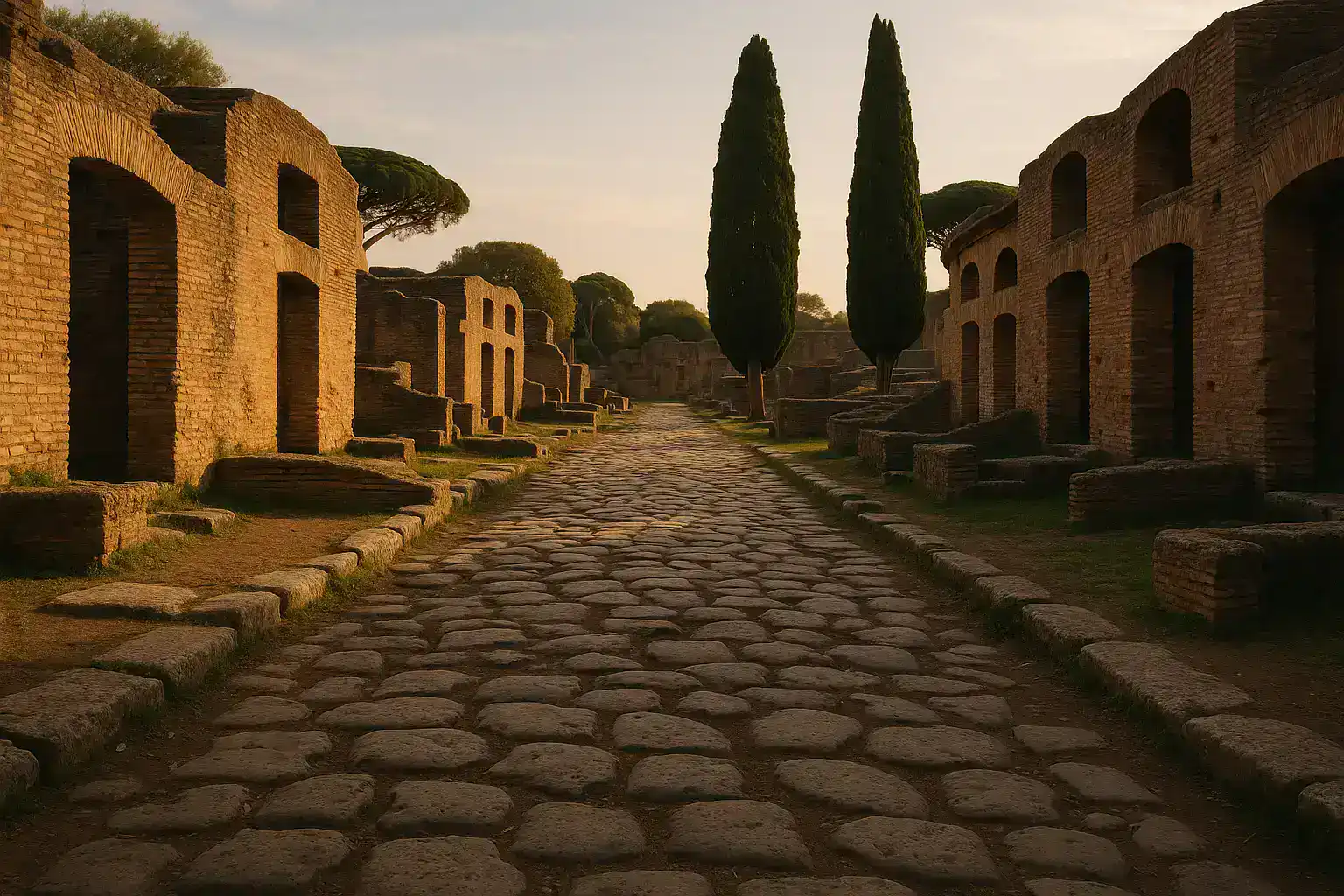
Thirty kilometers from the Eternal City, at the point where the Tiber once spilled into the Tyrrhenian Sea, lies the city that kept Rome alive. Ostia Antica—ancient Rome’s primary seaport for nearly seven centuries—fed the empire. Egyptian grain, Spanish olive oil, Gallic wine, and luxury goods from every corner of the Mediterranean passed through its warehouses before traveling upriver to the capital. At its height, fifty thousand people lived here: merchants, dockworkers, sailors, grain measurers, and the merchants of a dozen nations, all drawn to the greatest commercial hub of the ancient world. Today the site preserves what Pompeii cannot: the ordinary texture of Roman urban life. Walk streets paved with original basalt still bearing the ruts of cart wheels. Stand inside ancient bars where marble counters hold the circular depressions of food containers. Admire floor mosaics that have survived two millennia in extraordinary detail. Ostia Antica is Rome’s best-kept archaeological secret—vast, largely uncrowded, and endlessly rewarding for anyone willing to make the short train journey from Piramide station.
Rome’s Umbilical to the Sea
The very name Ostia comes from the Latin os—“mouth”—for the city stood precisely where the Tiber met the open Mediterranean. Founded in the 4th century BCE as a military colony guarding the river estuary, Ostia evolved over centuries into the nerve center of Rome’s commercial existence. The logistics were straightforward but staggering in scale: ocean-going merchant ships, too large and too deep-drafted to navigate upriver, anchored or docked at Ostia’s port facilities and transferred their cargoes to shallow-bottomed barges that could make the 25-kilometer journey upstream to Rome’s Emporium district. Without this relay system, Rome’s million-plus inhabitants would have starved.
The emperors understood Ostia’s strategic value and invested accordingly. Claudius and Trajan both undertook massive expansions of harbor infrastructure—Trajan’s hexagonal inner harbor at nearby Portus, completed in 113 CE, added a sheltered basin that could accommodate hundreds of vessels simultaneously. The city that grew around these facilities reflected Rome’s cosmopolitan reach. Inscriptions and artifacts reveal communities of Egyptians, Syrians, North Africans, Greeks, and Gauls living side by side, worshipping their own deities in temples built within a few streets of one another. Mithraic sanctuaries—more than any other site in the Roman world—proliferated throughout Ostia’s neighborhoods, evidence of the mystery cult’s particular appeal to soldiers and merchants.
A City Buried by Time
Ostia’s decline was gradual rather than catastrophic—nothing so dramatic as Vesuvius’s eruption ended this city. The Tiber is the culprit: centuries of silt deposition slowly altered the coastline, pushing the shoreline kilometers westward and making Ostia’s harbor increasingly unworkable. By the 3rd century CE, Portus had eclipsed the older port, and the economic rationale for Ostia began to dissolve. Malaria followed the marshes that formed in the silting river plain. Population fell. Buildings were abandoned, stripped for materials, and gradually swallowed by the accumulating soil.
This slow burial proved, paradoxically, to be Ostia’s salvation. Medieval stone-robbers who dismantled so many Roman structures across central Italy found Ostia already half-buried and less accessible than their nearer targets. When systematic excavation began in the 19th century—accelerated dramatically under Mussolini in preparation for the 1942 World Exposition—archaeologists found a city whose bones were largely intact. Streets, entire building facades, and floor mosaics lay waiting beneath the soil. The absence of volcanic glass-preservation means Ostia lacks Pompeii’s eerie plaster casts and carbonized organic remains—but the architectural preservation, particularly of multi-story apartment buildings and commercial spaces, exceeds what Pompeii offers in many respects.
The Decumanus: Walking the Spine of Ancient Commerce
The Decumanus Maximus, Ostia’s main east-west artery, stretches nearly 1.5 kilometers through the city’s heart. Walking its length from the city gate to the forum is the essential Ostia experience: a continuous immersion in Roman urban design. The basalt paving stones are original, polished smooth by centuries of foot traffic and wagon wheels whose ruts remain pressed into the stone surface. Along the sides, the ruins of shops, temples, and apartment blocks press close, their thresholds worn low by generations of Romans crossing them.
The thermopolia are the Decumanus’s most evocative details. These ancient fast-food counters—Rome’s street-food culture made permanent in marble—line the street at intervals, their L-shaped counters featuring circular dolia holes where terracotta containers held warm food and wine. One example on the Via di Diana preserves its original counter, shelving, and even traces of painted decoration, offering a glimpse so intimate that the ancient proprietor feels temporarily absent rather than long dead. Dockworkers, sailors, and merchants grabbed their midday meals here. The Latin phrase “going to the thermopolium” had the same casual weight in Ostia that “grabbing a coffee” carries today.
The Theater and the Piazzale delle Corporazioni
Built during the reign of Augustus and expanded under Commodus to seat roughly 2,700 spectators, Ostia’s theater remains among the most complete Roman performance venues in existence. Its semicircular cavea, orchestra, and the lower portions of the stage building are entirely Roman original—the upper seating and some architectural elements were partially restored in the 20th century, but the experience of climbing the tiers and looking out over the ruined city is authentically ancient in character. Summer performances still take place here on summer evenings, an experience that bridges two millennia with unsettling ease.
Directly behind the theater extends one of Ostia’s most distinctive spaces: the Piazzale delle Corporazioni, or Square of the Guilds. A long colonnade enclosed three sides of this commercial plaza, and each of the roughly sixty individual office bays that lined it belonged to a different shipping company, trading guild, or merchant association. Each decorated its threshold with a distinctive black-and-white mosaic advertising its specialty and origin. Elephants signal ivory traders from Africa. Grain measures identify Egyptian shippers who kept Rome’s granaries stocked. Dolphins and ships represent maritime transport companies. The lighthouse mosaic of the Portus officials shows the famous lighthouse of Claudius’s harbor. Together, this gallery of commercial heraldry constitutes the most extraordinary record of Roman trade networks in existence—a mosaic map of empire written in tesserae on the ground.
Baths, Mosaics, and the Art of Public Life
Ostia’s public baths reveal Roman civic culture at its most democratic. The Baths of Neptune—built under Hadrian and expanded under Antoninus Pius—preserve Ostia’s most spectacular mosaic: a vast black-and-white composition covering the entire exercise courtyard floor. Neptune himself drives a four-horse chariot across a sea churning with marine creatures. Sea-bulls, tigers, tritons, and nereids fill the surrounding water; the god’s chariot wheels send waves cascading around the border. The scale of the composition, perhaps 20 by 15 meters, and the precision of its execution remind visitors that Roman floor art was not decoration but statement—an assertion of the city’s relationship with the sea that gave it life.
Throughout Ostia, bath complexes appear with a frequency that reflects Roman bathing culture’s social centrality. The Terme del Foro, the Baths of the Seven Sages (with its philosophical graffiti and humorous inscriptions about the digestive benefits of certain regimens), and numerous smaller neighborhood facilities all served as daily gathering places where business was conducted, gossip exchanged, and social bonds maintained across class lines. The mosaics within them—geometric patterns, athletic scenes, mythological figures—were public art in the fullest sense, designed to be seen daily by the entire population of a working port city.
The Insulae: Roman Urban Life in Three Dimensions
What Ostia offers that no other Roman site can match in comparable scale is a preserved vision of Roman apartment living. The insulae—multi-story residential blocks rented out by wealthy landlords to working families—rose to three and sometimes four stories in Ostia, and several examples survive to their upper floors in a condition found nowhere else. The House of Diana is the finest: its brick facade, internal courtyard, and upper-floor corridors present a working-class Roman apartment building as a three-dimensional reality rather than a ground-plan abstraction.
The ground floors of such buildings typically housed shops and workshops; above them, successive stories of rented rooms housed the families of dockworkers, craftsmen, and tradespeople. Communal areas included courtyards with fountains, shared latrines, and ground-floor storage. Individual apartments were compact—by modern standards, startlingly so—but their occupants spent most daylight hours in the streets, the baths, the forum, and the harbor. The building’s interior life was domestic in the narrowest sense; everything else happened outside, in the urban fabric that Ostia still makes navigable today.
The Forum and the Capitolium
At the city’s geographic and civic heart, the Forum opens around the imposing mass of the Capitolium—Ostia’s temple to the Capitoline Triad of Jupiter, Juno, and Minerva. Built under Domitian in the late 1st century CE and later renovated, the Capitolium stands on a high podium approached by a broad staircase, its brick core stripped of marble revetment but still dominant over the Forum space. This was Ostia’s statement of Roman orthodoxy, the physical declaration that this distant port city participated fully in the religious and civic identity of Rome itself.
The Forum surrounding it preserves the ruins of other temples, administrative buildings, and the Curia where Ostia’s local senate conducted municipal business. Inscriptions recovered from this area—many now in the adjacent Museo Ostiense—document the careers of civic benefactors, the proceedings of guild meetings, and the honors paid to emperors and local magistrates. The museum itself, located within the archaeological zone, rewards an hour’s attention: portrait busts of ordinary Ostians, votive objects from the city’s many temples, and domestic objects that give human scale to the ruins outside its walls.
Practical Guide: Getting There, Tickets & Timing
Essential Planning FAQs
How do I get to Ostia Antica from Rome?
By train—remarkably easy. Take Metro Line B to Piramide station, follow signs to the Roma-Lido commuter railway platform (same station, different level), and board any train toward Cristoforo Colombo. Exit at Ostia Antica after approximately 25 minutes; the site entrance is a 5-minute walk straight ahead. The same €1.50 ticket covers both the metro and the Roma-Lido train. Trains run every 15 minutes during the day. Total journey from central Rome: 45–60 minutes.
What does admission cost, and should I book ahead?
Standard entry is €12 (as of 2026). Free entry applies on the first Sunday of each month, for EU citizens under 18, and for disabled visitors with one companion. Advance tickets are available at coopculture.it and eliminate any queue risk—particularly worth booking for free Sundays, which draw larger crowds. Combined tickets with other Rome archaeological sites are sometimes offered; check the official site for current options.
What are the opening hours?
Tuesday–Sunday, 8:30 AM – 6:00 PM (last entry 5:00 PM) April through October. 8:30 AM – 4:30 PM (last entry 3:30 PM) November through March. Closed Mondays, January 1, May 1, and December 25. Arriving at opening allows two to three hours of exploration before midday heat builds in summer.
How long do I need at Ostia Antica?
Three to four hours covers the Decumanus, theater, Piazzale delle Corporazioni, Baths of Neptune, and the museum comfortably. History and archaeology enthusiasts could spend a full day exploring the residential neighborhoods, the Mithraic sanctuaries, and the outlying areas near the ancient river port. Half-day trips from Rome are the standard approach and work well.
When is the best time to visit?
Spring (April–May) and autumn (September–October) offer the ideal combination: comfortable temperatures between 18–25°C, manageable crowds, and good photographic light on the ancient stone. Summer visits are entirely feasible but demand an early start—arrive at 8:30 AM before the heat becomes oppressive. Bring at least 1.5 liters of water per person; the site is largely unshaded. Winter brings smaller crowds and beautiful soft light but shorter opening hours and the possibility of rain.
Can I combine Ostia with the beach?
Yes—it’s a natural pairing in summer. The modern beach resort of Ostia Lido lies just 10 minutes further along the Roma-Lido railway. A morning at the ruins followed by an afternoon at the beach makes for an unusually satisfying day trip: two thousand years of Mediterranean history compressed into a single sun-drenched excursion. The juxtaposition of ancient port and modern resort, separated by a brief train ride, is genuinely striking.
Quick Facts
| Attribute | Details |
|---|---|
| Location | Rome, Lazio, Italy |
| Country | Italy |
| Region | Lazio |
| Civilization | Roman Empire |
| Historical Period | c. 4th century BCE–5th century CE |
| Established | c. 4th century BCE |
| Coordinates | 41.7556, 12.2886 |
Explore More Ancient Italy
- Pompeii: The Roman city frozen by Vesuvius
- Herculaneum: Better preserved than Pompeii, with carbonized wood and intact upper floors
- Colosseum Rome: Rome’s greatest amphitheater, 30 minutes from Ostia Antica by train
Plan your complete Italian archaeological journey with our Italy Ancient Sites Guide.
|-----------|---------| | Location | Lazio, Italy; 30 km southwest of central Rome | | Ancient Name | Ostia (from Latin os, “mouth” of the Tiber) | | UNESCO Status | Not separately listed; within broader Rome cultural heritage | | Peak Period | 1st–3rd centuries CE (imperial port era) | | Distance from Rome | 30 km; 45–60 minutes by metro + Roma-Lido train | | Train Cost | €1.50 each way (same ticket as Rome metro) | | Best Time | April–May, September–October | | Entry Fee | €12 (free first Sunday of month) | | Suggested Stay | Half day (3–4 hours); full day for enthusiasts |
Frequently Asked Questions
How do I get to Ostia Antica from Rome?
Take Metro Line B to Piramide station, transfer to the Roma-Lido commuter train (same ticket), and ride 25 minutes to Ostia Antica station. The site entrance is a 5-minute walk. Total journey from central Rome: 45-60 minutes. Cost: €1.50 each way (same as metro).
Is Ostia Antica worth visiting if I've seen Pompeii?
Absolutely. Ostia Antica preserves different aspects of Roman life—port commerce, apartment buildings (insulae), and middle-class neighborhoods that Pompeii doesn't show. The mosaics are superior, crowds are smaller, and it's easier to reach from Rome. The two sites complement each other perfectly.
How much time do I need at Ostia Antica?
Plan 3-4 hours for a comprehensive visit covering the main street (Decumanus), Forum, theater, and key mosaics. Half-day trips from Rome work well. History enthusiasts may want a full day to explore residential areas and the ancient river port.
What makes Ostia Antica special compared to other Roman ruins?
Ostia uniquely preserves a working-class port city rather than elite resort town. You'll see ancient apartment buildings (up to four stories), commercial bakeries, bars with marble counters (thermopolia), guild headquarters, and stunning black-and-white mosaics unmatched elsewhere. The scale is manageable yet comprehensive.
When is the best time to visit Ostia Antica?
Spring (April-May) and autumn (September-October) offer ideal temperatures and smaller crowds. Summer visits should start at the 8:30 AM opening before heat builds. The site closes at 6 PM in summer, 4:30 PM in winter. Avoid midday in July-August.
Can I visit Ostia Antica and the beach on the same day?
Yes. The modern beach town of Ostia Lido is a 10-minute train ride beyond the archaeological site. Many visitors combine morning ruins with afternoon beach time during summer months. The contrast between ancient port and modern resort is striking.
Nearby Ancient Sites
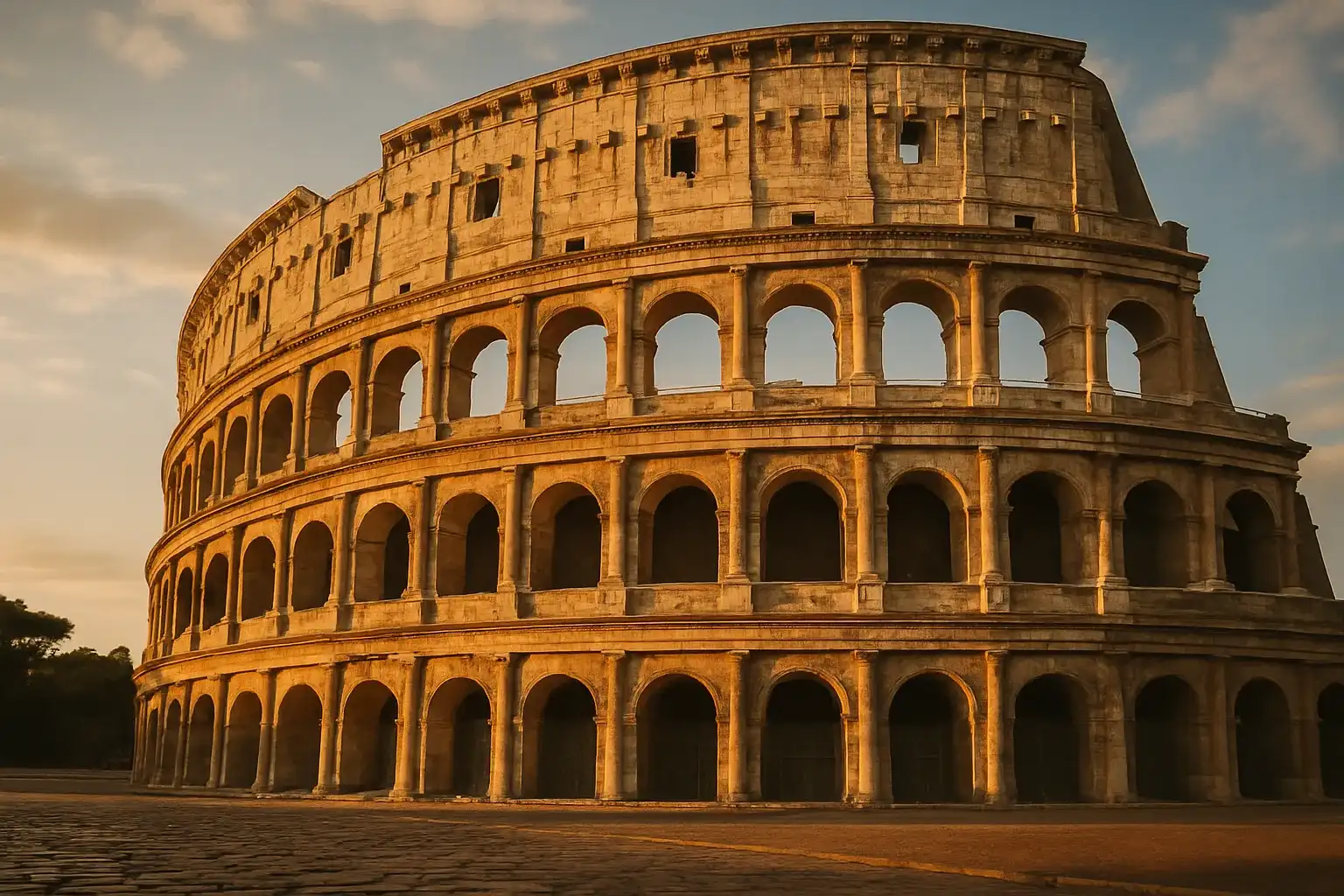
Colosseum Rome: Complete 2026 Guide to Arena Floor, Tickets, and Timing
Roman EmpirePlan the perfect Colosseum visit with timed-entry strategy, Arena Floor and underground access tips,...
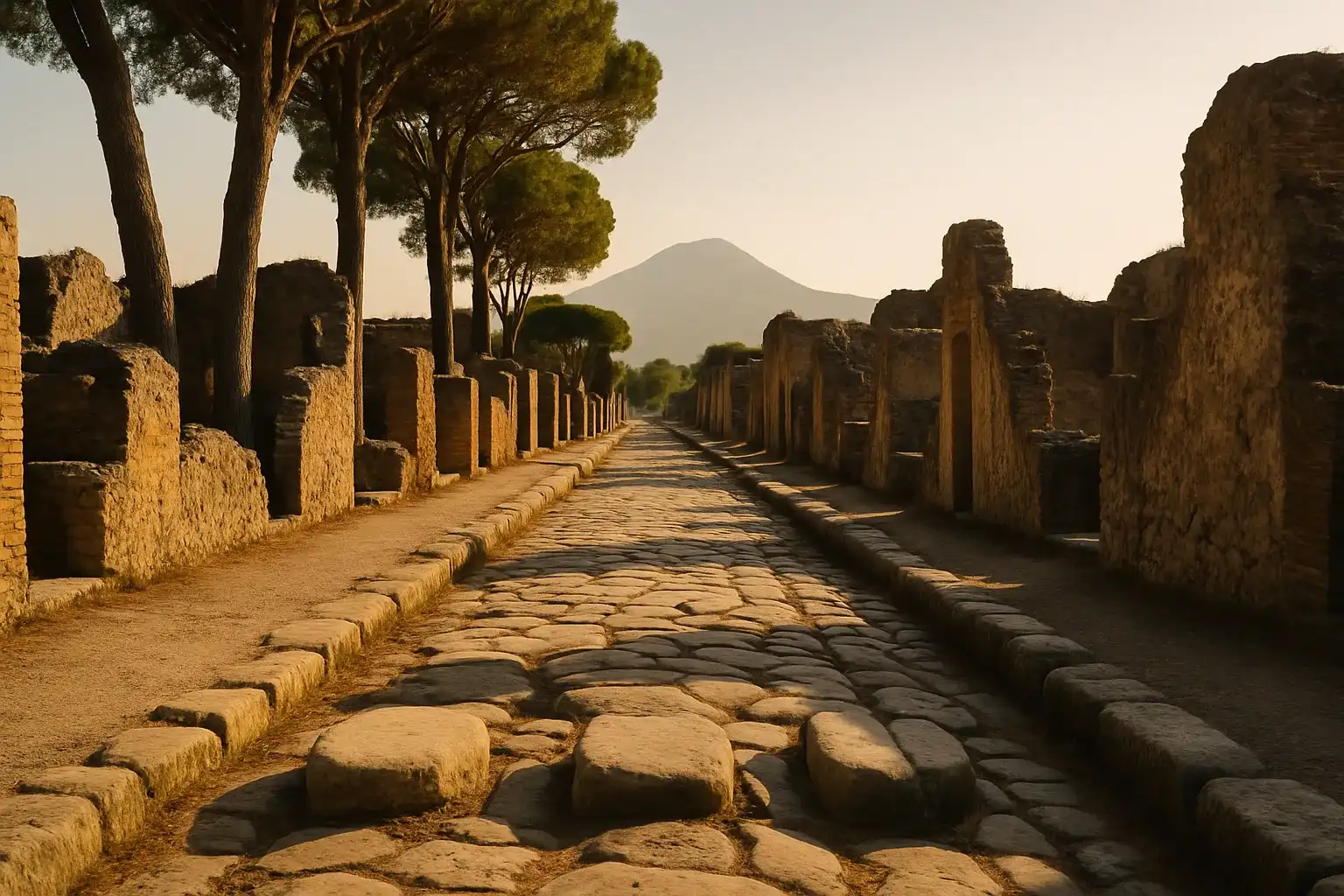
Pompeii Italy Travel Guide: Frozen in Time, Complete 2026
Roman EmpireWalk the streets of ancient Pompeii with our complete guide. Discover the best routes, must-see hous...
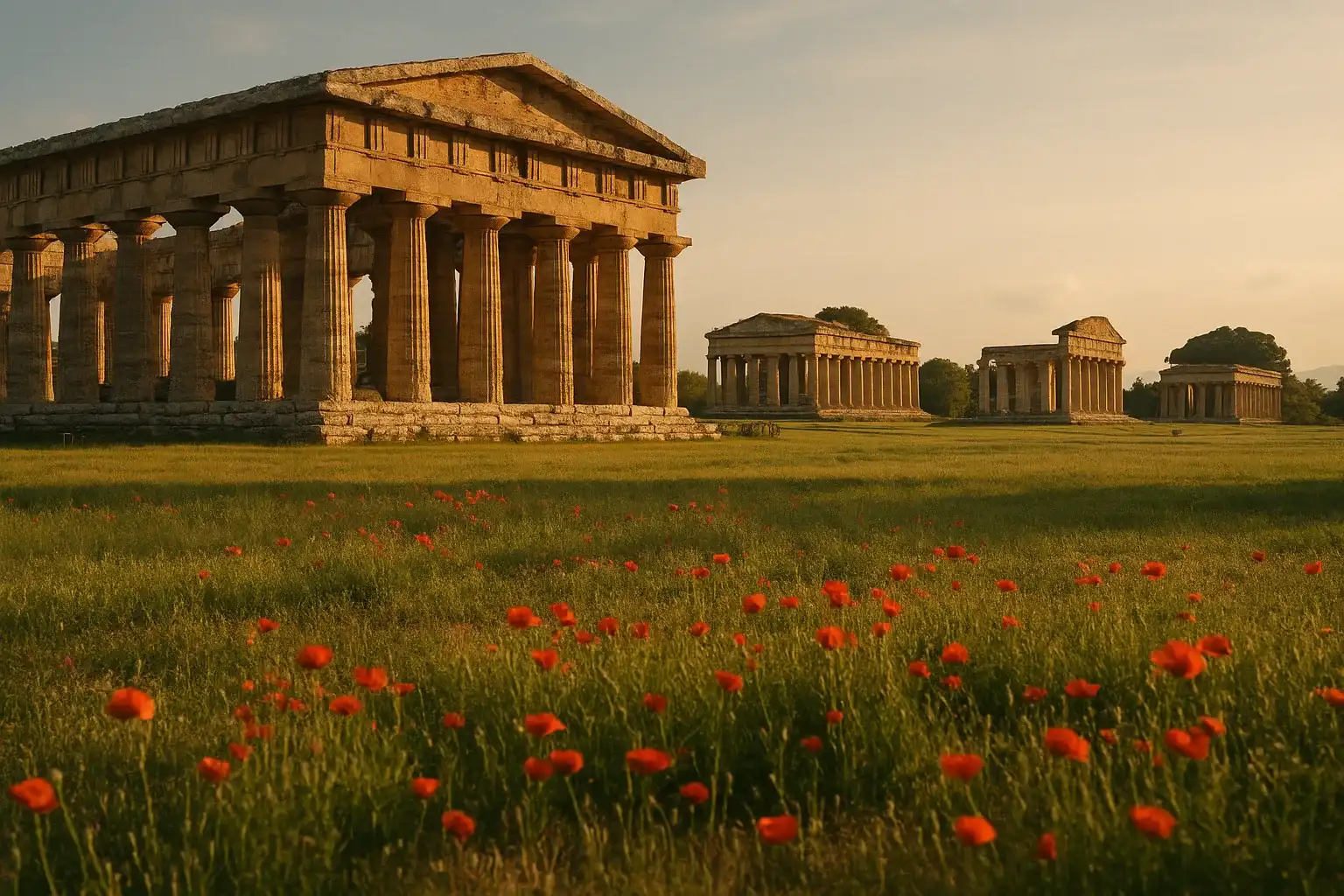
Paestum: Europe's Best-Preserved Greek Temples on Italy's
Ancient Greek / RomanDiscover Paestum's magnificent Greek temples, the Tomb of the Diver, and buffalo mozzarella farms on...