Quick Info
Curated Experiences
Jomon Era Sites and Oyu Stone Circles Private Day Tour
Akita and Northern Tohoku Megalithic Mysteries Tour
Jomon Culture World Heritage Full-Day Exploration
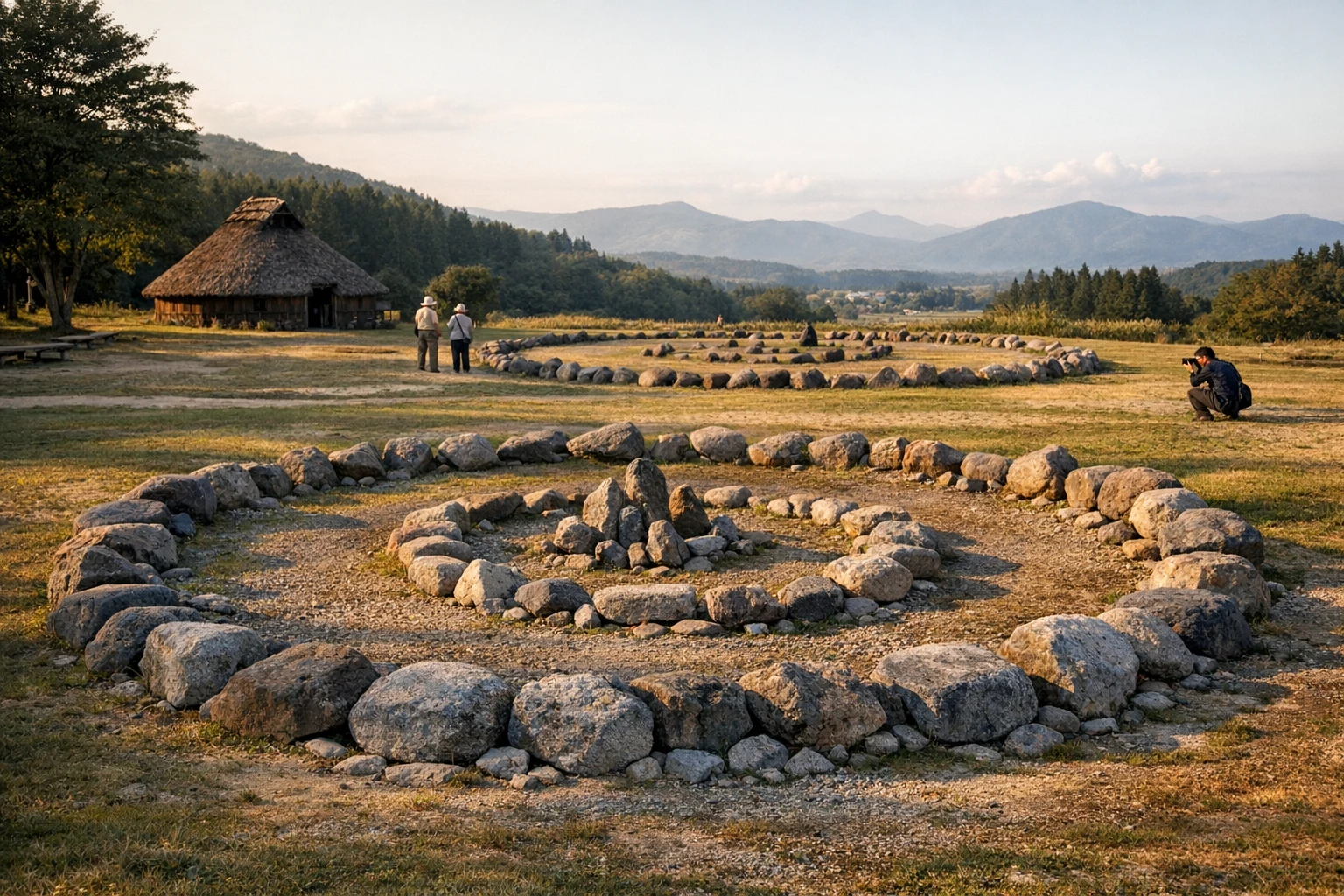
Set in the tranquil landscape of Akita Prefecture in Japan’s northern Tohoku region, the Oyu Stone Circles (Oyu-jōmon sekki) offer visitors a unique window into the spiritual and social life of Japan’s ancient Jomon culture. Enveloped by rural vistas where forested hills meet wide, open fields, the site stands as Japan’s largest and most elaborate example of prehistoric stone circle construction. Within minutes of arrival, modern distractions fade away, replaced by the steady silence and lingering mysteries of a place shaped around 4,000 years ago.
At first glance, the symmetrical care with which thousands of river stones have been set into two large, circular arrangements (comprising the Manza and Nonakado circles) reveals a sense of reverence and purpose. The stones rest where they have lain since the late Jomon period, arranged by ancient peoples who possessed a profound knowledge of their environment, celestial navigation, and landscapes of meaning. Unlike the standing megaliths of Europe, the Oyu Stone Circles are relatively low-set, blending seamlessly with the earth yet holding their own enduring power. Standing amidst the stones, one can’t help but speculate about the rites, gatherings, and astronomical observations that might once have taken place here.
For the traveler curious about ancient mysteries and the roots of human society in East Asia, the Oyu Stone Circles encapsulate both a tangible link to distant ancestors and an ongoing archaeological enigma. The visitor experience is heightened by the Oyu Jomon Museum adjacent to the site, providing cultural context and hands-on learning for all ages. With its blend of natural beauty, historical intrigue, and accessibility, the Oyu Stone Circles are an unmissable destination for anyone exploring northern Japan or seeking to delve into humanity’s earliest spiritual endeavors.
History
The Dawn of the Jomon Culture
The story of the Oyu Stone Circles begins with the emergence of Japan’s Jomon period (circa 14,000–300 BCE), a time marked by the development of a sedentary, hunter-gatherer society and an increasing sophistication in pottery and communal ritual. The Jomon people were characterized by their unique cord-marked pottery (from which the era’s name derives), and their capacity for thriving in Japan’s diverse environments, from the subtropical south to the snow-laden north.
By the late Jomon period, roughly 2,000–1,500 BCE, communities in the Tohoku region grew in size and complexity, leading to greater social organization and the creation of monumental works. It was during this time, at the confluence of the Yoneshiro River and the rich resources of what is today Akita Prefecture, that the Oyu Stone Circles were constructed. Their creation marks a turning point in prehistoric Japan: a time when ritual space began to mirror a deepening relationship with both nature and the cosmos.
Construction of the Circles
While thousands of years have elapsed since their formation, much has been determined about how the Oyu Stone Circles came to be. Archaeological evidence suggests that local river stones, some weighing up to 200 kilograms, were transported by communal effort and meticulously arranged. The Manza Circle, with a diameter of nearly 46 meters, and the slightly smaller Nonakado Circle (around 42 meters), were both established with remarkable geometric precision—hinting at the Jomon people’s understanding of mathematics and celestial cycles.
Radiocarbon dating of organic remains found beneath the stones places their construction firmly within the late Jomon period, around 2,000–1,500 BCE. The circles may have taken years or decades to complete, with each stage of construction accompanied by ritual activity, feasting, and seasonal gatherings. The process fostered not only communal identity but also a sense of shared purpose—one which endures in the landscape to this very day.
Rituals, Astronomy, and Social Life
Interpretations of the Oyu Stone Circles continue to evolve as researchers investigate their layout and alignments. Recent studies indicate that certain stone clusters and upright pillars may function as calendrical markers, allowing the Jomon people to measure solstices, equinoxes, and other key points in the solar year. This astronomical function would connect the site not only to seasonal cycles important for hunting and gathering but also to broader spiritual rhythms observed by ancient societies across the globe.
At the same time, the circles likely served as focal points for communal rituals—ranging from ancestor worship and fertility rites to feasts and social negotiations. Excavations have unearthed a range of artifacts within and around the circles, including clay figurines (dogū), charred grains, lacquerware, and bone tools. Together, these finds suggest that the site functioned as both a ceremonial hub and a social axis for surrounding settlements.
From Rediscovery to World Heritage Recognition
Interest in the Oyu Stone Circles grew in the early 20th century, when Japan’s rapid modernization spurred new curiosity about its ancient past. Extensive archaeological excavations throughout the 20th and 21st centuries have revealed stunning insights into Jomon lifeways, including the engineering and ceremonial sophistication of Oyu and other northern stone circles. Their significance was formally recognized in 2021, when the “Jomon Prehistoric Sites in Northern Japan,” including the Oyu Stone Circles, were designated as a UNESCO World Heritage Site. This milestone has further cemented Oyu’s status as an emblem of prehistoric Japanese creativity, emphasizing its global cultural and historical value.
Key Features
Standing at the Oyu Stone Circles, visitors will immediately notice two massive, concentric stone arrangements spread across a gentle, grassy rise. The larger Manza Circle, stretching nearly 46 meters in diameter, dominates the landscape with its broad circumference and subtle undulations. Nearby lies the Nonakado Circle, measuring about 42 meters across. Though neither feature Europe’s towering megaliths—like those found at Stonehenge—their scale is nonetheless impressive, echoing a communal spirit and deep, lived relationship with the land.
Each circle consists of countless river stones, painstakingly selected from the Yoneshiro River and carefully placed to maintain shape and alignment. Paths and gaps between the stones may have formed ceremonial avenues, guiding ancient feet along sacred lines. Among the most intriguing structural elements are upright stone pillars, which are thought to have functioned as astronomical sight-lines or calenderial indicators. At select times of the year—especially during solstices—the position of the sun aligns with these standing stones, suggesting complex ritual knowledge far beyond simple construction.
Exploring closer, visitors will find evidence of postholes and small hearths within the circles, points where wooden posts once stood and fires once burned. These are remnants of temporary ritual structures, platforms, or perhaps shelters built during periods of prolonged festival activity. Scattered throughout and in adjacent mounds, a wealth of artifacts has been discovered: exquisitely decorated pottery, dogū figurines noted for their elaborate and often enigmatic forms, stone tools, and jewelry crafted with an unexpected precision.
In addition to the circles themselves, the Oyu site includes reconstructed Jomon pit dwellings. These thatched huts, set just beyond the ceremonial grounds, offer visitors a glimpse into daily life thousands of years ago. Interpretation panels and detailed models reveal the climatic adaptations and domestic skills of the Jomon people, from their tailored clothing and diets to their artistry and trade.
At the edge of the site stands the Oyu Jomon Museum, a small but engaging facility featuring display cases of original artifacts, dioramas, and hands-on educational zones. The museum does an exceptional job putting the circles into larger context, both within the Jomon world and as part of the global phenomenon of megalithic monuments. Knowledgeable staff, some of whom are local volunteers, are on hand to answer questions and guide visitors through interactive displays. Seasonal events, such as guided solstice observations and craft workshops, further bring the ancient world to life.
The natural setting itself adds an additional layer of beauty. The circles are ringed by fields and wooded slopes, with changing foliage offering a constantly evolving backdrop. Through all seasons, the stones—worn yet resilient—preserve the silent testimony of a society whose wisdom, artistry, and sense of sacred landscape continue to intrigue modern minds.
Getting There
Although the Oyu Stone Circles sit in a relatively remote corner of Akita Prefecture, reaching the site is straightforward thanks to Japan’s reliable public transport and a well-developed system of rural buses and taxis. The starting point for most visitors is Akita City, which is directly connected to Tokyo and other major cities by the Akita Shinkansen and JR Ou Main Line.
From Akita Station, travelers should first board a JR Ou Main Line train heading north toward Ōdate, with a transfer or stop at Oyu-Onsen Station. The journey by limited express train from Akita to Oyu-Onsen takes approximately 1 hour and 40 minutes, with a standard fare around ¥2,300 (circa $18 USD) one-way for an unreserved seat. From Oyu-Onsen Station, local buses run several times a day to the Oyu Stone Circles, with a single fare typically around ¥300 ($2.50 USD). Taxis are also readily available, and the short drive to the site takes less than 10 minutes, costing about ¥1,600–¥2,000 ($12–$15 USD) each way.
For those preferring more flexibility or traveling in groups, rental cars are a practical choice and can be arranged at Akita City, Ōdate, or via online rental platforms. Driving from Akita City to Oyu Stone Circles takes roughly two hours via the Tohoku Expressway and local roads. The route is straightforward, and ample parking is available on site free of charge.
During peak tourist seasons, organized tours may include direct transfers from Akita or neighboring cities, combining the Oyu Stone Circles with other Jomon sites or Akita attractions. Always check bus timetables in advance, especially outside summer months, as rural schedules may be infrequent. Signage at Oyu is clear in Japanese and partially in English, ensuring that even independent travelers can navigate their way to this ancient site with minimal hassle.
When to Visit
The Oyu Stone Circles are open year-round, but the overall experience can vary greatly depending on the season. Akita Prefecture’s climate is distinctly marked by all four seasons, each lending its own mood and beauty to the landscape.
Spring (late April through June) is a wonderful time to visit, as cherry blossoms give way to vibrant green fields and mild temperatures, generally ranging from 10°C to 20°C (50–68°F). The site is peaceful, with fewer tourists and comfortable weather ideal for leisurely exploration.
Summer (July through September) brings warmth and life to the region, with temperatures often in the mid-20s°C (mid-70s°F) and lush backdrop of rice paddies and wildflowers. This is the most popular period for school trips, guided tours, and cultural events—including solstice sunrise viewings and Jomon craft workshops. In August, local festivals (matsuri) often complement a visit, allowing guests to experience regional tradition and cuisine.
Autumn (late September through early November) is arguably the most breathtaking season. The surrounding forests and fields ignite in hues of crimson and gold—an ideal setting for photographers and nature lovers. Days are cool, skies are clear, and the stones stand out in stark relief against the changing foliage. This season also coincides with special astronomical events, where shadows and sun alignments echo ancient rites.
Winter (December through March) transforms the circles into a stark, snow-covered landscape. Substantial snowfall is typical, and access may occasionally be limited. However, hardy travelers are rewarded with a magical stillness, the stones peeking through snowdrifts beneath bright winter skies. Dress warmly; temperatures often drop below freezing. Always check road and transit conditions if you plan to visit during this time.
Whenever you choose to go, allow at least one or two hours to wander the circles and the museum. Early morning is best for solitude, while late afternoon offers dramatic light as the sun begins to set behind Akita’s tranquil hills.
Quick Facts
| Feature | Details |
|---|---|
| Location | Kazuno City, Akita Prefecture, Japan |
| Coordinates | 40.30939° N, 140.47718° E |
| Period | Late Jomon (c. 2,000–1,500 BCE) |
| Number of Stone Circles | Two (Manza and Nonakado) |
| Diameter | Manza: 46m; Nonakado: 42m |
| Materials | River stones, local earth |
| UNESCO World Heritage Site | Since 2021 (as part of Jomon Prehistoric Sites) |
| Museum On-Site | Yes (Oyu Jomon Museum) |
| Entrance Fee | Free (small charge for museum entry) |
| Open | Year-round |
| Nearest Station | Oyu-Onsen Station (JR Ou Main Line) |
| Best Seasons | Spring, Summer, Autumn |
| Facilities | Parking, restrooms, museum, reconstructed dwellings |
| Typical Visit Duration | 1–2 hours |
| Family-friendly | Yes |
| English Support | Partial (museum staff/interpretive panels) |
For those intent on unraveling the prehistoric tapestry of northern Japan, the Oyu Stone Circles are not just a destination, but a point of fascination—a quiet reminder of humanity’s eternal quest to connect, celebrate, and understand the mysteries of the universe.
Frequently Asked Questions
What is the best way to reach the Oyu Stone Circles from central Akita?
The easiest way is by train and bus: Take the JR Ou Main Line to Oyu-Onsen Station, then use a local bus or taxi to reach the site. Allow about 2.5 hours from Akita City.
Are there entrance fees for the Oyu Stone Circles?
The site is free to enter. Donations for site maintenance are appreciated, and the adjacent Jomon Museum has a small admission fee.
Are tours available in English at the Oyu Stone Circles?
Some guided tours offer English-speaking guides, especially when booked in advance through major tour operators.
Can I visit the Oyu Stone Circles year-round?
Yes, the site is open all year, though heavy winter snow may impede access or partially cover the stones.
How long does a typical visit to the Oyu Stone Circles take?
Plan 1–2 hours to fully explore the stone circles and visit the informative Jomon Museum on site.
Nearby Ancient Sites
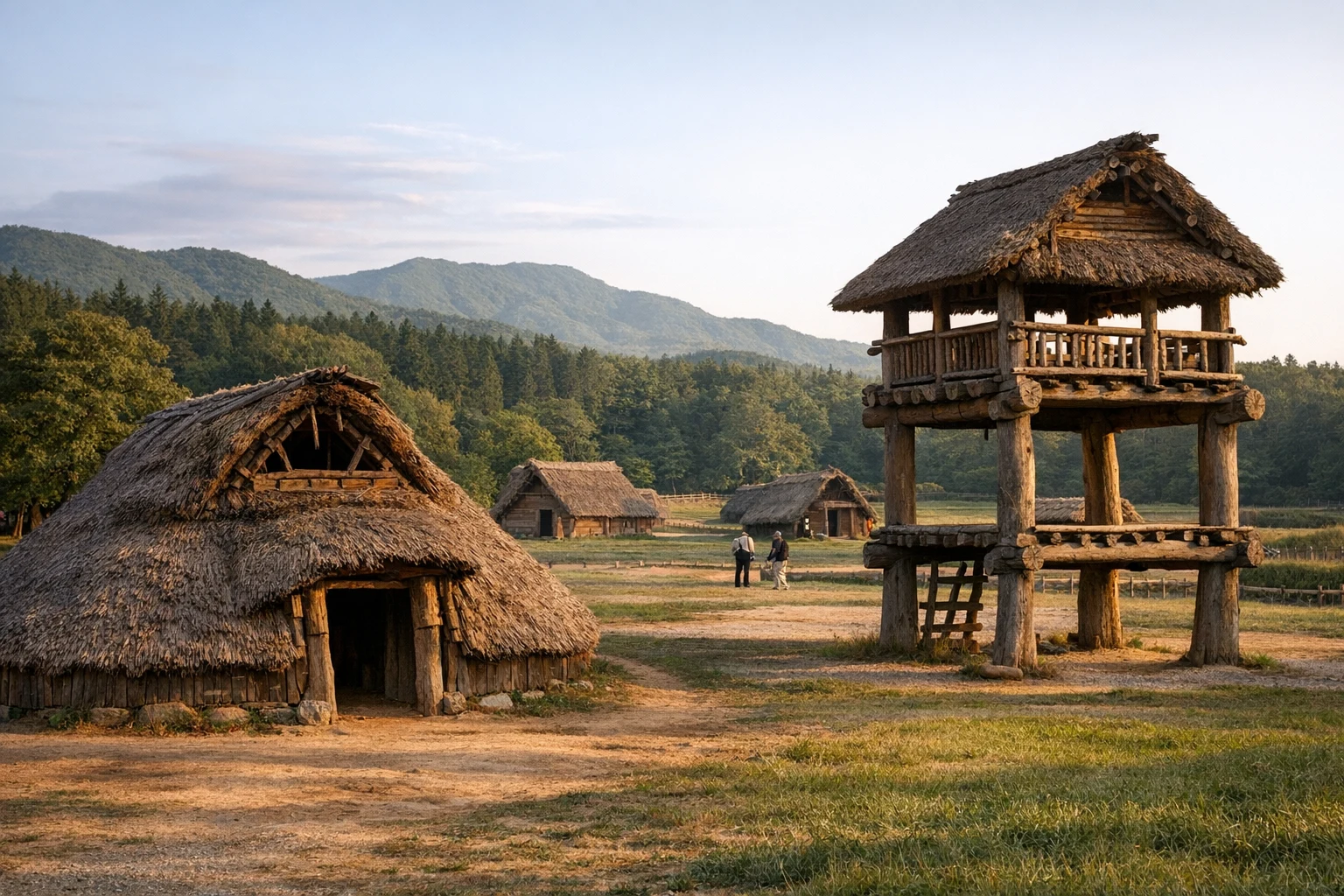
Goshono Jomon Site
Goshono Jomon Site in Japan is a remarkable archaeological park preserving a mid-Jomon period settle...
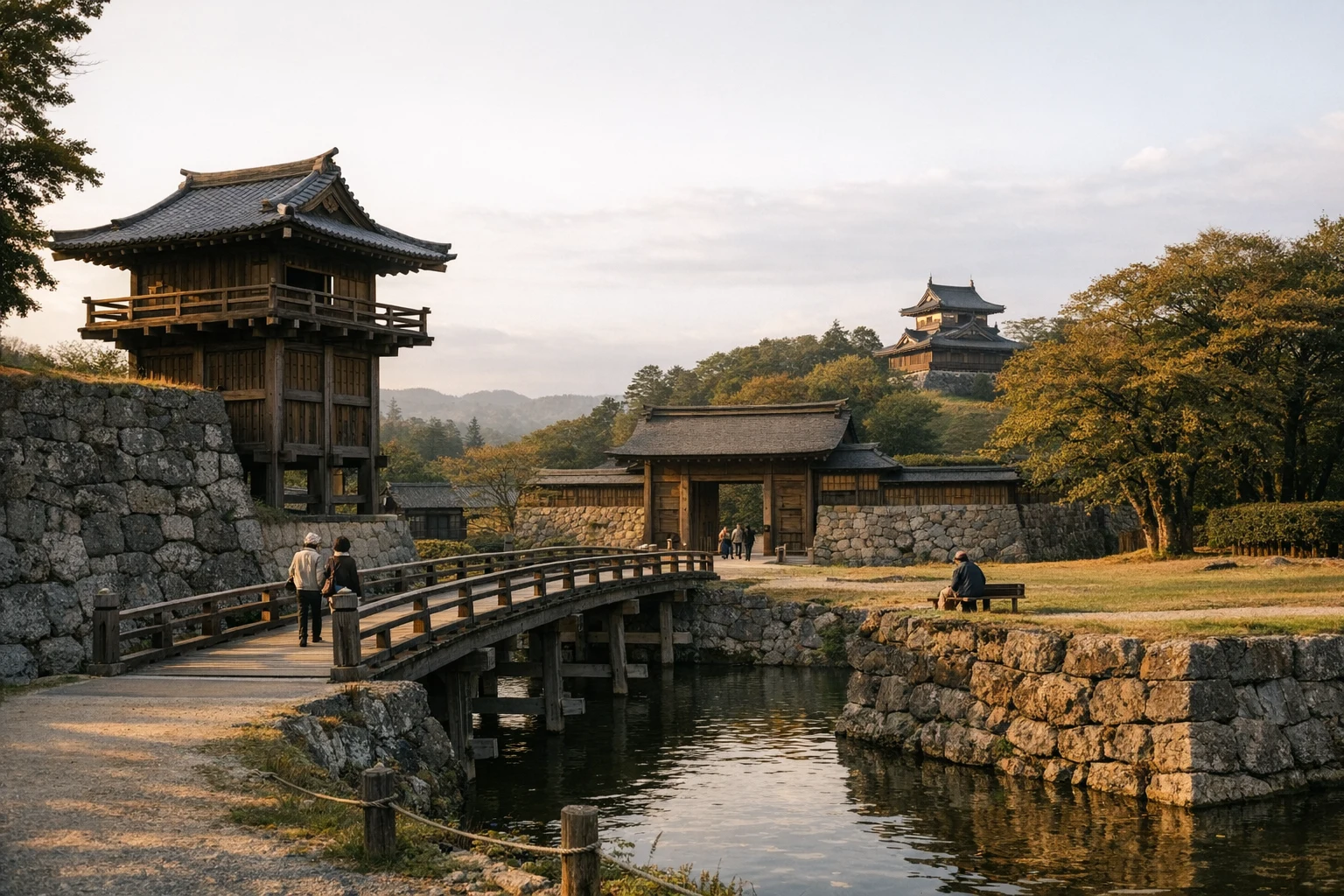
Akita Castle Site
Explore the Akita Castle Site, a historic Japanese fortification in Akita Prefecture that reveals th...
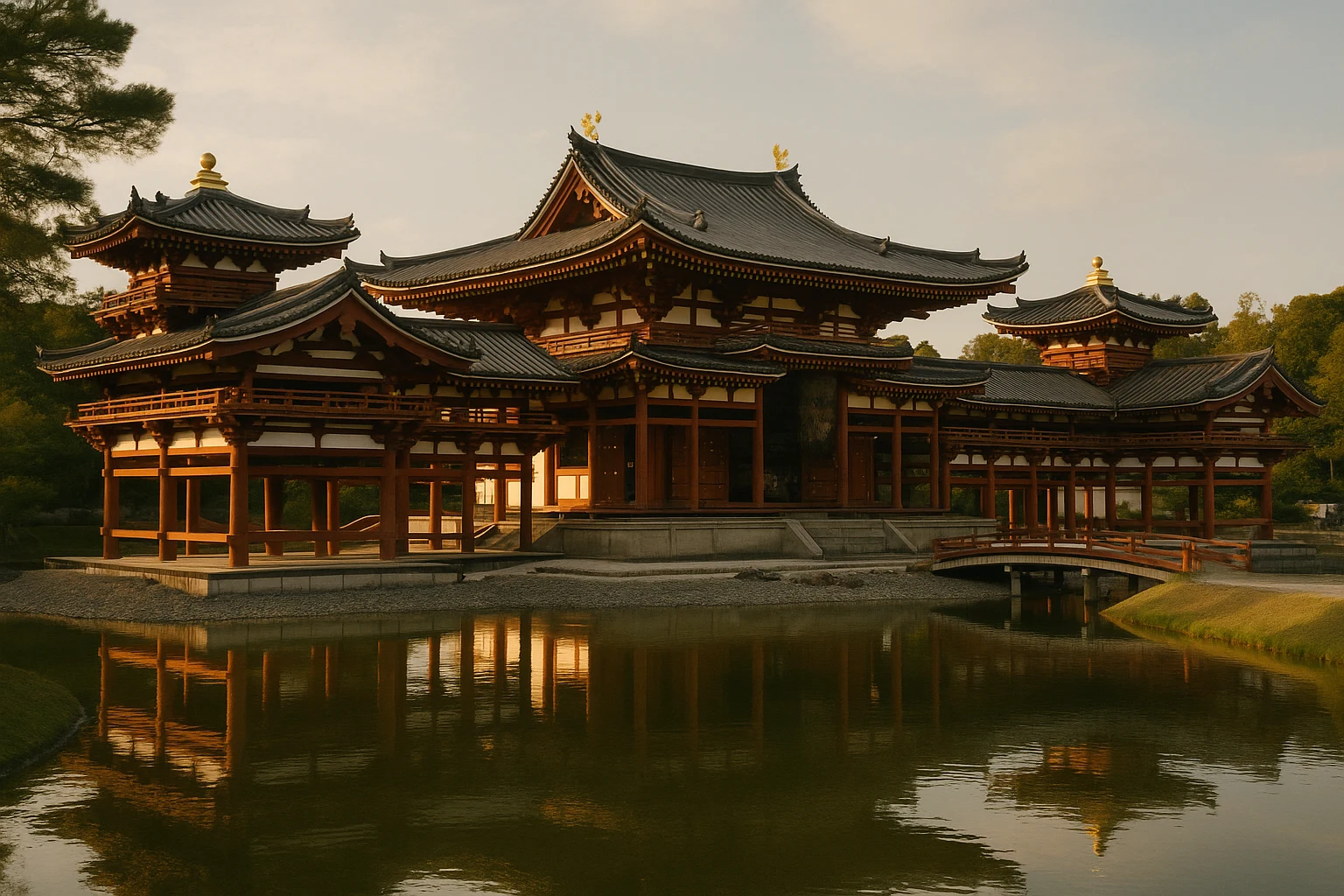
Byodoin Temple
Heian JapanA UNESCO-listed Heian-era masterpiece in Uji, Japan, renowned for its iconic Phoenix Hall reflected ...