Quick Info
At a glance
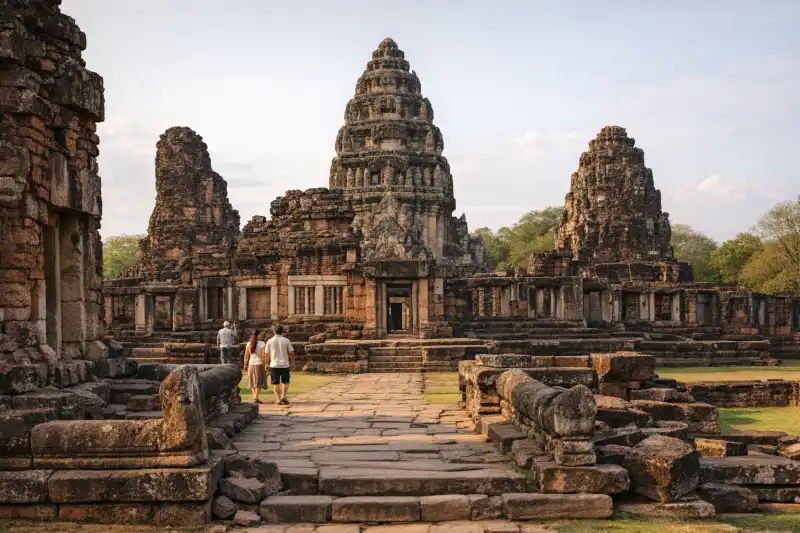
In the heart of northeastern Thailand, Phimai Historical Park rises from the flatlands of Nakhon Ratchasima Province with a presence that feels both stately and unexpectedly serene. Phimai Historical Park is one of Thailand’s most important Khmer monuments, yet it often feels calmer and more intimate than the country’s better-known temple destinations. Within its laterite walls and around its finely carved sandstone towers, visitors find a site that once stood on a major imperial route linking the Khmer world of Angkor with the Khorat Plateau.
What makes Phimai so memorable is the way grandeur and restraint meet in one place. The central sanctuary, with its pale stone surfaces and elegant proportions, has the ceremonial force of an imperial temple, but the grounds remain manageable enough that you can absorb details slowly: a lintel worn smooth by time, a naga balustrade tracing the edge of a causeway, a quiet courtyard where broken carvings still suggest the confidence of the builders who shaped them. Although it was built under Khmer influence, Phimai also reflects regional identity, local adaptation, and a long spiritual history that moved between Hindu and Buddhist traditions.
For travelers interested in ancient architecture, Southeast Asian history, or simply a rewarding day trip beyond Thailand’s standard tourist trail, Phimai offers unusual depth. It is a place where political power, sacred geography, craftsmanship, and later conservation all become visible in stone, and where the past still feels close enough to walk through.
History
Early settlement and sacred landscape
Long before the great temple complex was built, the Phimai area was already a settled and strategically valuable location. Positioned near the Mun River basin on the Khorat Plateau, the region supported agriculture, local trade, and movement across northeastern mainland Southeast Asia. By the first millennium CE, communities here were participating in wider cultural networks that connected what is now Thailand, Cambodia, Laos, and beyond.
The rise of Khmer political and cultural influence across the region transformed Phimai into an important provincial center. The site’s location on a road associated with the Angkorian world helped elevate its significance. Inscriptions and archaeological evidence suggest that Phimai was not simply a remote outpost but a major settlement with strong ties to the Khmer state. Its urban layout, defensive walls, reservoirs, and temple architecture point to long-term planning rather than a single isolated act of construction.
Construction under the Khmer Empire
Most of the standing remains at Phimai date to the 11th and 12th centuries, when the Khmer Empire reached deep into what is now northeastern Thailand. Scholars generally associate major building phases with the reigns of kings such as Suryavarman I, Udayadityavarman II, and especially Jayavarman VI or his successors, though exact attributions remain debated. Like many Khmer monuments, Phimai developed over time, with additions, repairs, and changing religious emphases.
The architecture reveals the site’s high status. The temple enclosure, gates, libraries, bridges, and central tower were executed in carefully cut sandstone and laterite, materials commonly used in elite Khmer religious construction. One striking feature is the orientation of the main sanctuary, which faces south rather than the more typical eastward direction seen at many Khmer temples. This unusual alignment may have been connected to the road toward Angkor or to local ritual geography.
Although Khmer state religion had long been rooted in Hindu concepts of divine kingship, by the time Phimai flourished, Mahayana Buddhism had gained influence in some royal and regional contexts. Phimai is notable because its iconography and plan suggest a strong Buddhist dimension, though elements associated with Hindu cosmology remain embedded in the architecture. This blending is one reason the site is so important for understanding the religious complexity of the Angkorian period.
Phimai as a regional center
At its height, Phimai was more than a temple. It was part of a substantial urban settlement enclosed by walls and integrated with reservoirs, roads, and surrounding habitation zones. The sanctuary likely functioned as the spiritual focus of a larger administrative and ceremonial center. The city’s planning echoed broader Khmer ideas about sacred space, where temples symbolized cosmic mountains and moats or reservoirs represented the primordial waters of creation.
Its importance may also be linked to political developments in the wider empire. Some historians note that Jayavarman VI, an important Khmer ruler, may have had origins in the Phimai region, highlighting the area’s role in imperial politics. Whether or not Phimai directly produced kings, it clearly belonged to a network of powerful provincial centers that helped sustain Khmer control far from Angkor itself.
As with many temple cities, Phimai’s life changed gradually rather than ending all at once. Religious practices evolved, political authority shifted, and over time the monument lost its original centrality. Yet it remained a known sacred place in local memory, even as parts of the structure fell into ruin and vegetation encroached on the complex.
Decline, rediscovery, and restoration
Following the weakening of Khmer political control in the region and the changing religious landscape of mainland Southeast Asia, Phimai entered a long post-imperial phase. Elements of Theravada Buddhist devotion became more prominent in Thailand, and many older Khmer sanctuaries were adapted, reused, or simply left to age. Local communities continued to live around the old city, and the monument was never wholly forgotten, but its original ceremonial role faded.
In the modern era, Phimai drew the attention of historians, archaeologists, and conservation authorities because of its outstanding architecture and unusual state of preservation. During the 20th century, Thai specialists and international experts worked to document, stabilize, and restore major sections of the site. Restoration efforts aimed to preserve original material where possible while reassembling collapsed architectural components through careful anastylosis.
Today, Phimai Historical Park is administered as one of Thailand’s premier archaeological attractions. Its conservation has made the site far more accessible without stripping away its sense of age. For modern visitors, the park represents both a Khmer imperial monument and a landmark of Thai heritage preservation, linking local identity with the broader history of Southeast Asia.
Key Features
The approach to Phimai Historical Park immediately establishes a ceremonial rhythm. Visitors cross a reconstructed causeway and pass through a naga bridge, where the serpent balustrades evoke a symbolic crossing from the human world into sacred space. This motif, familiar in Khmer temple design, was more than decoration: it represented transition, protection, and cosmological order. At Phimai, the bridge feels especially effective because it leads so clearly into the geometric calm of the main enclosure.
The outer walls and gateways frame the monument with a distinctly urban sense of planning. Rather than appearing as an isolated shrine in the countryside, the temple reads as the centerpiece of a designed landscape. The gopuras, or entrance pavilions, still carry traces of their formal authority, with carved details and strong axial lines guiding movement inward. Even before you reach the central sanctuary, the sequence of spaces creates a sense of elevation and narrowing focus.
The main prang, or tower sanctuary, is the visual heart of the site. Built in pale sandstone, it rises with a vertical elegance that sets it apart from the heavier massing of some other Khmer temples. Its carvings, though weathered, preserve floral motifs, divine imagery, and architectural moldings of exceptional refinement. The interior is relatively compact, but the power of the structure lies in its balanced proportions and the way light catches the stone surfaces at different times of day. In the morning and late afternoon, the sanctuary can appear almost luminous.
Flanking structures add complexity to the complex. The so-called libraries and smaller towers suggest ritual functions tied to scripture, offerings, or supporting ceremonies. Their exact use may remain debated, but architecturally they enrich the park by showing how the central shrine was embedded in a larger sacred program. Pediments and lintels depict scenes that reveal the layered religious environment of the site, where Buddhist themes may coexist with forms inherited from earlier Hindu temple traditions.
One of Phimai’s most intriguing features is its orientation. Unlike many Khmer temples that face east, Phimai’s principal entrance is aligned southward. This has prompted ongoing scholarly discussion, and for visitors it offers a subtle reminder that Khmer architecture was not rigidly uniform. Local terrain, political routes, and religious ideas could shape major design choices. Standing on the southern axis and looking inward, you get a sense that the temple was meant to address not only the heavens but also a lived geography of roads, people, and power.
The surrounding archaeological zone deepens the experience. Just beyond the main monument, traces of the old city walls and water systems hint at the larger settlement that once supported the sanctuary. Nearby, the Phimai National Museum helps contextualize what you see in the park itself. Sculptures, lintels, inscriptions, ceramics, and architectural fragments reveal the artistic language of the region and help visitors understand details that may be easy to miss on the standing structures. Seeing a weathered carving in the museum often makes the motifs on the temple walls suddenly more legible.
Atmosphere is one of Phimai’s greatest strengths. Unlike more crowded temple sites, it often allows for unhurried observation. You can spend time watching how shadows move across the galleries, how the laterite contrasts with the finer sandstone, and how the monument sits within the modern town that has grown around it. This closeness between ancient ruin and contemporary life gives Phimai a special character. It is neither remote wilderness ruin nor over-curated showpiece; it feels like an old sacred center still woven into a living place.
For photographers, the central sanctuary and axial walkways are obvious highlights, but many of the site’s best moments come from details: a broken guardian figure, lichen patterns on stone blocks, or the framed view through successive doorways. For history-minded travelers, these same elements reveal building techniques, iconographic choices, and centuries of repair. Phimai rewards both the first glance and the patient second look.
Getting There
Phimai Historical Park is easiest to reach from Nakhon Ratchasima, usually called Korat, the main transport hub of the region. From central Korat, Phimai is about 60 kilometers away by road. Public buses and minibuses run from the city to Phimai town, with fares commonly around 50 to 90 THB one way depending on vehicle type and departure point. The journey usually takes about 1 to 1.5 hours. Once you arrive at Phimai bus station, the historical park is close enough to reach by tuk-tuk, motorcycle taxi, or even on foot if you are traveling light and the weather is not too hot.
If you prefer greater flexibility, hiring a private car or taxi from Korat is straightforward. Expect to pay roughly 1,000 to 1,800 THB for a round trip with waiting time, depending on negotiation, vehicle type, and season. This option is especially useful if you want to combine Phimai with other attractions in the area, such as Sai Ngam banyan grove or regional museums.
From Bangkok, the most practical route is to take a bus or train to Nakhon Ratchasima first, then continue onward to Phimai. Long-distance buses from Bangkok to Korat often cost around 220 to 350 THB and take 3.5 to 5 hours. Trains vary by class, generally from about 100 to 400 THB. Renting a car from Bangkok is another good choice for independent travelers, with a driving time of roughly 4 to 5 hours total depending on traffic.
Entrance fees can change, but visitors should budget for the park ticket plus a small extra amount if visiting the nearby museum. Carry cash, water, and sun protection, especially if using public transport.
When to Visit
The best time to visit Phimai Historical Park is generally during Thailand’s cooler dry season, from November to February. At this time, daytime temperatures are usually more comfortable, the light is pleasant for photography, and exploring the exposed stone courtyards is far easier than during the hottest months. Early mornings in particular can feel remarkably calm, with softer sunlight bringing out the texture of the sandstone and fewer visitors in the main sanctuary area.
March to May is the hottest period in northeastern Thailand. The site remains open and can still be rewarding, but midday heat can be intense, often rising above 35°C. If you travel during these months, plan to arrive shortly after opening time or later in the afternoon. A hat, sunscreen, and plenty of water are essential, because much of the park offers limited shade.
The rainy season, usually from May or June through October, transforms the surrounding landscape into a greener setting. Showers can be heavy but are often intermittent rather than all-day events. This season brings atmospheric skies and fewer tourists, which some travelers prefer. The downside is increased humidity, occasional slippery surfaces, and less predictable travel conditions if you are relying on road transport.
If possible, avoid the hottest middle hours regardless of season. The ideal visit is often between 8:00 and 10:30 in the morning or after about 4:00 in the afternoon. If your schedule allows, pairing the park with the nearby museum during the midday heat makes for a more comfortable and informative day. Festival periods in the town can also add local color, but they may bring larger crowds, so check local calendars if you want either a livelier or quieter experience.
| Quick Facts | Details |
|---|---|
| Location | Phimai District, Nakhon Ratchasima Province, Thailand |
| Ancient culture | Khmer Empire |
| Main period | 11th-12th centuries CE |
| Primary materials | Sandstone and laterite |
| Religious background | Mahayana Buddhist with Hindu cosmological influences |
| Notable feature | South-facing main sanctuary |
| Distance from Korat | About 60 km |
| Typical visit length | 1.5-3 hours |
| Best time to go | November to February, early morning or late afternoon |
| Good to combine with | Phimai National Museum and regional Khmer heritage sites |
Guided tours: worth it?
Self-guided works here, but a guide can add real value if you want the ruins explained as a living place rather than just a sequence of monuments.
Best for
- First-time visitors who want context, not just photos
- Short visits where a planned route saves time
When to go self-guided
Go independently if you prefer setting your own pace, reading as you go, and checking official hours or ticket rules directly before you arrive.
What I’d avoid
Skip paid tours that bundle unrelated stops you do not actually want. The best option should either save meaningful planning time or add historical context you would miss on your own.
Phimai Historical Park tours
Useful when: you want to compare guided formats before deciding
Nakhon Ratchasima cultural tours
Useful when: you want to compare guided formats before deciding
Phanom Rung and Isan temple tours
Useful when: you want to compare guided formats before deciding
Some tour links are affiliate links, which may earn Ancient Travel a small commission at no extra cost to you. I try to surface options that make practical sense for the site—not just anything bookable.
Frequently Asked Questions
What is Phimai Historical Park?
Phimai Historical Park is a major Khmer-era temple complex in Nakhon Ratchasima Province, Thailand, centered on an impressive sandstone sanctuary built between the 11th and 12th centuries.
How far is Phimai Historical Park from Korat?
Phimai is about 60 kilometers northeast of Nakhon Ratchasima, often called Korat, and can usually be reached in around 1 to 1.5 hours by road depending on traffic.
Is Phimai Historical Park older than Angkor Wat?
Parts of Phimai predate or are roughly contemporary with the early phases of Angkor Wat, and the site reflects the architectural and religious traditions of the Khmer Empire during the 11th and 12th centuries.
How much time do you need at Phimai Historical Park?
Most visitors spend 1.5 to 3 hours exploring the main sanctuary, galleries, bridges, and museum exhibits nearby, though history enthusiasts may want longer.
What is the best time of day to visit Phimai Historical Park?
Early morning and late afternoon are best for cooler temperatures, softer light for photography, and a quieter atmosphere inside the temple grounds.
Can you visit Phimai Historical Park as a day trip?
Yes. It is commonly visited as a day trip from Nakhon Ratchasima and can also be combined with other Khmer heritage sites in northeastern Thailand.
Nearby Ancient Sites
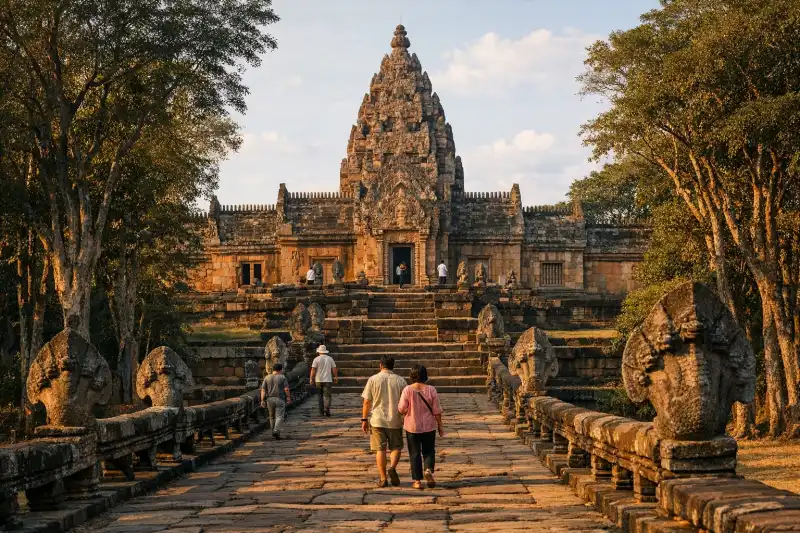
Phanom Rung
Khmer EmpireA dramatic Khmer hilltop temple in Thailand, Phanom Rung is famed for its sandstone carvings and sun...
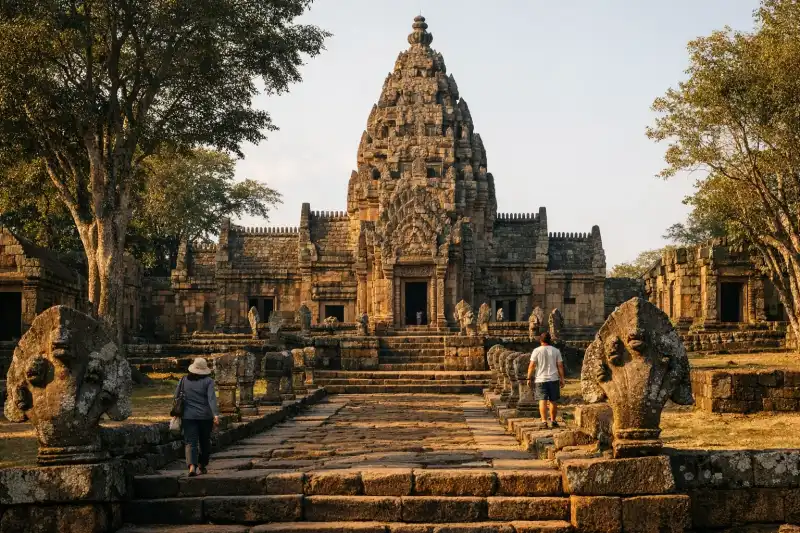
Prasat Hin Khao Phnom Rung
Khmer EmpireA dramatic Khmer hilltop temple in Thailand famed for its sandstone architecture, sacred processiona...
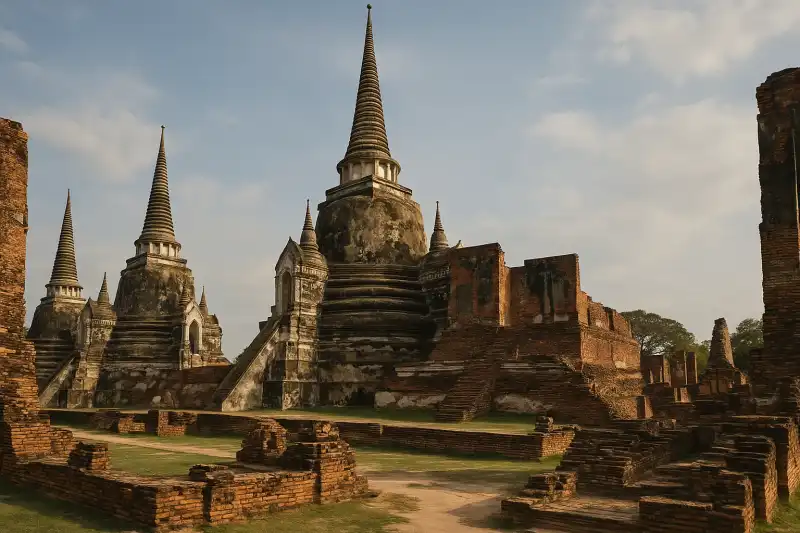
Ayutthaya Travel Guide 2026: Temple Ruins, Day Trip Planning, and What to Prioritize
Ayutthaya KingdomPlan a focused Ayutthaya visit with practical temple routing, timing, and transport guidance from Ba...
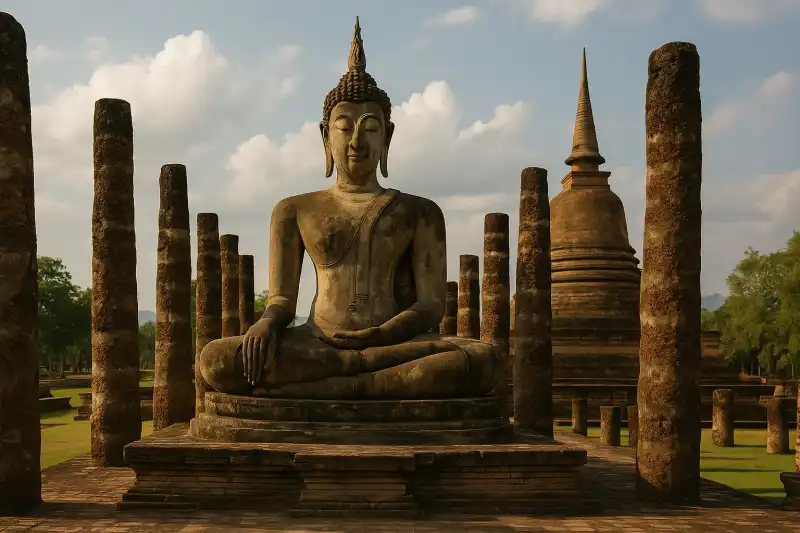
Sukhothai Historical Park Travel Guide 2026: Thailand’s First Capital Without the Crowds
Sukhothai KingdomPlan a smarter Sukhothai Historical Park visit with route tips, key ruins, and practical timing for ...