Quick Info
At a glance
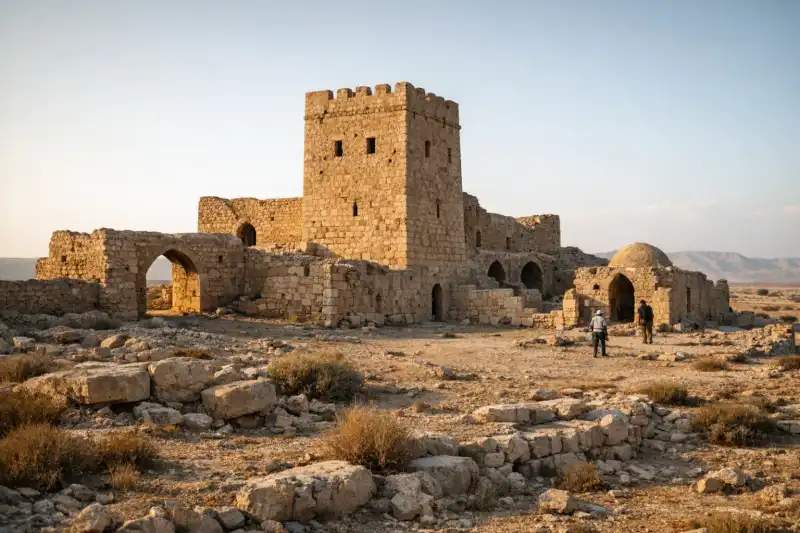
Qasr al-Mushash in Jordan is one of those places that rewards travelers who are willing to look beyond the country’s headline monuments and into its quieter historical landscapes. Set out in the open steppe east of Amman, the site feels at first like an interruption in the desert: cut stone walls, weathered blocks, and the outline of a once-planned residence rising from a plain shaped by wind, sun, and long-distance movement. It belongs to the family of early Islamic monuments often grouped as Jordan’s desert castles, yet it has a personality of its own—less polished than some of the better-known examples, more atmospheric in its isolation, and deeply evocative of the Umayyad era’s experiments in architecture, power, and rural presence.
To stand here is to sense how connected this seemingly empty landscape once was. Routes crossed the region, estates drew life from seasonal water and controlled cultivation, and rulers or elites projected influence through buildings that were not only practical shelters but also statements. Qasr al-Mushash survives today in fragmentary form, but fragments can be eloquent. The surviving masonry, plan, and setting all hint at a place intended to command attention. For visitors interested in archaeology, architecture, or the broader story of early Islamic Jordan, it offers a quieter, more contemplative experience than crowded urban sites. Its appeal lies not in lavish restoration, but in the chance to read history directly from the stone and the land around it.
History
Umayyad ambitions in the Jordanian steppe
Qasr al-Mushash is generally associated with the Umayyad period, the era when the first great Islamic dynasty ruled from Damascus between the 7th and mid-8th centuries CE. During this time, the lands of modern Jordan occupied a strategically important position within the wider caliphate. They linked Syria, Arabia, and Palestine, and they contained both settled communities and open landscapes suitable for seasonal movement, estates, and hunting reserves. It was in this context that a network of desert palaces, lodges, bathhouses, and rural compounds emerged.
These structures are often called “desert castles,” though the term can be misleading. Many were not castles in the strict military sense. Instead, they combined functions: residences, agricultural centers, administrative posts, elite retreats, and symbols of Umayyad authority beyond major cities. Qasr al-Mushash fits into this broader architectural and political program. Its very placement in the steppe suggests a site meant to anchor presence in a marginal but meaningful zone, where control of land, water, and movement mattered as much as urban prestige.
Building a rural palace
Although the exact details of its patronage remain less famous than those of some other Jordanian Umayyad monuments, Qasr al-Mushash appears to have been conceived as a substantial complex rather than a mere roadside shelter. The architecture points to deliberate planning, with a fortified-looking exterior and an internal arrangement that likely balanced practical use with residential comfort. Such compounds often expressed a fusion of inherited Late Roman and Byzantine building traditions with emerging Islamic courtly tastes.
The site’s masonry and layout indicate that its builders worked within a world where architectural knowledge moved easily across cultural boundaries. Stone-cutting techniques, courtyard-centered planning, and the careful orientation of rooms all reveal a continuity with earlier regional traditions, while the overall function belongs unmistakably to the early Islamic order. This blend is one of the most compelling aspects of Umayyad architecture in Jordan: it shows a dynasty not creating in a vacuum, but reshaping the built environment of the Near East through adaptation and innovation.
From use to decline
The Umayyad state was brought to an end in 750 CE by the Abbasid Revolution. That political change altered the geography of power in the Islamic world. With the new dynasty ruling from Iraq, many sites tied to Umayyad elite life in the Syrian and Jordanian countryside seem to have lost some of their original significance. Qasr al-Mushash likely experienced the consequences of that shift. Buildings dependent on aristocratic use, organized estate management, or dynastic patronage could quickly become underused, repurposed, or abandoned.
Environmental realities may also have shaped the site’s fate. Rural compounds in semi-arid landscapes depended on reliable access to water, labor, and security. If any of those networks weakened, the maintenance of a large stone complex became difficult. Over time, roofs collapsed, interiors filled with debris, and usable stone may have been removed for local reuse. What remains today reflects both natural decay and the long afterlife of architecture in inhabited landscapes, where old buildings often serve as quarries for later communities.
Rediscovery and archaeological interest
Modern interest in Qasr al-Mushash developed through the broader scholarly study of Jordan’s early Islamic monuments. As archaeologists and historians paid increasing attention to the Umayyad desert castles, more remote and lesser-known sites also entered the academic record. Qasr al-Mushash became important not because it was perfectly preserved, but because it offered another piece in the puzzle of how the Umayyads occupied and imagined the steppe.
Archaeological attention has focused on its plan, construction methods, and relationship to other regional sites. Even in ruin, it helps scholars compare architectural types across Jordan and Syria: which sites were ceremonial, which were agricultural, which had baths, which emphasized defense, and which served as expressions of status. For visitors today, this research matters because it transforms the ruins from anonymous walls into evidence. Qasr al-Mushash is not simply a broken building in the desert. It is a document in stone, preserving traces of a formative moment in Islamic history when architecture was used to organize landscape, display legitimacy, and shape elite life beyond the city.
Key Features
The first impression of Qasr al-Mushash is its commanding simplicity. Unlike monuments crowded with carved decoration or monumental gateways, this site draws the eye through mass and outline. The walls, even in their damaged state, retain a sense of enclosure and deliberate geometry. From a distance, the ruin resembles a stern block emerging from the plain, and that visual effect is likely part of what once made it so effective. Architecture in the steppe needed to be legible against a wide horizon. The strong external form of Qasr al-Mushash would have announced occupation, wealth, and order in an otherwise open landscape.
As you move closer, the quality of the stonework becomes clearer. The masonry reflects skilled building practices suited to the region’s available materials. Large blocks create a durable shell, and the surviving corners and wall lines help visitors imagine the original height and arrangement of the complex. There is a tactile pleasure in such sites: weather-softened edges, variations in stone color, and joints that still hold after more than a millennium. These details remind travelers that even apparently austere architecture can be deeply expressive.
The layout is another key feature. Like many early Islamic residences and rural palaces, Qasr al-Mushash appears to have been organized around internal space rather than exterior spectacle alone. Courtyards, chambers, and service areas would have structured life inside the enclosure, creating a rhythm between public reception, household activity, and environmental practicality. In Jordan’s climate, enclosed courtyards helped manage light, heat, and airflow. They also created a social center around which daily life unfolded. Even where complete rooms no longer survive, the remaining footprint suggests this inward-looking logic.
Its setting matters as much as its architecture. Qasr al-Mushash does not exist in isolation from the land; the surrounding plain is part of the monument’s meaning. The broad horizon, sparse vegetation, and changing desert light all help explain why Umayyad patrons built in such places. This was not empty wilderness in their eyes, but a zone of movement, estate management, seasonal opportunity, and elite display. Standing at the site, visitors can appreciate how architecture worked with visibility. Anyone approaching would have seen the complex from a distance, and those within it would have enjoyed a commanding sense of space and control.
Another important feature is the site’s relative quiet. Because Qasr al-Mushash is less visited than Jordan’s major tourist attractions, it often offers a more reflective archaeological experience. The absence of heavy infrastructure can be seen as a limitation, but it also allows the landscape to remain legible. You are not overwhelmed by signs, barriers, or crowds. Instead, you encounter the monument in a way closer to how an explorer or early surveyor might have approached it: by reading the ground, tracing the walls, and using imagination informed by history. For many travelers, that sense of discovery is precisely the appeal.
Qasr al-Mushash also gains importance through comparison. Visitors who combine it with other Umayyad sites in Jordan can notice both family resemblance and local variation. Some desert castles are more decorative, some include better-preserved baths, and some seem more overtly defensive. Qasr al-Mushash contributes to this spectrum by embodying the robust, estate-like side of Umayyad rural architecture. It helps demonstrate that the so-called desert castles were not a single formula, but a flexible group of buildings responding to patronage, geography, and function.
Finally, there is the emotional feature no site map can capture: atmosphere. Ruins in arid environments have a particular way of holding time. The silence can be intense, broken only by wind or the sound of distant vehicles. Light changes rapidly across the stone, especially in the morning and late afternoon, revealing textures that midday glare can flatten. This makes Qasr al-Mushash especially rewarding for photographers and thoughtful walkers. It is a place where architecture, environment, and historical imagination come together without much mediation. That understated quality is exactly what gives the site its lasting power.
Getting There
Qasr al-Mushash is most easily reached from Amman, which serves as the practical base for almost all visits. Because the site lies in a relatively remote area east of the capital, the most convenient option is a private car, hired driver, or organized day tour focused on Jordan’s desert castles. Driving from central Amman usually takes around 45 to 75 minutes depending on traffic, route conditions, and how directly you travel. Rental cars in Amman commonly start at about 25–40 JOD per day for a basic vehicle, while a private driver for half or full day outings often costs around 50–90 JOD depending on itinerary length and negotiation.
Taxis can work, but they are better suited to travelers who arrange a return journey in advance. A one-way ride from Amman to the area may cost roughly 25–40 JOD, though prices vary by pickup point and waiting time. If you ask the driver to remain with you and continue on to other sites, expect a higher total fare. Ride-hailing apps may be useful within Amman, but for a remote archaeological stop, pre-arranged transport is more reliable.
Public transport is limited and not ideal for most visitors. Buses and service taxis may get you part of the way toward eastern districts or settlements, but they rarely offer a straightforward connection to the ruins themselves. If you are traveling on a tight budget and know the local transport system well, it may be possible to reduce costs, but it will almost certainly involve extra walking, uncertain timing, and the challenge of finding transport back.
Most travelers therefore combine Qasr al-Mushash with a broader day route from Amman. Bringing water, offline maps, and cash is wise, as services near the site may be sparse.
When to Visit
The best time to visit Qasr al-Mushash is during spring and autumn, when Jordan’s temperatures are generally milder and the desert light is especially beautiful. From March to May, the plains east of Amman are at their most welcoming. Days are usually warm rather than oppressive, mornings can be crisp, and occasional seasonal greenery softens the landscape. This is an excellent season for walking around the ruins comfortably and lingering long enough to appreciate architectural details.
Autumn, particularly from late September through November, is another strong choice. Summer’s extreme heat begins to fade, the air is often clear, and the lower sun produces rich tones across the stone. Photographers often prefer these months because the light is less harsh than in midsummer. If you are planning a broader archaeology itinerary in Jordan, autumn is one of the easiest seasons for combining urban and desert sites in a single trip.
Summer visits are possible, but they require preparation. From June through August, daytime temperatures can become very high, and exposed ruins with little shade are much more demanding. If you go in summer, aim for early morning or late afternoon, carry plenty of water, wear sun protection, and avoid the hottest part of the day. Winter can be rewarding too, especially for travelers who like emptier landscapes and dramatic skies, but temperatures may feel cold in the wind, and weather can change quickly.
In any season, morning and late afternoon are the most pleasant times on site. The softer light helps reveal the texture of the masonry, and the desert atmosphere feels calmer and more dimensional than under noon glare.
| Quick Facts | Details |
|---|---|
| Location | Eastern hinterland of Amman, Jordan |
| Country | Jordan |
| Region | Amman Governorate |
| Historical Period | Early Islamic / Umayyad |
| Estimated Date | 8th century CE |
| Site Type | Desert palace / rural fortified residence |
| Best Base | Amman |
| Typical Visit Length | 45 minutes to 1.5 hours |
| Best Seasons | Spring and autumn |
| Access | Best by private car, driver, or organized tour |
| What to Bring | Water, hat, sunscreen, sturdy shoes, offline map |
| Good To Combine With | Amman Citadel, Ain Ghazal, Bethany Beyond the Jordan, Deir Alla |
Qasr al-Mushash may not have the fame of Petra or the urban layers of the Amman Citadel, but that is precisely why it leaves such a distinctive impression. It belongs to a more understated Jordan: one of open horizons, scattered ruins, and historical questions still visible in the landscape. For travelers interested in the Umayyad world, it offers direct contact with the rural architecture of a formative Islamic dynasty. For general visitors, it provides something rarer still—a chance to experience an ancient site where solitude, scale, and setting remain central to the encounter.
What survives at Qasr al-Mushash is enough to awaken curiosity. The enclosure, the masonry, the placement in the steppe, and the echoes of a wider desert castle network all suggest a site that once carried both practical and symbolic force. Visiting it encourages a slower kind of travel, one based less on spectacle than on observation. You notice how the walls meet the horizon, how the stone holds the heat, and how political history can be written into architecture far from any capital.
In Jordan, some of the most rewarding heritage experiences come from connecting famous places with quieter ones. Qasr al-Mushash is one of those quieter places, and it repays the effort. If you approach it with water in your bag, time in your schedule, and an interest in how landscapes preserve memory, you will find that this remote ruin speaks with surprising clarity.
Guided tours: worth it?
A guide can be genuinely useful at Qasr al-Mushash, especially if you want help with transport, timing, tickets, or understanding a large site without losing half the day to logistics.
Best for
- First-time visitors who want context, not just photos
- Travelers who want transport, timing, or entry logistics handled
- Short visits where a planned route saves time
When to go self-guided
Go independently if you already have transport and tickets sorted, enjoy moving at your own pace, and are comfortable checking the latest official rules before you arrive.
What I’d avoid
Skip paid tours that bundle unrelated stops you do not actually want. The best option should either save meaningful planning time or add historical context you would miss on your own.
Jordan Desert Castles Tour from Amman
Useful when: transport or pickup logistics matter
Amman to Eastern Desert Castles Day Tour
Useful when: you want to compare guided formats before deciding
Private Jordan Archaeology Tour from Amman
Useful when: you want flexible timing or a private guide
Some tour links are affiliate links, which may earn Ancient Travel a small commission at no extra cost to you. I try to surface options that make practical sense for the site—not just anything bookable.
Frequently Asked Questions
Where is Qasr al-Mushash located?
Qasr al-Mushash is in Jordan’s eastern hinterland, generally approached from Amman across the semi-arid plains associated with the country’s desert castle zone.
What is Qasr al-Mushash known for?
It is known as an Umayyad-period desert palace or fortified residence, valued for its masonry, plan, and its role in the network of early Islamic sites east of Amman.
Can you visit Qasr al-Mushash independently?
Yes, but most visitors find it easier to go by private car or organized tour because public transport is limited and the site is in a relatively remote area.
How much time should I allow for a visit?
Allow around 45 minutes to 1.5 hours on site, or longer if you want time for photography, architectural observation, and combining it with other desert castle stops.
Is Qasr al-Mushash suitable for families?
Yes, families can visit, but there is little shade or visitor infrastructure, so bring water, sun protection, and sturdy footwear for uneven ground.
What should I bring to Qasr al-Mushash?
Bring plenty of water, a hat, sunscreen, good walking shoes, cash for transport needs, and a charged phone or offline map since facilities nearby can be sparse.
Nearby Ancient Sites
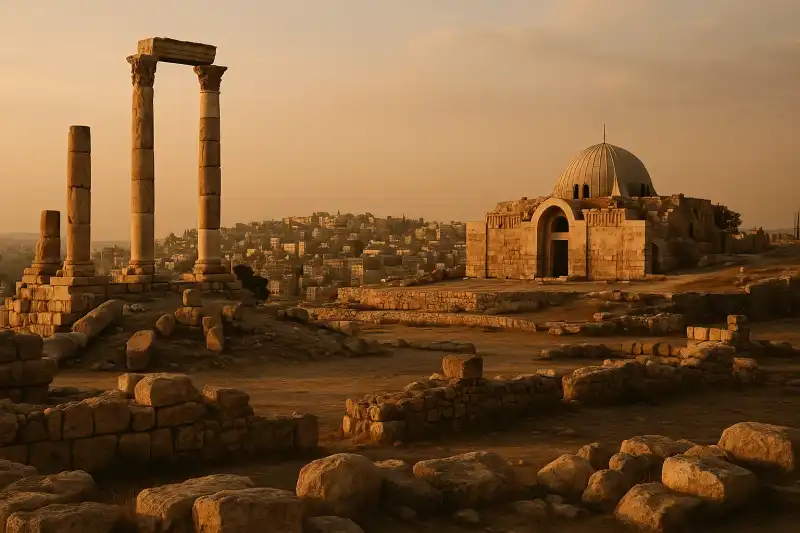
Amman Citadel Jordan Guide 2026: Temple of Hercules & Ancient Rabbah
Ammonite-Roman-UmayyadExplore Jordan's ancient citadel overlooking modern Amman. Discover the Temple of Hercules, Umayyad ...
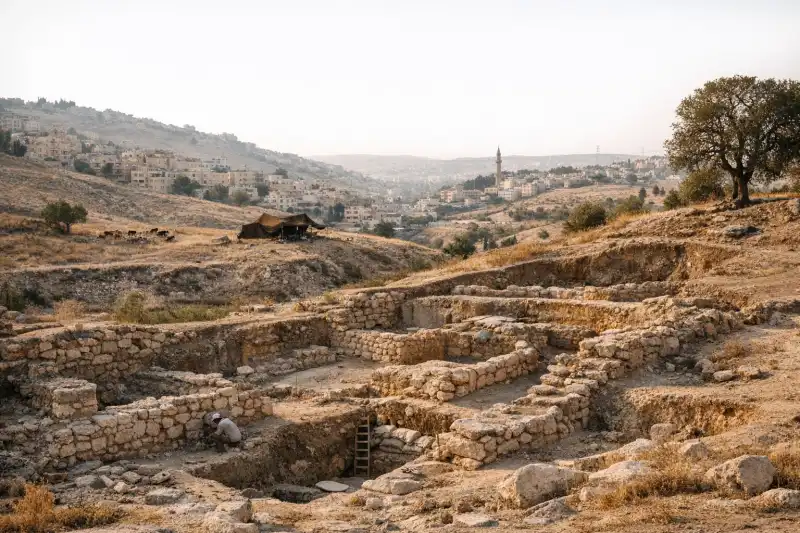
Ain Ghazal
Pre-Pottery Neolithic communities of the LevantDiscover Ain Ghazal, Jordan’s remarkable Neolithic settlement famed for its ancient plaster statues ...
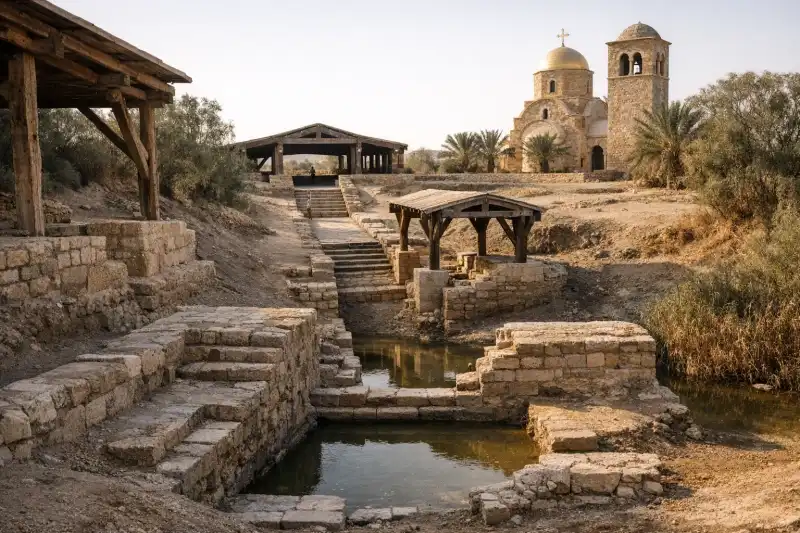
Bethany Beyond the Jordan
Bethany Beyond the Jordan in Jordan is an archaeological and religiously significant site believed t...
Deir Alla
Canaanite, Israelite-era, and regional Levantine culturesExplore Deir Alla in Jordan, an important Jordan Valley archaeological mound linked to Bronze and Ir...