Quick Info
At a glance
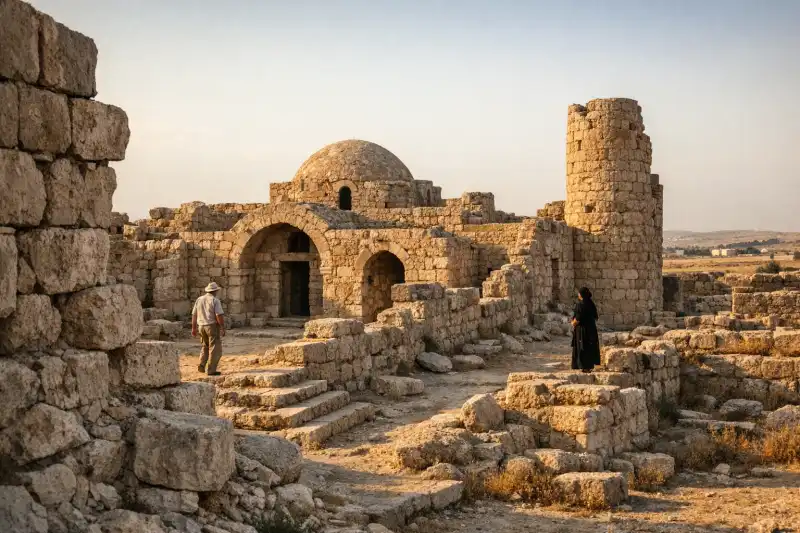
Qasr Al-Qastal in Jordan sits in a landscape where modern roads, airport traffic, and village life meet the surviving traces of an early Islamic royal estate. At first glance the site can seem modest compared with Jordan’s headline monuments, yet that is part of its appeal. The stone ruins of this Umayyad complex reveal themselves slowly: a palace enclosure, a mosque, evidence of water management, and carved architectural fragments that hint at the refined court culture of the 8th century. Because it lies just south of Amman and close to Queen Alia International Airport, Qasr Al-Qastal often feels like a secret detour rather than a major excursion, but travelers interested in architecture, archaeology, and the formation of early Islamic states will find it deeply rewarding.
What makes Qasr Al-Qastal memorable is not sheer scale but atmosphere. The site stands at a threshold between cultivated land and the drier open spaces associated with Jordan’s desert-castle tradition. Its worn masonry catches the light beautifully, especially in the morning and late afternoon, when the pale stone turns warm gold. Here, you can walk through the remains of a complex built for authority, rest, ceremony, and control of resources, then look outward toward the routes that connected the Umayyad capital to the wider Bilad al-Sham. It is a place that asks you to imagine movement: officials arriving, prayers being called, water being stored, and carved ornament announcing power in a frontier landscape.
History
Origins in the Umayyad era
Qasr Al-Qastal was established in the early Islamic period, most likely in the 8th century CE during the Umayyad dynasty. The Umayyads, ruling from Damascus between 661 and 750, invested heavily in a chain of palatial, administrative, agricultural, and roadside complexes across greater Syria, including present-day Jordan. These sites are often grouped under the popular label “desert castles,” though many were not true castles in the military sense and were not always deep in the desert. Instead, they served varied purposes: seasonal residences, estate centers, statements of dynastic prestige, and nodes in local and regional networks.
Qasr Al-Qastal belongs to this broader architectural and political world. Its location was strategic rather than isolated. The site stood on routes linking the central Jordanian plateau with Amman and farther north, while also benefiting from enough surrounding settlement and agricultural potential to support an estate. The palace and associated mosque suggest a place where governance, religion, hospitality, and land management overlapped. This combination reflects a wider Umayyad pattern of projecting authority through architecture while integrating local landscapes into imperial administration.
Development as a palace complex
The complex was more than a standalone building. Archaeological work has shown that Qasr Al-Qastal formed part of a larger built environment that included the palace enclosure, a mosque, water installations, and nearby structures that may have supported habitation, storage, or estate activity. Like other Umayyad sites, it blended practical functions with ceremonial ones. The ruler or local governor did not necessarily live here continuously, but the architecture signaled elite presence and organized control.
One of the site’s most important features is its mosque, which is among the early Islamic religious buildings in Jordan associated with this phase of expansion and consolidation. The presence of a mosque immediately adjacent to the palace complex reinforces how closely political and religious authority were expressed in early Islamic monumental design. Water infrastructure also played a key role. In a region where seasonal rainfall had to be captured and directed carefully, reservoirs and channels were as vital to prestige as decorative stonework. A functioning estate needed water for people, animals, agriculture, and ritual washing.
Decline, reuse, and survival
The Umayyad dynasty fell in 750 CE, replaced by the Abbasids, and many Umayyad rural and semi-rural complexes across the region underwent change, partial abandonment, or altered use. Qasr Al-Qastal likely did not continue to enjoy the same level of patronage after the political center shifted eastward. As often happened at ancient sites, some materials may have been reused locally, walls collapsed over time, and the complex gradually lost its original coherence.
Even so, the remains endured because of the quality of their stone construction and the relative continuity of settlement in the area. The village of Al-Qastal preserved the historical name, creating a link between the medieval estate and the modern landscape. Travelers, scholars, and local residents long recognized the antiquity of the ruins, though systematic archaeological attention came much later.
Archaeology and modern significance
In the modern era, Qasr Al-Qastal has gained importance as a key site for understanding Umayyad architecture in Jordan outside the better-known examples such as Qasr Amra or Qasr Kharana. Excavation and conservation have helped clarify the layout of the complex and bring attention to its artistic elements, especially carved stone decoration. Though parts of the site remain fragmentary, what survives is enough to place Qasr Al-Qastal among the significant early Islamic monuments of the region.
Today, the site matters on several levels. For archaeologists, it helps reconstruct how Umayyad elites shaped landscapes through architecture and water control. For historians, it illuminates the local expression of a dynasty often viewed only through grand capitals. For visitors, it offers a quieter and more contemplative experience than Jordan’s busier attractions. In that sense, Qasr Al-Qastal has survived not just as a ruin but as a record of how power was built into the land.
Key Features
The first feature most visitors notice at Qasr Al-Qastal is the palace enclosure itself. Although much of the structure survives only in foundations and partial walls, the rectangular plan still communicates order and authority. You can sense the controlled geometry typical of Umayyad palace architecture, where open courtyards and surrounding rooms created a transition between public display and more private activity. Walking the perimeter, it becomes easier to imagine how the complex would once have framed movement, directing guests through a carefully arranged architectural sequence.
Particularly striking are the carved stone fragments found around the site. Qasr Al-Qastal is known for ornamental details that once enriched facades, entrances, and possibly interior spaces. Even when seen in isolation, these pieces reveal a sophisticated visual language. Floral motifs, geometric carving, and sculpted architectural elements tie the site to broader artistic currents in the Umayyad world, where late antique traditions were adapted into new Islamic contexts. This decoration mattered politically. Fine carving was not simply aesthetic; it proclaimed wealth, taste, and legitimacy. In a setting that might otherwise seem austere, ornament transformed the palace into a statement of cultivated rule.
The mosque is another essential part of the experience. Though modest in scale compared with later monumental mosques, its presence is central to understanding the site. The proximity of mosque and palace reflects the practical and symbolic integration of worship with governance. Here the architecture of prayer was part of an estate complex, not isolated from daily administration or elite life. For visitors, the mosque area offers one of the clearest reminders that Qasr Al-Qastal was not merely a residence or retreat but a functioning center where political and spiritual routines intersected.
Water management is one of the most intellectually rewarding features, even if it requires some imagination on site. The remains of reservoirs and channels reveal the engineering skill needed to sustain occupation in Jordan’s semi-arid environment. Water systems were often the hidden backbone of early Islamic estates. Without them, palace architecture would have been little more than display. At Qasr Al-Qastal, the investment in collecting and storing water shows planning on a landscape scale. It also aligns the site with the larger Umayyad interest in transforming marginal environments into productive and prestigious zones.
The broader setting is itself a feature worth noticing. Unlike monuments isolated in modern archaeological parks, Qasr Al-Qastal survives within a lived-in landscape. The village around it, nearby roads, and the proximity of the airport create an unusual contrast between ancient and modern mobility. This makes the site feel grounded rather than theatrical. You are not visiting a ruin detached from everyday Jordanian life; you are seeing a historical layer still embedded in it. For many travelers, that immediacy becomes one of the visit’s strongest impressions.
Light and stone also shape the experience. The masonry here responds dramatically to changing sun angles, and the low relief of carved details becomes easier to appreciate when shadows lengthen. Because the site is relatively open, you can step back and read its plan, then move close to inspect texture, tooling marks, and joins in the stone. That combination of large-scale layout and intimate surface detail is rare in smaller archaeological sites and gives Qasr Al-Qastal a richness that rewards patient looking.
Finally, Qasr Al-Qastal stands out because it remains under-visited. There is room to pause, photograph, sketch, or simply think. Without large crowds, the architecture feels more legible. You can reconstruct the site mentally, moving between archaeology and imagination. For travelers who enjoy places that reveal themselves gradually, this may be the most compelling feature of all.
Getting There
Qasr Al-Qastal is one of the easiest ancient sites to reach in Jordan if you are based in Amman or arriving through Queen Alia International Airport. From central Amman, the drive is usually around 30 to 45 minutes depending on traffic. A standard taxi or ride-hailing trip from downtown Amman often costs roughly 12 to 20 Jordanian dinars one way, while a trip from the airport may be closer to 8 to 15 dinars because of the shorter distance. It is wise to confirm the fare in advance if you are using a local taxi rather than an app.
For the most flexibility, renting a car is the best option. Daily rental rates in Amman commonly begin around 25 to 40 dinars for a basic vehicle, excluding fuel and insurance. Roads in the area are generally straightforward, and a rental car allows you to combine Qasr Al-Qastal with nearby sites or with a longer “desert castles” route. Parking is usually easier than at major tourist attractions.
Public transport exists in the broader Amman region, but it is not the most practical way to reach and explore Qasr Al-Qastal. Service patterns can change, and the last segment may require a taxi anyway. If you want context on the archaeology, a private driver or guided day tour is often worth the extra cost. Private half-day arrangements from Amman typically start around 50 to 90 dinars depending on vehicle size and how many sites are included. Because the site is not huge, many travelers pair it with the Amman Citadel or other nearby historical stops in a single day.
When to Visit
Spring, especially March through May, is the most comfortable season to visit Qasr Al-Qastal. Daytime temperatures are usually mild, the light is clear, and the surrounding landscape can be greener than visitors expect in Jordan. This is the easiest time for walking exposed ruins without dealing with extreme heat. It is also ideal for photography, particularly in the morning when the stone surfaces catch a softer glow.
Autumn, from late September through November, is another excellent choice. Summer heat begins to fade, the air is often stable, and travel logistics around Amman become easier than in the peak holiday season. If you want a quieter archaeological experience with pleasant conditions, autumn is hard to beat.
Summer visits are possible, but timing matters. From June to August, midday temperatures can be intense, and shade at the site is limited. If you travel in summer, aim to arrive shortly after opening hours or in the late afternoon. Bring more water than you think you need, wear a hat, and expect the stone to radiate heat. Winter can be rewarding for travelers who like soft light and near-empty sites, but days may be cool, windy, or occasionally wet. Conditions can change quickly, especially if you are combining the visit with other open-air stops.
Whenever you go, try to avoid the harsh middle of the day. Qasr Al-Qastal is a site best appreciated when the angle of the sun reveals texture in the walls and carved fragments. Early morning and the last few hours before sunset usually offer the most atmospheric experience.
| Quick Facts | Details |
|---|---|
| Location | Al-Qastal, south of Amman, Jordan |
| Region | Amman Governorate |
| Historical period | Early Islamic / Umayyad |
| Date | 8th century CE |
| Main remains | Palace enclosure, mosque, carved stonework, water installations |
| Best base | Amman |
| Typical visit length | 45 minutes to 1.5 hours |
| Best season | Spring and autumn |
| Nearest major gateway | Queen Alia International Airport |
| Ideal travelers | Archaeology lovers, architecture enthusiasts, independent road trippers |
Qasr Al-Qastal is not Jordan’s most famous ruin, but that is precisely why it deserves attention. It offers a more intimate encounter with the early Islamic period than many bigger-ticket sites, and it does so in a location that is remarkably convenient. If you are interested in how the Umayyads shaped landscapes beyond the great urban centers, this site provides a vivid case study. The remains may be fragmentary, yet they still preserve the core elements of power: architecture, religion, water, and artistic display.
For some travelers, Qasr Al-Qastal will be a short stop between airport and hotel. For others, it becomes a highlight because it feels discovered rather than consumed. Its quiet atmosphere encourages slower travel and closer observation. In the surviving stones of the palace and mosque, you can read the ambitions of a dynasty that sought to organize territory not only through armies and administration, but through building. That makes a visit here more than a detour. It is a chance to step into one of the subtle but revealing chapters of Jordan’s ancient and medieval past.
Guided tours: worth it?
A guide can be genuinely useful at Qasr Al-Qastal, especially if you want help with transport, timing, tickets, or understanding a large site without losing half the day to logistics.
Best for
- First-time visitors who want context, not just photos
- Travelers who want transport, timing, or entry logistics handled
- Short visits where a planned route saves time
When to go self-guided
Go independently if you already have transport and tickets sorted, enjoy moving at your own pace, and are comfortable checking the latest official rules before you arrive.
What I’d avoid
Skip paid tours that bundle unrelated stops you do not actually want. The best option should either save meaningful planning time or add historical context you would miss on your own.
Amman Desert Castles Day Tour
Useful when: you want to compare guided formats before deciding
Amman City and Desert Castles Tour
Useful when: you want to compare guided formats before deciding
Jordan Umayyad Castles Private Tour
Useful when: you want flexible timing or a private guide
Some tour links are affiliate links, which may earn Ancient Travel a small commission at no extra cost to you. I try to surface options that make practical sense for the site—not just anything bookable.
Frequently Asked Questions
Where is Qasr Al-Qastal located?
Qasr Al-Qastal is located south of Amman in Jordan, near Queen Alia International Airport, in the village of Al-Qastal.
What is Qasr Al-Qastal known for?
It is known as an early Islamic Umayyad palace complex with a mosque, reservoir system, finely carved stonework, and an important role in the network of Jordan's desert castles.
How much time do you need to visit Qasr Al-Qastal?
Most travelers need around 45 minutes to 1.5 hours to explore the palace remains, mosque area, and surrounding features at a comfortable pace.
Can you visit Qasr Al-Qastal from Amman as a day trip?
Yes. Qasr Al-Qastal is one of the easiest ancient sites to visit from Amman because it is close to the airport and can be combined with other sites in and around the capital.
Is Qasr Al-Qastal suitable for independent travelers?
Yes, especially for travelers with a rental car or taxi driver. Signage can be limited, so reading up before arrival or hiring a guide improves the experience.
What should you bring to Qasr Al-Qastal?
Bring water, sun protection, sturdy shoes, and a charged phone or camera. Shade is limited and the exposed stone surfaces can be hot in warmer months.
Nearby Ancient Sites
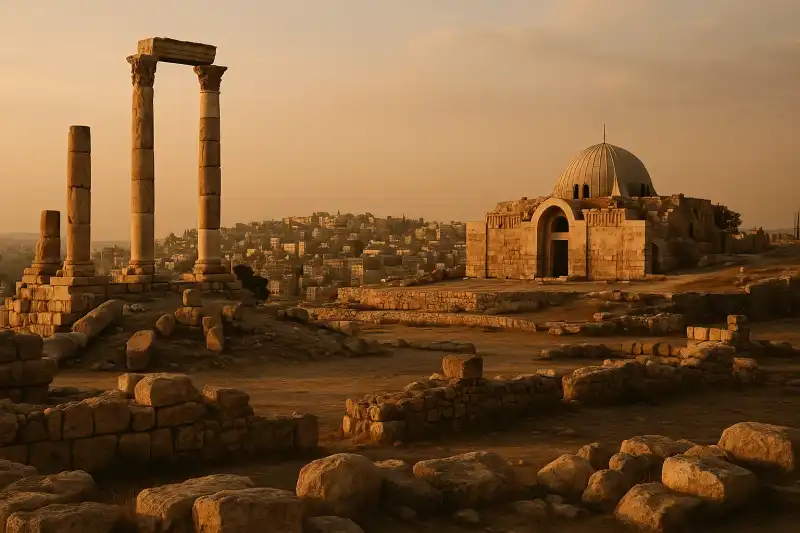
Amman Citadel Jordan Guide 2026: Temple of Hercules & Ancient Rabbah
Ammonite-Roman-UmayyadExplore Jordan's ancient citadel overlooking modern Amman. Discover the Temple of Hercules, Umayyad ...
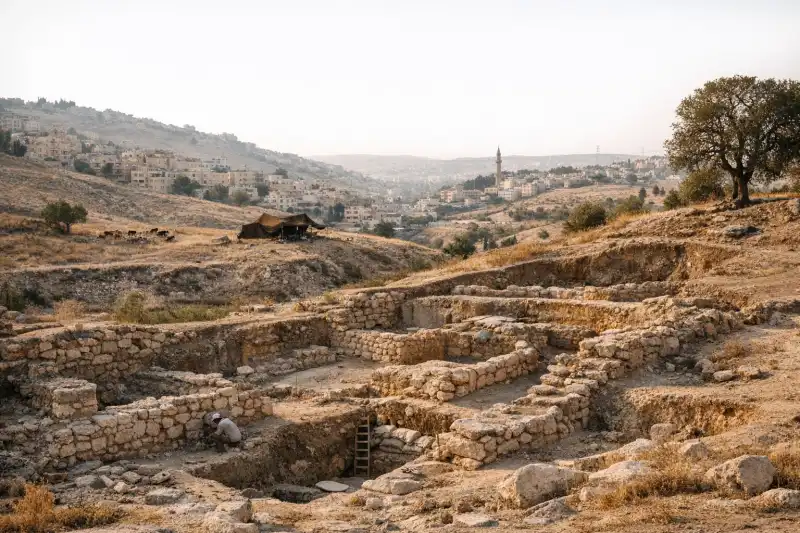
Ain Ghazal
Pre-Pottery Neolithic communities of the LevantDiscover Ain Ghazal, Jordan’s remarkable Neolithic settlement famed for its ancient plaster statues ...
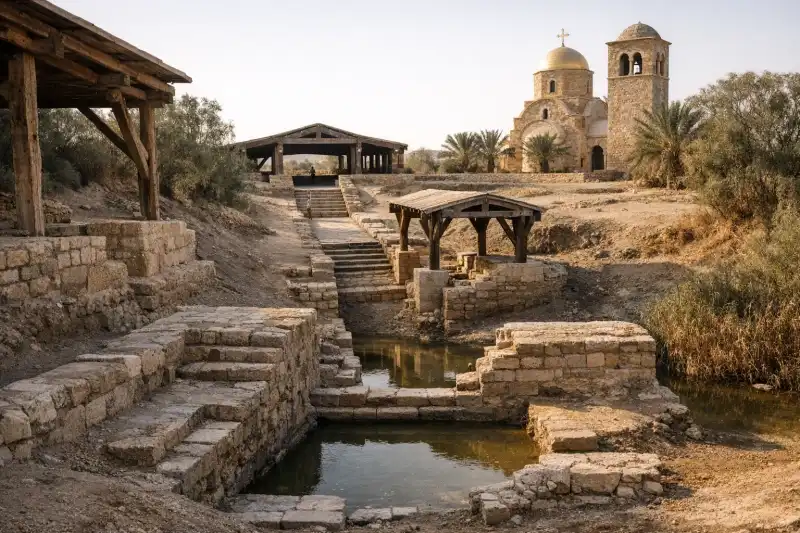
Bethany Beyond the Jordan
Bethany Beyond the Jordan in Jordan is an archaeological and religiously significant site believed t...
Deir Alla
Canaanite, Israelite-era, and regional Levantine culturesExplore Deir Alla in Jordan, an important Jordan Valley archaeological mound linked to Bronze and Ir...