Quick Info
At a glance
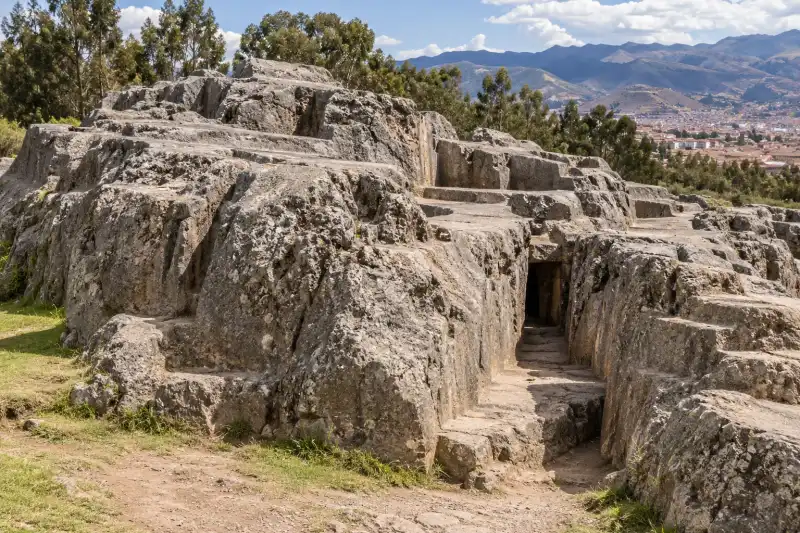
Qenqo, also written Kenko or Q’enqo, is one of the most revealing small sites above Cusco because it asks visitors to look carefully. There is no single wall on the scale of Sacsayhuamán. Instead, there is a limestone outcrop reshaped with channels, carved surfaces, niches, and passages. The place is part of the wider Inca landscape around Cusco, where architecture, geology, routes, and ritual attention often overlap. Its Quechua name is commonly connected with a zigzag or labyrinthine form, a sensible description of the rock’s manipulated lines, but it should not become a license for confident stories about every groove.
Historical context: a ceremonial landscape, not a solved puzzle
Qenqo is generally understood as an Inca-period ceremonial site, developed in the fifteenth and early sixteenth centuries when Cusco was the imperial center of Tawantinsuyu. Its placement above the city matters. The hills north of Cusco contain a network of built and modified places including Sacsayhuamán, Tambomachay, and Puka Pukara. These should not be imagined as isolated tourist stops. They formed part of a managed landscape of roads, water, stone, views, agricultural zones, and ceremonial practice.
At Qenqo, the most striking evidence is the deliberate modification of limestone. Rock surfaces were cut into channels and spaces, and natural cavities were incorporated into the site. Archaeologists and guides have proposed ceremonial uses for some features, including activities involving liquids or offerings. Such ideas are plausible within Andean ritual traditions, but specific function is not always demonstrable. A responsible visit preserves the distinction between what survives physically and what remains interpretive.
The Spanish conquest disrupted the Inca political and religious system, while the landscape itself remained. Later descriptions, excavations, conservation, and tourism brought Qenqo into the modern heritage circuit. Today the site is managed within the regional archaeological-park context. Current visitor access should be confirmed through the Dirección Desconcentrada de Cultura de Cusco or another official source, not through recycled ticket claims.
What to look for
The carved outcrop
The main rock mass is the site’s anchor. Walk around it slowly before following a guide’s explanation. You can see the relationship between natural fracture, worked surface, and narrow carved line. This is a good place to resist the “Inca mystery” script. The workmanship is interesting enough without pretending each feature has a unique, proven ceremony attached to it.
Channels and interior spaces
Qenqo contains channels and enclosed stone spaces that have encouraged many interpretations. Notice their careful integration into the existing rock. Whatever every individual action was, the builders clearly treated geology as a material to be shaped and encountered rather than simply cleared away for a freestanding building.
Position in the Cusco hills
Look outward as well as downward. Qenqo’s value rises when you connect it with the landscape around it. The route through the park links it to other Inca sites and to the city below. A guide who can explain the broader topography is often more useful than one who offers a dramatic but unverified story about a single niche.
Planning the visit
Qenqo is typically a short stop within a half-day or full-day circuit north of Cusco. The Dirección Desconcentrada de Cultura de Cusco lists Qenqo, Puka Pukara, Tambomachay, and related places on the Sacsayhuamán park route, with visitor hours published by the authority. Verify the current hours, ticket system, and any route restrictions shortly before travel. Do not assume a historic schedule or pass remains unchanged.
The practical challenge is altitude and terrain rather than distance. Cusco sits high in the Andes, and even a brief uphill walk can feel harder during the first days of a trip. Give yourself time to acclimatize, carry water, use sun protection, and stop if you feel unwell. This page cannot diagnose altitude illness. If symptoms become severe or worsen, seek local medical help and avoid further ascent.
Morning usually gives gentler light and a calmer experience than the busiest middle part of the day. In the rainy season, polished stone and paths can be slippery. Stay on designated routes and do not climb the carved rock. The damage would be permanent, and the photo would still be mediocre. Nature has not asked for your bootprint.
Pairing Qenqo with nearby sites
Sacsayhuamán is the essential pairing because it supplies the monumental masonry and political scale that Qenqo lacks. Tambomachay adds water-focused architecture to the same hills. Chinchero and Ollantaytambo are better treated as separate Sacred Valley visits, not as a rushed afternoon extension.
A good route prioritizes Qenqo’s particular character. See it after you understand the geography, then leave time to notice the stone rather than turning the stop into a five-minute box tick between larger sites.
How to visit without flattening the site
Qenqo is easy to misread because it is visually dramatic and physically small. People arrive primed for one shocking answer, then leave with a phrase about a “sacrificial altar” they heard somewhere. Better: spend five minutes observing before listening. Where has the rock been cut? Which shapes are geological, and which have been made more regular? How does a passage control your movement? What can you see from the high points? Those questions produce a more accurate experience than a single definitive label.
A guide can be valuable when they distinguish evidence from tradition and interpretation. Look for someone who places Qenqo in the regional Inca context instead of promising secret knowledge. A good guide might say that a channel could have been used in ritual practice while also acknowledging that its precise use cannot be proven from the stone alone. That is not less exciting. It is how archaeology stays honest.
Weather, season, and altitude
Cusco’s dry months often bring clear mornings and strong sun, while the wet season can make paths slippery and views variable. In either season, the high elevation matters more than the calendar’s marketing copy. Take a quieter first day in Cusco if you can, limit alcohol, eat and drink normally, and do not schedule a demanding circuit immediately after a long flight. People acclimatize differently, and fitness does not guarantee comfort at altitude.
For mild symptoms, reduce exertion and do not go higher. For severe symptoms, marked worsening, confusion, loss of coordination, breathlessness at rest, or chest symptoms, seek urgent local medical help and descend as advised. This is general travel safety information, not a diagnosis or personal treatment plan.
Respecting a living cultural landscape
Qenqo is part of an Andean region where heritage is connected with contemporary communities, not just a finished imperial past. Stay on the designated route, do not scratch initials into stone, and do not remove small fragments “because nobody will notice.” Somebody will notice eventually. Archaeology is mostly people noticing what earlier visitors wrecked.
A practical half-day itinerary
If you are newly arrived in Cusco, make Qenqo a later, lighter outing rather than your first strenuous activity. Begin with a relaxed morning in the city, then travel to the northern archaeological landscape when you have a sense of how the elevation affects you. If you are already acclimatized, combine Qenqo with Sacsayhuamán and Tambomachay in an order that limits unnecessary backtracking. Current transport and access conditions should decide the final sequence.
Bring a small daypack, water, a light waterproof layer, sun protection, and a charged phone. Do not count on facilities at every stop. Keep snacks and waste contained, and use marked areas rather than creating your own shortcut over grass or stone. In highland heritage sites, convenience paths tend to become erosion paths with alarming speed.
A focused visit is enough. Read the rock, notice the relationship between carved surfaces and natural form, and then give yourself time at a larger site where the imperial-scale context becomes clearer. Qenqo’s contribution is precision, not quantity. It helps reveal that Inca architectural skill could be expressed by transforming a single outcrop as thoughtfully as by assembling vast cut-stone walls.
What Qenqo adds to a Cusco trip
The great sites of Cusco can make imperial architecture seem defined only by perfect ashlar masonry and huge walls. Qenqo broadens that picture. It demonstrates that Inca design also worked by selecting, cutting, channeling, framing, and moving through natural stone. Its scale is smaller, but its design intelligence is concentrated.
That is why it deserves more than a rushed stop. Even a short visit can change how you look at the surrounding hills and at the relationship between nature and architecture across the Inca world.
Quick Facts
| Attribute | Details |
|---|---|
| Location | Hills north of Cusco, Peru |
| Cultural context | Inca ceremonial and landscape architecture |
| Main feature | Modified limestone with channels, passages, and carved spaces |
| Wider setting | Sacsayhuamán Archaeological Park landscape |
| Recommended time | 45 to 90 minutes, longer on a guided circuit |
| Essential preparation | Altitude awareness, water, sun protection, grippy footwear |
| Current access | Confirm with Cusco’s official cultural authority |
Qenqo rewards intellectual restraint. It is evidence of skilled Inca engagement with stone and place. That is more compelling than an invented certainty, and a much better reason to go.
Frequently Asked Questions
What is Qenqo?
Qenqo is an Inca archaeological site in the hills above Cusco, known for natural limestone modified with carved channels, passages, and ritual spaces. Its exact functions remain partly debated.
Is Qenqo part of Sacsayhuamán?
Qenqo is within the wider Sacsayhuamán Archaeological Park landscape and is often visited on the same route as Sacsayhuamán, Puka Pukara, and Tambomachay.
How should I describe Qenqo's carvings?
Describe what is observable: carved stone, channels, niches, passages, and an elevated ceremonial setting. Avoid presenting one proposed ritual interpretation as settled fact.
How much time is needed?
Allow about 45 to 90 minutes for Qenqo itself, longer if you are walking between sites or using a guide for the broader park.
What should visitors prepare for?
Cusco altitude, strong sun, uneven paths, and changing weather. Acclimatize sensibly, wear shoes with grip, and follow site staff directions.
Nearby Ancient Sites
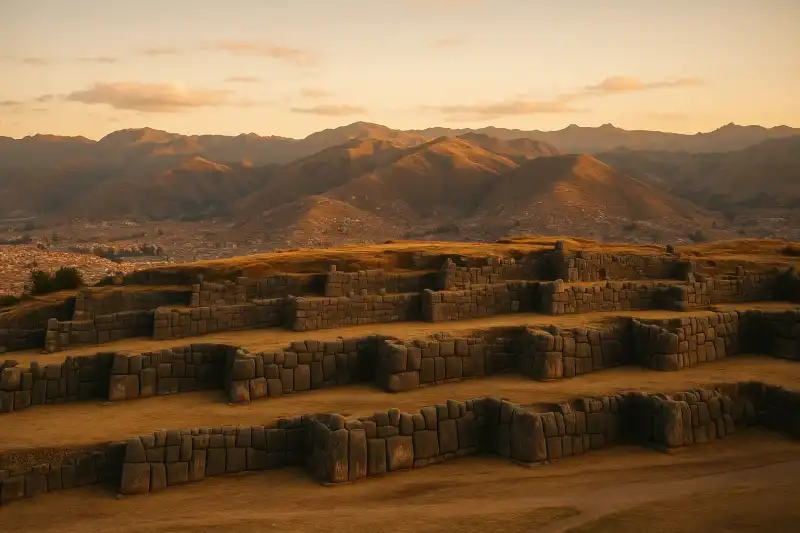
Sacsayhuaman Peru Guide 2026: Cyclopean Walls & Inca Ceremonial Fortress
IncaExplore Sacsayhuaman above Cusco: colossal Inca stonework, battle history, practical ticket logistic...

Tambomachay Peru Guide 2026: Inca Water Shrine Above Cusco
IncaExplore Tambomachay near Cusco: precision Inca water channels, ritual architecture, practical access...
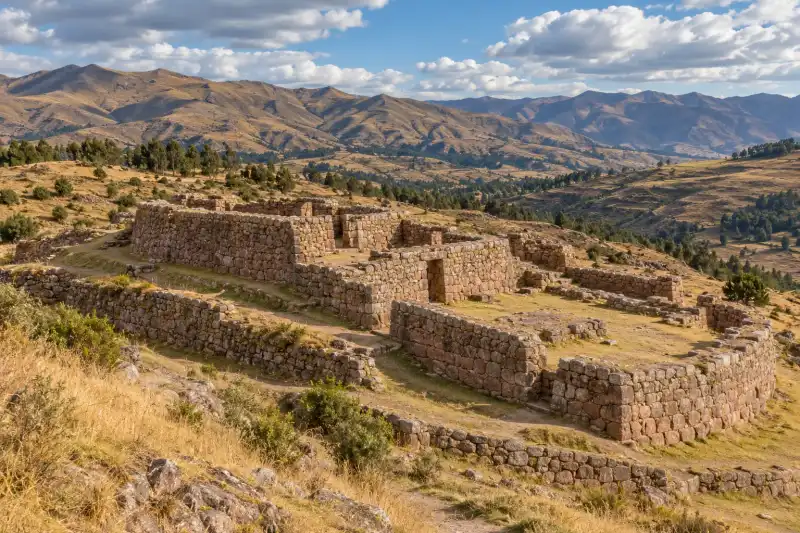
Puka Pukara Peru Guide 2026: The Red Fortress Above Cusco
IncaVisit Puka Pukara near Cusco for its Inca stone enclosures, terraces, water features, and wider sett...
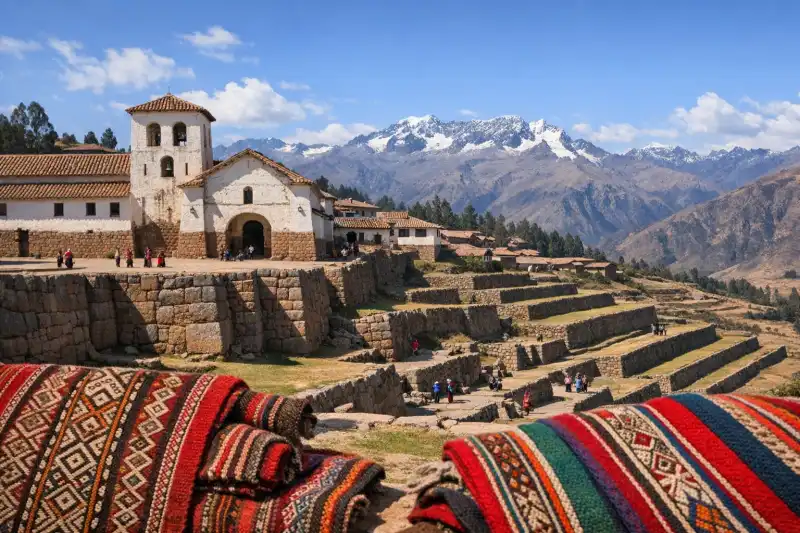
Chinchero Peru Guide 2026: Inca Terraces & Andean Weaving Village
IncaVisit Chinchero on Peru's high plateau above Cusco: Inca royal estate terraces, colonial church buil...
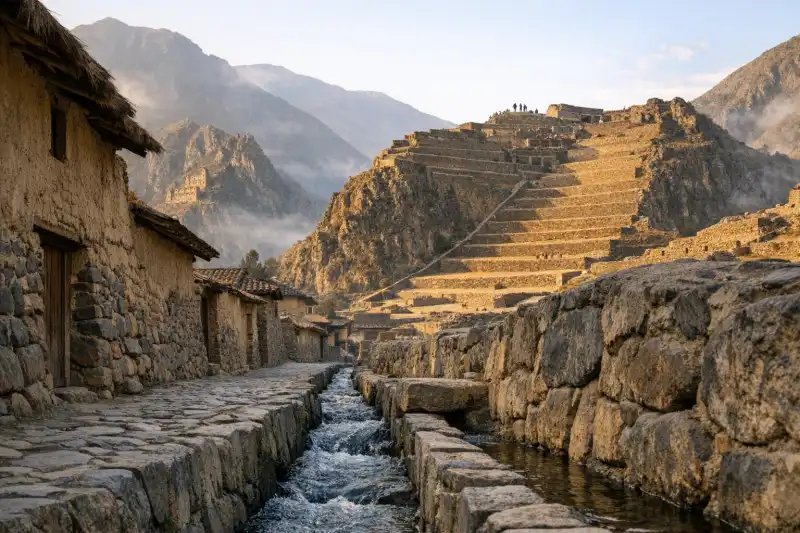
Ollantaytambo Peru Guide 2026: Inca Fortress & Sacred Valley Town
IncaVisit Ollantaytambo in Peru's Sacred Valley: explore the Inca fortress terraces, the Sun Temple, and...