Quick Info
Curated Experiences
Sagalassos Ancient City Tour from Antalya
Private Burdur and Sagalassos Day Trip
Sagalassos and Lake District Cultural Tour
The mountain opens without warning. One moment you are climbing through pine ridges in southwestern Anatolia; the next, terraces of marble and limestone appear above the valleys, and this Sagalassos Turkey travel guide finally makes sense in your body, not on a map. Sagalassos, Turkey is not an easy roadside ruin. It is a highland city of the old Pisidian world, later monumentalized under Rome with an ambition that still feels startling at altitude. You stand where fountains once ran under imperial patronage, where citizens debated policy above cloud lines, and where theater seats were cut toward a horizon of peaks rather than sea. The site is both grand and strange in the best way: imperial architecture adapted to mountain logic.
At Ancient Travels, we recommend Sagalassos as one of the most rewarding archaeological journeys in Turkey for travelers who want depth instead of checklist tourism. The ruins are extensive, the setting transforms every monument, and modern excavation has made the city unusually legible. This guide walks you through the historical timeline from Pisidian foundations to Byzantine transformation, the key monuments you should prioritize, realistic transport and ticket planning from Antalya and inland hubs, seasonal strategy for heat and weather, and how to combine Sagalassos with nearby classics. If you visit with a little preparation, Sagalassos feels less like a stop and more like discovering a lost civic world in full relief.
History: A Mountain City That Scaled Empire
Pisidian roots before imperial power (c. 5th century BCE-333 BCE)
Long before Roman colonnades and imperial dedications, Sagalassos grew as a Pisidian upland settlement whose greatest asset was topography. Built high in the Taurus foothills, it controlled internal routes between Pamphylian lowlands and the Anatolian interior while remaining difficult to subdue. Early urban organization likely prioritized water security, slope management, and defensible movement across terraces rather than broad ceremonial axes. This highland setting also shaped local identity: communities here developed reputations for autonomy, toughness, and selective engagement with outside powers. Even in fragmentary early evidence, you can see the long pattern that defines the city for centuries: openness to exchange, resistance to domination, and strategic use of terrain.
Hellenistic transition after Alexander (333 BCE-1st century BCE)
Sagalassos entered wider Mediterranean political circuits during the upheavals following Alexander the Great’s Anatolian campaigns. As successor kingdoms contested control, Pisidian centers negotiated, resisted, or accommodated external authority depending on military pressure and regional opportunity. At Sagalassos, Hellenistic influence expanded urban forms, civic institutions, and cultural language while local traditions remained active. Greek urban vocabulary appears in public architecture and inscriptions, but adaptation was never passive copying. Builders had to fit imported civic ideals onto steep mountain contours, producing a city that looked cosmopolitan in aspiration yet distinctly local in execution. By the late Hellenistic period, Sagalassos had become a significant inland center prepared for even larger integration under Rome.
Roman prosperity and monumental ambition (1st century BCE-3rd century CE)
Under Roman rule, Sagalassos experienced its most visible era of prosperity. The city became a leading center of Roman Pisidia, benefiting from relative political stability, regional trade links, and elite patronage connected to imperial networks. Monumental building intensified: agoras, baths, nymphaea, colonnaded spaces, and theater infrastructure transformed the mountain terraces into a civic stage set for status, ritual, and administration. The famous Antonine Fountain belongs to this era of architectural confidence, where hydraulic engineering and visual display reinforced urban prestige.
Local industries likely supported this growth, including high-quality ceramics that reached markets beyond the immediate region. The city’s prosperity was not merely decorative; it was systemic, combining production, governance, and symbolic architecture. Sagalassos demonstrates how a highland center could be thoroughly Roman in language while preserving an upland urban structure dictated by gradient, geology, and older settlement patterns.
Late antiquity, Christianity, and adaptation (4th-7th centuries CE)
As imperial priorities shifted in late antiquity, Sagalassos adapted rather than disappearing overnight. Christian Byzantine institutions reshaped parts of the city, and some earlier civic spaces were repurposed for new social and religious functions. Urban life continued, but with changing population density, maintenance capacity, and architectural emphasis. Earthquakes affected the region, and periodic seismic damage likely accelerated selective abandonment in monumental zones already expensive to maintain at altitude.
These centuries reveal the difference between collapse and transformation. Sagalassos did not simply end; it changed scale, use, and rhythm as political and economic geographies moved elsewhere. For modern visitors, this layered adaptation is visible in masonry palimpsests where Roman forms, late antique repairs, and later deterioration coexist within the same terraces.
Medieval decline and modern archaeological rediscovery (8th century-present)
By the early medieval period, urban intensity at Sagalassos had diminished substantially, and major civic architecture entered prolonged ruin. The reasons were cumulative: seismic stress, altered trade routes, administrative reorganization, and the practical burden of sustaining a large mountain city. Over centuries, structures collapsed, were buried, or weathered in situ, preserving extraordinary archaeological depth for modern research.
Systematic work in the modern era, especially international archaeological campaigns in recent decades, transformed scholarly and public understanding of Sagalassos. Excavations, conservation, and selective anastylosis made the site unusually readable without stripping away its mountain character. The restored flow of the Antonine Fountain became a symbol of this approach: not theme-park reconstruction, but careful revival that lets visitors experience hydraulic and urban design in motion. Today, Sagalassos stands as both a major archaeological destination and a continuing research landscape where new findings still refine the story.
The Key Monuments: What to See at Sagalassos
Antonine Fountain (Nymphaeum)
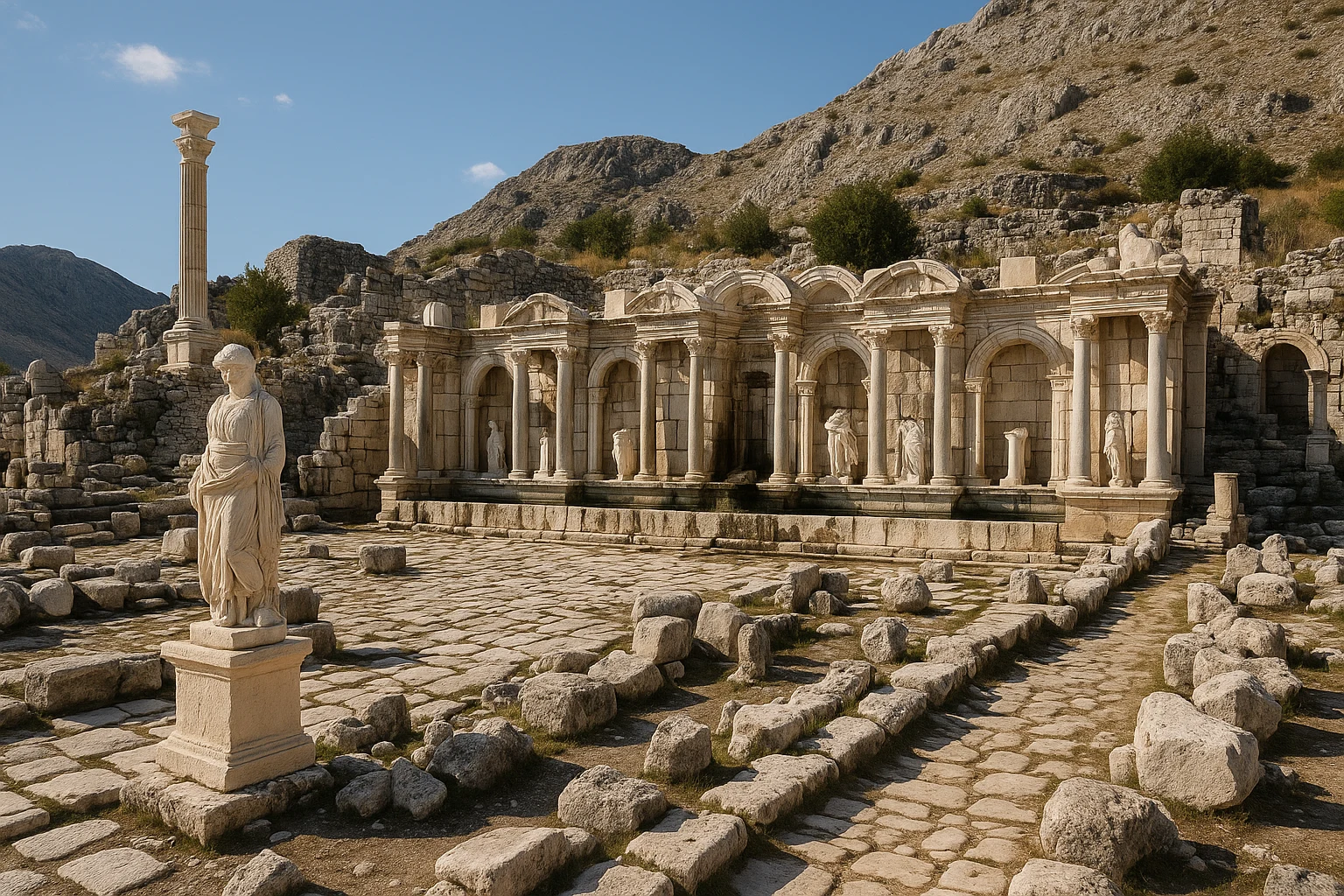
The Antonine Fountain is Sagalassos’s defining monument and one of the most memorable hydraulic restorations in the eastern Roman world. Built in the 2nd century CE during the city’s imperial high point, the nymphaeum combined engineering, political messaging, and theater-like façade design. Water did more than serve practical needs; it staged Roman civic power. Multiple basins, architectural framing, and statuary programs would have turned everyday access to water into an urban spectacle tied to benefaction and imperial order.
What makes the monument exceptional today is that water flows again. Hearing running water at this altitude, against reconstructed marble elements and mountain air, gives you a visceral sense of ancient public life. The restoration is substantial but still transparent enough for visitors to read original blocks, replaced sections, and structural logic. Arrive early for photography: morning side light brings out carved details and keeps reflections in the basin cleaner before heavier visitor traffic.
The Roman theater
Sagalassos’s Roman theater is one of the highest elevated major theaters in Anatolia, and the setting transforms the experience. Rather than opening toward a coast or urban plain, the cavea faces dramatic mountain distances that shift with weather and season. Construction likely began in the late Hellenistic period and developed further under Roman patronage, resulting in a large performance space adapted to steep terrain and local geology.
The surviving seating and stage-zone remains still communicate scale: this was a city confident enough to invest heavily in shared spectacle despite difficult logistics. The climb to upper seats can be demanding, but the payoff is perspective. From above, you see how theater, terraces, and valleys align into a single urban landscape. Late afternoon is often best for broad panoramas, though early morning offers softer contrast on masonry and fewer people in your frame.
Upper Agora and imperial monumental core
The Upper Agora is the political and ceremonial heart of Roman Sagalassos. This broad terrace once framed administrative activity, processions, and elite self-presentation through colonnades, honorific monuments, and carefully composed sightlines. Even with partial ruin, the scale remains clear: this was not a provincial afterthought but a city investing in the same civic grammar seen across the empire, translated into mountain architecture.
Nearby monumental elements, including arches and civic façades, show how urban identity was staged through movement. You entered, climbed, emerged onto terraces, and encountered architecture designed to communicate order and prestige. Spend time here slowly; the value is not one single standing structure but the spatial choreography between paved zones, retaining walls, and elevated viewpoints. On clear days, the agora’s edges frame some of the best long-distance perspectives in the whole site.
Heroon and elite commemorative monuments
The Heroon complex and associated commemorative architecture reveal the social hierarchy beneath Sagalassos’s monumental veneer. These structures honored prominent individuals or families and reinforced memory through location, scale, and decorative investment. In Roman civic culture, commemorative monuments were political instruments as much as memorials, turning private prestige into public narrative.
At Sagalassos, that logic is amplified by topography. Elevated placement made monuments visible across circulation routes, so remembrance literally overlooked everyday movement. Surviving architectural fragments and inscriptions help reconstruct the city’s elite networks and benefaction culture. For visitors interested in social history, these remains are essential: they show who paid for urban grandeur, who claimed symbolic capital from it, and how status was materialized in stone.
Bouleuterion, baths, and the working machinery of civic life
Beyond headline monuments, Sagalassos rewards attention to institutional infrastructure: the bouleuterion area associated with civic deliberation, bath complexes tied to hygiene and social life, and connecting streets that organized flow between terraces. These spaces are less photogenic at first glance than the fountain or theater, but they explain how the city functioned day to day.
The bouleuterion underscores governance in practice, where policy and local administration took material form. Bath architecture shows the persistence of Roman urban habits in a mountain context that required careful water management and fuel logistics. As you move through these sectors, look for retaining strategies and stepped transitions; they are clues to the engineering intelligence required to make civic routine possible on steep ground. If the fountain is Sagalassos’s public face, these structures are its operating system.
Getting There: Transportation and Access
Sagalassos is reachable as a day trip, but the mountain approach and sparse last-mile public transit mean planning matters more than for coastal headline ruins.
From Antalya
From Antalya, most routes run inland through Burdur Province, with total drive times usually around 2.5 to 3.5 hours one way depending on traffic, weather, and stop patterns.
- Private transfer or taxi: Commonly 4,500-7,500 TRY ($140-234 USD) one way for direct service, often cheaper per person if shared.
- Organized day tour: Usually 2,500-4,500 TRY ($78-140 USD) per person, often including guide, transport, and lunch.
- Rental car: Around 1,200-2,500 TRY ($37-78 USD) per day plus fuel/tolls; best for flexible pacing and combining nearby sites.
- Intercity bus + local taxi: Bus to Burdur or Aglasun then taxi to site; cheaper but slower and less predictable for same-day return.
From Isparta or Burdur
If you are already inland, Sagalassos becomes much easier logistically. Isparta and Burdur are practical bases with shorter transfer times and less coastal traffic volatility.
- Taxi from Aglasun/Burdur area: Typically 600-1,500 TRY ($19-47 USD) depending on distance and waiting arrangement.
- Local bus connections: Regional services run toward Aglasun, but frequencies vary and may not align with ideal site hours.
- Rental car from inland hubs: Most efficient for morning starts and side trips to museums or lake district viewpoints.
Admission and hours
Sagalassos generally operates as a daytime archaeological site with seasonal hour adjustments. Ticket prices are set in TRY and can change, but a realistic planning range is roughly 150-400 TRY ($5-12 USD) per person. A Museum Pass Turkey product may be valid depending on current policy and pass type, so confirm before your trip rather than relying on old forum posts.
Carry cash as a backup even when card payment is sometimes available in the region. In warm months, aim for opening-time entry to handle slopes before heat intensifies. In cooler seasons, mid-morning often offers the best balance between visibility, comfort, and safer footing on stone surfaces.
When to Visit: Seasonal Considerations
Spring (March-May)
Spring is usually the ideal season for Sagalassos. Daytime temperatures often range from 12-22°C (54-72°F), wildflowers appear along mountain approaches, and visibility is frequently crisp after winter moisture. Crowds are moderate, so key viewpoints remain enjoyable without rush. Mornings are excellent for climbing and photography, especially around the fountain and upper terraces.
Summer (June-August)
Summer brings stronger light and long days but can be physically demanding. Typical temperatures run around 25-34°C (77-93°F), with exposed zones feeling hotter on pale stone. Crowds increase with holiday travel, though Sagalassos still feels less packed than many coastal attractions. Start as early as possible, carry more water than you think you need, and pace climbs conservatively.
Autumn (September-November)
Autumn is another top choice, often with 14-26°C (57-79°F) conditions and calmer visitor volumes after peak vacation periods. Light can be beautifully angled for architectural texture, and midday heat is usually less aggressive than summer. Early autumn afternoons may still be warm, so a morning-heavy circuit remains smart for comfort and energy.
Winter (December-February)
Winter is quiet and atmospheric, with temperatures commonly around 3-12°C (37-54°F) and occasional wet or windy days. Crowds are low, which can make the site feel almost private, but footing may be slippery on rain-darkened stone. Bring layers, prioritize traction, and allow extra transit time in unstable weather. For travelers who value mood over perfect comfort, winter can be deeply rewarding.
Combining Sagalassos with Burdur, Antalya, and Nearby Ruins
The most efficient Sagalassos day begins with an early departure so you can arrive around 8:30 AM to 9:00 AM, depending on season. Use the first two hours for the Antonine Fountain, upper agora terraces, and primary monumental spine while temperatures are still comfortable and light is clean on carved surfaces. By 11:30 AM, shift toward the theater sector for broader mountain panoramas before lunch. If you are driving, a midday meal in Aglasun keeps logistics simple and gives you a chance to reset before adding a second stop.
From there, you have two strong options. The archaeology-focused route continues to Burdur Archaeological Museum by roughly 2:00 PM, where key regional finds deepen what you just saw in situ and help connect Sagalassos to wider Pisidian material culture. You can finish by 4:00 PM and still return to Antalya before late evening. The landscape-focused route trades museum time for lake district viewpoints and village stops, creating a slower cultural afternoon that pairs well with photographers and families.
If you are based in Antalya and want to combine major Roman-period highlights in one long day, a private itinerary can link Sagalassos in the morning with Termessos viewpoints on a separate route segment, but this is ambitious and better suited to travelers comfortable with extended driving. Most visitors will get a richer experience by giving Sagalassos primary space, then adding one complementary stop rather than chasing three headline sites at once. The mountain city rewards attention; rushing it weakens the quality that makes it special.
Why Sagalassos Matters
Sagalassos matters because it shows what happens when imperial architecture meets uncompromising terrain and does not flatten it. Rome’s civic language is here in full force, but every fountain façade, terrace, and theater line has been negotiated with slope, altitude, and local memory. You are not walking an abstract textbook city. You are walking a place where power had to earn its footing.
That is why the site lingers after the visit. The restored water at the Antonine Fountain, the exposed seats of the theater, the stepped agoras suspended above valleys, the half-buried traces of institutions that once organized daily life all reveal the same lesson: civilizations endure through adaptation, not just conquest. In modern travel terms, Sagalassos offers something increasingly rare, a destination that still asks for patience, physical engagement, and attention. If you give it those things, it gives back more than spectacle. It gives you scale, continuity, and a sharper sense of how people built meaning on difficult ground.
Quick Facts
| Attribute | Details |
|---|---|
| Location | Near Aglasun, Burdur Province, Turkey |
| Ancient Name | Sagalassos |
| UNESCO Status | On Turkey’s UNESCO Tentative List |
| Established | c. 5th century BCE settlement |
| Distance from nearest hub | About 9 km from Aglasun (20-25 minutes by road) |
| Entry Fee | Typically around 150-400 TRY ($5-12 USD), verify current rates |
| Hours | Daytime opening with seasonal closing changes |
| Best Time | Spring and autumn mornings |
| Suggested Stay | 3-5 hours on site |
Explore More Turkey
- Termessos: Another mountain stronghold near Antalya, famous for its dramatic theater and rugged hiking approach.
- Perge: A broad Pamphylian city with colonnaded avenues, baths, and one of Turkey’s clearest Roman urban plans.
- Aspendos: Home to one of the best-preserved Roman theaters in the Mediterranean and a cornerstone of Antalya-region itineraries.
- Ephesus: Turkey’s best-known classical city, where monumental streets and libraries reveal imperial urban grandeur at a different scale.
Plan your complete archaeological journey with our Turkey Ancient Sites Guide. For route strategy, read How to Plan an Ancient Turkey Itinerary.
Frequently Asked Questions
How much time should I plan at Sagalassos?
Most travelers need 3-4 hours on site to cover the Antonine Fountain, theater, main agoras, and principal monumental core at a comfortable pace. If you enjoy architecture or photography, plan closer to 5 hours because elevation changes slow your circuit. Add extra time for museum visits in Burdur if you want artifact context after the ruins.
What is the best time of day to visit Sagalassos?
Early morning is usually best for cooler temperatures and cleaner light on the mountain-facing monuments. In summer, arriving near opening time helps you avoid midday heat on exposed paths and steps. Late afternoon can also be beautiful, but always leave enough daylight for the mountain descent drive.
How do I get to Sagalassos from Antalya without a car?
The easiest no-car option is a prearranged guided tour or private transfer from Antalya, since direct public transport all the way to the archaeological entrance is limited. You can combine regional buses with a taxi from Aglasun, but schedules are infrequent and return timing can be uncertain. If you are short on time, organized transport is usually worth the cost.
How much are tickets, and can I use a museum pass?
Entry fees are set in Turkish lira and can change seasonally, but Sagalassos is generally affordable compared with major coastal flagship sites. A Museum Pass Turkey product may apply depending on your pass type and current ministry policy, so verify before travel. Carry cash as backup even when card payment may be possible at larger ticket offices in the region.
What are the must-see monuments at Sagalassos?
Do not miss the restored Antonine Fountain, the steeply perched Roman theater, and the upper agora with imperial monumental architecture. The Heroon, bouleuterion area, and spread of civic terraces also reveal how ambitious this mountain city became in Roman times. The real highlight is seeing all these structures in one dramatic high-altitude setting.
Is Sagalassos suitable for all mobility levels?
Sagalassos has uneven stone surfaces, stairs, and notable slopes, so it can be physically challenging for visitors with limited mobility. You can still enjoy selected viewpoints and parts of the lower monumental core with careful pacing, but full coverage requires steady footing. Sturdy shoes, water, and frequent breaks make a major difference.
Nearby Ancient Sites
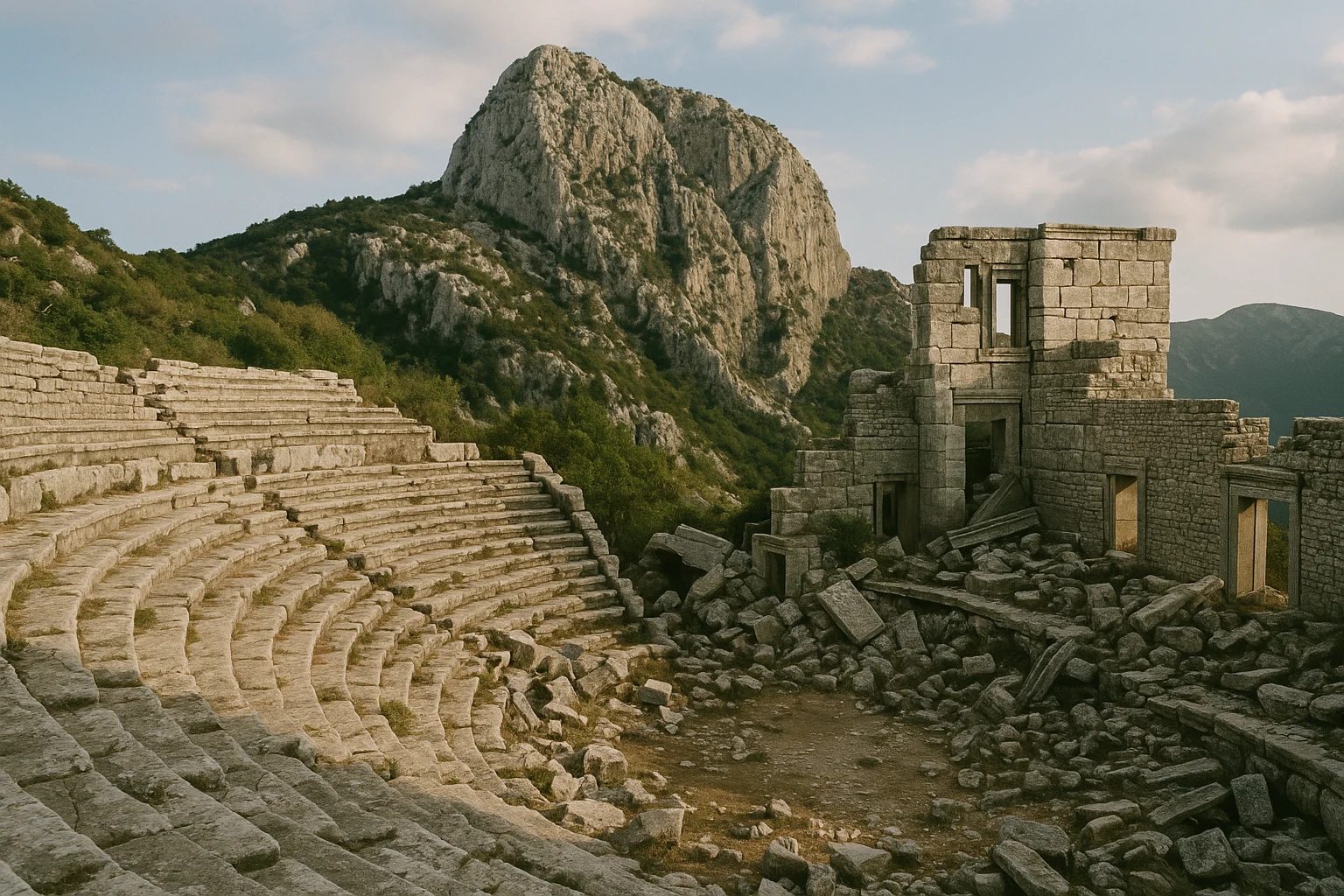
Termessos Turkey Guide 2026: Mountain Ruins & Pisidian Tombs
Pisidian-Hellenistic-Roman-ByzantinePlan a visit to Termessos in Turkey: mountain-top theater, agoras, and tombs with transport, ticket,...
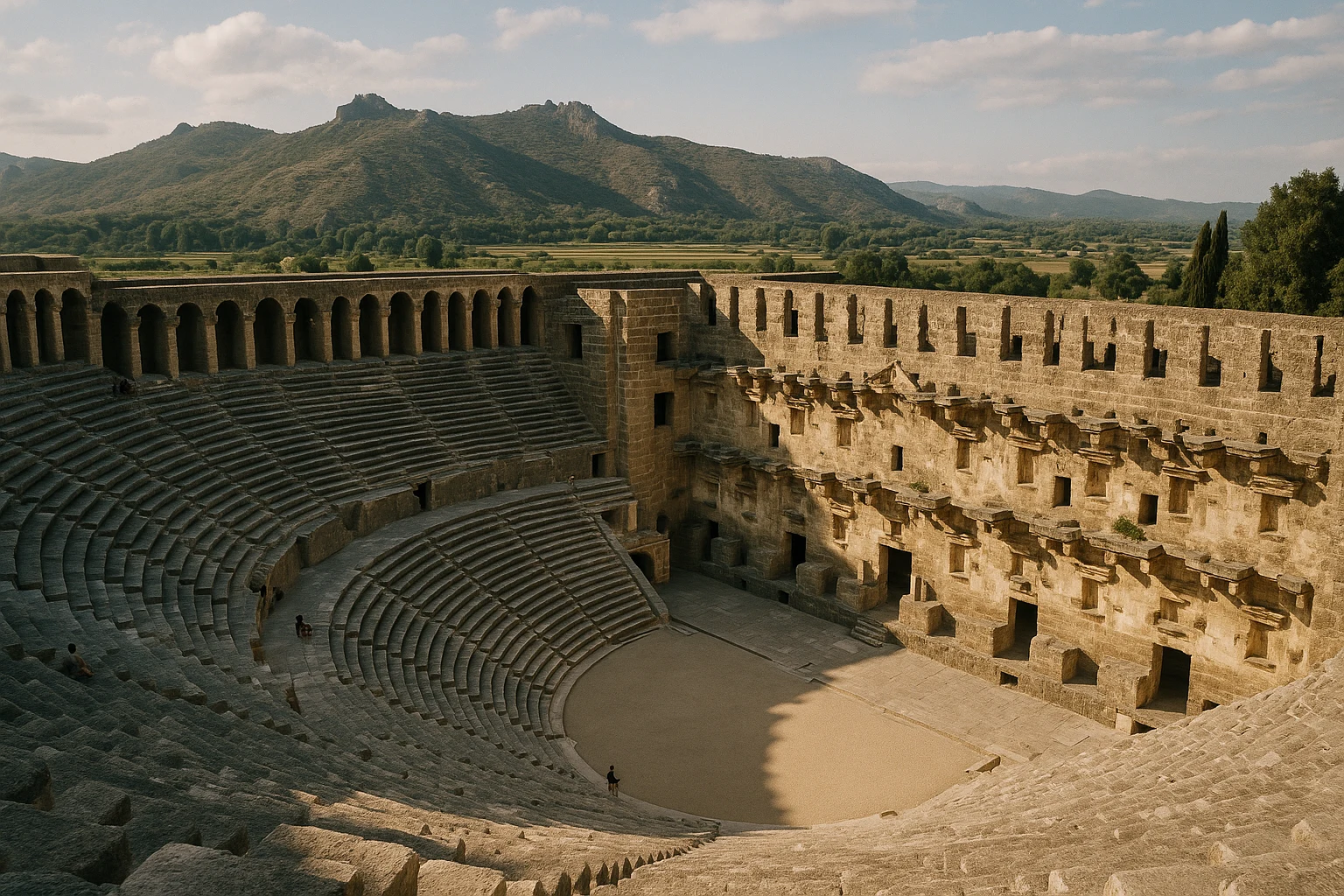
Aspendos Turkey Guide 2026: Roman Theatre & Pamphylian Aqueduct
Pamphylian-Greek-Roman-Byzantine-SeljukPlan your Aspendos visit in Turkey with practical tips on tickets, transport from Antalya, and what ...