Quick Info
Curated Experiences
Segovia and Ávila Day Trip from Madrid
Private Segovia Walking Tour with Aqueduct Highlights
Segovia Alcázar and Aqueduct Guided Experience
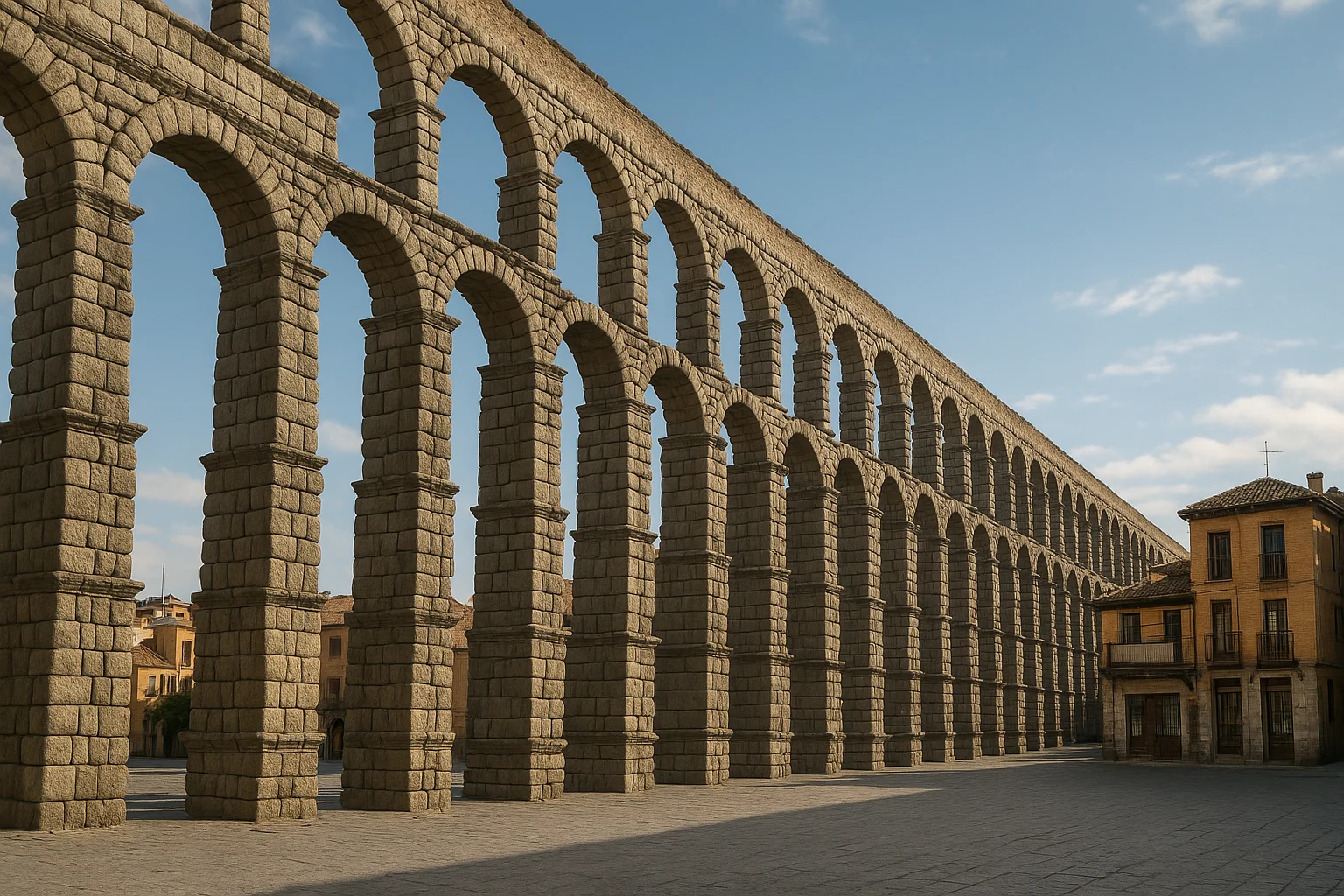
You come around a corner in the old town and the aqueduct is simply there — 28 meters of stacked granite arches rising above a busy plaza where people are drinking coffee and checking their phones, as though a piece of Roman infrastructure twice the height of the surrounding buildings were the most ordinary thing in the world. The Segovia Aqueduct has this effect on people. It is so present, so embedded in the fabric of a working Spanish city, that it takes a moment to register what you are actually looking at: 20,400 granite blocks assembled without mortar nearly two thousand years ago, still standing, still structurally sound, still defining the city’s central public space.
Unlike most Roman remains, the Segovia Aqueduct never fell into ruin. It was not rediscovered by archaeologists or reassembled from fragments. The structure stayed integrated into the city’s water supply infrastructure for centuries after the empire that built it collapsed, and that ongoing utility is precisely what kept it intact. Other aqueducts were quarried for stone or collapsed from neglect. This one was maintained because people still needed it. The result is not a ruin at all but a functioning piece of architecture that simply outlived the civilization that produced it.
The aqueduct itself takes less than an hour to see. But Segovia rewards more than a quick photograph. The old town above the aqueduct contains a Gothic cathedral, a castle that may have inspired Disney, and a web of medieval streets that turn a single-monument stop into one of the best half-day heritage walks in Spain.
Historical Context
The Romans built the aqueduct in the late 1st or early 2nd century CE, during the reigns of Domitian or Trajan, to channel water from the Rio Frio in the Sierra de Guadarrama roughly 17 kilometers into the city of Segovia. The city — known as Segobriga to the Romans — was a minor but strategically positioned settlement on the Castilian plateau, part of the network of colonial towns that anchored Roman authority across Hispania. The aqueduct’s construction was not an act of imperial vanity but a practical solution to a real problem: Segovia sits on a rocky ridge above two rivers, and supplying water to the elevated old town required engineering that could move water across a valley and up a slope with nothing but gravity.
The engineering is the story. The aqueduct’s 20,400 granite blocks are dry-stacked — no mortar, no cement, no binding material of any kind. Each block was precision-cut to fit its neighbors, and the entire structure is held together by gravity and the counterbalancing weight of the stones themselves. The two-tiered arcade that spans the valley near Plaza del Azoguejo reaches 28.5 meters at its tallest point, making it one of the highest surviving Roman aqueducts in the world. The 167 arches (including both tiers) trace a slight curve as the structure navigates the terrain, adjusting to the valley’s contours while maintaining the precise gradient necessary to keep water flowing by gravity alone. That gradient — a drop of roughly one percent over the aqueduct’s length — had to be calculated and maintained across 17 kilometers of varied terrain, a surveying achievement that would be impressive with modern instruments and that the Romans accomplished with water levels and plumb lines.
The aqueduct survived the fall of the Roman Empire, the Visigothic period, the Moorish occupation of Iberia, and the Reconquista with remarkable continuity of function. Medieval and early modern Segovians maintained the structure because it continued to deliver water. Minor repairs were made over the centuries — most notably in the 15th century under Queen Isabella, when damaged arches were restored — but the essential structure remained Roman. The aqueduct continued carrying water until the mid-20th century, when modern pipes finally replaced it. UNESCO designated it a World Heritage Site in 1985, recognizing it as one of the best-preserved and most significant Roman engineering works surviving anywhere.
The structure’s survival is not merely a matter of luck. Segovia’s dry Castilian climate protected the granite from the freeze-thaw cycles that destroyed similar structures in northern Europe. The granite itself, quarried from the nearby Sierra de Guadarrama, proved exceptionally durable. And the aqueduct’s integration into the city’s daily life meant it was never abandoned long enough for neglect to compound into failure. It is a monument to Roman engineering, but also to the practical wisdom of every subsequent generation that recognized a working system and chose not to dismantle it.
What to See
Plaza del Azoguejo
This is where you get the defining view: the full double arcade framing the street below, the arches receding in perspective toward the hillside. The plaza sits at the aqueduct’s lowest point, where the valley is deepest and the structure reaches its maximum height of 28.5 meters. The scale is more dramatic in person than photographs suggest, because the surrounding buildings provide human-scaled reference points that make the height legible. Morning light from the east illuminates the stone texture most clearly; late afternoon brings warmer golden tones. The plaza fills with visitors on weekends and holidays, so arrive early for cleaner photographs and a less congested experience. Several cafes line the plaza’s edge, and sitting with a coffee while the aqueduct rises above you is one of Segovia’s simplest pleasures.
The Upper Walkway and Staircase
Climb the stone steps alongside the arches on the east side of the plaza for an elevated perspective that reveals the aqueduct’s engineering logic. From above, you can trace the water channel that runs along the top of the structure — a narrow, stone-lined conduit originally covered to prevent contamination and evaporation. You can also see how the structure adjusts its height as it follows the terrain, the lower tier absorbing the valley’s depth while the upper tier maintains the consistent gradient required for water flow. This perspective makes the Roman surveyors’ achievement tangible: every arch is a different height, but the top surface is perfectly level. The staircase is free and publicly accessible.
The Single-Tier Section
Walk south from Plaza del Azoguejo along the aqueduct’s route toward the old town, and the structure transitions from its dramatic double arcade to a simpler single tier as the ground rises to meet it. This less-photographed section is worth following for two reasons. First, it shows how the aqueduct adapts to topography — the lower tier disappears as the valley floor rises, and the upper arcade continues alone until the channel reaches ground level and disappears underground. Second, the single-tier section passes through quieter residential streets where you can examine individual blocks at close range and appreciate the precision of the dry-stacked joints. Look for the stone niches that once held a statue of the Virgin, placed there in the 16th century when the structure was rededicated from pagan engineering to Christian service.
The Old Town Heritage Walk
From the aqueduct, continue uphill through Segovia’s medieval streets toward the city’s other two landmark monuments. The Segovia Cathedral, completed in 1577, is the last major Gothic cathedral built in Spain and rises above the old town with a soaring nave and elaborate stone tracery. The Alcazar of Segovia, perched on a rocky promontory where two rivers meet, is a fairytale castle with conical towers that reportedly inspired Walt Disney’s design for Sleeping Beauty Castle at Disneyland. Together with the aqueduct, these three monuments anchor a walking route that covers Roman, Gothic, and late-medieval layers in a compact two-kilometer loop. The cathedral charges approximately 3 euros for entry; the Alcazar charges 9 euros (tower access included for an additional fee).
Mirador del Aqueducto
For the widest panoramic view of the aqueduct in its urban context, walk to the Mirador viewpoint on the Cuesta de los Hoyos, across the valley from the main structure. From here, you can see the full sweep of the double arcade against the old town skyline, with the cathedral spire and Alcazar towers visible beyond. This viewpoint is particularly rewarding at sunset or under evening floodlighting. It is a 10-minute walk from Plaza del Azoguejo and almost always less crowded than the plaza itself.
Timing and Seasons
The aqueduct is an open-air monument visible 24 hours a day, with no entry requirements or closing time. The best hours for photography are early morning (before 10:00 AM) for clean eastern light on the stone surface, and late afternoon for warm golden tones and longer shadows that emphasize the arch depths.
Spring (April through June) and autumn (September through November) offer the most comfortable walking temperatures, typically between 55-75°F (13-24°C). Segovia sits at 1,000 meters (3,280 feet) on the Castilian plateau, and temperatures are noticeably cooler than Madrid year-round. Summer days reach 85-90°F (29-32°C) but the dry heat is manageable, and evenings cool significantly. Winter brings cold, clear days with temperatures between 32-48°F (0-9°C) and occasional snow that photographs beautifully against the granite. December through February is the quietest period for visitor traffic.
Weekends from spring through autumn are the busiest, particularly Saturday midday through Sunday afternoon. Weekday mornings offer the thinnest crowds at any time of year. If you are staying overnight, return to the aqueduct after dark — the floodlit structure at Plaza del Azoguejo against the night sky is a fundamentally different experience from the daytime view, and one of the most striking nighttime monuments in Spain.
Tickets, Logistics, and Getting There
The aqueduct is free to view. No ticket, no entry fee, no reservation. It stands in the public street and you walk right up to it.
From Madrid, Segovia is one of the easiest day trips in Spain. The AVE high-speed train from Madrid Chamartin to Segovia-Guiomar station takes 28 minutes and costs 12-25 euros depending on class and advance booking. From the station, a local bus (Line 11, roughly 1.50 euros) runs to the aqueduct area in 15 minutes. The La Sepulvedana bus company runs direct coaches from Madrid’s Moncloa station to Segovia’s bus terminal (1.5 hours, 8-10 euros each way), which deposits you closer to the old town center. By car, the drive from Madrid takes roughly 1.5 hours on the AP-6/AP-61 toll motorway; parking near the aqueduct is limited, but municipal garages are available on the city’s periphery for 1-2 euros per hour.
Book AVE tickets in advance during peak weekends — trains sell out, particularly the morning departures and evening returns that bracket a comfortable day trip. Renfe.com offers the best prices when purchased 30-60 days ahead.
The Segovia tourist office in Plaza del Azoguejo (directly beneath the aqueduct) provides free maps and can book guided walking tours. A standard guided tour covering the aqueduct, cathedral, and Alcazar runs 10-20 euros per person and typically lasts 2-3 hours.
Practical Tips
- Wear sturdy shoes. Segovia’s streets are steep in places and surfaced with uneven cobblestone. The walk from the aqueduct to the Alcazar gains noticeable elevation.
- Bring a light layer in spring, autumn, or winter. The elevated plateau catches wind, and the temperature difference between sun and shade can be significant.
- Do not skip the Alcazar. Most visitors come for the aqueduct, but the castle’s interior — particularly the Hall of Kings and the panoramic tower — is genuinely impressive.
- Segovia’s signature dish is cochinillo asado (roast suckling pig), served at traditional mesones throughout the old town. Restaurante Jose Maria near the aqueduct and Meson de Candido in Plaza del Azoguejo are the most famous addresses; expect to pay 25-35 euros per person for a full meal. Book ahead on weekends.
- If combining Segovia with Avila (another walled city 70 km west, also UNESCO-listed), allow a full day. Both cities reward 3-4 hours each.
- The Segovia Mint (Casa de la Moneda), a short walk below the Alcazar along the river, is an undervisited museum housed in a 16th-century royal mint designed by Juan de Herrera. Worth 30 minutes if your schedule allows.
Suggested Itinerary
Half-day visit (3 to 4 hours):
Arrive by the 9:00 AM AVE from Madrid. Take Bus 11 to the aqueduct area. Start at Plaza del Azoguejo for the main view (20 minutes). Climb the upper staircase for the elevated perspective (15 minutes). Walk south along the single-tier section into the old town (15 minutes). Continue uphill to the Cathedral (30 minutes inside). Proceed to the Alcazar (45 minutes including tower). Walk back through the old town streets, stopping for cochinillo at a traditional meson. Return to Madrid on an afternoon train.
Full-day visit with Mirador (5 to 6 hours):
Follow the half-day route but add the Mirador del Aqueducto viewpoint in late afternoon for sunset light on the full arcade (20 minutes). Include the Casa de la Moneda near the Alcazar (30 minutes). Spend more time in the old town streets, which contain Romanesque churches, Renaissance mansions, and a former Jewish quarter with a 14th-century synagogue (now the Corpus Christi church). Return to Madrid after sunset to catch the aqueduct under floodlights before departing.
Nearby Sites
Merida Roman Ruins in Extremadura holds Spain’s densest concentration of Roman monuments — theatre, amphitheatre, circus, bridge, and temple — offering a comprehensive view of Roman provincial life that complements the Segovia Aqueduct’s single-monument focus. Merida is roughly 4 hours south by car or train.
The Alhambra in Granada represents the Islamic counterpart to Roman Iberia. Pairing Segovia’s Roman engineering with the Nasrid palaces’ geometric refinement gives the clearest available picture of the two civilizations that shaped Spain most profoundly. Granada is roughly 5 hours south.
For the imperial Roman comparison beyond Spain, the Colosseum in Rome puts Segovia’s provincial infrastructure in context against the entertainment architecture that defined the empire’s capital. The contrast between a utilitarian water system and a spectacle arena illuminates the range of Roman engineering ambition.
The walled city of Avila, 70 km west of Segovia, offers the most complete medieval fortification walls in Europe and pairs naturally with Segovia for a full Castilian day trip from Madrid.
Final Take
The Segovia Aqueduct delivers instantly. No context is required to feel the scale, no guided tour needed to understand the achievement. Two thousand years of standing in the same place has given it an authority that no restored ruin can match — this is not a monument reconstructed from fragments but an original structure, built by Roman engineers, maintained by every subsequent civilization that needed its water, and still defining the center of a Spanish city that grew up around it. Walk the upper path, trace the route into the old town, return after dark for the floodlit view, and let the structure explain itself from every angle. That is when a striking photograph becomes an actual place in your memory.
Discover More Ancient Wonders
- Merida Roman Ruins: Spain’s richest concentration of Roman monuments in Extremadura
- The Alhambra: Nasrid palatial architecture and Islamic gardens in Granada
- The Colosseum: Imperial Rome’s arena, the other face of Roman engineering ambition
- Explore more destinations in our Spain Ancient Sites Guide
Quick Facts
| Attribute | Details |
|---|---|
| Location | Segovia, Castile and Leon, Spain |
| Country | Spain |
| Region | Castile and Leon |
| Civilization | Roman Empire |
| Historical Period | 1st-2nd century CE |
| Established | c. 1st century CE |
| UNESCO Status | World Heritage Site (1985) |
| Admission | Free (open-air monument) |
| Hours | Visible 24/7 |
| Time Needed | 30 min (aqueduct); 3-4 hrs (with old town) |
| Coordinates | 40.9480, -4.1186 |
Frequently Asked Questions
How much time do you need to see the Segovia Aqueduct?
You can see the main monument in 30 to 45 minutes, but plan 2 to 3 hours if you want to walk multiple viewpoints and explore Segovia's old town.
Is Segovia Aqueduct free to visit?
Yes. The aqueduct is an open-air monument in the city center and free to view. Guided tours may include additional paid entries to nearby attractions.
Is Segovia a good day trip from Madrid?
Yes. Segovia is one of the easiest and most rewarding day trips from Madrid, with train and bus options plus a compact historic center that is walkable.
Nearby Ancient Sites
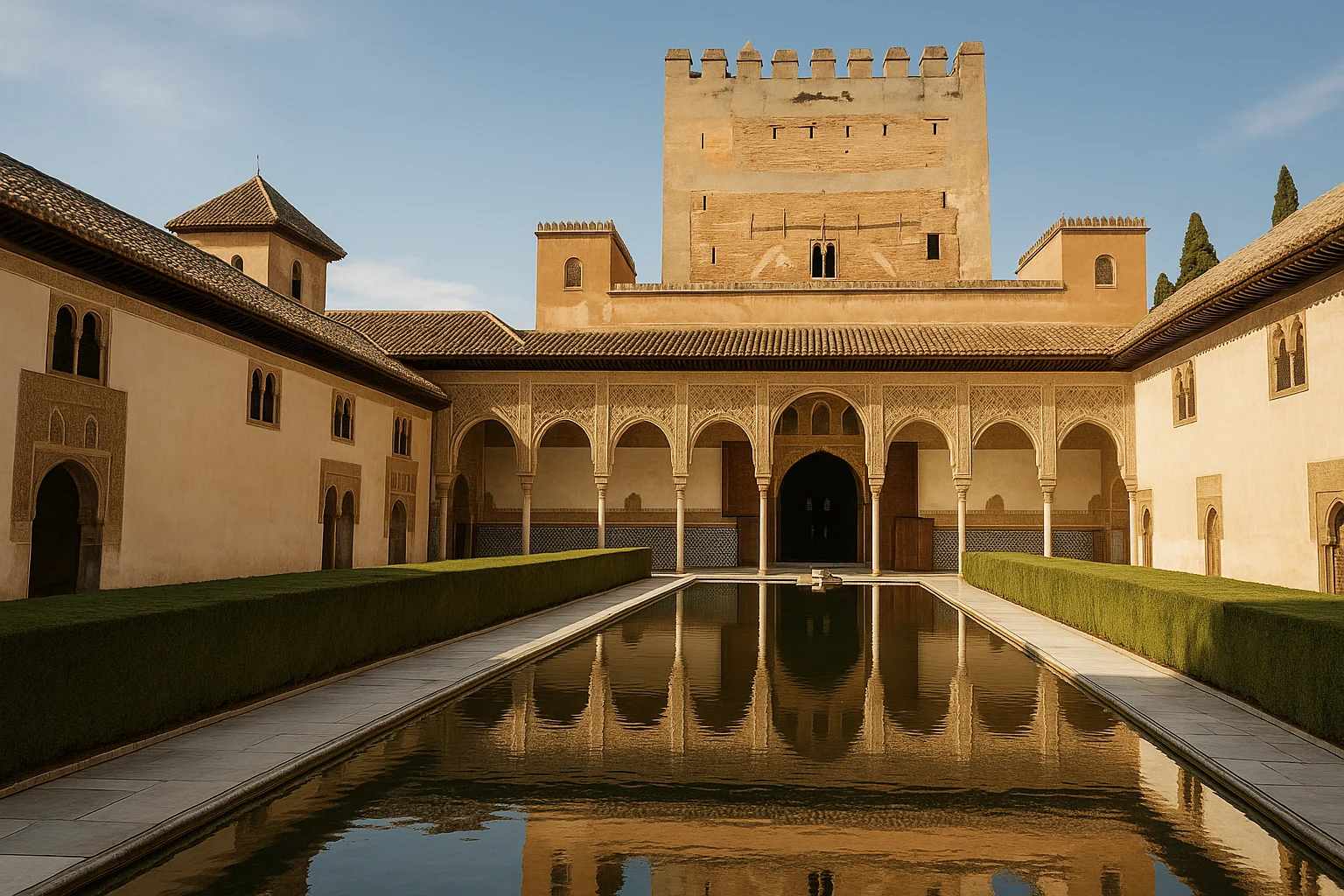
Alhambra Travel Guide 2026: Nasrid Palaces, Tickets, and Visit Strategy
Nasrid Dynasty (Moorish)Plan a well-timed visit to Granada's Alhambra with practical ticket advice, must-see highlights, and...
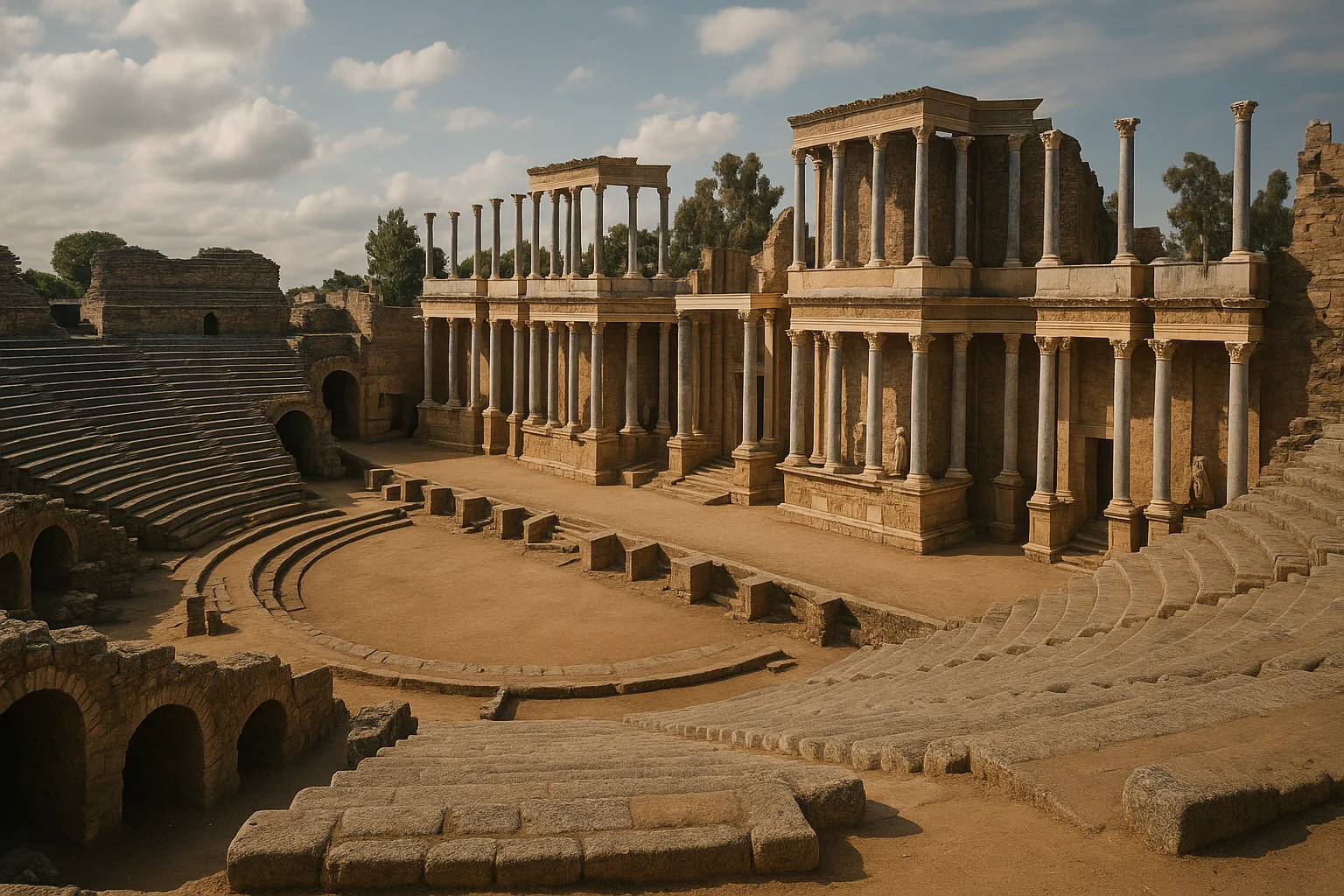
Mérida Roman Ruins Travel Guide 2026: Theatre, Amphitheatre, and Visit Strategy
Roman EmpirePlan your visit to Mérida's Roman archaeological ensemble with practical route advice, key highlight...
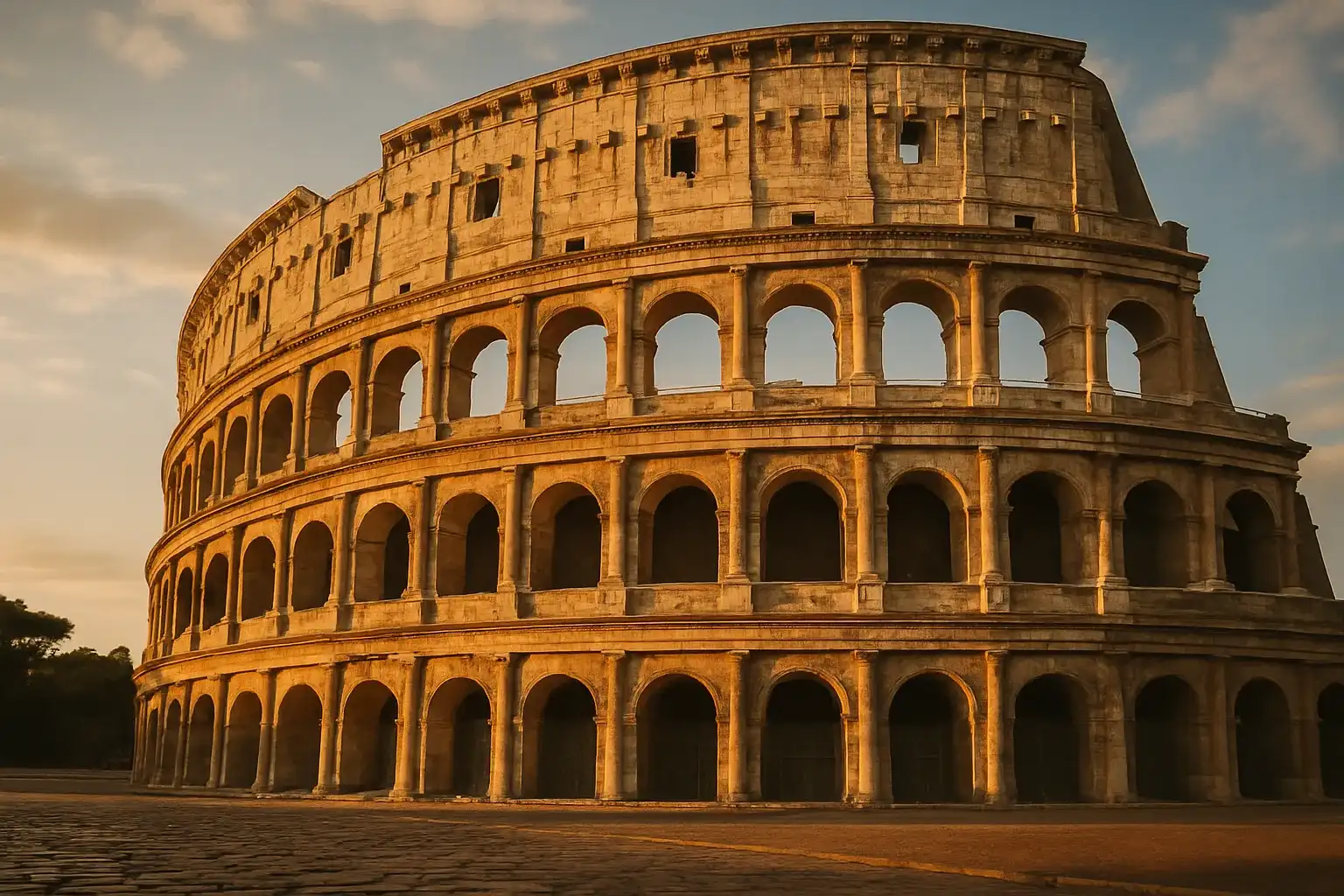
Colosseum Rome: Complete 2026 Guide to Arena Floor, Tickets, and Timing
Roman EmpirePlan the perfect Colosseum visit with timed-entry strategy, Arena Floor and underground access tips,...