Quick Info
At a glance
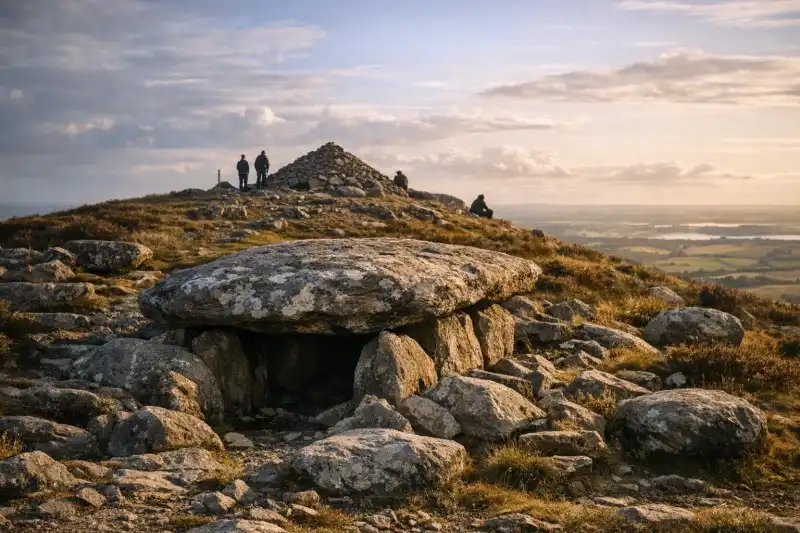
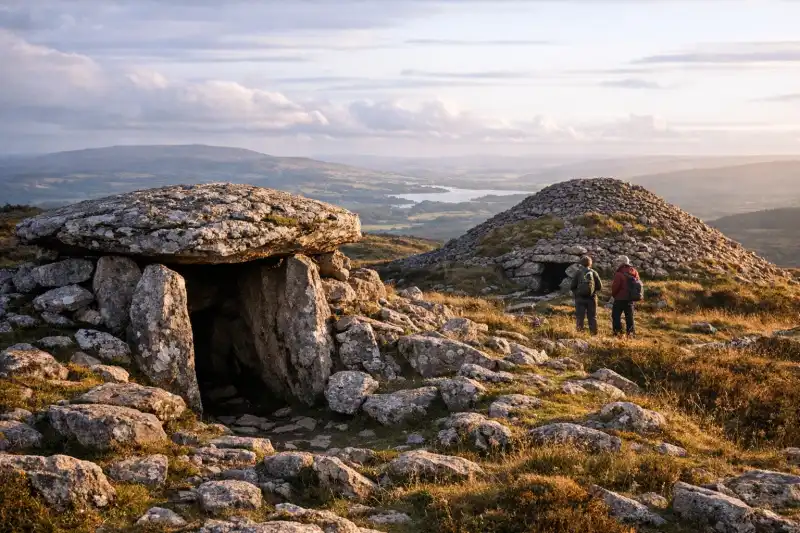
Slieve na Calliagh in Ireland rises quietly above the surrounding fields of County Meath, but its summit holds one of the island’s most remarkable prehistoric landscapes. Known more widely as the Loughcrew Cairns, this chain of passage tombs stretches across a ridge where sky, stone, and memory seem to meet. The climb is not especially long, yet it creates a sense of arrival that feels fitting for a place built more than five thousand years ago. As you walk upward, the modern world begins to fall away, replaced by open views, wind through grass, and the awareness that generations of people once approached this hill with purpose.
Unlike some ancient monuments that survive as isolated ruins, Slieve na Calliagh is best understood as a ceremonial landscape. Its cairns are not random piles of stone but carefully constructed tombs aligned with the movement of the sun and enriched with carved motifs that still puzzle scholars and visitors alike. Circles, lines, stars, and spirals appear on stones inside the chambers, linking the site to the wider megalithic tradition of Ireland while preserving a distinct identity of its own. Visiting today feels both intimate and expansive: intimate because you can stand close to the stones and their markings, expansive because the ridge commands immense views over the Midlands. It is a place where archaeology, myth, and the weather of the Irish uplands combine into a memorable experience.
History
Early Neolithic builders
The story of Slieve na Calliagh begins in the Neolithic period, around 3300 BCE, when farming communities across Ireland were creating lasting monuments in stone. These were not small undertakings. Building passage tombs required planning, labor, and a shared belief in the importance of commemorating the dead in places of ritual significance. On this ridge, communities selected a dramatic elevated setting and raised a series of cairns that formed one of the largest passage tomb cemeteries in Ireland.
Each tomb was built with a narrow passage leading into a chamber, then covered by a mound or cairn of stone and earth. The architecture reveals a sophisticated understanding of space, movement, and light. Certain tombs at Slieve na Calliagh were carefully aligned so that sunlight would enter the chamber at particular times of year, especially around the spring and autumn equinoxes. This shows that the builders were observing the sky closely and embedding those observations into ceremonial architecture. The hill was therefore more than a cemetery; it was a place where cosmology and ancestry met.
Megalithic art and ritual memory
One of the site’s greatest historical treasures lies in its carved stones. Slieve na Calliagh contains some of the finest surviving megalithic art in Ireland. The carvings include concentric circles, radiating lines, lozenges, arcs, cup marks, and other abstract patterns. Though the meanings of these designs remain uncertain, they were almost certainly purposeful. They may have marked sacred thresholds, represented beliefs about the cosmos, or reinforced social memory associated with the dead and the changing seasons.
The decorated stones also connect Slieve na Calliagh to the broader passage tomb tradition seen elsewhere in Ireland, including the Boyne Valley. Yet the Loughcrew carvings have a style and atmosphere of their own. Their placement inside dark chambers, where light would briefly animate them at key solar moments, suggests that they were designed to be experienced rather than merely seen. This was a ritual environment in which architecture, carving, and sunlight worked together.
Medieval memory and local tradition
Long after the Neolithic builders were gone, the hill remained embedded in local tradition. The Irish name Slieve na Calliagh is often translated as “Mountain of the Witch” or “Hill of the Hag,” reflecting folklore associated with the Cailleach, a powerful figure in Irish tradition linked to landscape, winter, and ancient female presence. Such stories are common at prehistoric sites across Ireland, where later communities interpreted enigmatic ruins through myth and legend.
This continuity of memory matters historically, even if the folklore does not preserve literal facts about the Neolithic builders. It shows that the hill never vanished from human awareness. The cairns remained prominent features in the landscape, inspiring explanation and storytelling. In that sense, medieval and later tradition formed another layer of the site’s long life.
Antiquarian interest and modern archaeology
From the eighteenth and nineteenth centuries onward, antiquarians began recording the monuments of Slieve na Calliagh more systematically. As interest in Ireland’s prehistoric past grew, researchers documented the cairns, measured chambers, and copied carvings. Some early investigations were imperfect by modern standards, but they helped draw attention to the importance of the complex.
Twentieth-century and later archaeological work improved understanding of the site’s age, structure, and astronomical significance. Excavation and survey confirmed that Slieve na Calliagh was not a single monument but a broad ceremonial complex spread across several hills. Scholars also focused on the equinoctial alignment of Cairn T, one of the best-known tombs, where the rising sun can illuminate the chamber under the right conditions.
Today the site is recognized as one of Ireland’s major prehistoric landscapes. While it does not always receive the same level of international attention as Newgrange, many visitors find that part of its appeal. Slieve na Calliagh still feels slightly apart from the main tourist circuit, allowing the ancient hilltop setting to speak for itself.
Key Features
The defining feature of Slieve na Calliagh is the way its monuments occupy the ridge. Rather than encountering a single tomb in isolation, visitors step into a dispersed sacred landscape. Cairns are arranged across the heights, creating the sense that the entire hill was monumentalized. This setting is crucial to the experience. The builders chose elevation not just for visibility but for symbolic power. From the summit, views stretch over much of the surrounding countryside, and that vast horizon helps explain why this was a place of ceremony.
Among the various monuments, Cairn T is the best known and often the emotional center of a visit. It sits near the summit and contains a chamber reached by a short passage. Inside are large carved stones whose abstract patterns are among the highlights of Irish prehistoric art. The chamber is compact, but the atmosphere is striking. Even for those without specialist archaeological knowledge, there is a sense of entering a space designed with intention and meaning. The stone surfaces are not merely structural; they are also artistic and symbolic.
The equinox alignment of Cairn T is another major feature. Around the spring and autumn equinoxes, the rising sun can enter the passage and light the inner chamber. This brief event is one of the reasons Slieve na Calliagh is so important in the study of prehistoric astronomy. The alignment demonstrates that Neolithic communities here were not only tomb builders but close observers of celestial cycles. Light was part of the monument’s design, and that transforms the tomb from static structure into seasonal instrument.
Megalithic art throughout the complex deserves special attention. Some of the carvings are deeply incised and still easy to recognize, while others require patience and changing light to appreciate. Spirals may be more famous at other Irish sites, but the geometric vocabulary at Slieve na Calliagh is equally compelling. Concentric circles, sun-like forms, zigzags, and linear arrangements create a visual language that remains unresolved. Their ambiguity is part of their power. They invite close looking without offering a final answer.
The hilltop setting also gives Slieve na Calliagh a different mood from more enclosed archaeological attractions. This is not a museum experience. Wind, mist, rain, and sunlight all shape what you feel here. On a clear day the views are immense, reinforcing the strategic and symbolic importance of the ridge. In poor weather, the cairns can seem austere and mysterious, almost withdrawing into the landscape that produced them. Either way, the environment is integral to the site.
Another memorable element is the approach itself. Reaching the cairns usually involves a walk uphill through open ground, which creates anticipation and a gradual transition into the ancient landscape. That climb is short enough for many travelers but long enough to make the arrival satisfying. It also helps preserve the sense that these tombs were meant to be set apart from everyday habitation.
Finally, Slieve na Calliagh stands out because it combines archaeological importance with a relative lack of overdevelopment. There are visitor facilities in the wider area, but the hilltop experience remains direct and uncluttered. For many travelers, that balance is ideal: enough access to make the visit practical, but not so much infrastructure that the prehistoric character is lost.
Getting There
Slieve na Calliagh is in County Meath, near the town of Oldcastle, and is most easily reached by car. From Dublin, the drive usually takes around 1 hour 45 minutes to 2 hours depending on traffic. Fuel costs for a round trip vary, but for a standard rental car you might expect roughly €25 to €40 in petrol. Driving gives you the greatest flexibility, especially if you want to combine the visit with other sites in Ireland’s Ancient East.
Public transport is possible but less direct. Bus services from Dublin can get you to nearby towns such as Oldcastle, though routes and schedules can change. A one-way bus fare is often in the range of €12 to €20 depending on the operator and booking time. From Oldcastle, you may need a taxi to reach the access point for the hill; local taxi fares for the short journey can add about €10 to €20 each way. Because return services may be limited, it is wise to check timetables in advance and avoid relying on late connections.
Some travelers choose a guided day tour focused on the Boyne Valley or County Meath, though Slieve na Calliagh is less commonly included than Newgrange. If you join a private or small-group excursion, expect prices to vary widely, often from €80 to €180 or more per person depending on transport, group size, and itinerary.
Once on site, there is typically a short uphill walk to the cairns. Wear shoes with decent grip, as paths can be muddy or slippery after rain. Bring water, a weather layer, and expect fewer services on the hill itself than at more commercial attractions.
When to Visit
The best time to visit Slieve na Calliagh is from late spring through early autumn, when longer daylight hours and milder conditions make the walk and hilltop exploration easier. May, June, and September are especially appealing because the landscape is green, the weather can be pleasant, and the site is often quieter than in peak midsummer. On clear days, visibility from the ridge is excellent, making the elevated setting one of the main rewards of the trip.
Summer offers the most comfortable temperatures, usually ranging from about 15°C to 22°C, but Irish weather remains changeable even then. You may experience sunshine, cloud, and rain in a single visit, so layered clothing is always useful. Midday can be busier with casual visitors, while morning and late afternoon often feel calmer and more atmospheric.
Spring and autumn are particularly interesting if you are drawn by the equinox association of the cairns. Around those times, Slieve na Calliagh attracts visitors interested in archaeoastronomy and seasonal ritual. Conditions can be colder, windier, and less predictable, but the connection between sunrise and tomb architecture is part of what makes the site extraordinary. If you hope to experience special light conditions, arrive early and confirm any local access arrangements beforehand.
Winter visits are possible, and the hill can be hauntingly beautiful under low cloud or pale sun, but shorter days, stronger winds, and wetter ground make the outing less comfortable. If visiting in winter, plan for mud, limited daylight, and reduced flexibility in transport. Regardless of season, a dry, bright morning is ideal for combining the best views with the strongest sense of the ancient landscape.
| Quick Facts | Details |
|---|---|
| Location | County Meath, Ireland |
| Alternative name | Loughcrew Cairns |
| Period | Neolithic |
| Approximate date | c. 3300 BCE |
| Site type | Passage tomb cemetery |
| Best-known monument | Cairn T |
| Famous for | Megalithic art and equinox alignment |
| Nearby town | Oldcastle |
| Time from Dublin | About 1 hour 45 minutes to 2 hours by car |
| Typical visit length | 1.5 to 3 hours |
Slieve na Calliagh rewards travelers who enjoy ancient places that still feel rooted in their landscape. It may lack the heavy visitor infrastructure of better-known Irish monuments, but that is exactly why many people remember it so strongly. Here, prehistoric engineering, ritual artistry, and panoramic geography come together on a windswept ridge that has carried meaning for millennia. The carved stones remain enigmatic, the chambers retain their solemn intimacy, and the views remind you that this was once a chosen place at the edge of earth and sky.
For anyone interested in Neolithic Ireland, Slieve na Calliagh is not a secondary stop but a major destination in its own right. It offers evidence of technical skill, ceremonial sophistication, and deep engagement with the sun and seasons. At the same time, it remains accessible enough for a rewarding half-day excursion from the east or Midlands. If you arrive prepared for weather, willing to walk a little, and ready to slow down, the hill reveals itself gradually. That sense of discovery may be the most fitting way to encounter a place built to hold both the dead and the mysteries of the living world.
Guided tours: worth it?
Most travelers can visit Slieve na Calliagh independently. Compare a tour only if you want a tighter history-focused visit, easier logistics, or a guide who can answer questions on the spot.
Best for
- Short visits where a planned route saves time
When to go self-guided
Go independently if you prefer setting your own pace, reading as you go, and checking official hours or ticket rules directly before you arrive.
What I’d avoid
Skip paid tours that bundle unrelated stops you do not actually want. The best option should either save meaningful planning time or add historical context you would miss on your own.
Hill of Tara, Trim Castle and Ancient Ireland Day Tours
Useful when: you want to compare guided formats before deciding
Boyne Valley and Newgrange Tours from Dublin
Useful when: transport or pickup logistics matter
County Meath and Ireland's Ancient East Tours
Useful when: you want to compare guided formats before deciding
Some tour links are affiliate links, which may earn Ancient Travel a small commission at no extra cost to you. I try to surface options that make practical sense for the site—not just anything bookable.
Frequently Asked Questions
What is Slieve na Calliagh?
Slieve na Calliagh is a hilltop complex of Neolithic passage tombs in County Meath, Ireland, also known as the Loughcrew Cairns.
How old is Slieve na Calliagh?
The main monuments date to around 3300 BCE, making them older than Stonehenge and roughly contemporary with the great passage tomb traditions of prehistoric Ireland.
Is there an entrance fee to visit Slieve na Calliagh?
Access to the hill and cairns is generally free, though visitors should check local heritage or estate information for current opening details and parking arrangements.
Can you go inside the tombs at Slieve na Calliagh?
At certain cairns, visitors can enter or look into the chambers when conditions and access rules allow, but care is required to protect the stonework and carvings.
What is the best time to visit Slieve na Calliagh?
Late spring to early autumn offers the easiest walking conditions, while clear mornings and evenings provide the best light and widest views across the Irish countryside.
Why is Slieve na Calliagh important?
It is one of Ireland's most significant prehistoric cemeteries, notable for its passage tomb architecture, megalithic art, and solar alignment linked to seasonal change.
Nearby Ancient Sites
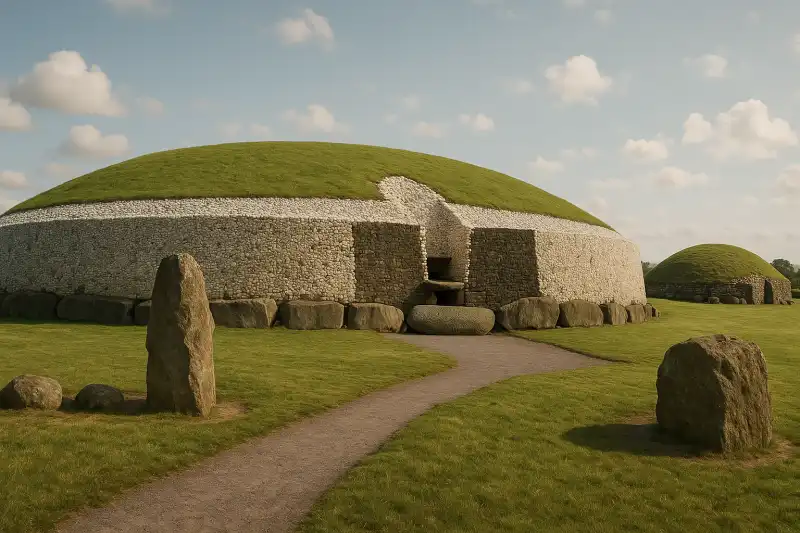
Boyne Valley Passage Tombs Travel Guide 2026: Newgrange, Knowth, and Dowth Visit Strategy
Neolithic IrelandPlan your first Boyne Valley passage tombs visit with practical timing, Brú na Bóinne access flow, a...
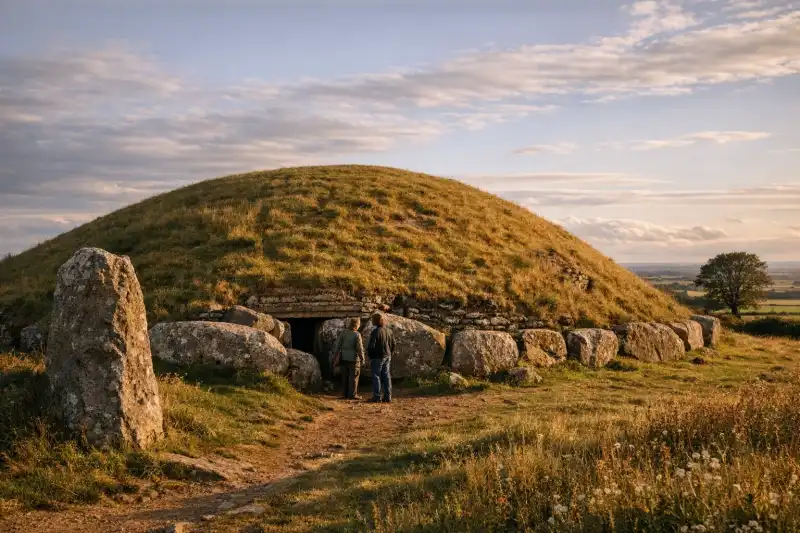
Dowth
Neolithic communities of Brú na BóinneAncient passage tomb in Ireland's Boyne Valley, famed for Neolithic art, winter light, and sweeping ...
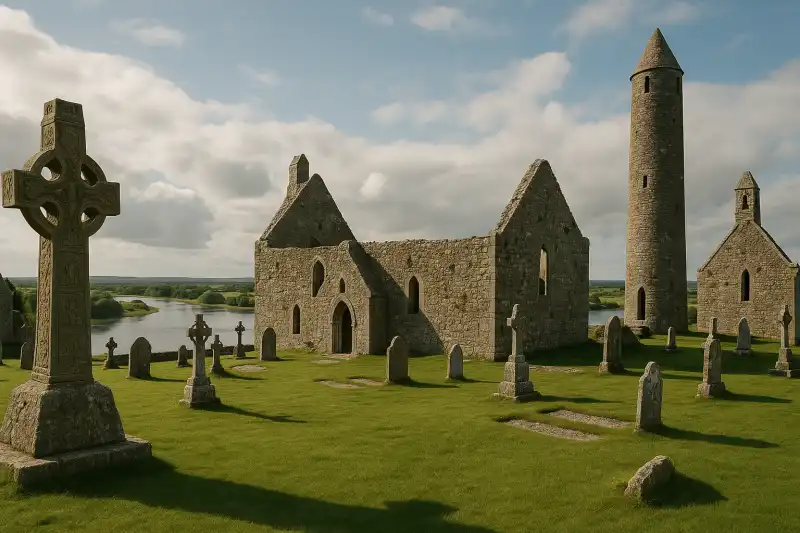
Clonmacnoise Travel Guide 2026: Monastic Ruins, High Crosses, and River Shannon Context
Early Medieval IrelandPlan a first visit to Clonmacnoise with practical timing, monastic-site context, and clear route adv...
Carrowkeel Megalithic Cemetery
Neolithic IrelandA dramatic Neolithic hilltop cemetery in Ireland with passage tombs, mountain views, and ancient rit...