Quick Info
At a glance
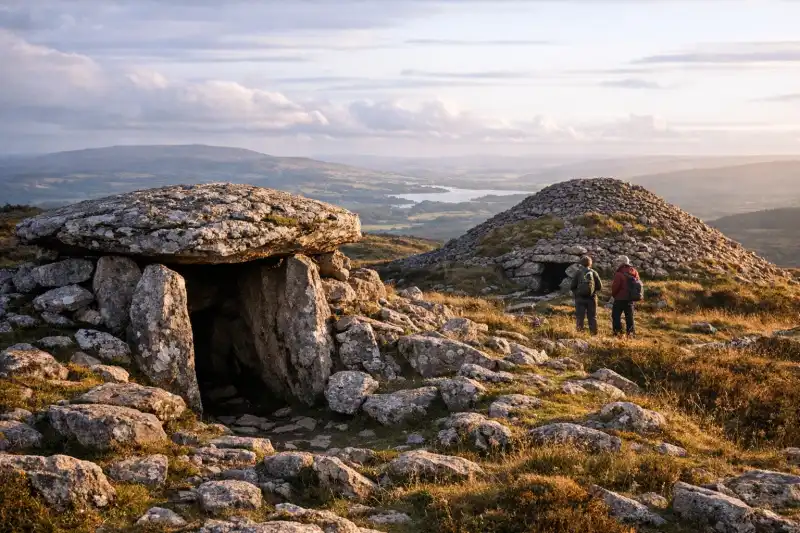
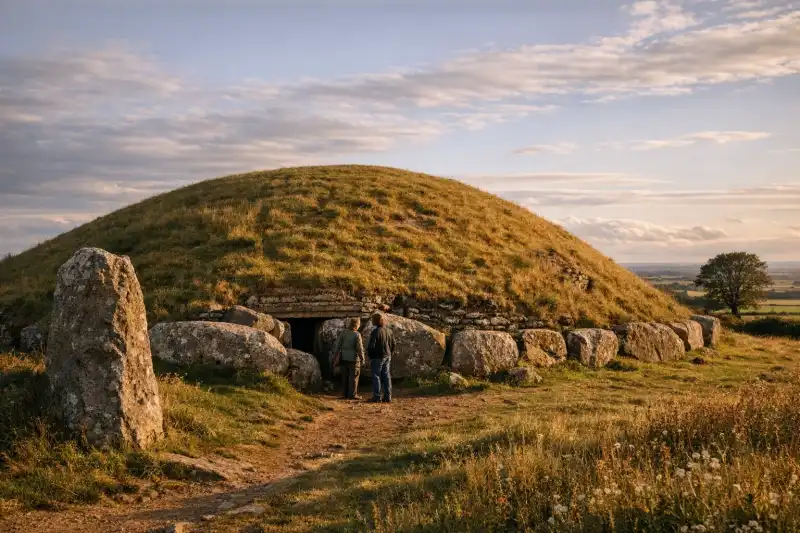
Carrowkeel Megalithic Cemetery in Ireland feels less like a single monument and more like an entire prehistoric world preserved on a high, windswept ridge. Set in County Sligo among the Bricklieve Mountains, this Neolithic complex rewards visitors with a rare combination of archaeology, silence, and grand western landscapes. The approach itself shapes the experience: narrow country roads, open fields, grazing sheep, and then a climb into a stony upland where tombs emerge against the sky. Unlike more urban or heavily managed heritage sites, Carrowkeel still carries a sense of discovery. You are not simply arriving at an attraction; you are stepping into an ancient ceremonial landscape that once held deep spiritual significance for the communities who built it.
What makes Carrowkeel especially memorable is the relationship between architecture and setting. The passage tombs sit across hills and ridges with commanding views over lakes, valleys, and distant mountains. Even for travelers already familiar with Ireland’s famous prehistoric monuments, Carrowkeel offers something different: a stronger feeling of remoteness and a more direct connection with the landscape that shaped ritual life in the Neolithic period. Here, stone chambers, cairns, and alignments are inseparable from weather, light, and horizon. Visiting is part archaeological excursion and part mountain walk, and that combination gives Carrowkeel its lasting power.
History
Neolithic origins
Carrowkeel was built during the Neolithic, broadly around 3500 to 3000 BCE, making it one of Ireland’s most important concentrations of passage tombs. The cemetery includes numerous cairns spread across the Bricklieve uplands, and it belongs to the same broad tradition as the better-known passage tomb landscapes of Brú na Bóinne and Carrowmore. These communities were among Ireland’s first farming societies, people who cleared land, kept animals, cultivated crops, and developed increasingly complex ceremonial practices. Their tomb-building was not just practical burial architecture but a major social and spiritual undertaking.
Constructing these monuments required planning, labor, and an understanding of stone engineering. Large slabs were transported and arranged to form chambers and passages, then covered with cairns of smaller stones. The effort involved suggests that these tombs served communities larger than a single family group. They likely functioned as places of burial, remembrance, ritual gathering, and perhaps seasonal ceremony. The elevated location of Carrowkeel was surely deliberate. Building on these heights would have made the cemetery visible and symbolically powerful, linking the dead with the sky, the horizon, and the wider land occupied by the living.
Ritual use and prehistoric significance
Passage tombs in Ireland are often associated with celestial events, and Carrowkeel is no exception. Some tombs are aligned in ways that suggest careful observation of the sun, especially around seasonal transitions. This supports the idea that the cemetery was not simply a repository for the dead but part of a ritual calendar. For Neolithic communities, monuments could anchor beliefs about ancestry, fertility, renewal, and the cyclical nature of time. The dead may have remained active presences within the social order, with ceremonies at tombs reinforcing communal memory and territorial identity.
Archaeological excavations at Carrowkeel produced cremated human remains and artifacts that helped confirm its role as a funerary and ceremonial complex. Finds included bone, stone objects, and other materials associated with burial practices. Such evidence shows that these tombs were repeatedly used and revisited, perhaps over generations. The cemetery would have been embedded in a wider sacred geography that also included settlements, routeways, and other ritual sites in the northwest of Ireland. Carrowkeel did not stand in isolation; it formed part of a prehistoric network of meaningful places extending across the Sligo landscape.
Rediscovery, excavation, and controversy
Although local people always knew the hills and their ancient stone mounds, scholarly attention increased in the nineteenth and early twentieth centuries as antiquarians and archaeologists documented Ireland’s prehistoric monuments. Carrowkeel was excavated in the early 1900s, notably by teams including R. A. S. Macalister, R. C. R. Armstrong, and others. These excavations uncovered important data, but they also reflected the methods and attitudes of their time, which did not always meet modern conservation or ethical standards.
One of the major controversies connected with Carrowkeel concerns the treatment of human remains and grave goods removed during excavation. As at many ancient burial sites investigated in that era, the process raised questions about respect for the dead, ownership of heritage, and the impact of excavation on fragile monuments. Modern archaeological practice is far more cautious, emphasizing preservation, documentation, and cultural sensitivity. Carrowkeel’s history as an excavated site therefore includes both important scientific discovery and a reminder of how heritage management has evolved.
Carrowkeel today
Today Carrowkeel is recognized as one of the great Neolithic landscapes of Ireland, though it remains less visited than some of the country’s more famous ancient monuments. That relative quiet is part of its appeal. Visitors encounter a site that still feels elemental, where the setting has not been overwhelmed by heavy infrastructure. Conservation efforts focus on protecting the cairns, guiding access, and encouraging respectful visitation.
Its importance has also grown through broader public interest in prehistoric Ireland. Carrowkeel now attracts archaeologists, photographers, walkers, and travelers seeking ancient places beyond the standard tourist trail. As understanding of Ireland’s Neolithic world deepens, the cemetery stands out not only for the age and number of its tombs but for the way it preserves the relationship between monument and mountain. In that sense, Carrowkeel remains what it has always been: a place where architecture, memory, and landscape meet.
Key Features
The defining feature of Carrowkeel Megalithic Cemetery is the cluster of passage tombs spread across the uplands of the Bricklieve Mountains. Rather than a single central monument, the site consists of multiple cairns occupying high points and slopes, creating an interconnected ceremonial landscape. This makes exploration especially rewarding. As you walk from one tomb area to another, you begin to understand that placement mattered as much as construction. Each cairn has a relationship to ridges, hollows, lakes, and distant peaks. The entire cemetery was designed with a sense of topography and visibility that remains legible thousands of years later.
Among the most notable monuments is Cairn G, often the focus of visitors because its chamber can offer a vivid impression of passage tomb architecture. Entering such a structure, when conditions and access guidance allow, changes the scale of the experience. Outside, the cairn belongs to the open mountain landscape; inside, the chamber is tight, dark, and carefully built, with corbelled stonework and a deliberate inward pull. This contrast between exposed hilltop and enclosed chamber is central to the power of Carrowkeel. It suggests movement from the world of the living into a ritual interior associated with burial and ceremony.
The stonework itself deserves close attention. Massive orthostats form passages and chambers, while cairn material creates rounded mounds that merge with the natural ground. Some stones bear traces of prehistoric working or arrangement that reveal considerable technical skill. Even where cairns are partly ruined, enough survives to communicate the ambition of the builders. These were not rough piles of stone but carefully conceived monuments, organized around chambers, entrance passages, and alignments. At Carrowkeel, the architecture is quieter than at some restored sites, yet in many ways more affecting because it retains a stronger sense of age and exposure.
One of the greatest pleasures of visiting is the panoramic setting. From the cemetery, views sweep over Lough Arrow and across the surrounding countryside of County Sligo and neighboring areas. In clear weather, the interplay of water, pasture, mountain, and sky becomes part of the site’s interpretation. It is easy to see why prehistoric communities selected these heights. The tombs command the land, but they are also enfolded by it. Light shifts rapidly here; sun, mist, and cloud can completely alter the mood within minutes. Sunrise, sunset, or low evening light can make the stones seem almost sculptural, reinforcing ideas about solar orientation and ceremonial timing.
Another important feature is the atmosphere of comparative solitude. Unlike major archaeological parks with visitor centers, marked circuits, and constant foot traffic, Carrowkeel remains a place where silence matters. You hear wind, birds, sheep, and little else. That relative absence of modern distraction allows visitors to observe the monuments at their own pace and to notice small details: the curve of a passage stone, the texture of moss on the cairn, the shape of a ridge leading toward another tomb. For many travelers, this is the quality that elevates Carrowkeel from an interesting archaeological stop to an unforgettable encounter.
The wider archaeological context also adds depth. Carrowkeel is part of a rich prehistoric landscape in northwest Ireland that includes Carrowmore and other ancient sites. Seeing it in relation to these places helps explain just how significant Sligo was in Neolithic ritual life. Carrowkeel’s upland tombs contrast with lower-lying monuments elsewhere, suggesting diverse choices in how sacred spaces were created. The cemetery is therefore valuable not only as an individual destination but as evidence of a regionally important and sophisticated prehistoric tradition.
Getting There
Carrowkeel Megalithic Cemetery is in rural County Sligo, and the easiest way to reach it is by car. From Sligo town, the drive usually takes around 45 to 60 minutes, depending on your route and road conditions. From Boyle, it is often about 30 to 40 minutes. Roads in the final stretch are narrow and winding, so drive slowly and expect occasional farm traffic. Parking is typically available near the trailhead, after which you continue on foot to the cemetery.
Public transport is limited. You can take a train or bus to Boyle or Sligo from Dublin and then continue by taxi or prearranged local transport. A rail journey from Dublin to Boyle often takes about 2.5 to 3 hours, with fares commonly starting around €20 to €35 if booked in advance, though prices vary. Bus fares can be somewhat lower, often around €15 to €30 depending on route and booking time. A taxi onward from Boyle to the Carrowkeel access point may cost roughly €35 to €60 each way, so it is wise to confirm prices locally.
From the parking area, expect a moderate uphill walk on a rough track and grassy path. Good footwear is important, especially after rain, when the ground can be slick or muddy. There are few visitor facilities on site, so bring water, weather layers, and a charged phone. If you prefer not to navigate country roads yourself, look for guided day trips covering Sligo’s prehistoric sites, though options can be seasonal and less frequent than tours in Ireland’s larger cities.
When to Visit
Late spring through early autumn is generally the best time to visit Carrowkeel. Between May and September, longer daylight hours make the drive and uphill walk easier, and the upland scenery is especially attractive with green fields, flowering hedgerows, and broader weather windows. Summer offers the best chance of dry footing and clear views, but even then conditions can change quickly. Bright mornings can turn windy or wet by afternoon, so layers remain essential.
Spring is an excellent compromise for many travelers. The landscape feels fresh, daylight is improving, and visitor numbers remain relatively low. Autumn can also be rewarding, especially on clear days when the light is softer and the surrounding hills take on richer tones. Photographers often appreciate this season because the low sun adds texture to the cairns and surrounding ridgelines.
Winter visits are possible but more challenging. Short daylight hours, wet ground, fog, and strong winds can make the cemetery harder to access and less comfortable to explore. If you do go in winter, start early and check the forecast carefully. The site’s exposed position means weather matters more here than at many lowland attractions.
Time of day also shapes the experience. Early morning and late afternoon tend to be the most atmospheric, with softer light and fewer people around. Clear sunset conditions can be spectacular on the hills, though you should plan your descent before darkness unless fully prepared. Whenever you visit, aim for a dry forecast and good visibility if possible. Carrowkeel is at its most impressive when you can see the wider ceremonial landscape spreading out below and beyond the tombs.
| Quick Facts | Details |
|---|---|
| Location | Bricklieve Mountains, County Sligo, Ireland |
| Type | Neolithic passage tomb cemetery |
| Date | c. 3500–3000 BCE |
| Cultural period | Neolithic Ireland |
| Best known for | Hilltop cairns, passage tombs, panoramic views |
| Closest town | Boyle |
| Typical visit length | 1.5–3 hours |
| Access | Rural road approach plus uphill walk |
| Entry fee | Generally free |
| Best season | Late spring to early autumn |
Carrowkeel rewards travelers who want more than a quick photo stop. It asks for a little effort: careful driving, a short climb, and readiness for whatever weather the mountain chooses to provide. In return, it offers one of Ireland’s most affecting ancient landscapes, where prehistoric architecture remains in powerful dialogue with sky, stone, and distance. For anyone interested in Neolithic Europe, sacred landscapes, or simply the experience of encountering the deep past in a quiet and dramatic setting, Carrowkeel stands among the most compelling destinations in the country.
Guided tours: worth it?
A guide can be genuinely useful at Carrowkeel Megalithic Cemetery, especially if you want help with transport, timing, tickets, or understanding a large site without losing half the day to logistics.
Best for
- Travelers who want transport, timing, or entry logistics handled
- Short visits where a planned route saves time
When to go self-guided
Go independently if you already have transport and tickets sorted, enjoy moving at your own pace, and are comfortable checking the latest official rules before you arrive.
What I’d avoid
Skip paid tours that bundle unrelated stops you do not actually want. The best option should either save meaningful planning time or add historical context you would miss on your own.
Sligo Ancient Sites Tours
Useful when: you want to compare guided formats before deciding
Ireland Megalithic Tombs Tours
Useful when: you want to compare guided formats before deciding
West Ireland Day Trips
Useful when: transport or pickup logistics matter
Some tour links are affiliate links, which may earn Ancient Travel a small commission at no extra cost to you. I try to surface options that make practical sense for the site—not just anything bookable.
Frequently Asked Questions
What is Carrowkeel Megalithic Cemetery?
Carrowkeel Megalithic Cemetery is a major Neolithic complex of passage tombs in County Sligo, Ireland, built roughly 5,000 years ago on the Bricklieve Mountains.
How do I get to Carrowkeel Megalithic Cemetery?
Most visitors drive from Sligo town or Boyle. The final approach includes narrow rural roads and a steep walk from the parking area to the tombs.
Is there an entrance fee at Carrowkeel Megalithic Cemetery?
Access to the cemetery is generally free, though visitors should check current local guidance before traveling.
How long should I spend at Carrowkeel Megalithic Cemetery?
Allow at least 1.5 to 3 hours to walk up, explore several cairns, enjoy the views, and return comfortably.
Can you go inside the tombs at Carrowkeel?
Some tomb chambers may be accessible depending on site conditions and conservation guidance, but visitors should never climb on the monuments or force entry.
What should I wear for visiting Carrowkeel Megalithic Cemetery?
Wear sturdy walking shoes and weatherproof layers, as the path can be uneven, muddy, and exposed to wind and rain.
Nearby Ancient Sites
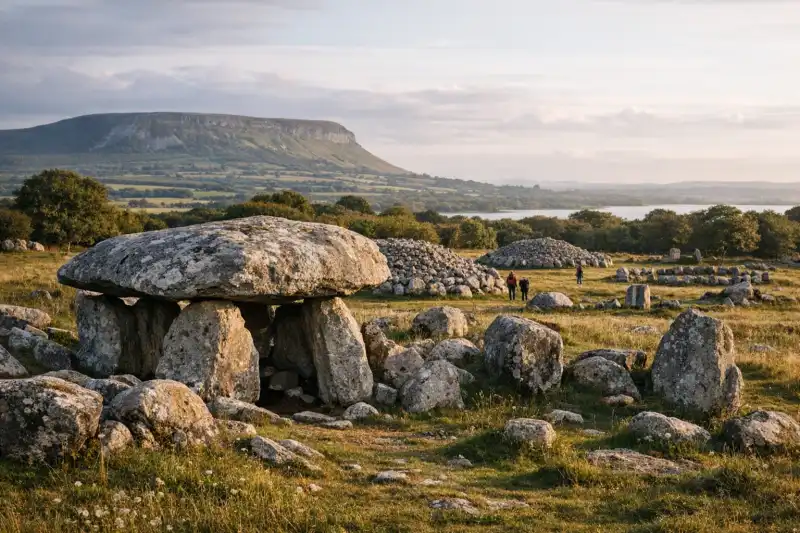
Carrowmore Megalithic Cemetery
Neolithic communities of prehistoric IrelandExplore Carrowmore Megalithic Cemetery, Ireland’s vast Neolithic burial landscape near Sligo, with t...
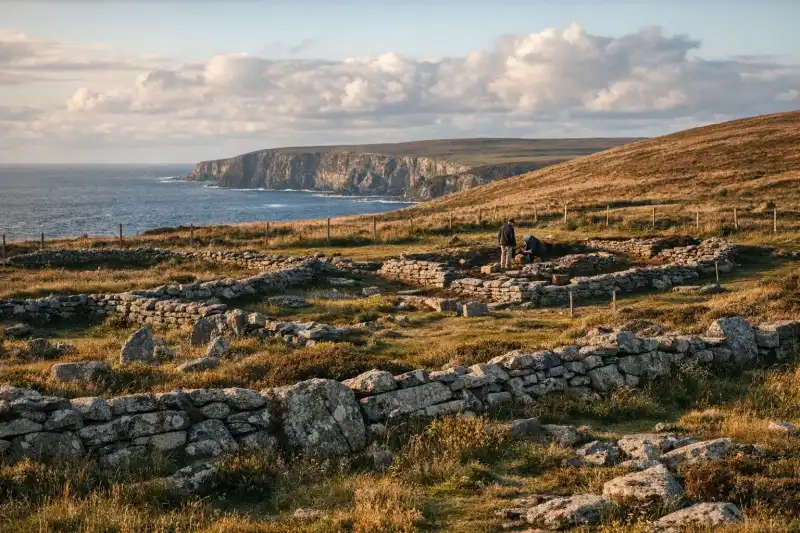
Céide Fields
Neolithic farming communities of Atlantic EuropeExplore Céide Fields in Ireland, a vast Neolithic landscape of stone-walled fields, tombs, and trace...
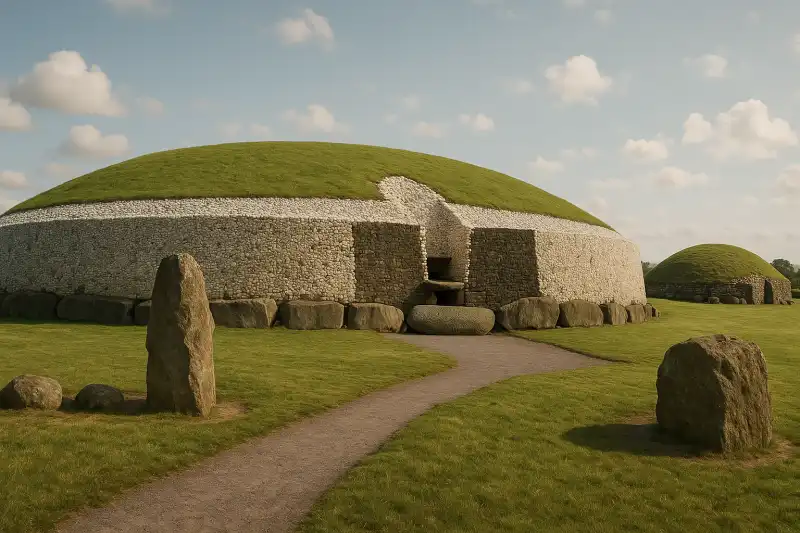
Boyne Valley Passage Tombs Travel Guide 2026: Newgrange, Knowth, and Dowth Visit Strategy
Neolithic IrelandPlan your first Boyne Valley passage tombs visit with practical timing, Brú na Bóinne access flow, a...
Dowth
Neolithic communities of Brú na BóinneAncient passage tomb in Ireland's Boyne Valley, famed for Neolithic art, winter light, and sweeping ...