Quick Info
At a glance
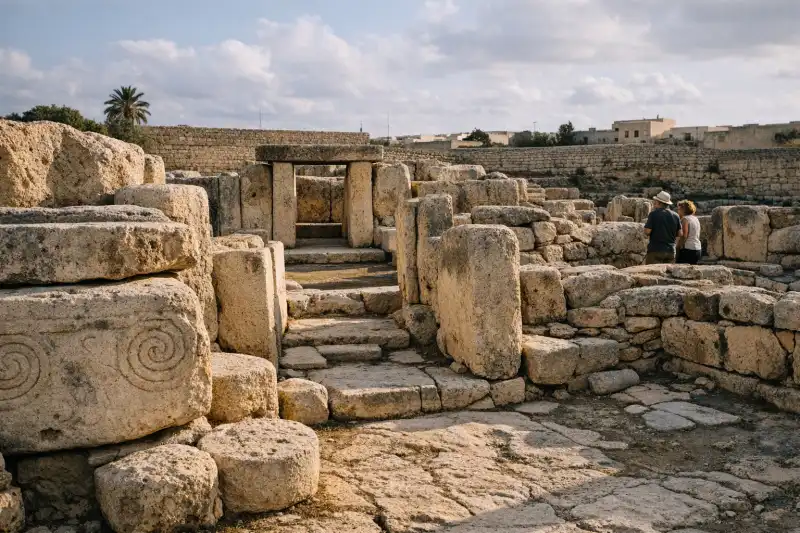
Tarxien Temples in Malta stand in the middle of a modern town, yet the moment you step inside the protected archaeological area, the present seems to fall away. Massive honey-colored limestone blocks curve into apses, passageways, and chambers laid out more than 4,500 years ago. The scale is striking, but so is the refinement: carved spirals, animal reliefs, altars, and carefully shaped thresholds suggest not only engineering skill but also a richly symbolic ritual world. Few places in Europe bring visitors this close to a prehistoric sacred landscape with such immediacy.
Part of the UNESCO-listed Megalithic Temples of Malta, Tarxien is often one of the most accessible sites for travelers staying near Valletta. That convenience can make it seem like a quick stop, but it deserves much more than a glance. This is not a ruin in the casual sense. It is a carefully studied ceremonial complex, built and rebuilt over centuries by communities that left no written records but did leave extraordinary stone architecture. Walking through Tarxien, you encounter evidence of both ritual performance and daily effort: dragged blocks, polished surfaces, carved decoration, and spaces designed for movement, gathering, and perhaps sacrifice. The site offers one of the clearest windows into Malta’s prehistoric temple culture, and even a short visit reveals just how sophisticated those island societies were long before the classical age.
History
Discovery in the modern era
Unlike some ancient monuments that remained continuously visible and famous through later centuries, the Tarxien Temples emerged into modern awareness relatively recently. In 1913, local farmers working the land turned up large stone blocks and remains beneath the soil. Their discovery led to archaeological investigation under Sir Themistocles Zammit, one of the major figures in early Maltese archaeology. Excavations revealed not a single temple but a complex of interconnected structures from different building phases.
The timing of the discovery was crucial. By the early 20th century, Malta’s prehistoric remains were increasingly recognized as part of a unique island tradition rather than isolated curiosities. Tarxien helped confirm the existence of a remarkably advanced Neolithic temple-building culture. As the excavations progressed, archaeologists uncovered decorated slabs, altars, animal bones, and evidence of ceremonial use. These finds transformed scholarly understanding of prehistoric Malta and elevated Tarxien into one of the archipelago’s most important archaeological sites.
Construction during the Temple Period
The main temple complex at Tarxien dates broadly to the late Neolithic Temple Period, with the most significant remains generally assigned to around 3150-2500 BCE. Archaeologists identify several phases and structures, indicating that the site developed over time rather than appearing all at once. Earlier traces of occupation in the area suggest that the location may already have held significance before the principal temples were built.
The builders used Malta’s local limestone, shaping and transporting huge blocks without metal tools or the wheel. The complex follows the characteristic Maltese temple plan, with a central corridor leading into a series of apses, often arranged symmetrically. At Tarxien, however, the architecture appears particularly elaborate. Multiple temples stand close together, and the complex includes finely worked decorative elements that represent a high point in the island’s megalithic tradition.
This was not architecture built for defense or domestic life. The layout, altars, carved panels, and controlled interior spaces all suggest ceremonial functions. Although scholars continue to debate the precise nature of the rituals performed here, Tarxien clearly served as a major sacred center for prehistoric communities on Malta.
Ritual activity and symbolic life
Tarxien is especially famous for the clues it offers about prehistoric ritual practice. Excavators found animal bones, including evidence that may point to sacrifice, as well as stone altars and hearths. Decorative motifs such as spirals and relief carvings of animals imply a symbolic language that was meaningful to the temple builders and worshippers. One of the most iconic finds from the site is the lower portion of a colossal statue, often interpreted as representing a richly skirted figure. Whether this was a deity, priestess, or symbolic presence remains uncertain, but it demonstrates the ceremonial importance of visual representation at Tarxien.
The site also raises questions about fertility, status, and seasonal rites. Some scholars have linked the temple tradition in Malta with fertility cults, based partly on figurines and bodily imagery found across the islands, though interpretations are not universally accepted. What is clearer is that Tarxien was a place of repeated, formalized activity. Its architecture guided movement, focused attention, and framed ritual performance in ways that suggest long-established traditions.
Decline, burial, and preservation
By around 2500 BCE, the great temple-building culture of prehistoric Malta appears to have declined. The reasons are still debated and may include environmental change, social transformation, or shifts in belief and population. Whatever the cause, the temples eventually fell out of use. Over time, natural processes and accumulated soil covered much of Tarxien, helping preserve the remains below ground until their rediscovery.
In later prehistory, parts of the site were reused in the Bronze Age, showing that the location retained significance even after the main temple phase ended. Modern conservation has been essential to protecting the fragile limestone and carved surfaces. Exposure to weather, pollution, and visitor pressure threatens the soft stone, so management efforts now focus on balancing public access with long-term preservation. Today, Tarxien remains both a major archaeological monument and a reminder of how much prehistoric heritage can survive, even in densely inhabited landscapes.
Key Features
What sets Tarxien Temples apart is the richness of detail within a structure type already unique to Malta. The complex consists of several adjoining temples, and as you move through the site, it becomes clear that this was not a single architectural gesture but a layered sacred precinct. The arrangement of curving chambers, apses, and passageways creates a sense of deliberate choreography. Visitors do not simply look at walls; they follow routes that were clearly designed to shape experience.
The megalithic construction is the first feature that commands attention. Some blocks are enormous, emphasizing the collective labor required to quarry, move, and position them. Yet the achievement is not only one of size. The builders also created carefully fitted entrances, smooth surfaces, and visually balanced spaces. The temple plans reveal a refined understanding of order and symmetry, even though everything was made in stone long before classical architecture emerged in the Mediterranean.
Tarxien is especially renowned for its carved decoration. Spiral motifs appear on certain slabs, cut with a confidence that feels both ornamental and symbolic. These patterns are among the most famous works of prehistoric art in Malta. Their exact meaning remains unknown, but they may have expressed cosmological ideas, ritual cycles, or social identity. Whatever their purpose, they show that Tarxien was conceived as more than a functional enclosure. It was a place where architecture and image worked together.
Animal reliefs are another memorable element. Carvings of creatures such as bulls, pigs, and goats link the site to the economic and ritual life of the communities who built it. Animals were clearly central to survival, but at Tarxien they also seem to have held ceremonial importance. The presence of altars and animal remains reinforces the idea that offerings or sacrificial acts may have taken place here. For modern visitors, these reliefs provide a rare direct connection to the symbolic world of a prehistoric society that left no written explanations behind.
One of the most discussed features associated with Tarxien is the monumental statue discovered at the site, now represented in part by casts and museum displays. The surviving lower portion shows a figure wearing a pleated skirt, its scale suggesting a powerful presence within the temple complex. The identity of the figure is uncertain, and that uncertainty is part of the fascination. It hints at a religious or ceremonial system sophisticated enough to produce large-scale sculptural forms, yet still elusive to interpretation.
The altars are equally important. Some are decorated, while others stand out because of their placement within the chambers. They anchor the ceremonial reading of the site. Standing near them, you can imagine gatherings, processions, offerings, and repeated acts of devotion structured by architecture. The spaces are not vast in the way of later cathedrals or imperial temples, but they feel intimate and purposeful, designed for enclosed ritual rather than spectacle from afar.
Another compelling feature is the contrast between ancient stone and modern protection. Shelters and conservation measures may soften the romantic image of ruins in the open air, but they help visitors understand that Tarxien is fragile. The protective environment allows you to see the carvings and masonry more clearly while also underscoring the vulnerability of soft limestone in a populated, coastal island setting. In that sense, preservation is part of the visit: it reminds you that ancient monuments survive only through careful stewardship.
Getting There
Tarxien Temples are easy to reach, especially if you are based in Valletta or elsewhere in the harbor area. By car or taxi, the journey from central Valletta usually takes around 15 to 20 minutes, depending on traffic. Taxi fares are commonly in the range of €12 to €20 each way, while ride-hailing prices can vary with demand. If you are arriving from Sliema or St. Julian’s, expect a longer trip and usually a fare closer to €18 to €30.
Public buses are the most economical option. Buses from Valletta toward Tarxien and neighboring southern towns regularly stop within walking distance of the site. A standard Malta public transport fare is typically about €2.50 in summer and around €2.00 in winter for a two-hour ticket, though exact pricing can change, so it is worth checking current rates before traveling. From the bus stop, the walk to the entrance is usually brief and straightforward through the town streets.
If you are planning a wider prehistoric itinerary, many travelers combine Tarxien with the nearby Hal Saflieni Hypogeum area and other southern Malta sights by taxi or rental car. Parking can be limited in residential streets, so arriving earlier in the day helps. Guided tours are also available from Valletta and major resort areas, often bundling transport with commentary. Those tours can be useful if you want historical context without navigating buses yourself, though they generally cost more than independent travel.
When to Visit
The best time to visit Tarxien Temples is during spring and autumn, when Malta enjoys warm but manageable weather and the light is pleasant for photography. Between March and May, wildflowers and greener landscapes add freshness to the island, while temperatures are usually comfortable for walking between nearby attractions. Autumn, especially from late September through November, brings warm seas, softer crowds than peak summer, and gentler daytime conditions.
Summer is the busiest season. From June to early September, Malta can be intensely hot, and although Tarxien is not a long hike, exposed travel between bus stops, parking areas, and nearby streets can feel tiring in midday sun. If you visit in summer, aim for opening time or earlier morning hours. Not only will temperatures be lower, but the site is often quieter, allowing a more reflective experience among the chambers and carved stones.
Winter can also be a good option if you prefer fewer visitors and lower travel costs. Malta remains relatively mild compared with much of Europe, though rain and wind are more likely between December and February. On overcast days, the site can feel atmospheric rather than diminished, with the subdued light bringing out the texture of the limestone. The main thing to watch in any season is opening hours and conservation-related restrictions, which can occasionally affect access. If Tarxien is a priority, check official information in advance and try to allow enough time to visit without rushing.
| Quick Facts | Details |
|---|---|
| Location | Tarxien, southeastern Malta |
| UNESCO Status | Part of the Megalithic Temples of Malta |
| Main Period | Neolithic Temple Period |
| Approximate Date | c. 3150-2500 BCE |
| Best For | Prehistoric archaeology, megalithic architecture, ritual art |
| Typical Visit Length | 45 minutes to 1.5 hours |
| Nearest Major Base | Valletta |
| Transport Options | Bus, taxi, ride-hailing, rental car, guided tour |
| Notable Highlights | Spiral carvings, altars, animal reliefs, temple chambers |
| Travel Tip | Visit in the morning for cooler weather and a quieter atmosphere |
Tarxien Temples reward visitors who slow down. At first glance, the site can seem compact compared with larger classical ruins elsewhere in the Mediterranean, but its importance lies in depth rather than scale alone. These stones preserve traces of a highly developed ceremonial culture that flourished on Malta thousands of years before Rome, before Greek colonization, and long before medieval fortifications reshaped the island. The architecture is both practical and mysterious: you can see how the builders arranged space, but not fully recover what every chamber meant to those who entered it.
That tension is what makes Tarxien so memorable. It is legible enough to impress with craftsmanship and planning, yet enigmatic enough to keep its spiritual life partly hidden. The carved spirals, the altars, the animal imagery, and the famous statue fragments all point toward a ritual world of immense complexity. For travelers interested in ancient religion, archaeology, or early architecture, Tarxien offers one of Malta’s clearest and most rewarding encounters with prehistory. Even after leaving the site and returning to the traffic and houses of the surrounding town, the impression lingers: that beneath modern Malta lies one of Europe’s oldest and most extraordinary sacred traditions.
Guided tours: worth it?
Self-guided works here, but a guide can add real value if you want the ruins explained as a living place rather than just a sequence of monuments.
Best for
- First-time visitors who want context, not just photos
- Short visits where a planned route saves time
When to go self-guided
Go independently if you prefer setting your own pace, reading as you go, and checking official hours or ticket rules directly before you arrive.
What I’d avoid
Skip paid tours that bundle unrelated stops you do not actually want. The best option should either save meaningful planning time or add historical context you would miss on your own.
Tarxien Temples Malta Tours
Useful when: you want to compare guided formats before deciding
Malta Prehistoric Temples Tours
Useful when: you want to compare guided formats before deciding
Valletta and Tarxien Temples Tours
Useful when: you want to compare guided formats before deciding
Some tour links are affiliate links, which may earn Ancient Travel a small commission at no extra cost to you. I try to surface options that make practical sense for the site—not just anything bookable.
Frequently Asked Questions
Where are the Tarxien Temples located?
The Tarxien Temples are in the town of Tarxien in southeastern Malta, a short drive or bus ride from Valletta and close to other major prehistoric sites on the island.
Why are the Tarxien Temples important?
They are among the most significant prehistoric temple complexes in Malta, known for their advanced megalithic architecture, carved reliefs, ritual spaces, and evidence of ceremonial activity.
Are the Tarxien Temples part of a UNESCO World Heritage Site?
Yes. Tarxien Temples form part of the UNESCO-listed Megalithic Temples of Malta, recognized for their exceptional prehistoric cultural value.
How much time should I allow for a visit?
Most visitors spend about 45 minutes to 1.5 hours exploring the site, though history enthusiasts may want longer to study the carvings, layout, and interpretation panels.
Can I visit Tarxien Temples without a car?
Yes. The site is easy to reach by public bus from Valletta and other parts of Malta, and taxis or ride-hailing services are also widely available.
What is the best time of day to visit Tarxien Temples?
Morning is usually best for cooler temperatures, softer light, and a quieter atmosphere, especially in the warmer months.
Nearby Ancient Sites
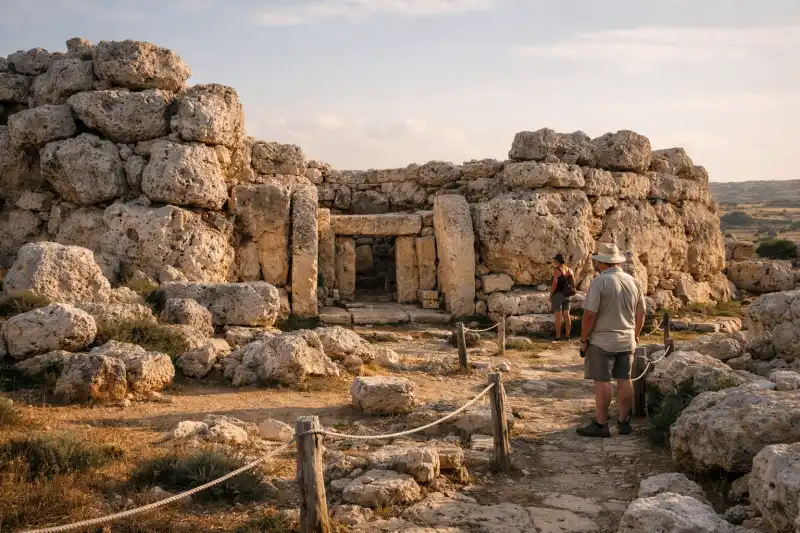
Ggantija Temples
Neolithic MalteseExplore Malta’s prehistoric Ggantija Temples, among the world’s oldest freestanding monuments, on th...
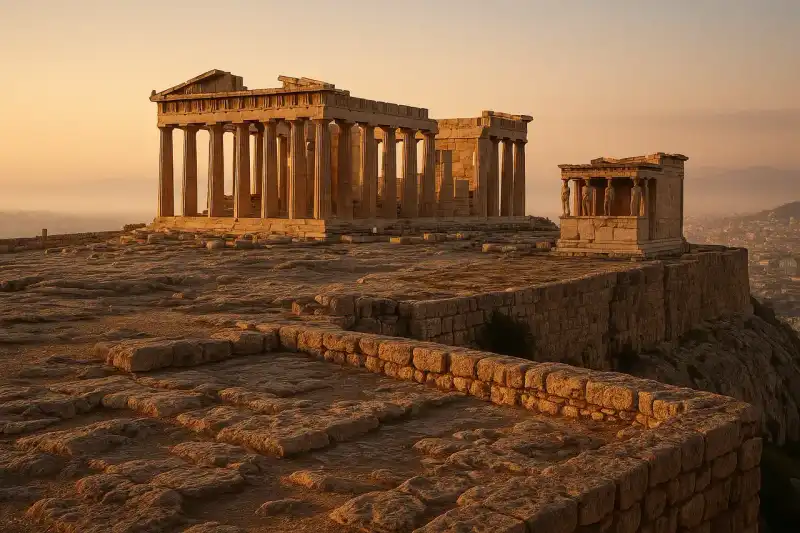
Acropolis Travel Guide 2026: Parthenon, Tickets, and Best Time
Ancient GreecePlan an efficient Acropolis visit with practical ticket timing, key monuments, and museum pairing ti...
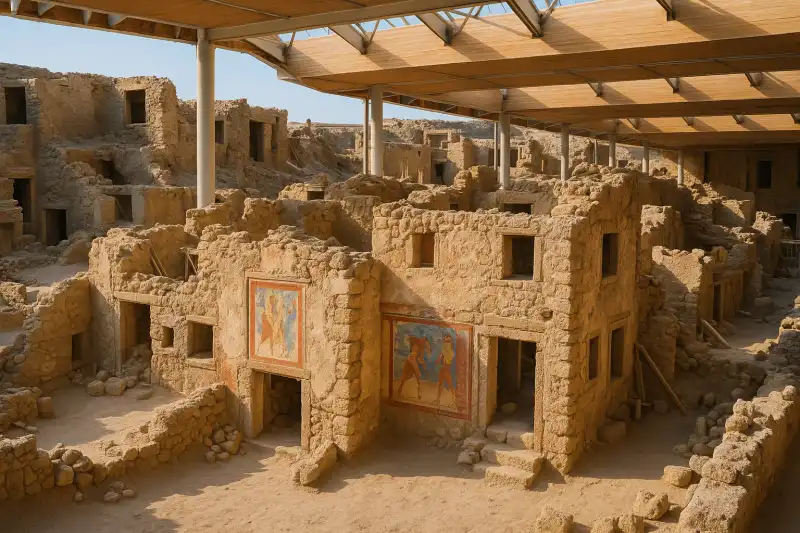
Akrotiri
Minoan / CycladicExplore Akrotiri, the Bronze Age Minoan city buried under volcanic ash on Santorini around 1613 BCE ...