Quick Info
At a glance
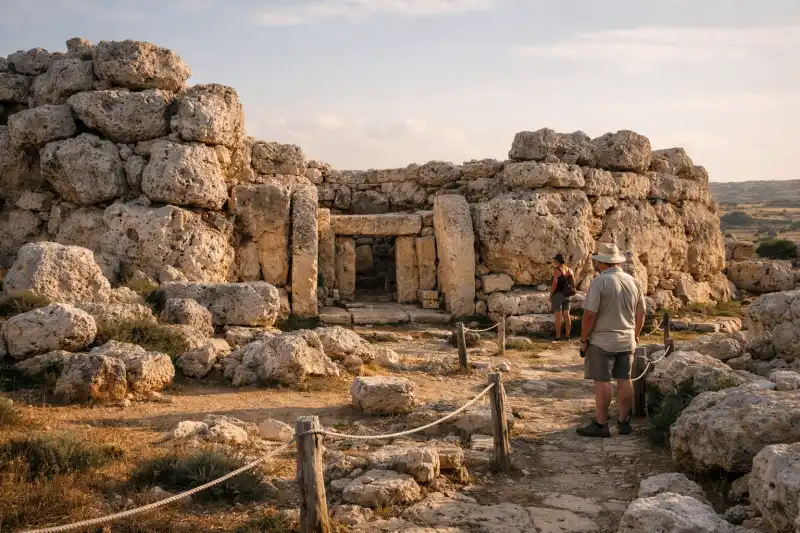
Ggantija Temples in Malta rise from the landscape of Gozo with a presence that feels both intimate and astonishing. Set just outside the town of Xagħra, this prehistoric complex does not overwhelm through size alone; instead, it impresses through age, texture, and the almost unsettling realization that human hands arranged these massive stones more than five thousand years ago. The site stands in a quiet rural setting of low walls, open skies, and cultivated fields, and that contrast adds to its power. What appears at first to be a cluster of rough limestone blocks gradually reveals itself as one of the oldest known freestanding monument complexes on earth.
For many travelers, Ggantija is one of Malta’s most unforgettable ancient places because it does not belong to the familiar classical world of Greek temples or Roman theaters. It comes from a much deeper past, from a Neolithic society that left behind no written records but did leave architecture of remarkable ambition. The name itself is tied to local legend: “Ġgantija” comes from the Maltese word for “giant,” reflecting the long-held belief that only giants could have moved stones of such enormous scale. Today, the temples are recognized as part of the UNESCO-listed prehistoric temple sites of Malta, and they remain central to understanding how early communities on these islands organized labor, ritual, and sacred space. Visiting Ggantija is not just a stop on a Gozo itinerary; it is an encounter with a civilization that still speaks through stone.
History
The Neolithic beginnings
The story of Ggantija Temples begins in Malta’s Neolithic period, when the islands supported farming communities that developed a highly distinctive temple-building culture. Archaeologists date the main phases of construction at Ggantija to roughly 3600 to 3200 BCE, placing the complex within the Ġgantija phase of Maltese prehistory. This date is what makes the site so remarkable: it predates many of the ancient monuments that dominate popular imagination, including Stonehenge and the Egyptian pyramids.
The builders had no metal tools and no wheeled transport, yet they quarried, shaped, and moved huge blocks of local limestone. Their achievement suggests careful planning, organized labor, and a strong shared belief system. The temples were not isolated structures in an empty landscape. They formed part of a wider network of ceremonial sites across Malta and Gozo, indicating that prehistoric communities on the islands invested heavily in ritual architecture. Ggantija may have served as a major ceremonial center for local populations, perhaps linked to seasonal rites, social gatherings, or cult practices focused on fertility and renewal.
A sacred complex takes shape
The visible remains at Ggantija consist of two adjoining temples enclosed within a common boundary wall. The southern temple appears to be earlier and more elaborate, while the northern one may represent a slightly later expansion. Their design follows the characteristic Maltese temple plan: a monumental entrance leading into a central passage, with curved apses opening on either side. This layout created an interior space that was structured, processional, and likely symbolically charged.
Finds from the site and from related Maltese temples have included altars, animal bones, pottery, and figurines, all of which suggest ritual activity rather than domestic use. Scholars often connect these spaces with ceremonies involving offerings or communal rites. Some researchers have argued for the worship of a fertility deity, partly based on corpulent figurines found at comparable temple sites, though interpretations continue to evolve. Whatever specific beliefs were practiced here, Ggantija clearly functioned as a purpose-built sacred environment.
Its builders also understood material and setting. Harder coralline limestone was often used for the outer walls, while softer globigerina limestone appeared in some interior elements. This practical and aesthetic choice helped give the temples their durability as well as their visual contrast. Even in ruin, the surviving walls communicate a sense of enclosure and intention.
Decline and burial in the landscape
Like other prehistoric temple sites in Malta, Ggantija eventually fell out of use. By the late Neolithic or subsequent Bronze Age, the ritual traditions associated with these temples had changed or disappeared. The reasons remain uncertain. Environmental shifts, social reorganization, demographic changes, or broader transformations in belief may all have contributed. Without a written record, archaeologists must reconstruct this transition through material evidence.
Over centuries, the temple complex partly collapsed and became embedded in the agricultural landscape. Soil accumulated around the stones, and local communities developed their own stories to explain the mysterious ruins. The giant legend endured because the site seemed too ancient and too monumental to fit ordinary human memory. This folklore preserved a sense of wonder around Ggantija long before modern archaeology provided chronology and context.
Rediscovery and modern archaeology
Although the temples were known locally for generations, formal recognition and excavation came in the modern period. Investigations in the nineteenth and twentieth centuries began to clarify the significance of the complex. Archaeologists documented the plan, identified phases of construction, and compared Ggantija with other Maltese prehistoric sites such as Ħaġar Qim, Mnajdra, and Tarxien. These studies established the extraordinary antiquity of the monument and confirmed that Malta possessed one of the world’s most distinctive prehistoric temple traditions.
Conservation efforts have since focused on stabilizing the masonry, protecting the remains from weathering, and improving interpretation for visitors. The site is now managed as a major heritage attraction, with a visitor center that introduces the social and ritual world of Neolithic Gozo. UNESCO recognition further elevated its international profile. Yet despite this modern framework, Ggantija still retains an elemental quality. It remains, above all, a place where prehistoric engineering, sacred architecture, and deep time meet in a surprisingly compact corner of Gozo.
Key Features
What makes Ggantija Temples so memorable is the physicality of the site. The first thing most visitors notice is the scale of the outer wall, built from immense upright and stacked stones. Some blocks rise several meters high and weigh many tons. Their surfaces are rough, weathered, and irregular, yet the arrangement is deliberate. Standing beside them, you immediately understand why earlier generations imagined giants had built the complex. The construction feels beyond ordinary expectation, especially when one remembers its Neolithic date.
The two temples are joined together but retain distinct identities. The southern temple, usually considered the older and more fully developed of the pair, has a clearer plan and more impressive surviving spaces. Entering through the threshold, visitors follow a central corridor into a series of curved apses. These apses are one of the defining features of Maltese prehistoric temple architecture. They create a rhythm of opening and enclosure, turning movement through the temple into a sequence rather than a single hall-like experience. The effect is both architectural and ceremonial. Even without roofs or complete fittings, the layout implies processions, designated ritual zones, and controlled access.
Within the complex, details reward slow attention. Some stone surfaces contain hollows, possible altars, or worked edges that hint at the original function of particular spaces. Archaeologists have identified features associated with offerings and ritual practice, and although many precise meanings remain uncertain, the site does not feel random. It feels carefully planned for repeated use. The shaping of interior spaces suggests that visual sightlines, movement, and symbolic boundaries mattered to the builders.
Another key feature is the contrast between mass and refinement. Ggantija is often described through its giant stones, but there is also subtlety in the design. The plan is symmetrical in places, and the builders were capable of creating formal, organized spaces from irregular natural material. This balance between monumental scale and architectural control is one reason the temples are so important in world prehistory. They show that early farming societies could produce sophisticated sacred buildings long before the rise of literate urban civilizations.
The site’s setting is also part of its appeal. Ggantija is not tucked into a dense urban environment; it sits within the landscape of Gozo, where open views and agricultural surroundings help frame the monument. The rural backdrop can make the complex feel more ancient and more connected to the daily life of the communities that built it. These were not empire builders erecting state monuments in a capital city. They were island societies creating ceremonial architecture within a lived landscape of fields, routes, and settlements. That context gives Ggantija a human scale despite the enormity of the masonry.
The visitor center adds another dimension to the experience. A good visit here begins before you step among the stones. Exhibits help explain how the temples fit into Maltese prehistory, what archaeologists have uncovered, and why the architecture matters. For travelers unfamiliar with Neolithic chronology, this context is especially useful. It transforms what could seem like an impressive ruin into a legible site with cultural depth. Models, artifacts, and interpretation panels bridge the gap between fragmentary remains and the once-active ceremonial complex.
Perhaps the most distinctive feature of Ggantija, however, is not a single stone or chamber but its age. That awareness changes how the entire site is perceived. Every wall, threshold, and apse belongs to a world so remote that even many other ancient civilizations were still far in the future when these temples were in use. The result is a different kind of historical experience. At Ggantija, visitors are not only looking at ruins; they are confronting the persistence of belief and construction across millennia. The monument’s survival, however partial, is itself one of its most extraordinary features.
Getting There
Ggantija Temples are located near Xagħra on Gozo, Malta’s second-largest island. Most travelers begin in Malta’s main island and make their way to Gozo by ferry. From Valletta or the airport area, buses and taxis connect to Ċirkewwa Ferry Terminal in the north of Malta. A public bus from Valletta to Ċirkewwa usually costs around €2 to €3 depending on season and ticket type, while a taxi or ride-hailing transfer can cost roughly €25 to €40 or more depending on pickup point and demand.
From Ċirkewwa, the Gozo Channel ferry to Mġarr on Gozo runs frequently and the crossing takes about 25 minutes. Standard passenger fares are usually paid on the return journey and are generally modest, often under €5 per foot passenger, though rates can change. If you bring a rental car, vehicle charges are higher but still straightforward for an island transfer.
Once on Gozo, you can reach Ggantija by public bus, taxi, or car. From Mġarr Ferry Terminal, buses toward Victoria and onward to Xagħra are the budget option, typically costing €2 to €3. Travel times vary with connections, but expect around 35 to 50 minutes total. A taxi from Mġarr to the site is faster and generally costs about €15 to €20. From Victoria, Gozo’s main town, buses to Xagħra are short and inexpensive, while a taxi may cost around €10. If you are self-driving, parking near the site is usually manageable, and combining Ggantija with other Gozo stops is easy.
When to Visit
The best time to visit Ggantija Temples is usually spring or autumn, when Malta has warm weather, clearer walking conditions, and fewer extremes of heat. From March to May, the countryside of Gozo is often at its greenest, and daytime temperatures are comfortable for exploring both the temple complex and nearby villages. This season also offers good light for photography, especially in the morning and late afternoon. Autumn, particularly from late September through November, brings warm sea temperatures and generally pleasant sightseeing weather after the peak summer crowds begin to thin.
Summer is the busiest season. From June through August, the site can be more crowded, and midday heat on Gozo can be intense. If you visit in high summer, plan to arrive close to opening time or later in the afternoon when the sun is less harsh. Carry water, wear a hat, and expect strong light with limited shade in exposed areas. The advantage of summer is the ease of combining Ggantija with beaches, coastal viewpoints, and a longer day of sightseeing on Gozo.
Winter is quieter and can be very rewarding for travelers who prefer fewer visitors and softer light. Temperatures are usually mild compared with much of Europe, though wind and occasional rain can affect ferry travel or outdoor comfort. Winter is especially good for those interested in archaeology rather than beach weather. Regardless of season, visiting earlier in the day is often the best strategy. The atmosphere tends to be calmer, tour groups are fewer, and the stones are easier to appreciate when the site feels unhurried and still.
Near the end of your visit, it is worth allowing a little extra time to look back at the complex from different angles. Ggantija reveals itself gradually, and changing light can alter the monument’s textures and the way its walls meet the surrounding landscape.
| Quick Facts | Details |
|---|---|
| Location | Near Xagħra, Gozo, Malta |
| Country | Malta |
| UNESCO Status | Part of the Megalithic Temples of Malta World Heritage listing |
| Date | c. 3600–3200 BCE |
| Period | Neolithic |
| Civilization | Prehistoric Maltese |
| Main Features | Two adjoining temple structures, monumental stone walls, apsidal chambers |
| Best Visit Length | 1–2 hours |
| Nearest Town | Xagħra |
| How to Reach | Ferry to Gozo, then bus, taxi, or car |
| Best Seasons | Spring and autumn |
| Why It Matters | Among the world’s oldest freestanding monuments |
Ggantija Temples reward travelers who are willing to slow down and imagine a world far older than the classical Mediterranean usually showcased in guidebooks. On a small island in Malta, these stones preserve the ambitions of a prehistoric community that invested immense labor in sacred construction and left behind architecture of startling permanence. The experience is not flashy, and that is part of its strength. There are no towering columns or carved historical inscriptions to narrate the site for you. Instead, there are thresholds, curves, massive blocks, and a silence that invites interpretation.
That directness gives Ggantija unusual power. It is a place where archaeology remains visible in the simplest possible terms: shaped stone, arranged space, surviving intention. For anyone interested in early religion, monumentality, or the deep human past, the complex is one of Malta’s essential destinations. Even visitors with little prior knowledge often leave impressed by how much can be conveyed through the scale and organization of the ruins alone. Ggantija is not only one of Gozo’s greatest landmarks; it is one of Europe’s most important prehistoric sites, and a visit here adds a profound time depth to any journey through the Maltese islands.
Guided tours: worth it?
A guide can be genuinely useful at Ggantija Temples, especially if you want help with transport, timing, tickets, or understanding a large site without losing half the day to logistics.
Best for
- First-time visitors who want context, not just photos
- Travelers who want transport, timing, or entry logistics handled
- Short visits where a planned route saves time
When to go self-guided
Go independently if you already have transport and tickets sorted, enjoy moving at your own pace, and are comfortable checking the latest official rules before you arrive.
What I’d avoid
Skip paid tours that bundle unrelated stops you do not actually want. The best option should either save meaningful planning time or add historical context you would miss on your own.
Ggantija Temples Tours
Useful when: you want to compare guided formats before deciding
Gozo Ancient Sites Tours
Useful when: you want to compare guided formats before deciding
Malta and Gozo Archaeology Tours
Useful when: you want to compare guided formats before deciding
Some tour links are affiliate links, which may earn Ancient Travel a small commission at no extra cost to you. I try to surface options that make practical sense for the site—not just anything bookable.
Frequently Asked Questions
What are the Ggantija Temples?
The Ggantija Temples are a prehistoric temple complex on the island of Gozo in Malta, dating to the Neolithic period and considered among the oldest freestanding monuments in the world.
How old are the Ggantija Temples?
The complex was built roughly between 3600 and 3200 BCE, making it older than Stonehenge and the pyramids of Giza.
Where are the Ggantija Temples located?
They are located near Xagħra on the island of Gozo, Malta, a short drive or bus ride from Victoria, Gozo’s main town.
Do you need tickets for the Ggantija Temples?
Yes, entry is ticketed, and admission often includes access to the visitor center. Prices can change, so it is best to check Heritage Malta before visiting.
How much time should I spend at Ggantija Temples?
Most visitors spend around 1 to 2 hours exploring the visitor center and the temple complex itself.
Can you visit Ggantija Temples without a car?
Yes, you can reach the site by bus from the Gozo ferry terminal or from Victoria, though a taxi or organized tour is usually faster and more convenient.
Nearby Ancient Sites
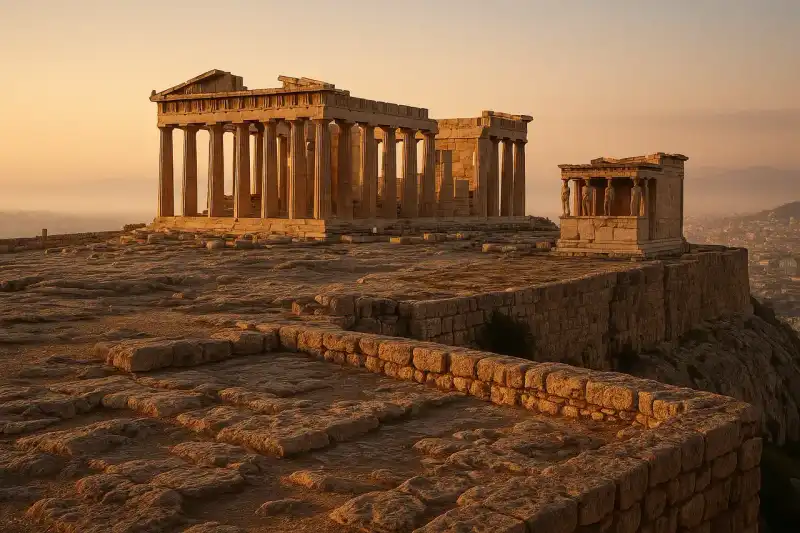
Acropolis Travel Guide 2026: Parthenon, Tickets, and Best Time
Ancient GreecePlan an efficient Acropolis visit with practical ticket timing, key monuments, and museum pairing ti...
The Complete Acropolis Athens Travel Guide: Temples
Ancient GreecePlan the perfect visit to the Acropolis of Athens with our 2026 guide. Discover the Parthenon, best ...
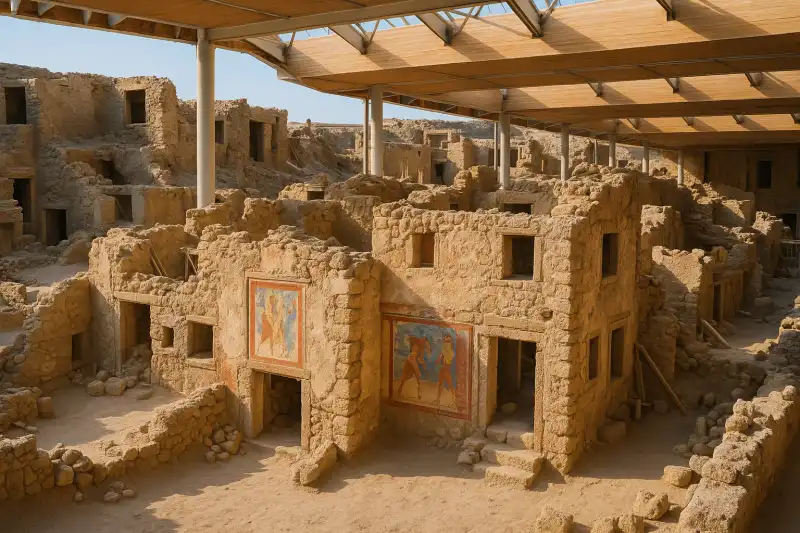
Akrotiri
Minoan / CycladicExplore Akrotiri, the Bronze Age Minoan city buried under volcanic ash on Santorini around 1613 BCE ...