Quick route summary
This 3-day route uses Valletta as a single base and focuses on Malta’s prehistoric temple culture rather than trying to cover the whole island. You start with the underground Ħal Saflieni Hypogeum in Paola, continue to the nearby Tarxien Temples, then take a full Gozo day for the Ġgantija Temples.
The pace is compact, but not rushed. Malta looks small on a map, which is exactly why people overpack it. This version gives the major prehistoric sites enough room to make sense: underground burial, carved temple architecture, and the older Gozo sanctuary that still feels bluntly massive in the best way.
Who this itinerary is for
This itinerary is for travelers who want Malta’s oldest history at the center of the trip. It works well for a first visit if you care more about Neolithic temples, ritual spaces, and archaeology museums than beaches or nightlife.
It is not the right plan if you want a slow resort stay or if you dislike timed tickets. The Hypogeum controls the schedule. Once that slot is fixed, the rest of the route becomes much easier.
Route at a glance
- Day 1: Overnight in Valletta. Visit the Ħal Saflieni Hypogeum in Paola, with the day built around timed entry and minimal extra travel.
- Day 2: Overnight in Valletta. Visit Tarxien Temples, then leave space for museum context, a harbor walk, or a quiet afternoon.
- Day 3: Overnight in Valletta. Ferry to Gozo for Ġgantija, with an early start and a realistic return window.
Practical logistics before you go
Book the Hypogeum first. It has strict visitor limits, and the timed slot should decide which day you visit Paola. If you cannot get a ticket, do not pretend the itinerary is unchanged. Swap the order, use Tarxien as the anchor, and save the Hypogeum for a future trip.
Valletta is the easiest base because it keeps buses, taxis, ferries, restaurants, and bad-weather plans close. Sliema, Floriana, and the Three Cities can also work, but check actual transfer times rather than relying on distance alone.
You can do this route independently with buses, taxis, and the Gozo ferry. A guide makes the most sense if you want the prehistoric sequence explained clearly, especially because Malta’s temple period can be hard to picture from stones alone. A Malta prehistoric temples and Hypogeum tour can help if it matches your exact ticket needs, but confirm the Hypogeum entry is included before booking.
Expect short distances and surprisingly real fatigue. Underground spaces, hot stone sites, ferry timing, and buses all take more energy than the island’s size suggests.
Day 1: Ħal Saflieni Hypogeum and Paola
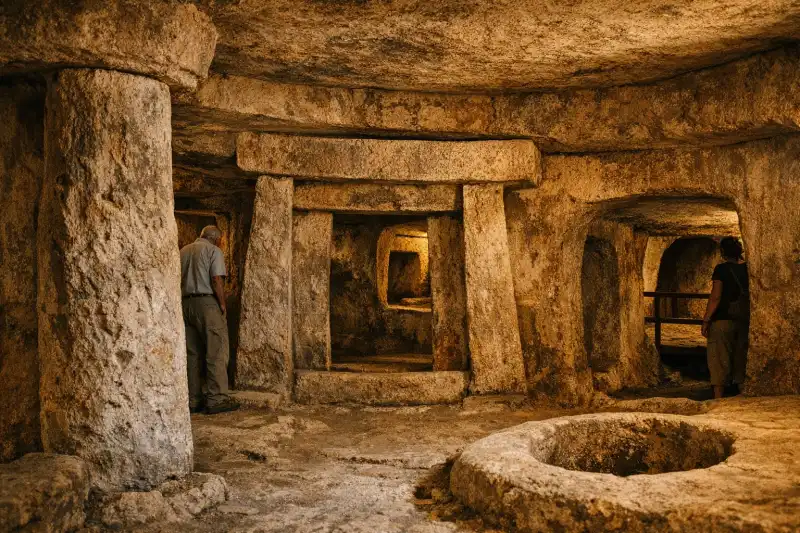
Start with the Ħal Saflieni Hypogeum if you can get a morning or midday slot. This is Malta’s most controlled ancient site for good reason. The Hypogeum is an underground prehistoric complex cut into limestone, with chambers, passages, and carved forms that echo above-ground temple architecture.
The most useful way to think about it is not as a cave, but as architecture made by subtraction. The builders removed stone to create spaces that feel built, framed, and intentional. Some chambers imitate structural features from Malta’s megalithic temples, which makes the site feel like a conversation between the living landscape above ground and the burial world below.
Keep the day simple around your timed entry. Arrive early, avoid stacking another tightly scheduled site before it, and do not count on lingering inside. Visitor limits protect the space, but they also mean the experience is focused and fairly brief.
Afterward, stay in Paola for a coffee or return to Valletta. If you are tempted to squeeze in Tarxien immediately, you can, but it is better to save it for Day 2 unless your Hypogeum slot forces a rearrangement. The underground site is easier to absorb when it is not treated as a prelude.
Day 2: Tarxien Temples and Malta’s temple builders
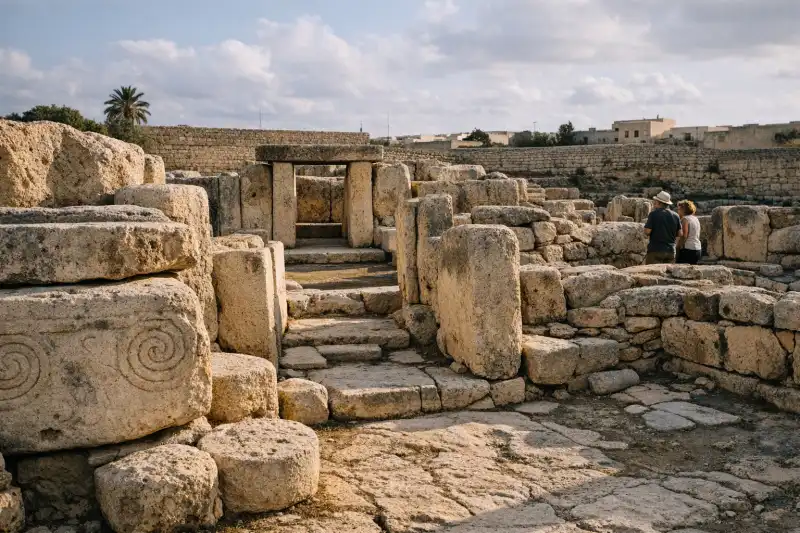
Spend the morning at the Tarxien Temples, only a short ride from Valletta. Tarxien gives you the above-ground half of the story after the Hypogeum. Instead of underground chambers, you get megalithic walls, apsidal temple plans, carved stone decoration, altars, and traces of ritual activity.
Look for the carved spiral motifs and animal reliefs. They are not decorative filler. They help show that these buildings were shaped by repeated ritual use, not just by the engineering problem of moving large stones. Tarxien also preserves evidence from different phases, which is a good reminder that Malta’s temple culture was not one static moment.
This is a day to slow down. The site is not huge, but the details reward patience. Walk the plan carefully and notice how the temple spaces curve inward. Malta’s prehistoric builders did not make straight, boxy monuments. They made enclosed, rounded spaces that guide movement and attention.
In the afternoon, keep your plans flexible. If you want more context, use a museum visit in Valletta. If the weather is hot, stop early. Malta’s stone sites can feel deceptively tiring because there is little shade and a lot of visual concentration.
Day 3: Gozo day trip to Ġgantija
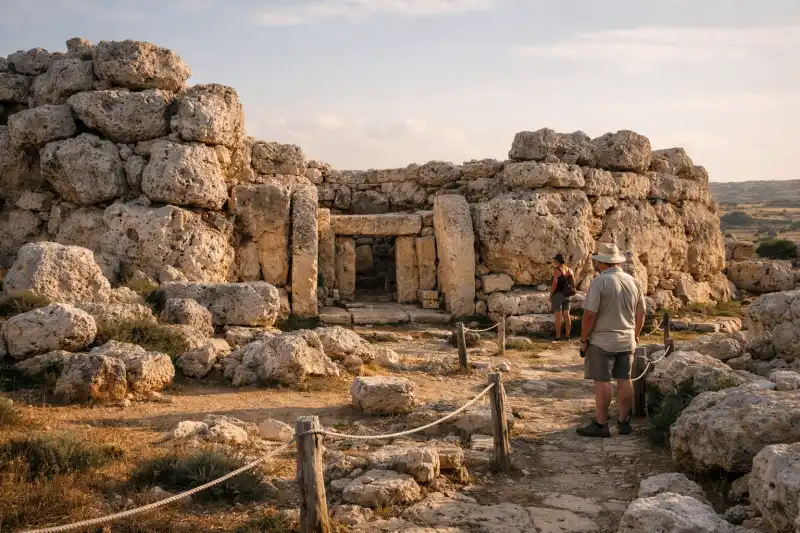
Leave early for Gozo and make the Ġgantija Temples the main event. The ferry logistics are not difficult, but they shape the day. If you are using public transport, check bus connections on both islands before you commit. If you are short on patience, a driver or guided day trip is the smoother choice.
Ġgantija is older than many ancient places travelers mentally file as “very old,” and the scale still lands. The name is linked to giants in Maltese tradition, which makes sense once you stand beside the huge limestone blocks. The myth is late, but the reaction is understandable. The walls look like they should have required more technology than the builders had.
Give the site more time than the map suggests. The value is not only in checking off another temple. Ġgantija helps you see that Malta’s prehistoric monuments were part of an island-wide ritual world, not isolated curiosities. Compared with Tarxien, Gozo feels quieter and more open, which changes how the stones read.
Do not plan a packed Gozo circuit unless you have a driver and good energy. Ġgantija plus a simple lunch and a steady ferry return is a better ancient-history day than a frantic island loop. Return to Valletta in the evening and keep dinner close to your base.
The historical thread: stone temples, underground chambers, and island ritual
Malta’s prehistoric sites are powerful because they do not fit the usual ancient Mediterranean script. This route is not about Greeks, Romans, or pharaohs. It points to a much earlier island society that built large ritual spaces in stone, shaped underground chambers with architectural care, and left behind monuments whose purpose is still partly resistant to easy explanation.
The sequence matters. The Hypogeum shows a concern with burial, sound, depth, and controlled access. Tarxien shows carved ritual architecture above ground. Ġgantija shows the older monumental confidence of Gozo’s temple builders. Together, they make Malta feel less like a small island with a few old stones and more like one of the Mediterranean’s strangest prehistoric laboratories.
Transportation notes
Use Valletta or the Valletta area as your base for all three nights. Changing hotels for Gozo is unnecessary on a 3-day version unless you already want a slower Gozo stay.
For Paola and Tarxien, taxis are easiest, buses are cheaper, and both are realistic. The main risk is not distance. It is timing, especially for the Hypogeum. Leave a buffer before your entry slot.
For Ġgantija, decide whether you want independence or simplicity. Independent travel means bus or taxi to the Malta ferry, ferry to Gozo, then bus or taxi onward. It works, but each transfer adds friction. A driver-guided Gozo day costs more but removes the annoying parts.
Do not self-drive unless you are comfortable with Malta’s traffic, parking, and left-side driving. The island is small, but the roads can feel busy and compressed. For this route, taxis, buses, ferries, and occasional drivers are enough.
Optional add-ons and swaps
If your Hypogeum ticket falls on Day 2 instead of Day 1, swap the first two days. Visit Tarxien Temples first, then treat the Hypogeum as the deeper follow-up. The history still works.
If Gozo logistics look too tiring, keep Day 3 on Malta and use it for museum context, harbor history, or a slower revisit of Paola and Tarxien. You will miss Ġgantija Temples, but you will avoid turning the last day into a transport puzzle.
If you have a fourth day, stay overnight on Gozo after Ġgantija. Remove the same-day return pressure and let the temple feel like part of a real island visit rather than a ferry errand.
Shorter and longer itinerary options
For a shorter visit, make it a two-day plan: Day 1 for the Hypogeum and Tarxien, Day 2 for Ġgantija on Gozo. It works, but it is tighter than it looks, and the Hypogeum ticket time still controls everything.
For a longer ancient Malta route, add one or two more days for additional prehistoric sites, museum time in Valletta, and a slower Gozo overnight. That version is better if you want the island’s temple culture to feel connected rather than sampled.
There are no published related Malta itinerary pages yet, so use the destination guides for deeper planning: Ħal Saflieni Hypogeum, Tarxien Temples, and Ġgantija Temples.
Related ancient sites
FAQ
The most common planning questions for this route are answered below.