Quick Info
At a glance
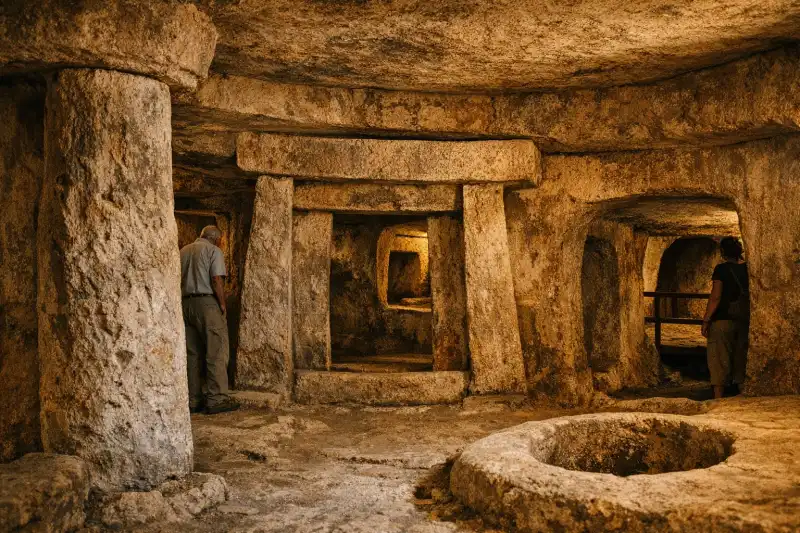
Ħal Saflieni Hypogeum in Malta is one of the most remarkable prehistoric monuments in Europe, a hidden world carved not into a mountain or cliff face but beneath an ordinary street in the town of Paola. From above, little prepares you for what lies below: a labyrinth of chambers, passages, and ritual spaces created more than 5,000 years ago by a society whose engineering skill and spiritual imagination still feel startlingly vivid today. Unlike Malta’s famous megalithic temples, which rise under open skies, the Hypogeum draws visitors down into an enclosed, dimly lit environment where architecture, burial, and ceremony merge into a single experience.
This underground complex is both intimate and monumental. It preserves the atmosphere of a place meant to be entered with caution and reverence, and even modern visitors feel that sense of transition as they descend through its carefully managed interior. The chambers, some carved to resemble above-ground temple architecture, hint at a sophisticated symbolic world in which death, ritual, and community were closely connected. Recognized as a UNESCO World Heritage Site, the Ħal Saflieni Hypogeum is not only a masterpiece of prehistoric engineering but also one of the rare ancient places where preservation rules remain strict enough to protect its fragile character. Visiting it is less like seeing a ruin and more like stepping inside a surviving prehistoric idea.
History
Discovery in the early 20th century
The modern story of the Ħal Saflieni Hypogeum began by accident in 1902, when construction workers digging foundations for new houses in Paola broke into an underground void. At first, the find was not fully understood, and some of the archaeological evidence suffered because the discovery was unexpected and early responses were inconsistent. Once scholars recognized the importance of what had been uncovered, however, the site quickly emerged as one of the most extraordinary prehistoric monuments in the Mediterranean.
The archaeologist Themistocles Zammit played a major role in documenting and investigating the monument. His work helped establish that this was not a natural cave or a simple burial chamber, but a complex, multi-level structure intentionally cut into the soft limestone. Excavations revealed human remains, pottery, carved architectural details, and evidence of long ritual use. These discoveries transformed understanding of Malta’s prehistoric culture, linking the Hypogeum to the wider world of the island’s megalithic temples.
Origins in the Neolithic period
The Hypogeum itself dates to Malta’s Neolithic temple-building era, roughly between 4000 and 2500 BCE, though scholars usually place its main phases of use within the later part of that span. It appears to have begun as a relatively simple subterranean burial area before expanding into a much more elaborate and symbolically charged monument. Over time, the people who created it carved additional chambers and levels, producing a layered underground complex with both practical and ceremonial functions.
This was the same broad culture that built above-ground monuments such as the Tarxien Temples and Ġgantija. What makes Ħal Saflieni exceptional is that it translates some of the same architectural vocabulary into an interior world below the earth. Doorways, apses, niches, and curving forms echo temple design, suggesting that the underground environment was not merely a cemetery but also a carefully shaped sacred space. Archaeologists believe the complex was used for both burial and ritual, and the remains of thousands of individuals indicate that it served the community over many generations.
Ritual, burial, and symbolic meaning
The Hypogeum’s purpose was likely multifaceted. Human bones found at the site suggest that it functioned as a collective burial place, yet the architecture goes well beyond what was necessary for storage of the dead. Certain chambers seem designed to create controlled sensory effects through sound, darkness, and movement. The famous “Oracle Room,” for example, has acoustic properties that can amplify low voices in a striking way, leading many researchers to propose a ceremonial function.
Objects discovered inside also support a ritual interpretation. Among the best known is the so-called “Sleeping Lady,” a small clay figurine often interpreted as a representation of rest, death, fertility, or regeneration. While certainty is impossible, finds like this point to a spiritual world in which the dead, the ancestors, and the cycles of life held deep significance. The Hypogeum may have been a place where the living maintained contact with these forces through repeated acts of commemoration and ceremony.
Decline, preservation, and UNESCO recognition
At some point around the end of Malta’s temple period, the Hypogeum fell out of use. The reasons remain uncertain, but the wider prehistoric culture that created Malta’s megalithic monuments also disappeared or transformed. For centuries the underground chambers remained sealed and forgotten, which in one sense protected them.
In the modern era, preservation became a serious challenge. Because the Hypogeum is enclosed, even small changes in humidity, temperature, and carbon dioxide can damage its surfaces. Earlier decades saw the effects of heavy visitation, prompting stricter conservation measures. Today, access is tightly controlled, with visitor numbers limited and entry by timed ticket only. These restrictions may require more planning, but they have become essential to the site’s long-term survival.
UNESCO included the Ħal Saflieni Hypogeum within Malta’s World Heritage recognition for its prehistoric monuments, acknowledging its outstanding universal value. It remains one of the world’s most important underground archaeological sites and a key source of evidence for understanding ritual life in prehistoric Europe.
Key Features
The most striking feature of the Ħal Saflieni Hypogeum is its three-level underground layout. Cut directly into the island’s globigerina limestone, the complex is not a cave adapted for use but a fully human-made monument, shaped with purpose and planning. As visitors move through the site, they encounter spaces that vary in scale and mood: narrow corridors that create anticipation, larger chambers that open unexpectedly, and carved recesses that suggest ritual choreography. The overall effect is architectural rather than geological. Even when the surfaces are rough, the monument feels designed.
One of the most memorable aspects of the site is the way it imitates elements of above-ground temple construction. Certain chambers include curved walls, trilithon-style doorways, and recessed spaces that resemble the apsidal plans familiar from Malta’s megalithic temples. This imitation matters because it suggests that the builders did not think of underground and surface architecture as separate worlds. Instead, they created a subterranean sacred environment that mirrored and transformed the ceremonial spaces used above.
The so-called Oracle Room is perhaps the site’s most famous chamber. It is relatively modest in size, but its importance lies in its acoustics and carefully carved details. A niche in the wall appears to have been designed to project sound, and experiments have shown that low-frequency voices resonate powerfully in the space. Whether this was used for chanting, recitation, or ritual speech cannot be proven, but the chamber makes clear that sensory experience was central to the monument’s design. Sound here was not accidental; it was part of the architecture.
Another notable area is the Main Chamber, with its rounded forms and interconnected spaces. The arrangement encourages slow movement and heightened awareness, qualities that suit both ceremonial processions and funerary use. Elsewhere, small side chambers and niches suggest places for offerings, deposits, or the placement of remains. Some surfaces preserve traces of red ochre decoration, a vivid reminder that the Hypogeum was once visually richer than it appears today. These painted traces are especially important because they hint at a symbolic language now mostly lost.
The burial function of the Hypogeum is central to understanding its significance. Archaeologists uncovered the remains of thousands of individuals, indicating that this was a major communal repository for the dead. Yet the site never feels like a purely utilitarian necropolis. Its chambers seem composed to guide experience: descent, enclosure, darkness, reverberation, and the controlled revelation of space all contribute to a powerful emotional atmosphere. That combination of tomb and temple is what makes the Hypogeum so unusual.
A further key feature is its preservation environment. Unlike many ancient sites, where weathering is visible and expected, the Hypogeum survives in a carefully regulated microclimate. Visitors enter in small groups, and the lighting is subtle, helping protect the stone while allowing the forms to emerge gradually from the darkness. This controlled approach can make a visit feel more structured than at other monuments, but it also heightens the sense that you are entering a rare and fragile place. The restrictions themselves become part of the experience, underscoring how exceptional the site is.
Finally, the Hypogeum’s museum-style interpretation helps visitors understand what they are seeing. Introductory displays and contextual material explain the phases of construction, the discoveries made during excavation, and the broader prehistoric culture of Malta. Since the monument’s meaning is not always obvious from its bare stone surfaces alone, this interpretation is valuable. It gives shape to the visit without overwhelming the mystery that makes the site unforgettable.
Getting There
Ħal Saflieni Hypogeum is located in Paola, in the southeastern urban area of Malta, and it is relatively easy to reach from Valletta, the island’s capital. By bus, the journey usually takes around 20 to 30 minutes depending on traffic. Single bus fares on Malta Public Transport are generally about €2.50 in summer and about €2.00 in winter, with lower evening fares on some services. Routes and stops can change, so it is wise to check the latest schedules before traveling, but Paola is well connected and commonly served from Valletta.
A taxi or rideshare from Valletta typically takes 15 to 20 minutes in normal traffic and often costs around €10 to €18, depending on time of day and demand. This is the most convenient option if you are traveling on a tight schedule, especially because Hypogeum entry is timed and late arrivals may face problems. If you are staying elsewhere in Malta, such as Sliema or St. Julian’s, taxi fares will be higher, often in the €15 to €25 range.
Driving is possible, though parking in urban Malta can be limited. If you rent a car, allow extra time to locate parking and walk to the entrance. Many visitors pair the Hypogeum with the nearby Tarxien Temples, which are only a short distance away and can be reached on foot or by a very short taxi ride.
The most important transport advice is to arrive early. Because entry is by pre-booked time slot and visitor numbers are capped, it is best to be at the site at least 15 to 20 minutes before your scheduled visit.
When to Visit
The best time to visit Ħal Saflieni Hypogeum is usually during spring and autumn, when Malta enjoys warm but not oppressive weather and overall sightseeing conditions are comfortable. From March to May and from late September to November, the island is lively without reaching the intense heat and crowds of midsummer. Since the Hypogeum itself is indoors and climate-controlled, weather affects the journey more than the actual visit, but milder months make it easier to combine the site with nearby outdoor monuments.
Summer, especially June through August, is Malta’s busiest tourist season. The advantage is reliable sunshine and long sightseeing days, but this is also when tickets can be hardest to secure. Demand is high, and last-minute availability may be very limited. If you plan to travel in summer, book your Hypogeum entry as far in advance as possible. The controlled interior means the visit itself remains comfortable, but transport, surrounding streets, and linked attractions can be busier.
Winter offers a quieter experience and often better ticket availability. From December to February, Malta’s climate is generally mild compared with much of Europe, though there can be wind and rain. This season suits travelers who prioritize easier logistics over beach weather. It is also a good time for deeper cultural itineraries focused on archaeology and museums.
As for time of day, morning visits are often best. Arriving earlier reduces stress, fits well with public transport schedules, and leaves room to explore Paola or continue on to the Tarxien Temples. Whatever the season, the key rule is simple: plan ahead. The Hypogeum is one of those rare sites where advance booking is not just helpful but essential.
| Quick Facts | Details |
|---|---|
| Location | Paola, Malta |
| Type | Prehistoric underground temple and necropolis |
| Period | Neolithic, c. 4000–2500 BCE |
| UNESCO Status | Part of Malta’s World Heritage prehistoric monuments |
| Best Known For | Rock-cut chambers, burials, and remarkable acoustics |
| Visit Duration | დაახლოებით 45–60 minutes |
| Booking | Advance reservation strongly required |
| Nearby Site | Tarxien Temples |
A visit to the Ħal Saflieni Hypogeum is unlike almost any other archaeological experience in the Mediterranean. It does not rely on dramatic scale in the conventional sense, nor on towering ruins or sweeping views. Its power comes from enclosure, silence, and the unsettling realization that prehistoric builders conceived this hidden architecture with extraordinary care. In Malta, where megalithic monuments already rank among the oldest free-standing structures in the world, the Hypogeum adds another dimension: a sacred landscape below ground, protected from sun and wind, where ritual and memory were carved into stone.
For travelers interested in ancient religion, funerary practice, or the engineering abilities of prehistoric societies, this site is indispensable. But even visitors with little prior knowledge often leave impressed by the atmosphere alone. The descent into the chambers, the controlled light, and the evidence of spaces designed for both the dead and the living create an encounter that feels personal and profound. Because access is limited, the visit also avoids the sense of congestion common at major heritage attractions.
That rarity is part of what makes the Hypogeum so memorable. It asks for planning, patience, and attention, and it rewards all three. If you are building an archaeological itinerary in Malta, it should sit near the top of your list—not just as a famous UNESCO site, but as one of Europe’s most haunting survivals from the prehistoric world.
Guided tours: worth it?
Self-guided works here, but a guide can add real value if you want the ruins explained as a living place rather than just a sequence of monuments.
Best for
- First-time visitors who want context, not just photos
- Short visits where a planned route saves time
When to go self-guided
Go independently if you prefer setting your own pace, reading as you go, and checking official hours or ticket rules directly before you arrive.
What I’d avoid
Skip paid tours that bundle unrelated stops you do not actually want. The best option should either save meaningful planning time or add historical context you would miss on your own.
Ħal Saflieni Hypogeum Tours
Useful when: you want to compare guided formats before deciding
Paola and Tarxien Temples Tours
Useful when: you want to compare guided formats before deciding
Malta Prehistoric Sites Tours
Useful when: you want to compare guided formats before deciding
Some tour links are affiliate links, which may earn Ancient Travel a small commission at no extra cost to you. I try to surface options that make practical sense for the site—not just anything bookable.
Frequently Asked Questions
Do I need to book Ħal Saflieni Hypogeum tickets in advance?
Yes. Visitor numbers are strictly limited to protect the site’s fragile microclimate, and tickets often sell out weeks ahead, especially in peak season.
How long does a visit to Ħal Saflieni Hypogeum take?
Most visits last around 45 to 60 minutes, including the introductory exhibition and the timed guided or audio-guided underground experience.
Is photography allowed inside the Hypogeum?
No. Photography and filming are generally prohibited inside to help preserve the monument and maintain the controlled visitor environment.
Can children visit Ħal Saflieni Hypogeum?
Children can visit, but the experience is best suited to older children who can follow rules in a quiet, enclosed archaeological environment.
How do I get from Valletta to Ħal Saflieni Hypogeum?
You can reach Paola from Valletta by bus, taxi, or rideshare. Bus journeys are usually the most affordable and take roughly 20 to 30 minutes depending on traffic.
Why is Ħal Saflieni Hypogeum important?
It is one of the world’s best-preserved prehistoric underground ritual and burial complexes, offering rare insight into Malta’s temple-building culture of the Neolithic period.
Nearby Ancient Sites
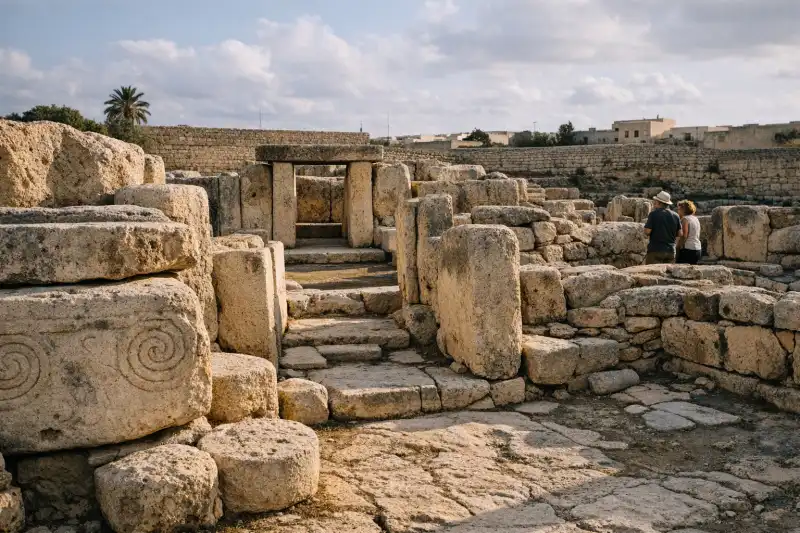
Tarxien Temples
Neolithic MaltaExplore Malta’s Tarxien Temples, a remarkable prehistoric ritual complex famed for megalithic art, c...
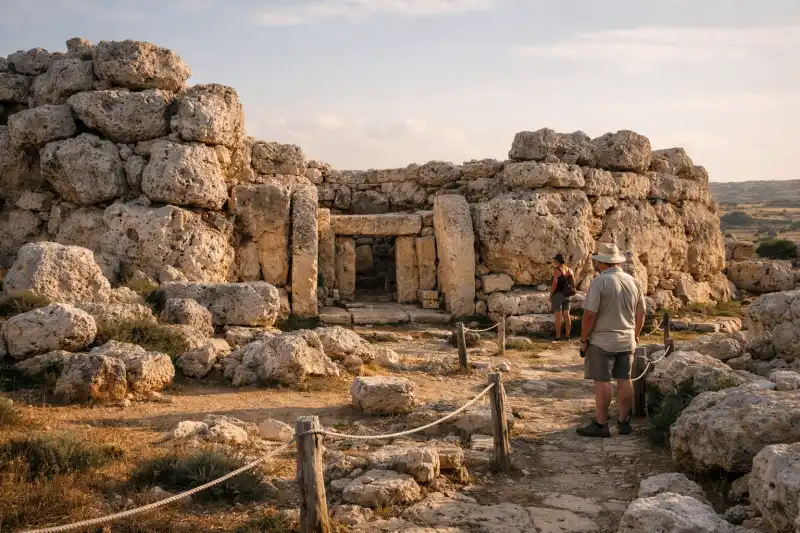
Ggantija Temples
Neolithic MalteseExplore Malta’s prehistoric Ggantija Temples, among the world’s oldest freestanding monuments, on th...
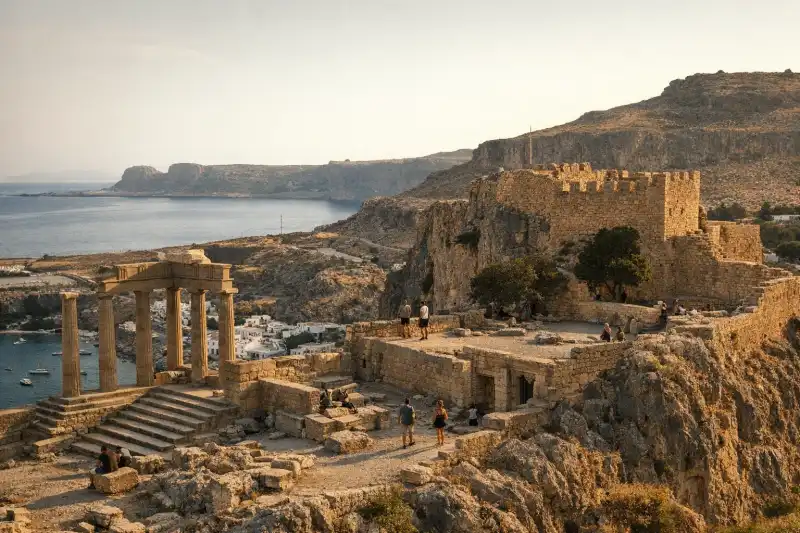
Acropolis of Lindos
Ancient Greek, Hellenistic, Roman, Byzantine, Knights HospitallerThe Acropolis of Lindos on Rhodes, Greece, is a spectacular ancient citadel blending Classical and m...