Quick route summary
This 3-day route uses Salisbury as a single base and keeps the focus on the prehistoric and early historic landscapes of Wiltshire. You start with Stonehenge, then spend a full day around Avebury, Avebury Stone Circle, Silbury Hill, and West Kennet Long Barrow. The final day shifts to Old Sarum, where prehistoric earthworks, an Iron Age hillfort, Roman roads, and medieval power all crowd onto the same chalk hill.
The pace is active, but sensible. The mistake here is trying to treat Wiltshire as a checklist of stone circles. Give the landscape time. The best parts often happen between the named sites, when a bank, ditch, avenue, mound, or ridge suddenly makes the map feel alive.
Who this itinerary is for
This itinerary is for travelers who want a compact ancient Britain route with one easy base, several major prehistoric sites, and enough practical structure to avoid wasting time on rural transport. It works well for first-time visitors who want more than the standard Stonehenge stop.
It is not ideal if you want to stay entirely car-free and see every outlying monument at your own pace. Stonehenge and Old Sarum are manageable from Salisbury without driving, but the Avebury day is much smoother with a rental car, private driver, or guided tour. It is also not a slow countryside break. There is walking, exposed chalk downland, and a fair amount of moving between sites.
Route at a glance
- Day 1: Overnight in Salisbury. Visit Stonehenge from Salisbury, with time for the visitor center, the monument circuit, and the wider Salisbury Plain context.
- Day 2: Overnight in Salisbury. Drive or tour north to Avebury, Silbury Hill, and West Kennet Long Barrow, allowing time to walk rather than just stop for photos.
- Day 3: Overnight in Salisbury. Visit Old Sarum in the morning, then keep the afternoon light for Salisbury or onward travel.
Practical logistics before you go
Salisbury is the cleanest base for this route. It has rail connections from London and the south coast, a compact center, and easy access to Stonehenge and Old Sarum. Avebury is the awkward piece. It is not far on a map, but rural transport makes the day slow unless you drive or take a guided tour.
Book Stonehenge tickets ahead if you are traveling in a busy season. The site is managed through timed entry, and the visitor center sits away from the stones, with shuttle buses or a walking route connecting the two. Do not plan Stonehenge as a quick roadside pause. The monument makes more sense if you give yourself time for the exhibition, the earthworks, and the approach across the plain.
For Avebury, bring shoes you do not mind getting muddy. The stone circle sits inside and around a living village, and the best visit involves walking through gates, banks, fields, and lanes. Silbury Hill cannot be climbed, which is good preservation policy and also slightly frustrating if you arrive expecting access. West Kennet Long Barrow involves a short uphill walk over open ground.
A guided tour makes the most sense on Day 2, especially if you are not renting a car. A Stonehenge and Avebury day tour can solve the spread-out logistics, but choose one that gives Avebury real time. A rushed ten-minute stop misses the point.
Day 1: Stonehenge and the Salisbury Plain
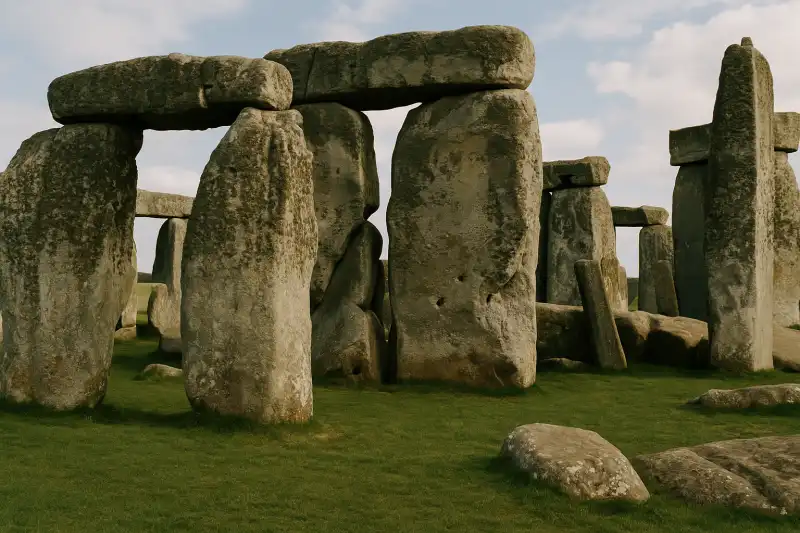
Start with Stonehenge from Salisbury. The logistics are straightforward compared with Day 2: use the Stonehenge bus, a taxi, a rental car, or a guided tour. Go early if you want a quieter circuit, and expect the visitor center to be part of the visit rather than an afterthought.
The stones are famous enough to flatten into a symbol, so slow down and look at the engineering. The larger sarsen stones probably came from the Marlborough Downs area, while the smaller bluestones were brought from west Wales. That is the detail that still feels slightly outrageous. This was not a local building project with nearby stone. It was a long-distance act of planning, movement, and belief.
Walk the circuit rather than judging the site from the first viewpoint. You cannot normally wander among the stones during standard admission, but the outer path lets you see the monument change shape as you move. The trilithons, lintels, bank, ditch, and avenue matter because Stonehenge was not just a ring of stones. It was part of a ceremonial landscape, aligned with seasonal light and connected to routes across the plain.
Do not overpack the day. If you add anything, make it modest: the visitor center exhibition, the reconstructed Neolithic houses, and perhaps a quiet return to Salisbury. Stonehenge can feel oddly small if rushed and oddly powerful if you give it space.
Day 2: Avebury, Silbury Hill, and West Kennet Long Barrow
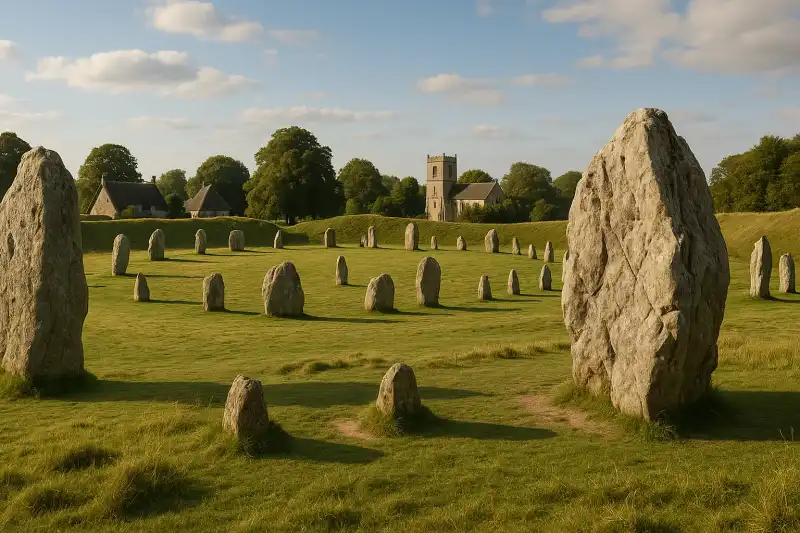
This is the day that benefits most from a car, private driver, or well-paced tour. Avebury is not a single monument in the neat Stonehenge sense. It is a huge henge and stone circle with a village running through it, plus nearby mounds, avenues, tombs, and traces of movement across the chalk.
Begin at Avebury Stone Circle. The scale is the surprise. The outer bank and ditch enclose one of the largest stone circle complexes in Britain, and you can walk through it rather than observing from a fixed path. That freedom is wonderful, but it also means you need to pace yourself. The site works best if you circle slowly, cross the bank, and let the stones feel uneven, repaired, missing, and lived around.
Continue to Silbury Hill, but arrive with the right expectation: you look, you do not climb. Built around the late Neolithic period, this massive artificial mound has no confirmed burial chamber and no easy explanation. That is part of its appeal. It took a huge amount of labor to build something that still refuses to say exactly what it was for.
Then walk to West Kennet Long Barrow if weather and energy allow. The chambered tomb is older than the main Stonehenge stone setting, and its use changed over time as human remains were placed, moved, and rearranged inside. The walk up the field is short, but it can feel exposed in wind or rain. Bring layers and do not leave it until the very end if your group is already tired.
If you still have energy, add The Sanctuary as a short extension. It is quieter than Avebury and visually less dramatic, but its postholes and stone settings help connect the idea of processional routes, timber circles, and monument sequences. This is a good day for people who like their ancient sites slightly puzzling.
Day 3: Old Sarum and a lighter Salisbury finish
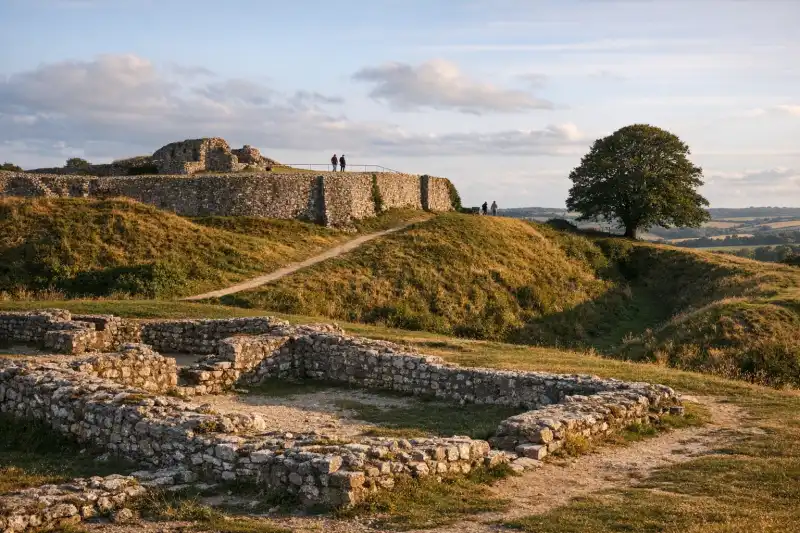
Use the final morning for Old Sarum. It is close to Salisbury, easy by taxi or local bus, and a useful change of texture after two Neolithic-heavy days. The site began as a hillfort, then gathered Roman, Saxon, Norman, and medieval layers. Wiltshire does this a lot: one good defensive or ceremonial place keeps attracting new uses.
Walk the outer earthworks before heading into the inner castle area. The banks and ditches are the point, not just the later ruins. Old Sarum helps show how ancient landscapes did not stop mattering when new political systems arrived. A chalk hill that worked for an Iron Age community could later suit a Norman castle and cathedral precinct.
The medieval cathedral ruins are especially helpful for understanding Salisbury itself. The old cathedral sat here before the city’s later cathedral rose on lower ground. That move from hilltop enclosure to planned medieval city is one of the cleaner historical transitions on the route, and it makes the modern Salisbury finish feel less random.
Keep the afternoon flexible. If you are leaving by train, do not squeeze in another distant ancient site. If you are staying one more night, use the time for Salisbury Cathedral, a riverside walk, or a proper meal. After Stonehenge and Avebury, a lighter final day is not laziness. It is good route design.
The historical thread: monuments, movement, and reused chalk landscapes
Stonehenge, Avebury, Silbury Hill, West Kennet Long Barrow, and Old Sarum belong together because they show Wiltshire as a landscape people kept returning to, reshaping, and arguing with through earth, stone, timber, and later masonry.
The Neolithic sites are not isolated mysteries. They sit in relation to routes, ridges, burial places, seasonal movement, and shared labor. Stonehenge feels controlled and formal. Avebury feels sprawling and inhabited. Silbury Hill feels deliberately unreadable. West Kennet Long Barrow brings the story down to chambers, bones, and repeated acts of burial.
Old Sarum then shifts the route forward. The same chalk country that held ceremonial monuments also held hillforts, roads, castles, and cathedrals. The thread is not one continuous culture. It is a repeated habit of choosing high ground, visible places, and memorable routes, then making power or belief visible there.
Transportation notes
Use Salisbury as your base for all three nights. Moving hotels would not help on a short Wiltshire route.
For Stonehenge, the easiest car-free option is the Salisbury Stonehenge bus or a taxi. A rental car gives more flexibility, but parking and timed entry still require planning. Do not assume you can simply turn up at the stones from a random roadside pullout.
For Avebury, driving is the practical winner. The sites are close enough to combine, but not close enough to make rural bus planning pleasant. If you do not want to drive on narrow roads, take a guided tour or hire a driver for the day.
For Old Sarum, keep it simple. Local bus, taxi, or a short drive all work. The main compression warning is Day 2: do not combine Avebury, Stonehenge, Old Sarum, and every nearby monument into one heroic day unless you enjoy remembering ancient landscapes mainly as parking lots.
Optional add-ons and swaps
Add The Sanctuary to Day 2 if you have a car and enough energy after Avebury and West Kennet. Remove a long lunch stop or shorten the Avebury village time rather than cutting West Kennet.
Add the Uffington White Horse only if you are turning this into a wider chalk-landscape trip. It is a prehistoric hill figure in Oxfordshire, not a quick Wiltshire add-on. If you include it, remove Old Sarum or add another night.
Add the Roman Baths Bath if you want the route to shift from prehistoric Wiltshire into Roman Britain. Bath is easy by train from Salisbury with a change, but it deserves its own day. Swap it for Old Sarum if Roman urban life interests you more than hillfort and castle layers.
Shorter and longer itinerary options
For a shorter visit, make it a two-day route: Day 1 at Stonehenge, Day 2 at Avebury, Silbury Hill, and West Kennet Long Barrow. Cut Old Sarum first, even though it is worthwhile.
For a broader prehistoric and ancient Britain route, use this as the Wiltshire core of a future 7 Days Ancient Britain: Stone Circles, Roman Sites, and Hillforts. That longer version can add Bath, Maiden Castle, or another major ancient landscape without making Wiltshire do too much work.
If Roman Britain is your main interest, pair this route with the planned 5 Days Roman Britain: Bath, Hadrian’s Wall, and Northumberland instead. That is a different historical mood: baths, forts, frontier roads, inscriptions, and military logistics rather than henges and burial mounds.
Related ancient sites
- Stonehenge
- Avebury
- Avebury Stone Circle
- Silbury Hill
- West Kennet Long Barrow
- The Sanctuary
- Old Sarum
- Uffington White Horse
- Roman Baths Bath
FAQ
The most common planning questions for this route are answered below.