Quick route summary
This 7-day ancient Britain route starts in Salisbury and ends in Newcastle, with bases in Salisbury, Bath, Dorchester, Keswick, and Newcastle. It is a country-scale route, not a gentle city break. The reward is range: Neolithic stone circles, Roman baths, Iron Age earthworks, and the northern frontier of Roman Britain.
The first two days focus on Stonehenge, Old Sarum, Avebury Stone Circle, Silbury Hill, and West Kennet Long Barrow. Then the route moves to Bath for the Roman Baths, south to Dorset for Maiden Castle, and north to Cumbria and Hadrian’s Wall.
The pace is ambitious but not reckless if you build in the long transfer on Day 5. What this route intentionally skips: Wales, Orkney, Shetland, Cornwall, and most of Roman southern England. They are worth separate trips. Trying to include them here would turn the week into a transport exercise with ruins attached.
Who this itinerary is for
This itinerary is for travelers who want ancient Britain as a sequence of landscapes rather than a checklist of famous stones. It works well if you are comfortable changing bases, using trains and taxis, and renting a car for the awkward rural stretches.
It is not ideal if you want one relaxed base, late starts every morning, or a London-heavy trip. It also asks for weather flexibility. Hillforts, stone circles, and frontier walks are better when you can adjust around rain, wind, and short winter daylight.
Route at a glance
- Day 1: Overnight in Salisbury. Visit Stonehenge and Old Sarum, using the Stonehenge tour bus, taxi, or rental car.
- Day 2: Overnight in Salisbury. Spend the day across the Avebury landscape, with Silbury Hill, West Kennet Long Barrow, and The Sanctuary by car or guided tour.
- Day 3: Overnight in Bath. Train to Bath, then visit the Roman Baths and keep the rest of the day walkable.
- Day 4: Overnight in Dorchester. Travel south to Dorset for Maiden Castle and Maumbury Rings, with taxi or rental car support.
- Day 5: Overnight in Keswick. Make the long Dorset to Cumbria transfer, with Castlerigg only if timing and daylight are kind.
- Day 6: Overnight in Keswick. Give Castlerigg Stone Circle a proper visit and keep the Lake District day deliberately light.
- Day 7: Overnight in Newcastle. Finish on Hadrian’s Wall with Vindolanda and Chesters Roman Fort by car, driver, tour, or seasonal bus.
Practical logistics before you go
The best base cities are Salisbury for Wiltshire, Bath for the Roman Baths, Dorchester for Dorset, Keswick for Castlerigg, and Newcastle or Hexham for Hadrian’s Wall. You can trim hotel moves, but doing so usually adds more road time than it saves.
Trains help on the Salisbury to Bath and long northbound transfer legs. They do not solve the rural archaeology days. Avebury, West Kennet, Maiden Castle, Castlerigg, and Hadrian’s Wall all sit in landscapes where the ancient setting matters, so leave room for walking, weather, and slow lanes.
A guided tour makes sense in two places: the Avebury landscape, where the monuments are scattered and easy to under-read, and Hadrian’s Wall, where Roman forts, milecastles, roads, and museums make more sense with context. For Day 2, a Stonehenge and Avebury day tour from Salisbury or Bath can remove the rural transport problem.
Book Stonehenge and the Roman Baths ahead in busy periods. For hillforts and open landscapes, the bigger issue is not tickets but conditions. Wear shoes that can handle wet grass and chalk paths. A windy hillfort after rain is still interesting, but it is not a place for flimsy city shoes.
Day 1: Stonehenge and Old Sarum
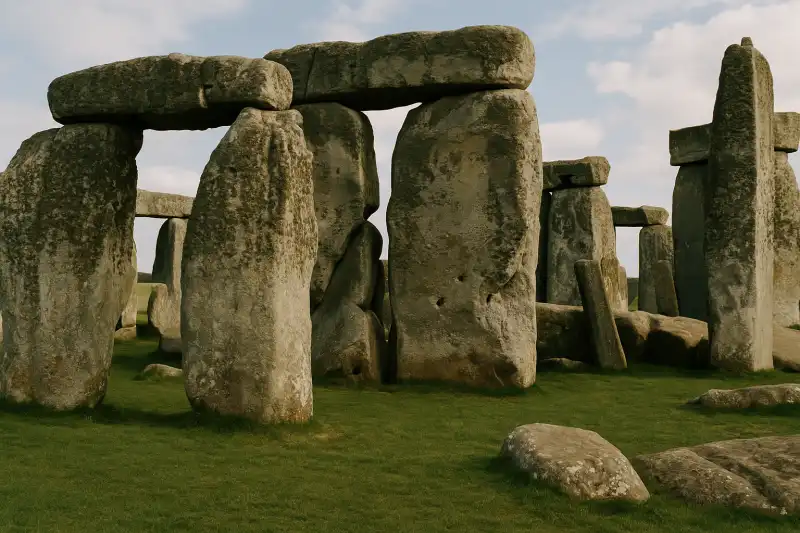
Start in Salisbury and go to Stonehenge as early as your ticket allows. The site can feel overfamiliar because the silhouette is everywhere, but the real visit is about setting. The stones sit in a wider ceremonial landscape of barrows, avenues, earthworks, and sightlines across Salisbury Plain.
The monument’s main stone phase dates roughly to the late Neolithic, around 2500 BCE. One useful detail: some of the smaller bluestones came from west Wales, which means the site was never just a local building project. However those stones moved, they carried memory, labor, and authority across a long distance.
Do not spend the whole day only at Stonehenge. Return toward Salisbury and continue to Old Sarum, where an Iron Age hillfort later became a Roman, Saxon, Norman, and medieval power site. The layered history is the point. You can stand inside one set of earthworks and see how later rulers reused an older place because it already commanded the landscape.
Logistics are manageable today. The Stonehenge tour bus from Salisbury works for many travelers, while a taxi or rental car gives more control. Old Sarum is close to Salisbury, but check closing times and daylight. If you arrive jet-lagged, cut Old Sarum rather than rushing Stonehenge.
Day 2: Avebury, Silbury Hill, and West Kennet
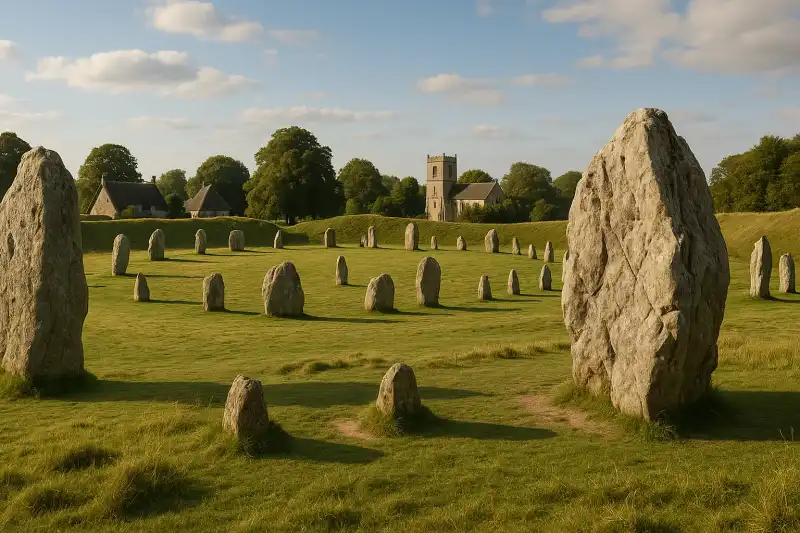
Give this day more time than the map suggests. Avebury Stone Circle is not a single stop so much as a whole ritual landscape with a village sitting inside it. Unlike Stonehenge, Avebury lets you walk among the stones freely, which makes the scale easier to feel.
Start at Avebury, then widen the day to Silbury Hill, West Kennet Long Barrow, and The Sanctuary if conditions and time allow. Silbury Hill is one of the strangest achievements in prehistoric Britain: a huge artificial chalk mound built without a known burial chamber at its center. The confidence of the project is hard to miss, even if its purpose remains debated.
West Kennet Long Barrow shifts the mood. Its chambered tomb began centuries before the main stone circle phases at Avebury and gives the route a deeper time horizon. You are not just seeing “stone circles.” You are seeing a landscape where burial, procession, memory, and communal work were rearranged over many generations.
This is the day when transport planning matters most in Wiltshire. A rental car is easiest, but a good guided day tour can be better than self-driving if you want the Avebury monuments stitched together clearly. Do not combine this with a rushed Bath evening unless you enjoy arriving tired and hungry. Sleep in Salisbury again and move on in the morning.
Day 3: Bath and the Roman Baths
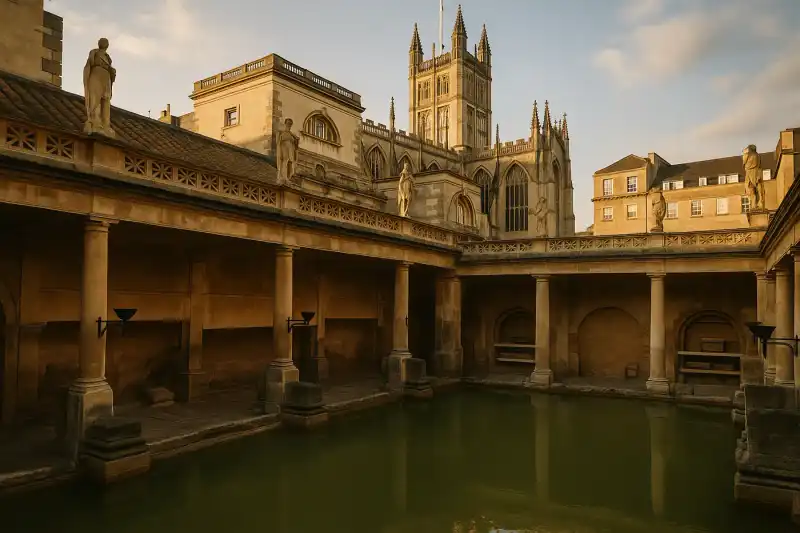
Take the train from Salisbury to Bath and keep the day mostly on foot. The Roman Baths are the anchor, and they deserve unhurried time. Book ahead in busy seasons, especially for weekends and school holidays.
Roman Bath was Aquae Sulis, a town built around hot springs associated with the goddess Sulis, whom the Romans linked with Minerva. That religious pairing is one of the best details at the site. The baths were not only about washing. They were about healing, offerings, status, social life, and the Roman habit of folding local gods into imperial forms.
Look for the curse tablets in the museum displays if they are on view. These small written appeals often complain about stolen cloaks, coins, or everyday annoyances, which makes Roman Britain feel less marble-statue formal and more human. People came here to bathe, pray, complain, and hope someone divine was listening.
Bath is a good recovery point after two rural days. Do the Roman Baths well, walk the historic center, and resist the urge to add another major out-of-town site unless you have a car and plenty of energy. This itinerary gets harder after Day 3, so a sane evening in Bath is not wasted time.
Day 4: Maiden Castle and Maumbury Rings
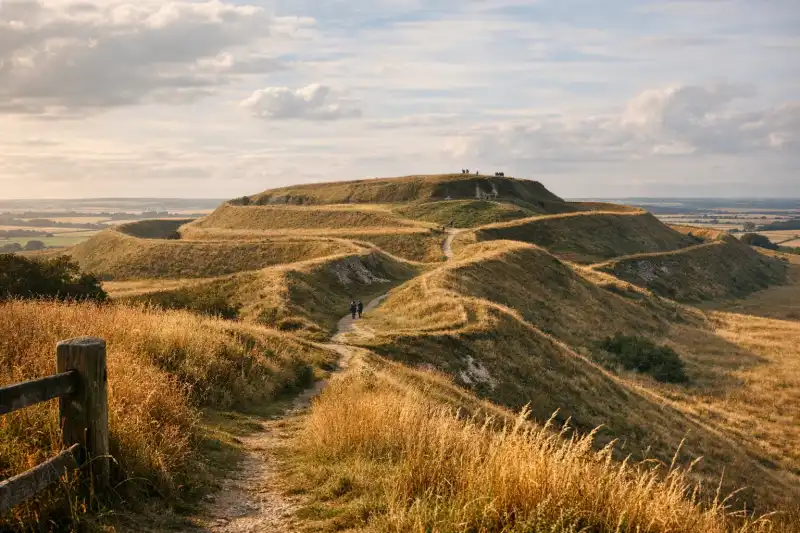
Travel toward Dorchester and aim your day around Maiden Castle. This is one of Britain’s great Iron Age hillforts, and it is best understood with your feet rather than from a viewpoint. Walk the ramparts slowly. The banks and ditches are not decorative. They controlled movement, displayed labor, and made approaching the settlement feel like entering political territory.
Maiden Castle’s occupation history is long, but its Iron Age ramparts are the reason to come. The site also has a Roman afterlife, including a small temple, which gives the day a useful hinge between native power structures and the Roman world pressing into southern Britain.
Back in Dorchester, visit Maumbury Rings if daylight holds. It began as a Neolithic henge, then was adapted by the Romans as an amphitheater. That reuse is wonderfully blunt. A prehistoric ceremonial earthwork became a Roman venue for spectacle, training, or public gathering. The old shape was too useful to ignore.
Do not overpack this day. Bath to Dorchester takes time, and hillfort walking can be tiring in wind or rain. A rental car gives the cleanest route, but train plus taxi can work. If you are running late, keep Maiden Castle and cut Maumbury Rings.
Day 5: Dorset to Cumbria transfer
This is the itinerary’s least glamorous day, and it is necessary. Moving from Dorset to Cumbria is a long transfer by train, car, or a mix of both. Treat the journey as the cost of connecting southern prehistoric and Roman landscapes with northern stone circles and the Roman frontier.
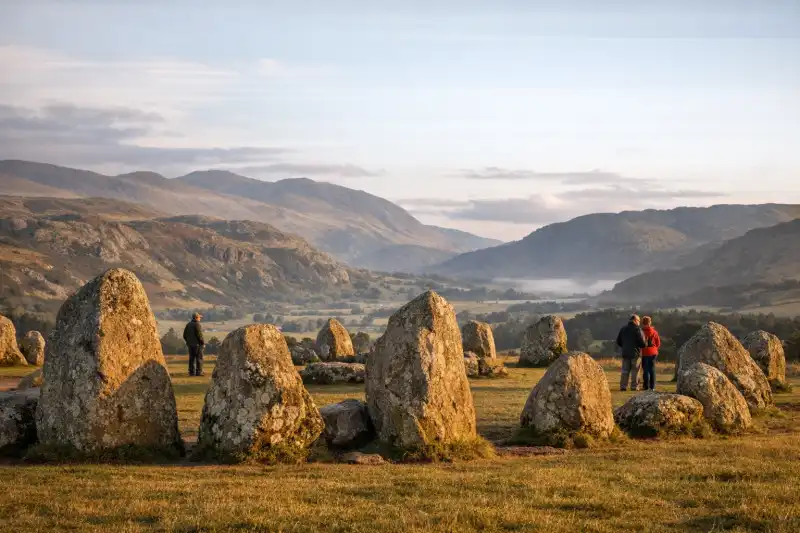
If you leave early and arrive in Keswick with daylight, make a first visit to Castlerigg Stone Circle. If not, do not force it. Castlerigg is much better when you can see the ring in its mountain setting rather than checking it off in fading light.
The historical payoff comes from contrast. Wiltshire’s monuments sit in chalk downland with processional routes and burial mounds. Castlerigg belongs to a different northern landscape, probably built in the late Neolithic or early Bronze Age, with fells enclosing the horizon. The stones are quiet now, but the choice of setting was not subtle.
Keep luggage simple today. If you are using trains, build in transfer slack and assume one connection will feel tighter than it looks. If you are driving, this is not a day to add detours. Arrive, eat, sleep, and save the real Cumbria visit for tomorrow.
Day 6: Castlerigg Stone Circle and the Lake District edge
Return to Castlerigg Stone Circle in the morning if you saw it briefly the night before, or make this your first proper visit. The circle is often dated to around 3000 BCE, making it one of the earlier stone circles in Britain. Its stones are not huge by Stonehenge standards, but the setting does a lot of the work.
Walk the perimeter before standing inside. The mountain ring around the stone ring is part of the experience, and it changes with weather. On a clear day, the site feels almost staged. In low cloud, it feels more enclosed and private. Both moods work.
Use the rest of the day lightly. Keswick is a practical base, and you can add a short walk or museum time, but do not turn this into a full Lake District hiking day unless you are willing to arrive at Hadrian’s Wall tired. The point of Day 6 is to recover from the long transfer while still giving Castlerigg the attention it deserves.
Transport is simple but not always frequent. A taxi is easiest. Local buses and walking can work depending on season, weather, and where you are staying. If you drive, parking is limited near the site, so go early and be considerate of the rural road.
Day 7: Hadrian’s Wall and Roman frontier sites
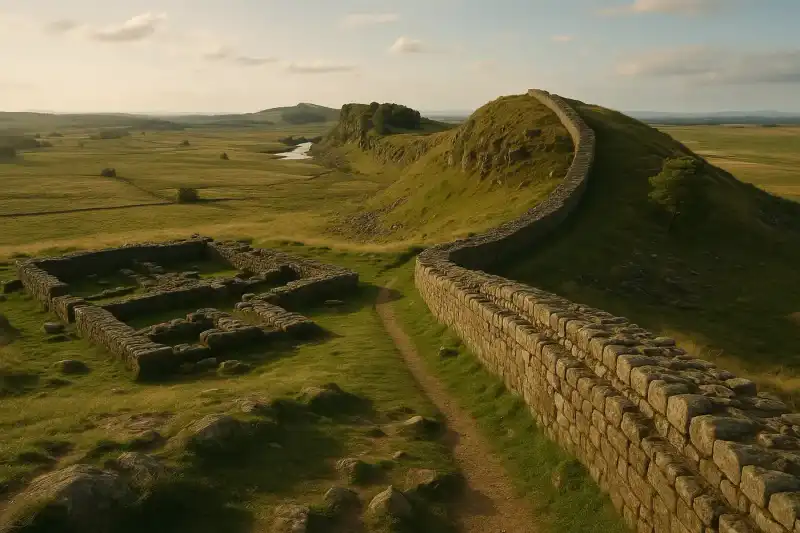
Finish with Hadrian’s Wall, but do not try to see the whole frontier in one day. Choose a focused section and pair it with one or two Roman sites. The most rewarding version for this itinerary is Roman Vindolanda plus Chesters Roman Fort, with wall viewpoints added where transport allows.
Vindolanda is the emotional center for many travelers because of the writing tablets found there. These thin wooden documents preserve birthday invitations, supply notes, military administration, and ordinary worries from the edge of empire. Roman Britain stops being abstract when someone is asking for socks, beer, or news from home.
Chesters gives you a different angle: a cavalry fort with visible bath remains beside the North Tyne. Baths on a cold northern frontier say a lot about Roman habits. The empire did not just move soldiers. It moved routines, architecture, paperwork, foodways, and expectations about what civilized military life should include.
A Hadrian’s Wall and Vindolanda day tour can be a smart choice if you do not want to drive rural roads after a week of travel. If self-driving, start early, check museum hours, and end in Newcastle or Hexham. Do not add Corbridge unless you are cutting something else.
The historical thread: monuments, conquest, and reused landscapes
This route works because it does not treat ancient Britain as one story. It moves from Neolithic ceremonial landscapes to Roman urban bathing, Iron Age hillfort power, northern stone circles, and the military edge of empire.
The best pattern is reuse. Old Sarum keeps attracting power. Maumbury Rings changes from henge to Roman arena. Bath turns a local sacred spring into a Roman religious and social complex. Hadrian’s Wall cuts across older northern landscapes and imposes a new military grammar on them.
The route also shows how different ancient places ask to be visited differently. Stonehenge is controlled and ticketed. Avebury is walked through a living village. Maiden Castle is read through effort, slope, and wind. Vindolanda speaks through small written scraps. Ancient Britain is not tidy, which is exactly why it is rewarding.
Transportation notes
Use trains where they make sense, especially Salisbury to Bath and the long northbound move if you do not want to drive the length of England. Use a rental car, taxi, or guided tour for rural archaeology days. Public transport can get you close to some places, but “close” may still mean a muddy walk, limited return options, or lost time.
The hardest part is Day 5. Dorset to Cumbria is a real transfer, not a scenic little hop. Do not schedule paid, timed attractions late that day. If you need a softer route, cut Dorset and travel from Bath to the north with less pressure.
Hadrian’s Wall is easiest with a car, a driver, a tour, or the seasonal wall bus when it is running. Check current schedules before building the day around it. If transport is limited, choose Vindolanda plus one wall viewpoint rather than trying to connect three forts badly.
Self-driving is useful but not mandatory. Do not self-drive if you are uncomfortable with narrow rural roads, left-side driving, or long post-site days. A mixed plan often works best: train between cities, taxi or tour for the awkward ancient landscapes.
Optional add-ons and swaps
If you want another stone circle and can add a Peak District stop, consider Arbor Low Stone Circle. Add it between Dorset and Cumbria only if you are driving and willing to break the transfer with an overnight. Remove the quick Castlerigg attempt on Day 5, or the schedule becomes too strained.
For a stronger Roman countryside angle, add Chedworth Roman Villa between Bath and Dorset. It works best with a car and adds mosaics, baths, and villa life to a route otherwise focused on public bathing and military sites. Remove Maumbury Rings or make Dorchester a two-night stop.
On Hadrian’s Wall, swap Chesters for Corbridge Roman Town if you care more about supply bases, streets, and frontier logistics than cavalry fort architecture. Do not add Corbridge on top of Vindolanda and Chesters unless you have a long summer day and a car.
If you want the alternate Vindolanda planning page, use Vindolanda Roman Fort for additional site context. Keep the day focused, though. The wall rewards depth more than frantic fort-hopping.
Shorter and longer itinerary options
For a compact version, use the planned 3 Days Stonehenge, Avebury, and Ancient Wiltshire route. It keeps Salisbury as the main base and focuses on Stonehenge, Old Sarum, Avebury, Silbury Hill, West Kennet Long Barrow, and The Sanctuary.
For a Roman-focused version, use the planned 5 Days Roman Britain: Bath, Hadrian’s Wall, and Northumberland route. That version should spend less time on prehistoric landscapes and more time on Bath, Vindolanda, Chesters, Corbridge, and the wall corridor.
A deeper 10-day Britain route could add Wales, Orkney, and Shetland, but that is a bigger logistical commitment, especially with islands and weather. It should not be treated as this 7-day route with three extra stops squeezed in.
Related ancient sites
- Avebury
- Stonehenge
- Old Sarum
- Silbury Hill
- West Kennet Long Barrow
- The Sanctuary
- Roman Baths Bath
- Maiden Castle
- Maumbury Rings
- Castlerigg Stone Circle
- Hadrian’s Wall
- Roman Vindolanda
- Chesters Roman Fort
- Corbridge Roman Town
FAQ
The most common planning questions for this route are answered below.