Quick route summary
This 5-day Roman Britain route starts in Bath, ends in Newcastle upon Tyne, and uses Bath, Hexham, and Newcastle as practical bases. The route style is a regional rail-and-frontier itinerary: easy city sightseeing at the start, one long transfer day, then two dense days along Hadrian’s Wall and Northumberland.
The pace is busy but manageable if you respect the geography. Bath and the Wall do not sit neatly beside each other, so the route works because it gives the northbound transfer its own day instead of pretending Britain is smaller than it is. The main ancient stops are the Roman Baths Bath, Roman Vindolanda, Vindolanda Roman Fort, Chesters Roman Fort, Hadrian’s Wall, and Corbridge Roman Town.
Who this itinerary is for
Use this itinerary if you want Roman Britain to feel like a lived network rather than a list of isolated ruins. Bath gives you water, worship, and urban comfort. Northumberland gives you forts, road corridors, military families, supply depots, and the hard northern edge of the province.
It is not ideal if you want one relaxed base for all five days. It also asks for some tolerance of UK rail transfers, rural site access, and weather that can turn a Wall walk from romantic to grim in about ten minutes. If you dislike moving hotels, stay longer in either Bath or Newcastle and choose a slower version.
Route at a glance
- Day 1: Overnight in Bath. Arrive by train, walk the compact city center, and visit the Roman Baths without adding another major excursion.
- Day 2: Overnight in Hexham. Travel north by train via London, Birmingham, or another sensible connection, then keep the evening light.
- Day 3: Overnight in Hexham. Visit Vindolanda and a central stretch of Hadrian’s Wall by car, taxi, bus where available, or guided tour.
- Day 4: Overnight in Hexham. Focus on Chesters Roman Fort and Wall country, with short walks if the weather is fair.
- Day 5: Overnight in Newcastle upon Tyne. Visit Corbridge Roman Town, then finish in Newcastle for trains, flights, or an extra night.
Practical logistics before you go
Bath is simple without a car. Arrive by train, stay near the center, and walk to the Roman Baths. Do not hire a car for Day 1 unless you are already on a wider road trip.
The north is different. Hadrian’s Wall sites are spread across rural Northumberland and Cumbria. Hexham is the best base for this route because it has rail access, places to eat, and reasonable links to Corbridge and the central Wall. Newcastle is easier for transport and evenings, but it puts you farther from some of the best frontier sites.
Guided tours make sense on Day 3 if you do not want to drive. A Hadrian’s Wall and Vindolanda day tour can solve the awkward part of the route: moving between rural forts, Wall viewpoints, and museum stops without spending the day checking bus times.
Book timed tickets where required, check seasonal opening hours, and take weather seriously. The Wall country is exposed. A short walk with wind and rain can feel longer than a full museum visit in Bath. Build slack into the Northumberland days, especially if you are traveling outside summer.
Day 1: Bath and the Roman Baths
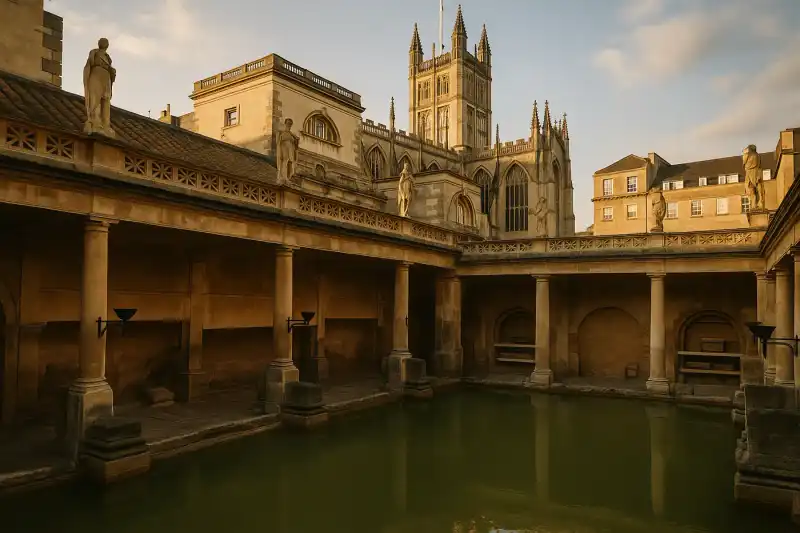
Start with the Roman Baths Bath while your energy is fresh. Bath is a gentle first day because the Roman core sits inside a walkable Georgian city, but the site itself deserves more than a quick loop. The great pool is the famous view, yet the more interesting story is the religious one: this was Aquae Sulis, where the Roman goddess Minerva was joined to the local goddess Sulis.
Look for the curse tablets if they are on display. They are small, but they pull the whole place down from imperial marble into ordinary irritation: stolen cloaks, missing coins, and people asking the goddess to deal with whoever wronged them. That is Roman Britain at human scale, not just columns and bathwater.
Keep the day simple. Walk the city center, visit the Baths, and maybe add the museum displays around the temple pediment and engineering of the hot spring. Do not bolt on Stonehenge today unless you arrived the night before and have a very early start. Bath rewards a slower first day, and the route becomes more tiring once you turn north.
If you are staying in Bath, choose a central hotel so you can avoid taxis. Have dinner nearby and pack for the next day’s transfer. This is not glamorous advice, but it is what keeps Day 2 from becoming a mess.
Day 2: Bath to northern England
Today is mostly about distance. Travel from Bath toward Hexham or Newcastle, and do not pretend this is a full sightseeing day. Depending on rail schedules, you may route through London, Birmingham, Bristol, or another connection. The exact line matters less than the principle: book a sensible train, leave enough connection time, and arrive north before you are too tired to sort out food and check-in.
This transfer also makes the history shift. Bath shows Roman Britain as a place of ritual bathing, civic display, local cults, and comfort. By tomorrow, the route is in a military landscape built around surveillance, movement, and control. The contrast is the point. Rome was not one thing in Britain. It was a hot spring sanctuary in Somerset and a wet frontier fort in Northumberland, both tied to the same imperial system.
If you reach Hexham with daylight left, keep it gentle. Walk the town, buy supplies, and confirm transport for Vindolanda. If you are using taxis, pre-book them. If you are using a seasonal Wall bus, check the current timetable rather than relying on old forum advice. If you are driving, remember that rural roads near the Wall can be narrow and slow.
Overnight in Hexham if you want the smoothest next two days. Overnight in Newcastle only if you strongly prefer a larger city base and accept longer approaches to the Wall.
Day 3: Vindolanda and the central Wall
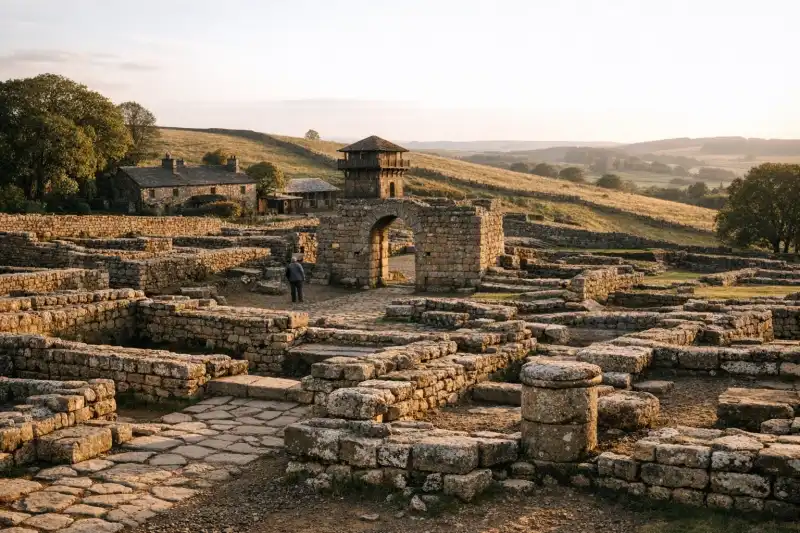
Make this your deepest Roman frontier day. Start with Roman Vindolanda or Vindolanda Roman Fort, then add a nearby Wall section if weather and transport line up. Vindolanda sits just south of Hadrian’s Wall, and that slight distance matters. This was not only a fort at the line. It was part of the working military world behind it.
The writing tablets are the detail to hold onto. Thin wooden leaves preserved in wet ground have given us birthday invitations, supply notes, duty rosters, and complaints from the edge of empire. One famous tablet from Claudia Severa to Sulpicia Lepidina is often described as the earliest known handwriting by a woman in Latin. The frontier suddenly feels less like a stone wall and more like households, shoes, beer, officers, enslaved labor, merchants, and mud.
Give Vindolanda more time than the map suggests. The site and museum together can easily take half a day, especially if active excavations or fresh finds are part of the visit. Afterward, continue to Hadrian’s Wall or Hadrian’s Wall for a short, realistic walk rather than an overambitious march.
This is the day when a guide or driver pays off. Public transport can work in season, but the timing can drive the day if you are not careful. If the weather is rough, choose deeper museum time over heroic walking. The Romans built the frontier here partly because the landscape already did some of the work. You will feel that in your legs.
Day 4: Chesters Roman Fort and Wall country
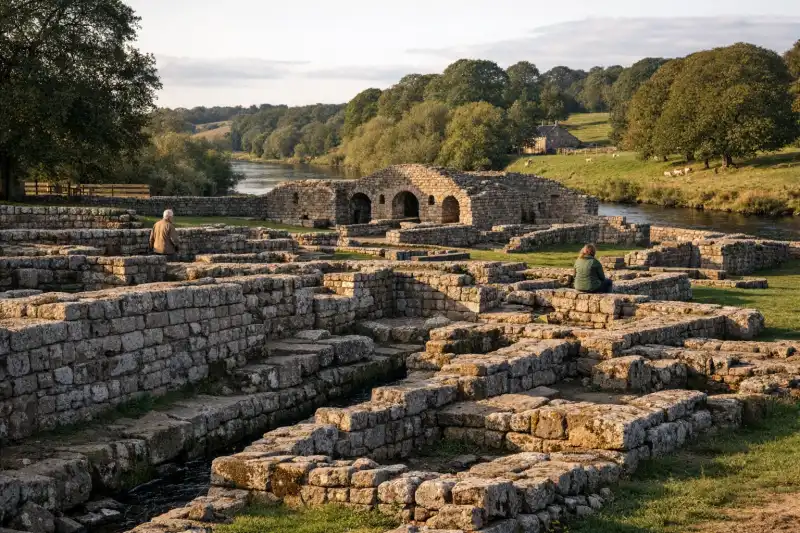
Use Day 4 for Chesters Roman Fort and the Wall corridor around it. Chesters, known to the Romans as Cilurnum, was a cavalry fort. That makes it a good counterpoint to Vindolanda. The remains are not just barracks and walls. The bathhouse near the river is one of the most evocative places on the route, partly because you can still read the Roman habit of making even a military posting include heat, water, routine, and repair.
This is also a day to think about movement. Hadrian’s Wall was not a single line of stone in isolation. It worked with forts, milecastles, roads, river crossings, ditches, gates, and supply routes. Soldiers watched the frontier, but they also moved through it, maintained it, staffed it, and lived beside it.
Plan the day around conditions. If the weather is clear, add a short Wall walk or viewpoint before or after Chesters. If rain or wind is heavy, spend more time at the fort and museum collections, then stop early. Northumberland rewards patience more than box-checking.
Driving gives the most flexibility today. Without a car, use a guided day tour, taxi plan, or current bus schedule. Do not leave the return trip vague. Rural evenings can get quiet, and the last leg back to Hexham is the kind of detail that matters more at 5 p.m. than it did over breakfast.
Day 5: Corbridge Roman Town and Newcastle finish
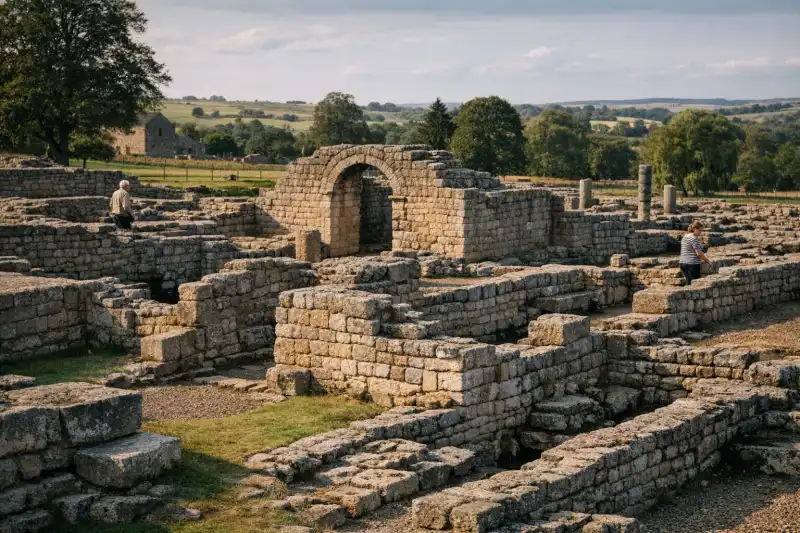
Finish with Corbridge Roman Town. It can look less dramatic than the forts at first, but stay with it. Corbridge was a supply base and town on Dere Street, the Roman road pushing north through Britain. This is where the route’s military story becomes logistical: granaries, compounds, workshops, streets, and the material business of keeping a frontier alive.
The Corbridge Hoard is the detail that gives the site teeth. Discovered in the twentieth century, it included armor, tools, weapons, and everyday military equipment packed into a chest. It is not the polished Rome of imperial portraits. It is Rome as kit, repair, storage, and practical survival.
Corbridge is easier to pair with a Newcastle finish than the more remote Wall sites. You can visit from Hexham or Newcastle by train plus a walk or taxi, depending on your luggage and timing. If you have bags, leave them at your hotel or use storage rather than dragging them through the day.
End in Newcastle upon Tyne for onward travel. If you have extra energy, the city makes a comfortable final night after the rural Wall days. If not, stop. Five days is enough to feel the range of Roman Britain without pretending you have exhausted it.
The historical thread: baths, borders, and the machinery of empire
This route works because Bath and Hadrian’s Wall show two very different faces of Roman Britain. Bath was about water, worship, healing, status, and the blending of Roman and local religious habits. The Wall was about military presence, controlled movement, taxation, supply, and the daily work of living at the northern edge of a province.
The tempting mistake is to think of Roman Britain only through monuments: bath, wall, fort, road. The better story is the system behind them. Hot spring engineering in Bath and boot repairs at Vindolanda belonged to the same empire. So did a cavalry bathhouse at Chesters and supply storage at Corbridge. Rome’s power in Britain was not just declared in stone. It was maintained through schedules, roads, paperwork, food, pay, and people who wanted dry socks.
Transportation notes
Use trains for the long-distance spine of the route: Bath to northern England, then Newcastle for onward travel. Book the Bath-to-Hexham or Bath-to-Newcastle transfer in advance if prices matter, and keep connection times humane.
Do not self-drive in Bath unless this is part of a larger road trip. The city is easier on foot. For Hadrian’s Wall, a car helps, but only if you are comfortable with rural roads and left-side driving. Otherwise, use Hexham or Newcastle as a base and combine taxis, guided tours, trains, and seasonal Wall buses.
The hardest part of the itinerary is not any single site. It is connecting several rural Roman places without wasting half the day. Pre-book taxis where needed. Check opening hours. Check bus dates. Do not assume that summer advice applies in March or November.
If you compress the route, cut Bath or cut one Wall day. Do not try to visit Bath, Vindolanda, Chesters, and Corbridge in three days unless you enjoy train platforms more than archaeology.
Optional add-ons and swaps
Add Stonehenge only if you can give the southwest an extra day. It pairs easily with Bath in theory, but it shifts the route from Roman Britain to prehistory and adds a separate transport problem. If you add it, remove one Wall day or extend the trip to six days.
Add Avebury Stone Circle if you want a less crowded prehistoric landscape near the Bath and Wiltshire side of the trip. It is wonderful, but it is not Roman. Swap it for Day 2 only if you are willing to delay the northbound transfer and arrive at the Wall later.
Add Lindisfarne Priory from Newcastle or Northumberland if early medieval Christianity interests you. Watch the tide tables carefully. This is a full add-on day, not a casual detour after Chesters.
For a Roman swap near London, use Verulamium in St. Albans before or after the main route. It gives you a major Roman town without the long rural logistics of the Wall, but it does not replace Vindolanda if frontier life is the reason you came.
Shorter and longer itinerary options
For a shorter 3-day version, choose either Bath plus one northern Wall day, or skip Bath and spend all three days around Newcastle, Hexham, Vindolanda, Chesters, and Corbridge. The second option is the stronger Roman route.
For a 7-day ancient Britain route, add Wiltshire prehistory before Bath, especially Stonehenge, Avebury, and nearby monuments. That turns the trip into a broader ancient Britain itinerary rather than a Roman-focused one.
For a 10-day version, continue beyond Northumberland into Wales, Orkney, or Shetland only if you accept serious travel time. Britain has enough ancient sites for a grand route, but the map can trick you. Islands, rural roads, and rail connections all need respect.
Related ancient sites
- Hadrian’s Wall
- Hadrian’s Wall
- Roman Vindolanda
- Vindolanda Roman Fort
- Chesters Roman Fort
- Corbridge Roman Town
- Roman Baths Bath
- Stonehenge
- Avebury Stone Circle
- Verulamium in St. Albans
- Lindisfarne Priory
FAQ
The most common planning questions for this route are answered below.