Quick Info
At a glance
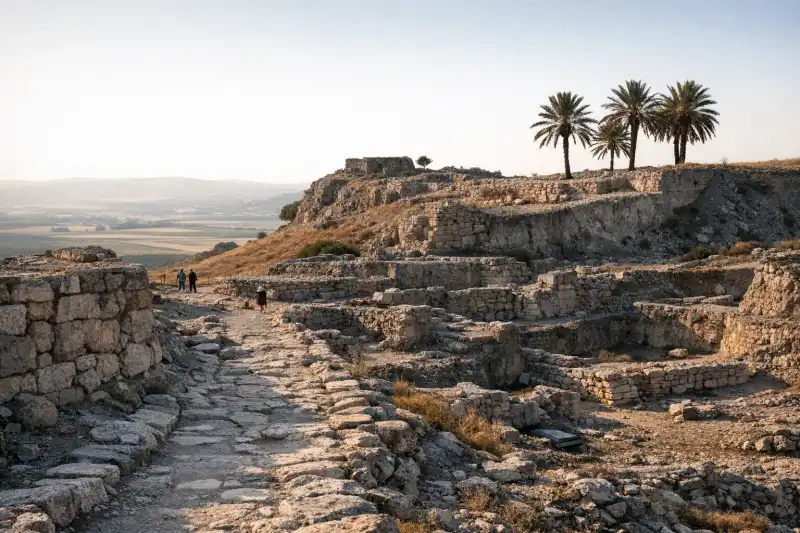
Tel Megiddo in Israel rises gently above the Jezreel Valley, but its low profile hides one of the most historically dense places in the ancient Near East. At first glance, it can seem like a quiet hill of stone, grass, and sun-baked earth. Yet every layer of the mound records another episode in a story that stretches back thousands of years, from early farming communities to Canaanite city rulers, Israelite kings, Assyrian administrators, and later imperial powers. Standing on the summit, you look out over one of the most strategic crossroads in the region, where routes linking Egypt, Syria, Mesopotamia, and the Mediterranean converged. That position explains why so many people wanted to control Megiddo, and why the site was built, destroyed, and rebuilt again and again.
Today, Tel Megiddo is part archaeological park, part historical puzzle, and part cultural symbol. It is also widely connected with the word “Armageddon,” derived from the Hebrew Har Megiddo, or “Mount of Megiddo,” giving the site a resonance far beyond Israel. Even for travelers with no special interest in biblical history, the appeal is immediate: wide valley views, monumental ruins, traces of palaces and fortifications, and one of the most memorable ancient water systems open to visitors. It is the kind of place where geography, politics, religion, and archaeology all meet in a single landscape.
History
Early settlement and the rise of a strategic mound
Megiddo’s story began long before written records. Archaeological evidence shows settlement in the area from the Neolithic and Chalcolithic periods, with the mound becoming increasingly important during the Bronze Age. Its location beside a major pass through the Carmel ridge and near the fertile Jezreel Valley gave it enormous value. Anyone controlling Megiddo could monitor movement between inland and coastal routes and influence trade and military traffic across a broad region.
By the Early and Middle Bronze Ages, Megiddo had become a fortified Canaanite city. Like other urban centers in the Levant, it developed defensive walls, public buildings, and elite residences. Trade linked it to Egypt and neighboring city-states, and imported goods suggest that its rulers participated in wider diplomatic and commercial networks. The mound expanded over time as old buildings were destroyed or leveled and new structures rose above them, creating the layered “tel” visible today.
Megiddo in the Late Bronze Age
During the Late Bronze Age, Megiddo emerged as one of the leading Canaanite cities in the region. Egyptian texts mention Megiddo, and the city is especially famous for its role in the campaign of Pharaoh Thutmose III in the 15th century BCE. The Battle of Megiddo is often described as one of the earliest battles in history for which reasonably detailed written accounts survive. Thutmose III’s victory established Egyptian dominance over Canaan and underlined just how strategically important Megiddo was.
Excavations have uncovered remains of palatial and administrative architecture from this period, indicating wealth and political significance. The city’s rulers likely operated as local elites under Egyptian hegemony, balancing local authority with imperial obligations. Luxury finds and monumental construction show that Megiddo was not just a military checkpoint but a sophisticated urban center integrated into international Bronze Age culture.
Iron Age kingdoms and biblical associations
Megiddo retained importance into the Iron Age, when the political map of the southern Levant changed dramatically. It became associated with the emerging Israelite kingdoms, though the exact interpretation of the archaeological evidence remains debated. Monumental gates, casemate walls, and large pillared buildings excavated at the site were once confidently attributed to the 10th century BCE and linked to the reign of Solomon. More recent scholarship has questioned some of these dates, proposing alternative chronologies and political contexts.
Even with those debates, Megiddo was clearly a major administrative and military center during the Iron Age. It controlled a key route and appears to have functioned as a royal city under northern kingdom authority. The site is also associated with large stable-like or storage structures, once popularly labeled “Solomon’s stables.” Whether they housed horses, stored goods, or served mixed administrative purposes, they reflect the scale of organized state activity at Megiddo.
The site also appears in biblical tradition in connection with conflict and royal history. Later Christian interpretation transformed the name Megiddo into “Armageddon,” giving it enduring apocalyptic associations. That spiritual afterlife has made the mound famous in global imagination, even though its real historical significance rests in its long and complex occupation sequence.
Assyrian rule, decline, and later periods
In the 8th century BCE, the Assyrian Empire expanded into the Levant and reshaped regional administration. Megiddo became an Assyrian provincial center after the conquest of the northern kingdom. Archaeological remains from this era indicate continued occupation and administrative use, though under new imperial management. The city’s strategic location still mattered, but now within the framework of Assyrian road systems and provincial governance.
Over time, Megiddo declined in importance. Settlement continued in reduced form through Persian, Hellenistic, and Roman periods, but the great urban prominence of earlier centuries faded. Nearby routes and settlements shifted, and the mound no longer held the same commanding political role. Like many tells, it eventually became more a layered memory of former power than an active regional capital.
Modern archaeological work began in the early 20th century and has continued through several major expeditions. These excavations transformed Tel Megiddo into one of the most studied sites in Israel. Because of its long occupational history and the quality of its remains, it became central to debates about chronology, state formation, and biblical archaeology. Its importance was formally recognized when it was inscribed as part of the UNESCO World Heritage site “Biblical Tels – Megiddo, Hazor, Beer Sheba.”
Key Features
Tel Megiddo rewards visitors not with a single spectacular monument but with a sequence of spaces that together reveal how an ancient city functioned. The first striking feature is the mound itself. From the top, the view across the Jezreel Valley makes the site’s strategic value instantly legible. You can see how roads would have threaded through the landscape, how armies might have advanced, and why rulers invested so heavily in defending and administering this position. The panorama is one of the best interpretive tools at the site.
Among the most important remains are the city gates and fortifications. Megiddo’s gate complexes are central to the site’s fame because they offer rare evidence for organized urban planning and military architecture in the Iron Age. Passing through them today, you get a sense of how movement into the city was controlled and watched. Gates in the ancient Near East were not just entry points; they were political spaces, places of administration, exchange, and public display.
The palace areas and elite structures reveal another side of Megiddo. Archaeologists have uncovered substantial architectural remains linked to high-status residents and governing authorities. These spaces suggest a city with concentrated wealth and centralized power, not merely a fortified village. Even where only foundations survive, the scale of the buildings allows you to imagine reception halls, courtyards, and administrative rooms that once managed tribute, storage, and local authority.
One of the site’s most talked-about features is the complex of large pillared buildings traditionally identified as stables. Whether one accepts that interpretation in full or prefers to see them as multipurpose storage and administrative structures, they are impressive. Their regular plan and repeated bays convey a strong sense of state organization. They also illustrate how archaeology often works through interpretation rather than certainty: what visitors see is not just ruin, but an ongoing scholarly argument made visible in stone.
The most memorable experience for many travelers is the water system. Ancient cities needed secure access to water, especially during siege. At Megiddo, engineers solved the problem by cutting a deep shaft and tunnel system that allowed inhabitants to reach a hidden water source without leaving the city’s defenses. Walking through it today is one of the highlights of any visit. The descent is steep and the passage can be cool and dim compared with the bright hilltop above, creating a dramatic shift in atmosphere. More than almost any other feature, the water system makes ancient urban survival feel tangible.
There are also remains from the Bronze Age, including earlier palace and temple zones, that remind visitors Megiddo’s importance predates biblical narratives by many centuries. This broader chronological depth is part of what makes the site special. It is not simply an “Israelite” or “biblical” location; it is a long-lived Canaanite and Near Eastern urban center whose identity changed repeatedly over time.
Interpretive signage helps connect the ruins to the historical debates surrounding them, and the park layout usually allows for a manageable walking circuit. The exposed archaeological layers are especially valuable because they show how the tel was created: each generation built on top of what came before, preserving fragments of earlier worlds beneath later ones. For visitors interested in ancient history, Tel Megiddo offers the rare chance to experience not just a monument, but the accumulated structure of civilization itself.
Getting There
Tel Megiddo is located in northern Israel, roughly between Haifa and Afula, and is easiest to reach by rental car or organized day tour. From Haifa, the drive generally takes about 40 to 50 minutes, while from Nazareth it is around 30 to 40 minutes depending on traffic. From Tel Aviv, allow around 1.5 to 2 hours. Parking is usually straightforward at the national park entrance, making self-driving the most convenient option for travelers combining Megiddo with Nazareth, Caesarea, or other northern sites.
Public transport is possible but less seamless. Buses run from major transport hubs such as Haifa, Afula, and sometimes Yokneam toward the Megiddo junction area. Typical intercity bus fares are often in the range of ₪15 to ₪35 depending on origin and route. From the nearest stop, you may need to walk or take a short taxi ride to the entrance. A local taxi transfer from nearby towns can cost roughly ₪40 to ₪90 depending on distance and time of day.
Many travelers choose guided tours from Tel Aviv, Jerusalem, or Haifa, especially if they want to combine Tel Megiddo with Galilee, Nazareth, or biblical sites in northern Israel. Shared day tours often start around $80 to $150 per person, while private tours can be significantly more. If you are relying on public transport, check schedules carefully before leaving, as service frequency can vary and connections are not always ideal for a long sightseeing day.
When to Visit
The best times to visit Tel Megiddo are spring and autumn, when temperatures are milder and the landscape is at its most pleasant. In March, April, October, and November, daytime conditions are usually comfortable for walking the exposed mound, and visibility across the Jezreel Valley is often excellent. Spring can be especially attractive because the surrounding countryside may still hold some green after the winter rains, softening the site’s otherwise dry, stony palette.
Summer visits are possible, but the heat can be intense. The mound offers limited shade, and the reflected sun from stone surfaces can make midday touring tiring. If you visit between June and September, aim to arrive early in the morning. Bring plenty of water, a hat, and sunscreen, and expect the underground water system to feel much cooler than the open summit.
Winter can be a good season for those who prefer fewer crowds and gentler light, though rain may occasionally affect conditions. Paths can become slippery, and the water system or certain sections may have limited access during poor weather or maintenance periods. As with many archaeological parks in Israel, holiday periods and weekends may be busier, especially when domestic tourism is high.
For photographers, early morning and late afternoon offer the best light, bringing out the texture of the excavated stone and the broad contours of the valley. If your main goal is comfort rather than atmosphere, shoulder seasons remain the safest choice.
| Quick Facts | Details |
|---|---|
| Location | Northern District, Israel |
| Nearest city | Afula |
| UNESCO status | Part of the Biblical Tels World Heritage listing |
| Best known for | Ancient mound, monumental gates, water system, Armageddon association |
| Main periods | Bronze Age, Iron Age, Assyrian, Persian, Hellenistic, Roman |
| Typical visit length | 1.5 to 3 hours |
| Best season | Spring and autumn |
| Access | Best by car or guided tour; possible by bus plus taxi/walk |
| Terrain | Uneven archaeological paths, stairs, underground tunnel |
| What to bring | Water, sturdy shoes, sun protection |
Guided tours: worth it?
Most travelers can visit Tel Megiddo independently. Compare a tour only if you want a tighter history-focused visit, easier logistics, or a guide who can answer questions on the spot.
Best for
- Short visits where a planned route saves time
When to go self-guided
Go independently if you prefer setting your own pace, reading as you go, and checking official hours or ticket rules directly before you arrive.
What I’d avoid
Skip paid tours that bundle unrelated stops you do not actually want. The best option should either save meaningful planning time or add historical context you would miss on your own.
Tel Megiddo and Galilee day tours
Useful when: you want to compare guided formats before deciding
Nazareth, Megiddo and Haifa tours
Useful when: you want to compare guided formats before deciding
Northern Israel biblical sites tours
Useful when: you want to compare guided formats before deciding
Some tour links are affiliate links, which may earn Ancient Travel a small commission at no extra cost to you. I try to surface options that make practical sense for the site—not just anything bookable.
Frequently Asked Questions
What is Tel Megiddo famous for?
Tel Megiddo is famous for its long sequence of ancient settlements, monumental gates, impressive water system, and its association with the biblical name Armageddon.
How much time do you need at Tel Megiddo?
Most visitors spend 1.5 to 3 hours exploring the mound, viewpoints, palace areas, gates, stables, and the underground water system.
Is Tel Megiddo suitable for families?
Yes, Tel Megiddo is suitable for families, though the site includes uneven paths, stairs, and an underground tunnel that may be challenging for very young children or strollers.
Can you visit Tel Megiddo without a car?
Yes, but it is easier with a car or organized tour. Public buses reach the area from cities like Afula and Haifa, followed by a short taxi ride or walk depending on the route.
What should I wear to Tel Megiddo?
Wear comfortable walking shoes, sun protection, and light clothing in warm months. Bring water, especially in summer, because shade is limited on the mound.
Is Tel Megiddo a UNESCO World Heritage Site?
Yes, Tel Megiddo is part of the UNESCO World Heritage listing of Biblical Tels in Israel, together with Hazor and Beersheba.
Nearby Ancient Sites
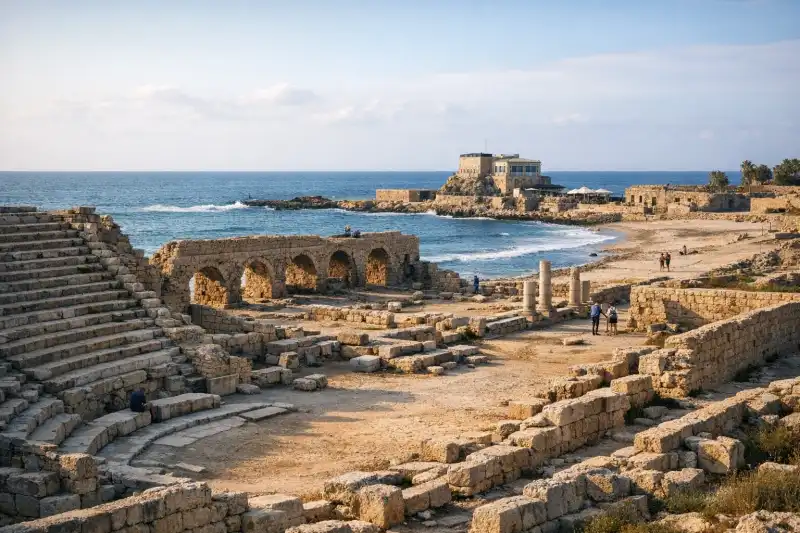
Caesarea Maritima
Herodian, Roman, and ByzantineExplore Israel’s Caesarea Maritima, a grand Herodian port city of harbors, theaters, aqueducts, and ...
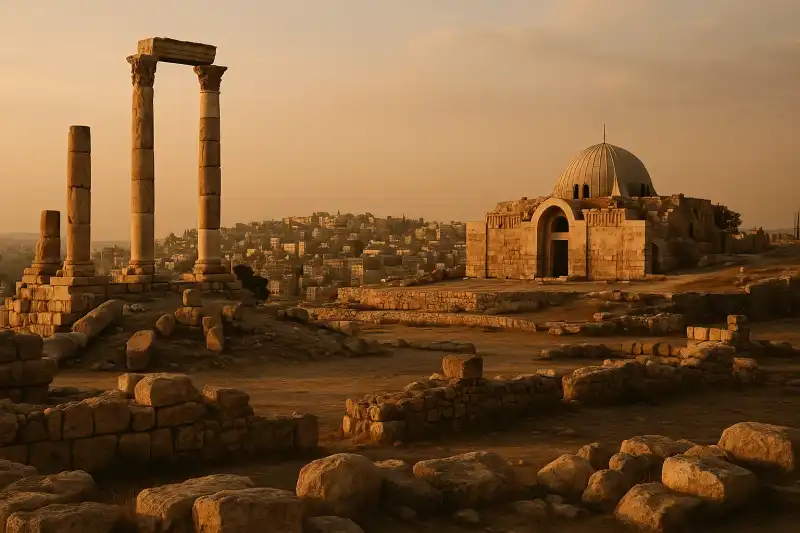
Amman Citadel Jordan Guide 2026: Temple of Hercules & Ancient Rabbah
Ammonite-Roman-UmayyadExplore Jordan's ancient citadel overlooking modern Amman. Discover the Temple of Hercules, Umayyad ...
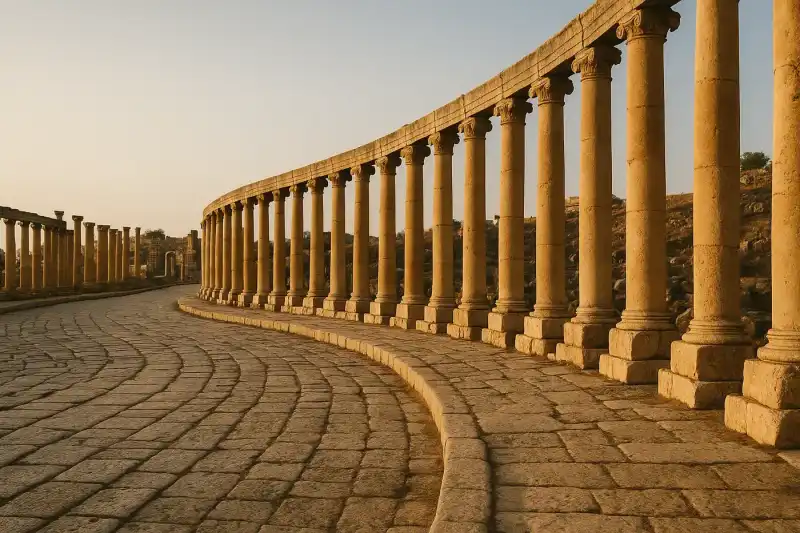
Jerash: The Pompeii of the East and Jordan's Best-Preserved
Roman / NabataeanDiscover Jerash, Jordan's remarkable Roman ruins. Walk the colonnaded streets of ancient Gerasa, exp...