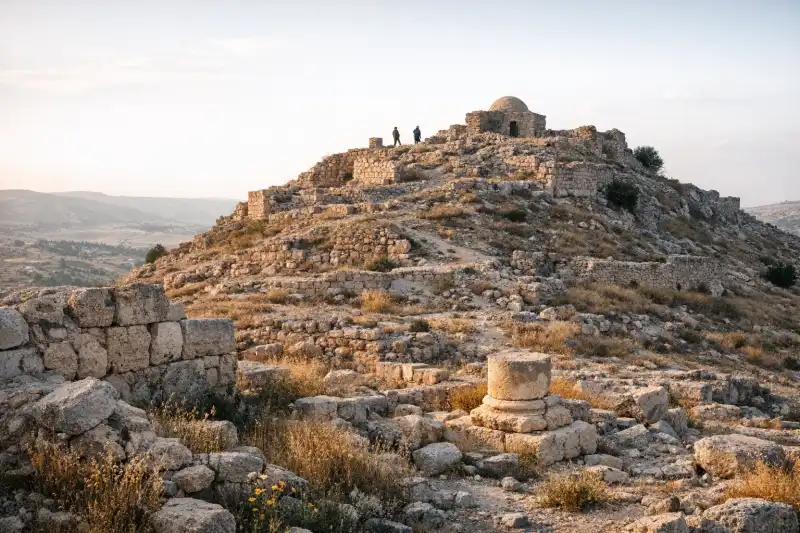
Quick Info
At a glance
Tell Hesban in Jordan rises from the highland landscape as a quiet, wind-brushed mound where layers of settlement still shape the ground beneath your feet. Unlike the country’s headline attractions, this site rewards patient travelers: those who enjoy standing on a summit, tracing ancient walls with their eyes, and imagining how a strategic hilltop community watched roads, fields, and rival powers move across the plateau. The setting is part of the experience. Around the tell, the land opens into broad agricultural country, while the ruins themselves hold the compressed memory of centuries of occupation, rebuilding, and adaptation.
For many visitors, Tell Hesban is compelling because it sits at the intersection of archaeology and tradition. It is frequently linked with biblical Heshbon, a name that appears in historical and religious literature, yet the site is also important on its own terms as a real, excavated settlement with evidence from multiple eras. Iron Age fortifications, later domestic and administrative structures, Byzantine ecclesiastical remains, water systems, and reused stonework all testify to a place repeatedly claimed and reimagined. Today, the site feels contemplative rather than monumental. There are no soaring façades here, but there is something more intimate: a hill of accumulated history where each visible fragment hints at a larger story of Jordan’s central highlands.
History
Iron Age foundations and regional power
The earliest significant phases at Tell Hesban are usually placed in the Iron Age, when the central Jordanian plateau was dotted with fortified settlements controlling agricultural hinterlands and routes across the uplands. In this period, the site occupied a valuable position. A hilltop settlement here could oversee movement between the Jordan Valley and the interior and could also draw strength from nearby farming land and water resources. Archaeological work has revealed remains consistent with occupation during the first millennium BCE, including defensive and domestic architecture that points to an organized community rather than a temporary encampment.
Tell Hesban is often associated with ancient Heshbon, a city known from biblical texts and related traditions. That identification has long attracted scholarly interest, though archaeology does not always align neatly with literary memory. Even so, the tell’s prominence, location, and occupational depth make it an important candidate in discussions of regional polities, especially the Ammonite sphere and neighboring groups. During these centuries, the settlement would have existed within a contested landscape shaped by local rulers as well as larger imperial forces from Mesopotamia and the Levant.
Hellenistic and Roman transformation
After the Iron Age, Tell Hesban continued to evolve through the Hellenistic and Roman periods. As political structures changed following the conquests of Alexander and the rise of successor states, the settlement adapted to new administrative realities and broader commercial connections. Material culture from these eras indicates continuity, redevelopment, and participation in the cultural world of the eastern Mediterranean.
Under Roman influence, the region became increasingly integrated into formal road systems, taxation networks, and urban hierarchies. Tell Hesban may not have been among the grand showcase cities of the Decapolis, but it benefited from the same wider environment of connectivity and architectural change. Excavations have identified structures, ceramics, and installations that point to sustained occupation and practical local activity. Roman-era communities often reused earlier foundations, and that pattern is visible at many tells across Jordan, where fresh construction was laid over older levels without erasing the strategic logic that had first made the site attractive.
Byzantine prosperity and sacred landscape
The Byzantine period brought one of the site’s most visible and significant phases. In late antiquity, the hills of central Jordan saw the growth of churches, monasteries, agricultural estates, and villages tied into a Christian sacred geography that included nearby Madaba, Mount Nebo, and the Jordan Valley pilgrimage zone. Tell Hesban participated in that world. Archaeological remains from this era include ecclesiastical architecture and associated settlement features, suggesting a community with both religious and agricultural importance.
Byzantine builders often left durable signatures: mosaic pavements, apses, carved stones, and reorganized urban spaces. At Tell Hesban, the surviving traces may not be as elaborate as those in major basilicas elsewhere, but they are enough to show that the site remained meaningful and inhabited. This period likely saw the surrounding countryside intensively cultivated, with the hilltop functioning as a focal point for worship, residence, storage, and oversight of local production.
Islamic-era continuity and gradual decline
The early Islamic centuries did not produce a sudden rupture in the life of the site. As elsewhere in Jordan, there was a degree of continuity in settlement patterns, building traditions, and agricultural use. Communities adjusted to new political frameworks under Umayyad and later rulers, and many existing sites continued in modified form. Tell Hesban appears to have remained occupied or reused in some capacity, though over time the scale and prominence of habitation changed.
Eventually, like many ancient tells, Hesban declined as a major settlement focus. Populations shifted, economic priorities altered, and newer centers became more important. Stone was likely removed or repurposed in later construction nearby, while erosion, agriculture, and time softened the contours of abandoned structures. Yet the mound itself preserved the record. Modern archaeological expeditions, particularly from the twentieth century onward, brought renewed attention to Tell Hesban, documenting its stratigraphy and helping place it within the long history of Jordan’s central plateau. Today, the site stands less as a single-period monument than as a layered archive of human adaptation.
Key Features
What makes Tell Hesban memorable is not one iconic structure but the cumulative character of the mound. As you move across the summit, the terrain reveals a patchwork of exposed walls, building foundations, and cut features that together communicate the site’s long life. The tell has the classic appeal of layered archaeology: one era built over another, yet never fully erased it. Visitors who look closely can see shifts in masonry technique, alignments, and the practical logic of settlement on elevated ground. The hill itself is a feature, chosen for defense, visibility, and command of the surrounding landscape.
One of the most striking elements is the panoramic setting. From the top, you can appreciate why generations settled here. The central Jordanian highlands spread outward in cultivated fields and low ridges, and on clear days the horizon seems to carry historical meaning as much as scenery. This elevated perspective helps visitors understand Tell Hesban not as an isolated ruin but as part of a network of ancient communities connected by roads, trade, religion, and rivalry. The views also create a strong emotional effect: the site feels open, exposed, and contemplative, especially in the early morning or late afternoon when the light softens the stone.
Among the archaeological remains, visitors often notice sections of fortification and substantial wall lines that hint at the mound’s defensive role. Even where structures survive only at foundation level, their placement along edges and higher points suggests deliberate control of access and visibility. These are the bones of a settlement designed to endure uncertainty. Nearby domestic and administrative traces reveal a more ordinary side of life: storage, residence, and day-to-day organization within the protective envelope of the tell.
Water management is another important feature, whether represented by cisterns, channels, or other installations associated with collecting and storing runoff. In the highlands of Jordan, settlement sustainability depended on careful handling of seasonal water. A hilltop site could only thrive if its inhabitants developed reliable systems for supply and storage, and Tell Hesban offers insight into that practical intelligence. Such features remind visitors that ancient survival rested not only on politics and war, but on engineering and seasonal discipline.
The Byzantine remains add another layer of interest. Fragments of ecclesiastical architecture connect Tell Hesban to the Christian landscapes that flourished in late antique Jordan. Though the site is quieter and less polished than the famous mosaic churches of Madaba, this is part of its charm. The remains feel embedded in the ground rather than staged for display, inviting the imagination to reconstruct apses, paved floors, and liturgical spaces from partial evidence. For travelers interested in the transition from classical to Christian Jordan, the site offers a more intimate encounter than major pilgrimage stops.
Another defining feature is the sense of archaeological process itself. At Tell Hesban, the exposed trenches and visible stratigraphy can make the act of excavation feel present. You do not simply look at a finished monument; you read a landscape that scholars are still interpreting. Questions of identification, chronology, and historical significance are part of the visit. This makes the tell particularly rewarding for visitors who enjoy sites where evidence, text, and debate overlap. Instead of a single story, Hesban offers many stories layered together, and that complexity is one of its chief attractions.
Getting There
Tell Hesban is easiest to reach by road from Amman or Madaba. From central Amman, the drive typically takes around 40 to 60 minutes depending on traffic and your exact starting point. A private taxi is the simplest option for independent travelers; expect a one-way fare in the rough range of 20 to 35 Jordanian dinars from Amman, though prices vary by negotiation, waiting time, and season. If you plan to combine the tell with Madaba, Mount Nebo, or Bethany Beyond the Jordan, hiring a driver for half a day can be more efficient, usually around 50 to 80 dinars.
From Madaba, Tell Hesban is much closer, generally a drive of about 20 to 30 minutes. Local taxis may charge approximately 10 to 20 dinars depending on whether the driver waits and returns you to town. Rideshare availability can be inconsistent outside major urban cores, so arranging transport in advance is wise.
Public transport in this area is possible but less straightforward. Service taxis and minibuses connect Amman with nearby towns, but they may not stop directly at the archaeological site, leaving you with a final stretch by local taxi or on foot. For most travelers, this makes public transport cheaper but less convenient. If you are self-driving, roads are generally manageable, and having a car gives you flexibility to pair Tell Hesban with other central Jordan sites in a single day. Bring offline maps, since signage to smaller archaeological places can be limited.
When to Visit
Spring and autumn are the best times to visit Tell Hesban. From March to May, the central Jordanian plateau is often at its most attractive, with greener fields, clearer air, and daytime temperatures that are comfortable for walking among exposed ruins. This is an especially good season for photography, as the landscape around the tell feels alive and the softer light brings out texture in stone and earth. September through November offers similarly pleasant conditions, with warm but usually manageable afternoons and less risk of the intense midsummer heat.
Summer visits are still possible, but you should plan carefully. Between June and August, midday temperatures can become tiring, especially since shade on the mound is limited. If you go in summer, aim for early morning or the last two hours before sunset, carry plenty of water, and wear a hat. The openness that makes the site scenic also leaves visitors exposed to strong sun.
Winter can be atmospheric, with cooler temperatures and fewer visitors, but weather is more changeable. Wind, rain, and occasional cold snaps can make the ground slippery and reduce visibility. On the other hand, winter light can be beautiful, and the site’s quiet mood is amplified outside peak travel months. Whenever you go, the best experience usually comes from visiting when the sun is low, allowing the topography and masonry lines of Tell Hesban to stand out more clearly.
| Quick Facts | Details |
|---|---|
| Location | Madaba Governorate, central Jordan |
| Nearest city | Madaba |
| Best reached from | Amman or Madaba by car or taxi |
| Main significance | Multiperiod archaeological tell often linked with ancient Heshbon |
| Key periods | Iron Age, Hellenistic, Roman, Byzantine, Early Islamic |
| Typical visit length | 1–2 hours |
| Terrain | Uneven paths, exposed stone, hilltop ruins |
| Best seasons | Spring and autumn |
| What to bring | Water, sun protection, sturdy shoes, camera |
| Ideal for | Archaeology enthusiasts, biblical history travelers, quiet heritage stops |
A visit to Tell Hesban is ultimately about perspective. The site does not overwhelm with scale, but it offers something subtler and, for many travelers, more lasting: the chance to stand within a landscape where settlement persisted through changing empires, faiths, and daily needs. Its appeal lies in continuity and accumulation. You come here to see how a hill became a city, a stronghold, a village, a sacred place, and finally an archaeological record.
That makes Tell Hesban especially rewarding for travelers who prefer depth over spectacle. In a single visit, you encounter the practical realities of water and defense, the cultural shifts of Roman and Byzantine Jordan, and the long afterlife of a place remembered in text and preserved in soil. Paired with Madaba, Mount Nebo, or other sites in central Jordan, it rounds out a fuller picture of the region’s ancient highlands. On its own, it offers silence, wind, and the enduring shape of history on the land.
Guided tours: worth it?
Most travelers can visit Tell Hesban independently. Compare a tour only if you want a tighter history-focused visit, easier logistics, or a guide who can answer questions on the spot.
Best for
- Short visits where a planned route saves time
When to go self-guided
Go independently if you prefer setting your own pace, reading as you go, and checking official hours or ticket rules directly before you arrive.
What I’d avoid
Skip paid tours that bundle unrelated stops you do not actually want. The best option should either save meaningful planning time or add historical context you would miss on your own.
Madaba and Mount Nebo day tours from Amman
Useful when: transport or pickup logistics matter
Biblical sites tours in Jordan
Useful when: you want to compare guided formats before deciding
Amman to Madaba and surrounding archaeological sites
Useful when: you want to compare guided formats before deciding
Some tour links are affiliate links, which may earn Ancient Travel a small commission at no extra cost to you. I try to surface options that make practical sense for the site—not just anything bookable.
Frequently Asked Questions
What is Tell Hesban?
Tell Hesban is an archaeological mound in central Jordan, widely associated with ancient Heshbon and known for remains from the Iron Age, Hellenistic, Roman, Byzantine, and Islamic periods.
Where is Tell Hesban located?
The site stands in the Madaba Governorate of Jordan, southwest of Amman and close to the road network linking the capital with Madaba and the central plateau.
Is Tell Hesban worth visiting?
Yes. It is especially rewarding for travelers interested in archaeology, biblical landscapes, and quieter hilltop sites with broad views rather than heavily developed tourist monuments.
How much time should I spend at Tell Hesban?
Most visitors spend 1 to 2 hours exploring the mound, visible architectural remains, and viewpoints, though archaeology enthusiasts may want longer.
Can I visit Tell Hesban on a day trip from Amman?
Yes. Tell Hesban is practical as a half-day or full-day excursion from Amman, often combined with Madaba, Mount Nebo, or other central Jordan heritage sites.
What should I bring to Tell Hesban?
Bring water, sun protection, sturdy walking shoes, and a phone or camera. Shade can be limited and the ground is uneven in places.
Nearby Ancient Sites
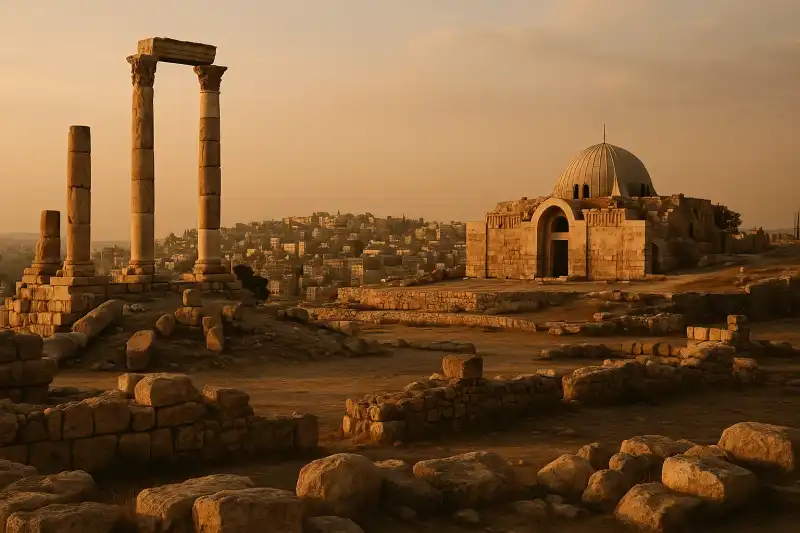
Amman Citadel Jordan Guide 2026: Temple of Hercules & Ancient Rabbah
Ammonite-Roman-UmayyadExplore Jordan's ancient citadel overlooking modern Amman. Discover the Temple of Hercules, Umayyad ...
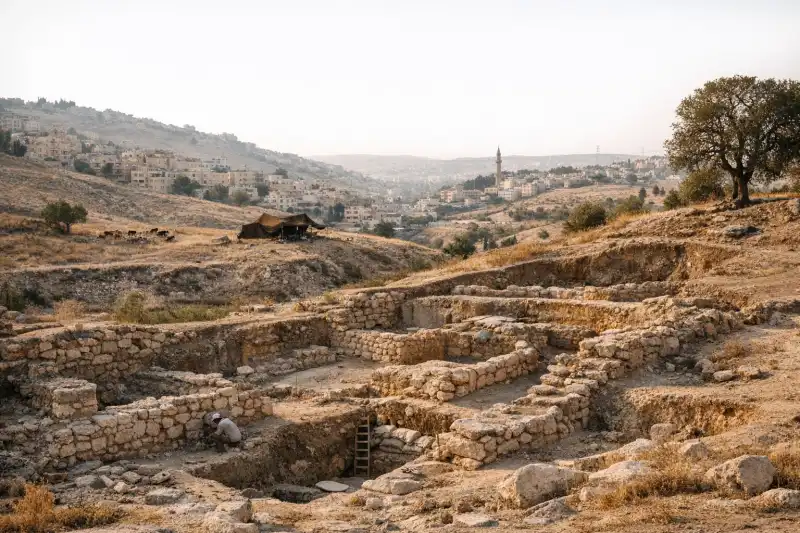
Ain Ghazal
Pre-Pottery Neolithic communities of the LevantDiscover Ain Ghazal, Jordan’s remarkable Neolithic settlement famed for its ancient plaster statues ...
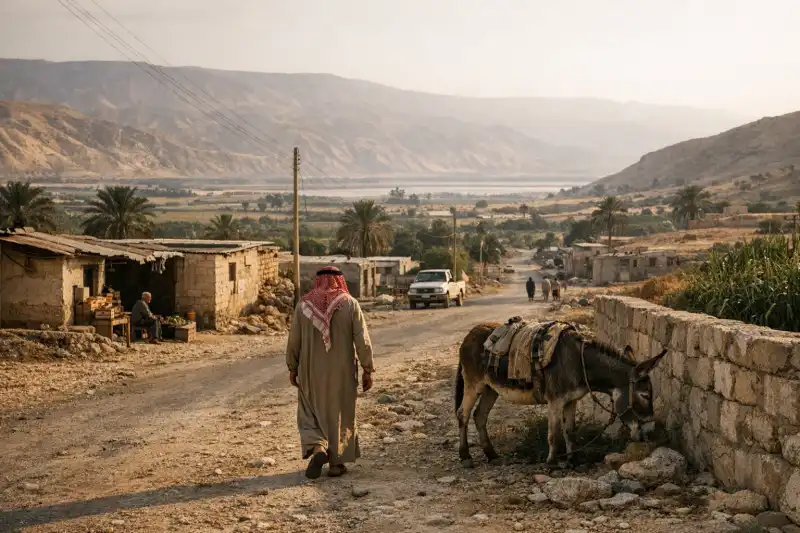
Deir Alla
Canaanite, Israelite-era, and regional Levantine culturesExplore Deir Alla in Jordan, an important Jordan Valley archaeological mound linked to Bronze and Ir...
Bethany Beyond the Jordan
Bethany Beyond the Jordan in Jordan is an archaeological and religiously significant site believed t...