Quick Info
Curated Experiences
Cape Sounion and Temple of Poseidon Half-Day Tour from Athens
Sunset Tour to Temple of Poseidon at Cape Sounion
Private Tour: Temple of Poseidon and Cape Sounion from Athens
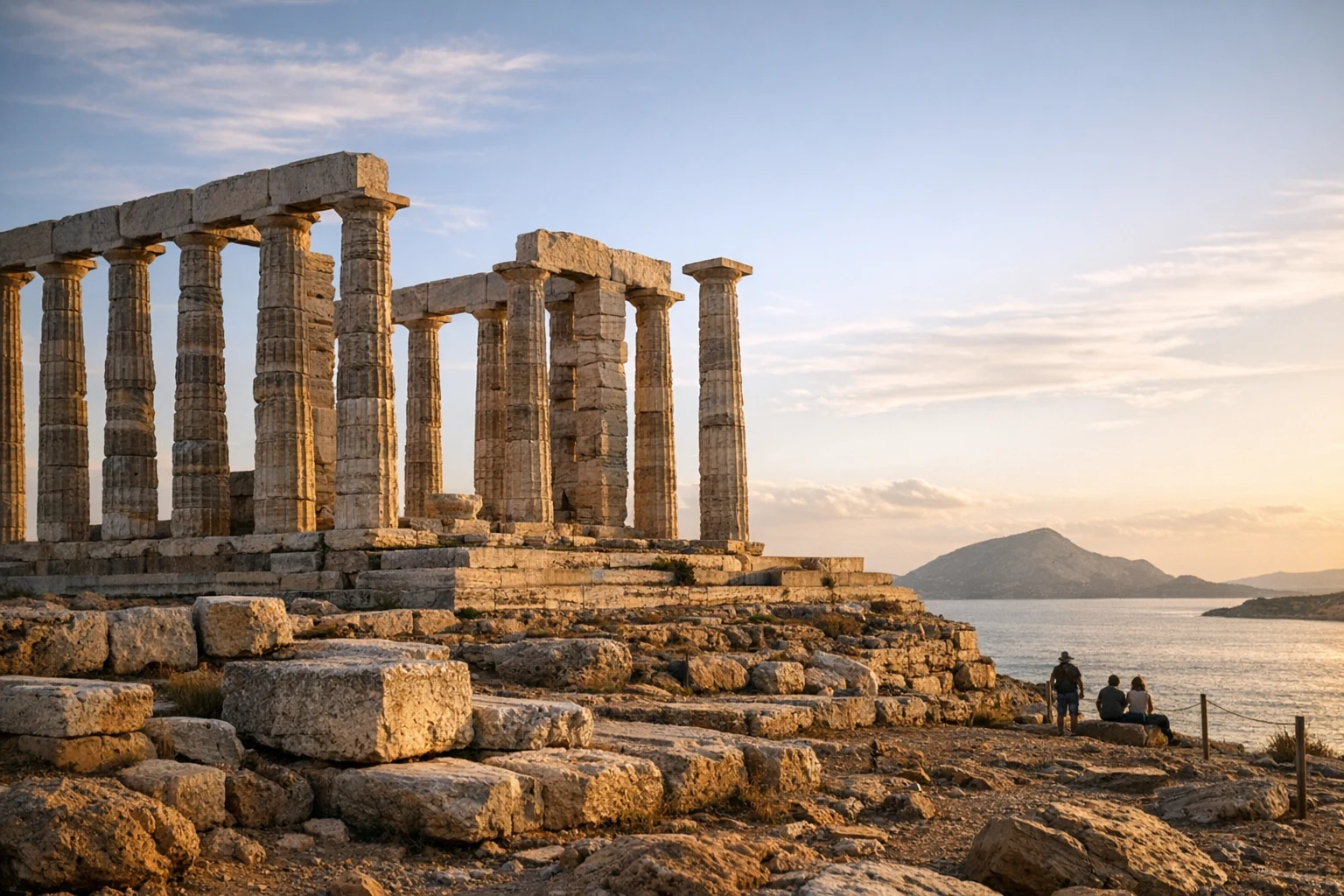
Perched dramatically atop a windswept promontory at the very tip of the Attica peninsula, the Temple of Poseidon at Sounion stands as one of the most splendid and evocative ruins of the ancient Greek world. Only 70 kilometers southeast of the bustling city of Athens, yet a world away from its urban energy, this sanctuary dominates Cape Sounion, guarding the azure sweep of the Aegean Sea. Here, marble columns gleam white against the blue of sky and water—a sight that has captivated poets, sailors, and travelers for millennia. The site unites majesty and myth in a setting where the elements and the achievements of a lost civilization are ever-present, making it a must-visit destination for anyone fascinated by the wonders of ancient Greece.
The Temple of Poseidon is more than an isolated archaeological gem. In the golden hours before sunset, visitors gather on its slopes to witness the sun sinking into the cerulean Aegean, a tradition extending deep into antiquity. It is easy to see why ancient mariners sought the protection of Poseidon here, at a spot famed for both beauty and strategic importance. The remains of the imposing Doric columns stand in silent testament to the vital role Sounion played in Greek religious and military history. The journey to Sounion—whether by scenic seaside road or through scrubby, pine-scented Attic hills—further connects the modern traveler with a landscape shaped by legend and longing. For anyone seeking a mix of natural grandeur, mythic resonance, and ancient architecture, the Temple of Poseidon at Sounion in Greece offers an unforgettable experience.
History
Early Significance and Myths
The headland of Cape Sounion, at the southeasternmost point of the Attica region, has been a sacred site since the earliest days of Greek civilization. Archaeological finds, including pottery and votive offerings, indicate cult activity as early as the 8th century BCE, possibly even earlier in the late Bronze Age. The temple’s association with Poseidon, the tempestuous god of the sea, was only natural given its location—projected into the Aegean, a landmark for ancient sailors leaving or returning to Athens. Greek myths surround Sounion’s cliffs: most famously, Homer’s Odyssey refers to Sounion as a sacred promontory; legend holds that King Aegeus plunged to his death here, believing his son Theseus lost to the Minotaur, thus giving the Aegean Sea its name.
Archaic and Classical Periods
The construction of the grand marble temple that visitors see today began around 444 BCE, during Athens’ “Golden Age” under Pericles. This era was marked by a surge of monumental building projects, including the Parthenon in Athens. Earlier structures, possibly an archaic temple destroyed by the Persians in 480 BCE, have been found beneath and near the current temple’s foundations. The Doric temple built in the 5th century BCE was part of an ambitious program to reaffirm Athenian piety and power following the Persian Wars. Its placement at Sounion was both religious—a sanctuary protecting and beseeching Poseidon’s favor for sailors—and strategic, serving as a lookout and defensive post guarding the maritime approaches to Athens.
Hellenistic and Roman Eras
The Temple of Poseidon retained its importance through subsequent centuries, though changes in religious practices gradually diminished its centrality. In the Hellenistic period (323–31 BCE), the sanctuary continued to attract pilgrims and visitors, and neighboring remains—such as the temple of Athena Sounias—suggest coordinated worship at the cape. Under Roman rule, Sounion’s sacred and symbolic roles persisted, with evidence of restorations and visitation by Roman officials and elites. Notably, in the 1st century CE, the Roman poet Philostratus wrote admiringly of Sounion’s panoramic vistas and religious significance.
Decline, Rediscovery, and Modern Era
As Christianity spread and the ancient religions faded, the temple gradually fell into disuse; its stones were quarried for local construction, and the site was battered by centuries of wind and weather. Still, its legendary status survived in memory and travel literature. In modern times, the Temple of Poseidon became a must-see stop on the “Grand Tour” of Europe, immortalized in the travel writings of Lord Byron, who famously carved his name into one of its columns. Systematic archaeological work began in the late 19th and early 20th centuries, revealing much about the sanctuary complex and securing its conservation. Today, the temple stands as both a powerful relic of the ancient Greek world and as a vibrant spot alive with cultural and historical meaning for contemporary visitors.
Key Features
One of the Temple of Poseidon’s most distinctive features is its unique setting. Rising above sheer cliffs that plunge almost vertically to the sea, the temple’s layout is oriented to maximize its visibility from afar, a beacon for both ancient ships and modern travelers. The structure itself is a prime example of Periclean Doric architecture, crafted from gleaming white marble quarried nearby at Agrileza. Of the temple’s original 34 sturdy, fluted columns, 15 remain standing today, aligned in two colonnades on three sides and originally enclosing the cella that housed the cult statue of Poseidon.
Entering the sanctuary grounds, visitors first pass remnants of a gateway and a series of ancient defensive walls, a reminder of Sounion’s dual role as both holy place and military outpost. Traces of other structures—such as an altar dedicated to Poseidon, storerooms for offerings, and the foundations of priestly residences—speak to the complexity of the religious community that once flourished here. Inscriptions and graffiti left by ancient and modern travelers alike are visible on several columns; among the most famous is the name of Lord Byron, inscribed during his stay in 1810. These markings are a tangible testament to the enduring fascination the site has held through the ages.
Surrounding the main temple, the wider archaeological area contains several points of interest, including fragments from a sanctuary dedicated to Athena Sounias, another important deity worshipped here, as well as foundations and carved blocks from successive building phases. The position of the sanctuary was carefully chosen not just for navigation, but for symbolism: aligned roughly to the east, the temple greets the rising sun, while its western face frames some of the most celebrated sunsets in Greece. The panorama from the temple platform is truly breathtaking, spanning the Saronic Gulf, the islands of Kea and Kythnos, and the distant mountains of the Peloponnese.
Modern interventions are minimal but important—pathways for visitors are discreetly laid out to protect both the site’s fabric and its striking visual impact. Informational panels provide insights into the temple’s history, archaeology, and mythological context. At once austere and harmonious, the Temple of Poseidon’s architecture continually reminds visitors of the delicacy and ambition of ancient Greek religious thought, where sanctuaries were created to both honor the gods and integrate seamlessly with the natural grandeur of the land and sea.
Getting There
Visiting the Temple of Poseidon at Sounion is an accessible and rewarding excursion from Athens or the wider Attica region, offering travelers both natural beauty and cultural immersion. The most popular way to reach Sounion is by road, following the scenic coastal highway—the “Apollo Coast” or “Athens Riviera”—which hugs the Saronic Gulf through green hills and past charming seaside villages. Driving from central Athens to Sounion takes about 1.5 hours (70 kilometers). Rental cars are available in Athens, with daily rates starting from around €40-€60, making this a flexible option for independent travelers wanting to explore at their own pace and potentially combine a temple visit with local beaches.
For those preferring public transport, the regional KTEL bus service offers frequent connections between Athens and Sounion. Buses depart from Pedion Areos (central Athens) or Syngrou-Fix Metro Station, running approximately every 1-2 hours depending on the season. The journey costs about €7-€9 one way and takes around two hours, with the final stop right next to the archaeological site. This is a budget-friendly and comfortable option, though be aware that the last return bus to Athens leaves before sunset during winter months—important if you are planning to linger for the legendary sunset views.
Organized day tours are another excellent option, especially for those wanting expert guides and hassle-free logistics. Both group and private tours depart daily from Athens and often include extras such as stops at seaside taverns, guided walks, and return transfers. Prices for half-day group tours generally range from €40 to €70 per person, whereas private tours start at €120 and go up depending on group size and extras. Several operators also offer late afternoon or evening tours specifically scheduled to catch the Sounion sunset. Finally, for adventurous visitors, cycling routes along the coast or even sailing excursions via the Saronic Gulf provide memorable and scenic alternatives to road travel.
When to Visit
The Temple of Poseidon at Sounion is striking in every season, but timing your visit can make a significant difference in terms of both comfort and atmosphere. Spring (April through June) and early autumn (September and October) are typically regarded as the best times, offering mild temperatures, gentle breezes, and a landscape alive with wildflowers or golden Mediterranean light. During these shoulder seasons, the site is less crowded, making for a more peaceful and contemplative experience, while still allowing for clear views and the possibility of swimming at nearby beaches.
Summers (July–August) at Sounion can be hot, with daytime temperatures often surpassing 30°C (86°F), but the steady coastal wind moderates the heat on most days. The temple is popular with both tourists and locals in high season, particularly at sunset, so arrive early if you wish to secure a prime spot or enjoy a quieter atmosphere. Early mornings provide relative solitude and cooler weather, and the colors over the cape are enchanting as the sun rises. For many, however, the spectacle of sunset is the highlight—when the sun appears to sink into the Aegean, framed by marble columns and the amphitheater of sea and sky.
Winter (November to March) brings fewer visitors and a more introspective beauty to the site. The weather is cooler and sometimes windy or rainy, but the drama of clouds over the sea and the temple’s hushed ambience give Sounion a stark and evocative charm. Opening hours are shorter in winter, so plan accordingly. No matter the season, it is advisable to bring sun protection, water, and layers—exposure to the elements is part of the experience at this wild promontory. For those seeking a blend of ancient mystery, natural splendor, and a front-row seat to one of Greece’s great spectacles, Sounion’s Temple of Poseidon welcomes visitors year-round.
Quick Facts
| Feature | Detail |
|---|---|
| Location | Cape Sounion, Attica, Greece |
| Distance from Athens | 70 km (43 miles) southeast |
| Coordinates | 37.6525° N, 24.0269° E |
| Construction Date | ca. 444–440 BCE (Classical Period) |
| Builder | Athenians under Pericles |
| Architectural Style | Doric, local white marble |
| Columns Remaining | 15 out of original 34 |
| Admission Fee | ~€10 for adults (reductions available) |
| Opening Hours | 9:00 AM to sunset (varies by season) |
| Closest Major City | Athens |
| Best Time to Visit | Sunset; spring and autumn are most pleasant |
| Public Transport | KTEL bus from Athens, ~€7–€9 one way |
| Facilities | Visitor center, restrooms, limited shade |
| Notable Features | Panoramic sea views, mythological connections, sunsets |
| Accessibility | Moderate—uneven terrain, some steps |
| Nearby Beaches | Legrena, Kape, Sounion Beach |
Frequently Asked Questions
How far is the Temple of Poseidon from Athens?
The Temple of Poseidon at Sounion is approximately 70 kilometers (43 miles) southeast of Athens, about a 1.5-hour drive.
What are the opening hours of the Temple of Poseidon?
The site is open daily, usually from 9:00 AM to sunset. Exact times may vary by season, so check the official website before visiting.
Is there an entrance fee to visit the Temple of Poseidon?
Yes, there is a small admission fee (typically €10 for adults, reduced or free for EU citizens under 25 and other special categories).
Can I reach the Temple of Poseidon by public transport?
Yes, you can use the KTEL regional bus service from Athens, departing from Pedion Areos or Syngrou-Fix Metro station.
What is the best time of day to visit the Temple of Poseidon?
Sunset is the most popular and beautiful time to visit, as the temple and cape are bathed in golden light above the sea.
Is it possible to swim nearby after visiting the temple?
Yes, there are several beaches close to the site where visitors often swim, especially during the warmer months.
Is the Temple of Poseidon accessible for people with mobility issues?
The site has uneven terrain and stone paths, which can be challenging for those with mobility difficulties.
Are guided tours available at the site?
Yes, guided tours are available and can be arranged in advance or at the site during peak times.
Can I visit the Temple of Poseidon as a day trip from Athens?
Absolutely. Many visitors take a half-day or sunset trip to Sounion and the temple from Athens.
Can I see other ancient sites nearby on the same trip?
You can combine your visit with archaeological sites in Athens, such as the Acropolis and the Ancient Agora.
Nearby Ancient Sites
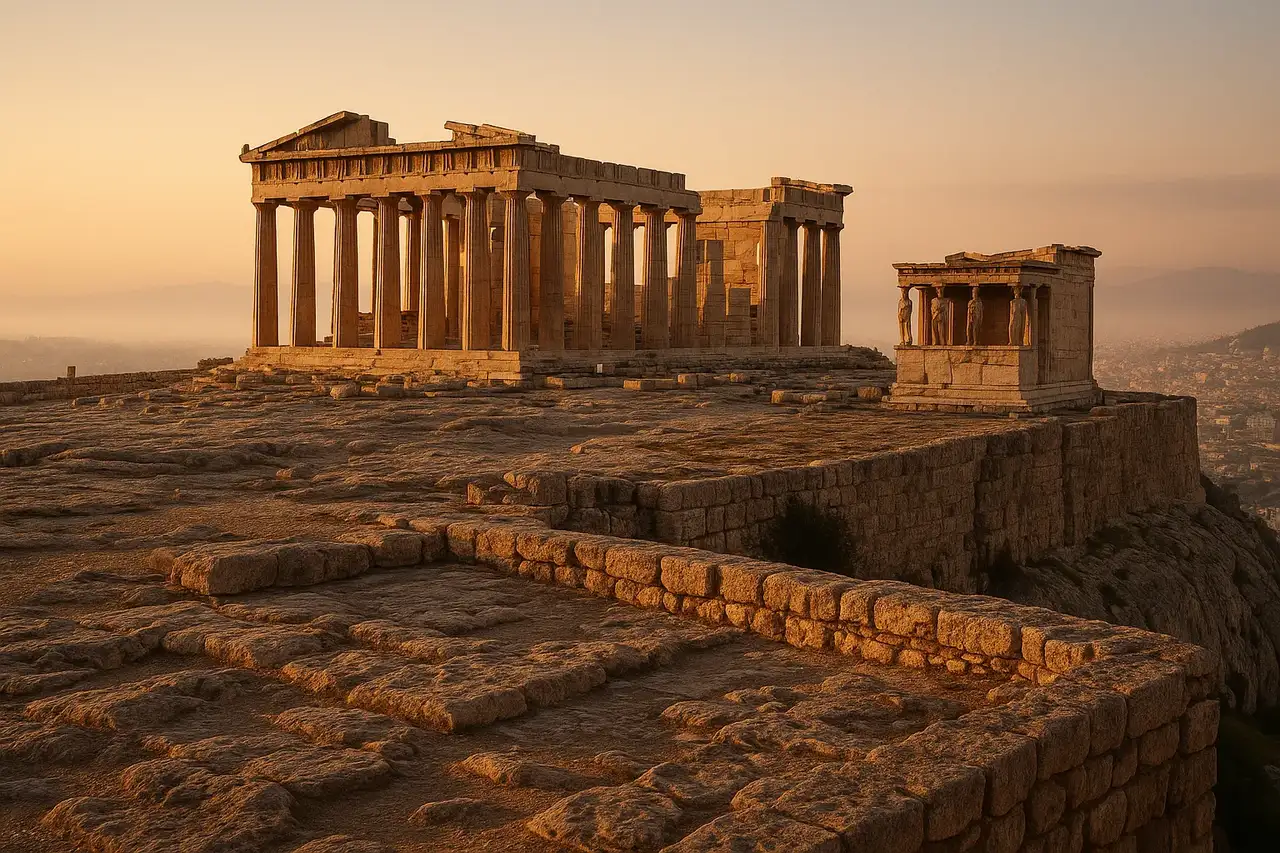
The Complete Acropolis Athens Travel Guide: Temples
Ancient GreecePlan the perfect visit to the Acropolis of Athens with our 2026 guide. Discover the Parthenon, best ...
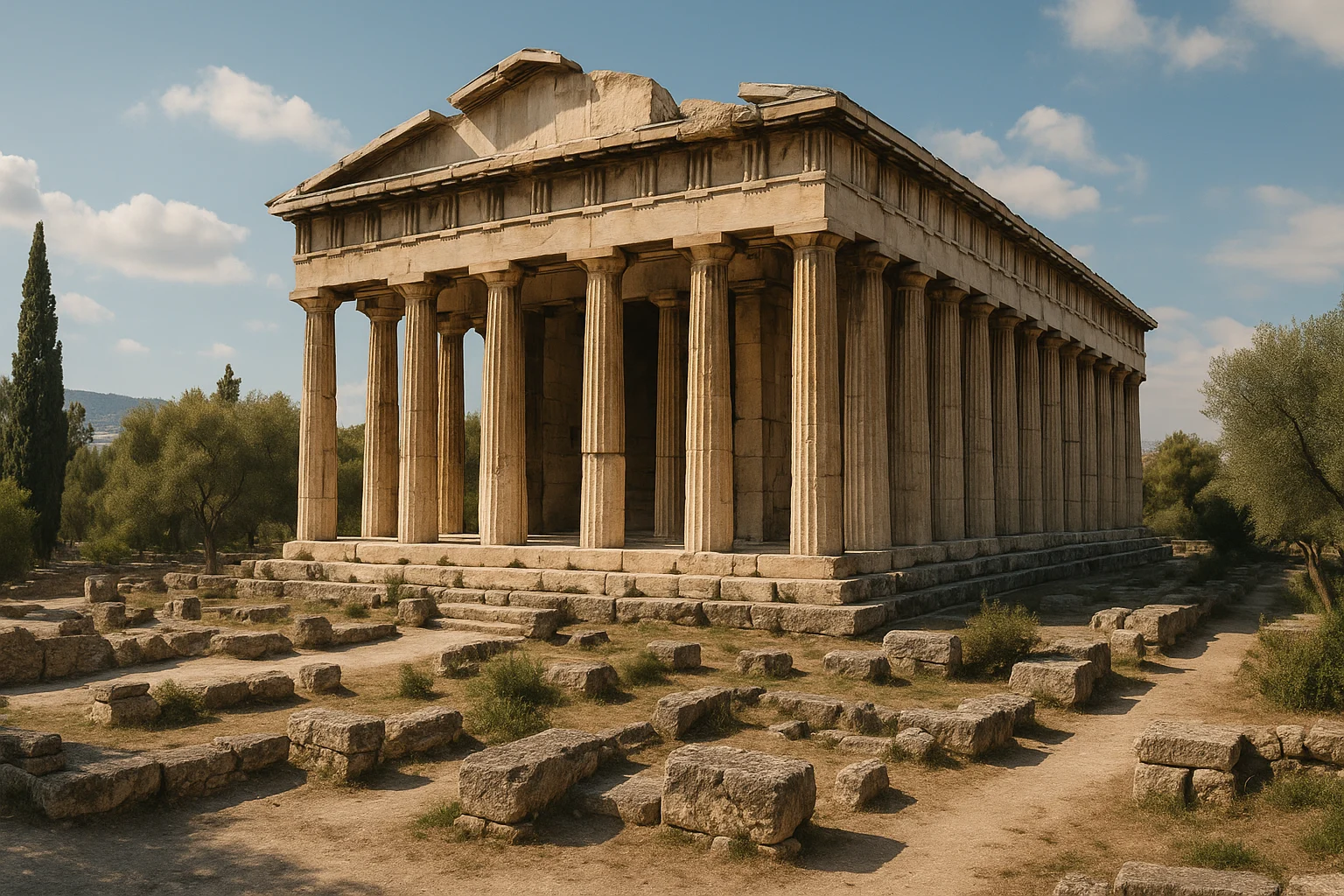
Ancient Agora of Athens Travel Guide 2026: Route, Tickets, and Context
Classical GreekPlan a better Ancient Agora visit with practical timing, monument priorities, and clear historical c...
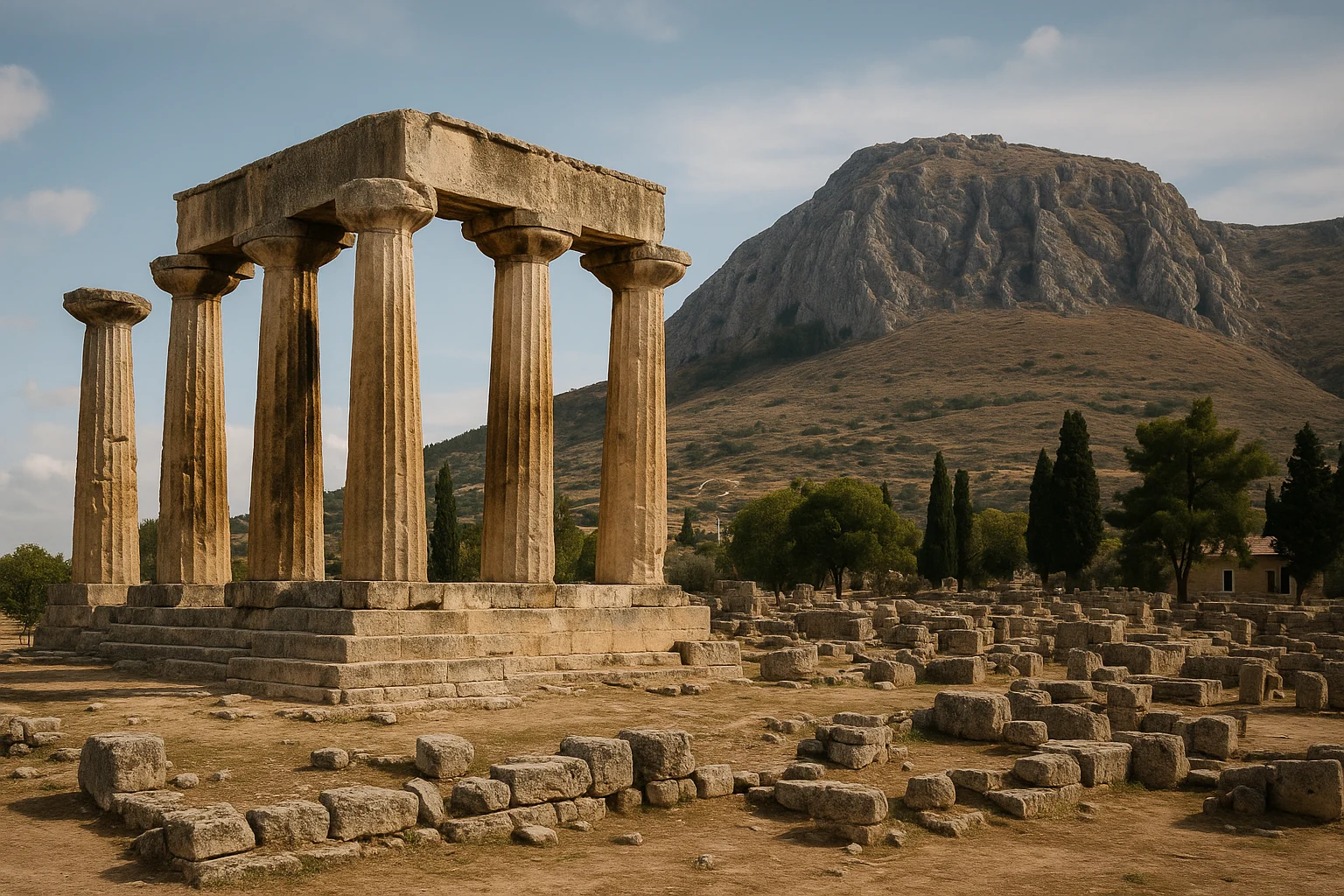
Ancient Corinth Travel Guide 2026: Ruins, Museum, and Visit Strategy
Classical GreekPlan a focused Ancient Corinth visit with practical timing, monument priorities, and route context f...